Categories
Uncategorized

The Amazing Value of Sports Broadcasting

As the public turns more and more towards on-demand media, many media companies are struggling to find a way to replace the loss of advertisement revenue. So why is Disney not upset about their purchase of ESPN? According to the CFO of Disney, Jay Rasulo, “… 99.4% of sports events on TV are watched live.” This might help to explain how ESPN has grown into the economic giant it has; purchased in 1996 by Disney for $19 billion it is now valued at approximately $40 billion.

This is an excellent place to turn for solutions to the ever rising crisis of internet streaming and video recording, which are crushing the demand for advertisement space as it just is not as effective as it once was. The content ESPN shows is what gives it the capability it has. People do not want to watch the sports game an hour after it has played when people get around to uploading it online; people want to talk to their friends about the game and be able to wager on who will win. This sort of excitement would be near impossible to recreate in other areas of media, but may prove to be very valuable.


http://www.forbes.com/sites/kurtbadenhausen/2012/11/09/why-espn-is-the-worlds-most-valuable-media-property-and-worth-40-billion/

Categories
Uncategorized

Entrepreneurship as a Career

Entrepreneurial work, both social and traditional, has been the focus of a few classes and several readings as well as playing a minor part in nearly every field covered in the class. This learning of the topic was reinforced with concrete examples of successful entrepreneurs, yet I am still very hesitant to consider entrepreneurial work as being suited for me.

When asked what part of a job is most important to us, most students answer growth potential (if my memory serves me). For me this is definitely a close second; without the ability to improve work becomes mind-numbingly repetitive. The most important portion of a potential future career, in my mind, is job security. I come from a very small family of modest means which consists primarily of labourers spanning generations back. It has been my understanding from a young age that there is nothing more important than being able to care and provide for those closest to you.

Entrepreneurship offers the possibility of leaving a mark on the world by introducing a revolutionary idea, but there is little to no job security. If your project fails the burden of expenses and forgone wages rests on your shoulders.

The tightrope of unsecured work is not necessarily for everyone.
Categories
Uncategorized

RE: Yuwei Wei’s “Social Enterprises: The Solution To Homelessness?”

Immediately upon reading the opening sentence of Yuwei Wei’s post, I could tell her opinions on social enterprises versus charities were congruent with mine. Referring to charities as being “bandaid solutions” makes for an excellent analogy. Seen across the globe time and time again are charities trying to temporarily relieve the less fortunate through the use of soup kitchens, charitable donations, and the like. These often prove to be more of a conscience cleaner for those involved than a solution to the problem at hand.

The idea of short-term aid as opposed to a long-term solution is echoed in the “give a man a fish… teach a man to fish…” proverb, and is not a new concept or idea. Society needs to create opportunities for those who cannot help themselves to learn the skills and gain the experience they require to be self-sufficient.

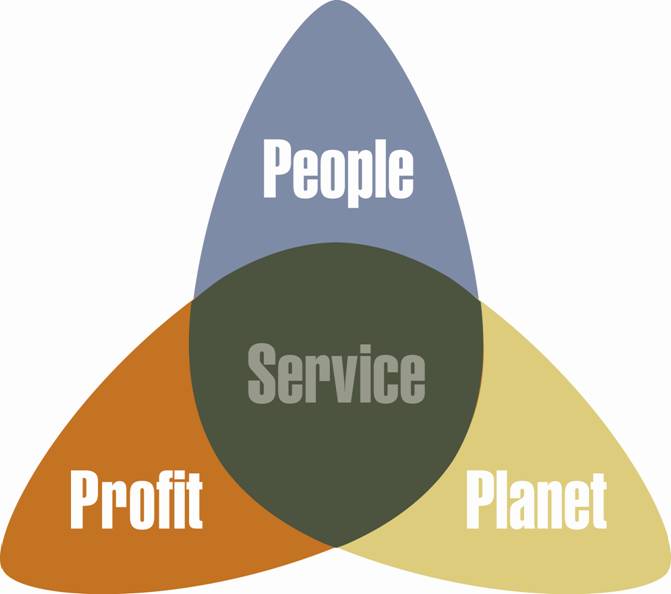
So social enterprises are the be-all, end-all solution to society’s worries? No, not exactly. While these types of entrepreneurial effort are extremely effective, they cannot hope to reach every impoverished or malnourished individual. I feel that hybrid enterprises, part profit driven and part social impact driven, would attract a larger audience of entrepreneurs; creating opportunities for the less-fortunate while still making a profit may entice a more diverse group of individuals.


Social Enterprises: The Solution To Homelessness?

http://www.guardian.co.uk/society/2005/jul/06/communities.homelessness

Categories
Uncategorized

The Effectiveness of Intrinsic Motivation


Daniel Pink is a BA holder from Northwestern University and a JD graduate from Yale Law School. A well-known writer and speaker he is best known for his work on the field of motivation, especially in the work force. In these two videos, Dr. Pink talks about two different types of motivation; intrinsic and extrinsic, and the effects they have on individuals. Denouncing the current reward system in place in most companies across the planet of “If you do this, then you get that.” as encouraging narrow-minded behaviour and shutting down creativity, Dr. Pink thinks it is far more effective to offer employees intrinsic motivation such as the feeling of autonomy and purpose in the work force.

There is debate on how modern society rewards the wrong behaviour unintentionally. If the manager maximizes sales, he might get a large bonus, but this does not necessarily maximize the company’s profits or adhere to their goals. These two presentations have made me wonder how Dr. Pink’s principals of proper motivation would apply to other aspects of life; do schools reward the wrong type of behaviour with the current grading system? How our learning is evaluated is based largely on our ability to produce specific information on exams and papers, rather than our overall understanding of the material.


Categories
Uncategorized

More than a Little Water Damage

Hurricane Sandy has been headline news recently, and with a forecasted $50 billion dollars in damage it is not hard to see the relation between it and the economy. A vault located in Manhattan containing “an estimated $36.5 trillion” worth of stock certificates and “custody certificates” was possibly damaged due to flooding. To get an idea of how large this value is, this is 3.20 times the public deficit America faced at the end of October 2012, or approximately $117 140.39 per American citizen.

               While the prospect of such a gargantuan sum of capital being ruined seems intimidating, the effects such damage would have would be dampened thanks to modern technology. Accurate computer records of all of the contents of the vault will greatly aid in the recovery process, as there are detailed reports on all of the documents which now face potential damage. Had this happened a few decades ago, the result would have been far more devastating. Even with the precautions which DTCC, the company responsible for the vault, have taken, the costs to them will be substantial.

http://buzz.money.cnn.com/2012/11/02/stock-certificates-sandy/

Categories
Uncategorized

The Not-So-Productive Side of Instant Communication

E-mail has become a major means of communication both between firms and within firms in modern society, and reasonably so; what is more productive than near-instant contact between an individual and his or her coworkers? Shayne Hughes saw a problem with this system though. He found that e-mails were failing to help employees communicate and were rather just giving them a way to pass work off on their coworkers until they subsequently passed it back. In an attempt to stop this behaviour, he blocked all internal e-mails within his company for a week.

The rationale behind this may not be clear at first; encouraging face to face communication and “sticky note” to-do lists seems counter-productive. Hughes raises some valid points however, and is able to support them with the results he observed in his own company. People were able to find solutions to their concerns faster when they could discuss their concerns rather than send vague e-mails back and forth and no longer needed to sift through lists of e-mails in hopes of finding the important ones. I think this is a prime example of where taking a step back from technology, even temporarily, helps increase productivity and reminds employees of the most efficient way to make use of it.

Would having to write all your memos and reminders on paper become a hassle?


http://www.forbes.com/sites/forbesleadershipforum/2012/10/25/i-banned-all-internal-e-mails-at-my-company-for-a-week/

Categories
Uncategorized

The Female Entrepreneur Empowered

This article caught my attention through its indicative title, “Four Advantages To Being A Female Entrepreneur”. With the increase in female influence in the workforce over the past century, the business world is still an area dominated by males. In the search for equality in all markets, an abundance of articles regarding the topic have emerged in recent years. Most of these articles talk about the pay discrepancies noted between men and women, the lack of job opportunities for women, or other forms of oppression in the workforce that hold women back. What separated this article from the rest of articles addressing the same topic is the writer, Stephanie Burns, took a very opportunistic view of the current situation. She offers four advantages women hold when starting their own business and investing in upcoming businesses.

I will digress from repeating the four main points of the article for brevity, but Burns makes some very compelling arguments and supports them with personal experience and evidence where possible. This opportunistic style article is capable of having a much larger impact on the current state of affairs than the generic article which takes the position of a victim.

http://www.forbes.com/sites/chicceo/2012/10/22/four-advantages-to-being-a-female-entrepreneur/

Author: Stephanie Burns

Published: 10/22/2012

Categories
Uncategorized

RE: William Taylor’s “Catch People in the Act of Doing Things Right”

In William Taylor’s blog post “Catch People in the Act of Doing Things Right”, he talks about the importance of rewarding employees for good performance, properly maintaining protocol, and any other positive input in the workplace. Mr. Taylor notes how extraordinary acts of kindness have become as they are so uncommon in a business-driven society.

Rewarding good behaviour is just as important, if not more so, as penalizing errors or inefficiency. Correcting mistakes is a reactive way of altering behaviour; if someone makes a mistake that you then correct, the hope is you will not need to correct the same error in the future. This is not meant to downplay the importance of this type of reinforcement; to allow mistakes to go unaddressed is certainly not an alternative. Recognizing good behaviour is a more proactive approach to the matter. Offering a small token, regardless of value, to someone who has done a job well will encourage similar future behaviour. While it may not entirely remove mistakes from the workplace, it should help reduce the occurrence of them as well as boost morale amongst workers.

(Words: 184)

http://blogs.hbr.org/taylor/2012/10/catch_people_in_the_act_of_doing_things_right.html

Categories
Uncategorized

The Reasoning Behind Dividends

The lecture on September 25th briefly addressed the stock market, why investors would want to give money up for shares, and why companies do or do not pay dividends to their shareholders. A recent article regarding Canadian companies offering increased dividends offers some insight into why certain corporations would want to pay dividends.

The primary reason that a company would offer a payout is to attract more investors to buy its shares. Stocks which offer a dividend provide much lower risk to their holders than those which do not. This is particularly appealing to investors who are “in or approaching retirement” (Reuters) as they may not have the financial security needed for such risks. Raising the size of the dividend also shows the market that the company is stable and powerful enough to survive most economic turmoil.

Another reason a company may look to give out dividends is to please its investors when it is pressured by them to do so. If a company has a large sum of cash, and few threats or opportunities in the foreseeable future, its investors will become restless and question why the money is not being invested into research and development, expansion, or another venture which would help profits.


Works Cited


McGugan, Ian. “The Globe and Mail.” The Globe and Mail. Globe Investor, 23 Aug. 2012. Web. 29 Sept.

2012. <http://www.theglobeandmail.com/globe-investor/investment-ideas/number-cruncher/upcoming-dividends-companies-with-piles-of-cash/article4496058/>.


Reuters. “Canadian Firms Upping the Dividend Game.” – BNN News. Business News Network, 24 Sept.

2012. Web. 29 Sept. 2012. <http://www.bnn.ca/News/2012/9/24/Canadian-firms-investors-upping-the-dividend-game.aspx>.

Categories
Uncategorized

RE: Alex Chua’s “Walmart’s Woes”

Reading Alex’s blog post Walmart’s Woes, which addresses the topic of unfair pay and horrendous working conditions in factories in developing nations, I could not help but consider if ethical treatment of employees should be left to corporations, or if third party (namely government) intervention is necessary.

In an absolutely free-market economy wages and working conditions would be influenced solely by the producers and consumers. If this were the case, it would be the responsibility of the corporations to act ethically, and the consumers to voice their opinion when they violated these values. This is not a real-world situation however, as there is government influence in almost all aspects of our lives, and labour laws are not exempt from this.

So governments pass labour laws protecting the workers in their country and everyone is happy again, unfortunately it is not that easy. What happens when a government does not care enough to put these types of laws into effect? We then need to turn to international law, but such laws are often difficult or impossible to enforce.

Labour laws are crucial to protect workers in developing nations from being exploited, but when labour laws fail, it falls on the shoulders of the corporations employing these groups to protect their workers by paying them fairly and making sure their working environment is safe.


https://blogs.ubc.ca/alexanderchua/

Spam prevention powered by Akismet