Categories
Teaching Presence

Connection, Collaboration and Transformation


Trust is the Key to Web 2.0

Originally uploaded by kid.mercury

I’ve just returned from the ELI Annual Meeting in San Antonio. The topic was Connecting and Reflecting: Preparing Learners for Web 2.0 ( a much maligned term referring to principles and practices of collaborative, participatory, democratic participation on the web). Technology plays a role, no doubt – but it’s all about the learning and the transformations that are beginning to emerge.

There are so many thoughts and resources I could share. Here are a few take-aways and some accompanying resources that I will be revisiting for some time. Hopefully, you’ll find some of these as thought provoking as I have:

  • Encouraging learners to fully participate in designing their own learning leads to more “ownership”, more authentic learning outcomes and greater partnership between learner and teacher. Resource: podcasted conversation with conversation with Barbara Sawhill, Director of the Cooper International Learning Center at Oberlin College, and Jude Higdon, Instructional Technology Support Team Coordinator at the University of Minnesota (about half an hour in length).
  • There is much fear associated with the use of collaborative tools and technologies associated with web 2.0 in academia- it’s important to keep the dialogue open and moving forward. Resource: A Digi-Drama about Fear 2.0. I wasn’t lucky enough to get in on this session but have since reviewed the videoclips and they are well worth the half hour spent!
  • Access to excellent, good and mediocre quality learning resources on the web has exploded. We have a role in helping learners learn how to navigate this, learn how to make meaning and make learning processes more transparent. Resource: An assortment of the video archives of featured sessions hosted by the ELI. Average length: about an hour.

    And , if you are interested in poking around at some of the resources that Educause has to offer, you may want to start here.

  • All for now.

Categories
Using Technology

E-Learning Institute News

At various times throughout the year, many members of the e-Learning community here at UBC contribute their efforts and talent to offer the UBC e-Learning Institutes. These institutes are typically spread out over a week, and include a variety of hands-on and seminar sessions dealing with an assortment of useful e-Learning topics. They are open to all faculty and staff and are a great way to fine-tune your existing skills or help build a strong foundation to start from.

This year, the Office of Learning Technology is producing a newsletter (every 2 months) that is printable for your convenience. It offers:

  • a list of upcoming workshops and events related to teaching and learning with technology.
  • profiles of faculty, staff or students who are using technology in innovative ways to enhance learning.

Download the PDF for Jan/Feb 08!

Categories
Teaching Presence

Diamonds in the rough


Student in Class

Originally uploaded by foundphotoslj

I thought I’d share something inspiring with all of you as we approach the end of the term. It’s about one teacher’s experience in appreciation of his students. Christopher Phelp’s Diamond in the Rough reminded me just how courageous, tenacious and adaptable we are. Appreciating those qualities in students is something we miss sometimes because we haven’t taken the time to get to know anything about them.

Getting to know students in a print-based distance course may be a bit of a challenge, but there are some ideas that you might consider:

  • Send a welcome message via the Faculty Service Centre to all of your students at the start of term. Consider sharing something interesting about you and encourage them to send you a return message.
  • Follow up regularly with students who miss assignments, don’t log into the course or haven’t contacted you in a while. A friendly check in goes a long way to creating a teaching presence that is so important in distance learning.
  • Consider sending a brief survey out to students at the start of term. It’s a good way for you to find out something about their knowledge or interest in your subject matter and their approaches to learning.
  • What about you? What do you do to get to know your students? How do you stay connected during the course? Please leave a comment and share…

    Happy Holidays all!

Categories
Teaching Resources

Reflection and Conversation


Coffee and Conversation

Originally uploaded by {platinum}

Last week, I had the good fortune to attend a plenary session at UBC’s Learning Conference, facilitated by Judy Brown (English) and Harry Hubball (Curriculum Studies). Although the presentation was focused on “conversation”, I found myself thinking about reflection – about our students, our practices, our successes and our defeats.

We struggle to carve out enough time in each day, week, month for this reflective activity. Review of student feedback is often a time for many to reflect on teaching practice. I’m offering up a few questions that I jotted down the session above:

  • Did I achieve my teaching goals?
  • Is there a gap between student expectation and my teaching approach? What can I do to close the gap?
  • What do I want to do more/less of next term?
  • Did students learn? How do I know?
  • Did I learn what I needed to learn from my students? If not, how can I change this?
  • Who can I have a conversation with about my reflections?
  • Pat Hutchings VP of the Carnegie Foundation for the Advancement of Teaching would agree wit Judy and Harry about the importance of conversation and reflection in the development of teaching practice. In a recent article titled Building a Better Conversation about Learning she asks us to consider the scholarship of teaching and learning not as a stand alone initiative but a set of principles that “undergrid and connect diverse approaches to improving learning.” This begins with some reflection about how and in what circumstances students learn and a “commitment to the inquiry and evidence about those questions.”

    Please share your questions in the comments field below. Perhaps we carry on a conversation here…

Categories
Administrivia

Grades for October exams

Some of you are teaching courses with an Oct. exam. Just a friendly reminder that grades are due for any sections that ran a final exam in October.

Once grades are in, you’ll have access to student feedback via CoursEval.

That’s all for now!

Categories
Challeging Students

Dealing with Difficult Students


Dialogo fra ombre

Originally uploaded by Sweetdevil

Posts inflammatory remarks. Doesn’t respond to specific questions or requests. Avoids or disrupts collaborative projects. Demands attention. Insists on special considerations.

These are a few of the behaviors that cause concern and angst among many a caring instructor.

Handling these situations with care and concern for all of the learners involved takes considerable time and patience. It may help to learn about the strategies that others have found effective.

Here are a couple of resources you may be interested in:
How to Manage Difficult Students Online (Butler, 2003)
Managing Difficult Students in the Online Classroom (Ko, 2004).

Learners may also need strategies for managing conflict. They might find Managing Conflict on the LEAP site helpful.

If you have strategies or challenges to share – please leave a comment below.

Categories
New Instructors

New to Teaching a Distance Education Course?

One of the key differences in teaching a distance course vs. a face to face course is that distance requires a team – where f2f is largely a solo proposition.

That means, for new instructors, there are many new (and necessary) contact people, services and systems that you will need to interact with in the delivery of your course.

We provide some basic getting started tips for new instructors. Whether you are teaching a print-based or online course, you may want to have a look at the tips and keep them on your desktop for reference.

Tips for instructors in print-based courses: Download PDF
Tips for instructors in online courses: Download PDF

Categories
Orientation

Learning Online: Orientation for Students

Orientation.jpg

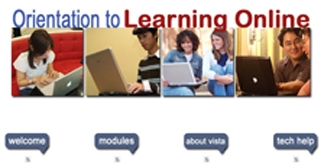
Just reminder that we offer a well-developed “Orientation to Learning Online” for learners enrolled in the undergraduate courses we deliver through OLT. Students are given access to the course approximately 2 weeks prior to the start of each term

The self-guided orientation courses offers information on:

  • how to be successful online
  • online communication
  • surviving groupwork
  • technical tools to support learning
  • connecting to the library (via VPN)

We’ve included practice exercises for each module and a discussion area that students can post questions to each other and receive help about general WebCT/Vista related issues.

How Do Students Access It?

We send online students a welcome package by email – with login instructions for the Orientation site specific to their course (WebCT 4.1 or Vista). the Orientation will then appear on their list of courses and they can access it any time during the term.

How Do Instructors Access It?

If you would like to have access to the site, please send your CWL to the olt helpdesk and you will be added in.

Happy start of term!!

Categories
MagnaPubs

MagnaPubs

UBC subscribes to 3 publications that may be useful to the teaching community:

  • The Online Classroom
  • The Teaching Professor
  • the Distance Education Report
  • TAG provides information about how to access these publications. Download the PDF.

Categories
Teaching Resources

Time Saving Tips

We can be very creative when stretched for time! Here are a few tips the recent edition of Teaching Online. Dr. Hayden Davis, an online instructor, recommends the following:

  • Re-use standard announcements. He suggests keeping them as word docs in a file that can be retrieved easily and “cut and pasted” into your announcements area.
  • Collect examples of good work (including discussion posts) which can be used to demonstrate effective approaches with students.

Many of you likely have some great time saving tips that you have discovered over the years – whether teaching an online or print based course. Why not share them with your colleagues here? Just add a comments below with your tip included!

Spam prevention powered by Akismet