Sustainable Building
The buildings at the Ecovillage are extremely unique! I have never before seen a structure built with such character in its exterior and interior design and such unique building materials.
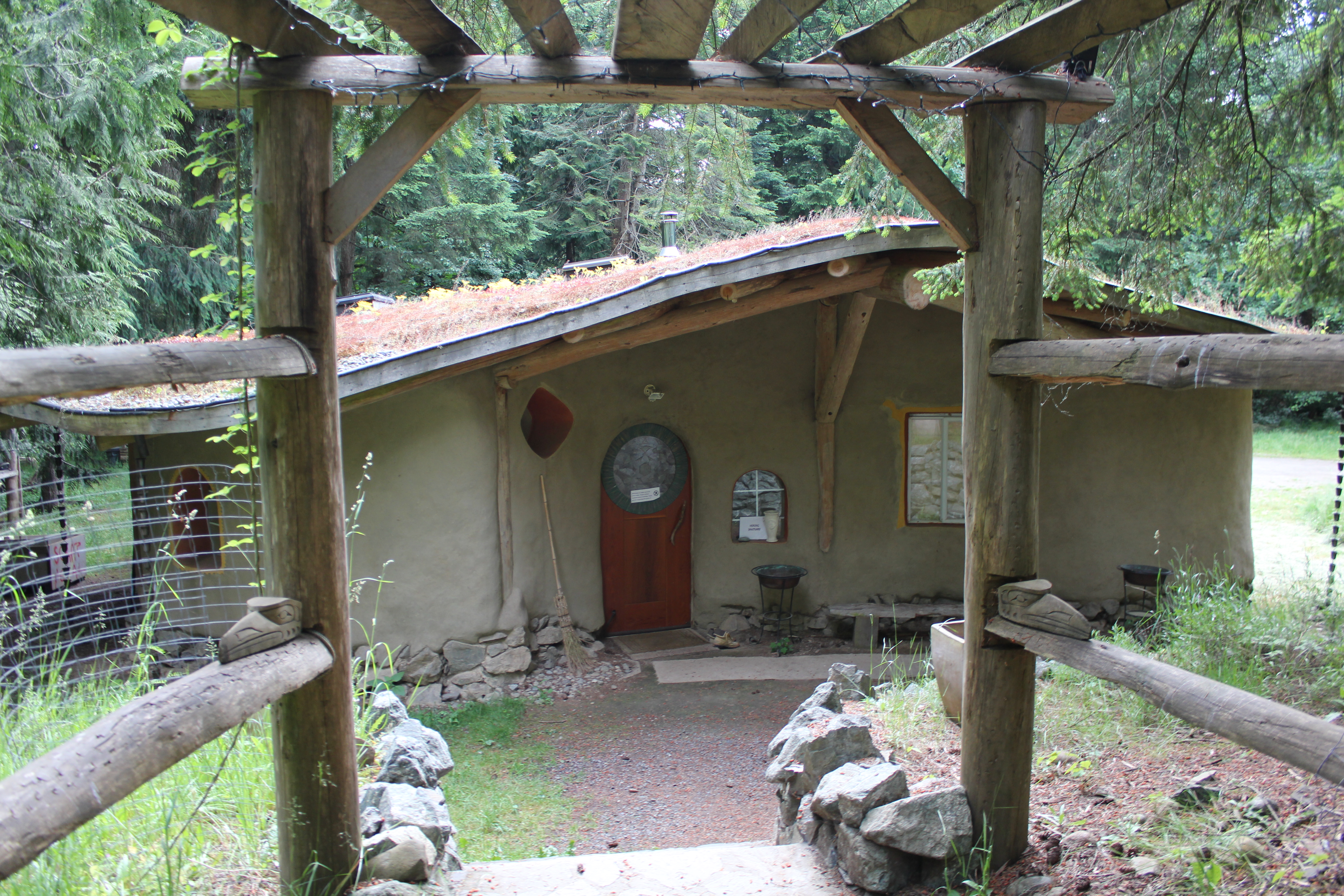
The buildings at the Ecovillage are built out of Cob, a material consisting of a mixture of clay, sand, water and a binder of wood chips or straw. It is a very versatile building material that can be sculpted and moulding into beautiful artistic structures. The price for the materials is also very minimal, for all of the materials can be dug from the village grounds. The sand is used as the aggregate, similar to concrete, and provides strength to the walls. The straw helps resist against cracking and provides strength as well. The clay binds the whole mixture.
We got the amazing experience of working alongside the builders by helping with mixing the cob ingredients together and forming the thermal walls of a new washroom that was being built during our stay.
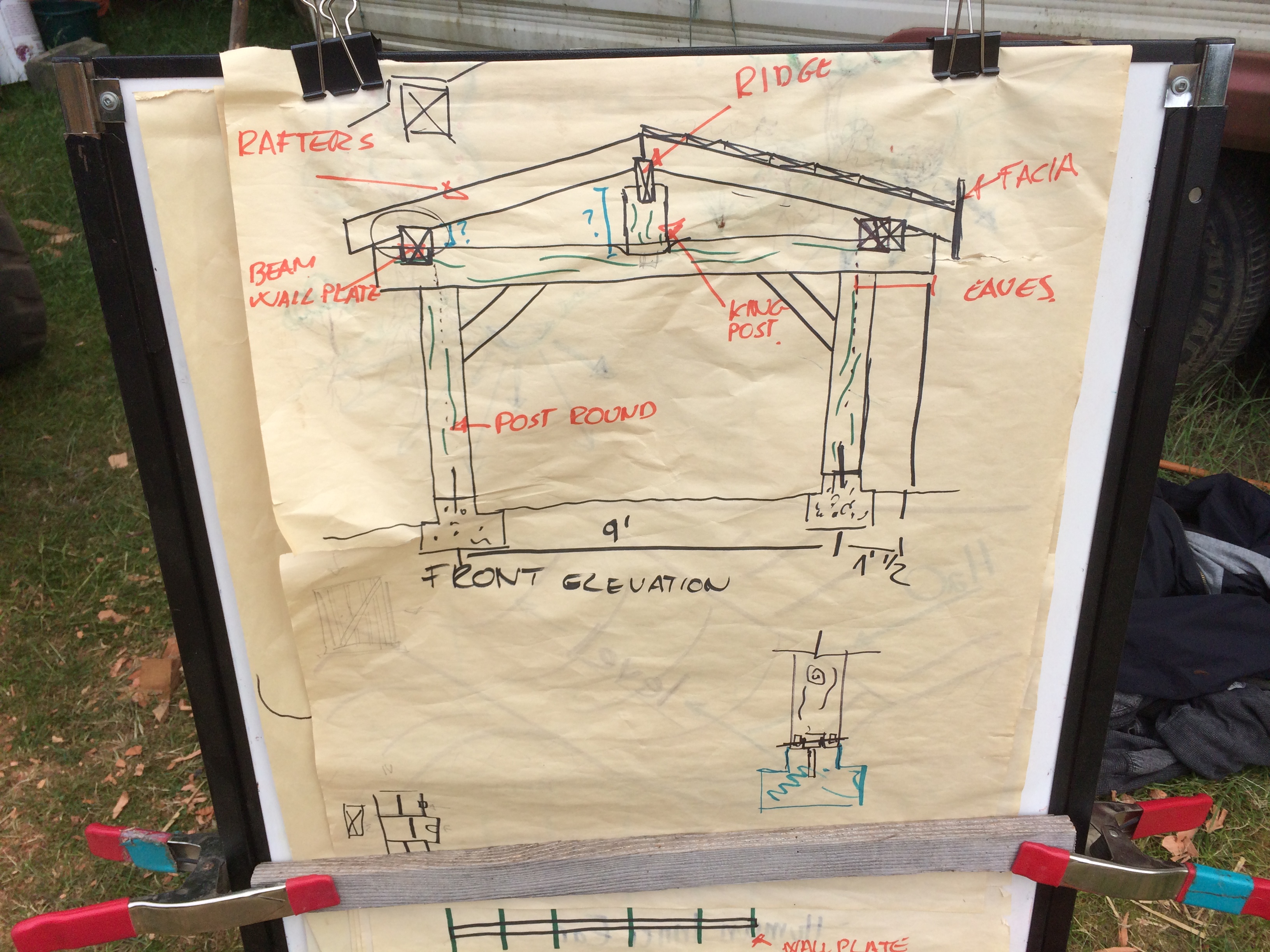
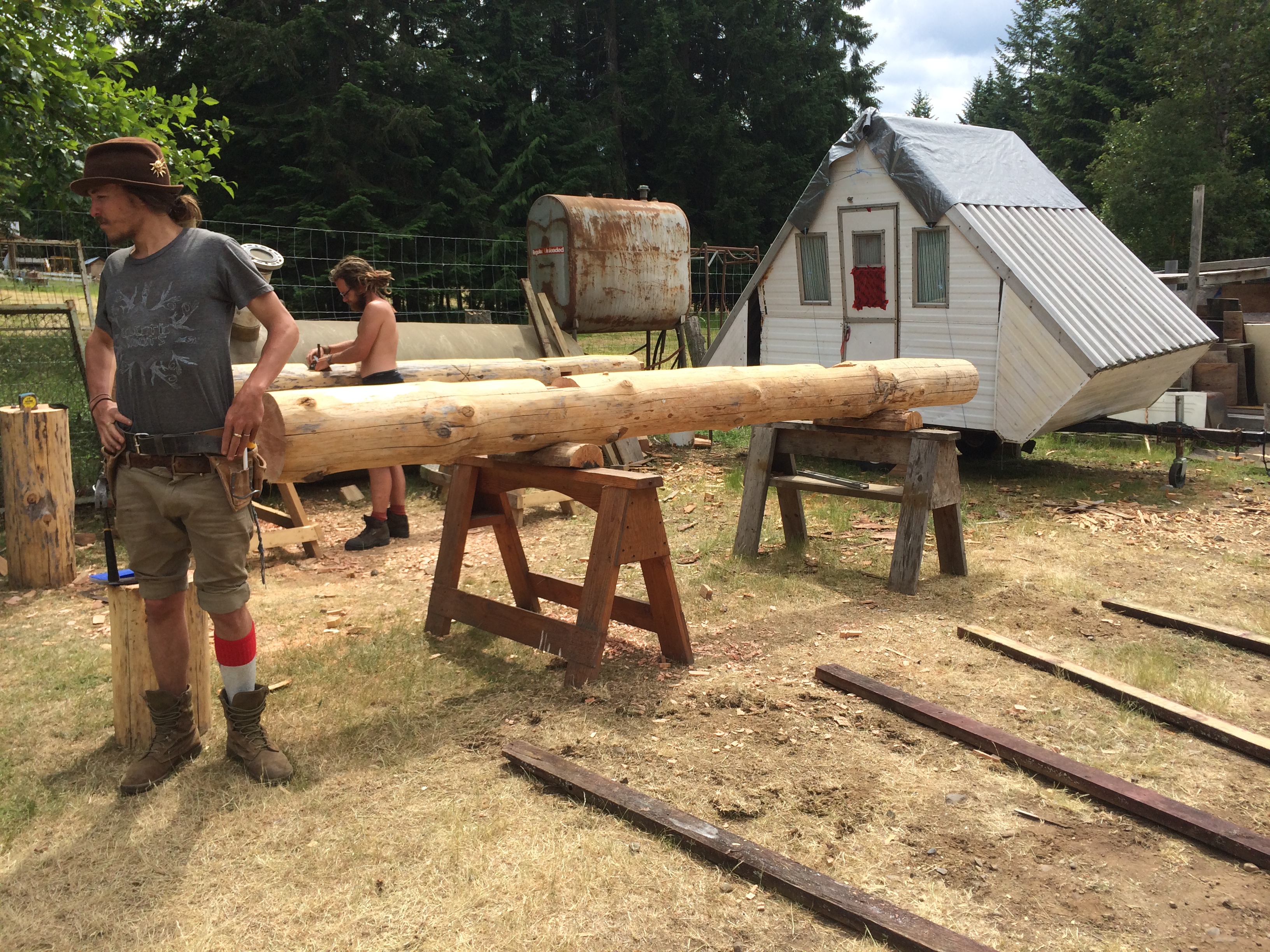
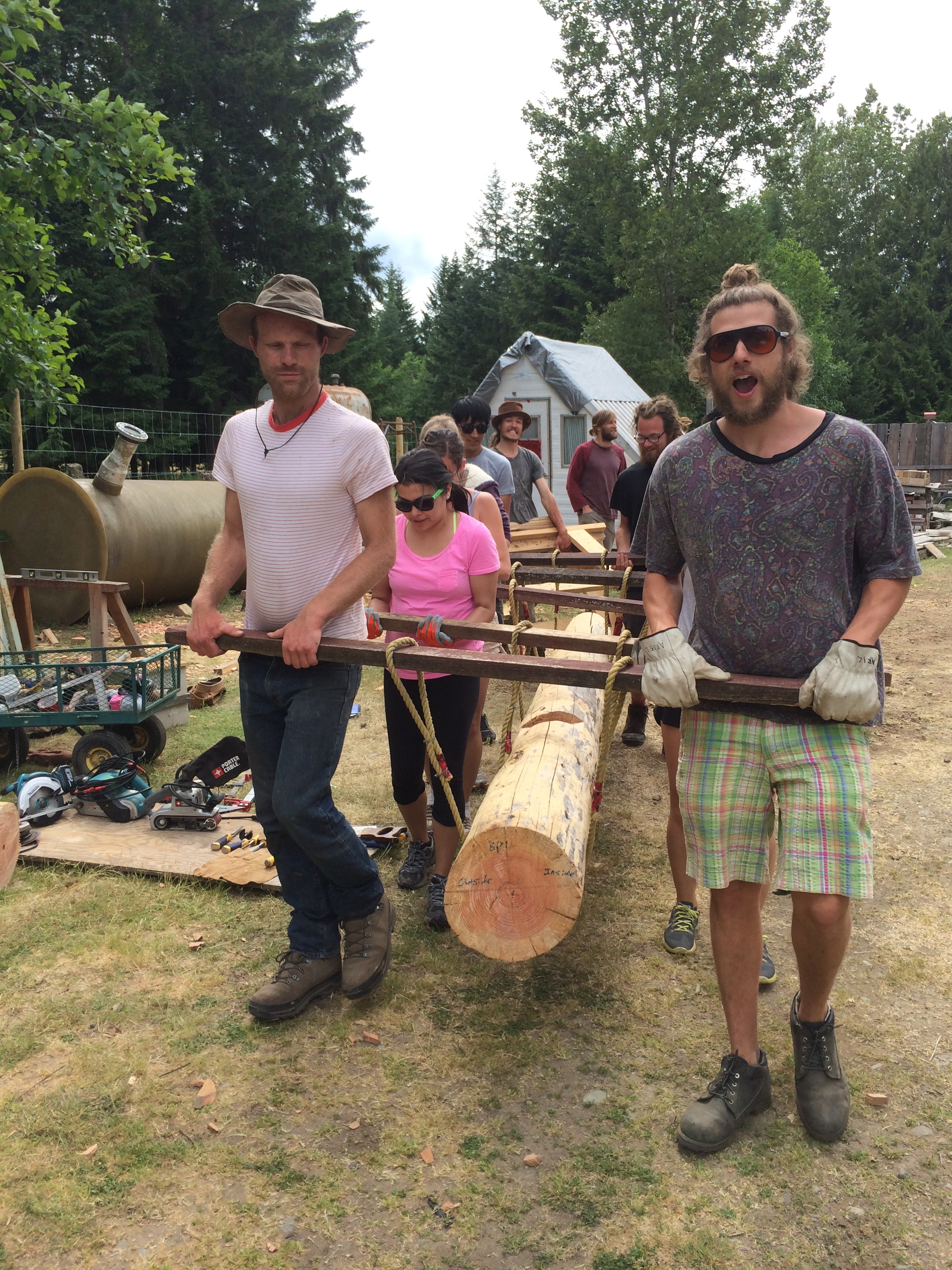
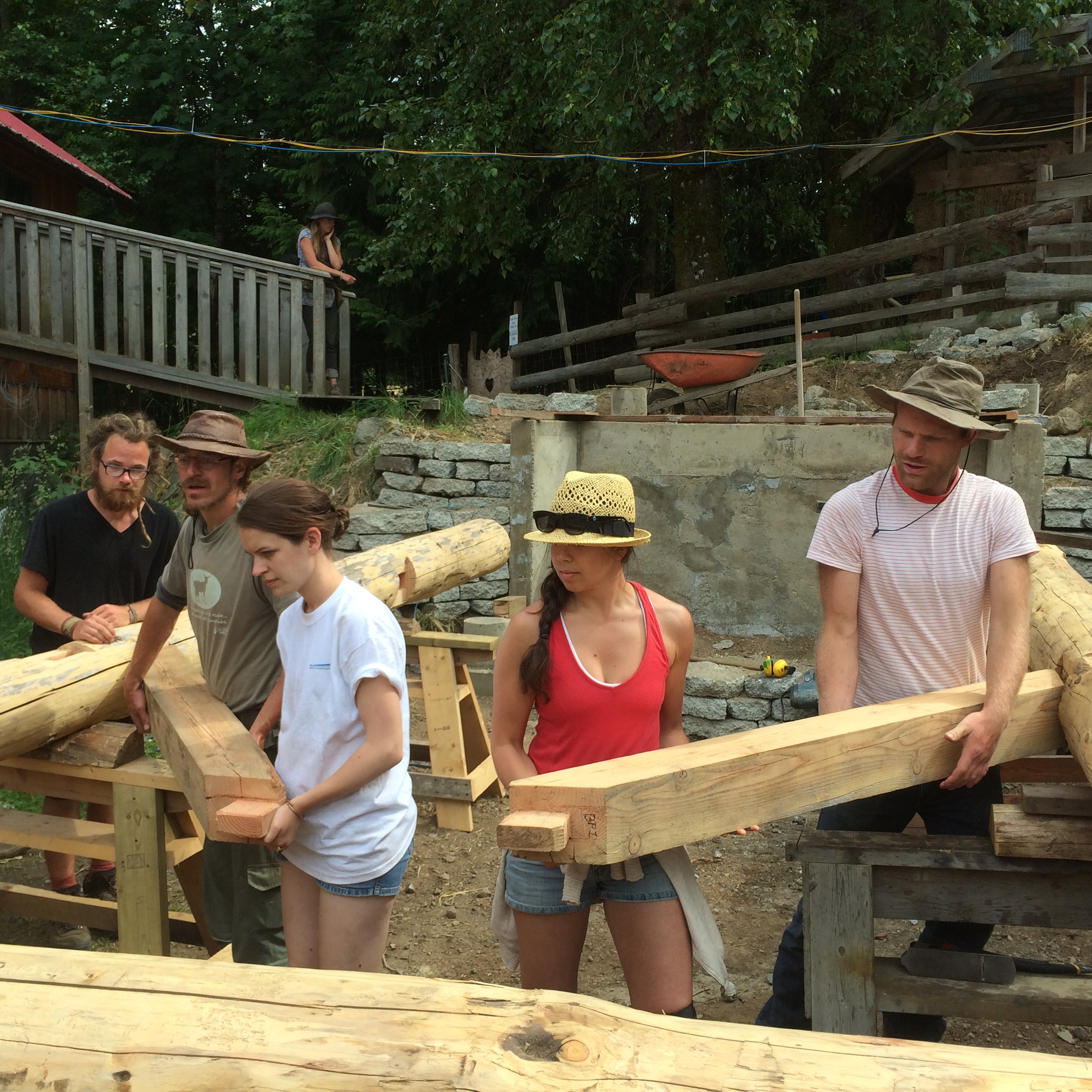
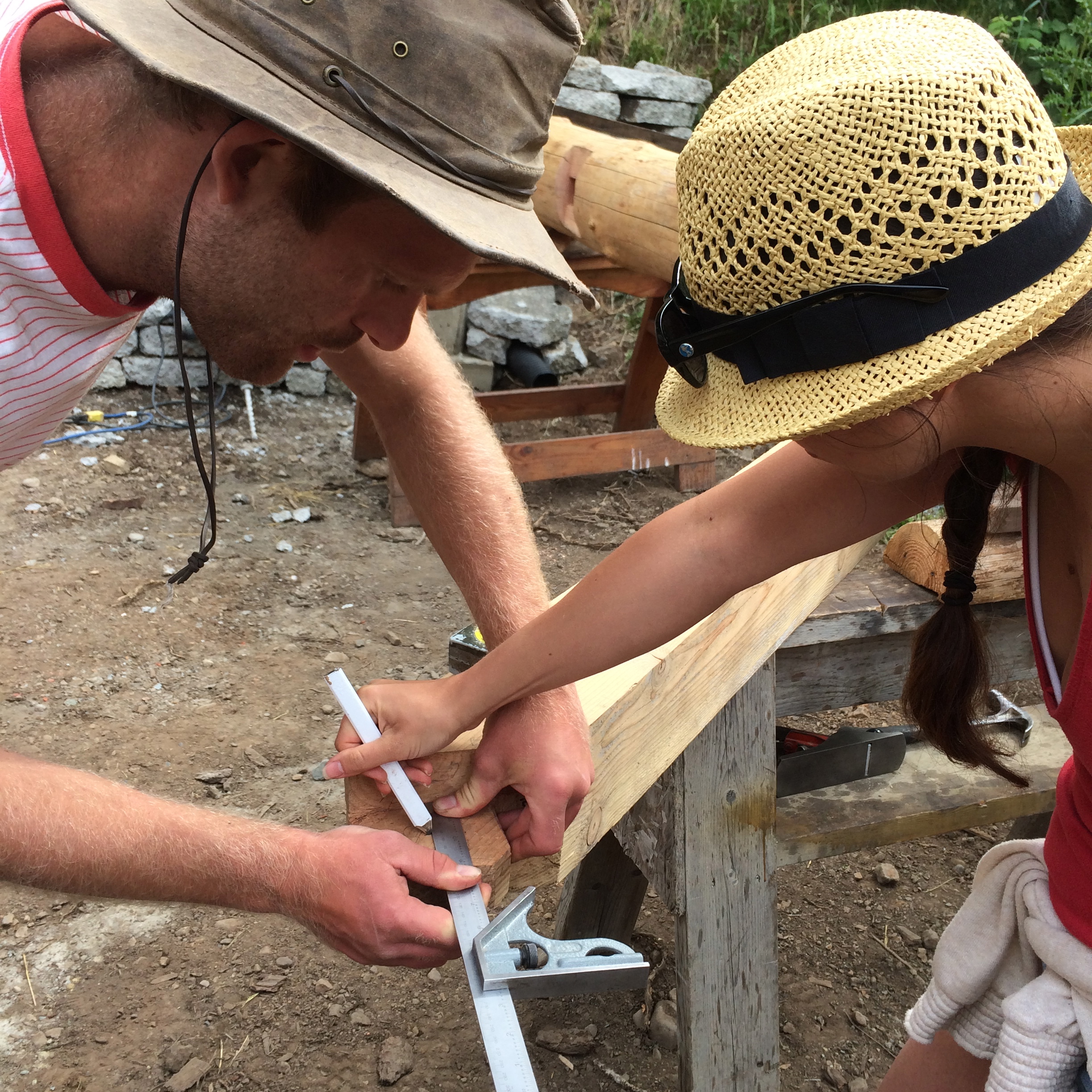
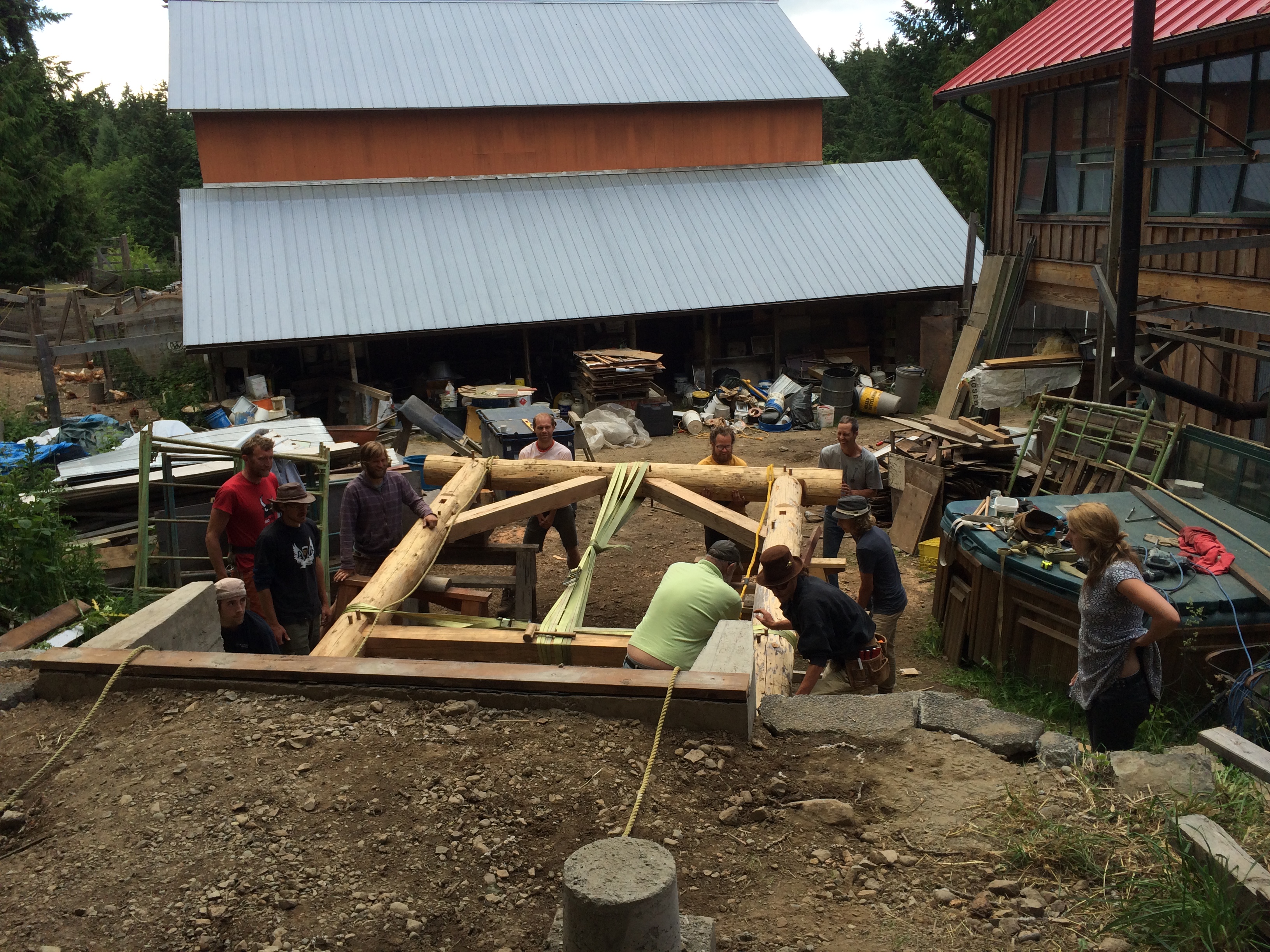
The washroom was a timber framed structure that had posts and trusts (beams and rafters). It was such a great opportunity to both witness the building of these beams and assisting in putting the structure together.
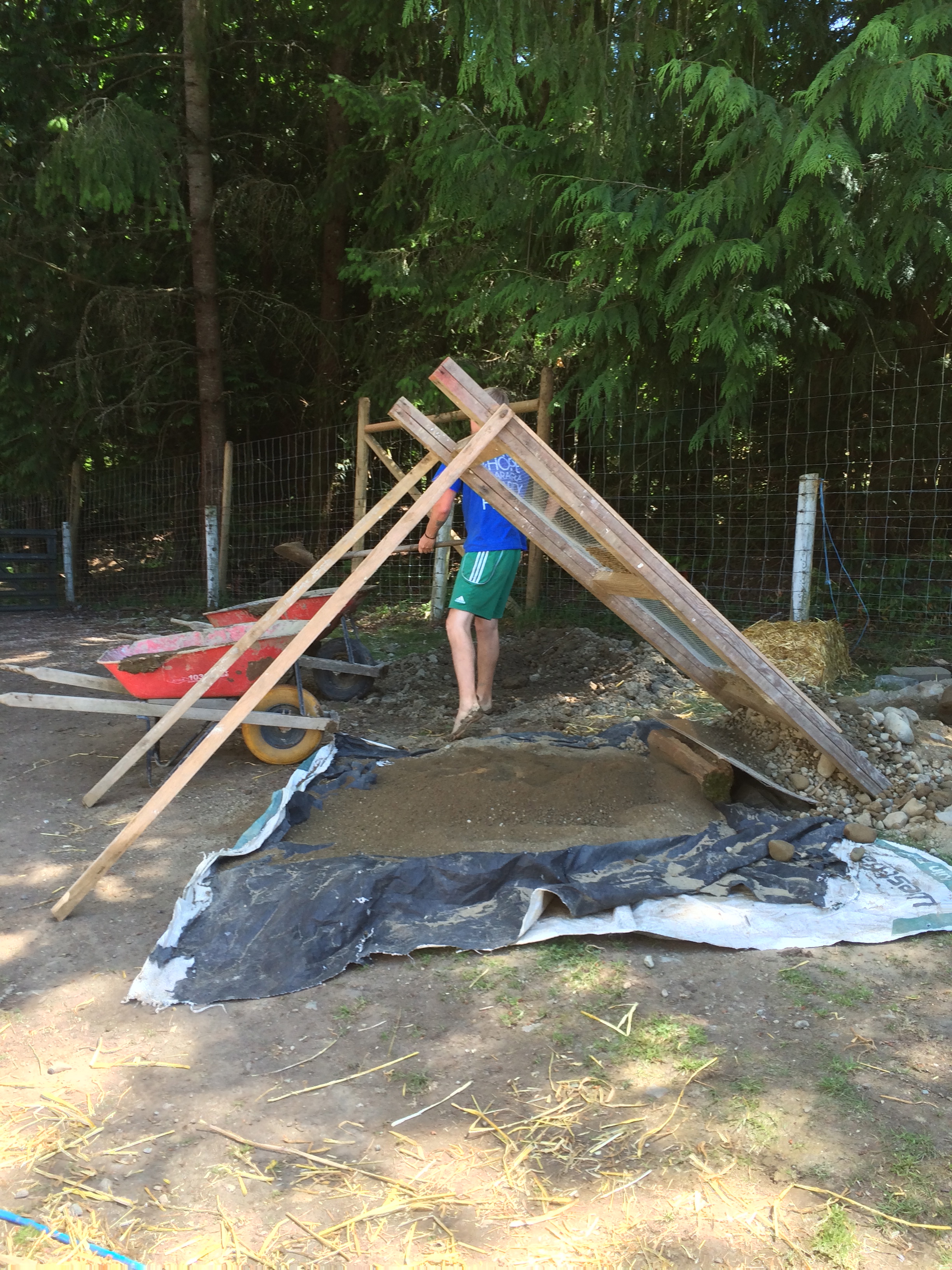
We mixed the cob ingredients in a manner that our ancestor builders used, stomping and mixing with the feet and rolling the mixture in a tarp. This experience was so much fun, brought the kid out in me, and I greatly connected with the earth and nature as I used my feet! The sand and clay were sifted to remove any rocks, then eight scopes of sand, eight scopes of clay, some water and straw would be added on top of a tarp. It was then stomped on with our feet, continuously adding water and straw until the right consistency developed. The tarp would be used to create a roll called a “cob burrito” and then wheel barrelled to the construction site.
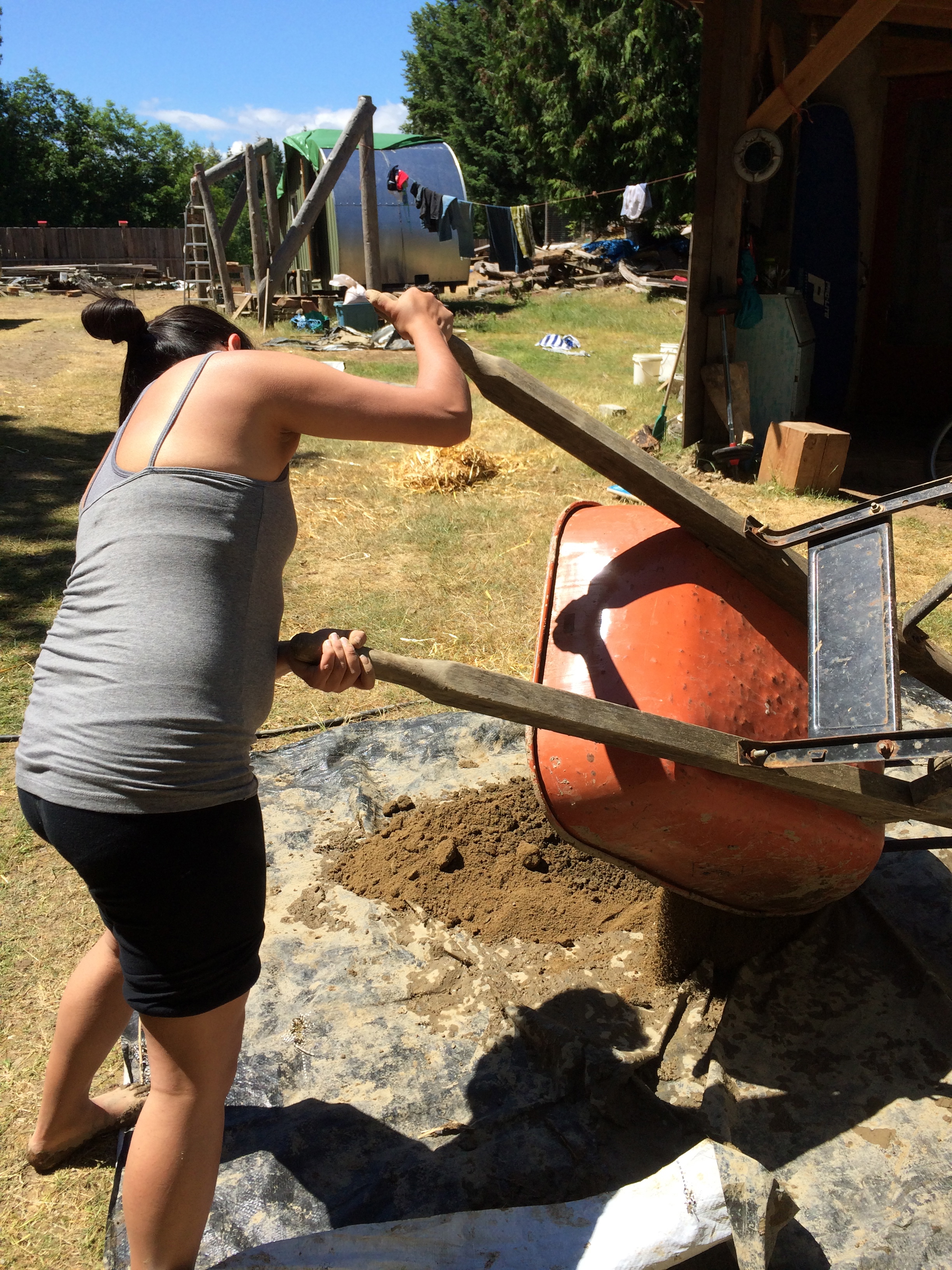
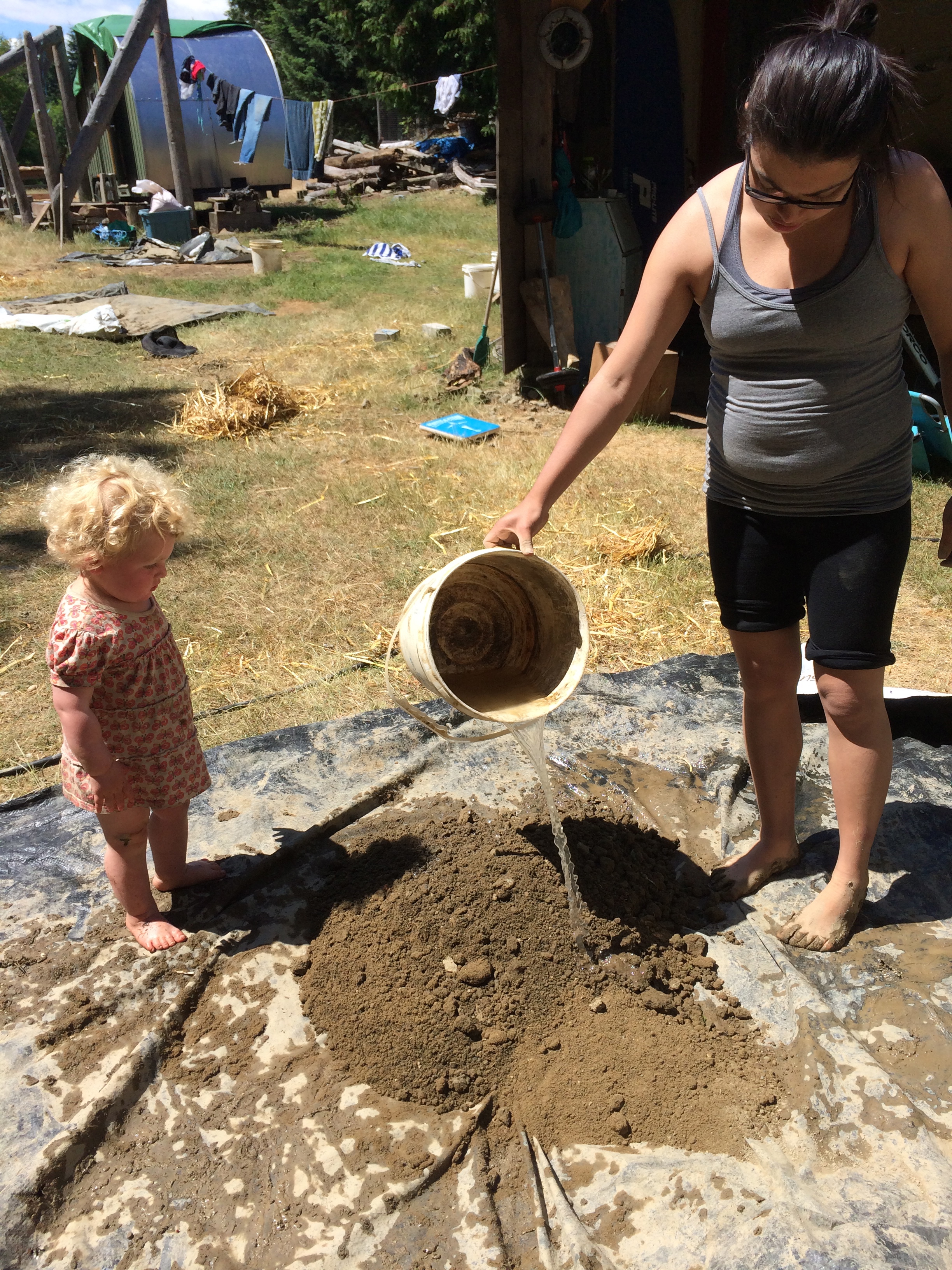
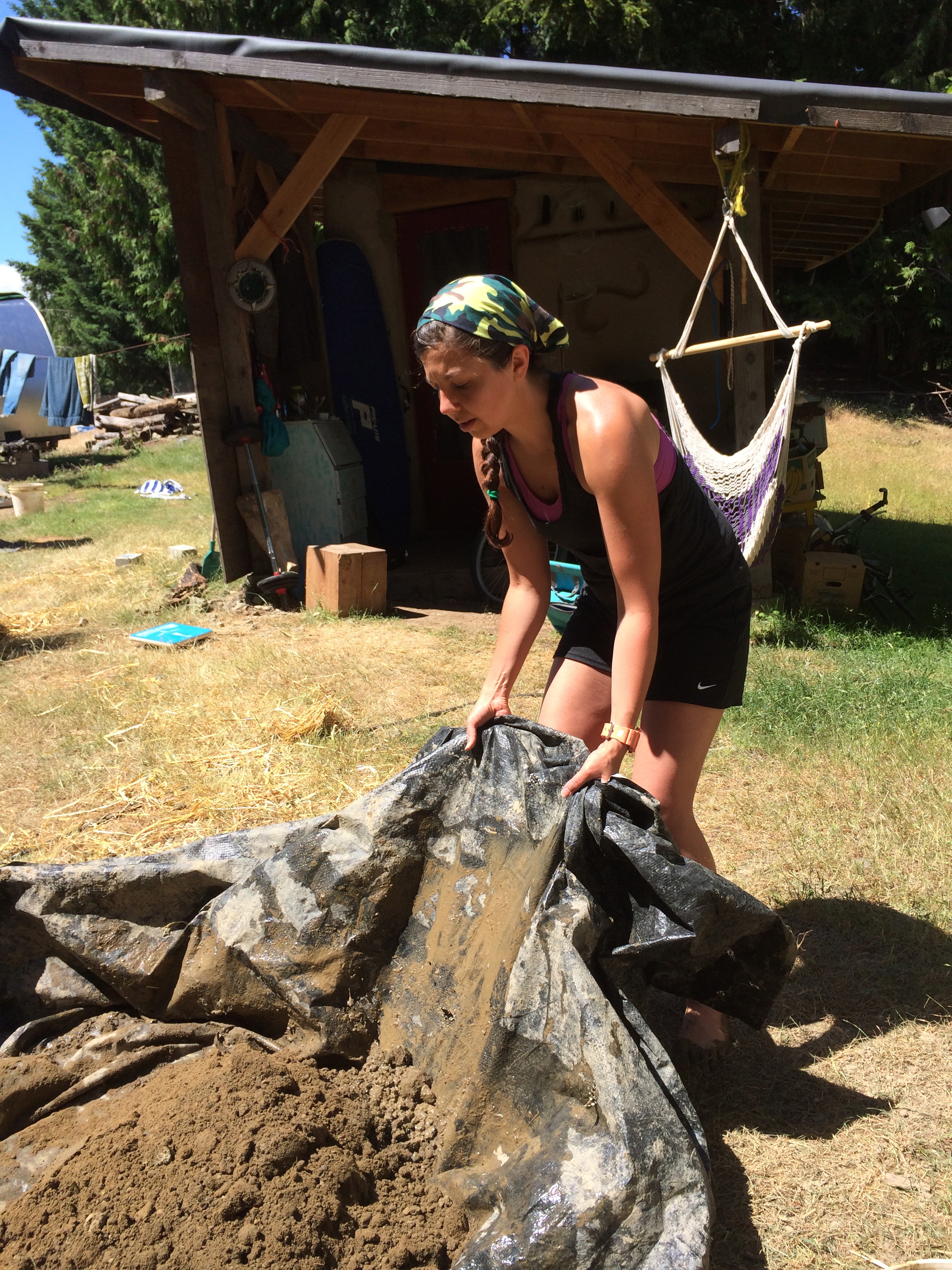
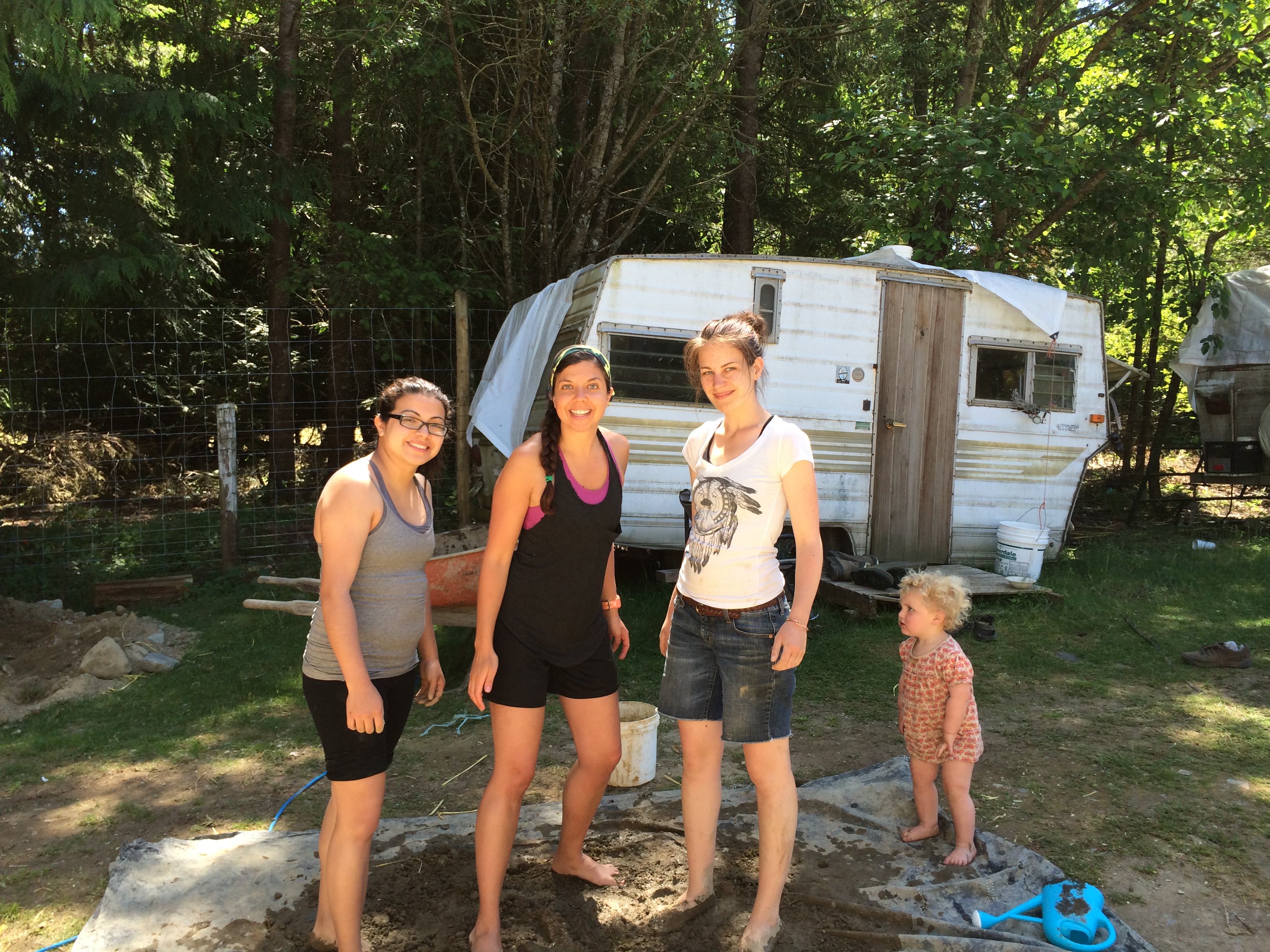
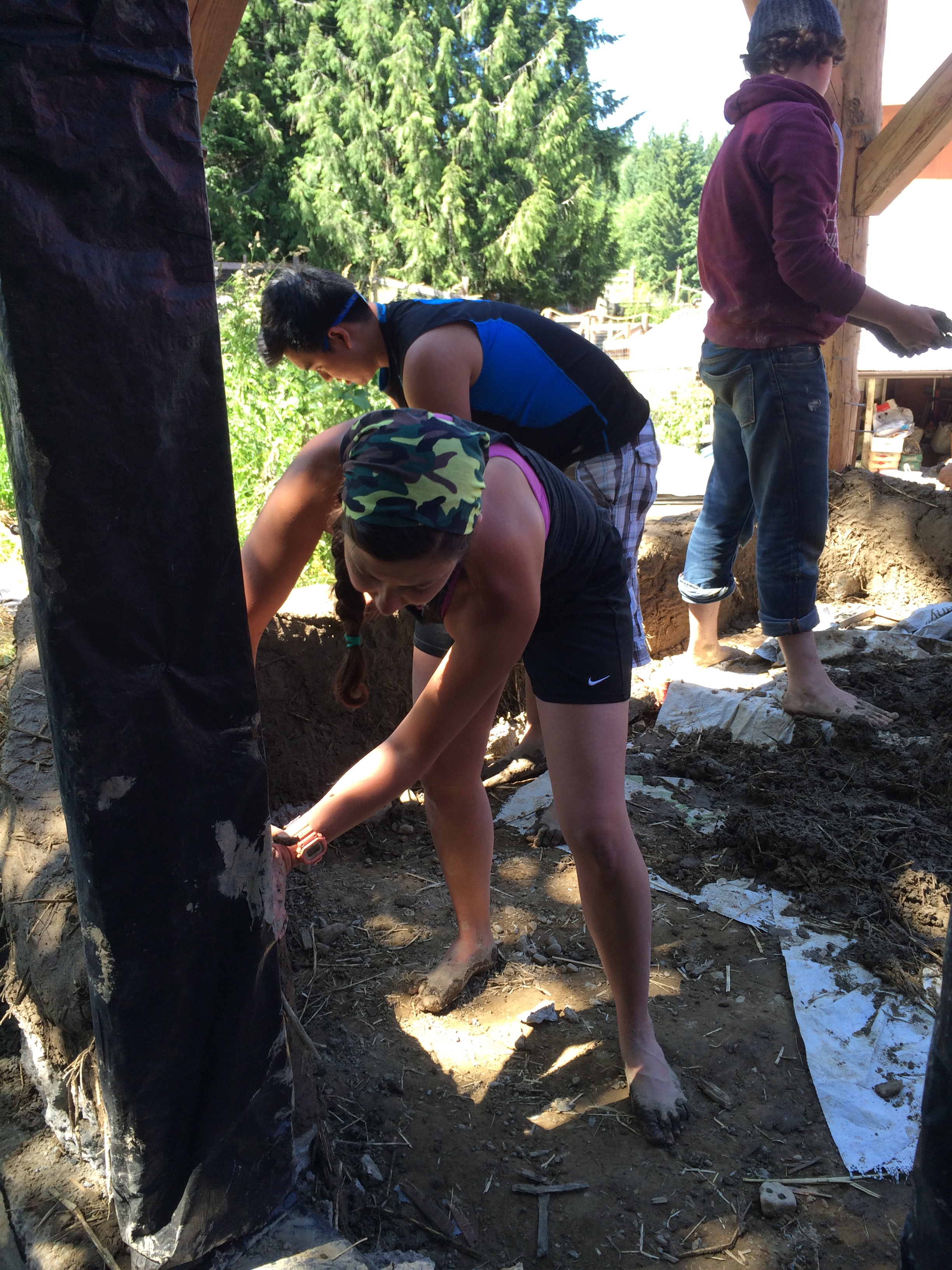
Handfuls of the material where added to the foundation and the angles and wall shapes were formed with our hands. The maximum height of the walls per day could be no more than a foot of height, for the walls need to settle and dry and this would limit the wall from sagging.
Once a wall is completed it is plastered with clay to create a smooth finish. Gemstones, glass, tiles and personal artefacts can be placed within the walls to provide a beautiful look but also to include some personal and memorable momentous of the builders.
The educational aspect that really stood out for me was the thermal properties of cob. The walls absorb heat energy from the sun and the walls have the capacity to “breathe”, acting as a natural form of air conditioning in the summer and a nature ability to warm a house through heat accumulation during the winter. Cob can also be used to make baking ovens for pizza and bread and have been used to help assist in the garden. There is a citrus house built in the garden out of cob that has a thick cob north facing wall and a glass south facing wall. The thermal mass of the cob walls allow for heat accumulation from the sun and energy transfer within the citrus house that will create an optimal environment for growing citrus fruits. This eliminates the need for electricity in heat lamps and building materials that could be toxic and unsustainable in the future. When building a house or any structure at the Ecovillage the builders use a concept called solar body mapping to determine the angles of the sun setting in winter, summer and the equinox. This helps to fully utilize the sun’s heat in heating the building.
This sustainable building experience can be successfully introduced into any classroom and any grade level. Again, the introduction of building concepts to students that are more natural can link environmental study lesson plans of recycling and reusing as well as scientific lessons on properties of earth matter like clay and sand. Lessons on social responsibility and social studies can be a means of guiding students in becoming more environmentally conscious. Students can become great inquirers and critical thinkers by taking this building method and applying it to building items, objects and structures that are important in their personal lives and community. The hands on experience allows students to become fully immersed in the entire process from start to finish and develop not only a greater appreciation for quality work but also the feeling of accomplishment of working hard at something with there own hands and feet. Play is also incorporated in this process, which I feel is crucial aspect in any child’s learning.