

There are many stories about different assumptions of ELL students, and sometimes being told a message over and over could influence our overall judgements with cloudy ignorant. It is important to know a few things about the myths and false believes of what we think its best.
- All ELL students came from a refugee or close to a refugee status.
In the 1999 ESL guideline, designed for the specialist and teachers, mentioned about the general four stages of adjustments – Honeymoon, hostile, humour, and home. What have changed significantly since that was written is that most of the immigrants that are coming into Canada will have a higher Social-Economic Status (SES) than the earlier immigrants or locals. This is solely due to the change in immigration law since 2001.
- Grammar-translation method is boring and therefore we should avoid it at all cost.
Being a first-hand experience source, I find that the simple achievable worksheet allows the non-readers and minimal writers to gain confidence by achievable goals. These are the students who just landed into Canada from China, India or relative cultural background where marks and validation of work is vital to their academic survival. With the lack of simple and repetitive work, students will feel more anxiety from the lack of understanding of language and culture than the abundance of, supposedly, non-developmental work.
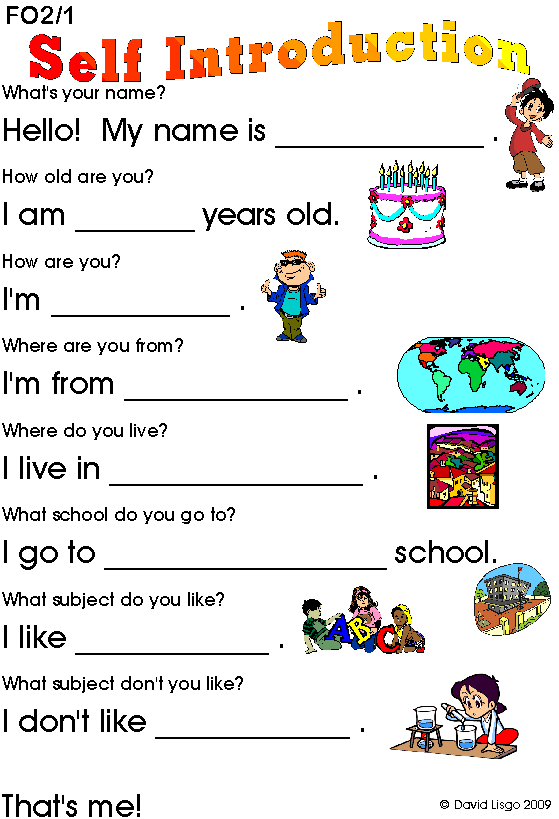
Similarly, it is important to provide them with relative homework assignments, adapted according to their language level so that they can feel belongingness as everyone hand in assignments relative to the same subject that they are handing in.
- English acquisition is the responsibilities of the specialists not mine (as a teacher)
The reasoning behind encouragement of speaking native tongue at home and target language away from home is to differentiate language application in the work and survival from calm and casual environments. Thus, as the teacher, to your students, you are the working environment to your students’ life.
It is a recognized understanding, according to any psychological theory, that a person can’t learn what a person doesn’t want to learn. Sometimes, I think, a student is willing to take challenges, even seemingly impossible from the teacher than a specialist who, by profession, depicts the alienating factor between the ELL students from their peers.
- Pull-out method where all ELL are placed into a class is a bad idea.
This is not quite a myth, but I want to challenge this idea. Research and debates have been flaring up between the funding and allocation of funded resources. I realized with the amount of ELL students in the school system, they can actually run an ELL specific class to first allow the ELL students to learn how to converse in English with their friends. Otherwise, cliques are easily formed between language speakers amongst themselves pushing their English speaking opportunities to a minimal.
By being in an ELL specific classroom, students are assigned individual or group seating which can exercise independence of ELL students away from their language buddy – any student that speaks the same mother tongue. However, it does not exercise assimilation since it is recognized that during break time and free time, they could easy group together to have casual conversation.
- it’s too late for your older students to learn English as efficiently in comparison to the younger ones.
Language acquisition is actually better for adults due to the basic understanding of the more complex character traits of language applications. However, it is the familiarity of using the native tongue to solve problems that often leads the students to self-fulfilling prophesies of how it’s harder for older people.
Also, the expectation of language application for younger students are often much easier than older students. Grade 1 students, even as ELL, could easily catch up to their native English-speaking classmates in presentation, speaking, reading, and writing skills. Grade 2 students’ literacy PLOs are also much more achievable than say, a secondary level requirement to accomplishing the tasks they are expected to do. Thus, a grade 1 or 2 student may have begun to participate in class work with higher marks to validate their progress than a grade 9 or 10 student.
- Students with reasonable fluency can quickly pick up the academic work.
Fluency with social language, also known as Basic Interpersonal Communication Skills, could be easily mistaken as the fluency for functionality in Cognitive Academic Language Proficiency Skills. The social language is very fundamental and less comprehensive or critical of executive functioning. On the contrary, academic language requires the student to fully understand the interconnection between text and concept to relative problem solving logic with using the target language. This could take many years that run long beyond the year of social fluency.
When embarking on a construction project, one of the most important steps is ensuring that you have the elevation drawings for permits. These drawings provide a clear view of the building’s exterior from all sides, which is crucial for approval from local authorities. Not only do they show the height and placement of structures, but they also help ensure compliance with zoning laws and building codes.
Perfect tool for web, film, and design projects – the 4:3 calculatordoes the math for you.
A birth certificate check in Bangladesh can be done through the official BDRIS verification portal by entering your 17-digit Birth Registration Number and date
RTA Fine Check Pay in Installments. Dubai’s Roads and Transport Authority (RTA) has introduced a financial relief program for drivers facing.
A Bahrain work visa check is a legal document that allows
LPB Piso WiFi
is a leading coin-operated internet system in the Philippines, offering fast, affordable WiFi for users and a reliable passive income for vendo owners.
Thanks for sharing!
You bring up some really important points about the misconceptions surrounding ELL students and how understanding their backgrounds can improve teaching approaches. Creating supportive environments and encouraging confidence in language learning truly makes a difference for students adapting to a new system. In a different way, community activities like the fundraisers hosted by Texas Roadhouse also help bring diverse groups together for a shared cause. Programs like the Texas Roadhouse fundraiser show how community support and collaboration can positively impact schools and local initiatives.
ELL Myths usually refer to common misconceptions about English Language Learners, such as the idea that students will “pick up English naturally without support” or that learning multiple languages at once will confuse them, when in reality research shows that strong native language skills can actually support second-language learning. Another myth is that ELL students struggle because of ability, when in fact the real barriers are often access, instruction methods, and time needed for language acquisition. It’s like Dubai Chocolate Strawberries—people might assume the “extra layers” make it complicated, but in reality those layers are what create a richer and more complete experience.
Challenging the myth about pull-out programs offers a valuable perspective on creating supportive environments for ELL students to converse and build confidence. Recognizing the difference between social and academic language proficiency highlights a crucial aspect of supporting ELL students’ long-term success.
I appreciate the article’s focus on debunking common ELL myths and offering practical advice for teachers, especially regarding the importance of achievable tasks for newly arrived students and creating a sense of belonging. Challenging the assumption that pull-out programs are inherently bad opens up a valuable discussion about how to best structure support for ELLs and foster a supportive learning environment.
I appreciate the article’s focus on debunking common ELL myths and offering practical advice for teachers, With Hill Climb Racing Free Coins APK, you can get endless coins to upgrade your rides and explore new challenges without restrictions.
Thanks for the information! Try now Bloxstrap
Thanks for the details, TI-84 calculator
makes solving math problems and creating graphs simple and convenient for students.
Thanks, I will try it now Blueb Services
The point about social fluency being mistaken for academic language proficiency is something more teachers need to understand. A student who can hold a conversation comfortably in English might still struggle significantly with reading a textbook or writing an analytical paragraph because those skills draw on a completely different set of cognitive and linguistic abilities. Treating them as the same thing sets students up for frustration on both ends.
The myth about older learners being at a disadvantage is also worth pushing back on more strongly. Adults actually bring a lot of structural understanding of language in general which younger learners simply do not have yet. The challenge for older ELL students is more about confidence and context than actual capacity.
On the grammar translation debate I think the key is balance. Repetitive worksheets alone will not build fluency but dismissing them entirely ignores how much confidence they can build for students who are used to validation through visible measurable progress. That psychological piece matters more than most methods acknowledge.
One thing I have noticed with my own ELL students is that low stakes word games outside the classroom help bridge the gap between social and academic language in a relaxed way. Something like letter boxed for example pushes vocabulary and pattern recognition without the anxiety of a formal task. Worth exploring as a supplementary activity.
Really thoughtful breakdown of these myths overall.
Hafilat Recharge allows Abu Dhabi bus passengers to add travel credit to their cards quickly and conveniently. Regular top-ups ensure uninterrupted access to public transportation and help commuters avoid low-balance travel issues.
Great article! I appreciated the clarification on the four stages of adjustment (honeymoon, hostile, etc.) mentioned in the 1999 ESL guideline. It’s so important to understand that not all ELL students come from refugee backgrounds, as the honeymoon stage can vary widely. Thanks for debunking these myths.
National Police Clearance online registration process in the Philippines. Step-by-Step Police Clearance Online Registration (2026).
Manfinity lets you express your unique style with comfortable, modern apparel designed for everyday confidence. The hoodies sweatshirts manfinity dauomo hoodie combines premium comfort, a contemporary fit, and versatile fashion, making it an ideal choice for casual wear in every season. Whether you’re heading out with friends or relaxing at home, Manfinity delivers quality, style, and comfort that truly define you.
Manfinity lets you express your personal style with comfortable and fashion-forward apparel designed for everyday confidence. Whether you’re looking for casual essentials or standout streetwear, the hoodies sweatshirts manfinity dauomo hoodie combines premium comfort, modern design, and versatile wear.
Discover the complete guide to Snapchat Planets in Order 2026, including the meanings, colors, and how each planet represents your friendship ranking in the Solar System feature. Learn what every one of the 8 planets symbolizes and how the Snapchat Plus feature works Check here to understand your planet position and what it says about your closest friends.
Snapchat Planets in Order 2026 explains the meaning of all 8 friendship planets, their colors, and how the Snapchat Solar System works for Snapchat+ users. This guide makes it easy to understand what each planet represents and how your position reflects your friendship ranking.
Check here to learn the complete order, meanings, and updated planet details for 2026.
Access the 10.0.0.1 Admin Login page to manage your LBP Piso WiFi Router 2026 settings, including network configuration, user controls, and internet access. Visit https://10001ph.com/tenda-router-login/
Kaboom brings together powerful cleaning solutions and iconic collectibles, making it easy to explore every Kaboom product in one place. From foaming Kaboom cleaners that tackle tough bathroom grime to the legendary Kaboom trading cards loved by collectors, the brand offers something for every fan.
Lane Furniture has been crafting quality American home furnishings for generations, offering premium recliners, luxurious sofas, elegant sectionals, and timeless designs built for lasting comfort. Complete your living space with stylish Lane coffee tables that pair perfectly with every décor.
The four stages of adjustment—honeymoon, hostile, and beyond—are mentioned in the article. I’m curious if the 1999 ESL guideline includes strategies for teachers during the hostile stage. Paper Doll Diary.
Among the many articles I have read recently, this one impressed me because of its organized structure and reader-friendly approach. The writer explained every point in a logical sequence, making the topic easy to understand for readers with different levels of experience. Around the middle of the article, FastWin apk was included naturally while discussing one of the important aspects of the subject, fitting smoothly into the surrounding paragraphs. Every section introduced valuable information that improved the quality of the content and maintained a smooth reading experience. Before the conclusion, FastWin apk was mentioned again while highlighting the key takeaways shared throughout the guide. Overall, it was a well-written, informative, and engaging article.
I really appreciated this discussion of ELL myths because it challenges the tendency to treat English language learners as one uniform group. One point that stood out to me was the idea that repetitive grammar or translation activities are automatically ineffective. While teaching methods should certainly encourage communication, structured and achievable activities can also give beginning learners confidence, especially when they are still developing basic literacy and adjusting to a new educational environment.
The point about repeated assumptions shaping “cloudy” judgments really connects with the four adjustment stages you cited: honeymoon, hostile, humour, and home. I could see Kavel’s Sora 2 Prompt Generator Sora 2 Prompt Generator helping teachers create scenario prompts that explore those stages without flattening ELL students into stereotypes.
A platform can have plenty of sections, but that does not help much if finding them becomes difficult on a phone. While spending time on OKWIN, I looked at how the menus and different pages were arranged during ordinary browsing. The layout felt reasonably organized, and moving between sections did not require excessive effort. Yash generally checks these details before getting comfortable with any new platform because they become important during longer sessions. Having the main areas easy to recognize made the browsing experience feel more manageable from a smaller screen.
This is a fantastic article on busting ELL myths! Misconceptions can really hinder a child’s learning process. Just as it is important to communicate clearly and debunk language learning myths in education, it’s equally important to bust myths around healthcare. I focus on breaking down complex medical jargon into easy-to-understand language for parents. If any educators or parents here want to learn more about children’s health in simple terms, feel free to visit my blog. Keep up the great educational work!
This article stood out immediately because of how naturally informative and captivating your writing feels without trying too hard to impress the reader.I appreciate how every point was explained with enough detail to feel valuable while still remaining easy and enjoyable to follow.
Your article immediately caught my attention because the writing felt sharp, modern, and incredibly easy to stay invested in from the start.I appreciate how you explained everything with enough detail to feel substantial while still keeping the pacing smooth and engaging overall.