Categories
Uncategorized

The Grooved Pants Empire: Lululemon Athletica

Chip Wilson: The Vision Behind Lululemon Athletica

YouTube Preview Image

It is certain that Lululemon embodies an entrepreneurial entreprise through the following characteristics (taken from quickMBA):

Amount of Wealth Creation: Within the first two quarters of 2010, Lululemon Athletica experienced a profit increase of 92.9% from the fiscal period of 2009. This figure translates into around $74.5 million. For the third quarter of 2010, Lululemon is looking to generate $155-$160 million in revenue, which will only succeed in boosting profits at exponential levels.

Speed of Wealth Creation: Lululemon was founded in 1998 but did not open its first store in Kitsilano until 2000. This indicates that within approximately 10 years, Lululemon has cultivated significant entrepreneurial wealth. The store has not taken a lifetime to grow, but instead has been expanding since its creation under founder Chip Wilson.

Risk: The original idea behind Lululemon was to create a clothing store that would function as a healthy environment in which people could discuss the physical and mental components to personal fitness. This contained significant risk, as it was unknown whether customers would be receptive to the combination of products and the services offered by the store.

Innovation: It can’t be denied that the design of the Lululemon brand is extremely innovative with regards to its emphasis on healthly living. Lululemon offers several programs to aid their customers in achieving personal success, and such programs strengthen the company’s relationship with its shareholders. Among these, a goal-setting website is easily accessible to assist with outlining objectives and free in-store yoga classes are offered for customers interested in learning about the practice of yoga.

Categories
Uncategorized

The Supply Side of Shoppers

The CEO of Shoppers Drug Mart, Jurgen Schreiber, has recently announced that Shoppers will begin to export both private-label generic and store-brand drugs to countries outside of Canada. This, as revealed in a Globe and Mail article comes in response to Ontario’s recent drug reform, prohibiting $750 million worth of allowances to pharmacies that were previously collected from suppliers to sell their generic drugs. Schreiber threatened to boycott this reform by decreasing hours of operation and suspend services offered by the pharmacy. However, Shoppers still experienced a significant loss: $12 million worth of profit in the sixteen weeks leading up to October 16th. While the legislation permits Shoppers from selling store-brand drugs overseas, the drug store chain has already signed a contract to sell private-label generic drugs to an international company.

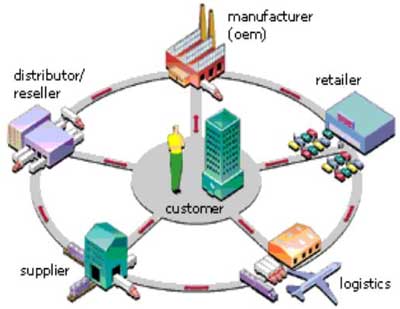
The proposal has significant implications for inventory management. If Shoppers is going to be successful in providing overseas companies with drug products, they are going to have to reevaluate their supply chain. The distributional channel of Shoppers, responsible for providing consumers with the drugs delivered to them by the suppliers and manufacturers, will now become two-pronged: the first link being between the manufacturer and Shoppers and the second link being between Shoppers and its international counterpart. Despite the increase in profit that will come from the sales of these drugs, Shoppers will undoubtedly experience severe transportation/logistical costs in transporting the drugs overseas. If the corporation can be innovative and find a way to deliver without incurring exorbitant expenses, Shoppers will reduce the amount of time drugs spend in inventory increase its inventory turnover ratio, and consequently benefit from the decrease in operational costs.

http://www.theglobeandmail.com/globe-investor/squeezed-by-drug-reform-shoppers-turns-to-export-market/article1793577/

http://www1.shoppersdrugmart.ca/en/Home.aspx

Categories
Uncategorized

A Game of Mortgage Monopoly: CIBC, RBC, and HSBC

When the average Canadian homeowner-to-be goes in search of the best mortgage package, it is certain that they will evaluate several banks on their respective terms of payment, interest rates, and prepayment options depending on the amount of cash flow they wish to retain. CIBC, RBC, and HSBC offer unique mortgages depending on the status of the buyer, but all possess similiar payment methods.

A fixed-rate closed mortgage, or one in which the loan is paid back in fixed increments, is offered by CIBC at terms of 1,2,3,4,5,7, and 10 years. A mortgage on a 5-year term must be paid back at an interest rate of 5.29%, and the buyer has the option to prepay 10% each year. A buyer would choose this time of mortgage, as opposed to a fix-rate open mortgage, if they want their payment to be unaffected by fluctuating interest rates. The same mortgage is offered by RBC at a slightly smaller interest rate: 5.19%. However, a buyer may also choose RBC’s special offer of a 3.79% interest rate, on the condition that 8% interest will be paid back over a period of 25 years. At HSBC, a fixed-rate closed mortgage is offered at a 5.29% interest rate or 3.35% for HSBC Premier customers. Such a customer is defined by holding $100,000 in assets with the bank.

Each bank offers specific mortgage packages depending on the type of customer. CIBC offers an AeroMortgage, which provides the buyer with one Aeroplan mile, or points towards airline flights, for each dollar that is paid back on interest. RBC offers a Vacation mortgage for buyers interested in owing a second vacation property. Alternatively, HSBC offers an Equity Power mortgage, which allows the buyer to receive funds based on equity, as calculated between the difference between the value of their home as appraised and the value of their mortgage. A homeowner may consider this option to facilitate the liquidity of their primary asset, their home.

http://www.cibc.com/ca/mortgages/fixed-rate-closed-mortg.html

http://www.rbcroyalbank.com/products/mortgages/fixed-rate-mortgage.html

http://www.hsbc.ca/1/2/en/personal/mortgages-and-loans/mortgages/find-mortgage

Categories
Uncategorized

Gap Rides the Social Media Wave

Gap Ad on Groupon.com

With the promise of free jeans, Gap has become the latest in corporations to look to social networking tools in order to reach an online community rapidly expanding in population. Within the past six months, Gap has been experiencing a decline in sales, and it hopes to counteract this by offering 10,000 pairs of free jeans to people who attend Gap’s give-away event on Facebook.

Customers who aren’t able to receive a pair of jeans are instead offered an alternate deal: a 40% coupon for any piece of merchandise in the store. Gap has offered such a coupon but only on an in-store basis, and it has only just recently begun to switch to tools like Facebook, Groupon.com, and Foursquare to unveil incentives: a sure-fire way to cause queues to form out the door of Gap stores.

The use of social media results in partnering two key aspects for the financial success of a company: management-information systems and market research. By streamlining the technology utilized by a business in promoting its products, the MIS division opens up a gold-mine of resources for marketing by encouraging the generation of customer feedback and amplifying the word-of-mouth effect to levels previously unreached. In turn, the information gleaned from market research will assist MIS in pinpointing how to enhance the flow of communication, increase innovation in product design, and cut down the supply chain to eliminate operational costs.

http://blogs.wsj.com/digits/2010/11/05/gap-turns-to-social-media-to-draw-shoppers/

Spam prevention powered by Akismet