Categories
Digital media distribution

.mobi (not the other guy)

How frustrating is it to have to scroll through pages on your Smartphone to get to the content you want when a retailer is advertising something to you? Irritating and stupid. The marketer in me gets annoyed when retailers I like just send me emails with product offers and I have to fight my way through a bunch of screens to figure out what it’s for. Sure, I hear you. I know I can click on the website button or sometimes (like in J Crew’s case) there’s a supposed ‘mobile phone friendly version of this email’.

Better now: there’s .mobi. The mobi standard is the first attempt to set a standard for what a mobile site should look like. The standards are designed for easier viewing on the smaller screens of Blackberrys and iPhones. Screens are designed to be viewed as wider rather than narrower so you don’t have to scroll down. Options to purchase stuff are fewer, using drop down lists. Users will NOT be overwhelmed with data: something that costs users money on cell phones.

But is .mobi even necessary? Maybe not. Businesses can use the .mobi standards and create better consumer-friendly smartphone sites. Many companies are just adding an ‘m’ to their site and creating a smartphone friendly version e.g., m.google.com. In the long run, however, apps are the way that most businesses will go. The .mobi standard is just a stepping stone to help businesses build their way to a more smartphone-friendly way to access their website…and ultimately, sell their stuff.  It’s just another channel for accessing product.

Categories
distribution innovation

New product: Christmas tree on Hormones

My family likes a good Charlie Brown tree.  The wimpier, the better.  Every year we approach the lot looking for the tree that leans over the most, with the fewest branches to hold our cache of macaroni ornaments.  We don’t like it, however, when it drops it needles before the guy in the suit shows up.

The Christmas tree business is huge, especially in Atlantic Canada.  To the tune of $70M/year, Christmas tree growers are anxious to have their product last as long as possible.  Unfortunately, too many trees drop their needles before they’re sold, often en route to the big markets in the U.S.  This is bad news for the small tree lot owners.   Scientists at the (wait for it…) the Christmas Tree Research Centre recently developed a smart tree that will hold its needles for twice as long.  This is great news for consumers and producers alike.  Consumers get a tree that lasts longer and producers have their problem of perishability  reduced.  New product development is an important aspect of marketing:  recognizing a problem, either consumer or producer, in this case both, and solving it in an innovative way.

How’d the Christmas Tree Research Centre solve it?  By  feeding the trees hormones!  The same hormones that cause bananas to ripen and go bad apparently keep the needles on the branches, allowing your pipe cleaner decorations to swing merrily for a few more days…and your Charlie Brown tree to continue on being Charlie Brown for a little longer.

Categories
advertising Digital media social media

Decade’s Best Digital Ad Campaigns

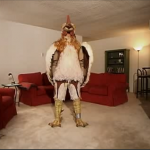
There will be lots of decade-best lists coming out now (depending on when you think the decade ended!)  There has been a lot written about where advertising is, and isn’t, going in the future.  These campaigns will give you something to think about.  I remember when I started using the Subservient Chicken (Burger King’s out there digital ad) to explain how social marketing campaigns could work, to the tune of 380 million people!  Interestingly, the Subservient Chicken, even though is 6 years old, took top spot.

Here are some of the top campaigns.  We’ve talked about many of these:

1. ‘The Hire’ – BMW’s 2001 series of short films directed & starring well known actors and directors.  This was an internet-only campaign designed to increase brand awareness amongst a younger target market

2. Dove Evolution – of course

3. Uniqlo’s Uniglock – Uniqlo, the cool Japanese apparel company that is taking over N. America, created the Uniqlock using pix of young, Japanese women show the time.  Time to call it a success:  Uniqlock.jp, received 68 million views.

4. IKEA’s Dream Kitchens – this gave users the ability to avoid the crazy lineups and explore 3D kitchens.  Missed the $1.99 breakfast though.

5. Livestrong’s Chalkbot – this robot wrote chalk messages, as directed by users, along the 2010 Tour de France route

For your entertainment, I’ve put The Chicken back up.  Click on the picture to get the link.  Just remember, there’s a limit to what he’ll do.

Bus 101 Winds Up

It was an exciting term in Bus 101 with 600 Sauder 1st year students in 4 sections having an opportunity to see all aspects of Commerce integrated.  Paul Cubbon, Jeff Kroeker, Rob Jackes and I taught this highly engaging, active course together.  Paul designed the course and he and Jeff ran it as a pilot last spring.  The students had no texts or exams.  Every class’ preparation was delivered via the website, with students prepping Harvard Business School or newspaper articles.  In each 125 student class, we clicked and tweeted.  The intention  was to give the new Commerce entrants a ‘once over lightly’ of all the different aspects of Commerce, showing them the tension and integration between topics.  How do marketing decisions affect human resources management?  Does sustainability have a role in finance?

The Bus 101 students learned  a lot about Commerce in their first term at b-school and got comfortable with a host of real world business tools like Twitter, clickers, blogs and business plans. Take a look at what UBC Public Affairs has to say.

Categories
social media viral marketing

(RED) or Dead

Had a great discussion yesterday about the launch of product (RED), forcing us to think back to 4 years ago when this brand and business/charitable model were a whole new concept for raising money for a cause.  Look what showed up today:  YouTube Preview Image

In this campaign, to support World AIDS Day on Dec. 1, digitally savvy celebs have stopped posting on Facebook and Tweeting until $1,000,000 is raised.  The campaign, called Digital Death, encourages consumers to buy back these celebs digital lives by texting to Buylife.org.  There was so much traffic that the website went down.

There were many other prongs to the campaign too:  (RED) products are available year round from Nike, GAP, Starbucks and Armani.

Starbucks has an exceptionally cool advent calendar (okay, who doesn’t love those), with a World AIDS Day contribution of $.05 for every view of a new Killers video.  Great.  Innovative.

Frequent use.  Small, regular payments.  All of the things that we talked about that (RED) was trying to do following the initial launch of the campaign:  keep you coming back.  Keep up that Customer Lifetime Value.

Today’s the day:  World AIDS Day.  Get yourself to a Starbucks today.  5 cents from every drink goes to fight AIDS in Africa.

Spam prevention powered by Akismet