Final Reflections

I say this every November and April, but I can’t believe that it is already the end of the semester! I learned a lot in this course – I have never done a “just theory” course and my favourite part was to learn about how theorists interact with each other; a lot of their work establishes a dialogue between each of their separate arguments, either by the way some expand on other’s work and include other perspectives, to moments of complete disagreement. The most interesting – and difficult – part for me was to develop my own critical stance as I read these discussions, either for the purposes of writing the two assignments of the course or when reading each week’s readings and trying to synthesize them in my notes or simply trying to state my own argument of the week’s theme in my own words. I think this is something that will always be the hardest part for me, and something to work on especially as I work on my thesis.

My favourite weeks were the ones that discusses film studies and cultural studies – I can’t tell for sure if I liked these most because they are the ones that are on my mind a lot as I’m writing my thesis (and these topics are very relevant for that purpose) or because it is that I find film and culture studies interesting that I chose to do my thesis in that area; this is a the-chicken-or-the-egg problem that I’m not too concerned about because at the end of the day it has led to me having more readings and perspectives to consider as I’m writing my thesis and in my books, that is a great thing. My research project analyzes the representation of the figure of the child and/or adolescent in works of literature and film that are set during the time of the Spanish Civil War literature but published or released between 1992 and 2013. I chose this time period as there are some very interesting discourses coming out of Spain in regards to how the Civil War should be examined and seen especially during and after the financial crisis of 2008 and I am very interested in these discussions. Thus, film studies as well as cultural studies represent an integral part of my project and I am very happy and grateful that I got the chance to deepen my knowledge of these topics, as well as many others of course, in this course. It was great to meet with  you all every week and go on this journey of exploring theoretical concepts together, and my thanks to all of you for the wonderful and stimulating discussions and to Prof. Beasley-Murray and Prof. Freilick for leading us through it all. A special thank-you to Prof. Beasley-Murray for the week on film, so interesting and useful!  

Categories
reflections

Last week !!! Yeah !!!! My general impressions?

I-did-it-Yes-I-did-itI have to admit, I was not impressed at the beginning of the semester. I was afraid the theory class would quickly turn into an “ideological” class. As the weeks went by, I started to make connections with what I was working on and started to see the advantages of a theory class. I came across a few articles and theories that I’d never heard of before and that proved to be very useful for my thesis. Don’t get me wrong!! That theory class was not that pink bubble I seem to be describing. I had my up and down. I ended up hating finding annoying disliking a few theorists more than I already did. I still have that impression of a closed space reserved to critics who write theories for a certain elite. I still have the impression sometimes when I read theories on Race, cultural studies, “postcolonial studies”, etc that while denouncing the oppressive relationship between the dominated and the dominants, they tend to reinforce that oppression by writing for a small privileged group of people. Thank God, theory is more than that. Other authors helped restore my hope in humanity :)

….and you look good in a coffee place with a critical theory book…if you are lucky, you may even be offered a free coffee.


7 conclusions

  1. In the first entrance in this blog I said my relationship with theory was not the best since I always have felt it cold and distant, and it did not gave me the warm sensation that literature gives me. Well, today, three months later, I think that some of these fast brushstrokes of theory are still cold. Some of them are also distant. But not all of them. I have found some authors really inspiring and warm: Lorde, Anzaldua, Fanon, Morrison, Barthes, Foucault, Thiong’o, Bakhtin, Schlovsky, inter alia. Also when I read Friedberg and Fiske I also noticed that television its a really interesting topic. Even thought in this very moment I will not able to remember all their definitions and terms, some of their ideas still resonates in my head.
  2. Lorde, Anzaldua and Thiong’o made me think about how a theory or theoretical reflection could be proposed from a personal perspective, with an emotional ingredient which remembers a little the sense of literature. When I read them I thought: “It is possible create and the same time theorize! There is an alternative and it not contradicts the academy!” I actually felt very excited. However, when I asked in class if is possible to write down a paper in this way, from the first person who elaborates academic reflections based on personal experiences, the answer was negative. I felt disappointed. Well, it was explained to me that it is possible to write some papers, perhaps for conferences where you can make performance-papers, but not for academic work, nor for a thesis. So, maybe is a contradiction that we read alternative models for creating theories but we are not able to apply those models in our work, right?
  3. In that order of ideas, I think, also, the alliance between arts and theory should be accepted in our programs. Is part of making real the interdisciplinary studies. When I watched “Blow Up” by Antonioni (I know this is not part of the readings, but we should watch it for our second writing assignment) I asked myself if a work of art, a film in this case, is also understandable as a analytical reading for a short story. I think the film is: Antonioni offers a point of view, and highlights what he thinks is the most important of the short story. However, I am not completely sure if a student of our programs would be allowed to present a film, a painting, a novel or a group of poems as a thesis. Maybe is possible if the student argues with a solid theoretical frame, but I am not sure if the academy will validate it. Maybe. Maybe not. I do not put much hope on that.
  4. The course more than answers, give me questions. One of them is how to put in practice these theories, not only in an article or essay but in the “real” world. If we are learning to deconstruct, an idea that for me is still ethereal, how can we teach or apply this concept to our societies; how to use deconstruction in a practical way, linked to the problems of our countries, to our works. I have to think more about this.
  5. I also asked myself which one of this theories could be useful for my thesis research. So far, I am not sure. Maybe a combination of concepts/authors could work: Said + Fanon + Thiong’o? Perhaps. I think I have to read them more profoundly and see how to use them. But I least I have an idea for where to begin with.
  6. Last, but not least, I think the blog is an useful idea. I understood better some concepts here than in the readings! When someone explains tricky ideas in a simple way it was really helpful. Thanks to everybody! Sometimes this blog was a space for dialogue, for thinking in different ideas, and it worth it. However, in several occasions I felt frustrated because the authors we talk about here in the blog were not discussed in class. Anyway, is a great space but it deserves a better connection to the class.
  7. Gracias. Merci. Thanks.

7 conclusions

  1. In the first entrance in this blog I said my relationship with theory was not the best since I always have felt it cold and distant, and it did not gave me the warm sensation that literature gives me. Well, today, three months later, I think that some of these fast brushstrokes of theory are still cold. Some of them are also distant. But not all of them. I have found some authors really inspiring and warm: Lorde, Anzaldua, Fanon, Morrison, Barthes, Foucault, Thiong’o, Bakhtin, Schlovsky, inter alia. Also when I read Friedberg and Fiske I also noticed that television its a really interesting topic. Even thought in this very moment I will not able to remember all their definitions and terms, some of their ideas still resonates in my head.
  2. Lorde, Anzaldua and Thiong’o made me think about how a theory or theoretical reflection could be proposed from a personal perspective, with an emotional ingredient which remembers a little the sense of literature. When I read them I thought: “It is possible create and the same time theorize! There is an alternative and it not contradicts the academy!” I actually felt very excited. However, when I asked in class if is possible to write down a paper in this way, from the first person who elaborates academic reflections based on personal experiences, the answer was negative. I felt disappointed. Well, it was explained to me that it is possible to write some papers, perhaps for conferences where you can make performance-papers, but not for academic work, nor for a thesis. So, maybe is a contradiction that we read alternative models for creating theories but we are not able to apply those models in our work, right?
  3. In that order of ideas, I think, also, the alliance between arts and theory should be accepted in our programs. Is part of making real the interdisciplinary studies. When I watched “Blow Up” by Antonioni (I know this is not part of the readings, but we should watch it for our second writing assignment) I asked myself if a work of art, a film in this case, is also understandable as a analytical reading for a short story. I think the film is: Antonioni offers a point of view, and highlights what he thinks is the most important of the short story. However, I am not completely sure if a student of our programs would be allowed to present a film, a painting, a novel or a group of poems as a thesis. Maybe is possible if the student argues with a solid theoretical frame, but I am not sure if the academy will validate it. Maybe. Maybe not. I do not put much hope on that.
  4. The course more than answers, give me questions. One of them is how to put in practice these theories, not only in an article or essay but in the “real” world. If we are learning to deconstruct, an idea that for me is still ethereal, how can we teach or apply this concept to our societies; how to use deconstruction in a practical way, linked to the problems of our countries, to our works. I have to think more about this.
  5. I also asked myself which one of this theories could be useful for my thesis research. So far, I am not sure. Maybe a combination of concepts/authors could work: Said + Fanon + Thiong’o? Perhaps. I think I have to read them more profoundly and see how to use them. But I least I have an idea for where to begin with.
  6. Last, but not least, I think the blog is an useful idea. I understood better some concepts here than in the readings! When someone explains tricky ideas in a simple way it was really helpful. Thanks to everybody! Sometimes this blog was a space for dialogue, for thinking in different ideas, and it worth it. However, in several occasions I felt frustrated because the authors we talk about here in the blog were not discussed in class. Anyway, is a great space but it deserves a better connection to the class.
  7. Gracias. Merci. Thanks.

Reflections


I believe our last post was to be a reflection about what we have done in this course and what we are taking away…I hope I am correct. Overall I can say that in this course, I finally read bits and pieces of all the big writers I always here people talk about as well as new ones. It is interesting to see that all of them take on sometimes similar yet different approaches when reading a text and that they tend to refer to one another within their text. So for me, it’s like a family. You have some people you like (like sweet Aunt Loo …just an example) and then some you can’t stand (like Crazy uncle Sal….also just an example). Things may not always be a smooth and easy quest but you learn what you can along the way. I did like the incorporation of film into the lesson. It was nice to get away from serious topics (not that film is not serious but you know what I mean). Perhaps in the next year there could be more geared toward that as well as photography.

Looking back at the beginning of the year, I remember writing why I took this class. I believed I wrote down that I hoped it would help me decide on my interest/thesis topic. I am still grinding through some ideas but it has cleared up certain grey areas. Do I want to be a psychoanalyst like Freud? No. Do I want to solve the meaning of life and beyond? No. Will I use some of the concepts we have learned in class to analyze and interpret certain texts in the future? I believe so. I would like to pursue my passion just like each of these authors did theirs.


I believe the thing I liked the most about this class was the camaraderie. When I started the semester, I was definitely intimidated by this class. It was my first graduate course at UBC and my first theory class. Yes, I was a baby. But, my fellow classmates were so kind and open that soon I became confident and wasn’t scared to participate (sometimes….only when I think I have something to contribute. Haha). Plus, having had this class, I have met many people from different areas that I find fascinating. In addition I have made many friends some of which will last a good while (awwww, I know….ok that’s enough). Soon we must go our separate ways for the holidays but no worries….I know where your department is. 

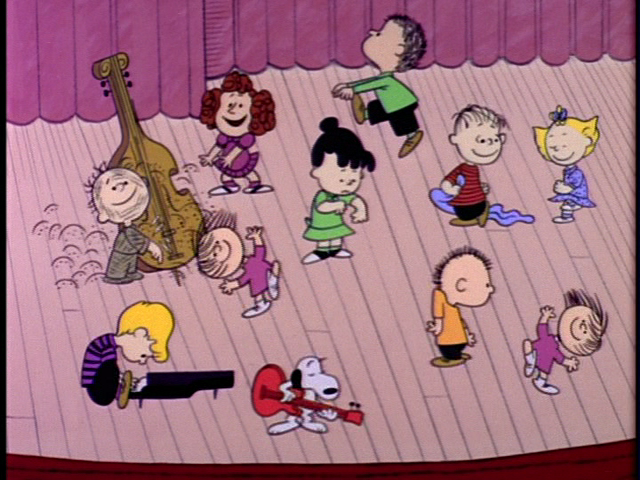
Good luck next week and happy holidays!! Now dance it out, snoopy style :)


Reflections


I believe our last post was to be a reflection about what we have done in this course and what we are taking away…I hope I am correct. Overall I can say that in this course, I finally read bits and pieces of all the big writers I always here people talk about as well as new ones. It is interesting to see that all of them take on sometimes similar yet different approaches when reading a text and that they tend to refer to one another within their text. So for me, it’s like a family. You have some people you like (like sweet Aunt Loo …just an example) and then some you can’t stand (like Crazy uncle Sal….also just an example). Things may not always be a smooth and easy quest but you learn what you can along the way. I did like the incorporation of film into the lesson. It was nice to get away from serious topics (not that film is not serious but you know what I mean). Perhaps in the next year there could be more geared toward that as well as photography.

Looking back at the beginning of the year, I remember writing why I took this class. I believed I wrote down that I hoped it would help me decide on my interest/thesis topic. I am still grinding through some ideas but it has cleared up certain grey areas. Do I want to be a psychoanalyst like Freud? No. Do I want to solve the meaning of life and beyond? No. Will I use some of the concepts we have learned in class to analyze and interpret certain texts in the future? I believe so. I would like to pursue my passion just like each of these authors did theirs.


I believe the thing I liked the most about this class was the camaraderie. When I started the semester, I was definitely intimidated by this class. It was my first graduate course at UBC and my first theory class. Yes, I was a baby. But, my fellow classmates were so kind and open that soon I became confident and wasn’t scared to participate (sometimes….only when I think I have something to contribute. Haha). Plus, having had this class, I have met many people from different areas that I find fascinating. In addition I have made many friends some of which will last a good while (awwww, I know….ok that’s enough). Soon we must go our separate ways for the holidays but no worries….I know where your department is. 

Good luck next week and happy holidays!! Now dance it out, snoopy style :)


Categories
reflections

One “meta-question” as reflexion of the course

We are thrown into this world without notice. In a certain point of our life we realize that everything is strange: the world, society, its creations, and, of course, ourselves etc., etc. Questions like these arise: “Who I am?” “Which is the sense of life? What is society? Which is my role in society? Why do I have this role in society? What is art? The uncertainties continue to the infinite and beyond. So, we need answers, desperately. In this point we begin to think, to theorize about ourselves, about the world, about society, etc., etc. We also begin to criticize: why the things have to be like this? Why being born in certain society or with certain characteristics typecast us? So, again, we think, we theorize.

However, we are never satisfied. It’s part of our nature. One answer (one theory) to one of our questions lasts few seconds. For instance if I make a theory about Art and develop some terms about it, someone would come and say “Ok, but maybe…” or “No, that is not completely true…” or “No, Art is…” Theory then enters into the dichotomy that gives it life: writing/rewriting. If we accept as definite one theory, then the dynamic finishes. But it cannot end, because, we are never satisfied with only one answer and one answer, paradoxically, conduce to more questions.

This demonstrates that we are very complex and that we like complexity. And more: we need complexity. We can complain about it (“Why everything is so complicate?!, Why life is so difficult?!”, etc.), but we need it. Also, we need art, culture, daily life problems, etc. But, why do we need all these. Only because is in our nature being complicated? I think there is something deeper.

I said that we have infinite uncertainties, but I did not mention that we have only one certainty: we are mortals. This fact, the only one that is for sure, is much more disruptive than the millions of uncertainties regarding the reality that we could have. Of course, this fact also generates multiple questions, but the main difference with all the others is that theories that we could make about it cannot be empirical. Even, religions have their certainties about death; there is no possibility of a real discussion. In other words, we cannot theorize about our transitory condition in the world, because we do not have elements to do it. We only can imagine.

So, my question is: Maybe our need to create theories, art, culture, daily life problems, etc. has not only the purpose of answering our questions about the world, but distract us of the undeniable fact that we are mortals? In that sense, the need of complexity is in someway also a good way of forget our deep nature of being mortals? I am not saying that the aim of theorizing or making art is only to distract us from death, but maybe it is also a function that we are not aware all the time.

This is a reflexion that I could make after a course that demonstrate that we are all the time making questions, attempting answers, criticizing, making more questions; in other words, writing and rewriting. So, one “meta-question” would be “Why we like to be questioning, criticizing, complaining all the time? One possible answer (among multiples, of course), even pessimistic (but also realistic) is that, as I said, we need to be distracted of our mortality. I don’t know. This is only a theory.

The dark side…

Although I happened to have gotten confused about what reading to do last week, I think it actually worked out for the best because I learned some new things during and after class, which you may find interesting. During class we discussed Benjamin’s whole idea. We began with the initial concept of the “aura” and how he believes it begins to lose its meaning in the “age of mechanical reproduction”. In this aspect, I would have to disagree. I feel that the aura of a piece of art is present no matter how often it may be reproduced and propagated throughout the world. I am sure many of us have replicas of pieces of art in our homes. No, they are not the originals but they will do. Having gone to the museums and seen the originals in person, I can say that I appreciate them even more. I can definitely tell the difference between the original and my copy in a frame. Of course, Benjamin’s discussion takes us further…into politics.


He feels that the use of technology has led to a negative affect on art. There is a dark side of the force (yes….star wars reference). What I found interesting was that after this discussion in class, we had a guest speaker come into our French seminar to discuss photography and literature. During his presentation, he focused on Barthes and his views on photography, the capturing of the moment, the feelings we encounter when looking at a photo. He then went on to show us two pictures. Although he placed the photographs side by side, they were taken by two different photographers for two very different reasons. One of them struck me more than the other (of course, I don’t remember who took the picture or I would have placed it on the blog….so anyone that was in that seminar that remember, send it my way). Anyway, it was a picture taken by a photographer during the Nazi regime. The photograph had a picture of a man, nicely dressed, and his pure bred dog. They were both looking away from the camera at different things. Looking at this picture, I felt cold. They were so statue like and frigid which is what I would have imagined them to be (of course, not the dog but as some people say, the dog can look like the owner). He then informed us that that picture was actually not accepted by the Nazis because they did not feel it represented them and the photographer was asked to stop. The reason I brought this up is because it reminded me of our discussion in class and how Benjamin did not like how art was used (or duplicated) to take on different things rather than maintain its aura. In this case, I feel like we can clearly understand Benjamin. The photographer had an intention, which was to capture the moment showing the average Nazi in its true form, but because it did not align with the Nazis intentions, they did not want it. They did not like the aura present and did not want it duplicated and spread about.

The dark side…

Although I happened to have gotten confused about what reading to do last week, I think it actually worked out for the best because I learned some new things during and after class, which you may find interesting. During class we discussed Benjamin’s whole idea. We began with the initial concept of the “aura” and how he believes it begins to lose its meaning in the “age of mechanical reproduction”. In this aspect, I would have to disagree. I feel that the aura of a piece of art is present no matter how often it may be reproduced and propagated throughout the world. I am sure many of us have replicas of pieces of art in our homes. No, they are not the originals but they will do. Having gone to the museums and seen the originals in person, I can say that I appreciate them even more. I can definitely tell the difference between the original and my copy in a frame. Of course, Benjamin’s discussion takes us further…into politics.


He feels that the use of technology has led to a negative affect on art. There is a dark side of the force (yes….star wars reference). What I found interesting was that after this discussion in class, we had a guest speaker come into our French seminar to discuss photography and literature. During his presentation, he focused on Barthes and his views on photography, the capturing of the moment, the feelings we encounter when looking at a photo. He then went on to show us two pictures. Although he placed the photographs side by side, they were taken by two different photographers for two very different reasons. One of them struck me more than the other (of course, I don’t remember who took the picture or I would have placed it on the blog….so anyone that was in that seminar that remember, send it my way). Anyway, it was a picture taken by a photographer during the Nazi regime. The photograph had a picture of a man, nicely dressed, and his pure bred dog. They were both looking away from the camera at different things. Looking at this picture, I felt cold. They were so statue like and frigid which is what I would have imagined them to be (of course, not the dog but as some people say, the dog can look like the owner). He then informed us that that picture was actually not accepted by the Nazis because they did not feel it represented them and the photographer was asked to stop. The reason I brought this up is because it reminded me of our discussion in class and how Benjamin did not like how art was used (or duplicated) to take on different things rather than maintain its aura. In this case, I feel like we can clearly understand Benjamin. The photographer had an intention, which was to capture the moment showing the average Nazi in its true form, but because it did not align with the Nazis intentions, they did not want it. They did not like the aura present and did not want it duplicated and spread about.

the politics of culture

When “Culture” came up, I used to feel perplexed about the immense broad sense of this word. I thought it comprehends everything about art for sure: painting, music, film, architecture… and other aspects of human behavior that could distinct one culture from another. But after reading the introduction of the Culture Studies, I found that “culture” actually possesses a much broader sense which “ includes language and the arts”, as well as “the regularities, procedures and rituals of human life in communities”.  No wander that culture tainted with political color, because politics also compose an indispensable part of culture. And it’ll make sense that Walter Benjamin had politics and art forms like painting, photographs and films connected in the extensive realm of culture.

The main conflict that Benjamin displays is the incompatible relationship between “mechanical reproduction” and the “actual work of art”. In summery, there are several qualities that are absent in the reproduction art : “presence in time and space”; “the original”; “the authenticity”; “the aura”; and “the fabric of tradition”. He points that the existence of the work of art with reference to its aura is never entirely separated from its ritual function. Ritualistic basis is stressed in the cult of beauty, however, it runs to crisis after the Renaissance and even get denied with the doctrine of “l’art pour l’art”. But in the era of mechanical reproduction, it emancipates the work of art from its parasitical dependance on ritual and changes the reaction of the masses towards art. Film, as the most powerful agent of mass movements and result of the development of technology, decisively sways the individual attitudes by mass audience response. By introducing the freudian theory which makes unnoticed thing perceivable, Benjamin says that film too, enriched our field of perception.

Last but not least, the author explains “the logical result of the Fascism is the introduction of aesthetics into political life”. Fascism seeks to give the masses an expression rather than their right and thus has property preserved. War is the culmination of this political aesthetic. “War and war only can set a goal for mass movements on the largest scale while respecting the traditional property system”. In this sense, war is worshiped by Fascism and is expected to supply the artistic gratification of a sense of perception. Considering the background in which the author situated, one could not neglect two most significant features of that period: the innovative production of film and  the horrible warfare pushed by Fascism. Although nowadays few people  connect film with war, and the relation of the two seems quite farfetched, it’s totally understandable in the context of that peculiar history.

Spam prevention powered by Akismet