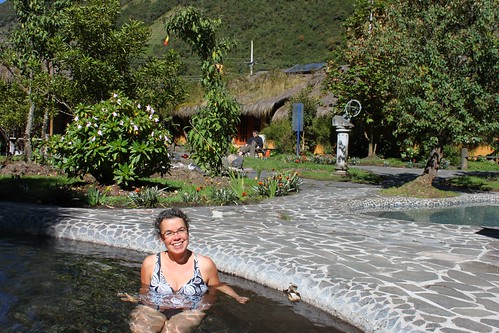
Since leaving Vancouver nine and a half months ago, we experienced many new places and made many new friends, and now our eyes were focused northward and home. Leaving the jungle behind, we journeyed toward Quito by bus but not before stopping for two days at the thermal bath resort of Papallacta to enjoy the hot and cold pools just outside our hotel room door.
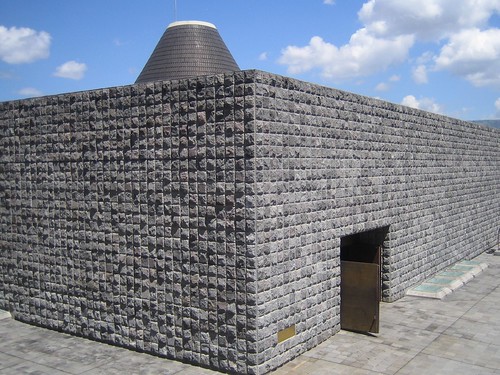
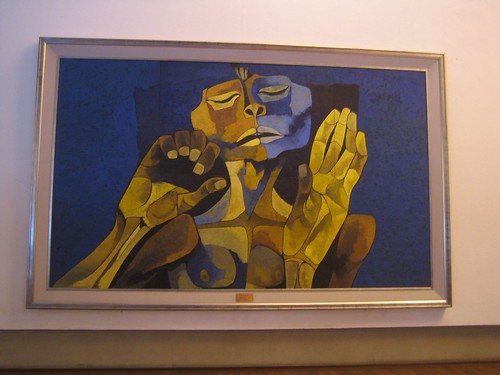
We spent our final two days in Quito where we visited the Guayasamín Museum and his Capella del Hombre (Chapel of Man), walked and ate in the Mariscal neighbourhood and did some last-minute shopping.
On our last night we found ourselves in an outdoor restaurant taking in the local colour and watching Ecuador play Greece in a soccer match. We looked across the patio to find our friend Alex from the Galapagos. What a coincidence and a great way to end the trip!
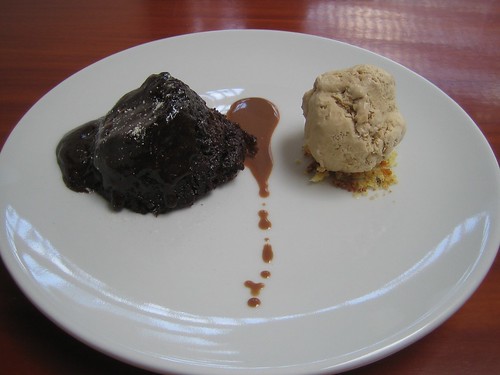
Up at 4am on June 8th, we caught our flight and by 5pm we were at the Sea-Tac airport enjoying our first mussels and salmon in ten months. Oh yes, and while connecting through Houston, we devoured a pulled pork sandwich and a huge baked potato loaded with an assortment of artery clogging condiments.
Once home, we continued to reacquaint ourselves with the culinary delights of Vancouver… Chinese dumplings, Indian curry, Japanese sushi… everything we missed while away.
What next? We don’t know yet. Besides we’re still unpacking from this trip, and Sally has to return to work. We loved sharing our adventure with you and trust you enjoyed it too.
On the morning of the 26th, we arrived in the south of Quito and took public transit to the north end to meet our friend Luis from Galapagos for lunch. After a pleasant visit, we hopped a bus to Otavalo, arriving in time for a walk around town before dinner.
Otavalo is a busy market town with daily food and craft markets, and a Saturday live animal market. Our first day was Friday, and the town was relatively quiet giving us a head-start at the crafts market before the Saturday crush.
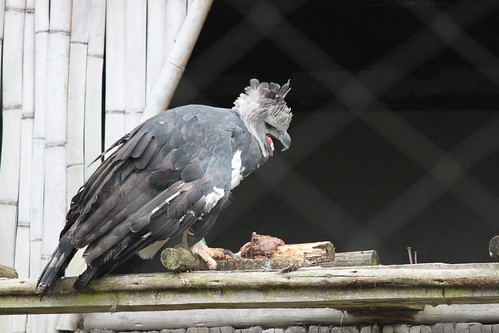
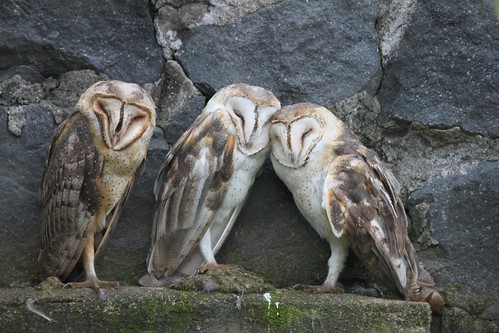
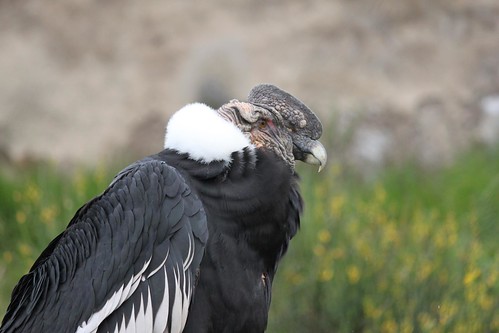
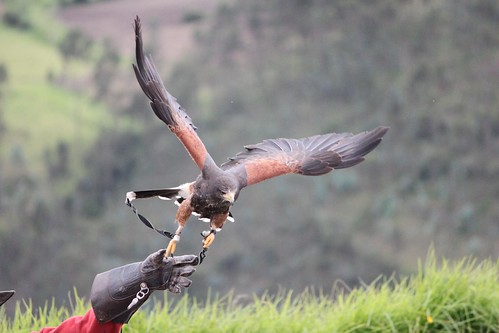
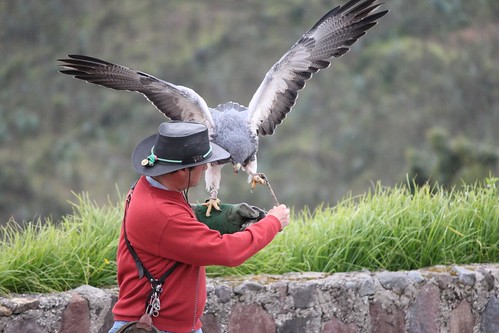
After a bit of shopping, we took a cab to Parque Condor, a Dutch-owned rehabilitation centre for birds of prey and vultures. We saw an amazing number of birds, including hawks, eagles, owls and the famous Andean condor.
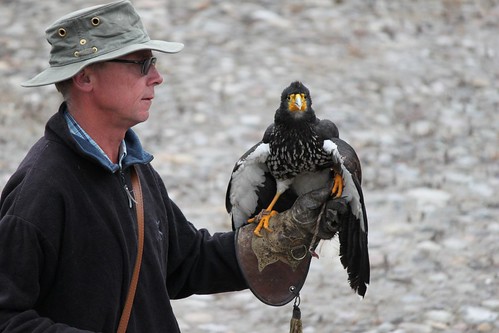
We were there for the 11:30am flight demonstration which was very entertaining as they flew several birds, including a Harris hawk and a black-chested buzzard eagle.
The most amusing was the Carunculated Caracara which had imprinted on humans and followed the trainer around like a needy child.
Back to town for lunch at the market and more shopping.
That evening we had dinner with a mother-daughter team from England who we had seen previously on the train to the Devil’s Nose. It is not uncommon when travelling in a small country like Ecuador to cross paths with some of the same people you’ve met before.
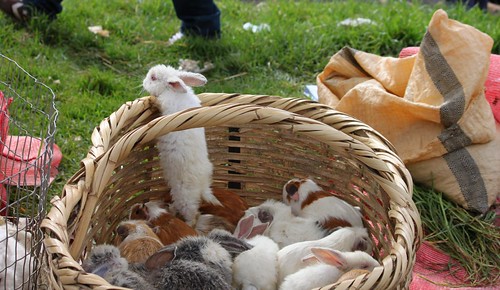
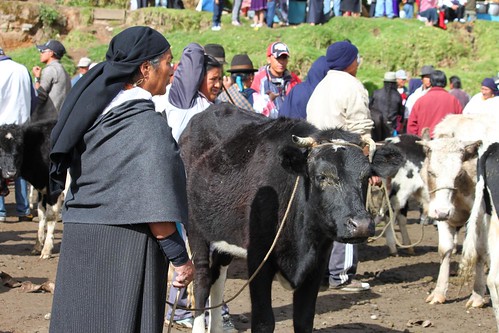
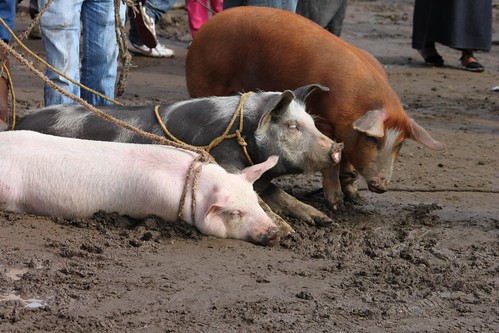
On Saturday we visited the animal market before breakfast as the activity starts early. Hundreds of Ecuadorian farmers come to buy and sell chickens, pigs, cattle, rabbits, and cuy… you know, that North American pet, the guinea pig. The big difference here is that cuy is a national delicacy. I have not tried cuy yet, although I am under some pressure to do so.
Most fun were the pigs which can cause a huge racket when they are prodded or pulled, pushed or slapped to get them to come along.
At lunch when we were trying to decide where to eat, we stumbled upon a restaurant that was showing the football match between Manchester United and Barcelona. What took us by surprise was that the loudest cheering was for Man. U.
We retired early on Saturday night to be ready at dawn for the 11-hour bus ride to Lago Agrio, the starting point for our Amazon canoe trip.
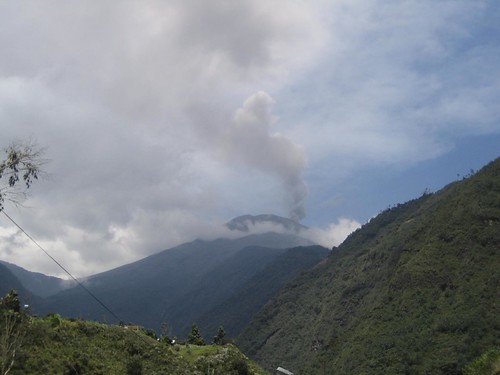
May 17 was a travel day from Alausí to Baños. Our bus dropped us off on the outskirts of Ambato where we hoped to catch another bus into Baños. Standing on the road beside us was a woman who assured us we were in the right spot and yes, that huge smoking mountain was the Tungarhua volcano and our destination.
A few minutes later an older gentleman driving a vintage Toyota Corolla in need of a new muffler and possibly a ring job offered us all a lift to Baños. On the way we told him of the warnings to avoid Baños because of the eruption and heavy ashfall around May 2nd. He assured us this was exaggerated and that such activity from the volcano was normal. As we discovered, he was correct (for the time we were there) but the warnings had a definite effect on tourists as Baños was very quiet and businesses were suffering.
Our accommodation at Posada del Arte was excellent and located in a quiet corner of town near a small waterfall. That night we had an excellent meal at the Swiss fondue restaurant and over dinner decided to do the bike trip from Baños to Puyo.
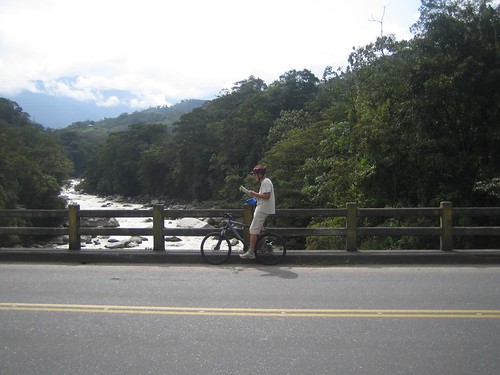
The first leg of the ride was a nice downhill section and I should have clued in right away that something was amiss with my rented bike as Sally kept creeping up on my back wheel and using her brakes. Basic physics says that shouldn’t happen as I am much heavier. On the first uphill section I stopped to investigate a strange noise from my front wheel and discovered that both disc brakes were warped and dragging. Merde! I knew our ride would be an effort and this development would certainly add to it.
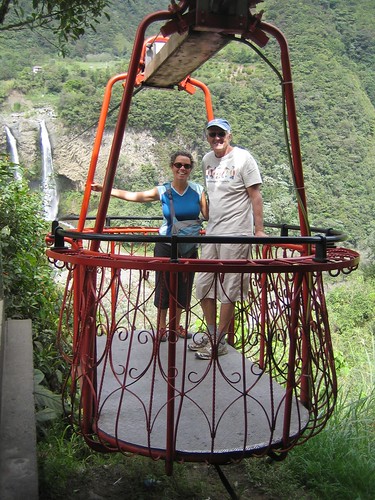
Our first stop was at the cable car over the river gorge to see the waterfalls Manto de la Novia. The total span is about 400 m. and is about 100 m. above the river. The local woman on the far side offered us a $3.50 lunch of fresh trout from her trout pond. It was too early for lunch so we thanked her for the offer and moved on.
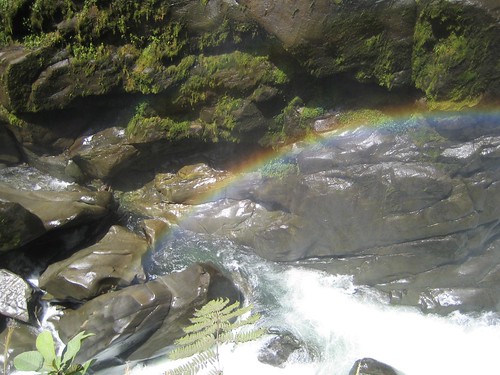
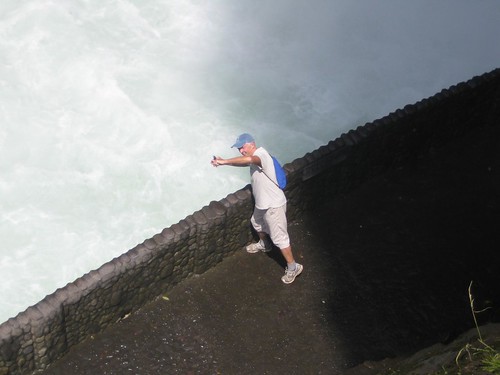
Next stop was Pailon del Diablo… the Devil’s Cauldron. Leaving our bikes in the parking lot we walked 1 km. downhill to visit the narrow but very powerful waterfall that created enough spray to make a permanent rainbow and soak you if you ventured too close. Sally crawled along the cliff edge to a point where she could partially stand behind the waterfall… a feat for which she was thoroughly drenched.
While the 60 km. ride to Puyo drops 850 m. there were several uphill stretches that had us gasping and our legs failing. Consequently, we did some walking in order to survive to ride to the finish. By the time we reached Puyo, we were pretty much toast and following a restorative beverage, we took the bus back to Baños. Arriving in darkness we decided to dine at our Posada and call it a day.
Next day was Spa day, a volcanic ash and salt exfoliation, lunch and hot pools at a location 500 m. overlooking Baños. The volcano obliged by rumbling and sending up clouds of ash and smoke we observed from our hot pool.
The next day we explored around town and had a surprise reunion with friends we had met in Vilcabamba the previous week.
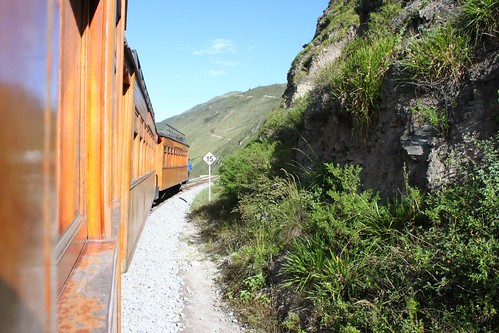
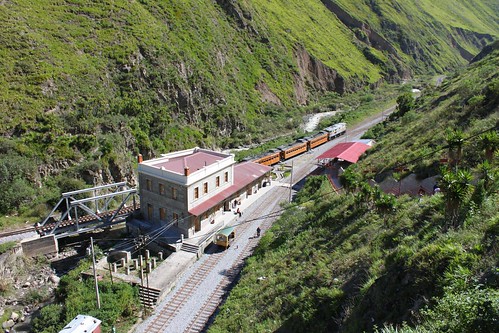
On our way from Vilcabamba to Baños, we overnighted in Alausí, and the next day took the three hour return train trip to Sibambe past the Nariz del Diablo (Devil’s Nose). The train drops 500 metres in 13 km as it zig zags down the canyon. In years past, the route went from Sibambe all the way to Riobamba, and the trip was a big tourist attraction as you could ride on the roof of the passenger cars. That came to an end when an unfortunate tourist was killed by some low hanging wires. Picturesque though the ride was, it would have been more enjoyable on the roof as the train travels at a very moderate pace.
Our recommendation would be to arrive the day of the trip (the train goes at 8am, 11am and 3pm) and then carry on to Baños which has more to offer.
Our hostel was perched on a hillside overlooking Vilcabamba with views to the high peaks across the valley. Downtown at the main square, local shops and restaurants mingled with new gringo cafes serving organic vegetarian meals and raw cacao shakes. Five years ago before Vilcabamba was written up in a U.S. magazine that extolled the beauty, tranquility and alleged longevity, property was inexpensive. Now there are at least three real estate companies, and prices have skyrocketed. Seeing long hair, baggie pants and loose shirts was like stepping back in time… anyone for a spirulina smoothie?
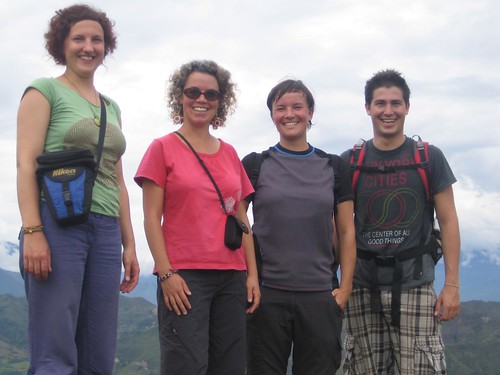
Actually I liked it there, as a lovely place to visit rather than settle. We reconnected with Galapagos friends, Alex and Katharine and made new friends at the hostel with whom we went hiking.
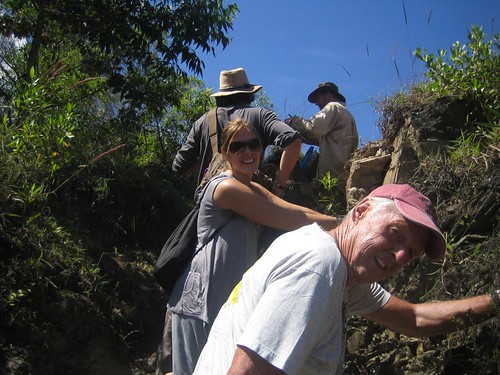
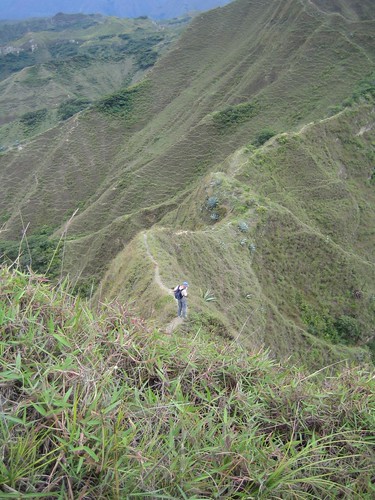
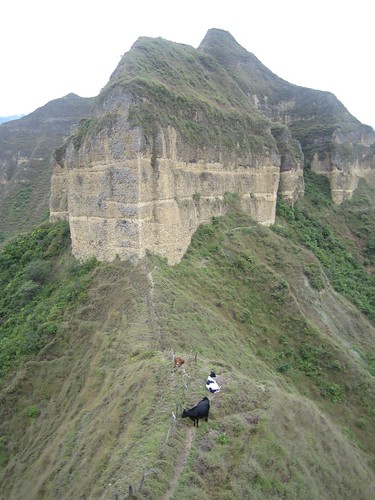
Hiking here means up – lots of up to make your pulse pound in your ears and your legs heavy with the elevation. However, no matter how high we went, no matter how precarious the footing, grazing cows were waiting at the top or had left evidence of having been there ahead of us. Not goats but cows.
This time of year is particularly beautiful because the rainy season is just ending, and the valley is carpeted in green from the river bottoms to the highest peaks. What constantly amazed us was the extent of cultivation which goes as high as a farmer can walk with a hoe. Imagine a patch quilt of shades of green that covers an entire mountain.
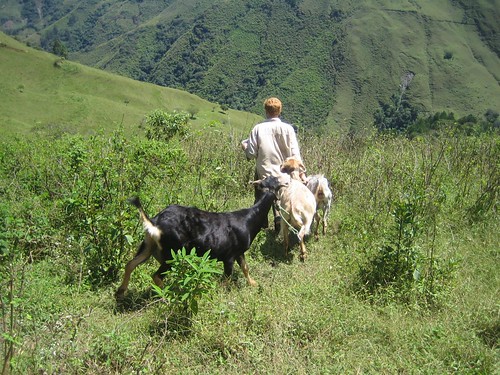
We met an interesting fellow named Yves who showed us his labour of love he calls Sacred Sueños which is an experimental organic farm he created from 10 hectares of scorched land on a mountainside above Vilcabamba. In addition to growing fruits and vegetables, Yves tends two milk goats from which he makes cheese to sell in town.
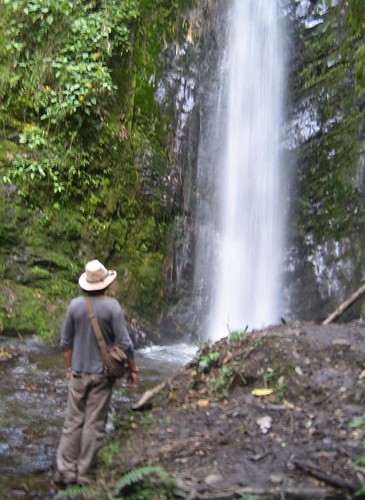
On the way back from his farm, we dropped down to the valley floor to visit a refreshing waterfall before the long walk back to Vilcabamba.
Too soon we had to leave Vilcabamba and head north to the central highlands.
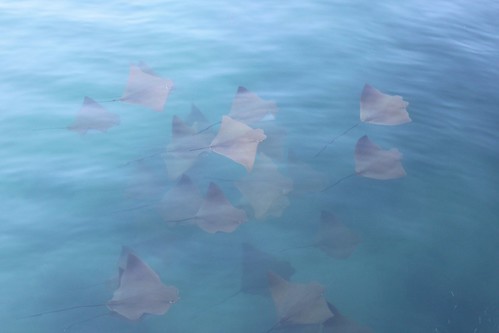
No sleeping in this Saturday. We were up at 5 am for a 6 am pickup and drive over the island to our waiting boat at Itabaca canal (near Baltra Island). At first glance our boat looked a bit rough around the edges but we discovered it had a good layout and was large enough to accommodate the 21 passengers and crew without crowding for the leisurely 2 1/2 hr trip to Isla Bartolome. We knew it would be a good day when we saw a school of golden rays swim by the dock.
Bartolome, while small may be one of the most visited islands in the Galapagos. There are two main attractions: the hike up the boardwalk to the top of an extinct lava cone and possibly the most photographed view in the islands, and the bay below at Pinnacle Rock where you can snorkel and enjoy a small sandy beach.
On the boardwalk to the top we saw small lava lizards munching on low tiquilia shrub flowers that grow on the barren gravelly tuff slopes. The shrubs seem to be evenly spaced, which ensures equal access to the scant water available. The lava lizards here are primarily vegetarian although I am sure they would relish an insect if available.
Most of our group were French geologists who were very interested in the different kinds of lava. They had their own translator who would take their questions and translate into Spanish for the guide. He would reply in Spanish which the interpreter would then turn into French and so on.
While the lava was interesting, Sally and I decided to go on ahead and enjoy the view from the top and wait for the group there.
Following the hike we went back to the boat for a cold coke and collected our snorkeling equipment. Our panga dropped us off at the base of Pinnacle Rock and for the next hour we explored the shoreline between there and the nearby beach. We saw schools of yellow tailed surgeon fish that were accompanied by colourful parrot fish who swam just under them…..not sure why. We also swam with a couple of penguins who fished right around us.
Back on the boat for lunch it seems I was not the only one who was ravenous after the activities as everyone tucked in heartily.
Cruising home in the sun and calm seas, we could see that it was raining in the highlands on Santa Cruz as we approached. Sure enough, on the bus ride home when we stopped to visit Los Gemelos craters, everything was fresh and wet from the recent downpour. Back home we elected to eat in rather than go out………happy but tired campers.
This was probably our last trip to see another island. I’m still one island ahead of Sally because of my trip to Santiago (not that anyone is counting).
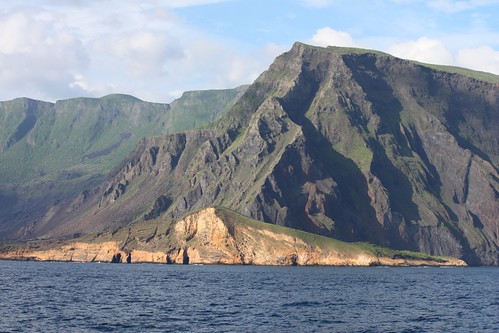
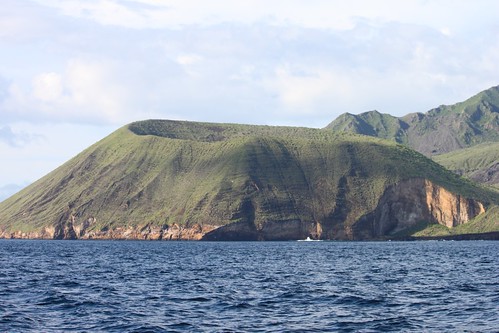
This post is late as the tsunami post took precedence. Three weeks ago we took a cruise to the northwest of Isabela, clockwise around the top and down the east side crossing the equator twice.
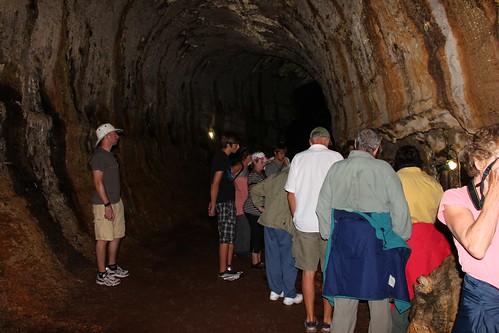
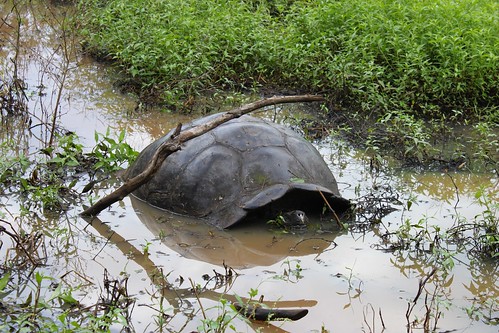
Day 1: We started March 3rd from home base in Puerto Ayora and drove to the highlands to visit the giant tortoise reserve and the nearby large lava tunnel which was old news to us but new to our friend Pete who was visiting from Vancouver. Back to the boat for dinner and a meet and greet with our crew who wore their crisp whites for the occasion. Near midnight we cast off for Puerto Villamil, the town on Isabela (where we had spent six peaceful days at Christmas).
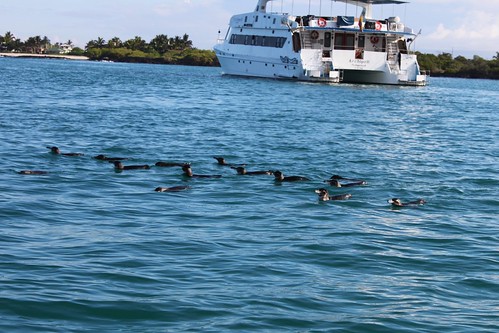
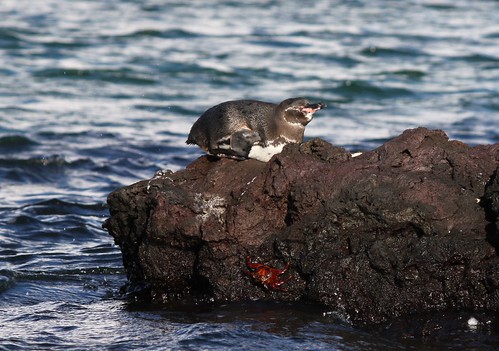
Day 2: Following a 7am breakfast, our guide Dario led the way in our two pangas (zodiacs) to Las Tintoreras, a large lava outcrop just off Isabela. Our panga was lucky to see a large group of penguins swimming close to the boat.
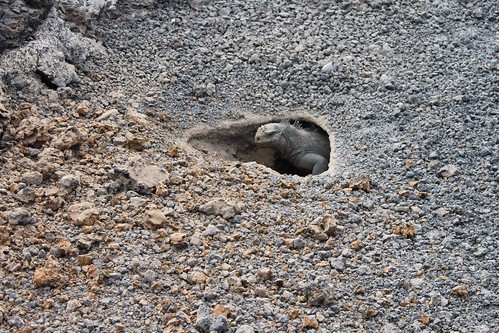
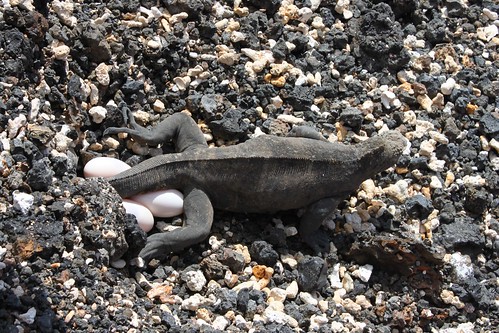
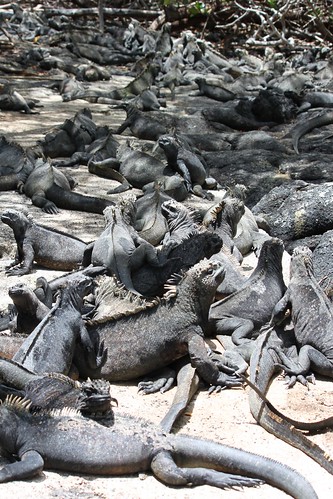
We did a one hour walk along a restricted path through hundreds of marine iguanas that were digging nests and competing for spots in the softer lava gravel beds. We witnessed an iguana laying eggs but unfortunately, they were exposed to the air so would not survive.
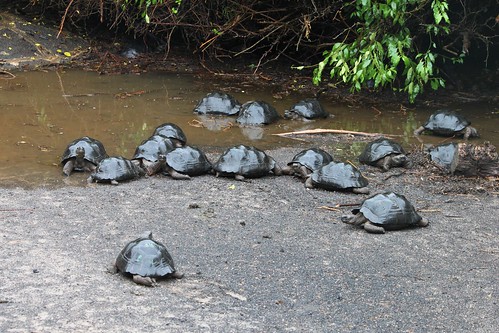
In the afternoon we went ashore and visited the tortoise nursery where young giant tortoises are fostered until large enough to be repatriated to their respective volcanoes.
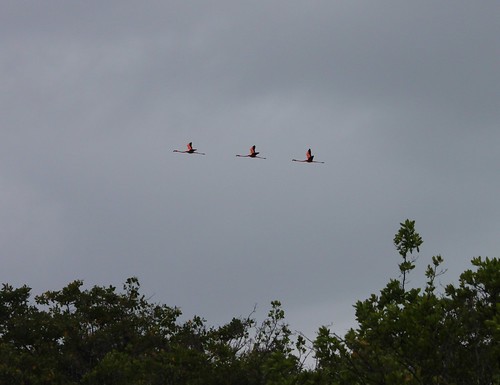
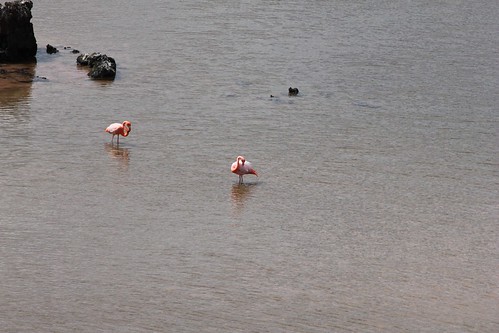
The return walk brought us through a salt lagoon where we saw four flamingoes feeding and had the good fortune to see nine more fly by.
Just after we got back to town for an afternoon at the beach, heavy rains started, and several of us happily sat in an open air restaurant having a beverage or two…
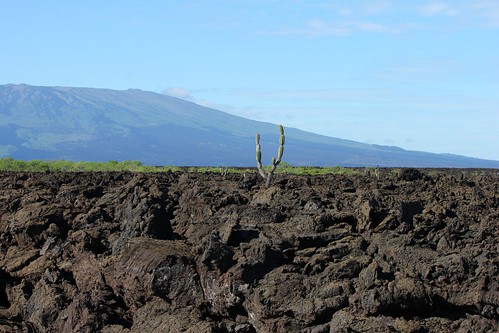
Day 3: We woke up anchored at Punta Moreno where we went on a rough lava walk. En route we could see the sources of the massive lava flow, Volcan Sierra Negra and Volcan Cerro Azul.
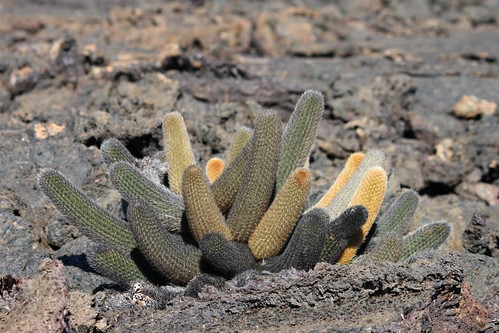
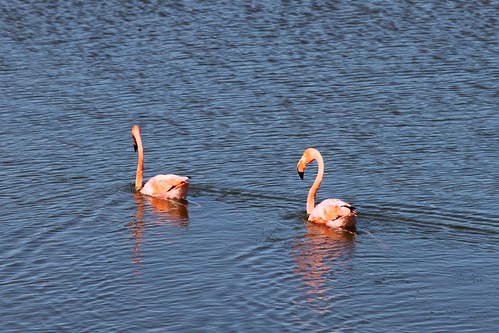
We passed lava cacti and a few oases which are salt water lagoons in the middle of the lava fields. One contained feeding flamingos, and we saw that when the water is too deep for wading, flamingos can swim like swans.
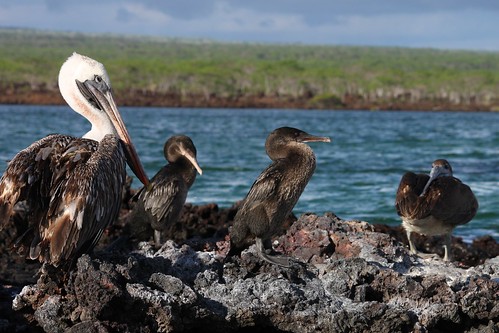
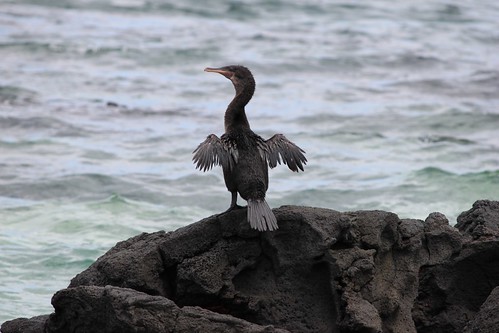
After lunch we motored to Elizabeth Bay and once the tide had dropped, we took the pangas into the mangrove waterways to look for sea turtles. We only saw a few since the water was still high but en route, we passed a small lava outcrop that hosted pelicans, flightless cormorants and penguins.
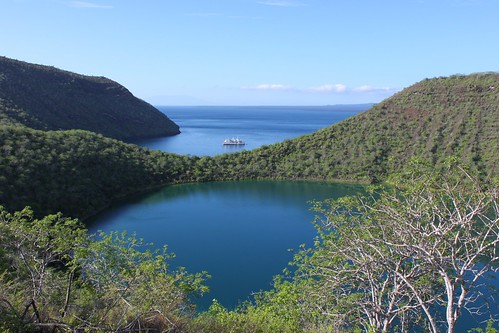
Day 4: Sunrise found us anchored in Tagus Cove where we went for a morning hike past a salt lake to a high viewpoint. From above, the lake appears to be higher than the ocean but in fact, it is not. The lava is just a porous barrier between it and the sea.
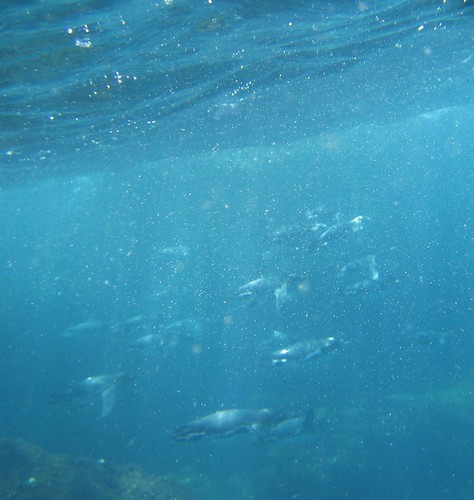
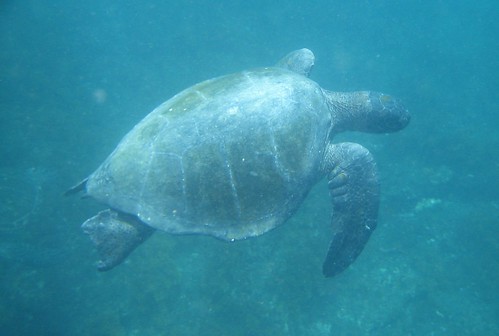
Following the hike, we went snorkelling where we swam among penguins, sea turtles, sea lions and cormorants, and for those of us without wetsuits, we felt the stings of tiny jellyfish.
That afternoon we motored across to Punta Espinoza on Isla Fernandina where the walk took us through swaths of basking marine iguanas, sea lions, nursing pups, flightless cormorants, sea turtles and the bleached bones of a small whale.
Back on board, we headed northwest along the coast of Isabela, crossing the equator for the first time at around 5:15pm. We celebrated with a G & T.
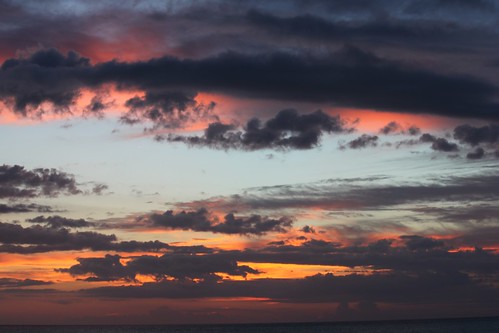
This part of Isabela is rugged and spectacular, and the sunset was okay too.
Dinner was finished by the time we turned right across the top of Isabela which was fortunate because the ocean had become rough for the first time on the trip. Around 9pm Sally’s stomach and nerves were feeling fragile, so we made our way to the top deck for fresh air and stargazing. An unexpected treat was being accompanied by ghostly swallow-tailed gulls that make curious clicking sounds. They are the only night-feeding gull in the world and fish up to 30km from land.
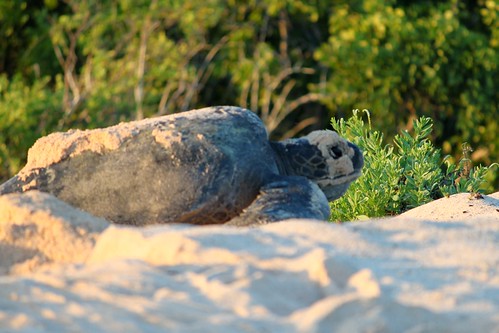
The voyage throughout the night was rough (apparently, that leg is), and only smoothed out shortly before our dawn arrival at Playa Las Bachas, back on Isla Santa Cruz. There we went ashore early in order to see the nesting sea turtles before they left the beach. We barely succeeded; there was evidence in the soft sand of departed turtles, and only one remained. She was just finishing covering her eggs before slowly hauling herself back into the sea.
Our cruise ended at Baltra where we made the familiar trip by ferry across the Itabaca Canal and by taxi to our casa in Puerto Ayora.
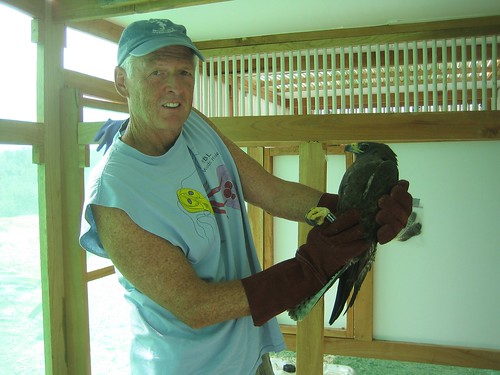
I recently had a rare opportunity to assist with a Galapagos Hawk quarantine program for 12 days on uninhabited Isla Santiago. The hawks had been captured from nearby islands, one of which was undergoing a rat eradication project. The rats in question are black ship rats (Rattus rattus), an aggressive introduced species which is endangering native populations of birds and turtles. Using sophisticated GPS mapping, a helicopter dropped poisoned bait on the island. Twenty hawks had been removed to prevent them from eating the contaminated rats.
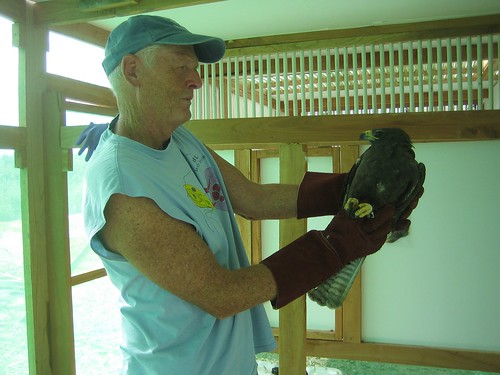
The quarantined hawks were housed in a purpose built structure on Santiago and kept in six large cages according to social group. The adults were dark brown to black with yellow feet and yellow curved beaks. The females weighed 1000-1200g and were larger than the males who weighed 800-900g.
We fed the hawks once daily from a menu of four kinds of meat. My main job as handler was to hold the hawk while the real hawk whisperer drew blood to check for parasites and general health. To handle the bird safely and securely, I grasped its lower legs between the fingers of my right hand while positioning the bird comfortably on its back on the examining table. The hawks were never vocal and did not struggle once held in this submissive position. They just fixed you with an unwavering stare as if to say, “If you loosen your grip, buddy, there will be trouble”.
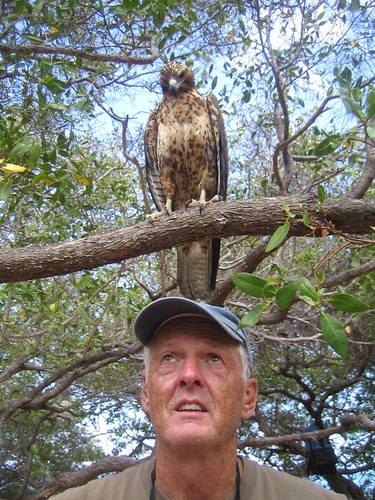
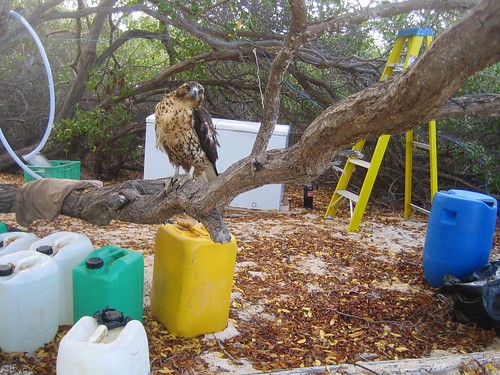
In addition to the quarantined hawks, we were visited daily in camp by local juveniles looking for a free meal. Our favourite was a female who we named La Bamba after the campsite. Her plumage was mottled light and dark brown, and she had lovely sharp black talons. She became territorial and would chase away other juveniles from her new turf. She was totally unafraid and would only move if you attempted to touch her feet and even then, just a short distance.
Our camp was right on the beach under the mangroves. At night under the brilliant starry skies, we were lulled to sleep by booming surf as it broke over the offshore lava reef. One night when the tide was particularly high, I moved my tent back a few feet since it felt like the waves were lapping at my feet.
Wherever you go in the Galapagos, you are up close to the local fauna. In camp every day, aside from the hawks, you could see blue-footed boobies, pelicans, frigate birds, lava herons, lava gulls, wading shorebirds, Great Blue herons, Sally Lightfoot crabs, marine iguanas, a young sea lion and many finches.
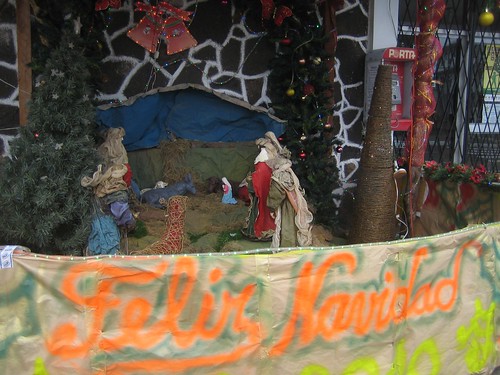
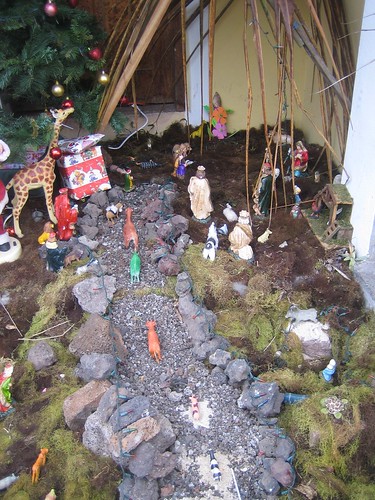
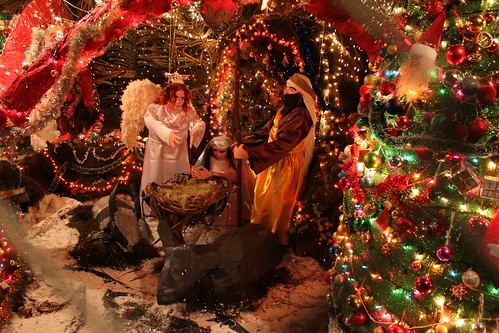
Holiday greetings from us down here on the equator. We will be back on Isla Isabela at Casa de Marita over Christmas, and we will be joined by Mike S from the running club who is under strict orders to bring us fruitcake among other essentials. The citizens and businesses of Puerto Ayora are well into the seasonal spirit as evidenced by the many brightly decorated store fronts and creative nativity scenes. Sally has been taking pictures to show you their enthusiasm.
Wishing all our friends and family a very Merry Christmas!
On Saturday, November 27 we began our long awaited 4 day cruise to the SE islands which as you know are the oldest islands in the Galapagos as they were formed at the NW hot spot then migrated to the SE. Consequently they are eroded and flatter with more vegetation.
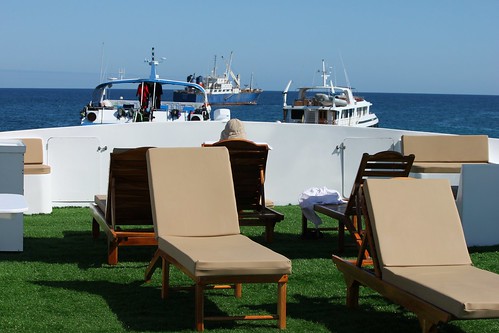
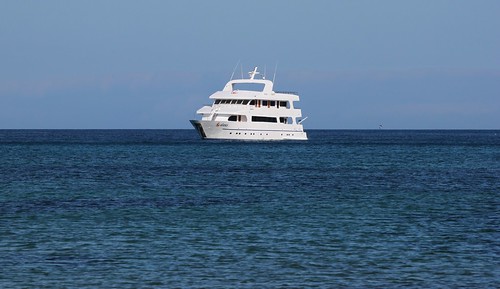
We boarded our yacht Galaxy in Puerto Ayora harbour at noon and relaxed while waiting for the rest of the tour group who were arriving by air from the mainland.
The yacht had capacity for 16 but it turned out our group was only going to be 9. (Yay for last minute booking). Sally and I were accompanied by our friend Richard, a visiting scientist from Australia, and we joined a young couple from Switzerland who were already on board. Arriving by plane were two British couples who completed our group. An excellent mix of people and a first rate crew and guide made for a memorable trip. Everyone got acquainted over our first of several tasty meals together and went to bed knowing that when we woke up the next morning we would be anchored off Isla Floreana.
Breakfast every day was at 7am and in the interest of brevity, let me say that all breakfasts, lunches and dinners were very good. By 8 am, we were onshore at Punta Cormoran where we walked to a nearby brackish inland lagoon frequented by flamingos.
The lagoon was very low but we did see two flamingos at a distance which official photographer Sally captured with her big new telephoto lens.
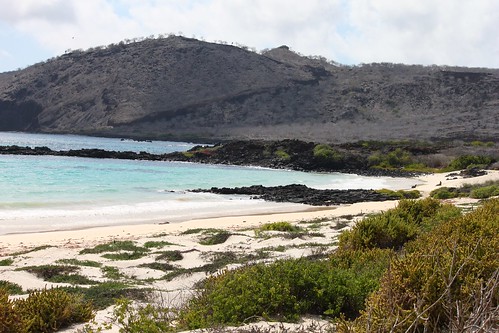
A short walk in a different direction took us to a brilliant white sandy beach well known as a green sea turtle nesting site. The turtles were cruising just offshore when we visited and come on land at night to lay their eggs. Back at our landing site we went snorkeling and were lucky enough to swim with a turtle.
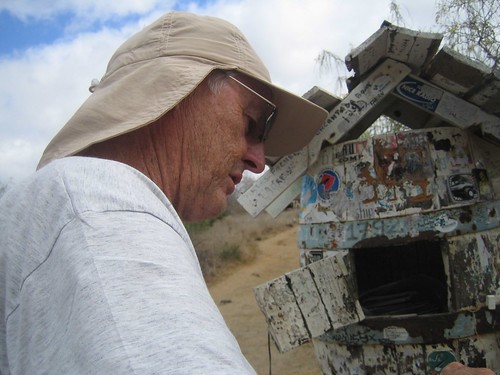
After lunch on board, the yacht moved along the coast to anchor in Post Office Bay. This is the spot where in 1793 ships bound for the Pacific whaling grounds would leave letters in a barrel to be picked up by homeward-bound ships whose crews would deliver the mail by hand. Following tradition, we left some mail so a few of you may receive a card delivered by a stranger. A walk further inland (which we didn’t do) lie the rusted remains of a failed 1920s Norwegian fishing operation.
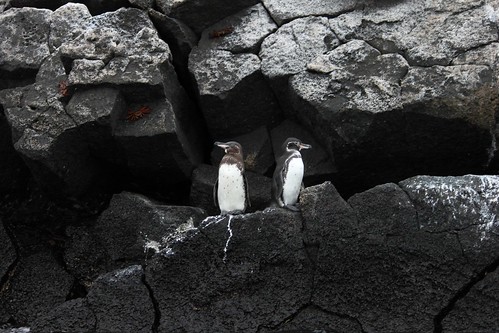
At 5pm we set out in the panga (inflatable dinghy) in search of Galapagos penguins. We were in luck and got up close to the little guys as they rested on a lava outcrop. We also saw sea turtles along the way and in a quiet spot, resting white tipped sharks.
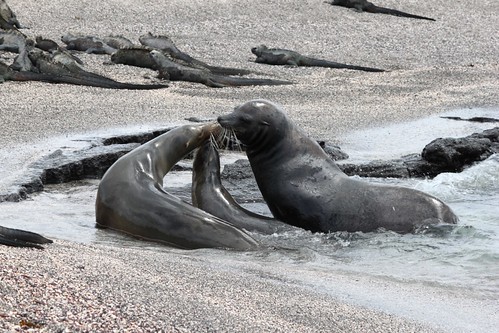
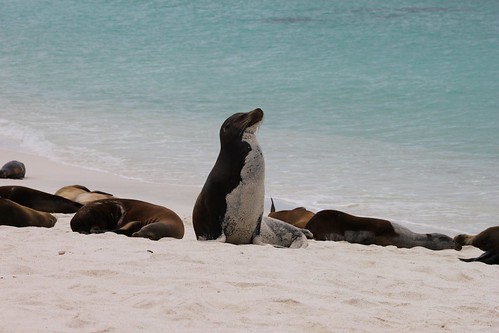
After another overnight sail or motor if you will, we arrived at Gardner Bay on Isla Espanola. Our morning beach walk started with the now familiar indifferent gauntlet of lobos marinos. All beaches have lobos, all sizes, all the time but this beach had LOTS!
Here is a video of the beachmaster or alpha male who during the breeding and calving season constantly swims back and forth along his sandy turf, barking, warning and chasing off potential rivals.
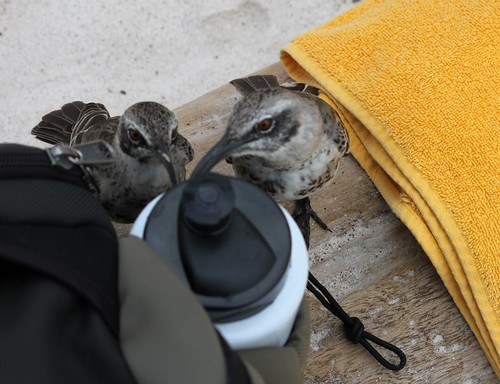
Also on Gardner Bay, we observed some peculiar behaviour. As soon as we were on shore, we were mobbed by thirsty Espanola mockingbirds (one of four Galapagos species). These hazel eyed residents are constantly in search of water and know that humans have it. While you are not allowed to water or feed them to avoid interfering with the natural order, they hope someone has a leaky waterbottle.
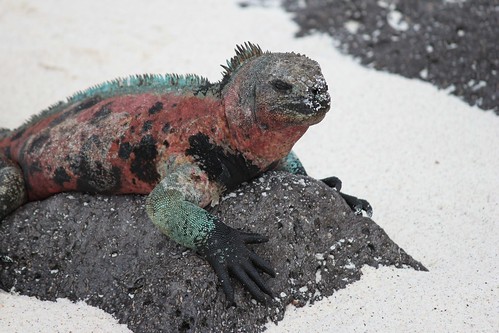
The marine iguanas on Espanola are a subspecies and are more colourful than those on the other islands. During the breeding season, the males’ red and green colouring is even more pronounced.
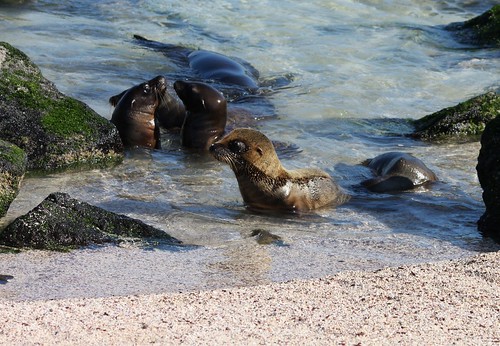
After lunch we motored for an hour along Espanola arriving at Punta Suarez where for the first time we had to share an island with a large cruise ship. This stop to visit the waved albatross nesting ground was the main reason we took the cruise, and I felt frustrated about sharing the space. No worries, it all worked out. On shore while getting organized for the birdwalk, we watched a group of sea lions with many young playing in the shallows and newborns that were barely able to nurse. The barking beach boss was never far away.
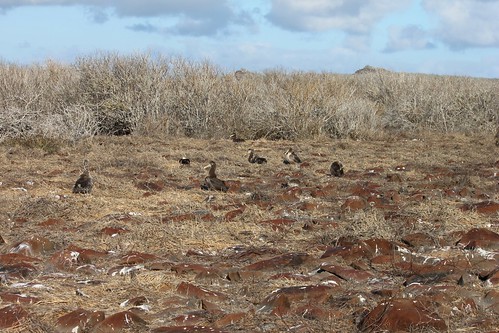
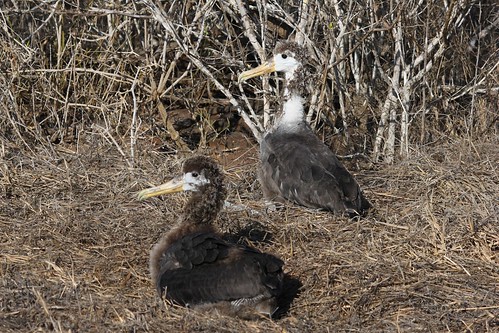
The walk exceeded expectations. We saw not just one or two albatrosses but a whole field of juveniles, many with partial baby feathers.
This nesting ground was the same one you see in the National Geographic videos, and it was a different feeling to be there with these stately and at the same time goofy looking birds.
In the video below we captured a juvenile prompting its parent for food.
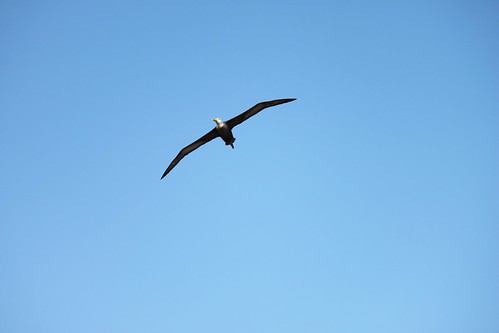
On the ground, albatrosses waddle like big slow ducks but in the air they are masters of grace and power.
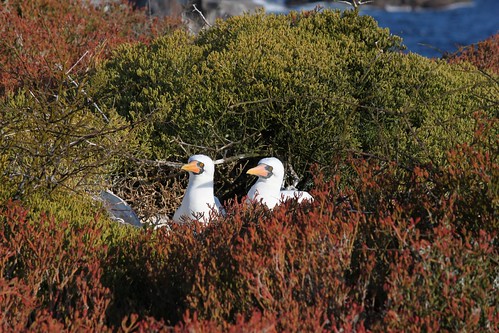
While we came to see the albatrosses, other birds nest in this area too. There were boobies everywhere.
Nazca boobies:
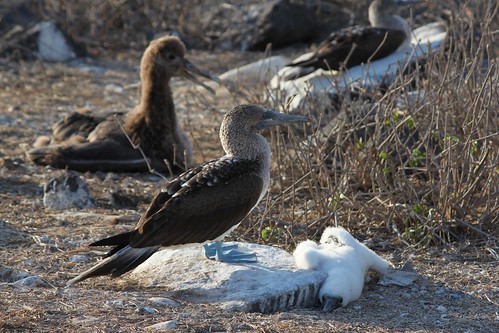
Blue footed boobies:
Our cruise ended the next morning in Puerto Baquerizo Moreno on Isla San Cristobal, the provincial capital. We visited the interpretation centre which opened in 1998 and does a beautiful job of presenting the human and natural history of the islands with an emphasis on conservation issues. Behind the centre we did a short hike to see the statue of a young Charles Darwin located at the spot where he first set foot in the Galapagos in 1835.
That afternoon we took a taxi to the highlands to visit El Junco, the only year round fresh water lake in the Galapagos. Our hotel owner warned us that given the weather conditions, the lake could be fogged in. She was right. We couldn’t see a thing. We have pictures to prove it. If we get the chance, we’ll return to San Cristobal and try again.