Categories
argentina

Iguazu Falls

Since our last post, we have braved the rushing waters of the Iguazu Falls, danced the tango at a milonga, witnessed a country in mourning, paid our respects to Evita and enjoyed our first visitors to the Galapagos. Let me show you Iguazu Falls first.

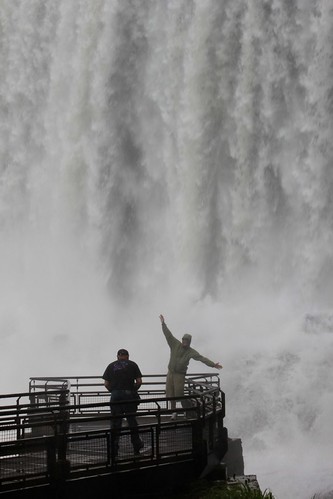
That is the Devil’s Throat, the most impressive section of the Iguazu Falls, a series of waterfalls located mostly in Argentina but also in Brazil. We spent an entire day in the national park on the Argentine side visiting the upper, middle and lower areas of the falls.
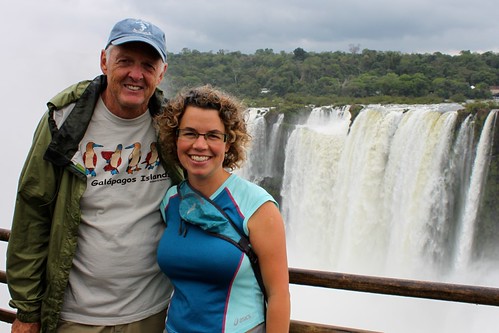
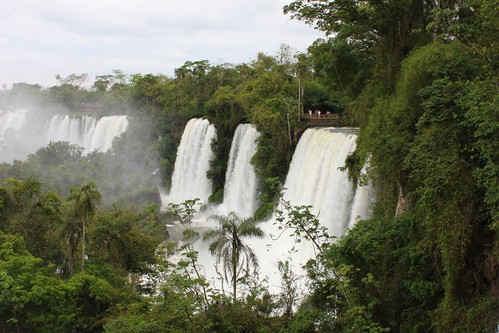
Roger & Sally at Igauzu

Middle falls

Jacket required

On the advice of a park employee, we saved the adventure boat trip for the end of the day. According to my guidebook, 5000 cubic metres of water falls per second into the river 70 metres below. Some of this water landed in the boat.
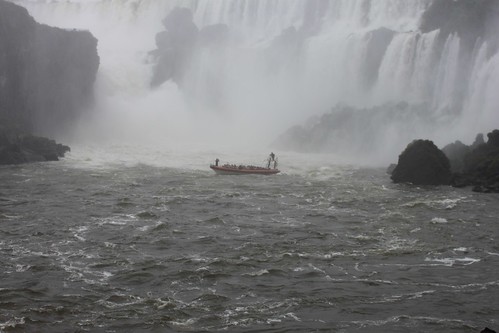
That's a lot of water

After a dry change of clothes and hot coffee, we hung around for the start of the Luna Llena tour, a trip back to the Devil’s Throat but under the light of the full moon. That’s where I tried my hand at night photography but let me tell you that taking pictures of fast running water in the dark with no tripod is no fun!
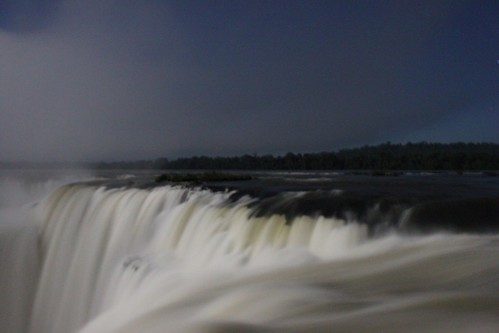
Devil's Throat at night

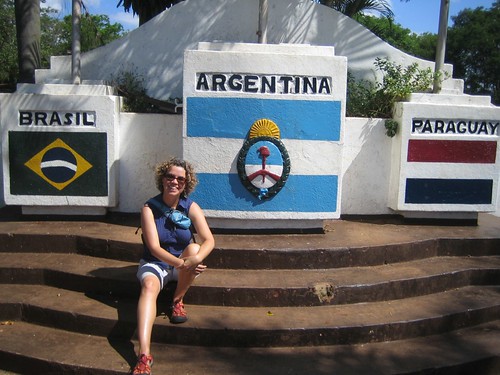
The next day we walked through the town of Puerto Iguazu and along the Iguazu river until we reached the Parana river and the tri-country border of Argentina, Brazil and Paraguay. I was happy to be on the Argentine side where we lunched on a restaurant terrace and took in the view.
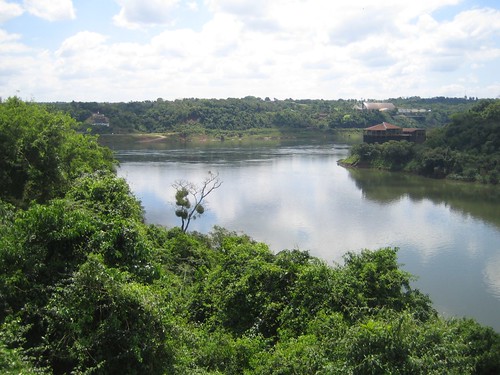
Rios Parana and Iguazu

Tri-country border

The following afternoon we headed to the airport to return to Buenos Aires where we would have almost a week of city life. Hah! We had just boarded the plane when the captain informed us that the clock didn’t work. Thus began 4 hours of waiting to see if a new part would arrive that evening. Hopes were dashed when we saw OUR crew board the last flight out of Iguazu. Things turned out okay though. The airline put us up in a 5 star hotel complete with a buffet dinner, and we got to meet some nice folks from the United States.

More photos from Iguazu: http://www.flickr.com/photos/sataylor/sets/72157625425173082/
Categories
isla santa cruz library puerto ayora

My morning commute

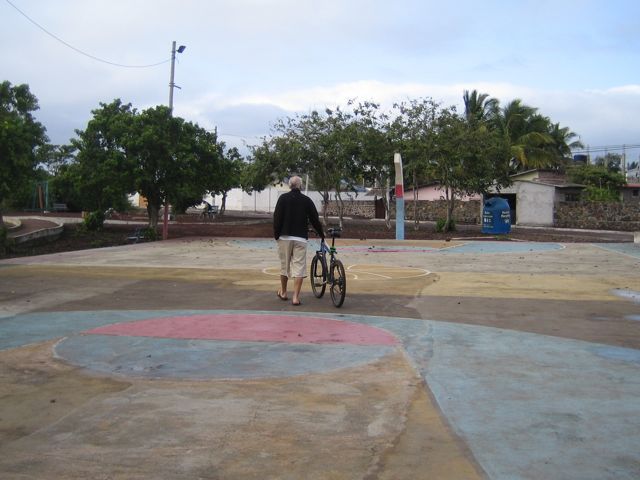
It’s back to work tomorrow. Unlike the majority of people at the station, I do not have a bicycle, so I walk to work. Here’s what I see during my 15 minute commute.

Sometimes Roger walks with me and then cycles home. We cut through the little park that has a basketball court and a playground.

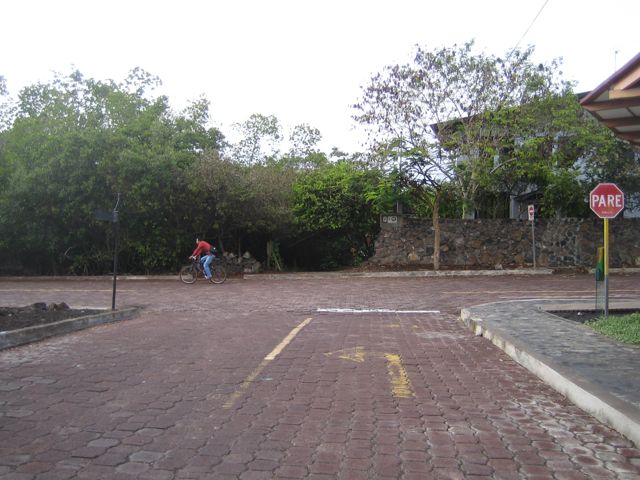
We walk down the hill to Charles Darwin Avenue where there is steady stream of taxis (white pick-up trucks). This morning there is just a lone rider.

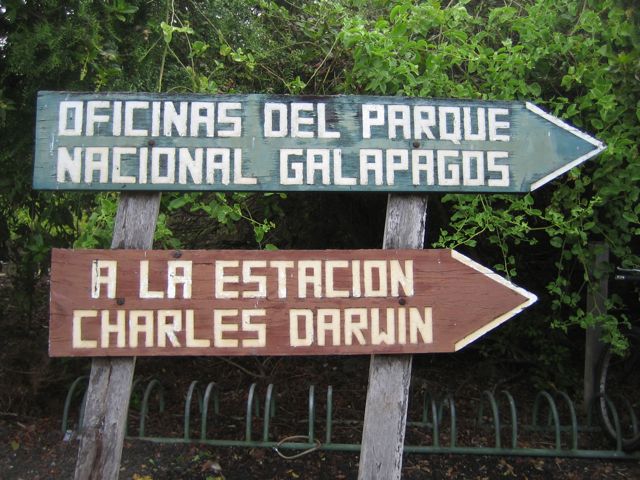
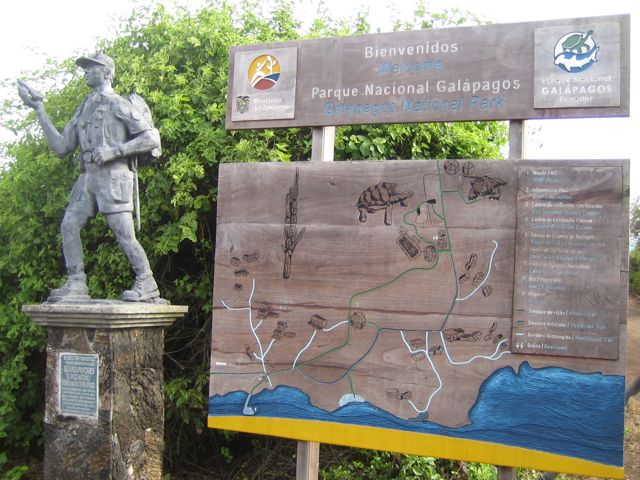
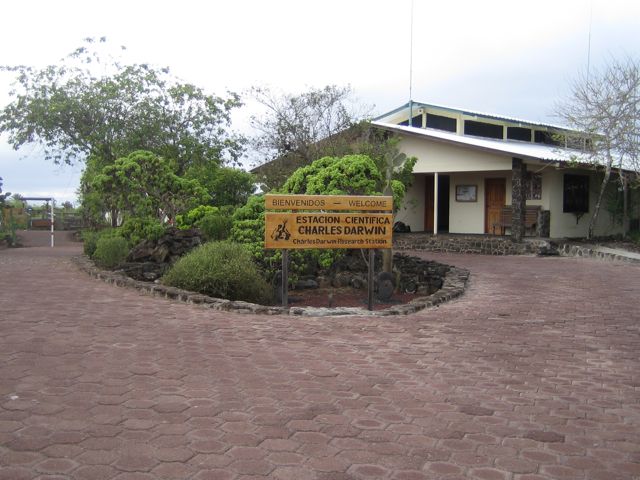
We turn left and head towards the Park headquarters and the research station.

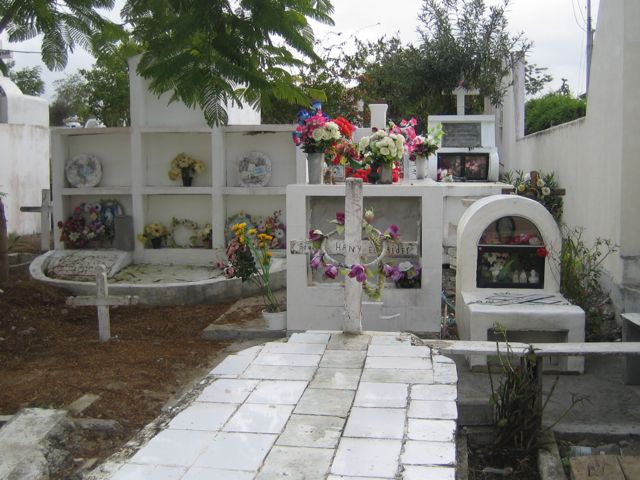
We pass a small cemetery with lots of flowers, both real and plastic. I’m interested in seeing what the cemetery will look like in early November when they celebrate el Dia de los Difuntos (Day of the Deceased as it is called in Ecuador).

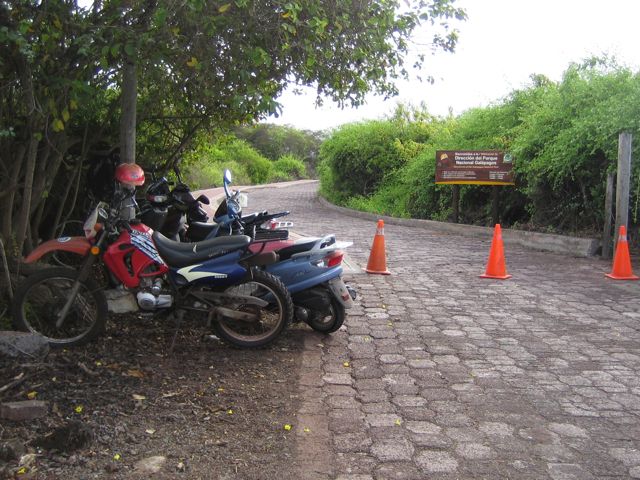
Most vehicles are not permitted in the park, so motorcycles are left at the gate. Roger eyes them enviously.

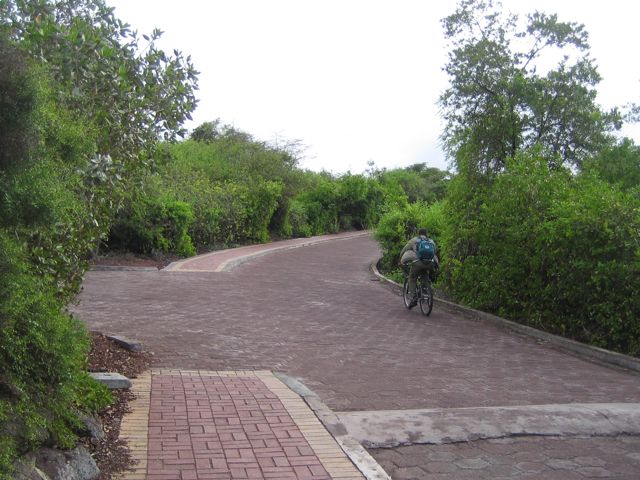
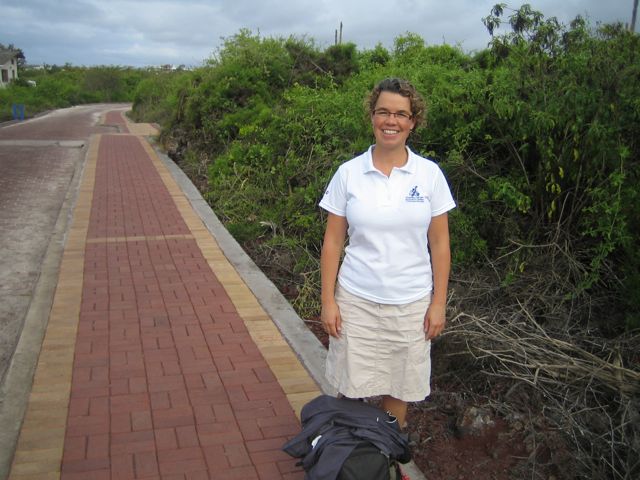
We walk along a new yellow and red brick sidewalk with thick vegetation on either side. On the way, we see finches, small lizards, and other people heading to work.

Typically there are one or two groups of tourists returning from an early morning visit to the station where they’ve seen Lonesome George and his cronies.

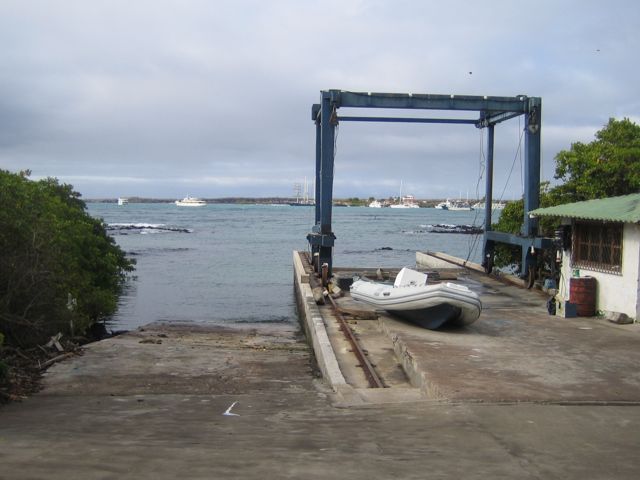
We pass the staff entrance to park headquarters. There are washrooms here for visitors, and across the road is a boat ramp with a view of the ocean and lounging marine iguanas.

Staff and volunteers wear t-shirts with the research station logo. I have five, one for every day of the week. I no longer agonize over what to wear to work.

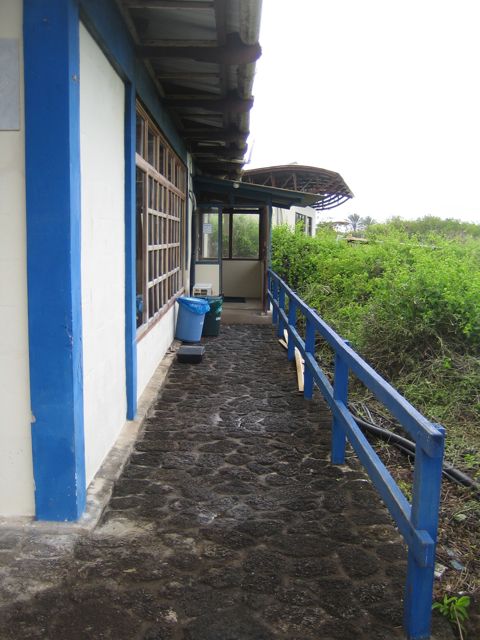
Around a bend in the yellow (and red) brick road are the administrative buildings for the station.

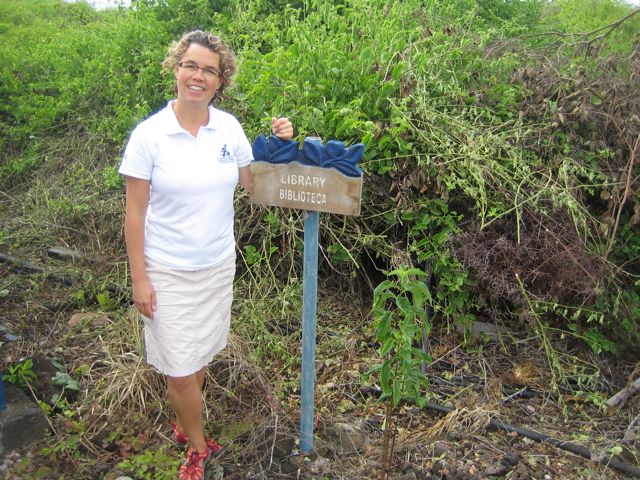
A few steps further is the entrance to the library.

Categories
puerto ayora

I passed!

If you can answer these questions, you too can be a temporary resident of the Galapagos Islands. To make it easier, I’ve translated the Spanish.

1. Which of the following are introduced species and which are native to the islands?
– blackberry
– guava
– sea lions
– goats
– cats
– marine iguanas

2. What colour are the following bins?
– organics
– recycling
– garbage

3. Why should you not write on rocks, trees and walls?
a) it will damage the pen
b) it destroys the beautiful landscape
c) it’s a sign of a bad education

There were more questions but you get the idea…

Categories
isla santa cruz wildlife

Bahia de la Academia

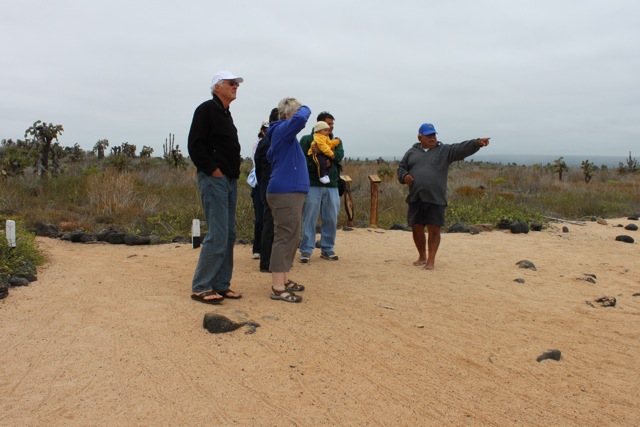
Sunday has become our day for visiting the sights around Santa Cruz. This past week, we went on a boat tour of Academy Bay with another volunteer and one of the staff scientists and his family. Heading out of the sheltered harbour in a small lancha gave us a taste of travel at sea (made me wonder how I’d handle the 2 hour trip to Floreana or Isabela).

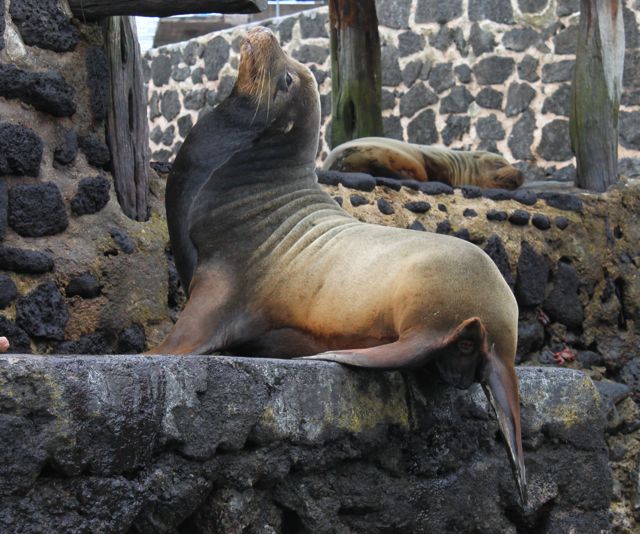
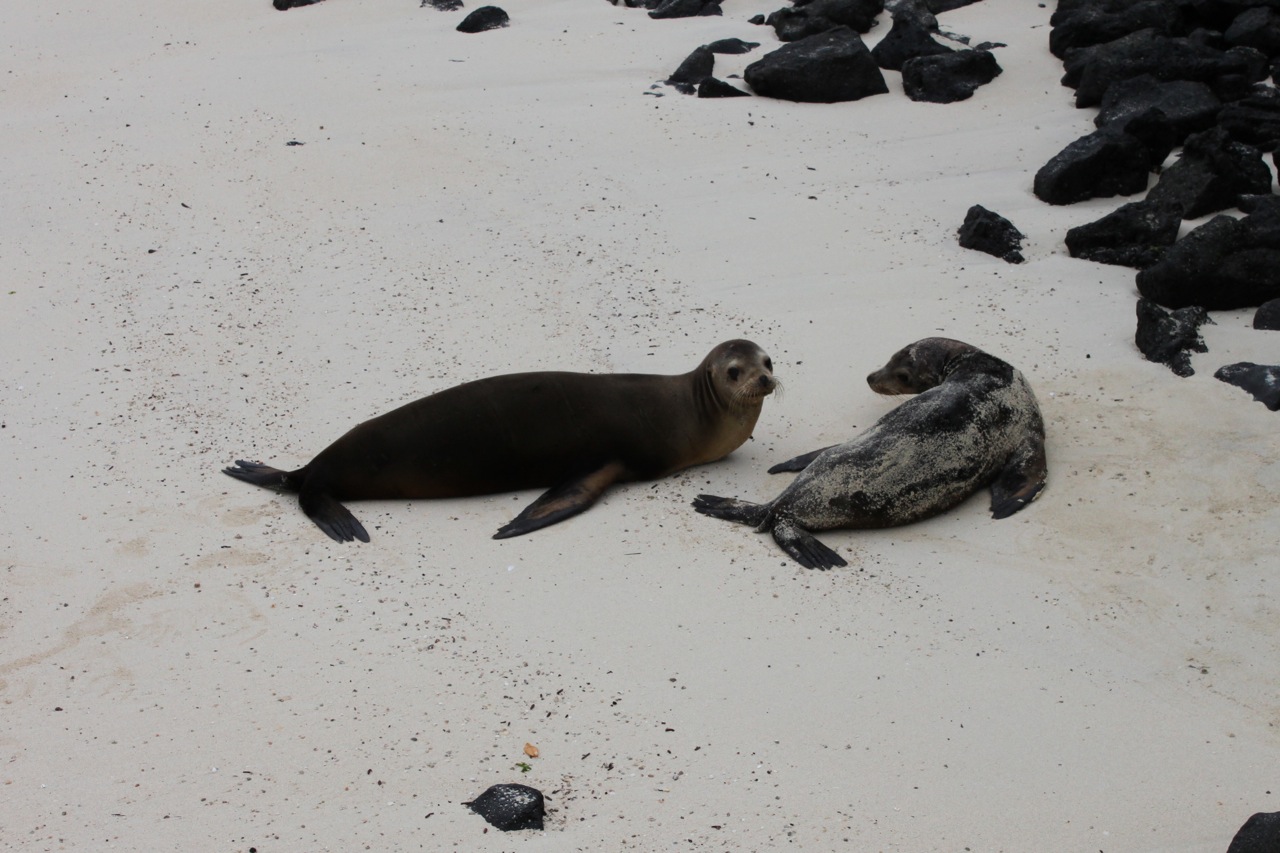
First we headed east to see “La Loberia” where the lobos marinos (sea wolves aka sea lions) hang out. We saw the animals from a distance while our craft bobbed up and down. Apparently, these same animals are the ones we see at the fish market. We were too far to take photographs but here are two of their cousins at another spot.

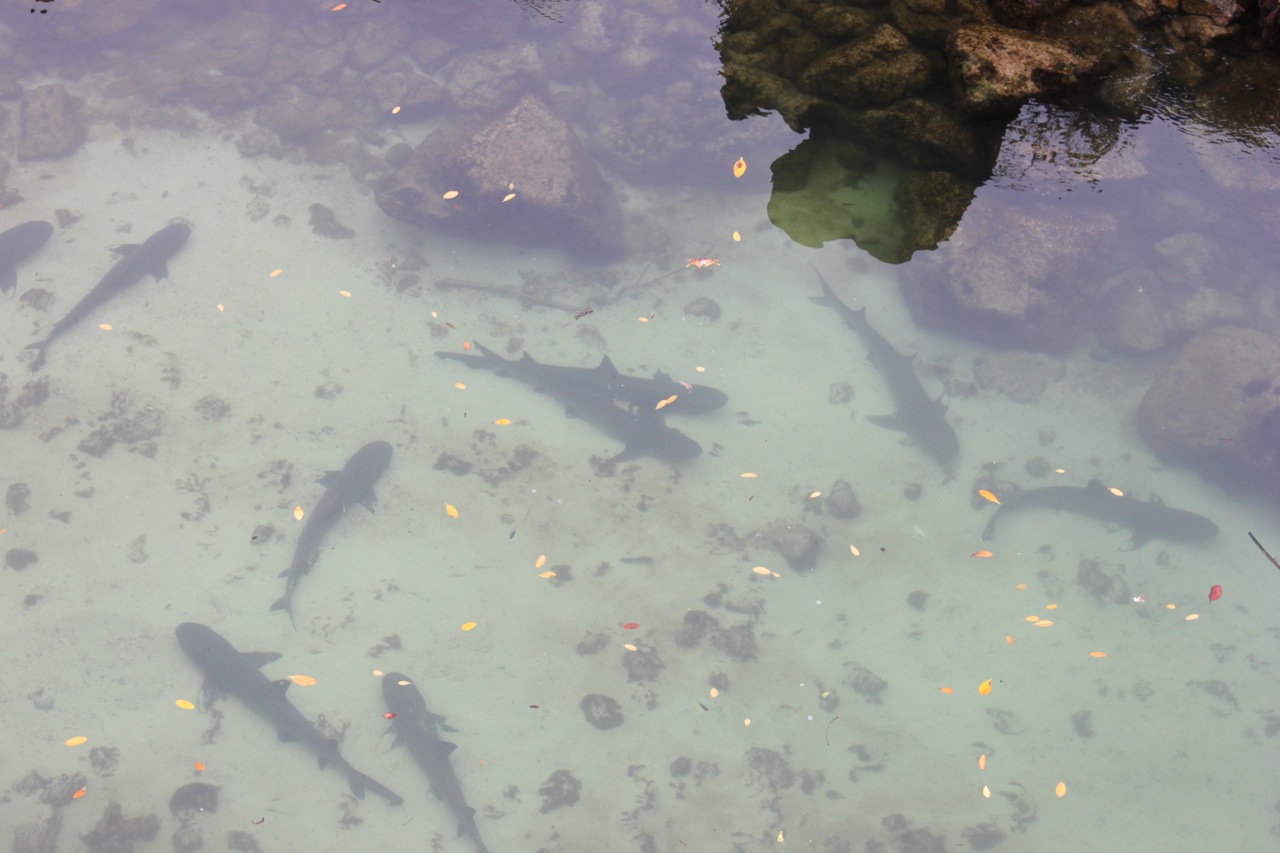
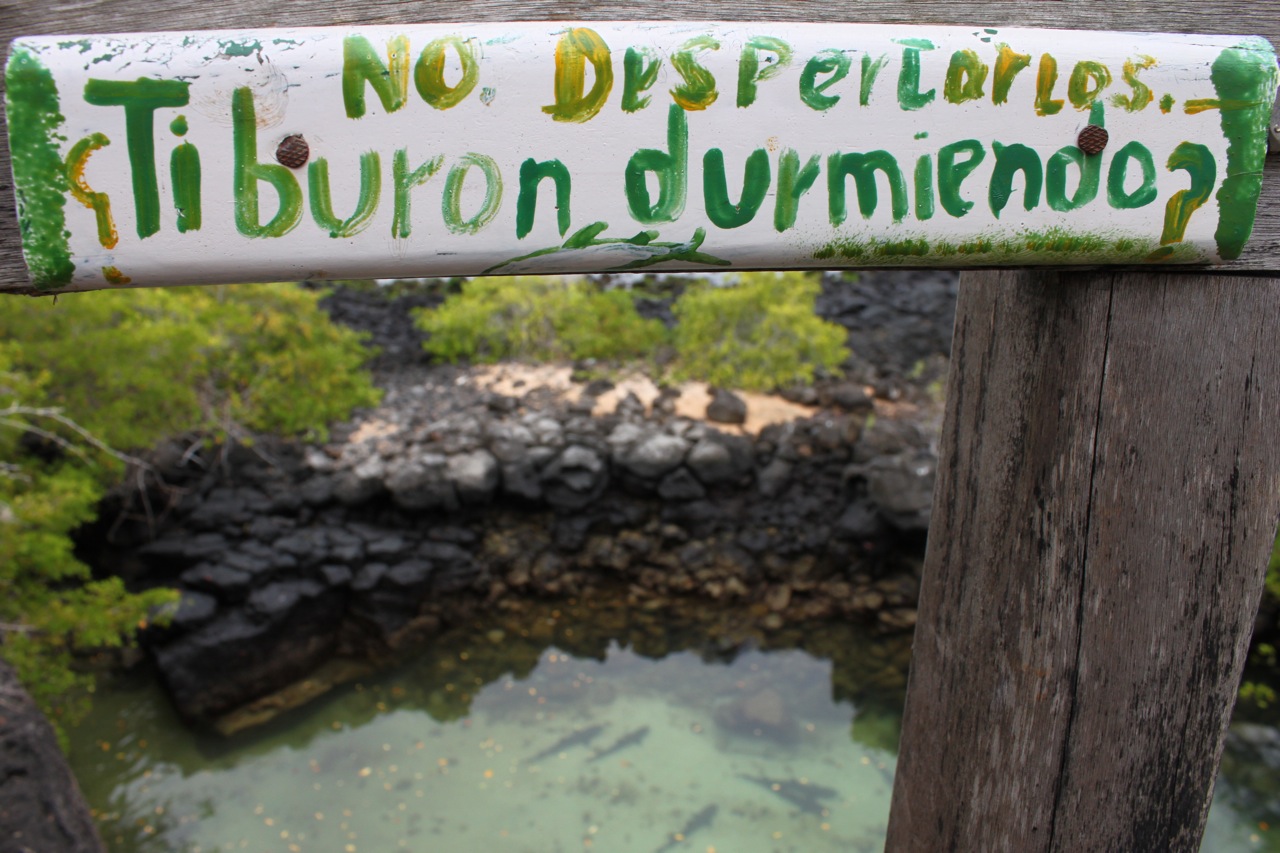
Next we cut back across the bay to the west side to “Canal del Amor” and “Canal de las Tintoreras”. The water was too low to venture into the love canal so we jumped off the boat and walked to see the tintoreras. What are tintoreras? Despite the fact that this could be a picture of minnow or maybe coi, they are in fact small white tipped sharks taking a snooze. Note the sign: Do not wake the sleeping sharks!

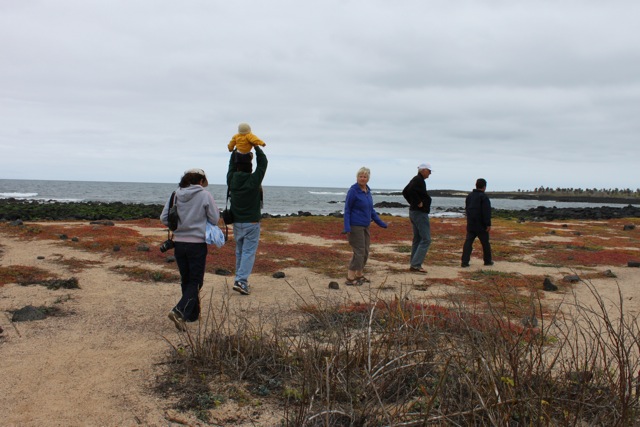
After seeing the sharks (and two manta rays) we followed the trail to Playa de los Perros, a beautiful beach carpeted with Sesuvium, an endemic plant that turns red during the dry season. Our guide was made of tough stuff, walking barefoot over lava rock and cactus spines.

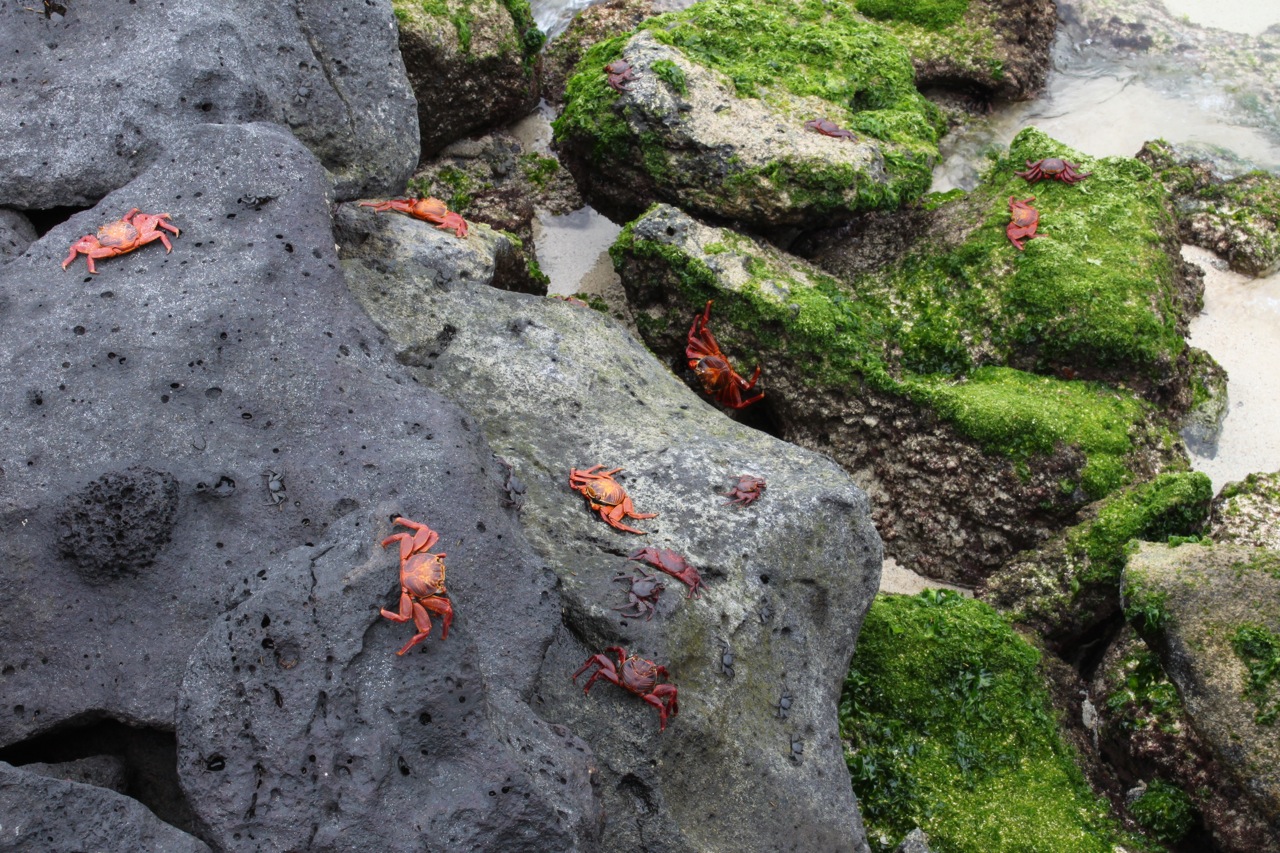
Finally we headed back past the Sally lightfoot crabs to watch lava gulls and blue footed boobies from the boat. We had the option to snorkel but it being surprisingly cool, we declined. We were back in town by noon, just in time for almuerzo (lunch).

Categories
library wildlife

On the Galapagos

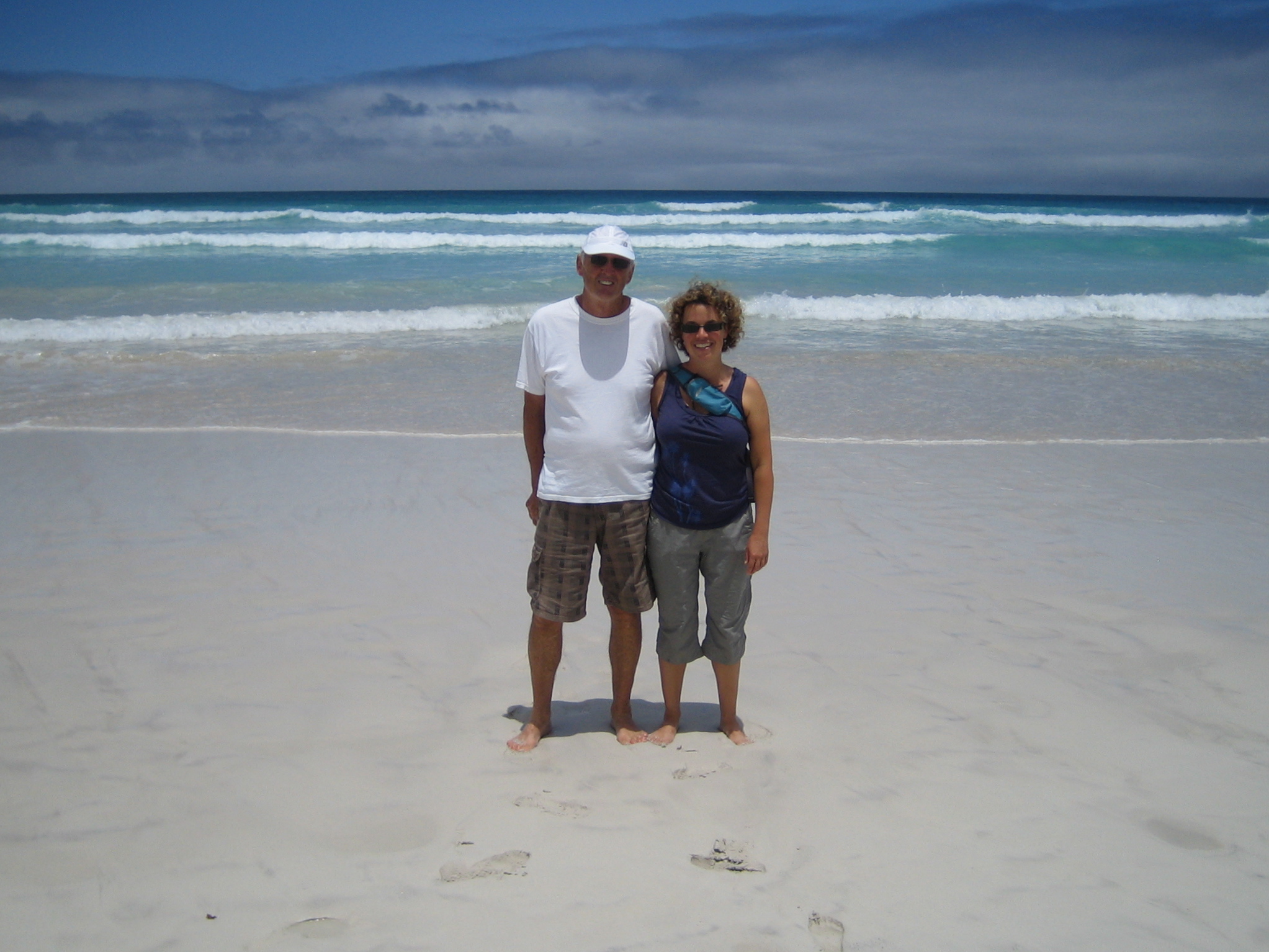
Not all of Isla Santa Cruz is this beautiful but the 50 minute walk to Tortuga Bay was well worth it. There’s a surfing beach and then a quieter beach further on, perfect for swimming (even in the cold season).


Roger & Sally at Tortuga Bay

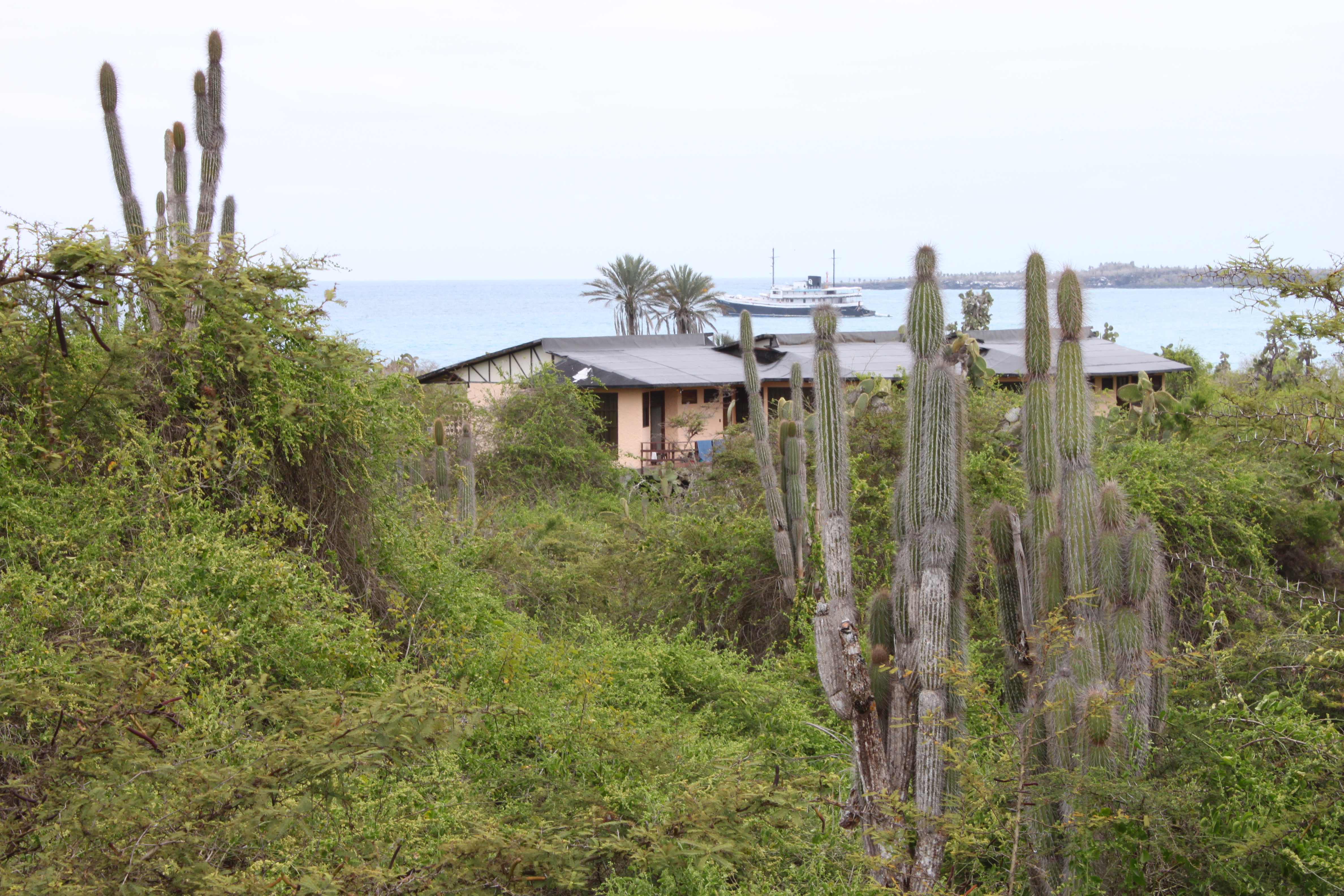
When we arrived we stayed at the research station for a few nights (a short commute to work). Now we’re housesitting for an Australian couple who are on vacation for two weeks. We plan to view a house this week that comes available in October.

Our accommodation at the station
Evening view
Evening view

Here’s a glimpse of the wildlife we’ve seen at the station, in town and at Tortuga Bay.

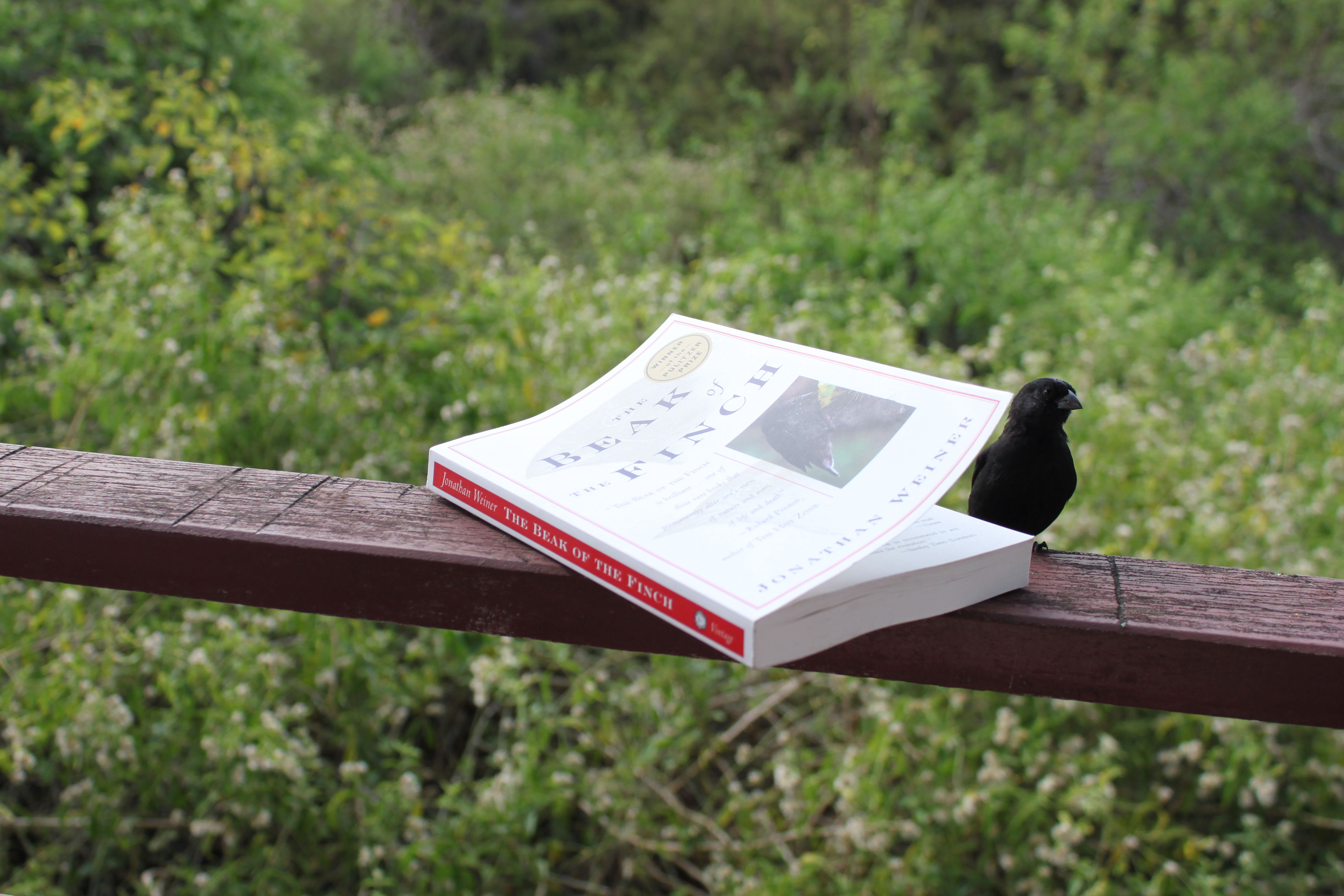
Intellectually curious small ground finch
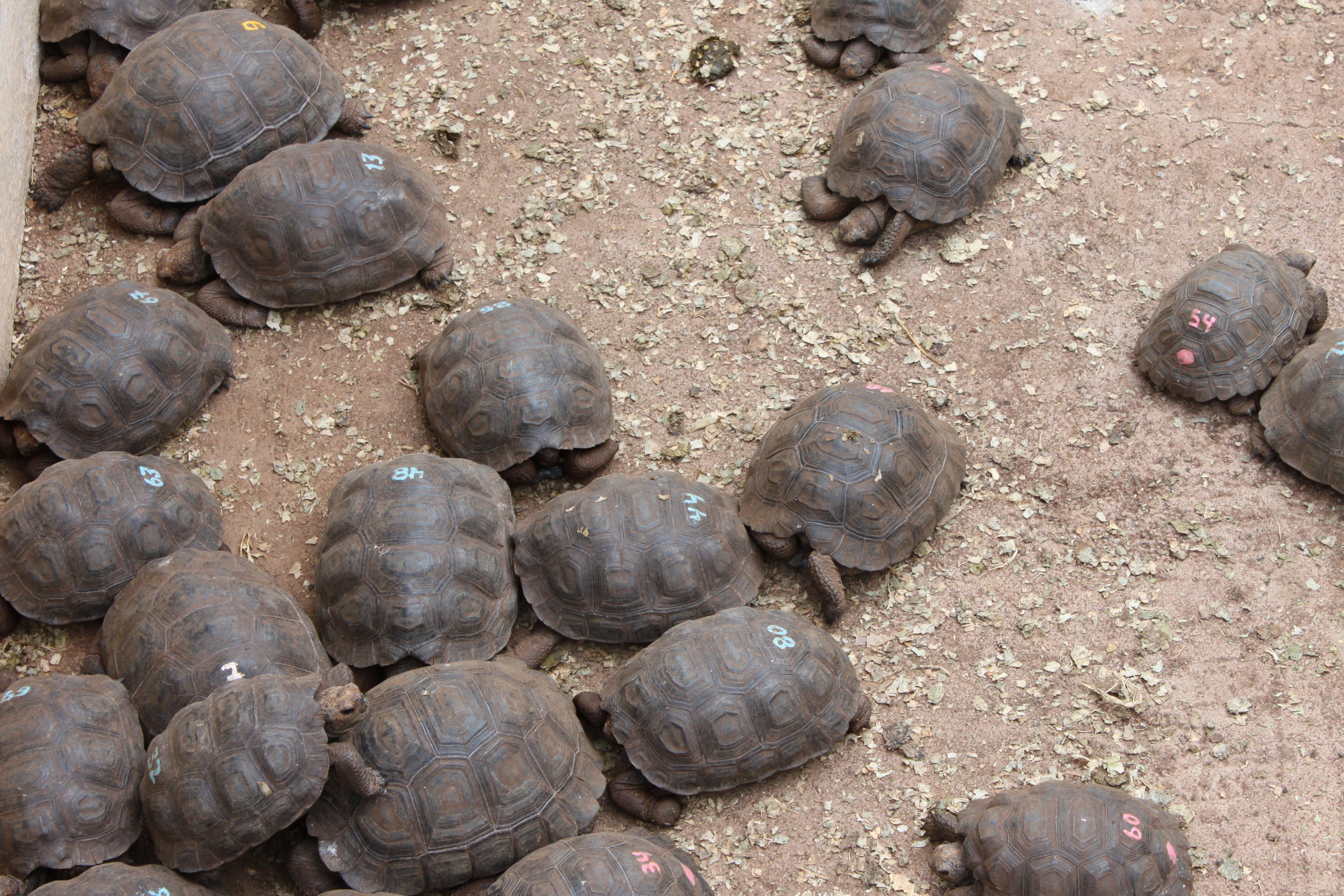
Tortoise nursery
Tortoise nursery
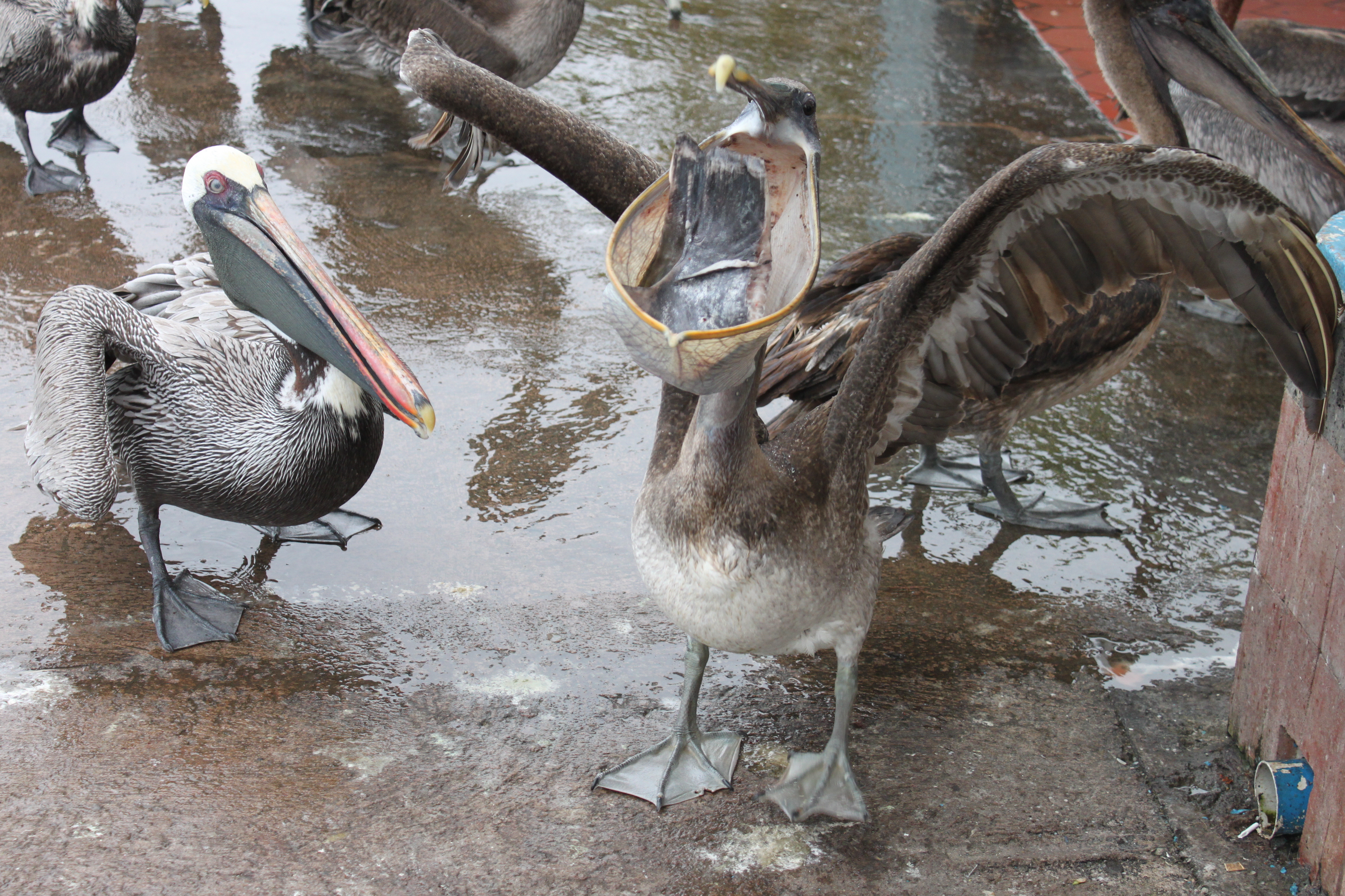
Pelican biting off more than he swallow
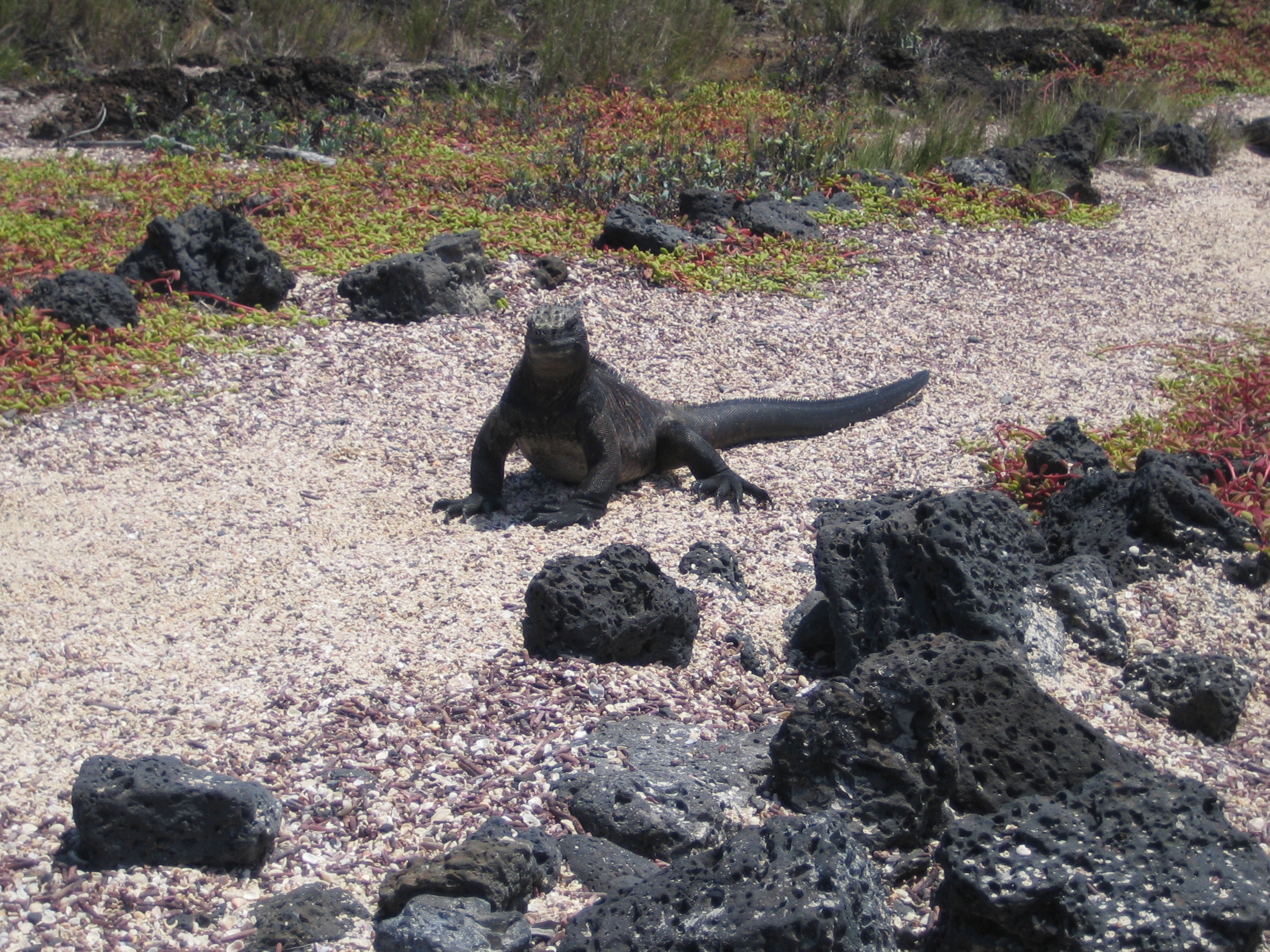
Marine iguana on the path

For more photos from our first 7 days on the Galapagos, see: http://www.flickr.com/photos/sataylor/sets/72157624785248326/

What about the library, you say? On my first day, a tourist from Italy came in for a visit, and on the week-end, I helped a visiting scientist from Spain find the recently published thesis by Charles Darwin’s great great granddaughter (thankfully available in an institutional repository). I also seem unable to avoid journal moves! The library’s low use journals were recently moved “off site” (i.e. a 5 minute walk away), so I’m working with another woman to reorganize them. We need more insect traps for the cucarachas!

Categories
quito

High on Quito

Last night we arrived late (1am) but safe and sound in Quito and are staying in a gorgeous hotel (Dann Carlton) with friendly service and beautiful roses.

Roses in the Dann Carlton hotel lobby

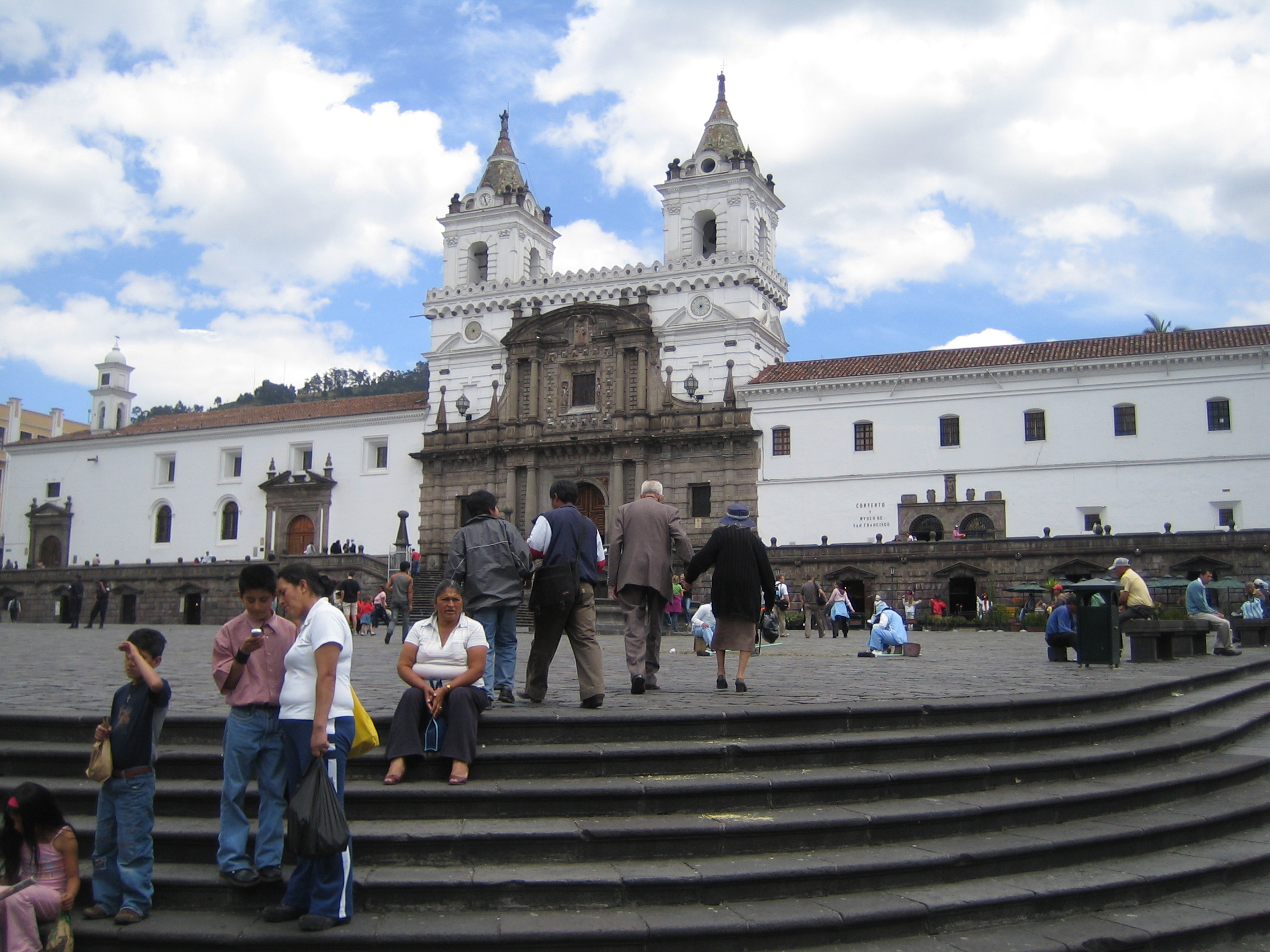
This morning we visited the Old Town where there are 7 churches dating as far back as 1534. Outside the Church of San Francisco (below), we met an arts student (Luis) and practiced our Spanish with him. He taught us the word “chevere” which means cool. We may check out his hometown Loja in the south. Nearby in the town of Vilcabamba, there is supposedly a 130 year old woman and a perfect climate year round (perhaps a connection).

San Francisco
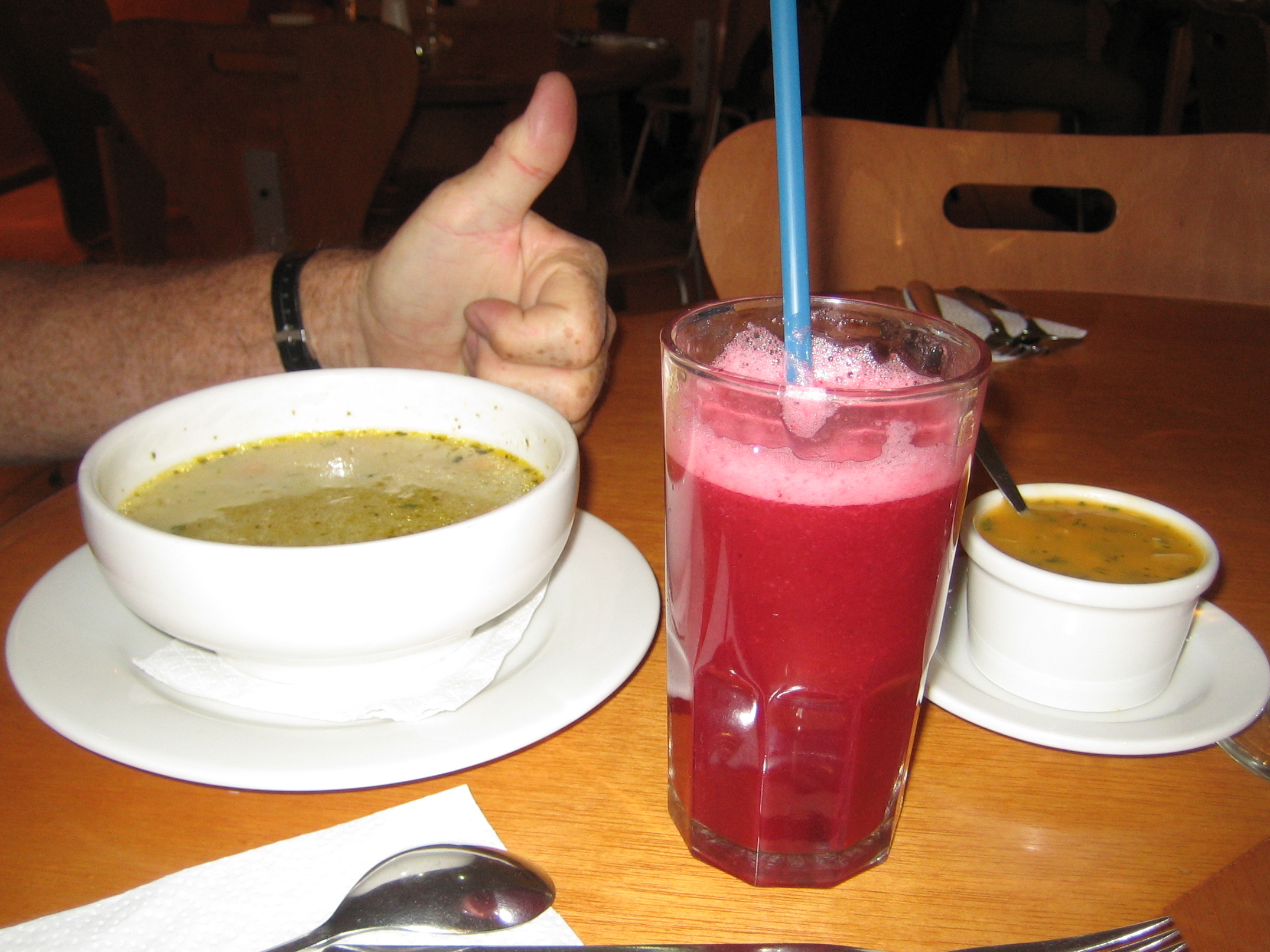
We had lunch in the old town where Roger enjoyed a tasty 3 course meal for $3.50 complete with blackberry juice (juego de mora).

Blackberry juice

In the afternoon, we took the gondola ride up the side of the volcano. Accents are important. It took a while for the taxi driver to understand that we wanted the Teleférico not the Teleferíco.

Teleferico

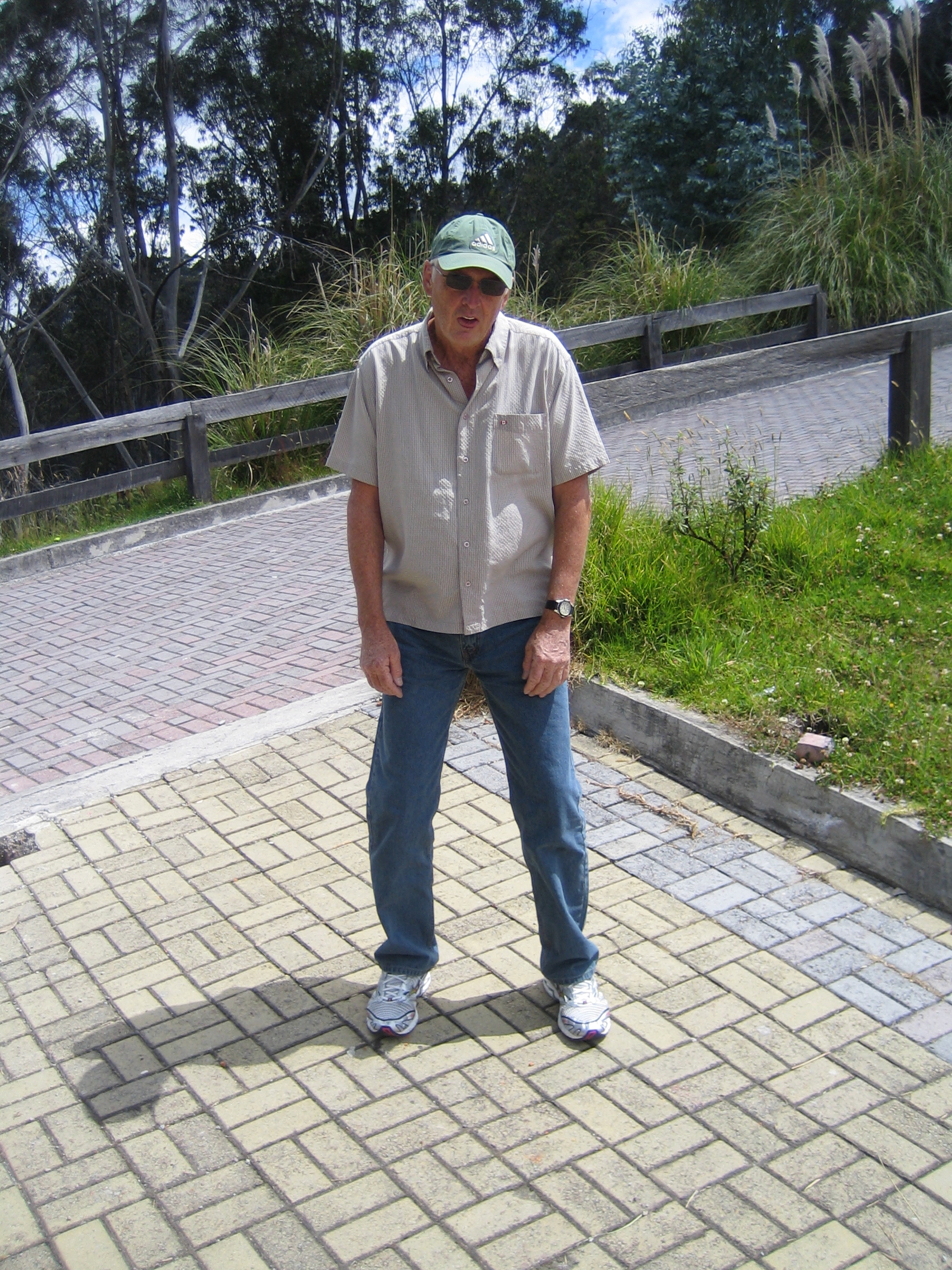
Already suffering a bit from the altitude in town, we went higher to 4100 metres. We drank coca leaf tea for strength but learned from a local that it didn’t contain any coca. We still felt better.

Exhausted Roger

As we write at 6:30 local time, it’s dark outside.

For more photos in Quito, see: http://www.flickr.com/photos/sataylor/sets/72157624623805919/

We leave tomorrow for the Galapagos.

Categories
general

Galapagos travels

We have our visas for Ecuador, and our flight to Quito is booked for August 16. I’ve set up this blog to share our Galapagos experience with friends, family and colleagues. Because I have no Galapagos photos of my own yet, I’m using a beautiful image for the header that I found on flickr. It is a Sally Lightfoot crab taken by A_E_P.

iguanas
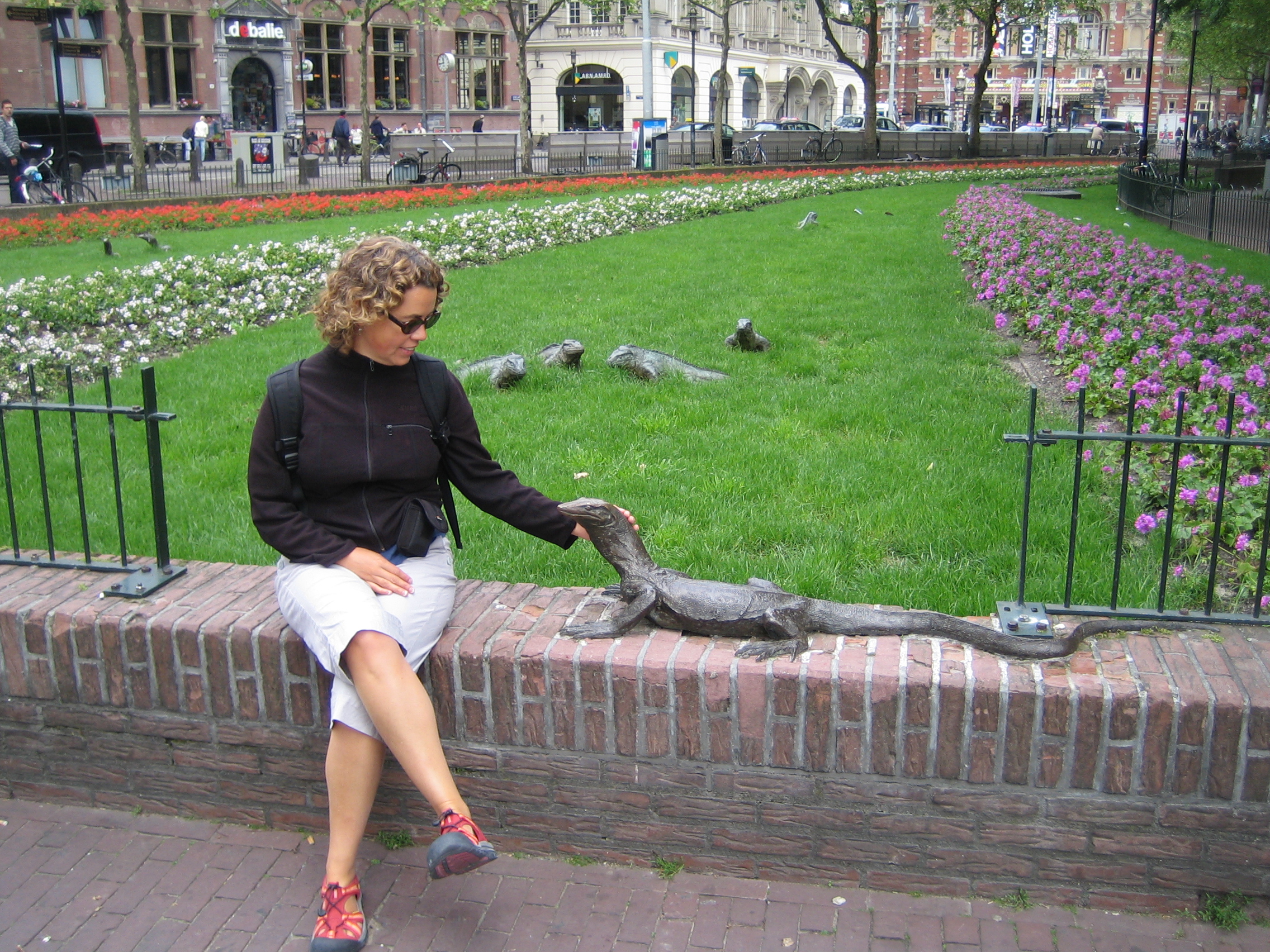
Iguanas in Amsterdam

Spam prevention powered by Akismet