Categories
isla floreana

Fun on Floreana

Floreana is one of four inhabited islands in the Galapagos and while Roger and I had visited Post Office Bay and Punta Cormorant on the north side during our cruise in November, I had yet to see the small town of Puerto Velasco Ibarra (population ~ 120). I got my chance three weeks ago when my neighbours (Cristina and Matthias) and some other folks from the research station were there running an environmental education program for the local kids. Since there is no regular ferry service to Floreana, I hitched a ride with a boat of day-trippers to make the 1.5 hour trip.
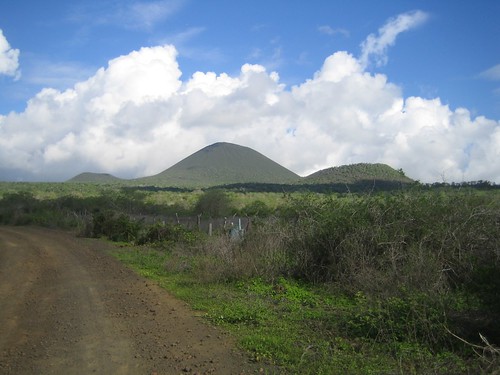
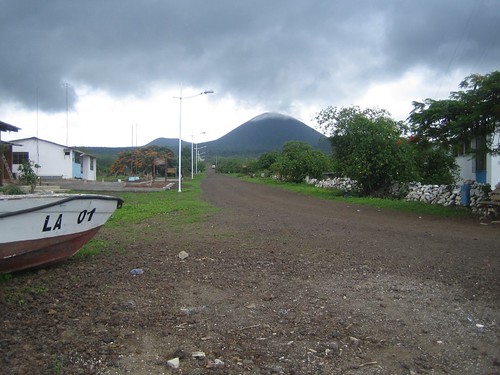
Isla Floreana

V. Ibarra, Floreana

Although it was Friday, people had the day off to celebrate Galapagos Day. The town started the festivities with a reverse relay triathlon (bike, run, swim). There were only four teams in the race since bicycles are scarce on Floreana (a hilly island with thorn-covered lava roads). The station’s team won!

One group from the station is living in a house on Black Beach (with marine iguanas and sea turtles building nests nearby). I had a swim and some lunch, and then we headed over to the community centre where most of the townspeople were enjoying grilled beef, yucca and salad (a second lunch for us).
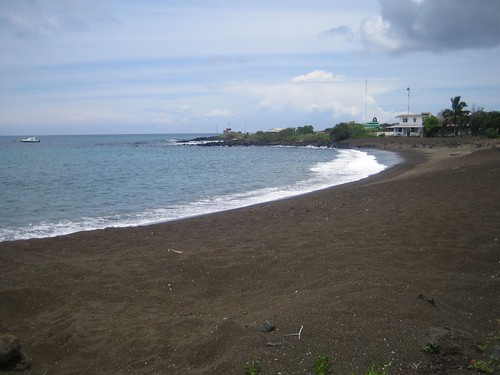
Playa negra

In the afternoon, my friend Angela and I walked up the road to Las Palmas where the other group from the station was living, and where I was going to stay. En route we passed the cemetery where Margaret and Heinrich Wittmer are buried. They were a German couple who came to Floreana in the 1930s and whose descendants still live on Floreana.
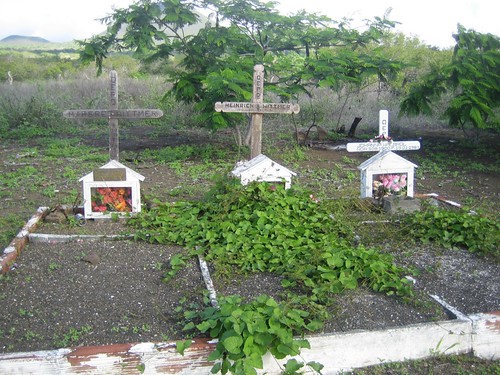
Cemetary on Floreana

After the scenic but tiring 30 minute walk uphill, we rehydrated on ciruelas (small plums) from the orchard at Las Palmas.
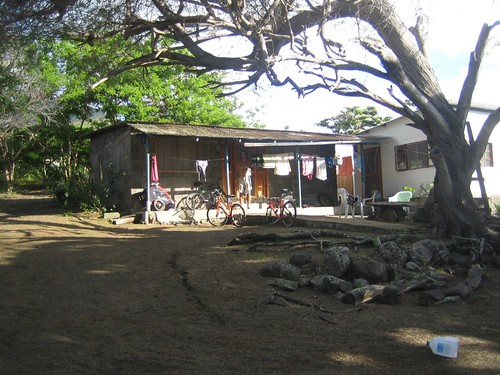
Las Palmas

The house is built on the site where two other early inhabitants, Dr. Ritter and Dore Strauch had lived. Dr. Ritter died under mysterious circumstances from food poisoning, and with a bit of wandering through the orchard and direction from Matthias, we found his grave.
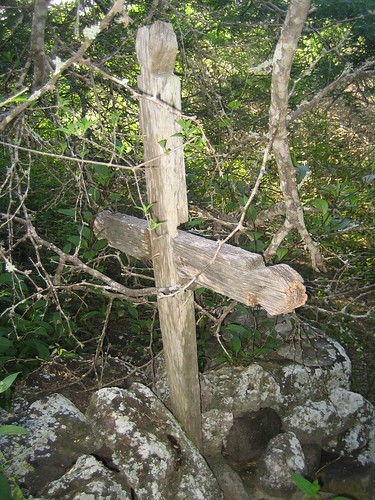
Ritter gravesite

We visited with Cristina and Matthias over coffee, cake and more ciruelas (this time in the form of juice – throw them in a blender, pits and all, and then strain). We then walked back to town, arriving just as the light was fading. After a delicious supper with the group at Black Beach, we wandered over to the soccer field which doubled that night as a dance floor. Initially only two pairs of young people were dancing but with encouragement from the MC and a generous pouring of canelazo (a hot cinnamon drink), the dance floor filled up, and we grooved to the beat of reggaeton. It was reported the next day by friends at Black Beach that the music played until 6am. Meanwhile I slept peacefully at Las Palmas and woke to the sound of birds chirping and the smell of fermenting ciruelas.

The next day, I visited La Loberia which is a sea lion area and a great place to snorkel. The rain came as we finished our swim, and we enjoyed a freshwater shower which has become a luxury living in the Galapagos.
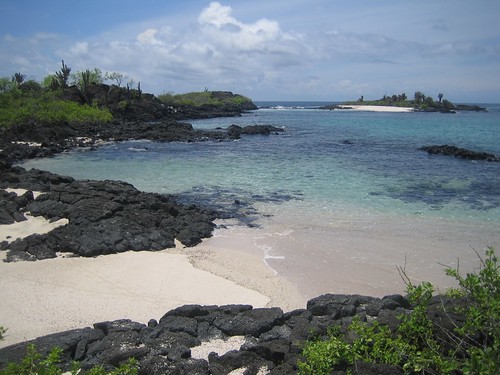
La Loberia

That night the Black Beach crew made the trek to Las Palmas, and there were 13 of us from 8 different countries for dinner.

The following day I returned to Puerto Ayora, travelling again with a group of day-trippers. It was a wet ride! It poured before the trip. Then as part of the tour, we stopped at La Loberia for a snorkel, and the skies opened again. It cleared up for some of the ride but upon reaching Puerto Ayora, it poured again. Dare I say it? I was actually feeling chilled by the time I got home!
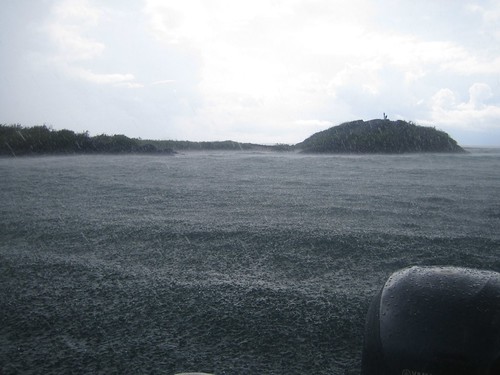
Boat trip back to SC

I enjoyed my mini adventure to Floreana, having read the fascinating tales of the Wittmers and the Ritters even before I came to the Galapagos. The trip was a welcome break from the hustle and bustle of Puerto Ayora and was especially fun because friends from the station were there.
Categories
isla espanola isla floreana isla san cristobal wildlife

Cruise to the Southeast

On Saturday, November 27 we began our long awaited 4 day cruise to the SE islands which as you know are the oldest islands in the Galapagos as they were formed at the NW hot spot then migrated to the SE. Consequently they are eroded and flatter with more vegetation.

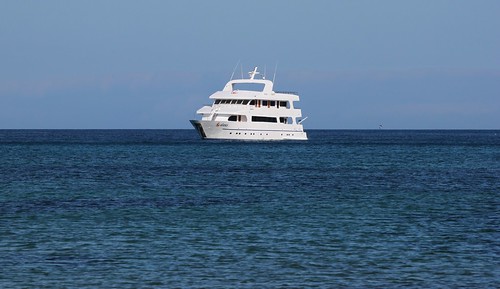
We boarded our yacht Galaxy in Puerto Ayora harbour at noon and relaxed while waiting for the rest of the tour group who were arriving by air from the mainland.

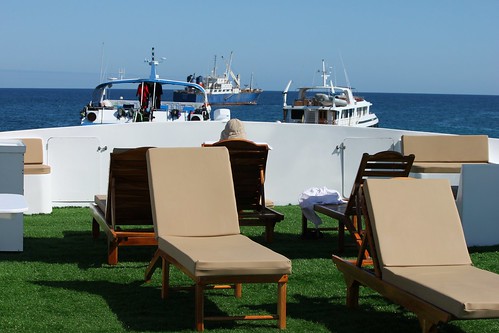
Rooftop deck perfect for sunning

The yacht had capacity for 16 but it turned out our group was only going to be 9. (Yay for last minute booking). Sally and I were accompanied by our friend Richard, a visiting scientist from Australia, and we joined a young couple from Switzerland who were already on board. Arriving by plane were two British couples who completed our group. An excellent mix of people and a first rate crew and guide made for a memorable trip. Everyone got acquainted over our first of several tasty meals together and went to bed knowing that when we woke up the next morning we would be anchored off Isla Floreana.

The Galaxy

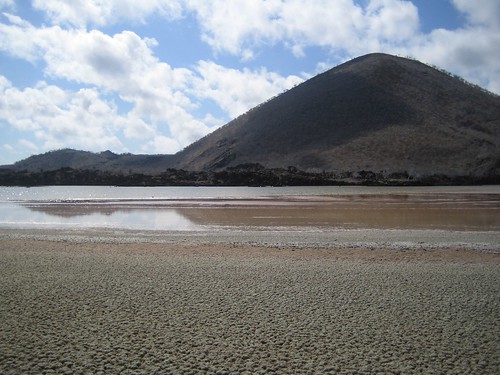
Breakfast every day was at 7am and in the interest of brevity, let me say that all breakfasts, lunches and dinners were very good. By 8 am, we were onshore at Punta Cormoran where we walked to a nearby brackish inland lagoon frequented by flamingos.

Lagoon at Punta Cormoran

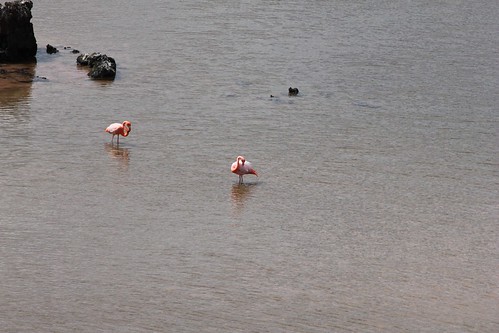
The lagoon was very low but we did see two flamingos at a distance which official photographer Sally captured with her big new telephoto lens.

Flamingos

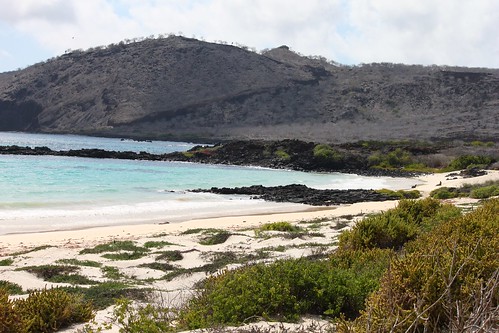
A short walk in a different direction took us to a brilliant white sandy beach well known as a green sea turtle nesting site. The turtles were cruising just offshore when we visited and come on land at night to lay their eggs. Back at our landing site we went snorkeling and were lucky enough to swim with a turtle.

Turtle egg laying beach

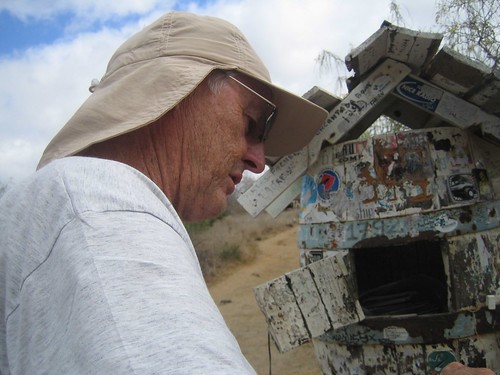
After lunch on board, the yacht moved along the coast to anchor in Post Office Bay. This is the spot where in 1793 ships bound for the Pacific whaling grounds would leave letters in a barrel to be picked up by homeward-bound ships whose crews would deliver the mail by hand. Following tradition, we left some mail so a few of you may receive a card delivered by a stranger. A walk further inland (which we didn’t do) lie the rusted remains of a failed 1920s Norwegian fishing operation.

Roger mailing a card

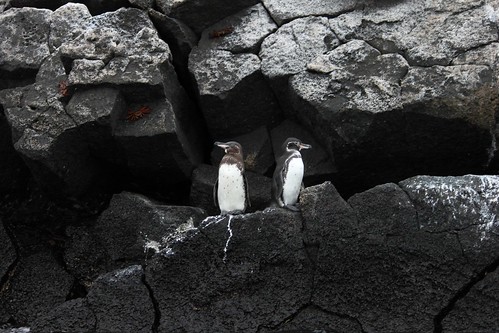
At 5pm we set out in the panga (inflatable dinghy) in search of Galapagos penguins. We were in luck and got up close to the little guys as they rested on a lava outcrop. We also saw sea turtles along the way and in a quiet spot, resting white tipped sharks.

Penguins

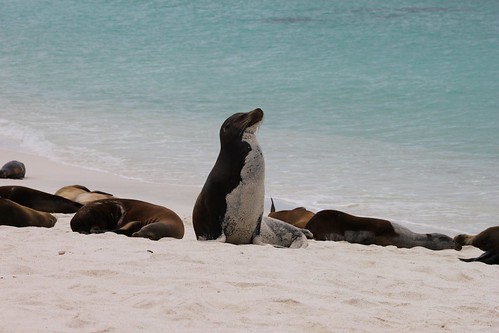
After another overnight sail or motor if you will, we arrived at Gardner Bay on Isla Espanola. Our morning beach walk started with the now familiar indifferent gauntlet of lobos marinos. All beaches have lobos, all sizes, all the time but this beach had LOTS!

Disguised as a penguin

Here is a video of the beachmaster or alpha male who during the breeding and calving season constantly swims back and forth along his sandy turf, barking, warning and chasing off potential rivals.

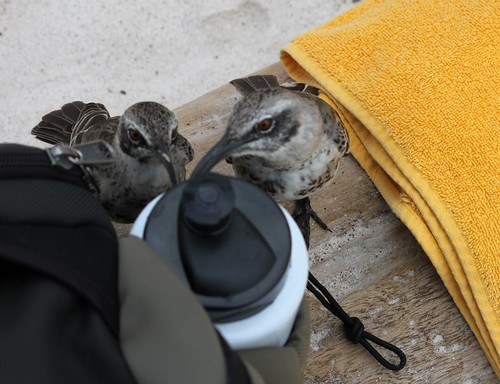
Also on Gardner Bay, we observed some peculiar behaviour. As soon as we were on shore, we were mobbed by thirsty Espanola mockingbirds (one of four Galapagos species). These hazel eyed residents are constantly in search of water and know that humans have it. While you are not allowed to water or feed them to avoid interfering with the natural order, they hope someone has a leaky waterbottle.

Hoping for water

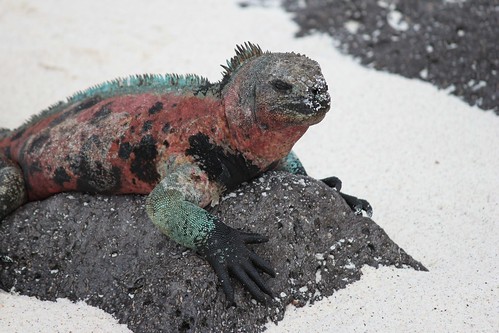
The marine iguanas on Espanola are a subspecies and are more colourful than those on the other islands. During the breeding season, the males’ red and green colouring is even more pronounced.

Christmas iguana on Espanola

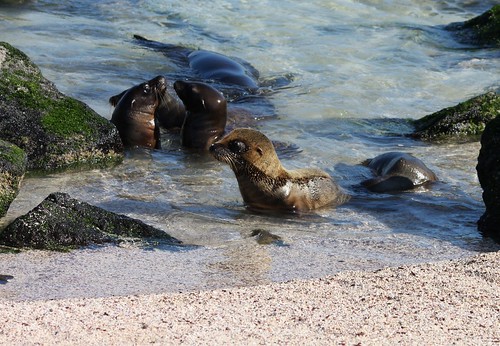
After lunch we motored for an hour along Espanola arriving at Punta Suarez where for the first time we had to share an island with a large cruise ship. This stop to visit the waved albatross nesting ground was the main reason we took the cruise, and I felt frustrated about sharing the space. No worries, it all worked out. On shore while getting organized for the birdwalk, we watched a group of sea lions with many young playing in the shallows and newborns that were barely able to nurse. The barking beach boss was never far away.

Sea lions playing

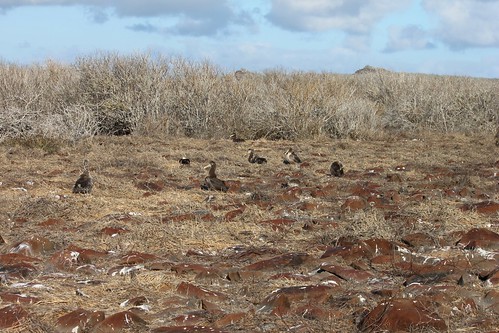
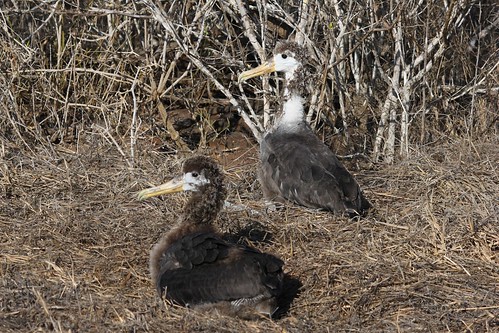
The walk exceeded expectations. We saw not just one or two albatrosses but a whole field of juveniles, many with partial baby feathers.

Nesting grounds

This nesting ground was the same one you see in the National Geographic videos, and it was a different feeling to be there with these stately and at the same time goofy looking birds.

Juvenile albatrosses

In the video below we captured a juvenile prompting its parent for food.

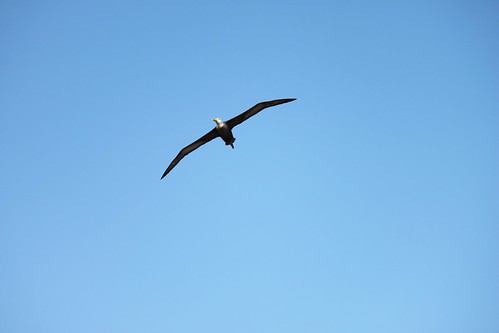
On the ground, albatrosses waddle like big slow ducks but in the air they are masters of grace and power.

Soaring albatross

While we came to see the albatrosses, other birds nest in this area too. There were boobies everywhere.

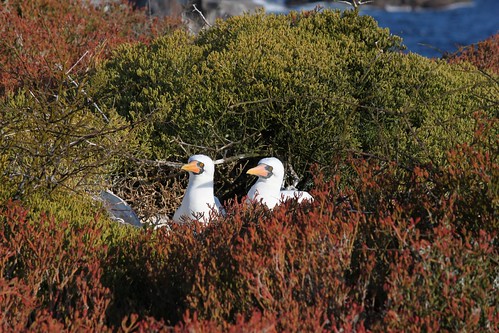
Nazca boobies:
Nazca boobies

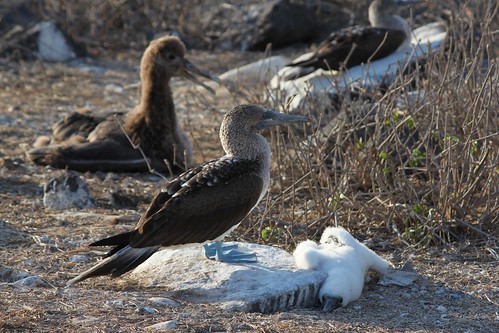
Blue footed boobies:
Albatross in the background

Our cruise ended the next morning in Puerto Baquerizo Moreno on Isla San Cristobal, the provincial capital. We visited the interpretation centre which opened in 1998 and does a beautiful job of presenting the human and natural history of the islands with an emphasis on conservation issues. Behind the centre we did a short hike to see the statue of a young Charles Darwin located at the spot where he first set foot in the Galapagos in 1835.

Darwin on San Cristobal

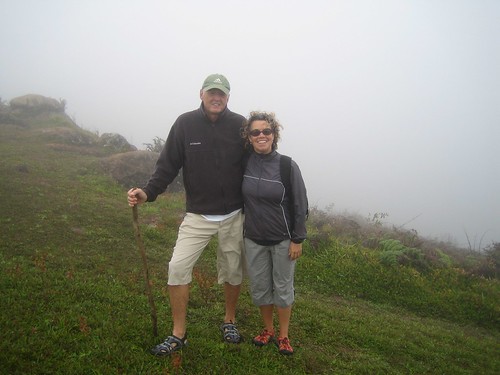
That afternoon we took a taxi to the highlands to visit El Junco, the only year round fresh water lake in the Galapagos. Our hotel owner warned us that given the weather conditions, the lake could be fogged in. She was right. We couldn’t see a thing. We have pictures to prove it. If we get the chance, we’ll return to San Cristobal and try again.

Where's the water?

More photos from our trip:
http://www.flickr.com/photos/sataylor/sets/72157625458213919/

Spam prevention powered by Akismet