Categories
isla santa cruz puerto ayora

Friday in Puerto Ayora

Friday started like any other day. Roger got up first and made coffee.

When I came downstairs, he had already read about the earthquake in Japan and was on the phone with our neighbour who called from Quito to let us know the news.

At that point, we didn’t really understand that there was a risk for the Galapagos, so Peter (our friend who is visiting) left for a day trip to North Seymour Island, and I headed off to work a little while later. A few blocks from the house, I met Pete who had yet to be picked up by the tour company, and a woman from the research station who told me that the station was closed. President Correa had decreed that the coastal communities in Ecuador be evacuated to higher ground. For citizens of Puerto Ayora, this meant going to the town of Bellavista in the highlands. For Lonesome George and the baby tortoises, it meant a trip to Santa Rosa.

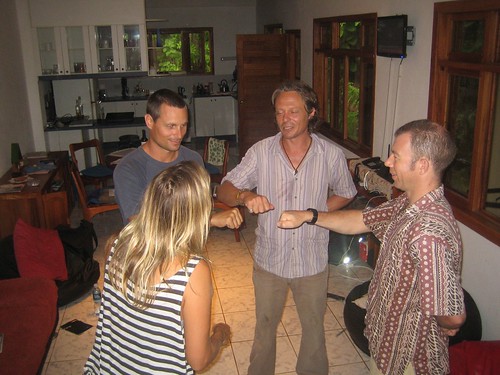
Thus began a day of waiting since the tsunami was not expected to reach the Galapagos until the evening. Since Roger and I live in a 2-storey house quite high up already, our place became the refuge for some folks who were staying at the station. Amazingly, the internet was fully functional, and at one point, we had four laptops, 1 Blackberry, 1 iPhone and 1 iPod touch all connected and checking for the updates. I was happy to learn that librarian colleagues who were gathered in Newport, Oregon for an annual meeting had moved to higher ground until the threat had passed.
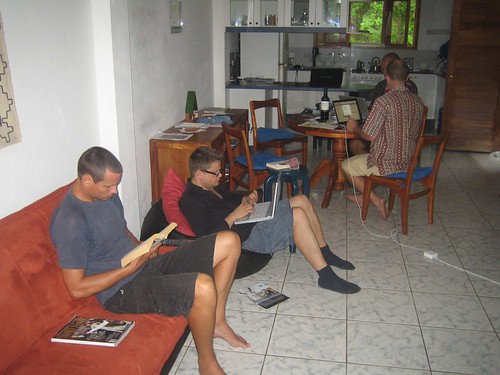
A well connected group

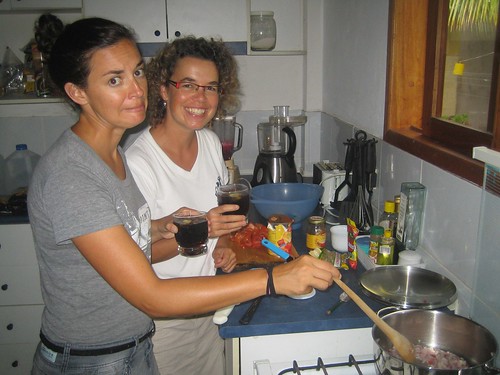
In addition to following the news and checking in with family and friends through email and Facebook, we pretty much spent the day eating, drinking, talking and playing games. Based on the predictions of minimal wave heights in the Galapagos, we decided to remain at home in Puerto Ayora where we were comfortable and dry.
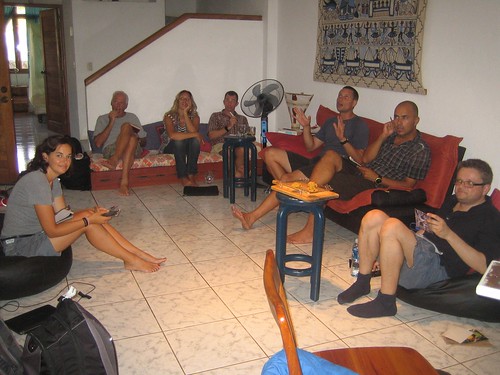
Watching the news

Preparing lunch

Spoof

According to the Pacific Tsunami Warning Center web site, the first wave in the Galapagos (at Baltra Island) was predicted for 5:54pm. We climbed onto the roof and waited until the sun set but the ocean remained calm.
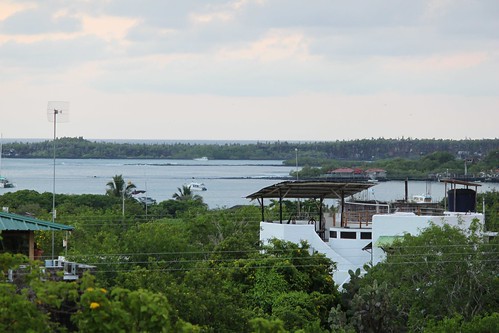
Calm water

Just after going back inside, the power went out which meant no lights or water (since our water is on an electric pump). Luckily our group was well equipped with headlamps and lanterns, and Roger had collected rainwater which we could use for dishes and flushing toilets. [As it turned out, the power didn’t come back on until the following morning.]

It wasn’t until we walked down to Charles Darwin Avenue at about 7:30pm and saw debris on the road, that we realized that the first wave had arrived after dark. We met a police officer on a motorbike who told us that they were expecting another swell and that we should go home.
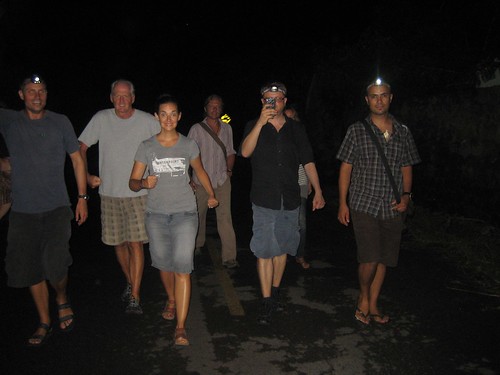
Checking out the streets

Later that night when we heard people returning from Bellavista, we ventured out again to inspect the damage. Buildings right on the waterfront including the Red Mangrove hotel, the Banco Pacifico, the Pro Insular (the big grocery store) and two beautiful galleries had their ground floors flooded. Other buildings just set a few feet higher were completely spared. The strangest thing was seeing this blue boat lying on the road. Without a motor, it was light enough to be carried by the wave.
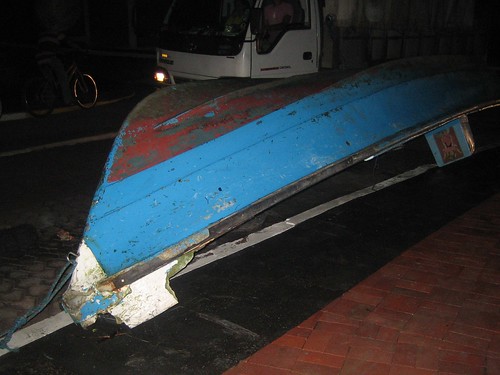
Boat on Charles Darwin Ave.

The streets which had been dark and quiet were now busy again with taxis and buses returning people to their homes. My friend Luis who had returned to the station sent me a much appreciated text, “the library is fine”.
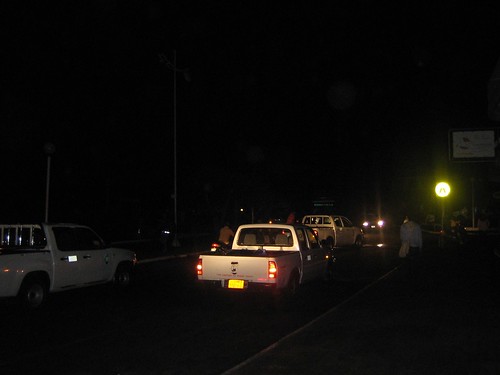
Evacuees returning to P.A.

The next day, Pete and I walked out to the station so I could see the library for my own eyes and to turn on the air conditioner in the bodega which had turned off during the power outage. Roger and I had moved books and archival materials from the lowest shelves, hoping that an extra foot or two would make a difference. As it turned out, our efforts were thankfully unnecessary. The worst damage to the station was to the Biomarine Sciences building which is right at sea level.
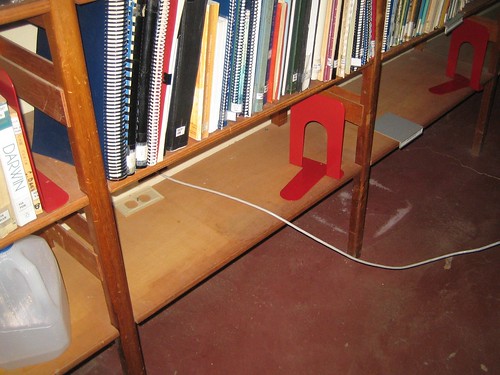
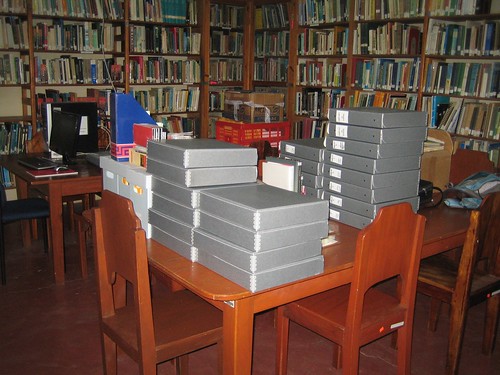
Empty bottom shelves

Moving the archives to higher ground

Later that day, a few of us took a trip to Garrapatero which is a beautiful beach on the east side of Isla Santa Cruz. We were amazed to find that the waves had carved a channel, effectively splitting the beach in half, and creating a shallow creek between the ocean and the flamingo lagoon 200 metres inland.
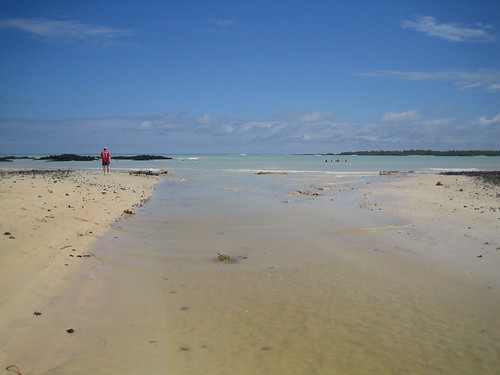
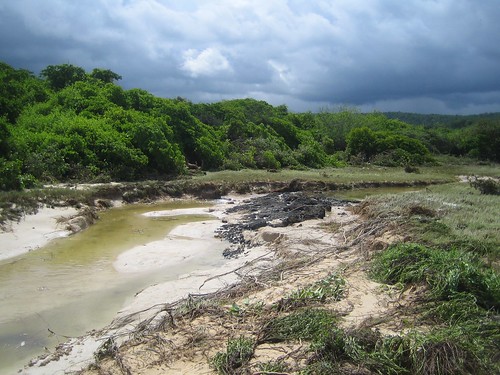
A new channel

A little river now

Although it was mostly sand and rocks that had been moved by the waves, we did see little fish and this small shark in the mangrove forest. A strange site indeed.
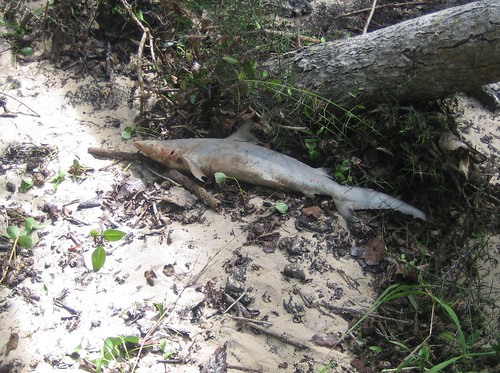
A shark in the forest

Today we went to Tortuga Bay, and it looked like the waves had done no damage. I expect over the next few days, we will hear reports on how the animals fared throughout the islands. The sea turtles and the marine iguanas are nesting right now and may have been impacted by the tsunami.

For more photos, see: http://www.flickr.com/photos/sataylor/sets/72157626256319024/
Categories
isla santa cruz puerto ayora

Christmas cactus…

… Galapagos style!

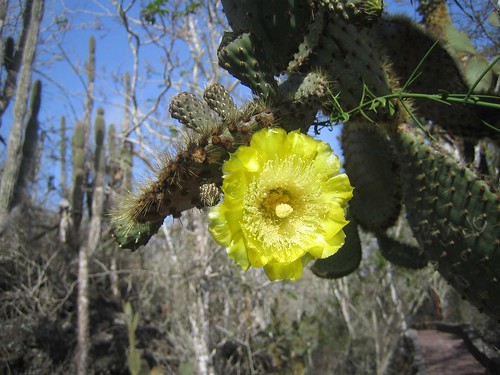
Opuntia flower

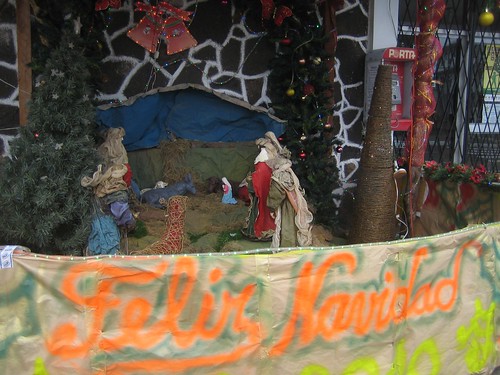
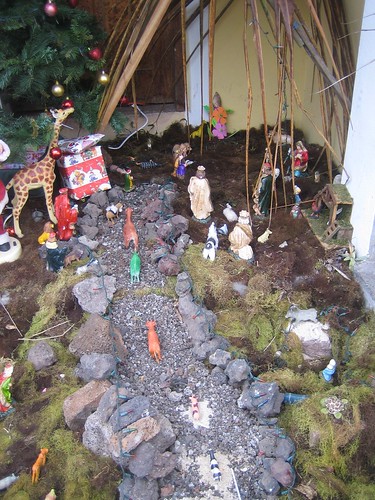
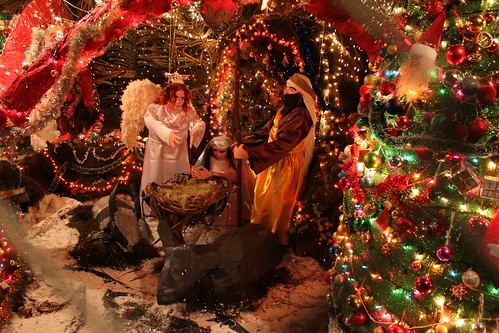
Holiday greetings from us down here on the equator. We will be back on Isla Isabela at Casa de Marita over Christmas, and we will be joined by Mike S from the running club who is under strict orders to bring us fruitcake among other essentials. The citizens and businesses of Puerto Ayora are well into the seasonal spirit as evidenced by the many brightly decorated store fronts and creative nativity scenes. Sally has been taking pictures to show you their enthusiasm.

Wishing all our friends and family a very Merry Christmas!

Snowman in the window

Nativity scene on Charles Darwin Ave.

Nativity scene with jungle animals

Nativity scene on Baltra Ave.

Categories
isla santa cruz library puerto ayora

My morning commute

It’s back to work tomorrow. Unlike the majority of people at the station, I do not have a bicycle, so I walk to work. Here’s what I see during my 15 minute commute.

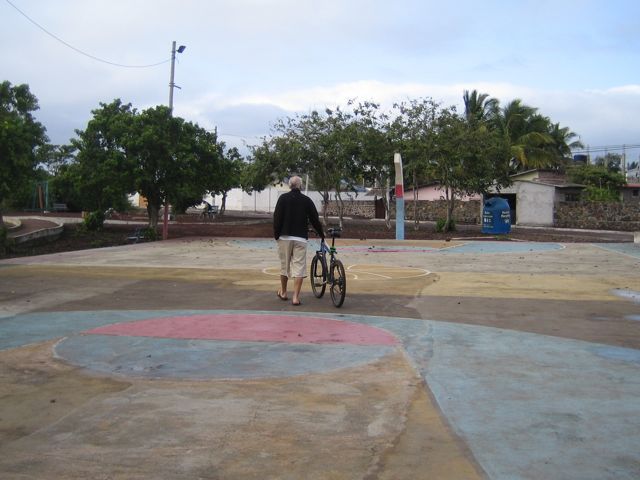
Sometimes Roger walks with me and then cycles home. We cut through the little park that has a basketball court and a playground.

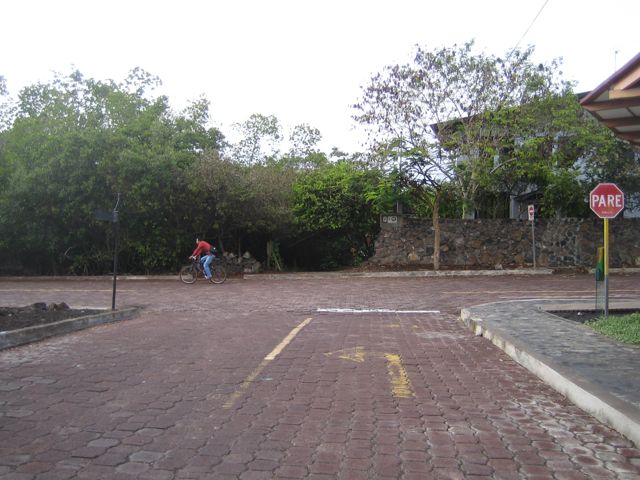
We walk down the hill to Charles Darwin Avenue where there is steady stream of taxis (white pick-up trucks). This morning there is just a lone rider.

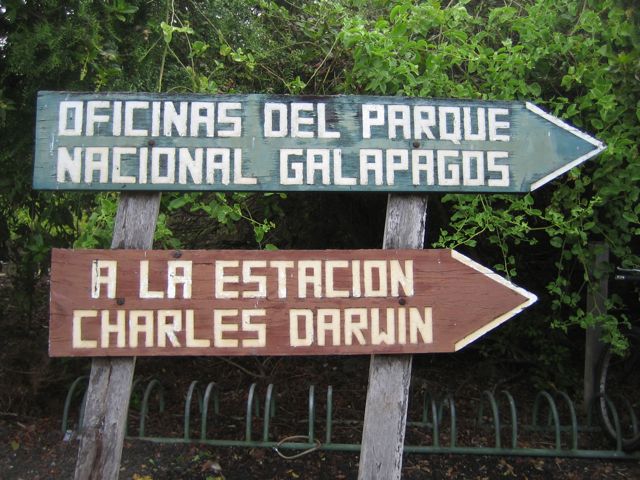
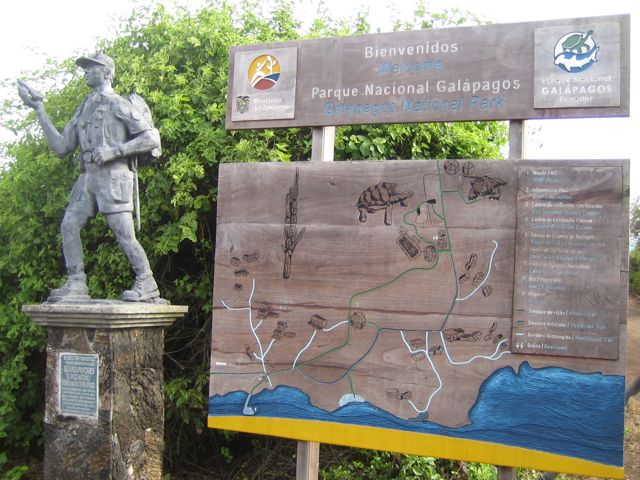
We turn left and head towards the Park headquarters and the research station.

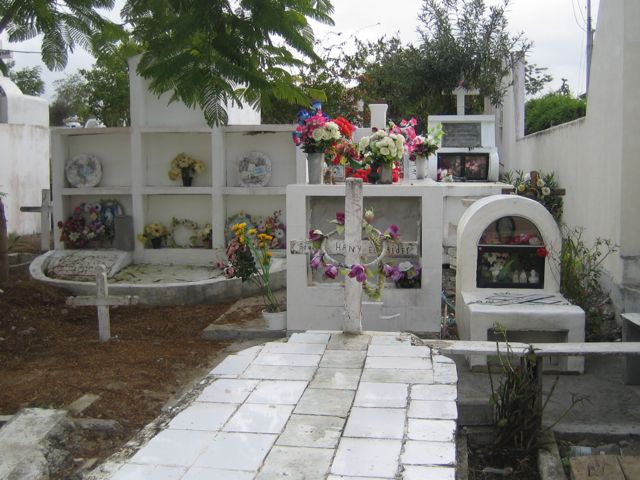
We pass a small cemetery with lots of flowers, both real and plastic. I’m interested in seeing what the cemetery will look like in early November when they celebrate el Dia de los Difuntos (Day of the Deceased as it is called in Ecuador).

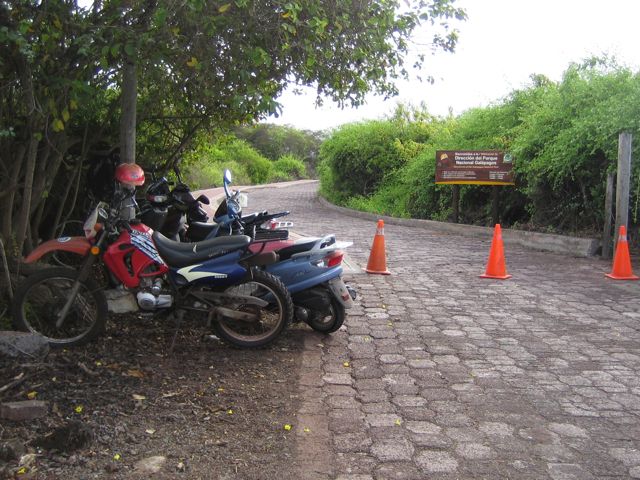
Most vehicles are not permitted in the park, so motorcycles are left at the gate. Roger eyes them enviously.

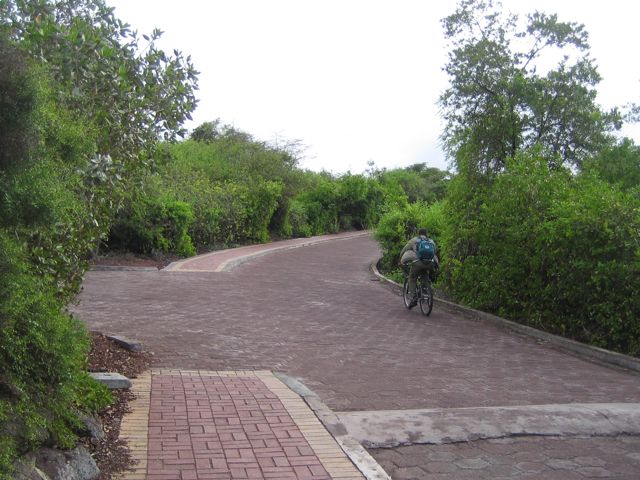
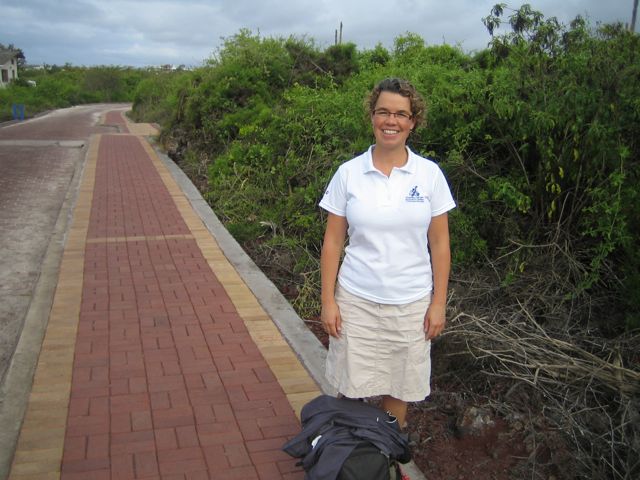
We walk along a new yellow and red brick sidewalk with thick vegetation on either side. On the way, we see finches, small lizards, and other people heading to work.

Typically there are one or two groups of tourists returning from an early morning visit to the station where they’ve seen Lonesome George and his cronies.

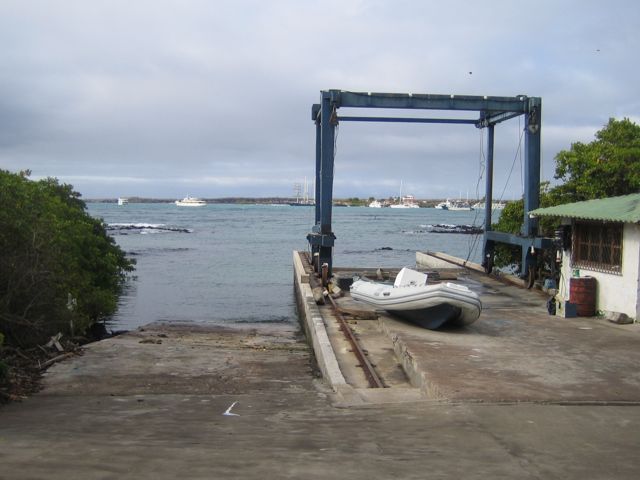
We pass the staff entrance to park headquarters. There are washrooms here for visitors, and across the road is a boat ramp with a view of the ocean and lounging marine iguanas.

Staff and volunteers wear t-shirts with the research station logo. I have five, one for every day of the week. I no longer agonize over what to wear to work.

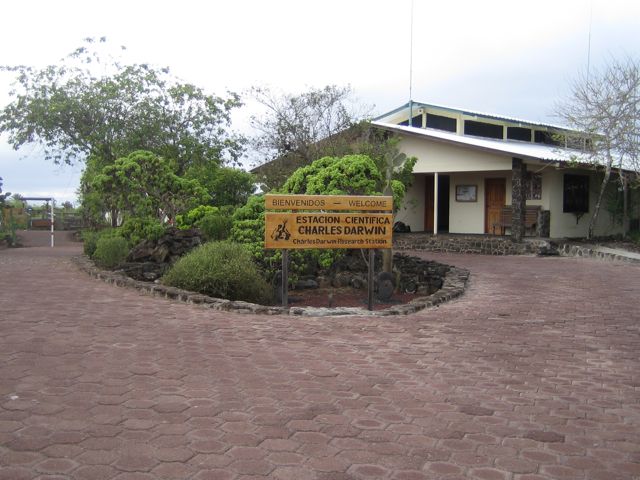
Around a bend in the yellow (and red) brick road are the administrative buildings for the station.

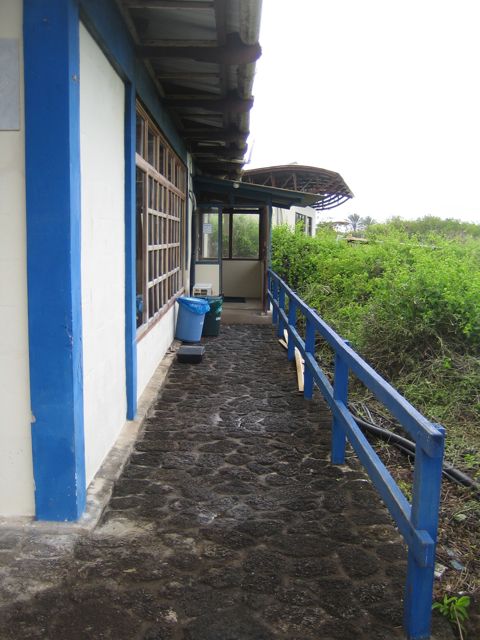
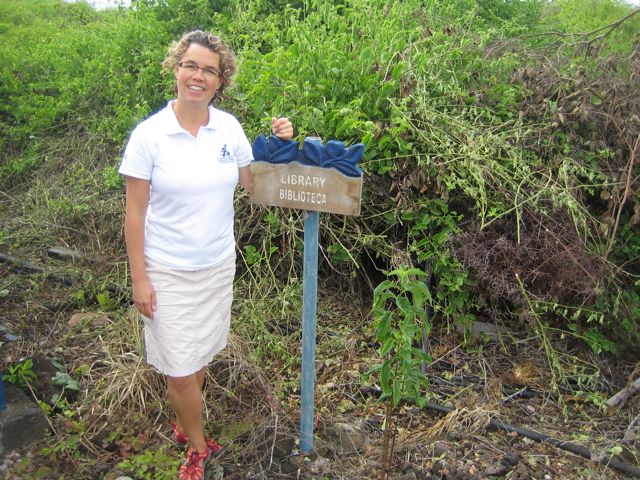
A few steps further is the entrance to the library.

Categories
puerto ayora

I passed!

If you can answer these questions, you too can be a temporary resident of the Galapagos Islands. To make it easier, I’ve translated the Spanish.

1. Which of the following are introduced species and which are native to the islands?
– blackberry
– guava
– sea lions
– goats
– cats
– marine iguanas

2. What colour are the following bins?
– organics
– recycling
– garbage

3. Why should you not write on rocks, trees and walls?
a) it will damage the pen
b) it destroys the beautiful landscape
c) it’s a sign of a bad education

There were more questions but you get the idea…

Categories
puerto ayora

Around town

Today our coffee ran out. Not all is lost however as we will try a recommended local brand (Lava Java) to tide us over for the next month while we wait for a special delivery of Juan Valdez from the mainland. Don’t think for a moment that we will not be placing orders with anyone coming this way.

Since we arrived we have lived in two places and later this week we move into the third. On arrival we stayed in Darwin campus housing and were then offered a housesit for 11 days. Yesterday while investigating a permanent rental we were offered the adjoining suite for a month while its owners were away, a perfect way to see if we liked it as our suite would be the mirror image.

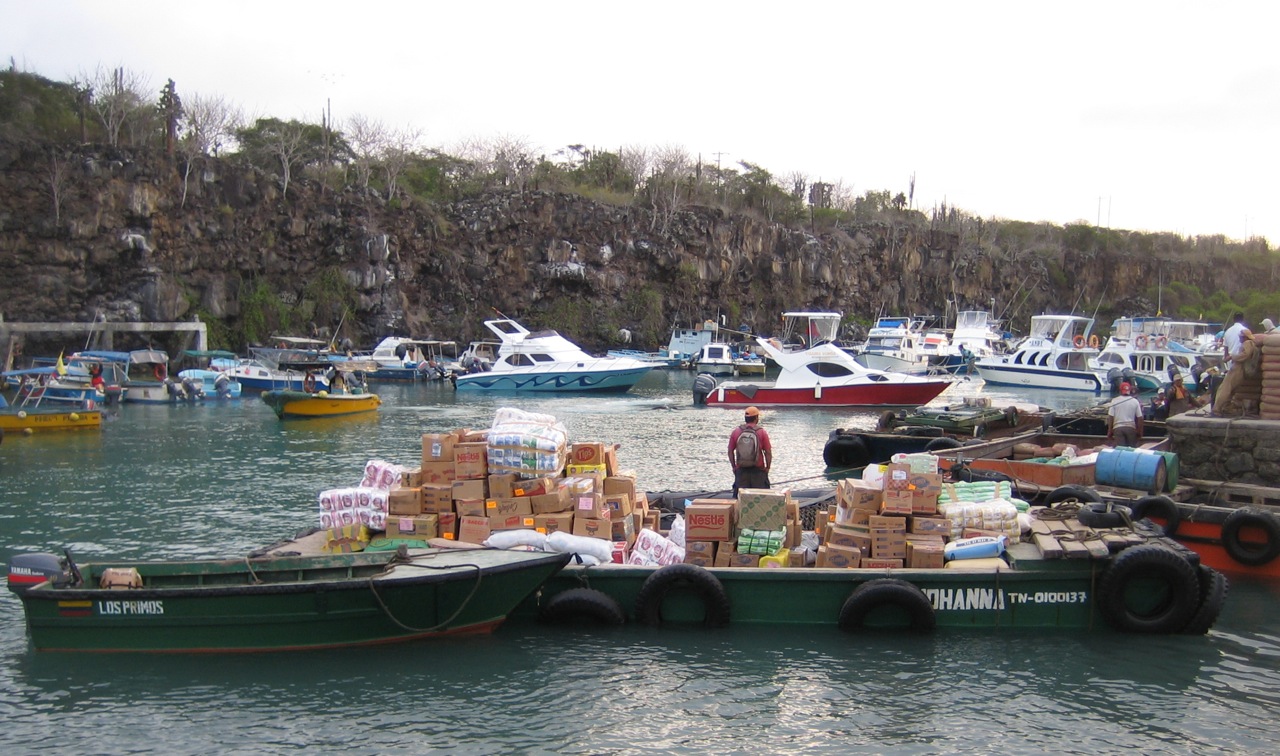
Puerto Ayora is the hub for trips throughout the islands so there is a lot of activity harbourside with people and supplies. The road from the harbour along the waterfront in town has many shops catering to tourists that range from the ordinary clothing and mementos to glossy highend jewelry. There are plenty internet places so you don’t need to bring your lappy.

Unloading supplies

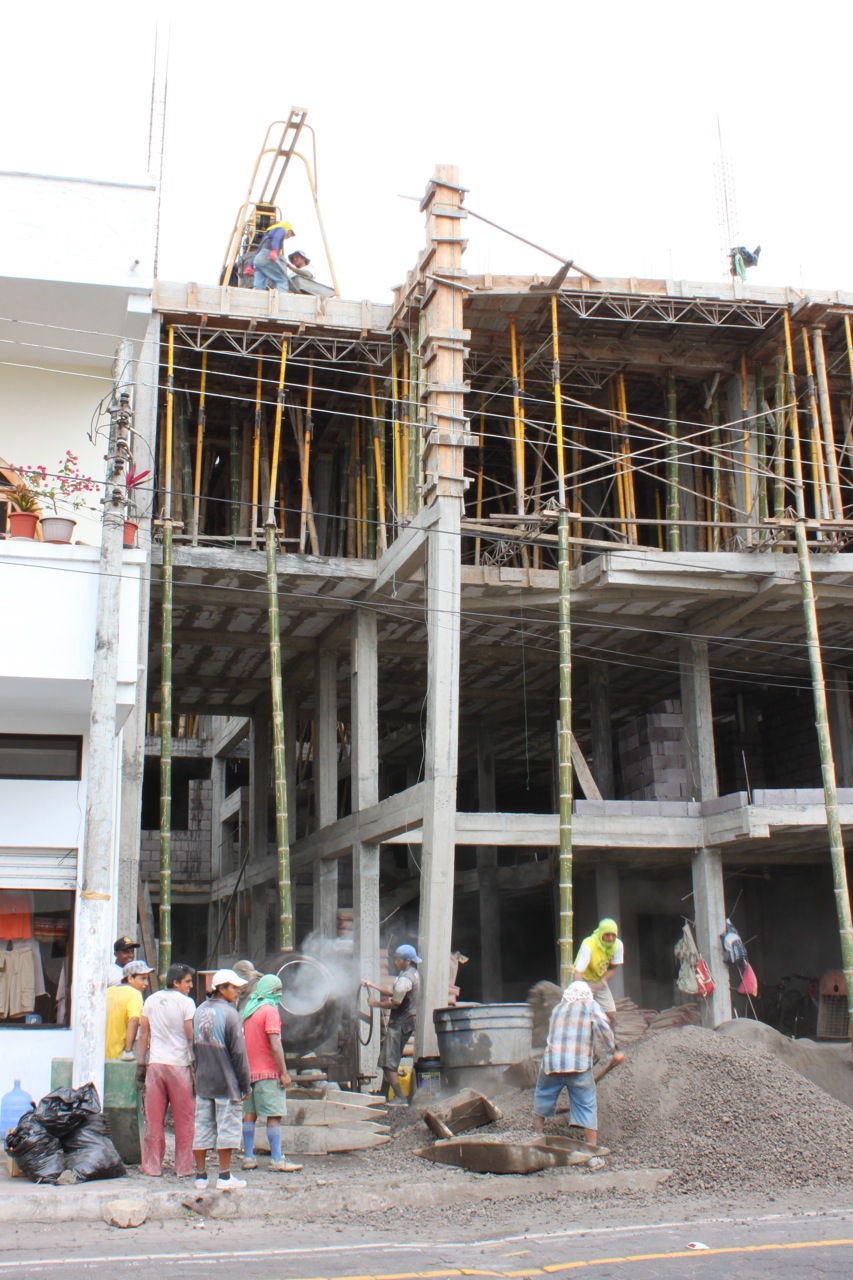
Construction is all concrete, concrete frame and then filled in with concrete block. It looks rather rough until the finishing crew comes in and applies a smooth finish coat which is then painted.

concrete

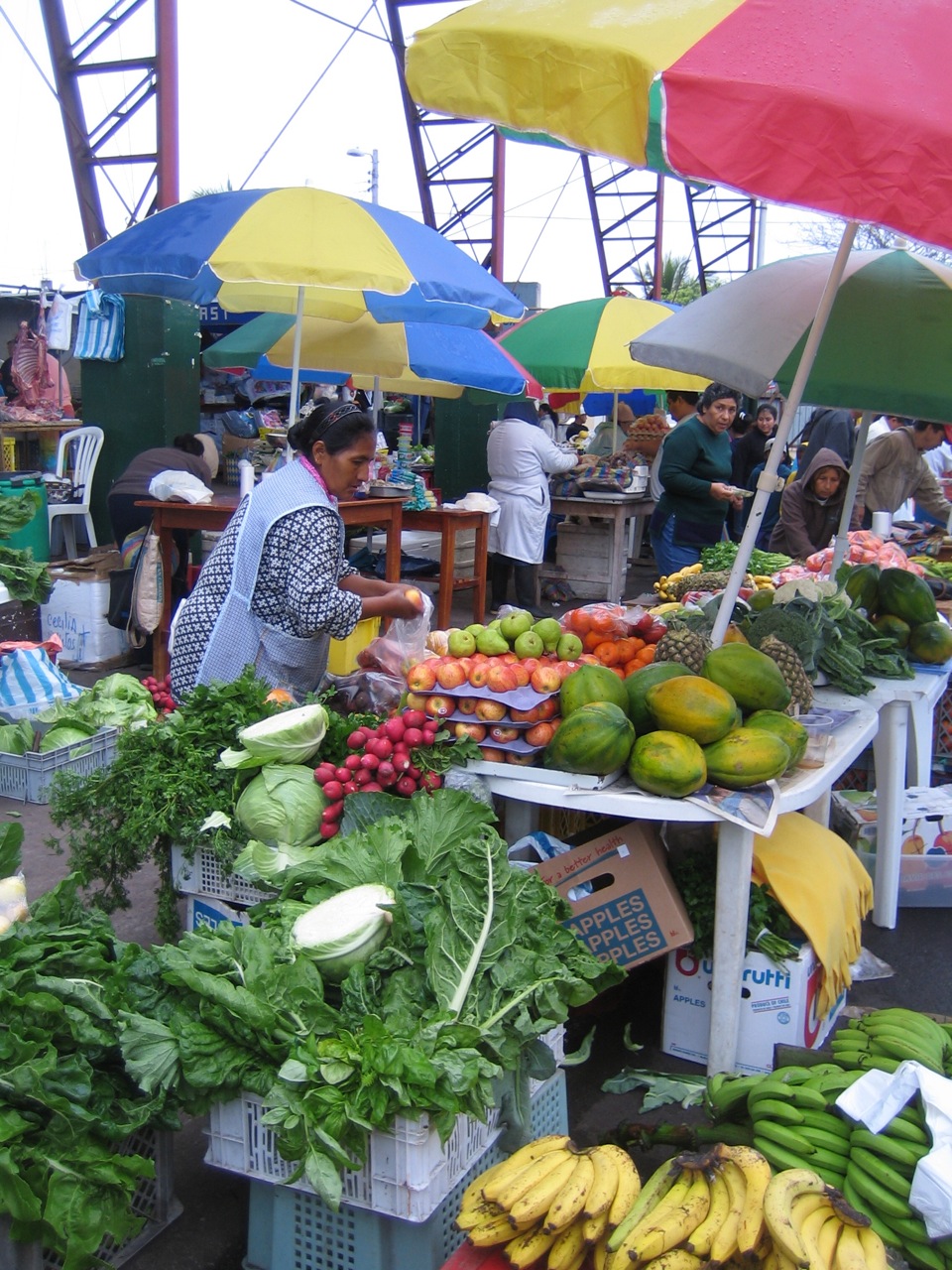
The food is concentrated around fish, chicken, pork, beef and beans. Veggies are available but not as varied or as nice as we are used to. Not until Saturday morning market that is. With set up starting at 4 am. and largely over by ten, it is a spectacle of fruit, veg and protein. There are also hot food vendors who will provide breakfast. Prices are very good and the produce is the freshest you will find all week. Needless to say it is very popular and crowded. Anyone travelling here should time their visit to include market day.

market

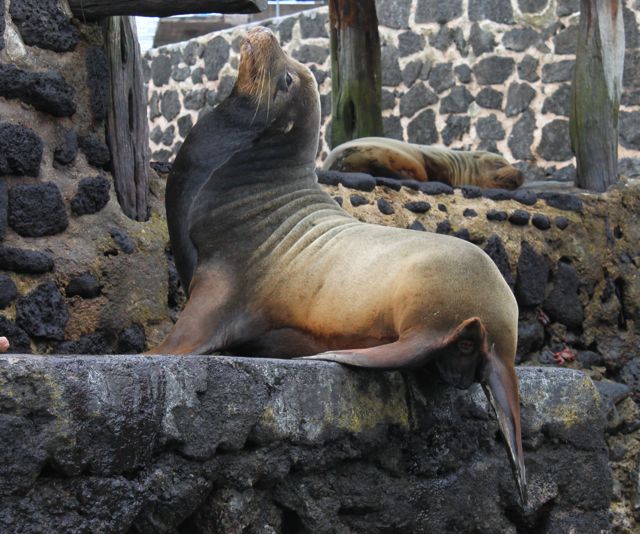
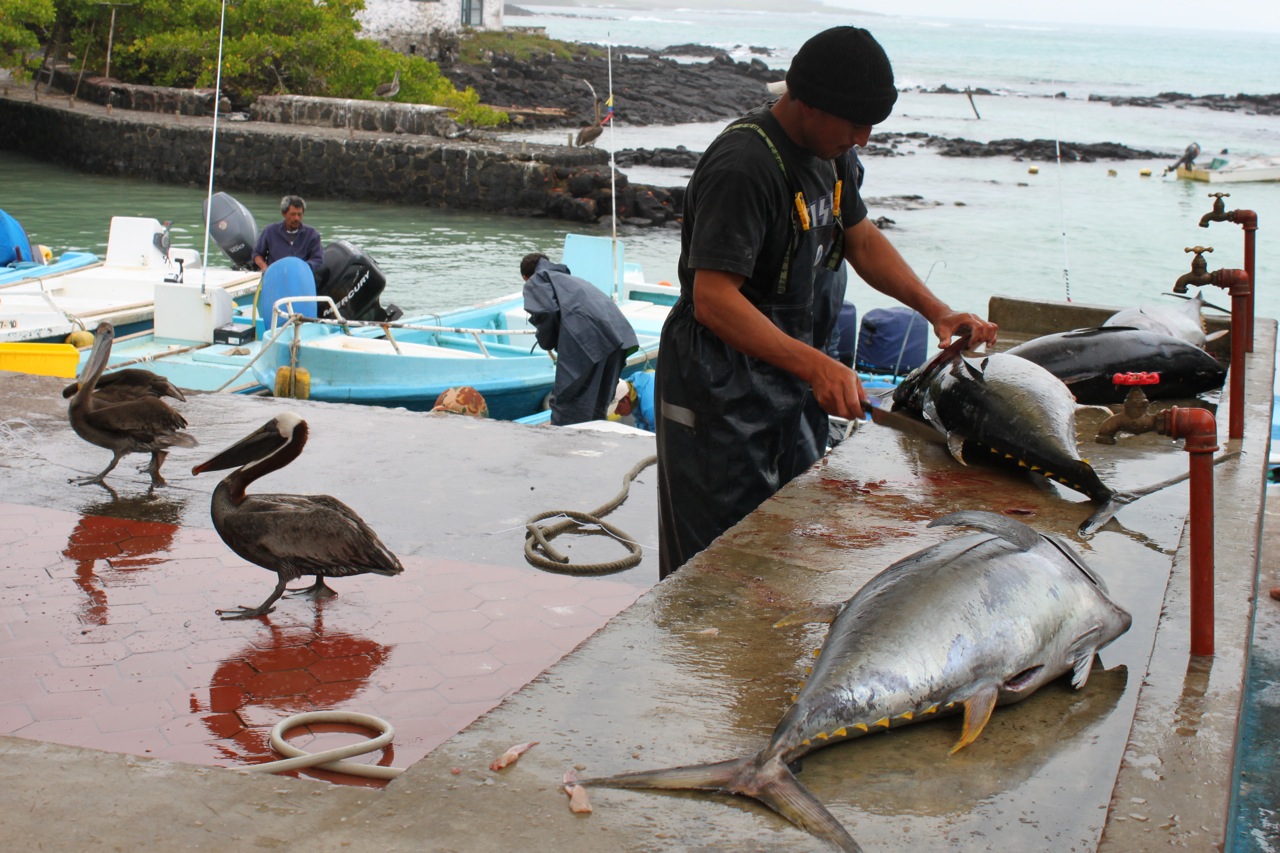
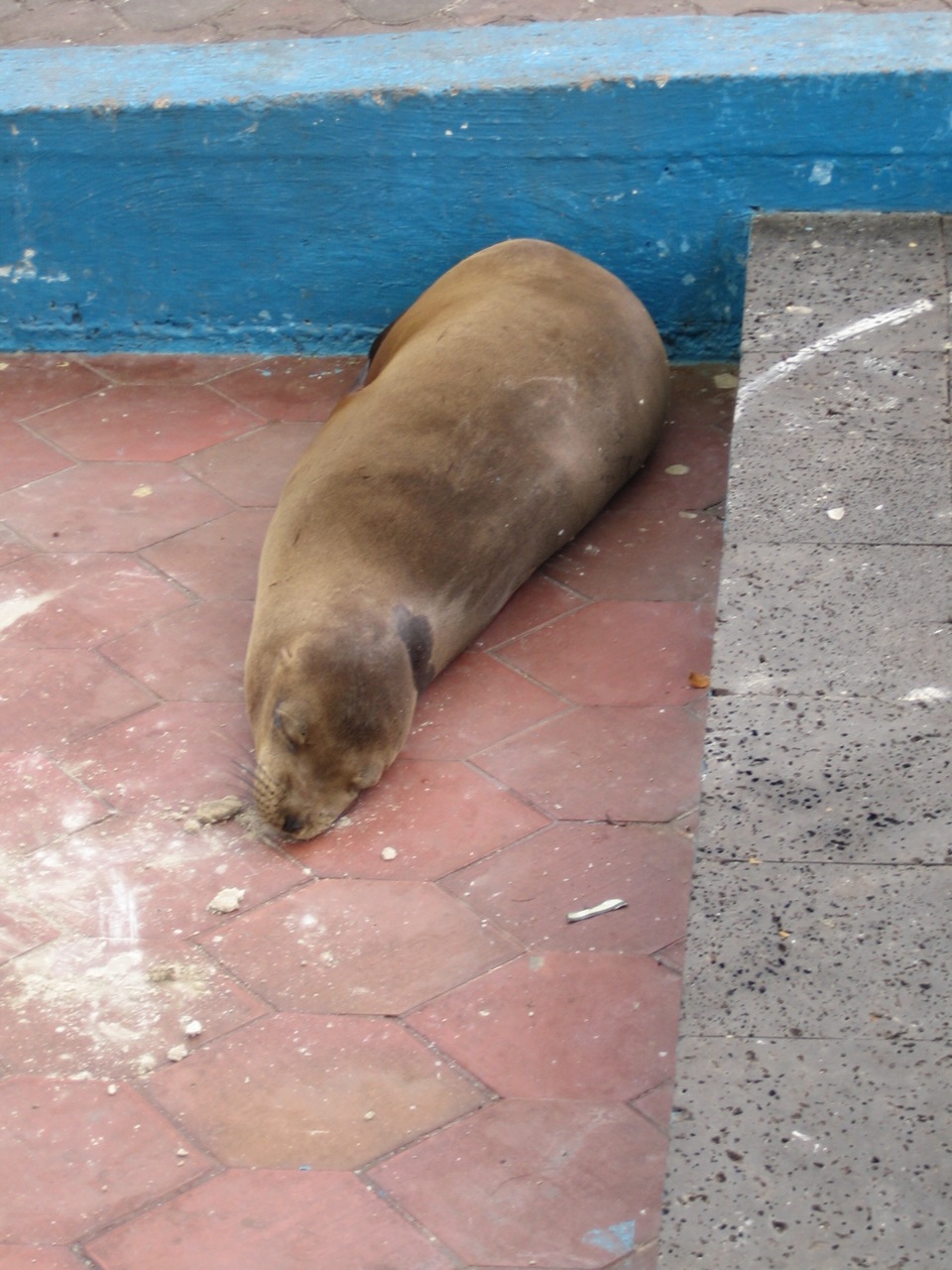
One of my favourite spots is the place in the center of town where the fishermen come in with their daily catch. You have to fight your way past the scrap scrounging pelicans and competing sea lions before you can buy sushi grade fresh yellowtail tuna for $2,oo/lb.

yellowfin

A few blocks away from the waterfront is a block of small open air kioskos or small restaurants that offer basic Equadorian fare at bargain prices. We eat there often but on some nights guiltily go to a more expensive place that has nicer surroundings but basically the same food.

Regarding travelling, I think that 3 or 4 days in PA itself would be sufficient time to see this island (Isla Santa Cruz). Other island excursions would be in addition to that. There are many companies selling day trips and diving trips. It seems to be cheaper to book trips from here, and if you are flexible and adventurous there are last minute deals to be had. Forget Christmas – vacations were booked a year in advance!

Spam prevention powered by Akismet