Categories
cuyabeno wildlife

Welcome to the jungle

You know the jungle isn’t really such a scary place. The majority of piranha fish are vegetarian, an anaconda will only attack if you’re near its nest, and the frog that jumped out of the toilet is completely harmless.
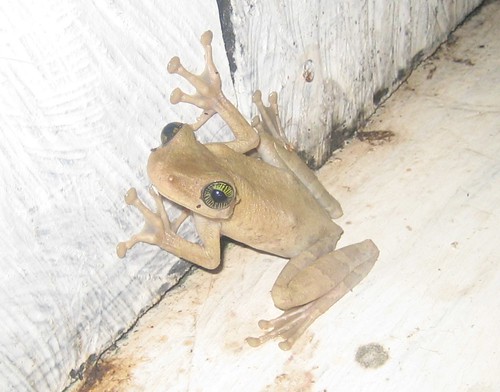
Toilet frog

Those are some of the things I learned on our 5 day canoe trip in the Ecuadorian Amazon. Of course, being attacked by large ants on a night hike did raise some alarm, and there might have been a few squeals when a giant cockroach landed on the dinner table.

The Oriente or eastern part of Ecuador covers a third of the country’s area and encompasses the cloudforests of the eastern Andes and the rainforest or jungle whose rivers flow into the Amazon. We visited the Cuyabeno Reserve in the Northern Oriente which meant an 8 hour bus ride to the gateway town of Lago Agrio followed by a 2 hour bus ride to the bridge on the Cuyabeno River where we put in the canoes.

While most tour groups travel by motorized dugout canoe, we booked our trip with Magic River Tours for the opportunity to paddle the river and observe the jungle without the noise of the motor. The great part was that all the paddling was on flat water or downstream and that for the first two days we had a paddler from the community at the back of each boat. When it came time to travel upstream and for some of our evening excursions, we used a motorized dugout!
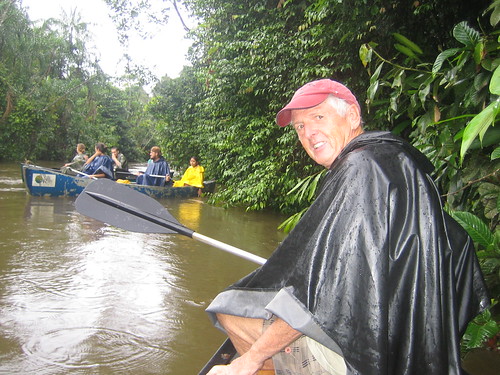
Just Roger

On the first afternoon, we paddled to the Magic River campsite (Tiger Pass) where the crew had set up our tents and prepared a beautiful candlelight dinner.
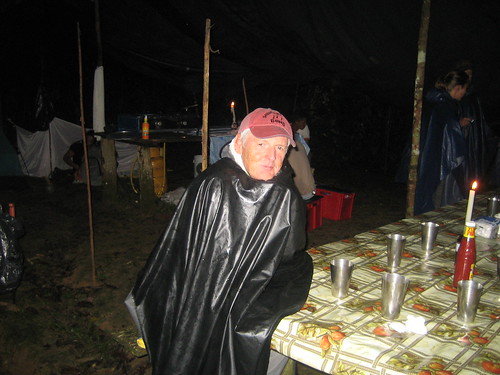
Candlelight dinner

After dinner, we walked through the forest using flashlights to see where we were going and to look for eyes in the darkness. Our guide Luis was a pro and showed us a scorpion spider, a tarantula and a kinkajou (a mammal related to raccoons and coatis). It’s quite possible that while we were straining our necks to see the kinkajou, the ants (mentioned above) hitched a ride on our pants.

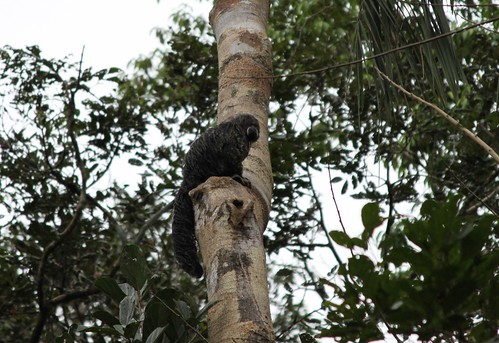
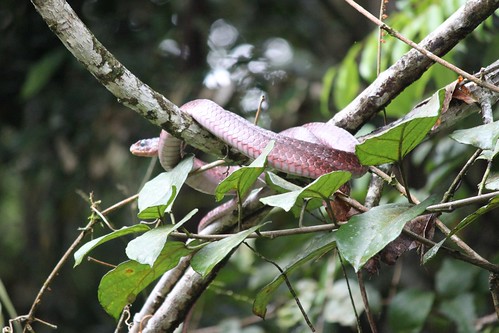
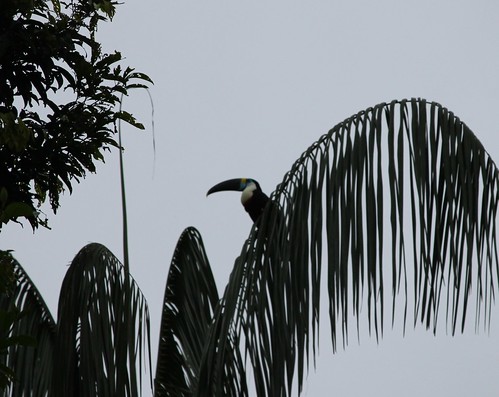
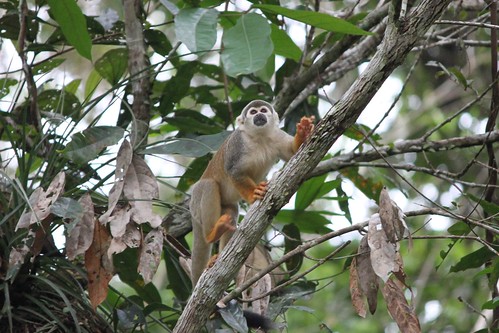
The next morning, the crew broke camp with lightning speed (with us either pitching in or trying not to get in the way), and we launched the canoes for the morning paddle which I should admit included an hour of just drifting! We saw different species of monkey, including white-fronted capuchins, squirrel or clown-faced monkeys and monk saki monkeys, as well as a morage palm snake and a toucan or two.
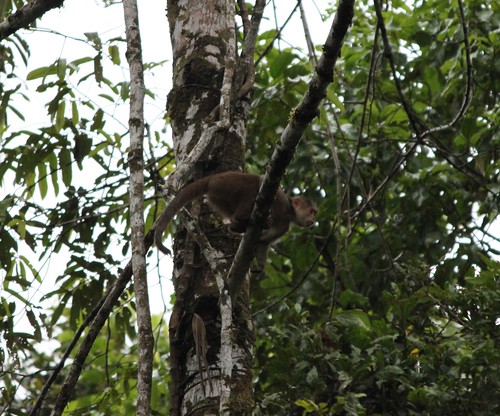
White-fronted capuchin

Squirrel monkey

Monk saki monkey

Morage palm snake

White-throated toucan

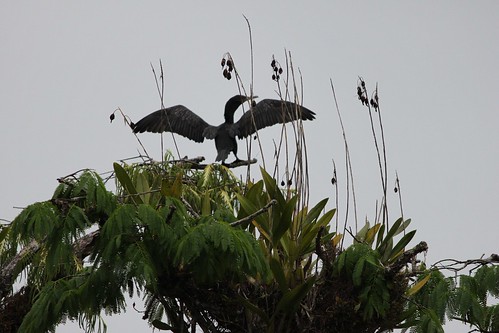
When we reached the Laguna Grande, we transferred into the motor boat for the rest of the trip to the Magic River Lodge where lunch awaited us. There we settled into our rustic cabins (unsettling an insect or two) and had time for a swim in the river before heading back to the lagoon (and our canoes) in search of wildlife. There was more monkey activity and a few bird sightings, including an anhinga (snakebird), a huatzin (stinky bird) and a cormorant.
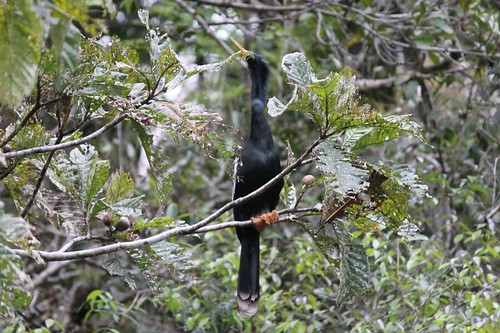
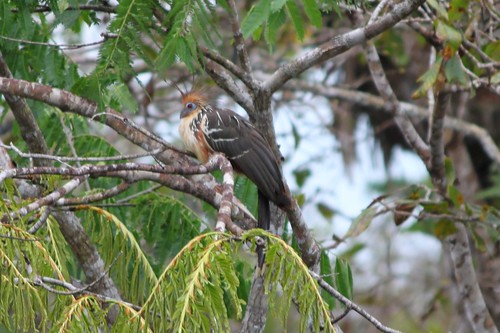
Anhinga

Huatzin or stinky bird

Neotropical cormorant

We also saw a couple of pink river dolphins (my reason for wanting to visit Cuyabeno) but I have no photos because they were far away and far too quick. We visited the home of an anaconda but she was sleeping so instead we watched the sun set over the lagoon.
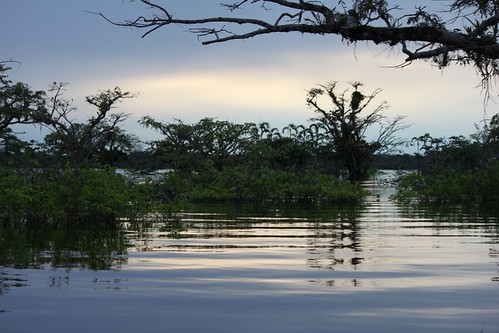
Sunset

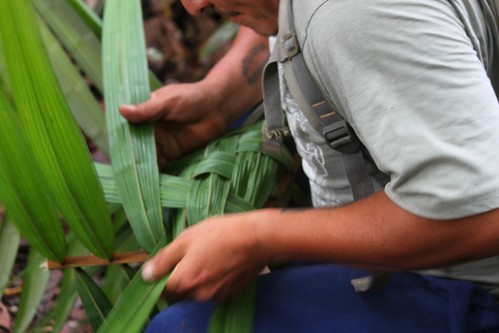
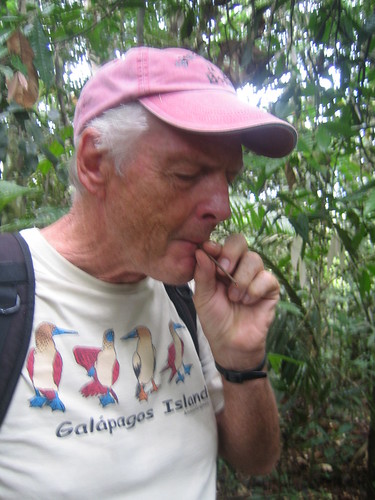
The next day Luis took us on a three hour hike through the forest and shared some of his jungle secrets. He showed us the magic leaf for writing messages, the twigs that substitute as cigarettes, and how to make a basket from a palm frond. Unfortunately, I wouldn’t be able to identify any of these plants again and would probably end up eating the pretty blue berries that are poisonous.
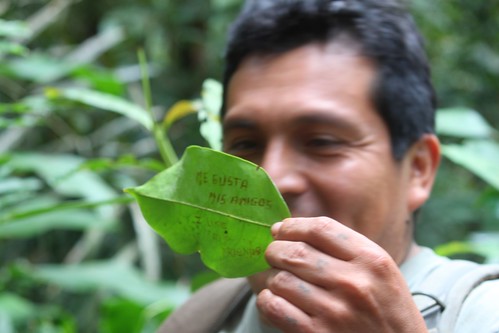
Secret message

Jungle cigarette

Making a basket

In the afternoon in the pouring rain, we went piranha fishing with wooden poles baited with raw beef. There were a few lucky people in our group who caught piranha but Roger and I wouldn’t last in the jungle; he caught a 3 inch minnow, and I caught nothing!
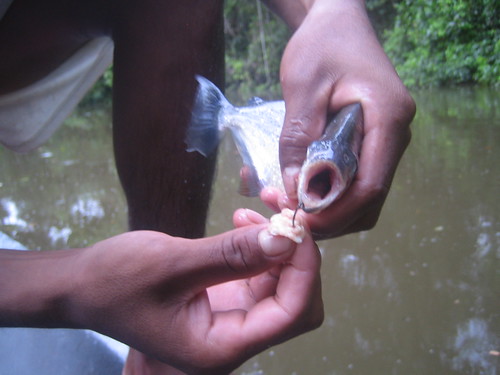
Piraña catch and release

The fourth day of our trip was my birthday. Last year I spent it at a villa in Crete. This year I spent the day in a small village (Tarapua) of the Siona people learning how they make yucca bread, the main staple in their diet.

We canoed downriver and then walked the path that the school kids use to get to the village. En route Luis revealed a few more jungle secrets, and we tasted the flesh around the seeds of the cacao plant. Yum!
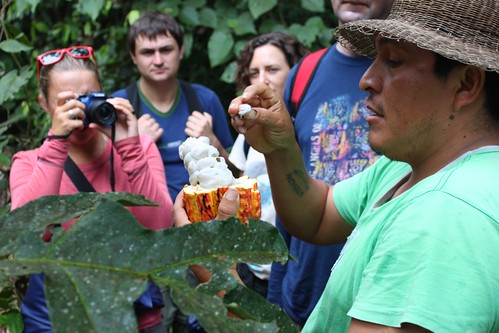
Cacao pod

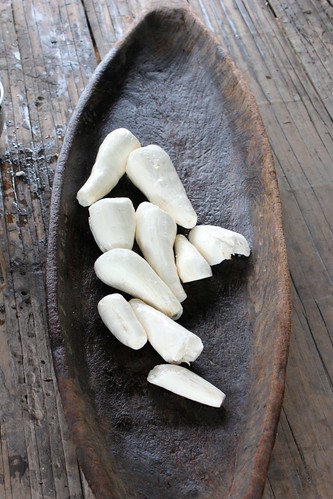
Upon arriving at the village, we met Maria who showed us how to dig the root of the yucca (or manioc) with a machete and then replant parts of the stalk for new yucca to grow. Next we peeled the yucca and cleaned the tubers.
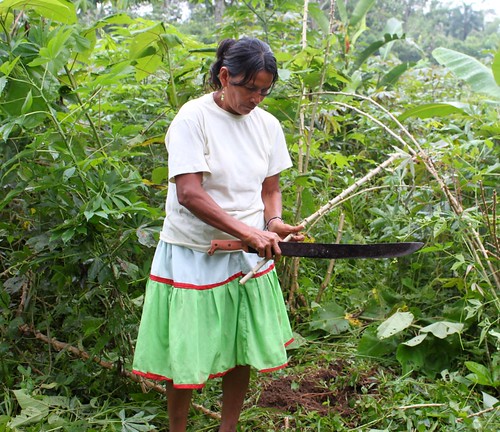
Replanting the stalk

Washed and ready

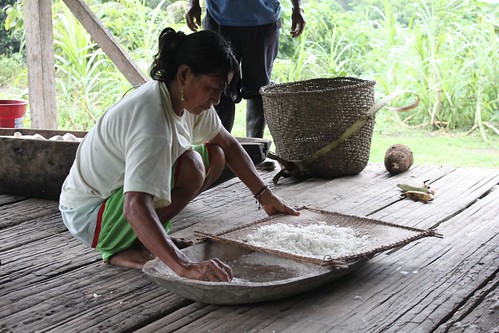
Roger participated in grinding the yucca using a homemade grater (made from a piece of aluminum punched with nails). Maria then squeezed out the liquid using a device made from a plant. Finally the yucca was put through a sieve. The amount of water that is removed is crucial because nothing else is added to the flour to make the bread.
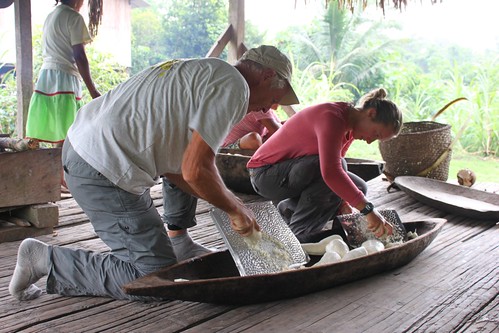
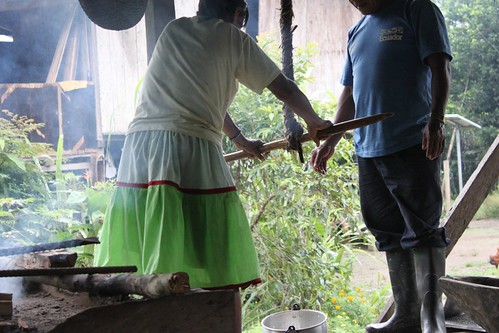
Roger grating yucca

Squeezing out the water

Sifting the yucca flour

The yucca bread was cooked in a clay pan on an open fire and tasted delicious plain and with jam. All of the activity took place in an open air kitchen owned by Hilda, one of our paddlers from the first two days.
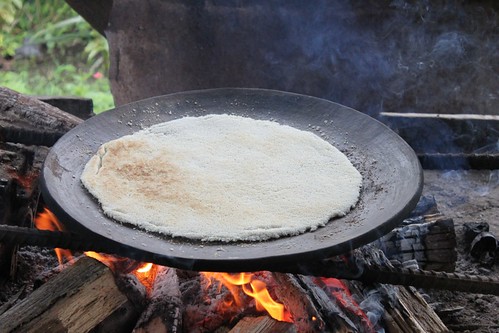
Yucca bread

After purchasing a couple of bracelets from the local kids, we walked to our awaiting motorboat, stopping en route to see a scarlet macaw up close (someone’s pet). Later that day we were fortunate to see one fly overhead!
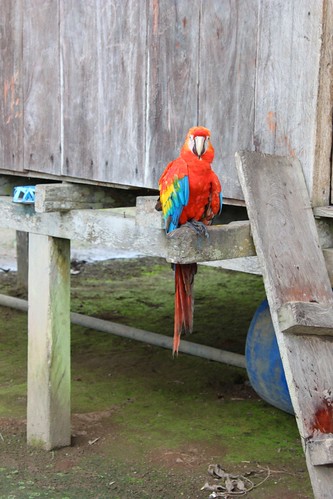
Scarlet macaw

When we passed the spot where we had left the canoes, we stopped and tied them to the back of the boat in a canoe train. After a brief rest at the lodge, we took the motorboat to the laguna to swim and see the sunset.
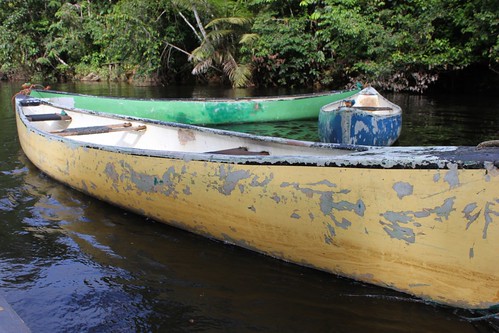
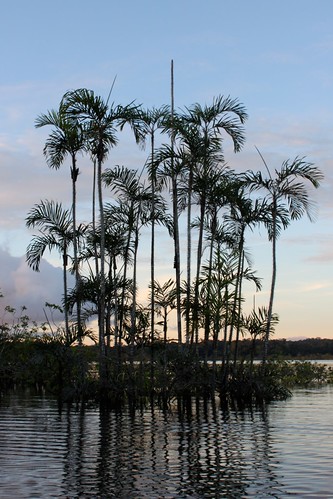
Canoe train

Palms at sunset

That night at dinner, there was a surprise! Roger had arranged a cake, which caused the chef some grief in finding the ingredients and having to cook it stove-top but the result was a lovely raisin cake (kind of like a bread pudding).

On our last day, we were up at 4:30 to motor to the Laguna Grande and transfer into the canoes to watch the sunrise and see the freshwater dolphins one more time. Then we breakfasted, packed up and motored for two hours back to the bridge from whence we came.
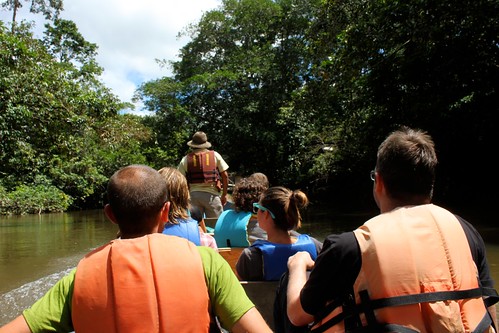
Heading back

What a trip! Our guide Luis was outstanding, sharing his knowledge and enthusiasm for the jungle (having grown up in the Napo region), and the rest of the crew (Raoul the chef, Jesse the boat captain, and John Hayden the assistant) made our trip comfortable and safe.

For more jungle photos, see: http://www.flickr.com/photos/sataylor/sets/72157626753973265/
Categories
isla isabela isla santa cruz wildlife

Northwest passage

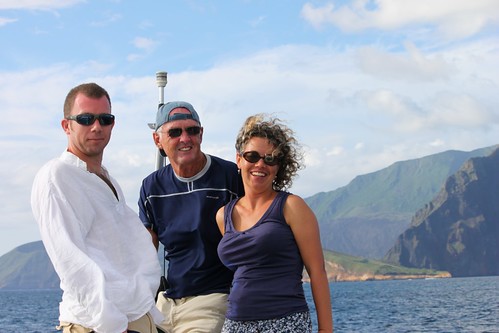
This post is late as the tsunami post took precedence. Three weeks ago we took a cruise to the northwest of Isabela, clockwise around the top and down the east side crossing the equator twice.

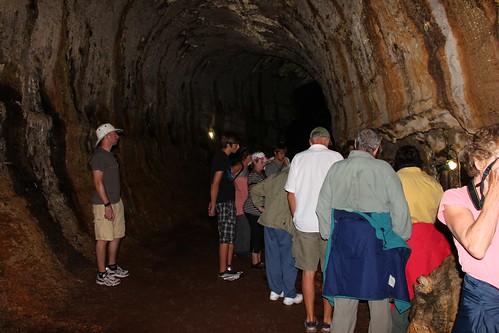
Day 1: We started March 3rd from home base in Puerto Ayora and drove to the highlands to visit the giant tortoise reserve and the nearby large lava tunnel which was old news to us but new to our friend Pete who was visiting from Vancouver. Back to the boat for dinner and a meet and greet with our crew who wore their crisp whites for the occasion. Near midnight we cast off for Puerto Villamil, the town on Isabela (where we had spent six peaceful days at Christmas).

Lava tunnel

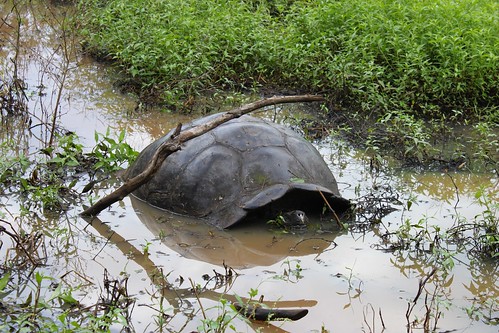
Giant tortoise

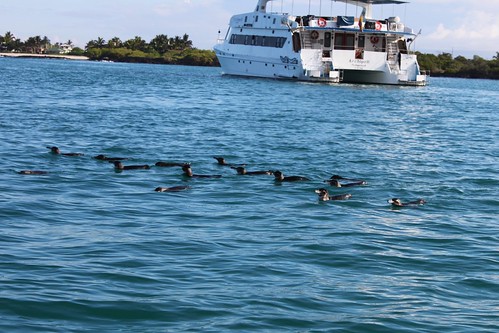
Day 2: Following a 7am breakfast, our guide Dario led the way in our two pangas (zodiacs) to Las Tintoreras, a large lava outcrop just off Isabela. Our panga was lucky to see a large group of penguins swimming close to the boat.

Penguins at Puerto Villamil

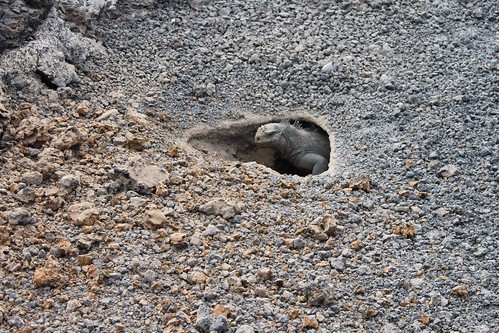
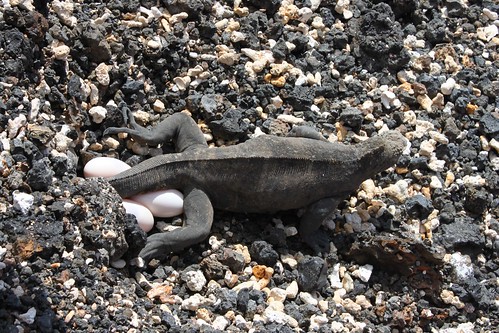
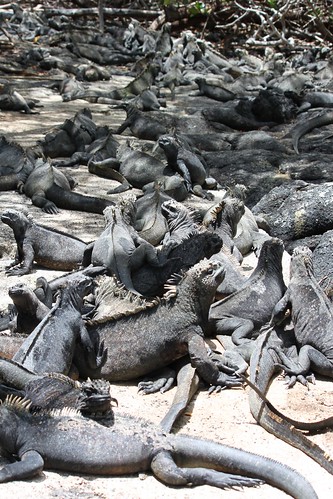
We did a one hour walk along a restricted path through hundreds of marine iguanas that were digging nests and competing for spots in the softer lava gravel beds. We witnessed an iguana laying eggs but unfortunately, they were exposed to the air so would not survive.

Iguana in her nest

Egg laying

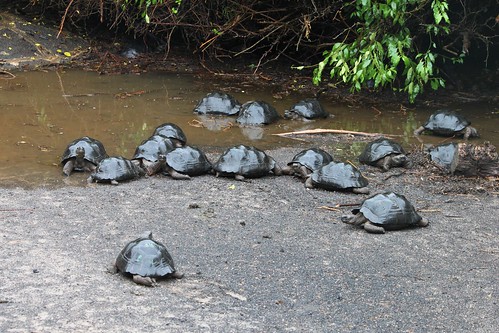
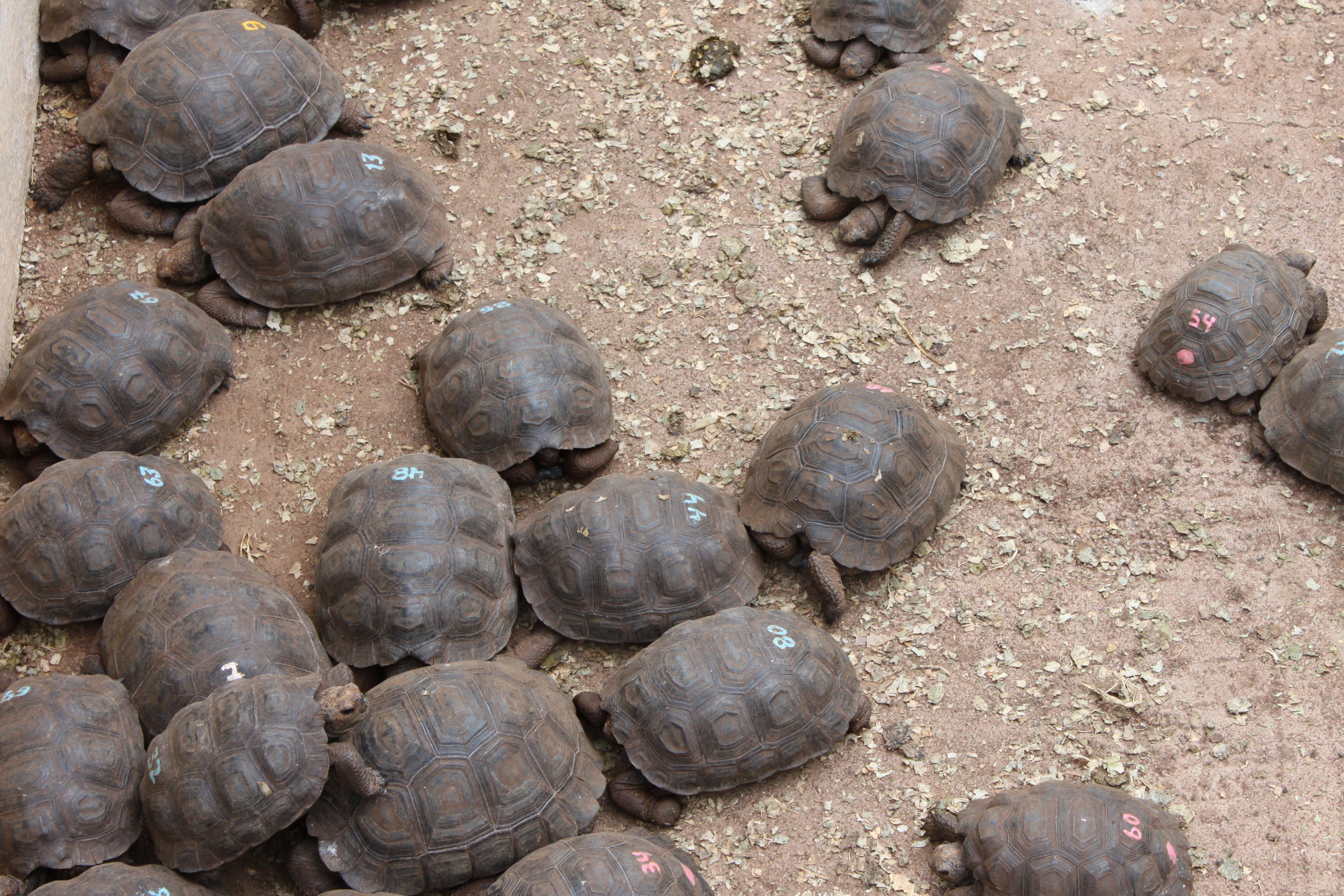
In the afternoon we went ashore and visited the tortoise nursery where young giant tortoises are fostered until large enough to be repatriated to their respective volcanoes.

Tortoise nursery

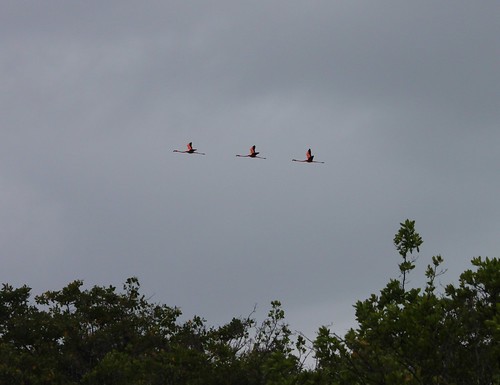
The return walk brought us through a salt lagoon where we saw four flamingoes feeding and had the good fortune to see nine more fly by.

Three flamingos in the sky

Just after we got back to town for an afternoon at the beach, heavy rains started, and several of us happily sat in an open air restaurant having a beverage or two…

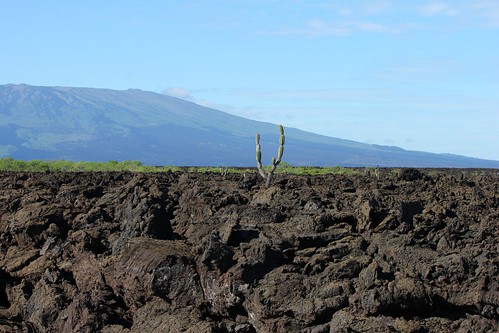
Day 3: We woke up anchored at Punta Moreno where we went on a rough lava walk. En route we could see the sources of the massive lava flow, Volcan Sierra Negra and Volcan Cerro Azul.

Cactus and Cerro Azul

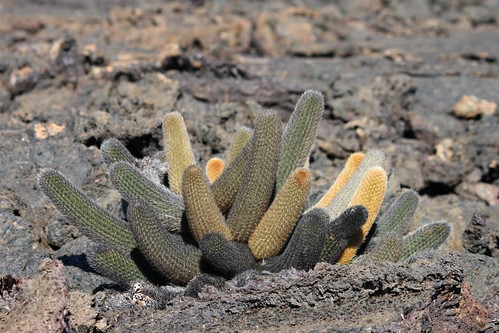
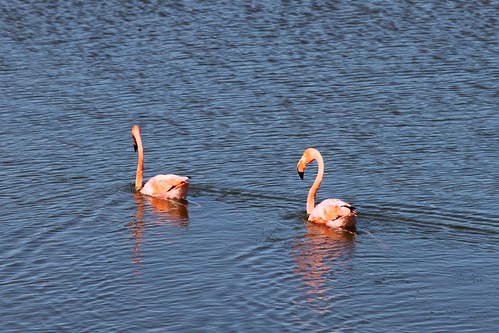
We passed lava cacti and a few oases which are salt water lagoons in the middle of the lava fields. One contained feeding flamingos, and we saw that when the water is too deep for wading, flamingos can swim like swans.

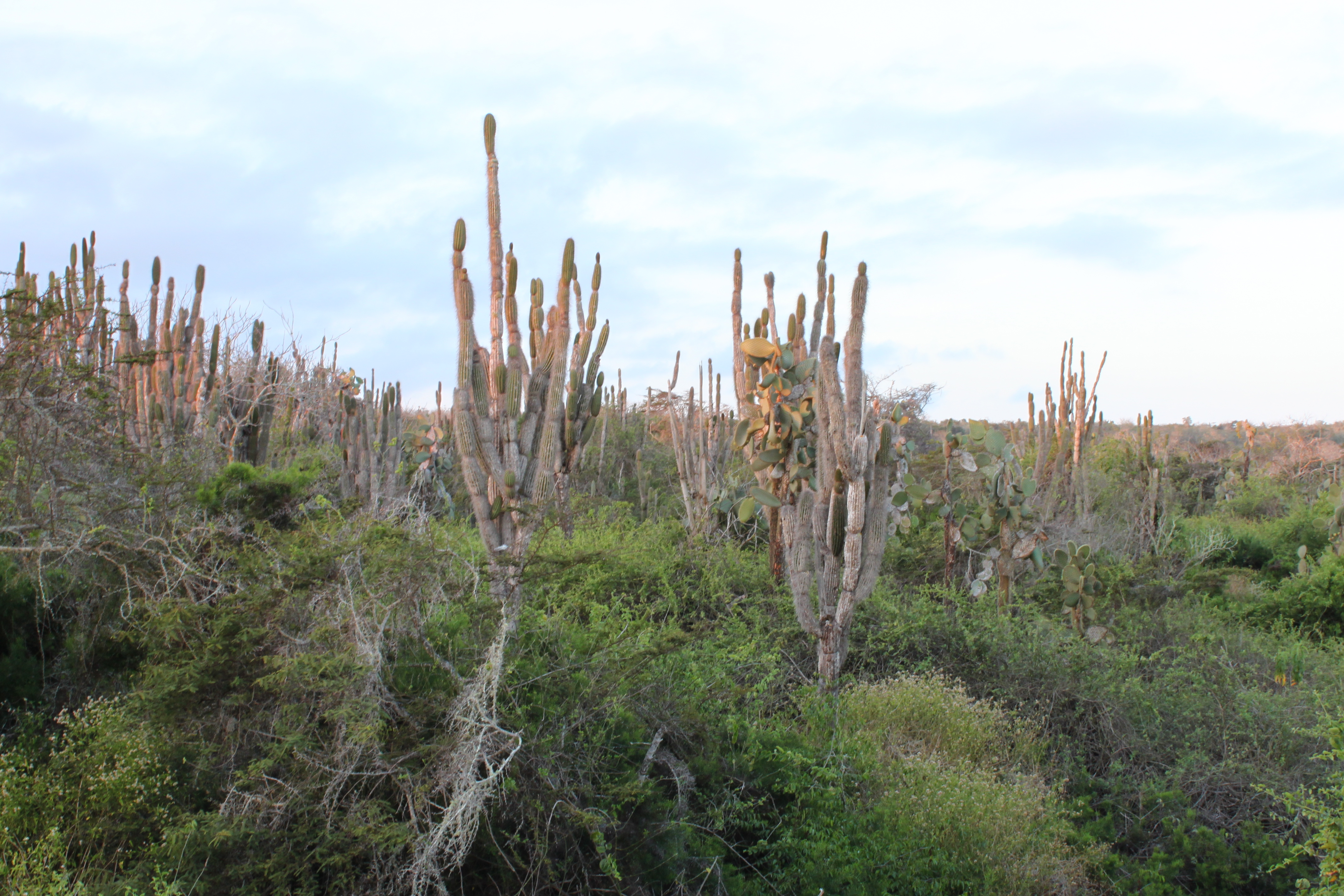
Lava cactus

Flamingos

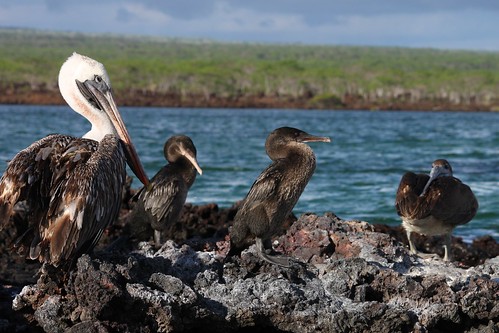
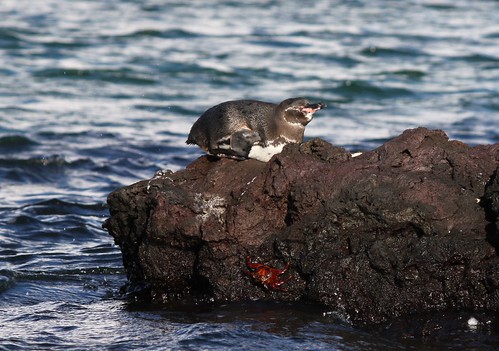
After lunch we motored to Elizabeth Bay and once the tide had dropped, we took the pangas into the mangrove waterways to look for sea turtles. We only saw a few since the water was still high but en route, we passed a small lava outcrop that hosted pelicans, flightless cormorants and penguins.

Pelican and cormorants

Penguin

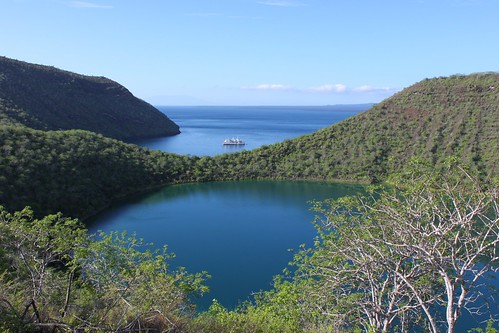
Day 4: Sunrise found us anchored in Tagus Cove where we went for a morning hike past a salt lake to a high viewpoint. From above, the lake appears to be higher than the ocean but in fact, it is not. The lava is just a porous barrier between it and the sea.

Tagus cove

View from the top

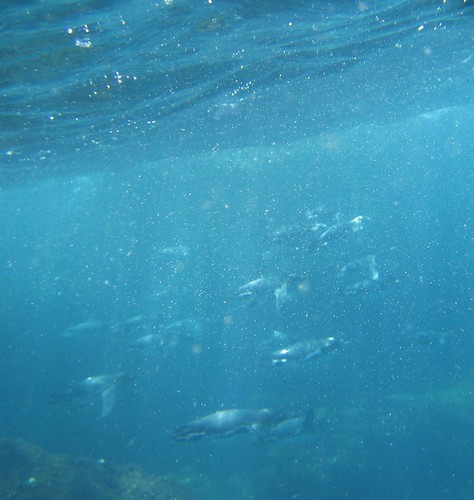
Following the hike, we went snorkelling where we swam among penguins, sea turtles, sea lions and cormorants, and for those of us without wetsuits, we felt the stings of tiny jellyfish.

Penguins underwater

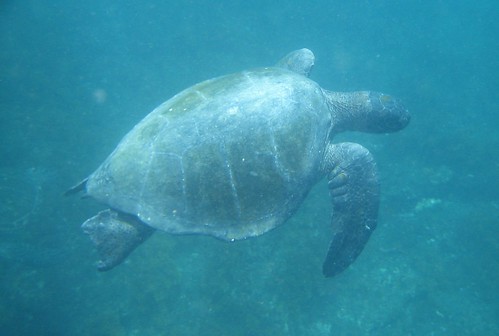
Green sea turtle

That afternoon we motored across to Punta Espinoza on Isla Fernandina where the walk took us through swaths of basking marine iguanas, sea lions, nursing pups, flightless cormorants, sea turtles and the bleached bones of a small whale.

Gauntlet of iguanas

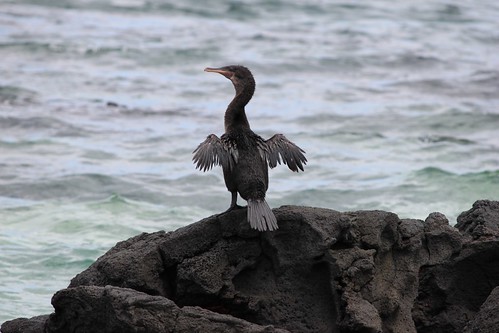
Flightless

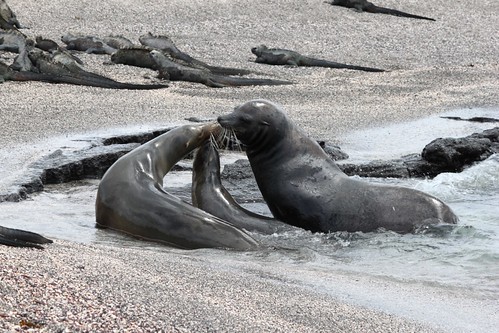
Sea lion family

Back on board, we headed northwest along the coast of Isabela, crossing the equator for the first time at around 5:15pm. We celebrated with a G & T.

At the equator

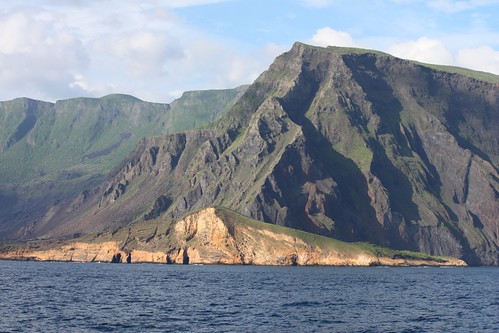
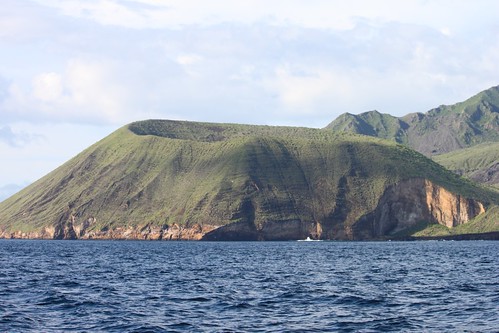
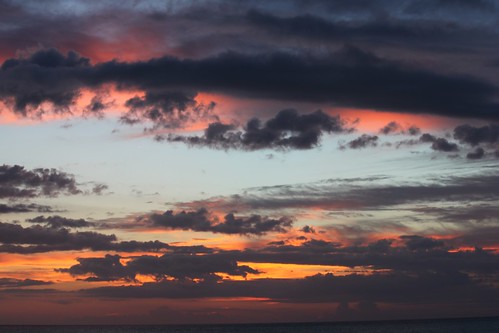
This part of Isabela is rugged and spectacular, and the sunset was okay too.

Isabela

Crater

Sunset

Dinner was finished by the time we turned right across the top of Isabela which was fortunate because the ocean had become rough for the first time on the trip. Around 9pm Sally’s stomach and nerves were feeling fragile, so we made our way to the top deck for fresh air and stargazing. An unexpected treat was being accompanied by ghostly swallow-tailed gulls that make curious clicking sounds. They are the only night-feeding gull in the world and fish up to 30km from land.

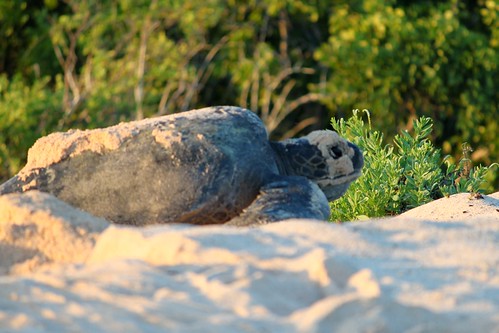
The voyage throughout the night was rough (apparently, that leg is), and only smoothed out shortly before our dawn arrival at Playa Las Bachas, back on Isla Santa Cruz. There we went ashore early in order to see the nesting sea turtles before they left the beach. We barely succeeded; there was evidence in the soft sand of departed turtles, and only one remained. She was just finishing covering her eggs before slowly hauling herself back into the sea.

Sea turtle nesting

Our cruise ended at Baltra where we made the familiar trip by ferry across the Itabaca Canal and by taxi to our casa in Puerto Ayora.

For more photos from the trip, see: http://www.flickr.com/photos/sataylor/sets/72157626312634668/with/5543728384/
Categories
isla santiago wildlife

Hawks on Santiago

I recently had a rare opportunity to assist with a Galapagos Hawk quarantine program for 12 days on uninhabited Isla Santiago. The hawks had been captured from nearby islands, one of which was undergoing a rat eradication project. The rats in question are black ship rats (Rattus rattus), an aggressive introduced species which is endangering native populations of birds and turtles. Using sophisticated GPS mapping, a helicopter dropped poisoned bait on the island. Twenty hawks had been removed to prevent them from eating the contaminated rats.

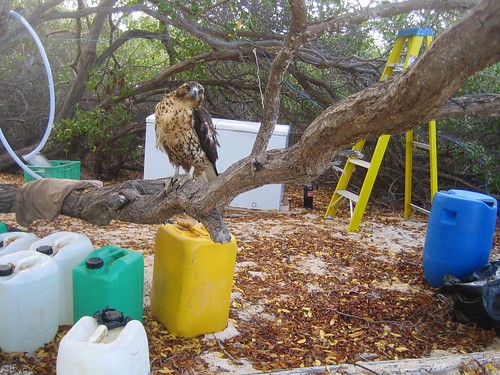
The quarantined hawks were housed in a purpose built structure on Santiago and kept in six large cages according to social group. The adults were dark brown to black with yellow feet and yellow curved beaks. The females weighed 1000-1200g and were larger than the males who weighed 800-900g.

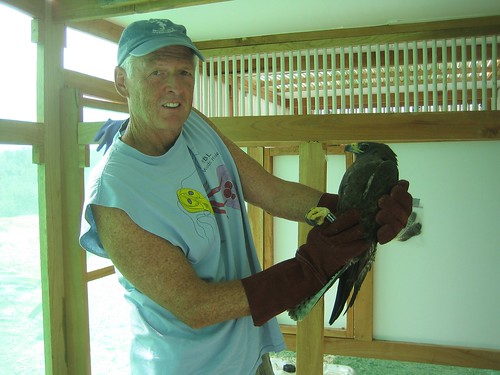
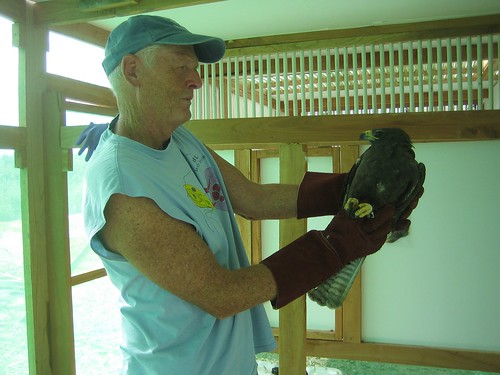
We fed the hawks once daily from a menu of four kinds of meat. My main job as handler was to hold the hawk while the real hawk whisperer drew blood to check for parasites and general health. To handle the bird safely and securely, I grasped its lower legs between the fingers of my right hand while positioning the bird comfortably on its back on the examining table. The hawks were never vocal and did not struggle once held in this submissive position. They just fixed you with an unwavering stare as if to say, “If you loosen your grip, buddy, there will be trouble”.

Long gloves

Who you lookin' at?

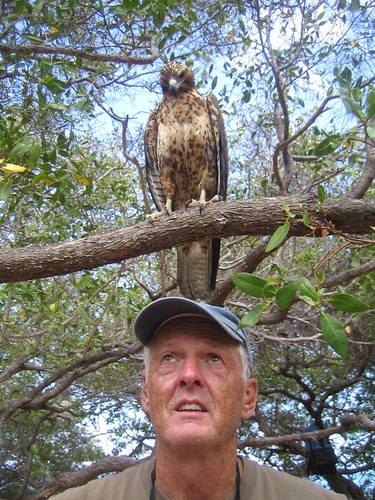
In addition to the quarantined hawks, we were visited daily in camp by local juveniles looking for a free meal. Our favourite was a female who we named La Bamba after the campsite. Her plumage was mottled light and dark brown, and she had lovely sharp black talons. She became territorial and would chase away other juveniles from her new turf. She was totally unafraid and would only move if you attempted to touch her feet and even then, just a short distance.

Hawk overhead

Curious

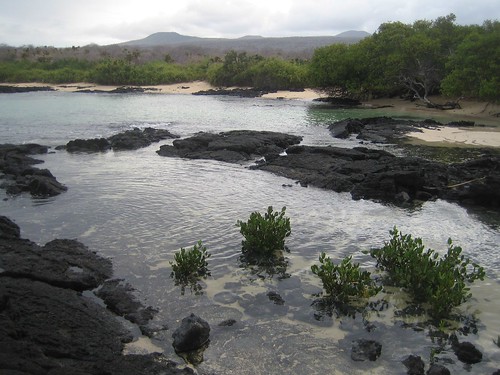
Our camp was right on the beach under the mangroves. At night under the brilliant starry skies, we were lulled to sleep by booming surf as it broke over the offshore lava reef. One night when the tide was particularly high, I moved my tent back a few feet since it felt like the waves were lapping at my feet.

La Bamba camp

Wherever you go in the Galapagos, you are up close to the local fauna. In camp every day, aside from the hawks, you could see blue-footed boobies, pelicans, frigate birds, lava herons, lava gulls, wading shorebirds, Great Blue herons, Sally Lightfoot crabs, marine iguanas, a young sea lion and many finches.

An unforgettable experience.

More hawk photos here: http://www.flickr.com/photos/sataylor/sets/72157625985284948/

Categories
isla santa cruz wildlife

Iguanas for lunch

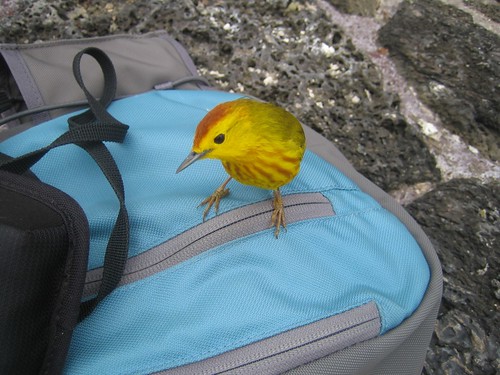
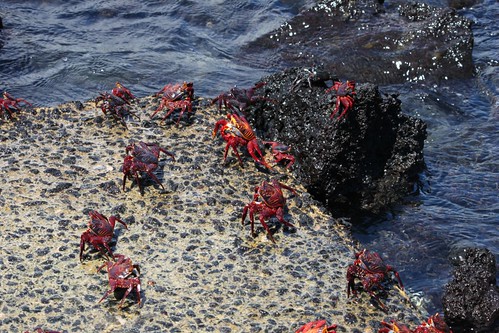
Unlike most people who go home at midday, I eat my lunch at the station (Roger makes a delicious tuna sandwich with capers). While the shady gazebo and the director’s beach are nice, my favourite spot is on the ramp at Biomar (the marine sciences building). On any given day, I see at least half a dozen species (crabs, pelicans, frigate birds, herons, lava gulls and yellow warblers) but the real entertainment is watching the marine iguanas and the change in their behaviour over the past several months.

Yellow warbler

Crabs

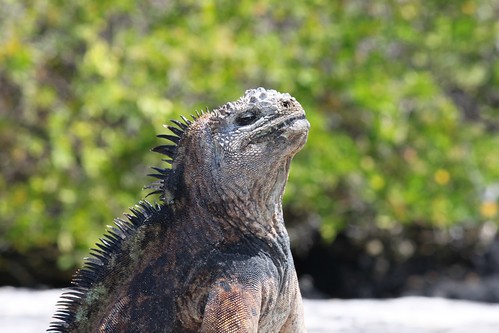
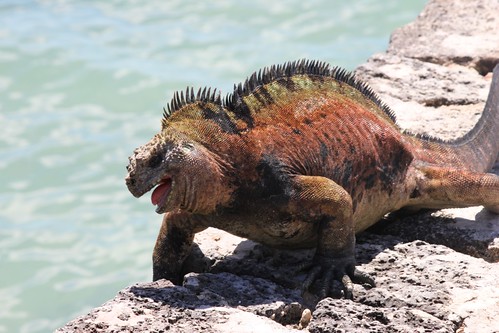
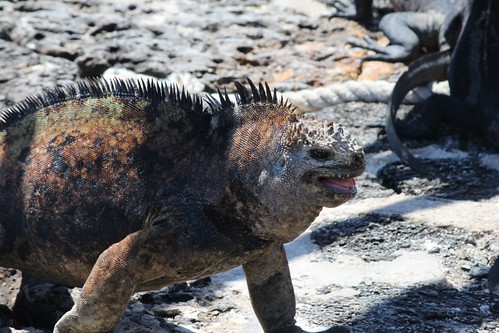
There are seven subspecies of marine iguana (Amblyrhynchus cristatus), and they vary in colour and size depending on the island. The most colourful are on Isla Española but the ones on Santa Cruz are quite attractive, especially the large males that take on a green tinge during the mating season.

So proud

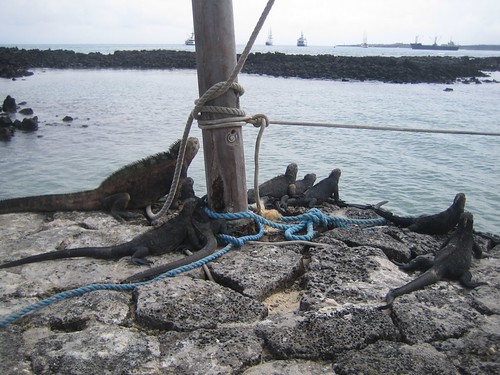
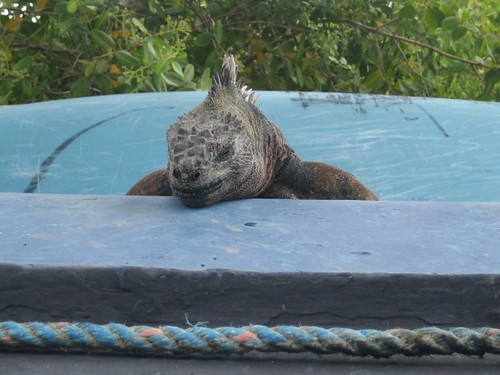
The first time I went down to Biomar, the iguanas were stretched out across the path like cows on a country road. I had to carefully step over them. Now they congregate on the small pier and the rocks close to the water perhaps because the weather is warmer.

Facing the sun

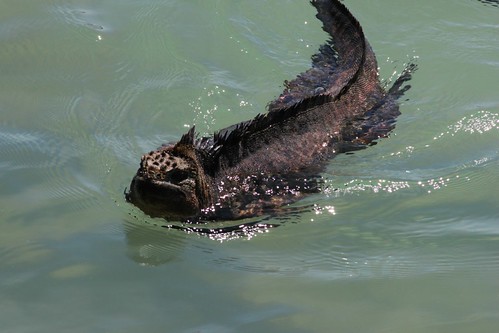
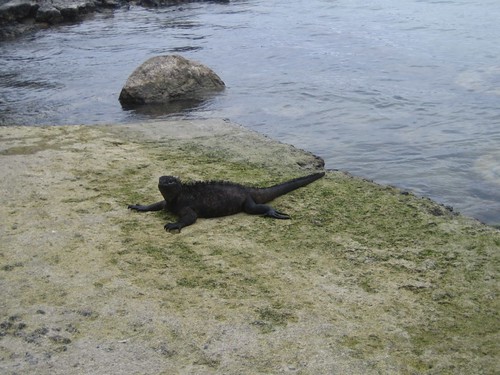
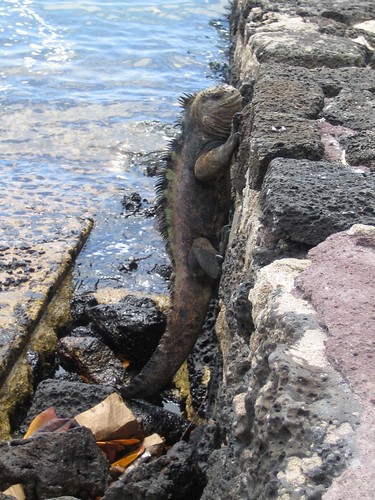
Marine iguanas feed on red and green algae in the intertidal zone and must warm up before and after feeding trips. When the water was cooler, they would come out of the water and plonk themselves down to warm up a bit before moving to higher ground. Now they come up the ramp immediately and often climb the wall of the pier to get to their resting place.

Swimming iguana

Warming up

Climbing up the pier

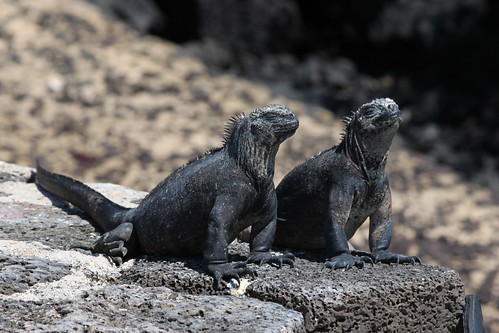
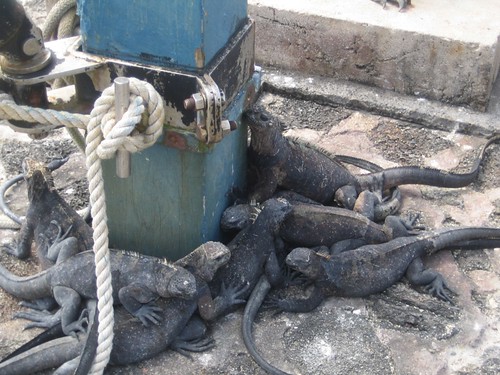
In the midday heat, marine iguanas look like sun worshippers. In fact, this is a strategy to avoid overheating. By facing directly into the sun, they decrease the surface area that is exposed to the rays. When it was cooler, the smaller iguanas would lie together to stay warm; now I think they’re competing for the shade.

Sun worshipping

Hogging the shade

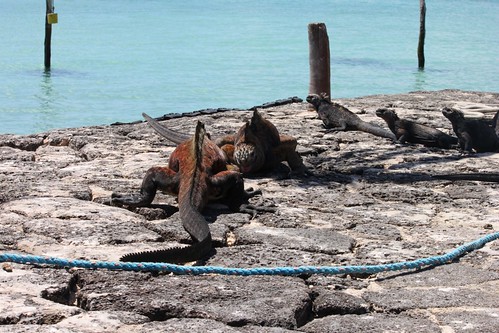
During the breeding season, males are more aggressive and indicate their strength by showing their broad side to other males and by head bobbing. They chase away smaller males, and when there is a confrontation, it is settled by headbutting.

Head bobbing

Headbutting

The lay of the land has changed. Initially there were six large males in the area. Now there are only two that fiercely guard the pier, and the others have been relegated to the margins. I often see other males attempt to come ashore, and they are quickly chased back into the water.

Fierce

Mating has started despite the seeming reluctance of the females (sorry, no photos). The females will lay their eggs in March or April. The eggs take 3 to 4 months to incubate, I won’t be around to see the next generation of marine iguanas. I’ll just have to enjoy images like this.

Mellow

Categories
isla espanola isla floreana isla san cristobal wildlife

Cruise to the Southeast

On Saturday, November 27 we began our long awaited 4 day cruise to the SE islands which as you know are the oldest islands in the Galapagos as they were formed at the NW hot spot then migrated to the SE. Consequently they are eroded and flatter with more vegetation.

We boarded our yacht Galaxy in Puerto Ayora harbour at noon and relaxed while waiting for the rest of the tour group who were arriving by air from the mainland.

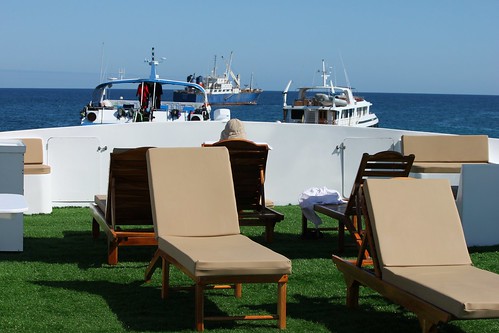
Rooftop deck perfect for sunning

The yacht had capacity for 16 but it turned out our group was only going to be 9. (Yay for last minute booking). Sally and I were accompanied by our friend Richard, a visiting scientist from Australia, and we joined a young couple from Switzerland who were already on board. Arriving by plane were two British couples who completed our group. An excellent mix of people and a first rate crew and guide made for a memorable trip. Everyone got acquainted over our first of several tasty meals together and went to bed knowing that when we woke up the next morning we would be anchored off Isla Floreana.

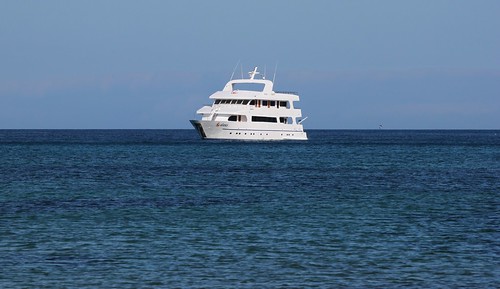
The Galaxy

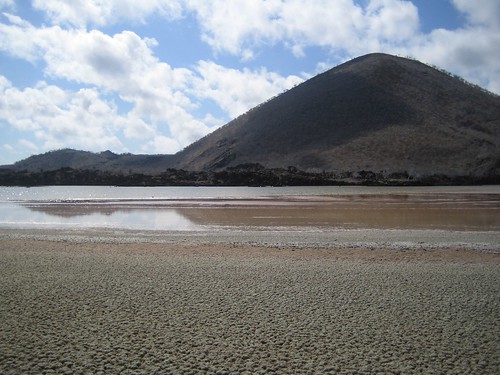
Breakfast every day was at 7am and in the interest of brevity, let me say that all breakfasts, lunches and dinners were very good. By 8 am, we were onshore at Punta Cormoran where we walked to a nearby brackish inland lagoon frequented by flamingos.

Lagoon at Punta Cormoran

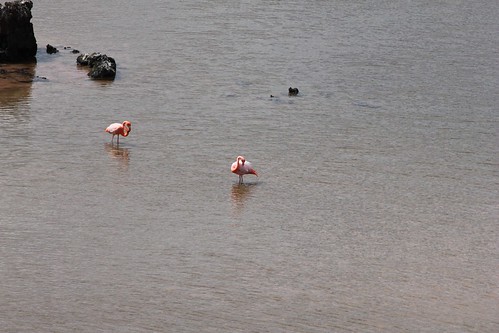
The lagoon was very low but we did see two flamingos at a distance which official photographer Sally captured with her big new telephoto lens.

Flamingos

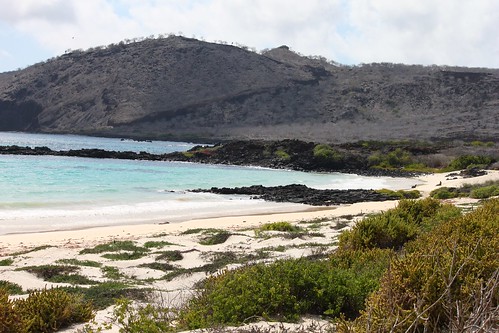
A short walk in a different direction took us to a brilliant white sandy beach well known as a green sea turtle nesting site. The turtles were cruising just offshore when we visited and come on land at night to lay their eggs. Back at our landing site we went snorkeling and were lucky enough to swim with a turtle.

Turtle egg laying beach

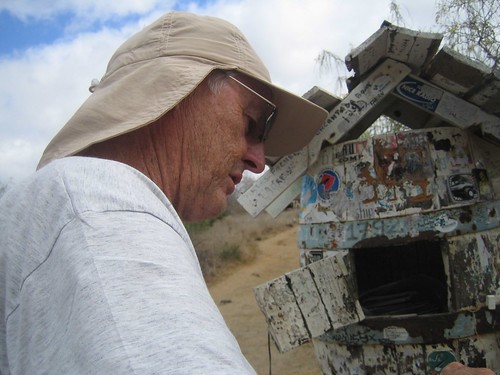
After lunch on board, the yacht moved along the coast to anchor in Post Office Bay. This is the spot where in 1793 ships bound for the Pacific whaling grounds would leave letters in a barrel to be picked up by homeward-bound ships whose crews would deliver the mail by hand. Following tradition, we left some mail so a few of you may receive a card delivered by a stranger. A walk further inland (which we didn’t do) lie the rusted remains of a failed 1920s Norwegian fishing operation.

Roger mailing a card

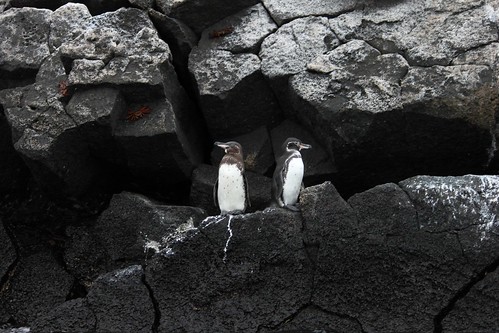
At 5pm we set out in the panga (inflatable dinghy) in search of Galapagos penguins. We were in luck and got up close to the little guys as they rested on a lava outcrop. We also saw sea turtles along the way and in a quiet spot, resting white tipped sharks.

Penguins

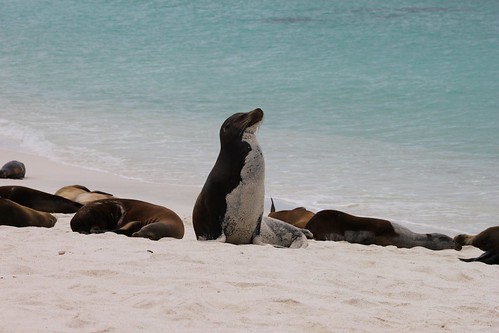
After another overnight sail or motor if you will, we arrived at Gardner Bay on Isla Espanola. Our morning beach walk started with the now familiar indifferent gauntlet of lobos marinos. All beaches have lobos, all sizes, all the time but this beach had LOTS!

Disguised as a penguin

Here is a video of the beachmaster or alpha male who during the breeding and calving season constantly swims back and forth along his sandy turf, barking, warning and chasing off potential rivals.

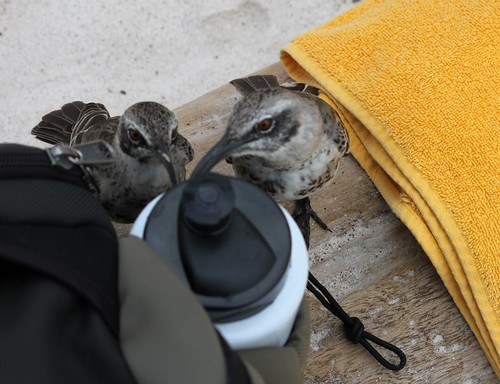
Also on Gardner Bay, we observed some peculiar behaviour. As soon as we were on shore, we were mobbed by thirsty Espanola mockingbirds (one of four Galapagos species). These hazel eyed residents are constantly in search of water and know that humans have it. While you are not allowed to water or feed them to avoid interfering with the natural order, they hope someone has a leaky waterbottle.

Hoping for water

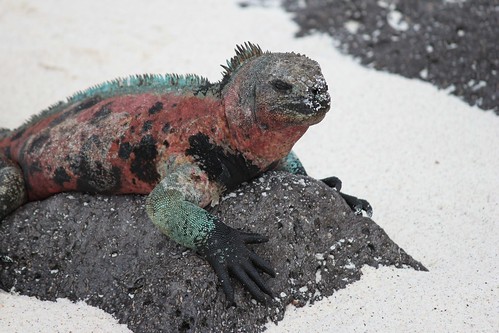
The marine iguanas on Espanola are a subspecies and are more colourful than those on the other islands. During the breeding season, the males’ red and green colouring is even more pronounced.

Christmas iguana on Espanola

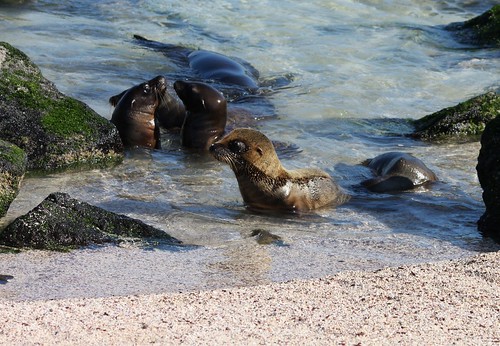
After lunch we motored for an hour along Espanola arriving at Punta Suarez where for the first time we had to share an island with a large cruise ship. This stop to visit the waved albatross nesting ground was the main reason we took the cruise, and I felt frustrated about sharing the space. No worries, it all worked out. On shore while getting organized for the birdwalk, we watched a group of sea lions with many young playing in the shallows and newborns that were barely able to nurse. The barking beach boss was never far away.

Sea lions playing

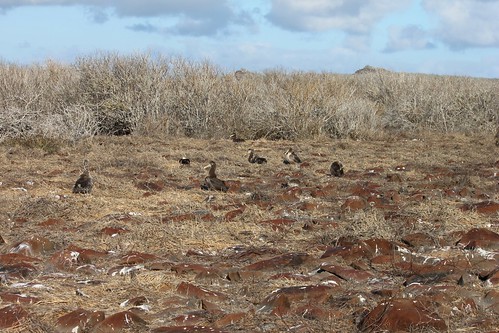
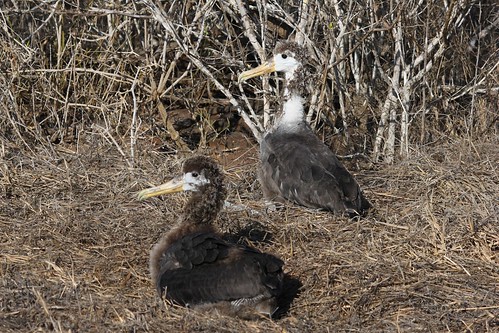
The walk exceeded expectations. We saw not just one or two albatrosses but a whole field of juveniles, many with partial baby feathers.

Nesting grounds

This nesting ground was the same one you see in the National Geographic videos, and it was a different feeling to be there with these stately and at the same time goofy looking birds.

Juvenile albatrosses

In the video below we captured a juvenile prompting its parent for food.

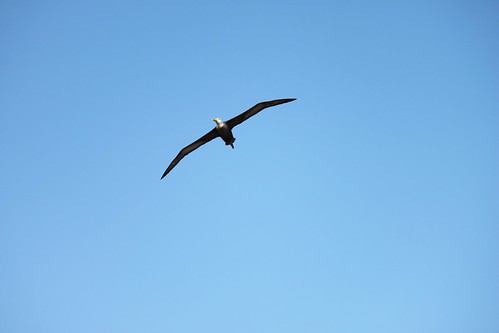
On the ground, albatrosses waddle like big slow ducks but in the air they are masters of grace and power.

Soaring albatross

While we came to see the albatrosses, other birds nest in this area too. There were boobies everywhere.

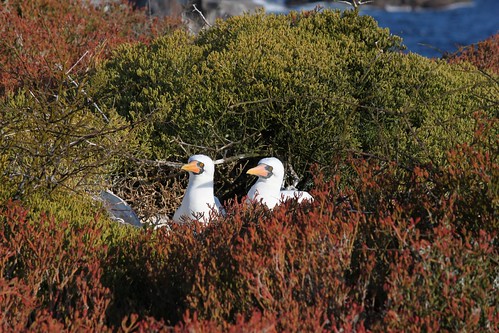
Nazca boobies:
Nazca boobies

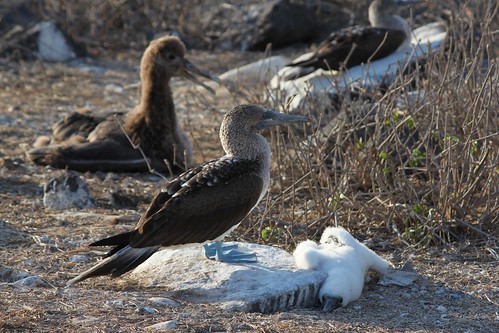
Blue footed boobies:
Albatross in the background

Our cruise ended the next morning in Puerto Baquerizo Moreno on Isla San Cristobal, the provincial capital. We visited the interpretation centre which opened in 1998 and does a beautiful job of presenting the human and natural history of the islands with an emphasis on conservation issues. Behind the centre we did a short hike to see the statue of a young Charles Darwin located at the spot where he first set foot in the Galapagos in 1835.

Darwin on San Cristobal

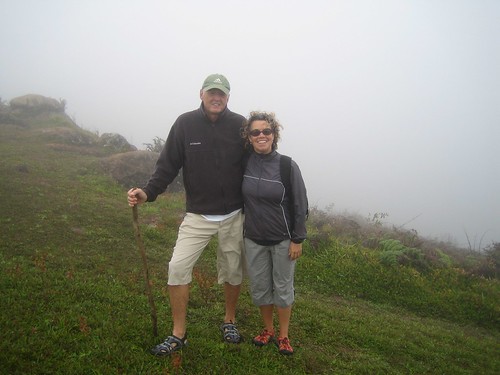
That afternoon we took a taxi to the highlands to visit El Junco, the only year round fresh water lake in the Galapagos. Our hotel owner warned us that given the weather conditions, the lake could be fogged in. She was right. We couldn’t see a thing. We have pictures to prove it. If we get the chance, we’ll return to San Cristobal and try again.

Where's the water?

More photos from our trip:
http://www.flickr.com/photos/sataylor/sets/72157625458213919/

Categories
plaza sur wildlife

Breaking with tradition

This weekend we did something different……..we did a day trip on Saturday rather than Sunday :). Our destination was Plaza Sur, a very small island off the E. corner of Santa Cruz. A 45 minute drive from Puerto Ayora to the Baltra ferry took us up through the rain clouds of the Highlands but once over the height of land, we had clear skies for the rest of our trip as the photos will attest.

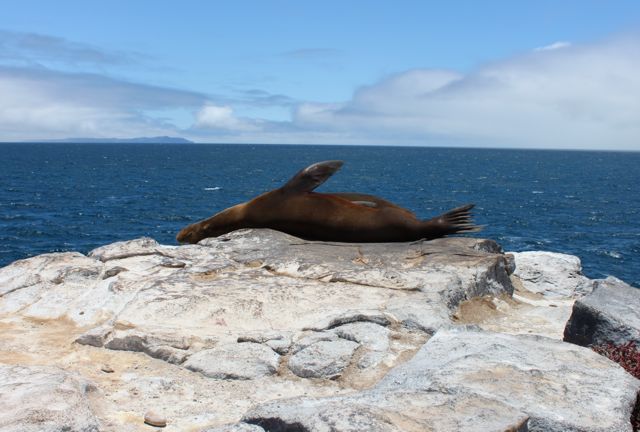
The boat ride to Plaza Sur takes about an hour and fifteen minutes. As we were heading into the prevailing wind the ride was a little bumpy but not enough to make any of the 16 passengers uncomfortable. The return trip was much smoother. On arrival we transferred to shore via an inflatable dinghy and immediately saw that the rocky shoreline was occupied by a group of sea lions comprised of basking mothers and pups and the constant offshore patrol of the male beachmaster/harem owner. Slowly cruising back and forth, raising his head from the water, he gave short gutteral barks (ark, ark, ark) to continually announce to one and all that this was his turf.

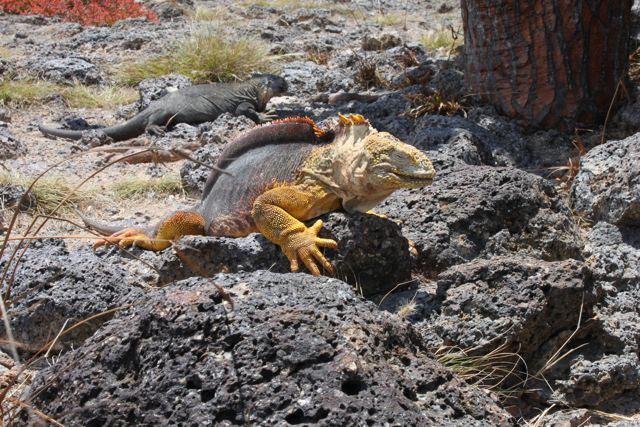
In the immediate area we saw many land iguanas that advanced through our crowd to feed on pieces of cactus that our guide chipped off a fallen Opuntia. (He is not supposed to do that but he wanted us to see what they eat.)

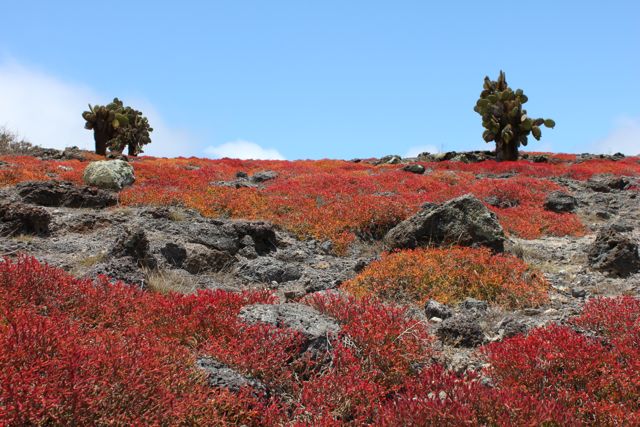
Our walk took us through large patches of sesuvium, a ground cover which is red in the dry season and green in the rainy season. It turns red to protect itself from the sun in the absence of water. When it is green and blooming, its flowers are a further source of food for the land iguanas.

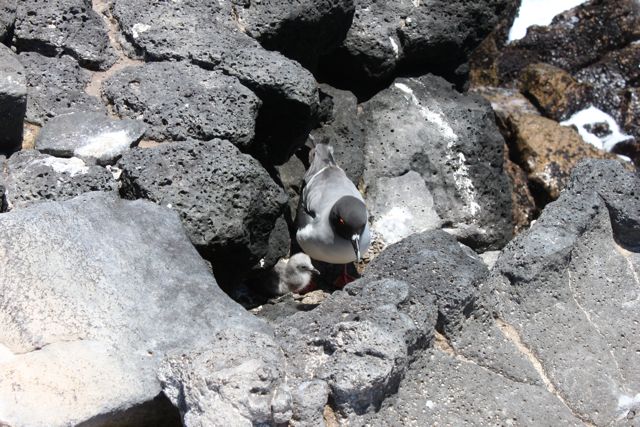
There is a drop off cliff on the other side of the island and this is where we saw nesting swallow tailed gulls or night gulls as they are also called. They rest all day and range out over the ocean for many miles at night hunting for food. The basking sea lions were there too, as were wheeling flocks of petrels who spend the day on the ocean, then return to their nests in the rocky highland where they are safe from maurading frigate birds.

Near the end of our trip, our captain pulled into a protected bay for some snorkeling where we saw schools of fish, a galapagos shark, frigate birds resting on shore and ghostly palo santo trees on the cliffs above.

Here are a few more photos from the day: http://www.flickr.com/photos/sataylor/sets/72157625005340691/

This Thursday we are off to Argentina for two weeks and will be posting from there. Ciao until then.

Categories
isla santa cruz wildlife

Bahia de la Academia

Sunday has become our day for visiting the sights around Santa Cruz. This past week, we went on a boat tour of Academy Bay with another volunteer and one of the staff scientists and his family. Heading out of the sheltered harbour in a small lancha gave us a taste of travel at sea (made me wonder how I’d handle the 2 hour trip to Floreana or Isabela).

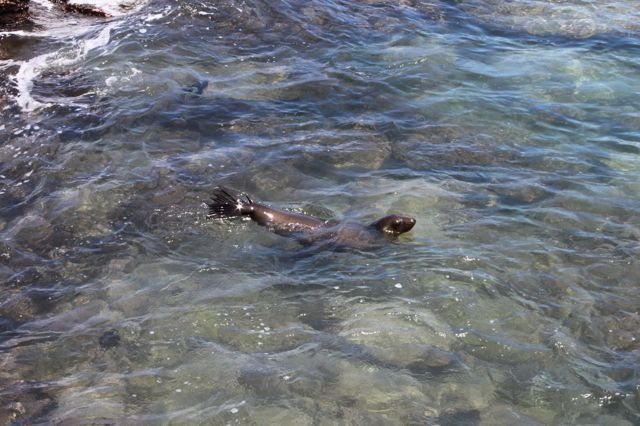
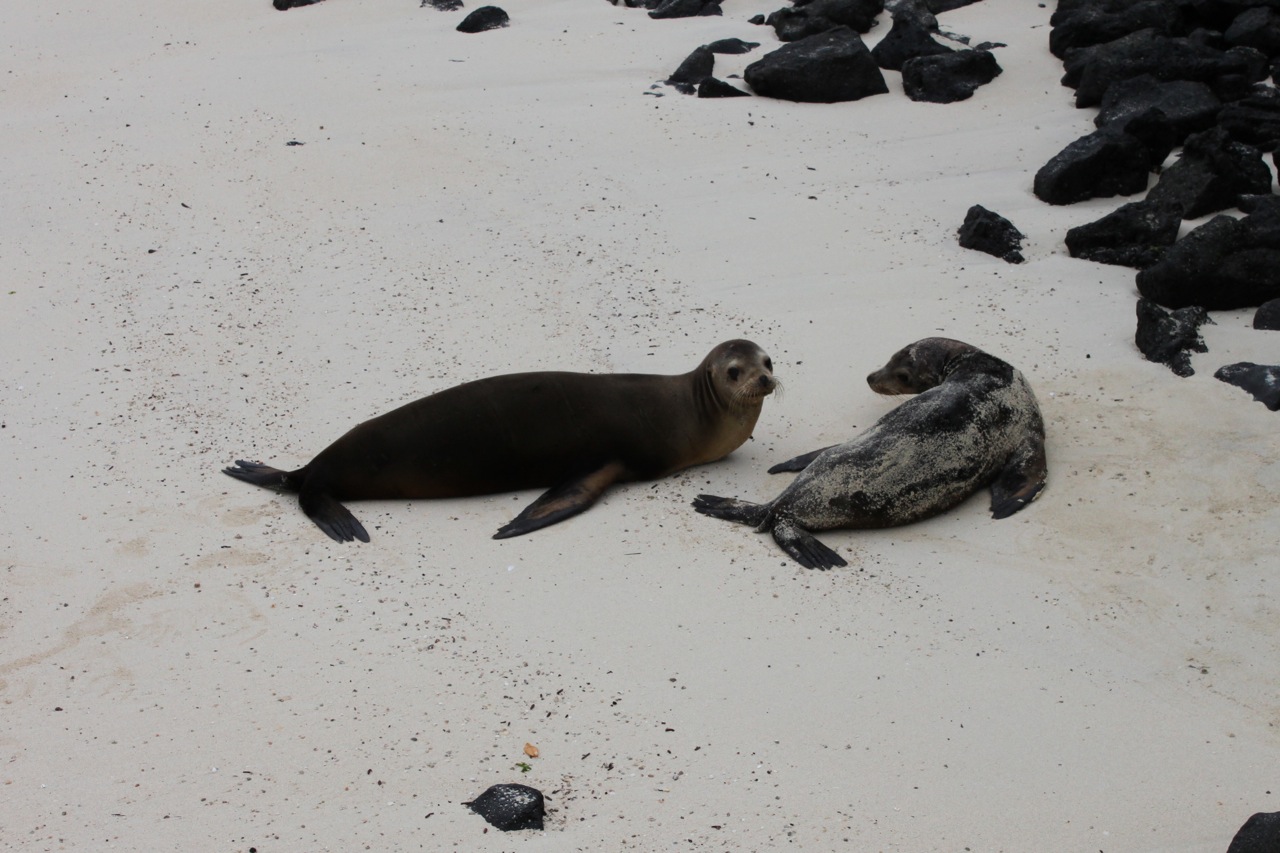
First we headed east to see “La Loberia” where the lobos marinos (sea wolves aka sea lions) hang out. We saw the animals from a distance while our craft bobbed up and down. Apparently, these same animals are the ones we see at the fish market. We were too far to take photographs but here are two of their cousins at another spot.

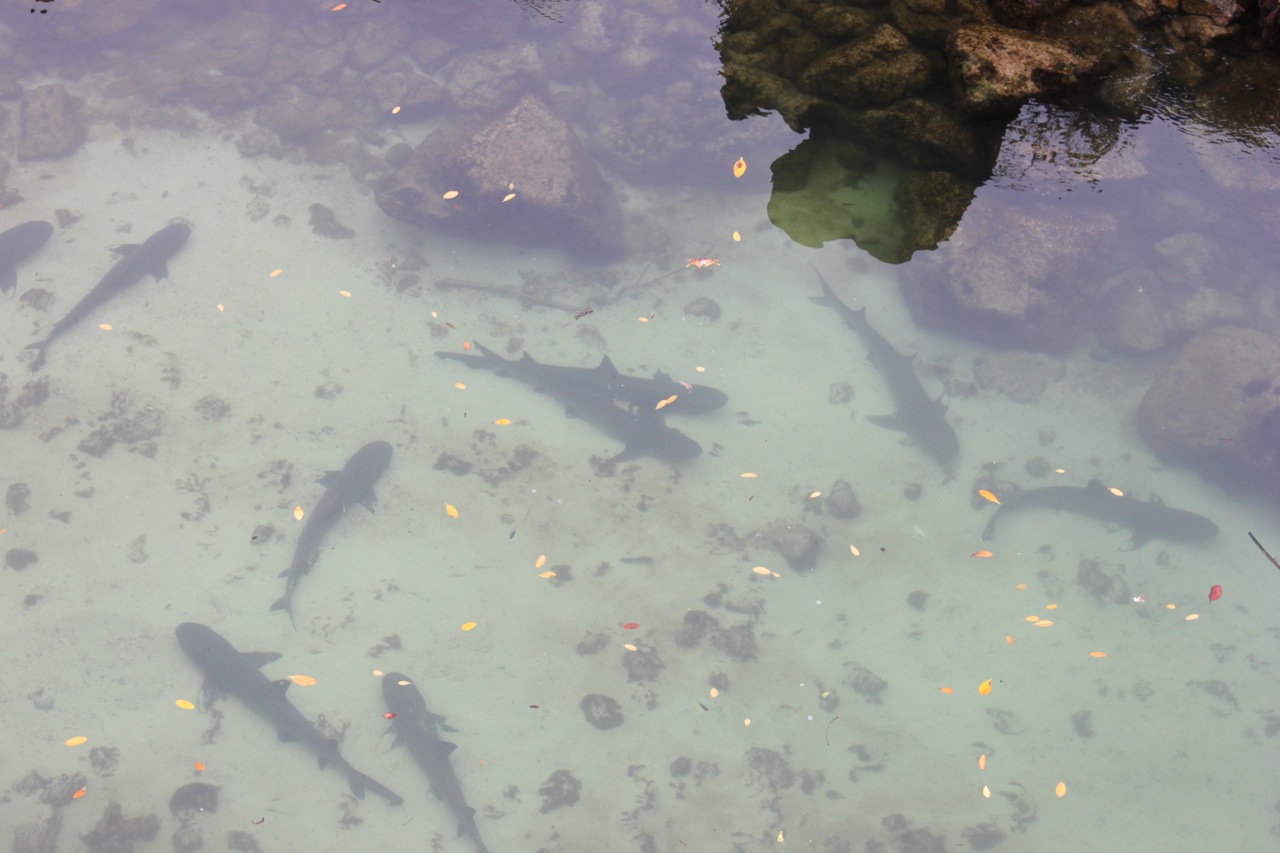
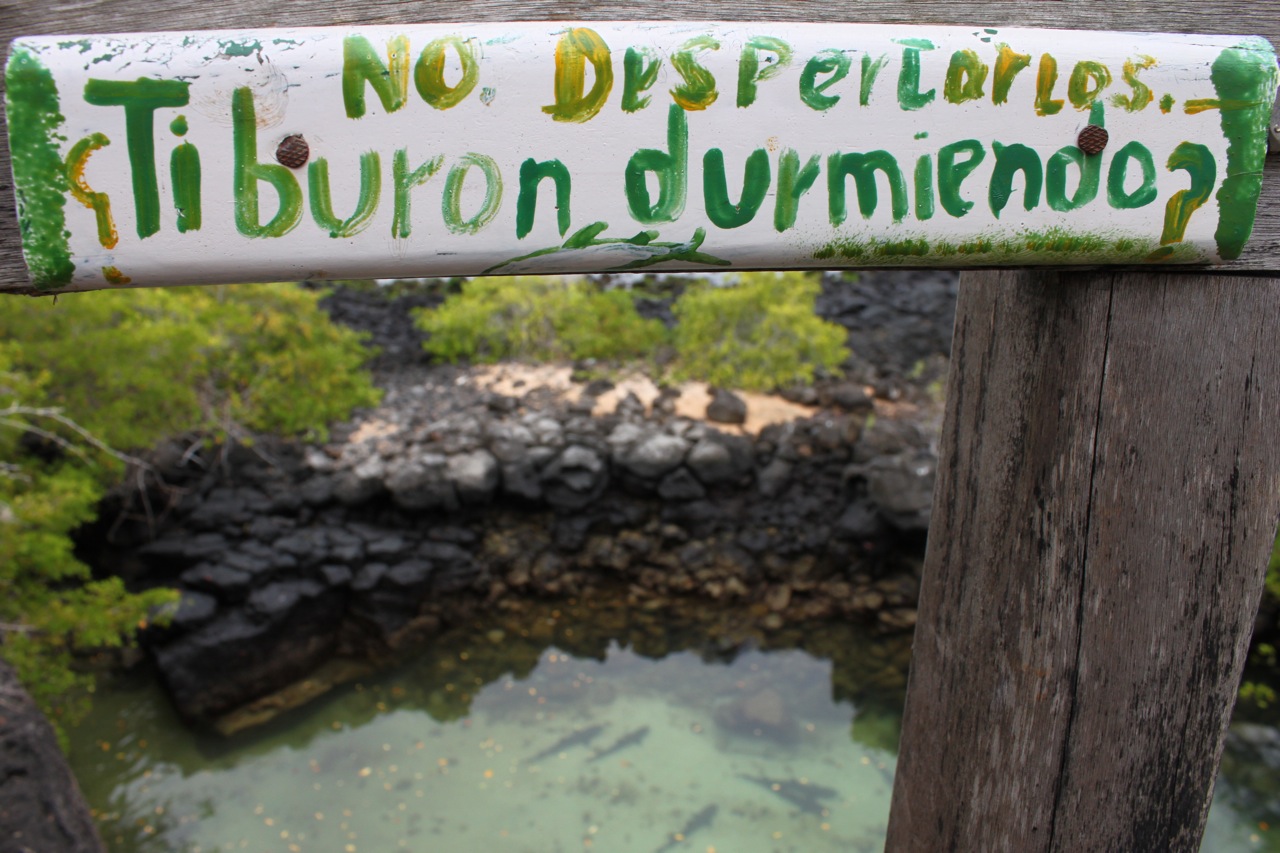
Next we cut back across the bay to the west side to “Canal del Amor” and “Canal de las Tintoreras”. The water was too low to venture into the love canal so we jumped off the boat and walked to see the tintoreras. What are tintoreras? Despite the fact that this could be a picture of minnow or maybe coi, they are in fact small white tipped sharks taking a snooze. Note the sign: Do not wake the sleeping sharks!

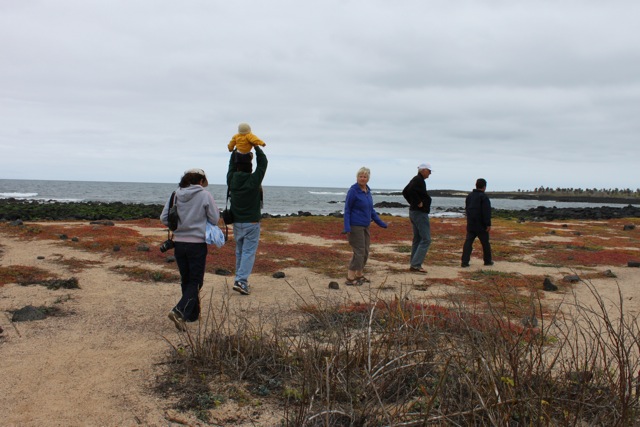
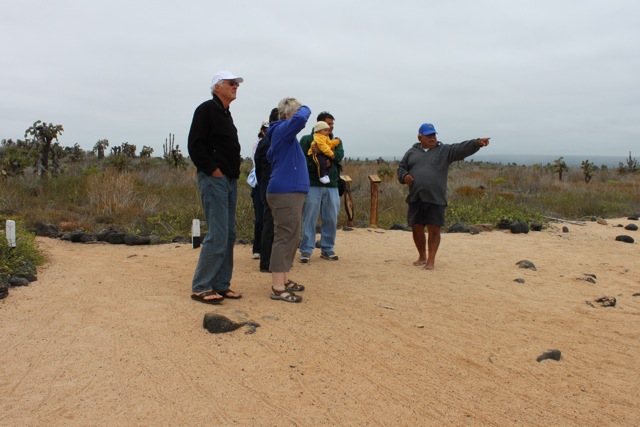
After seeing the sharks (and two manta rays) we followed the trail to Playa de los Perros, a beautiful beach carpeted with Sesuvium, an endemic plant that turns red during the dry season. Our guide was made of tough stuff, walking barefoot over lava rock and cactus spines.

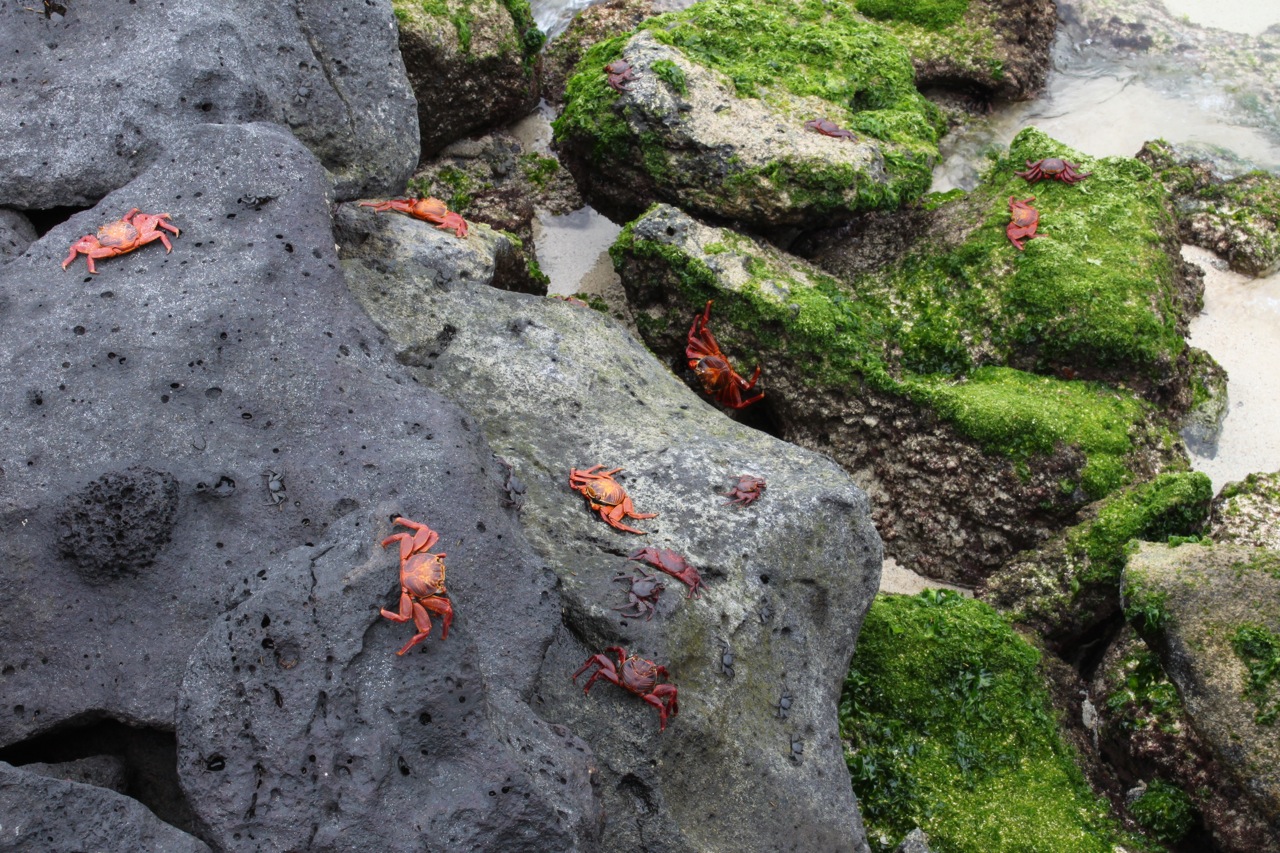
Finally we headed back past the Sally lightfoot crabs to watch lava gulls and blue footed boobies from the boat. We had the option to snorkel but it being surprisingly cool, we declined. We were back in town by noon, just in time for almuerzo (lunch).

Categories
library wildlife

On the Galapagos

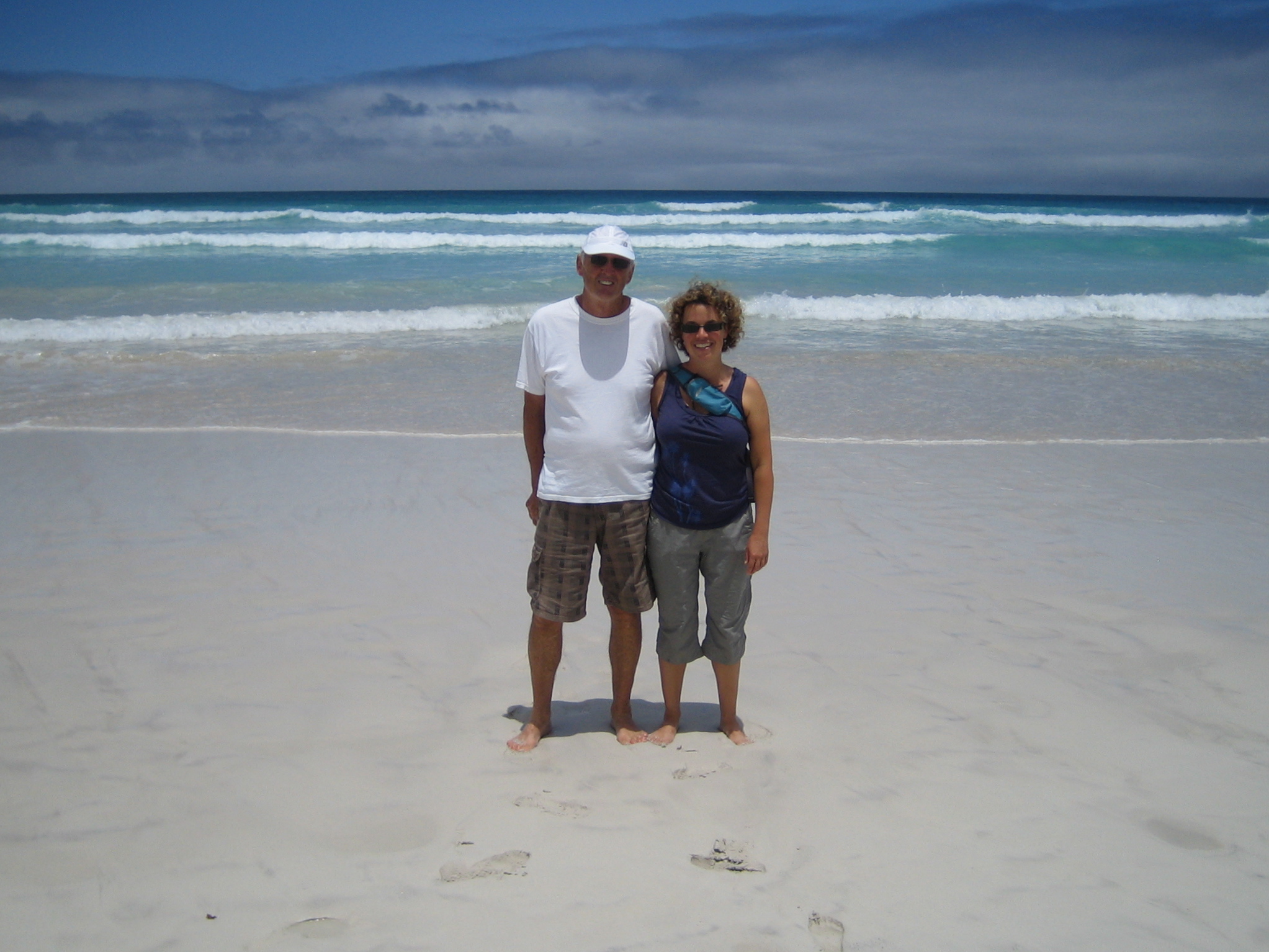
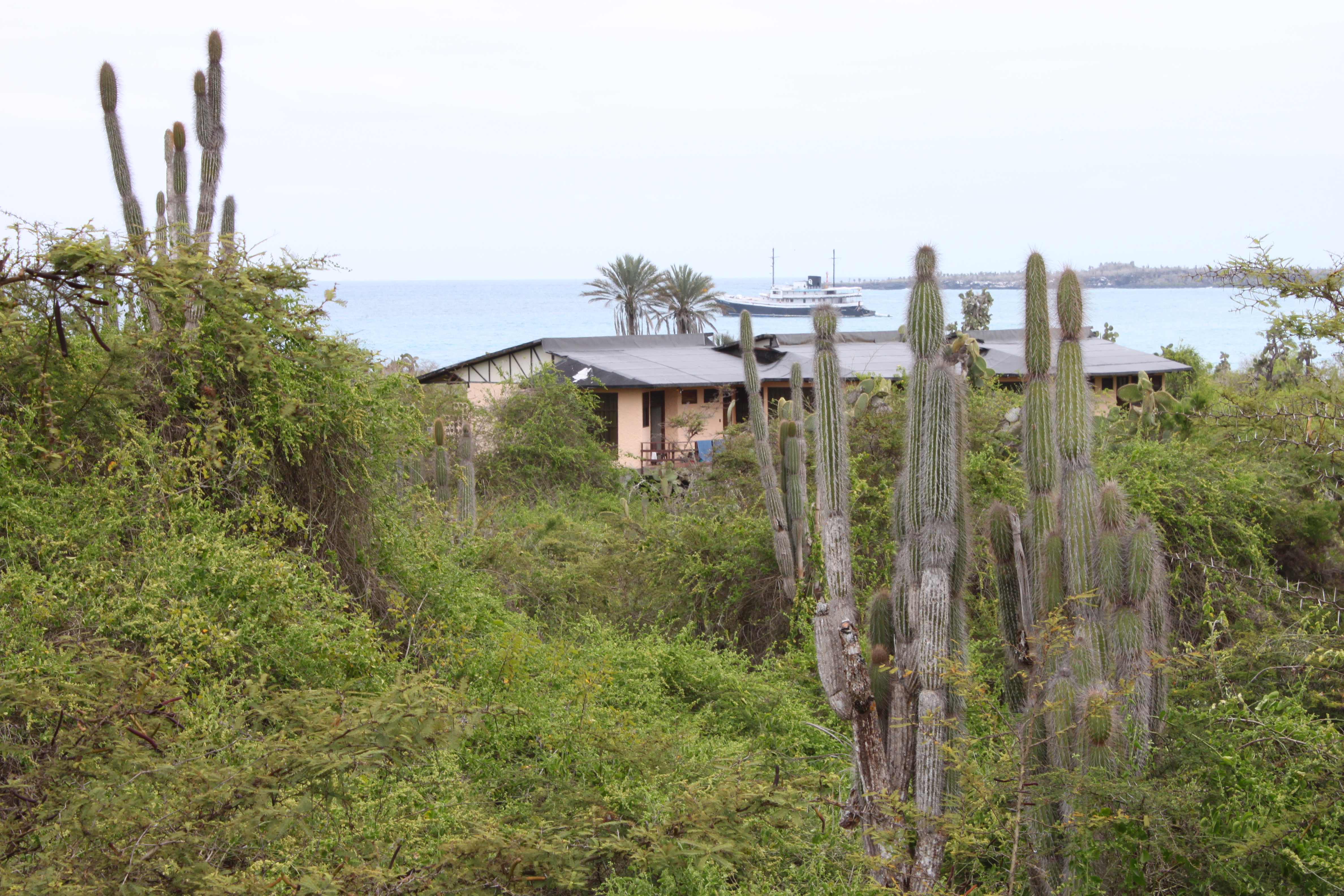
Not all of Isla Santa Cruz is this beautiful but the 50 minute walk to Tortuga Bay was well worth it. There’s a surfing beach and then a quieter beach further on, perfect for swimming (even in the cold season).


Roger & Sally at Tortuga Bay

When we arrived we stayed at the research station for a few nights (a short commute to work). Now we’re housesitting for an Australian couple who are on vacation for two weeks. We plan to view a house this week that comes available in October.

Our accommodation at the station
Evening view
Evening view

Here’s a glimpse of the wildlife we’ve seen at the station, in town and at Tortuga Bay.

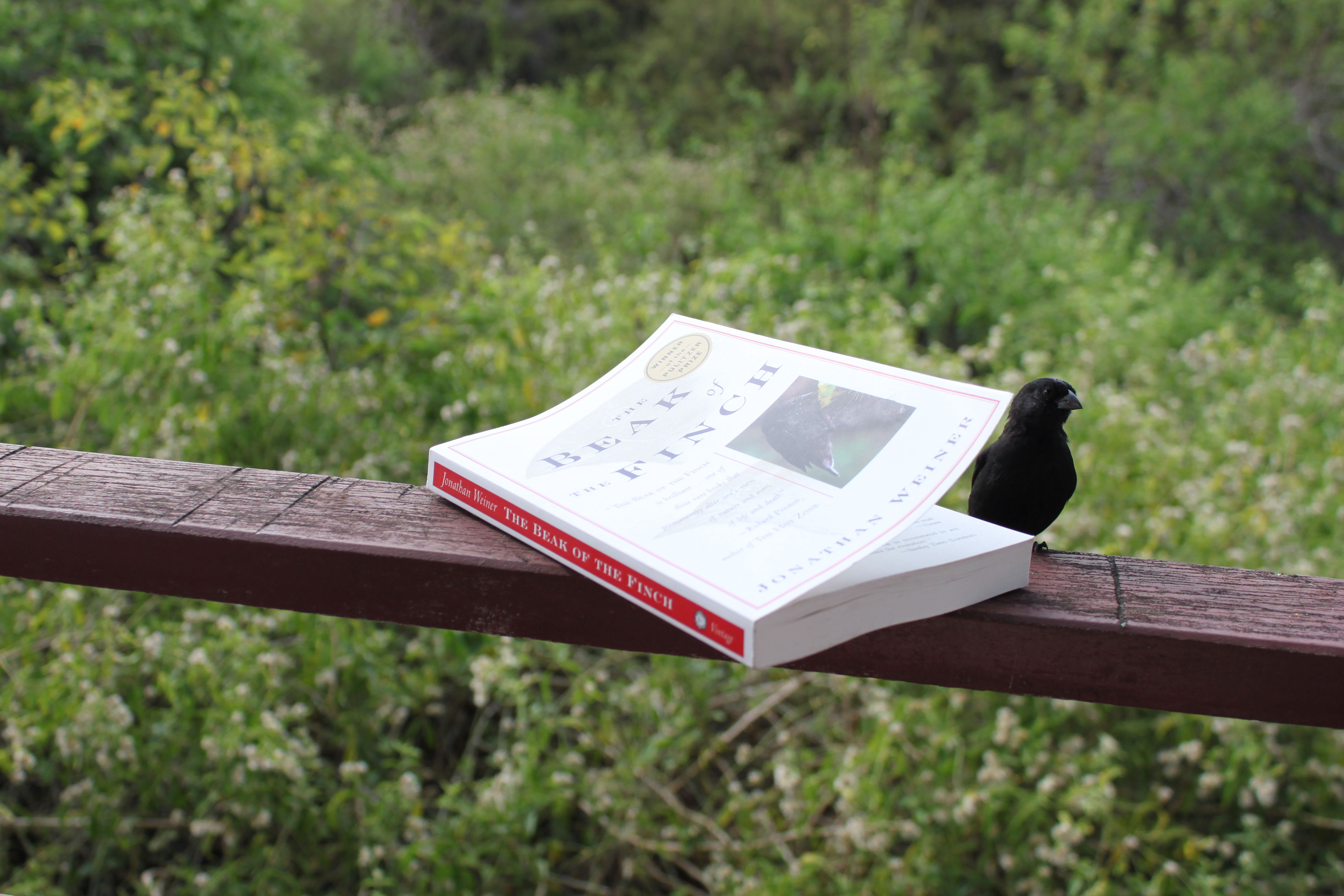
Intellectually curious small ground finch
Tortoise nursery
Tortoise nursery
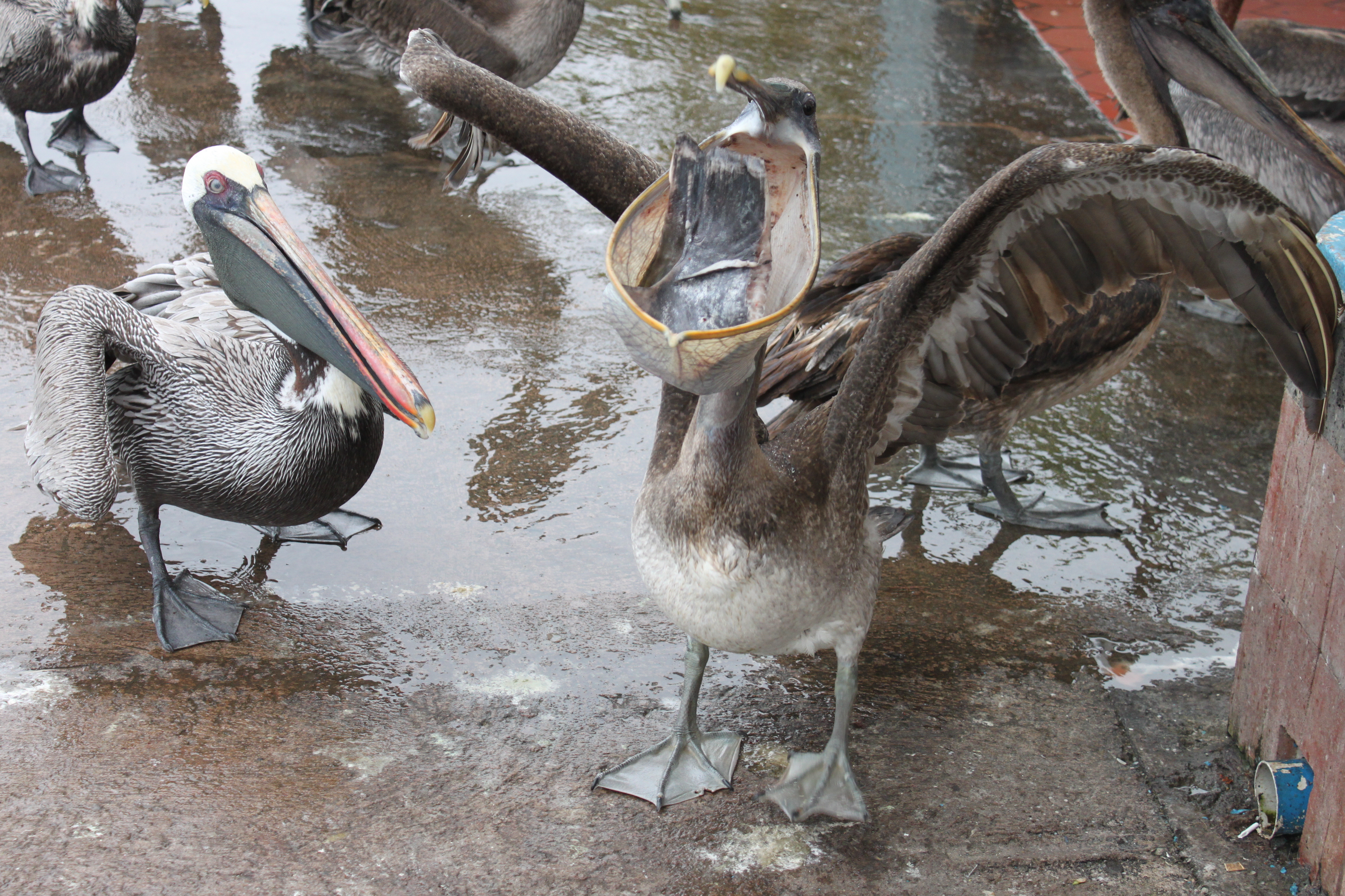
Pelican biting off more than he swallow
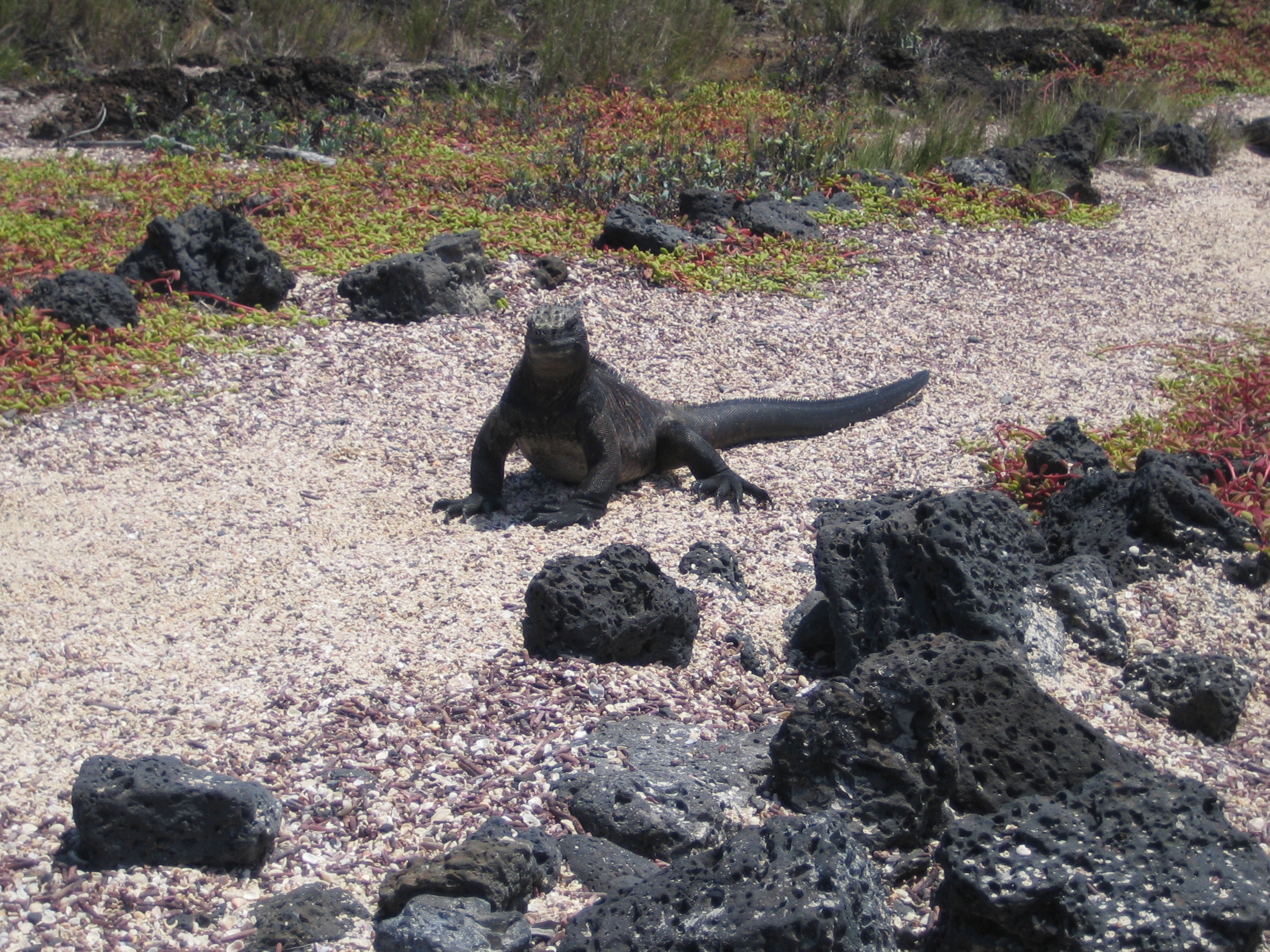
Marine iguana on the path

For more photos from our first 7 days on the Galapagos, see: http://www.flickr.com/photos/sataylor/sets/72157624785248326/

What about the library, you say? On my first day, a tourist from Italy came in for a visit, and on the week-end, I helped a visiting scientist from Spain find the recently published thesis by Charles Darwin’s great great granddaughter (thankfully available in an institutional repository). I also seem unable to avoid journal moves! The library’s low use journals were recently moved “off site” (i.e. a 5 minute walk away), so I’m working with another woman to reorganize them. We need more insect traps for the cucarachas!

Spam prevention powered by Akismet