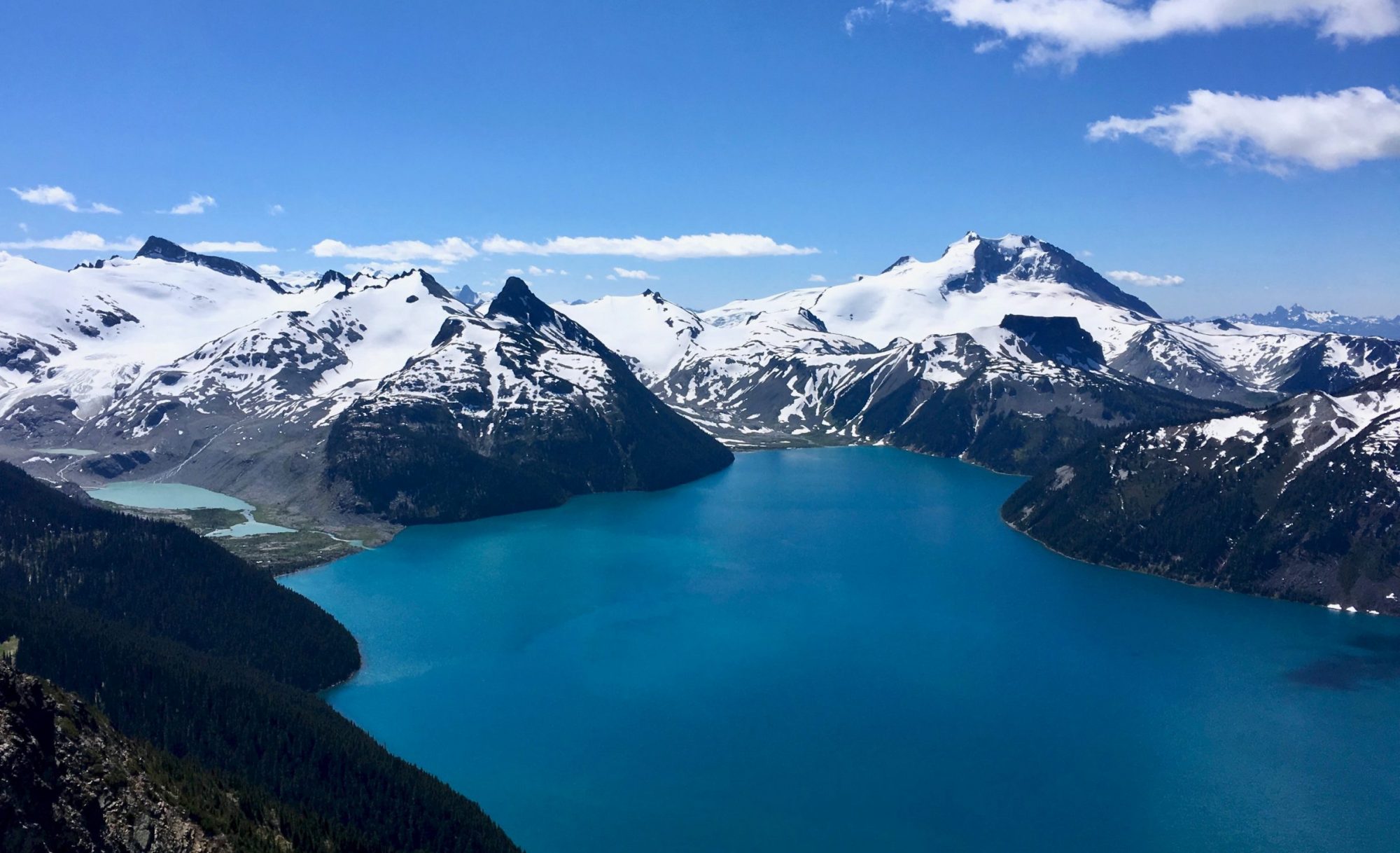
In approximations of real-world phenomena, GIS analyses are subjected to unavoidable uncertainties. As such, several uncertainties were identified throughout this multi-step GIS project; the main ones relating to the suite of tools used in hazard mapping, laharz_py. For instance, a slope value of 0.3 was used in delineating the proximal hazard zone although there is a large range of slope values on the Garibaldi massif due to extensive erosions over long geological time periods, some which still persists at high altitudes due to glacial movement. Another issue is that the key assumption behind mapping lahar inundation zones using laharz_py is that the tool considers the valley cross-sectional area as the main independent variable instead of the compositions of the lahar deposits. However, the lahar zones generated from laharz_py is a reasonable tool to delineate the maximum lahar inundation zones because lahar deposits often have a much smaller cross-sectional area (Schilling, 2014).
Other than that, mapping of the ashfall zone was highly simplified due to a lack of time-varying wind data accurate to specific heights for modelling of volcanic ash dispersion. However, the ashfall zone in this analysis has sufficiently outlined the maximum possible ashfall extent, and consequently aid in the identification of highly populated areas which are subjected to the Garibaldi volcanic hazards.
Finally, there are many other volcanic features surrounding the Garibaldi massif therefore volcanic hazards are not limited to the massif if actual eruption takes place. However, consideration of all volcanic features would require manual assessments on each, which makes assessment too complex.
For the Evacuation Plan section of this project, selection of locations for service area analyses was made based on the assumption of a lahar flow speed of 80 km/h, which is a high estimate given that lahars tend to travel much slower with increasing distances from the source vent (“Lahars”, 2017).
Despite the uncertainties, the Hazard Assessment of the Garibaldi volcano clearly shows that the population of the District of Squamish is in extreme danger in the event of a volcanic eruption. On the other hand, Whistler’s population would be subjected to moderate volcanic hazards, specifically from volcanic ashfall. Considering the potential volcanic hazards, Evacuation Plans for both areas are warranted to minimize adverse health effects on the local populations and casualties.
While it is evident that a Garibaldi volcanic eruption would affect the lives of roughly 30,000 people in Squamish and Whistler, Mount Garibaldi is currently not closely monitored by the Geological Survey of Canada due to its remoteness. This project thus serves to create awareness for the government to plan initiatives in the development of official hazard maps in Mount Garibaldi vicinity and to devise strategies in the determination of any supplementary infrastructural modifications or reworkings.