Categories
Uncategorized

2:3 The One Where Hannia Lost the Plot

I set out to answer the question regarding Coyote Makes a Deal with the King of England and its syntax. I attempted to read the story on my own, and while doing so, I heard it the way I thought it would sound if I were to read it aloud. That’s normal enough, everyone has thoughts. I did find the syntax to be a little strange, but I felt it would flow smoothly.


Then I read it aloud to a friend. Not having someone on hand to read to at all times, I did it over Skype conference. This experience was… interesting. The way I read it was probably way too fast, but I felt the way it was written on the page compelled me to keep a quick pace. Thus, I kept tripping over my words, misreading things, having to stop and repeat bits and pieces I’d flubbed. And then there was the running commentary. We had some trouble getting through the story, as its more conversational style made it, in the case of myself and my friend this time, a bit easy to get lost in the narrative. So I often stopped to summarize so we were clear on what was happening and various other remarks. I am a terrible joker, so there were times when I may or may not have been a little mean to the text. For example, Robinson often repeats details, like when God is giving Coyote instructions about how he’ll arrive on the English beach on a boat, and he mentions the fact that he’ll arrive on the boat about three times. I quoted The Emperor’s New Groove. (“The poison. the poison meant specifically to kill Kuzco. Kuzco’s poison.”) We’d often repeat the words “Kuzco’s poison” when we got to a part where the narrator fixated on a detail, this proving once and for all that I am a terrible person. Looking back, I should have taken it more seriously, but I felt I was hanging out with my friend. There was also the “which queen of England is he referring to exactly, and that is not how the inheritance works in the English monarchy” incident. Essentially, in reading it aloud I imbued the text with my own irrelevant thoughts, and allowed that to colour the performance.


I really wish I could hear Robinson himself tell the story. The syntax makes me wonder if there’s a specific cadence and speed that one needs to hit in telling this story for it to get across correctly. Wendy says, in a bit of conversation shortly after the story, that no one tells stories quite like Harry does. I doubt I managed to tell it that way, in fact I think I got it catastrophically wrong, so I’m not entirely sure if the syntax really does preserve the original teller’s essence.
Categories
Uncategorized

2:2 First Stories

The night grows ever lighter. I blink at the light of my screen, struggling to stay awake. How did it come to this? I was doing so well! I think to myself, holding back the tears that so, so, easily fall from my eyes at the slightest disturbance. Once I cried because I spilled some noodles on the sidewalk. Anyhow, here I am, bravely forging through while releasing yawns every once in a while. You gotta just let ’em out sometimes.


My very first reaction to Robinson’s story about the Black and White law was that it was likely conceived after contact. Keeping in mind the history between the Indigenous people and Europeans, all the hurt and anger that must have been present after years of horrible treatment, the characterization of the twins makes sense. Coyote’s character, as Wickwire notes, was far from the bad boy Harry often painted him to be (Robinson 11); he was quite responsible and mature, making me wonder what exactly had happened to create the wild man previously described. This departure from character points towards a story that was more a product of the result of the contact rather than a prediction… which I guess it presented itself as, really, though its creation story elements do give off the vibe that this is something whipped up after a long time knowing the White twin’s children. The stories with Coyote as a footloose and fancy-free individual might be older than this one, but I can’t say I know. It’s simply an assumption I can make from reading this story.


Also, such accurate, painful description of the harm Europeans caused in this story is really paints it as a kind of narrative formed to come to terms with the shoddy treatment received by them, to find some kind of logical origin to it. Dr. Paterson asks what the Indigenous people did to deserve the ills that came upon them in this week’s lesson, and I feel this story is a way to bring about an explanation. Notably, it highlights that there was nothing the Indigenous people did to warrant the pain brought upon them, but rather a side-effect of each group’s forefather’s difference in temperament. The European people are descendants of a liar and a thief, thus explaining their behaviour. Coyote was good and raised his children well, but his brother’s mistake in rearing his doomed them.


As for the stolen piece of paper, it hearkens back to our discussion on oral and written cultures. The Europeans count as a “written” culture… type of people. Their ancestor stole a secret piece of paper, which I figure he used to write on and taught his children to do the same. Thus, a difference in record keeping was born. The fact that Coyote then traveled to England to procure a piece of paper with a law written on it implies the fact that the Europeans essentially forced the Indigenous people to adapt to their ways, even in seeking retribution. Overall, the story highlights the difference between the groups in a matter that is understanding considering the teller and the history at hand.


Works Cited

Paterson, Erika. “Lesson 2:2.” ENGL 470A Canadian Studies Canadian Literary Genre. UBC, n.d. Web. 21 June 2014.
Robinson, Harry. Living by Stories: a Journey of Landscape and Memory. Compiled and edited by Wendy Wickwire. Vancouver: Talon Books, 2005.


Categories
Uncategorized

2.1.2 Home II

(WARNING: The following piece of writing is sandwiched between the complete overhaul of my sleep cycle and a term paper deadline. Misspellings are due to the author having to write through a veritable waterfall of tears.)


First of all, I found that I may not be entirely alone when it comes to being confused about where home is meant to be. It seems to be a pretty common thing, especially among those who have had to relocate several times. It is pretty difficult to get a sense of home when you keep having to pack it up for a new one. Though yes, there are people who can say they’ve lived in the same place all their lives, ours is a fairly nomadic group and we’re familiar with feeling ill at ease in a location we’re meant to live in, even though our feelings may later change. There’s a sense that to many of us, home is a place we’re trying to find, realize we’ve found just as we’re meant to leave it, or never even realized we’d found until much later.


Overall, though, there’s a sense that home is tied to a feeling, be it of comfort, belonging, or so on. You could technically live in a place and still yearn for home elsewhere. If it’s tied to people, that covers the feeling of belonging. If it’s memories, maybe comfort. Sometimes it’s even tied to things like food. In any case, home is less about, say, a house than our feelings toward that house.

Categories
Uncategorized

2:1 Home

6562855
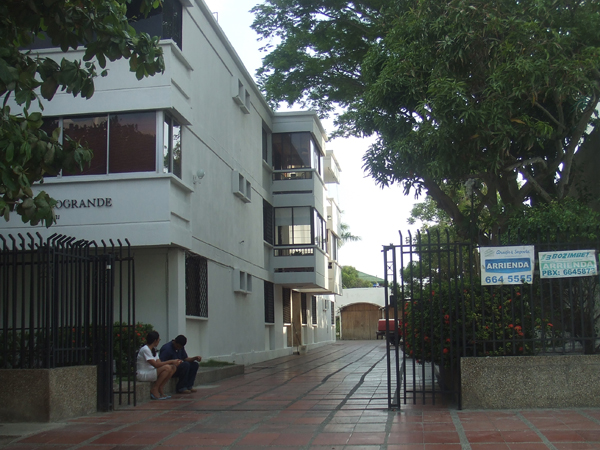
Shell of a former home.


Growing up in Colombia, I was told I had three homes: my parents’, my maternal grandmother’s, and my paternal grandparents’. I repeated the fact like a phrase you learn by memory and just parrot about without really making that emotional connection, quite the same way I did with prayers and any fact I actually retained in school. Out of the three homes, I suppose I preferred my grandparents’ because I could eat my pancakes while watching TV in the morning if I wanted to. I was a very spoiled child.


And then we packed up and moved to Canada.


First I lived in a tiny Vancouver apartment, not at all large enough for rambunctious children to play their games peacefully within. My friends and I would improvise and play in the hall, which was a huge bother to the other tenants. We found a sizable courtyard one day, only accessed by taking the stairs, but that turned out to be private property. Then a condo in Winnipeg, lived in for one of the most terrible years of my life. Winnipeg and I had a rough start. Finally, my parents bought the house I spent the better part of my teen years in. I had some happy times, and some terrible, but I never really got attached to Winnipeg. I never felt I had much of an obligation to the place. At school, most of the friendships I saw had been in place since elementary school, and I hadn’t had the opportunity to root myself in that sense. So it wasn’t too difficult for me to choose a university based on how far away it was from the city and it’s horrible winters and feet upon feet of snow. Personal relationships aside, the real reason I never wanted to consider Winnipeg my home was the weather. I used to pity the people I talked to who said they could never really leave such a frozen place. I knew I was perfectly capable.


Except Winnipeg was probably the closest thing to home I had in Canada. I had time to build solid memories and formative experiences there, and in my decision to leave so rashly I now have no way of going back. Not long after I started school, my family made the move to Mississauga, Ontario. Mississauga is one of the last places in the world I would look to as my home; I’ve never really lived there, apart from a very extended visit spent praying for my departure to come quickly. But I also don’t feel quite at home in Vancouver. I have no family here and have spent the time hopping from dorm to basement to basement. These places don’t feel mine, and though I have friends here I hesitate to count this as my home. Many of them will probably leave as soon as university is over anyway, and then what will I have?


Thus, I cannot really make a description of the place I think of when I think of home. There is no such place. I’ve lost touch entirely with my childhood homes in Colombia, and even my parents have that feeling that there is no point in going back there. Too much time has passed and our lives just aren’t there anymore, ready to be slipped back into like an old coat. Is home where family is? Then why can’t I make myself at home in Mississauga? I’ve also got plenty of family in Colombian still, but being there is only a visit. In terms of memories,  my home is Winnipeg. In terms of friends and an independent life, my home is Vancouver. But there is no place that feels truly mine, that I can connect to on that deeper level. I don’t get off a plane at YVR, breathe in, and immediately feel like I’ve come home. (In fact, the last time I returned I felt terror and dread.) Really, I’m still looking for a place that has that comforting feeling of belonging, that I can really curl up in and feel like I’ve arrived. I worry I may never find it.


Spam prevention powered by Akismet