Farewell
Time flies and we are on the last week of our project. As we anticipated, stress levels have risen again. Deadlines are beginning to pile up as the finish line is right ahead of us. So we are working hard to produce results that we will be proud of. Although this may be the last post from us, we want to make it a meaningful one by discussing another moment of significance that left a big impact on us and led us to what we will showcase in our presentation and final report.
What?
A moment of significance that occurred in the course (and especially our project) was our collaboration with Lorraine Chow during the Food Bank Challenge. We initially planned on creating a recipe book based on uncommon foods that are not usually found in Western diets. Alongside, we would have been helping facilitate one workshop that focused on teaching community members how they could use the foods in their food bags. However, as a result of the collaboration, the direction of our project deliverable changed to one that our group and the Hastings Sunrise community partners agreed was more appropriate to the community – a food skills guide. The Food Bank Challenge was a one day event, located at the Thunderbird Community Centre, where our group, under the guidance and direction of Lorraine, was challenged to make a meal with only the items that a recipient would receive for that one week from the food bank. During the meet-up, Lorraine’s insight and experiences helped us realize that a food skills guide would be more beneficial in building community capacity in food security within the Hastings Sunrise community. By getting a more hands-on experience we were able to better understand the day-to-day challenges faced by those living with low-income and experiencing food insecurity.
So What?
Our new understanding that was gained from the change in our deliverable was that as we became more immersed in the project over time, the objectives became clearer, and we gained new insights that dictated the outcome of the project. Participating in the Food Bank Challenge was the moment where we wanted to re-evaluate the effectiveness of our initial deliverable. It was through the challenge that we were better able to understand the community’s food system as we were no longer simply theorizing the issue, but actually seeing it for ourselves, which is one of the main reasons why Lorraine wanted to invite us to her community kitchen. Questions we asked ourselves during the Food Bank Challenge were:
- How can we make a deliverable that is accessible to everyone in the community?
- Will it be understandable by all community members?
- Will it improve food skills?
- Will it be effective in accomplishing our ultimate goal for this project, which is enhancing food literacy?
Since the shift of our objectives came so late into the project, we had to adapt quickly and work efficiently in order to still meet the deadline. Reflecting back at our situation, we learned that no matter how clear a project may seem in the beginning, there will always be unpredictable instances and obstacles that will change the course of the project. In the beginning of the course, our instructor, Will Valley, mentioned the importance of being flexible when working with our community partners. We kept this in mind as the months went by and we believe that through this reminder, we were able to not be too flustered when change continually occurred throughout the project.
Now What?
In evaluating the success of our project, the broader issue that needs to be considered is increasing access to healthy and affordable foods. In terms of food literacy, having knowledge of how foods can be prepared, cooked, and stored are essential for community members to be able to support themselves in their community food system. However, the knowledge cannot be applied if food choices are unavailable. Therefore, building community capacity is essential to building independence within the food system. To help initiate the process, we started a food skills guide. By attending the facilitator meeting and the Food Bank Challenge, we learned that some barriers people face are not knowing how to cook and/or not having the time, transportation, money, and childminding to obtain food and then cook a meal. However, they do know what a nutritious meal looks like and are interested in learning more. Therefore, by providing the knowledge to prepare common produce along with the knowledge of meal ideas, one would be better able to make a healthy meal.
To improve access to healthy and affordable foods, those doing the important work of advocating for improved accessibility should continue their endeavors. Moreover, municipal governments and planners should give convenience and grocery store owners as well as consumers incentives to ordering and purchasing healthy as opposed to unhealthy foods. However, potlucks can also be done where community members can combine their groceries with other members to make a meal, increase the variety in their diet, and widen the availability of kitchen equipment while decreasing the amount of time to cook meals. The idea is similar to the Lupii Community Cafe which we learned about at the facilitator meeting where they provide free community dinners in the Champlain Heights neighborhood. We hope that our food skills guide provides a template for the community to continue adding more to. Moreover, we hope the Instagram account along with the linked email can be used to receive more pictures that can be posted on the account to widen the geographic range of available inexpensive produce bags in the Lower Mainland.
However, we do acknowledge that there are limitations to the two deliverables in terms of their outreach. Both projects must be accessed via the internet which limits our audience. Therefore, a physical copy of the food skills guide should be made so people without access to the internet can use it. Furthermore, the locations of the dollar produce bags can be organized into a map. Community capacity building can also be addressed by creating a video on how to post pictures on Instagram so the account we created can be managed by community members.
Year 3 of the project will be continued in the coming spring term in which another LFS 350 group will pick up where we left off. We hope our report and collaboration over the past two and a half months will contribute, along with the next few LFS 350 groups, to the development and improvement of local food systems.
There has been a lot of effort and input put into this projects from our group members, community coordinators, and instructors. The challenges of integrating different perspectives of solving the current issues of food insecurity in Hastings Sunrise is a complex issue that cannot be covered and understood in just a few lectures. This project has broadened our views and thoughts on food security, which is the most valuable experience that we learned from this course. Though LFS 350 will end for us in one week, our contribution to this project and concerns about current issues on food security will still carry on.
References
University of Memphis. (2017). Module 5 – Capacity Building for Sustained Change. Retrieved from http://www.memphis.edu/ess/module5/index.php
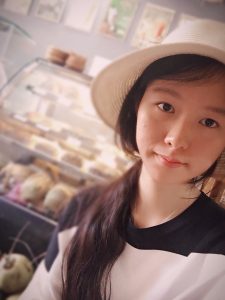 Sylvie Chen is a Nutritional Science major student. She is interested in exploring various food cultures among different countries. Understanding various food habits in different regions is an efficient way to understand their culture, including religions. Also, she wants to approach the knowledge about healthy diets during her undergraduate study and be able to apply it to daily life to improve her and her family members health consciousness. She thinks the Hastings-Sunrise project is an excellent chance to apply the theoretical knowledge on actual practice through helping low-income community members to understand their foods and use them correctly.
 Eunice Wang is a third year undergraduate in the Food, Nutrition and Health program, specializing in Nutritional Sciences that mainly focuses on the nutritional aspect of foods and scientific scale of food systems. She has a great interest on how healthy foods can improve people’s health and living conditions. She is very excited to study how social factors, such as income level and cultures have impact on how people eat foods in healthy and nutritional ways. Travelling around the world is one of her favourite interests because she can have a chance to taste different styles of foods and get to know local healthy diets. She cherishes the opportunity of accomplishing this project since she can study what it is that prevents people from having healthy nutritional diets and foods.
 Valerie Kam, is a third year Nutritional Science major student. After taking several nutrition courses, she enjoys studying human international nutrition the most, especially when it pertains to malnutrition in children. This particular project piqued her interest, as it mirrored a project she participated in another course prior. With both of the projects centralizing their topic on food literacy, she is excited to see how different it will be to conduct food literacy workshops with a different audience and community this term.
 Melissa Gee is a fourth year student majoring in Applied Animal Biology. She is interested in studying animals, but is especially fond of birds. However, to study an organism, one must also look at their interactions with others and the environment, which includes the effects of agriculture. Moreover, eating is an activity that everyone shares and an activity that is a major part of our lives. As a result, people should think more critically of their food choices since they have varying degrees of impact on the environment. The Hastings-Sunrise project incorporates the concept of food rescue to not only optimize food utilization, but to also minimize food waste, which is an idea she is interested in.
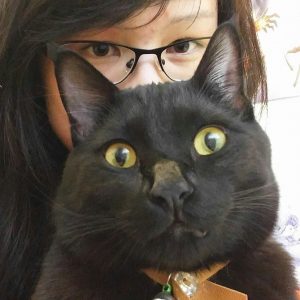 Olivia Chan is a third year Food, Nutrition and Health student, aspiring to become a dietitian. She is interested in helping others lead healthier lives through nutrition, a subject she has been passionate to learn about since her first Home Economics class in high school. She wants to focus on being able to help a wider population, from those less fortunate to those of different ethnicities based on what she has learned so far in her courses and from volunteering. That is why she believes the Hastings-Sunrise project best suits her interest, as engaging with a diverse community will give her a better insight into food security and find various ways to help people of different backgrounds gain access to better nutrition.
 Jessica Williams is a third year undergraduate student majoring in Nutritional Sciences. She is passionate about food, health and nutrition and aspires to promote wellness of people and communities across the globe. She is interested in international nutrition, race, age and gender issues specifically regarding women and children’s health. She also chose this project because it addresses food security in local communities and the resources available to help to alleviate challenges in accessibility, availability and affordability.