Categories
Comm 101

It’s electrifying

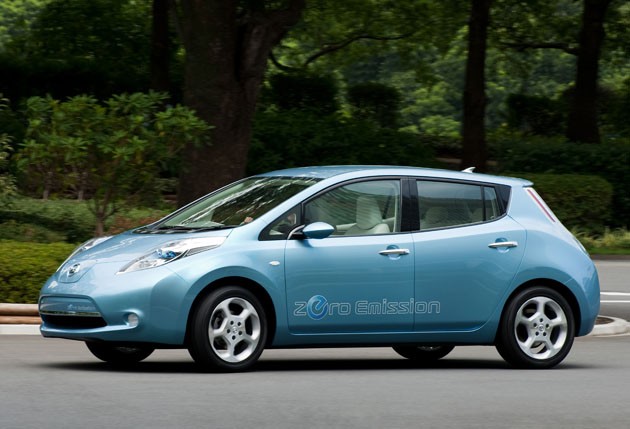
Over the years, many automobile companies have been shifting towards offering new sustainable cars due to Corporate Social Responsibility, which integrates social, environmental, and economic concerns into their values and operations.  Companies like Toyota and Ford offer hybrid vehicles, but no company has yet launched a fully electric zero-emission car.  This will all change in late 2010 when Nissan introduces the LEAF, their new 100% electric car.  This new model is part of Nissan’s “New Way” philosophy, with their goal being that they hope and optimism to help create a sustainable future.  This new innovation causes no pollution, no noise, and charges with domestic electric power.  Not to mention that even the seat fibers and bumpers are comprised of recycled bottles.  There are two models available for market depending on if you want fully loaded, with solar panel spoilers, or well-equipped.  Both models run in a, surprisingly low, price range from around $25,000-$26,000, after tax savings.  The incentives to buy this car are not only the fact that the consumer is reducing their carbon footprint, but also the rebates that will help to promote the purchase of the LEAF such as the “New Qualified Plug-In Electric Drive Motor Vehicles” and “Alternative Fuel Vehicle Refueling Property Credit.”  The new Nissan LEAF is sure to revolutionize how civilization will drive into the future and take steps towards “New Way(s)” of thinking to promote a sustainable future.

YouTube Preview Image

http://www.nissanusa.com/leaf-electric-car/index#/leaf-electric-car/index

http://www.renewable-energy-news.info/nissan-leaf-test-drive-review/

Categories
Comm 101

Swoosh or stripes?

Nike and Adidas are both popular athletic clothing and equipment brands that fiercely compete in the same competitive market.  You see sports team, athletes, and everyday people sporting either the Nike “swoosh” symbol or the Adidas three stripes.  Each sells the same style products for enhanced performance, but they also create different campaigns that they hope will attract and pull market consumers to their brand.  In order to compare the two we must look at both their points of parity and points of difference.

As Nike and Adidas are both athletic wear companies they share multiple points of parity, one in particular being their individual electronic performance technology that allows you to train on your own time and at your own pace.  Nike focuses on their Nike+ product, that along with Apple, allows runners to track their distance, pace, calories burned, and heart rate, then send their stats online where they can set goals and join challenges.  Similarly Adidas has the miCoach Pacer that like Nike+ tracks pace, heart rate, and stride.

In terms of points of difference Nike and Adidas are both running campaigns that are individual to their brands.  Nike has created in the NikeiD series where you can customize your own shoes and gear.  Therefore appealing to customers who like to create their own style and unique identity.  For those consumers who are focused on being eco-friendly, Adidas is the in process of working on a sustainable performance clothing that will be good both for the buyer and the earth.

With similar price points it’s hard to choose between Nike and Adidas, but their goal is to hold some attribute that makes you chose one over the other based on their points of difference.

YouTube Preview Image

http://www.nike.com/nikeos/p/nike/en_CA/?&ref=

http://www.adidas.com/ca/homepage.asp

Categories
Comm 101

Will Bombardier make the flight or miss the gate?

Montréal operated Bombardier’s latest project has been to develop the new C Series airplanes that will first take flight in 2012.  However the first task of this challenging journey is entering into the large plane market and taking on huge competitor Boeing Air.  The result of this task could either be an opportunity if Bombardier becomes hurdle into major leagues of aircraft manufacturing or threat if Bombardier’s new planes don’t take to the market, ending as a huge costly mistake.  In order to avoid losing millions of dollars, Bombardier is focusing on older airlines who are looking to replace their aging planes, for inter-continental flights, with the new C Series airplanes that will cut operating costs, making their operating fleets more green friendly.  This is a key strength for the company that is battling for the key airline markets of the future, mainly in China.  An even greater opportunity for Canadian manufactures is if the new C Series is successful, Canada could be propelled into a tiny group of high ranked countries that build these large commercial aircraft, showing our ability to win in high global competition.  Bombardier’s plan of working with low-cost countries for production of airplane materials is currently working but could hurt the company if another competitor decides to move in and start shopping in the same markets for supplies.  Will Bombardier’s plans take off or end up crashing, hurting both their pocket books and Canadian manufacturers’ operations?  One thing is clear that this ambitious project is filled with technical and logistical challenges on a scale few manufacturers have undertaken.  Will Bombardier make the flight or miss the gate?

http://www.theglobeandmail.com/globe-investor/bombardiers-c-series-poised-to-take-flight/article1738911/

Categories
Comm 101

Is it a Want or a Need?

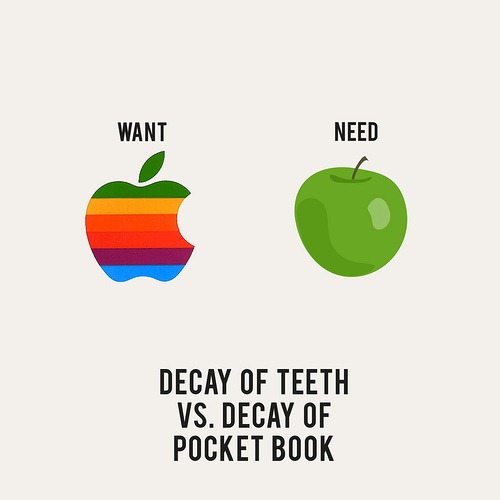
In the material world we hear a lot of I WANT this and I NEED that.  We automatically categorize want and need as the same thing, however they are not interchangeable in the business world.  A want is something you desire, in economics this is called quantity demanded.  It includes you’re willingness to buy goods dependent on price.  Even though you may want to purchase an item that does not dictate if you will actually buy the item.  For instance, to live human beings need water and food.  Your life is not dependent that you buy a new car or those cute pair of high heels.  A need is a requirement, but how do we define requirements?  We have choice as to how we satisfy our wants, but do we have choice as to how we satisfy our needs?  Marketers have the opportunity to influence how to satisfy both our wants and our needs.  By creating barriers of confusion marketers are able to influence our selectiveness in the decisions we make.  Their way of selling and branding a product can entice you to feel like you need to have the certain product, therefore creating a desire to want the item.

Categories
Comm 101

Expectations of the Buyer

In business, markets push to meet customers’ wants due to the expectations of the buyers.  For example, car companies always have standard features in their cars because customers expect to have a basic level of safety features and standard levels of performance.  These expectations vary depending on both national safety regulations and incomes of the desired market.  For instance, a Tata Nano sold in Indian is focused on providing an inexpensive compact vehicle for low-income families, which as a result doesn’t have air conditioning and other features that most Canadians would think to be basic features when purchasing a car.  Another point to think about is if standards are not regulated, competition in areas can be drastically changed even by the influence of a signal competitor. For example, if Ryan Air increases the amenities that they charge for passengers then other airlines may also want to cash-in on charging for the basics, while still charging their high flight fees that Ryan Air doesn’t. The question therefore has to be asked, what boundaries can be pushed in the market in the business world?  How far is too far?

Categories
Comm 101

Are consumers getting what they pay for? Whose responsibility is it?

Lululemon Athletica is a unisex athletic clothing brand that emulates a philosophy of living well and playing hard, while enjoying a calm “yogis” lifestyle. The technical designs of Lululemon’s ”pre-shrunk, flat-seamed, well-gussted” clothing has set it apart from your average pair of athletic unattractive sweatpants.  The clothing makes you, the customer; feel good when wearing the product.  Not only because of its extreme comfort but also because of the features and benefits that Lululemon’s clothing exclusively promises.  The latest of which is a seaweed fiber shirt that releases amino acids, minerals, and vitamins into your skin.  However one must question if these “health” benefits even exist. This was the problem when “Lululemon’s VitaSea T-shirts do not contain the 24% of seaweed fiber advertised.” Showing that even with high company standards things can still slip through the cracks, especially when relying on the supplier’s word. Is the consumer getting what they are paying? Or are the company and the shareholders capitalizing on these “trendy” but misleading “health” benefits? Consumers must always be aware of what they are purchasing, but the companies must also adhere to high ethical standards and insure that they are delivering the goods and meeting their customers’ expectations.

Reference to: “Lululemon asked for it” – National Post (Financial Post)

http://www.financialpost.com/story.html?id=589fb9e5-c143-48f4-99b7-7171630e8546&k=43929&p=2

Categories
Comm 101 Everyday

Hello world!

First blog!!! For starters I am loving UBC.  I am so glad that I chose to come here and study business at Sauder.  I’ve met great people and look forward to spending the next few years of my life studying and hanging out on campus.  Keep posted for both business and everyday related blog posts.  Cheers.

Spam prevention powered by Akismet