Categories
Uncategorized

Mhm, Coke.

On Rohit Bhargava’s Influential Marketing Blog, Rohit speaks about Coke’s efforts to raise awareness for obesity. When first thought about this concept, I felt it was quite strange: Why was Coca-Cola spending money to undermine itself? I then realized, Corporations spend money with a purpose- and Rohit makes an excellent point in his blog with what I believe is the main driving factor: “Focusing on health can make competitors look unfeeling or out of touch.”

Coca-Cola of course understands that it plays a central role in obesity with its unhealthy drink offerings, however, it also understands that consumer preferences could change. We see increased awareness for obesity and unhealthy ‘junk’ foods, and if this trend continues, Coca-Cola could be threatened with its unhealthy offerings. In the past decade, we can see Coca-Cola adding both increased breadth and depth in its product lines as focusing on healthier alternatives. Specific examples would be the acquisition of Vitamin Water for increased breadth, while Coke Zero would be an increase of depth along with a brand extension of the brand ‘Coke”.

In the video that Coca-Cola has created, it outlines the specific actions it has taken to reduce caloric intake. As a consumer, I am skeptical of such videos, however, I believe Coca-Cola has done at least enough to raise awareness of its different brands/different size offerings. As well, I agree with Rohit in the sense that by taking the initiative to admit that there is a problem, it makes its main competitor  Pepsi, look out of touch and uncaring. With continued efforts, Coca-Cola could potentially build brand equity via the association that Coca-Cola products are healthier, eventually creating loyal consumers. As both giants are in the convenience good market, this loyalty is an amazing advantage.

YouTube Preview Image
Categories
Uncategorized

Reflection

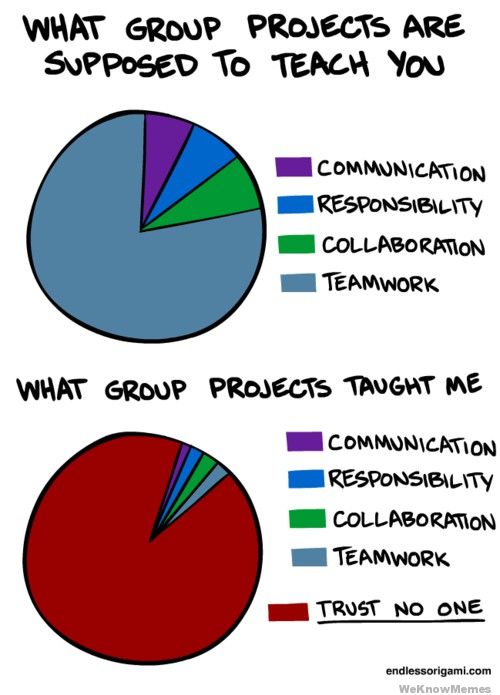
When I originally joined COMM 296, I dreaded the group aspect portion of the course. Participation? No problem. Exams? A walk in the park (no, not really…). Group projects? Well, I think it always depends on the caliber of the group assigned. By no means am I referring to ‘caliber’ as ability, or intelligence. Rather, what I mean is, the collective efforts of the team are aligned with the goals that we set.


^That didn’t happen.

(Source: http://weknowmemes.com/2011/11/what-group-projects-are-supposed-to-teach-you-graph/)

AKA: If the video is due tomorrow, we’re staying up to finish it. ALL OF US.

This group, by all means, had that spirit. I’m incredibly lucky to have so many wonderful groups here at Sauder. Hey, Tiffany, Devon, Anna, and Linda… If you’re reading this, thank you. Tiffany, that was an incredible amount of work you did on the Prezi. It looked wonderful. Thanks.

This collective team spirit is what made me truly enjoy my time working alongside each and every one of you. I understand that we all have different strengths and weaknesses, however, I judge the excellence of the groups I work with primarily on attitude. To see each and every one of you communicate punctually on our Facebook group, and attend all the meetings makes me extremely grateful.

I believe we all displayed this positive attitude throughout all the assignments, but I believe I can use the Video Assignment to truly characterize this attitude. Admittedly, we started on the project late. However, when we had to come together late in the afternoon and work into the night, each and everyone of my group members were more than willing. We all sat down in HA492 and contributed our voices and ideas. When I offered to stay behind to put final touches on the video, Linda immediately volunteered her time as well. When I realized that the video lagged on my computer, Devon instantly took initiative and did extra work to process the video on his computer. This supportive, positive, and resilient attitude is what I hope all my groups would be like in the future.

Thank you again.

(Source: http://www.graphicshunt.com/funny/images/teamwork-12974.htm)

Categories
Uncategorized

The Koreans are always up to something…

By no means am I making a cheeky- okay, maybe I am making a cheeky reference to the high tensions on the Korean Pennsula, but I do hope that the ongoing problems can be solved peacefully without destabilizing the region.

What I am referring to though, is Johnson’s blog post about Homeplus Subway Shopping. Johnson outlines Homeplus’ advertising campaign that focuses on two of the 4 Ps : Place and Promotion. I would even argue that this new and innovative method changes the product P, as now Homeplus isn’t providing a retail location where consumers shop for products. Instead, they are providing a service that directly delivers goods to consumers’ homes.

Homeplus utilizes large billboards displaying products along with their QR codes to allow consumers to shop on their smart phones as they pass by these images. Once consumers scan the associated QR code into their phone, these groceries are eventually delivered to their homes. I agree with Johnson’s analysis of Homeplus using this tactic to target time-poor consumers- and to be frank, we are all becoming increasingly time poor. While this method has worked tremendously in Korea, I would have hesitations about the same campaign if used in North America. QR Code penetration has been poor, and North American usage of public transit is lower than South Korea. It would be a daunting task to find similar locations with such high visibility in North America. Personally, I have never used the QR code scanner on my phone, and I have serious doubts that QR codes could be implemented at its current state now. Furthermore, high cost mobile data plans in North America may severely limit the target market that a company could reach! As somebody who DOES have a smart phone, who DOES take the public transit, and who DOES have a data plan, I still think there is a super cool idea.

Cool in South Korea, not so kosher in Canada, yet.

YouTube Preview Image
Categories
Uncategorized

Qualcomm is brilliant.

To continue on with my theme of Cellphones, I’d like to shift away from the negativity with my previous Blackberry ad and talk about something that I saw on YouTube that I felt was really, really clever.

The company in question this time, is Qualcomm, a global leader in making semiconductors for mobile and wireless devices. (AKA, they make chips for our phones! At least they do for my phone, the HTC One S). What they did was a classic example of Guerilla Marketing. Utilizing a low budget, they directly reached a small population. Their exposure at their ‘bus stop’ was limited, but the video however, went viral. Currently, it has over 3 million views!

Although they did not directly reference their products in the advertisement, the concept of the video was so interesting that it captured my attention. Many of their products are not directly sold to the consumers, but the sheer genius of the ad forces consumers to seek out: What is Qualcomm?! This made me realize- I could analyze this ad with the “AID” of ADIA!

A- Attention – it sure grabbed my attention! WOW. Lambos? Huskies?
I –Interest – Definitely made consumers interested on what exactly their company does… Why are they putting out this ad?
D – Desire – The main idea that Qualcomm was trying to send was the fact that they “make everyday life better with mobile”… By ‘relieving’ these poor souls at the bus stop, they sure did!

…Enough about that, I’m going to let the ad speak for itself.

YouTube Preview Image
Categories
Uncategorized

RIM- Errr… Blackberry’s Disappointing Ad.

In American Television, a 30 second commercial spot during the Super Bowl theoretically reaches the biggest audience possible. It is also the most expensive ad placement. As a result, Super Bowl commercials are typically are highly anticipated- due to the high costs of advertisements, marketers place additional efforts to appeal to their target markets. One of the companies that I was really interested in was Blackberry. Being a Canadian, I was widely exposed to Blackberry’s emergence, and subsequently, their struggles in a competitive mobile landscape versus their competitors. With Blackberry being a distant 4th in the marketplace, they readied the launch of their much delayed handset, the Blackberry Z10. To complement this launch, Blackberry bought a coveted Super Bowl commercial spot and the world was ready, watching.

I saw the Blackberry ad make its way onto my favorite gadget blog, Engadget. I was extremely disappointed. In the commercial, it was a mishmash of absurdities. The message of “It’s just easier to show you what the Blackberry can’t do in 30 seconds” did reach me, but it was not striking like the iconic Apple 1984 commercial. I was really excited to learn about the Z10, but I felt that the advertisement did not educate me on features OR benefits that the new Z10 offered me. I left with disappointment and confusion.  For enthusiasts, this was extremely underwhelming as it didn’t describe to them the salient benefits obtained for Z10.  For the casual, mainstream users, this does nothing to convince them that the Z10 is a superior product to current phones such as the Samsung Galaxy or the Apple iPhone. Overall, this ad accomplished nothing in the sense that it did not leave a striking image, or educate consumers. Perhaps I’m wrong. There is quite a bit of discussion on simply how BAD the ad was. Any publicity is good publicity?

YouTube Preview Image
Categories
Uncategorized

HTC’s One S: Bait and Switch Tactics, Not Impressed

As consumers in today’s society, we all have to be weary of advertisements and claims. The public has a perception that advertisers are willing to mislead to a certain extent to create a non-existent need into a want. I’m going to discuss a relatively unpublicized issue in an area I’m really interested in: Smartphones.

Approximately six months ago, I was in the market for a new Smartphone. After reading reviews, blogs, and watching videos on YouTube, I ultimately decided on the HTC One S. It’s a fabulous phone. It has a sleek design, accompanied with industry leading performance with its new “Snapdragon S4” processor. I was pretty satisfied with the phone, until I came across a post on Engadget, a popular electronics blog, that claimed that HTC was utilizing a vastly inferior “Snapdragon S3” processor in an INDENTICALLY named phone in select markets. According to Engadget, HTC insisted that that it would “provide consumers [with] the same experience”, but this is not so according to tests. Although benchmarks do not translate exactly into real life performance standards, I was outraged as a phone enthusiast that HTC pulled a bait and switch maneuver. I understand that my area (Canada) was not affected, but overall, it repels me from HTC knowing that they used the goodwill of the positive reviews to sell an inferior product to select consumers. HTC made no attempt to distinguish the two models, even selling them at identical prices.

Back in June 2012, the Snapdragon S4 was the newest processor available, and therefore it had severe supply issues. HTC should have delayed the roll out of the One S to prevent confusion. As a person whom many friends consult for phone advice, I find it difficult to recommend HTC any further. Although I truly love my HTC One S, the actions of HTC rubbed many enthusiasts, including myself, the wrong way. We would be far more hesitant to recommend HTC phones now.

Categories
Uncategorized

Samsung Vs. Apple, fight!

As fellow user of a Samsung Android smart phone with Helena Wong, I do realize that my phone gets a lot of criticism for being an ‘iPhone knockoff’. Helena, in her Comm 101 blog, tries to state that Apple is picking on the ‘little guy’. That’s not true at all. Samsung is a global diversified company which generates obscene amounts of revenue. Looking at Samsung’s designs, Apple does have a fair argument; many of Samsung’s original phones do look like Apple’s. The general shape, chrome frame, corners, icons, and even the button at the bottom reeks of iPhone design language. In subsequent phone and tablet releases, however, Samsung has changed their designs to distance themselves away from Apple. An excellent example would be the Galaxy Tab 10.1N released in Germany. Apple, however, has gotten more and more ridiculous with its patent claims. For example, it tries to state that its way to unlock mobile phones can only be used by them.How is that even possible? It’s just a horizontal swipe. Samsung is starting to innovate while Apple is getting caught in patent battles to stop Samsung’s growth.

(Look at the similarities!)

https://blogs.ubc.ca/whelena/2011/09/14/what-are-you-really-trying-to-say-apple/

http://www.theverge.com/2011/11/16/2566533/samsung-redesigns-galaxy-tab-10-1n-avoid-german-sales-ban

http://www.forbes.com/sites/timworstall/2011/10/27/apples-slide-to-unlock-patent-yes-the-patent-system-needs-reform/
Categories
Uncategorized

GST + PST = More Harm, Less Benefits

The Province of British Columbia recently passed a referendum to abolish its HST and bring back the old system of the PST and the GST by March 31st, 2013. In Kevin Milligan’s blog, he argues that the elimination of the HST will harm the province. There are three main points he argues. First, the cost of investment has increased. Second, he argues that by going back to the old system of PST and GST, British Columbia has to repay the 1.6 Billion dollars spent on transitioning to the HST back to the Federal government. Third, the complexity of transitioning from the HST is present as some investments have been made during the HST period. I wholeheartedly agree with Milligan’s points. In the long run, this decision will cost BC voters more.That being said, the abolition of the HST makes sense to me on a moral standpoint. The BC Liberal government flat out denied the fact that HST would be introduced. The BC Liberals hoped that by implementing the HST after the election, voters would simply forget about the issue by the time re-election came around. Going back to the old system does cost money, but it is the price to pay for our voice and democratic society.

YouTube Preview Image
(An interesting Pro-HST approach to debunk Bill Vander Zalm, a prominiant Anti-HST supporter.)

http://www.theglobeandmail.com/report-on-business/economy/economy-lab/the-economists/hst-vote-a-move-in-the-wrong-direction/article2143449/

Categories
Uncategorized

Netflix Turbulence

Lisa Wu, a Comm 101 classmate of mine, recently made a blog post on Netflix’s fall from grace. I agree with most of Lisa’s points on Netflix’s failure to anticipate the loss of subscribers as they increased their prices. Lisa’s argument is that Netflex did not realize that DVD/Video Streaming services had such low price elasticity. As they increased their prices, a significant amount of subscribers would terminate their services. I would like to take another approach on this. Yes, although I do believe that Netflix had its faults in increasing price, it was inevitable. As Netflix became a success, the movie studios that supplied Netflix the movies also wanted a healthy share of the pie. Because Netflix was not extremely popular in the past, Studios could licenced their content to Netflix at bargain basement prices. Now, with Netflix’s success, studios also want profits. An article by CNN estimates that the price of Netflix’s content will increase from 180 Million in 2010 to an astronomical 1.98 Billion in 2012. That’s an 11 fold increase! Netflix must negotiate better deals with studios and regain the trust and loyalty of their consumers. Otherwise, Netflix is doomed.

(Are they really greedy when their costs have increased significantly?)

https://blogs.ubc.ca/lisawu/2011/10/25/netflix-bad-move/

http://money.cnn.com/2011/07/08/technology/netflix_starz_contract/index.htm

http://politicalhumor.about.com/od/politicalcartoons/ig/Political-Cartoons/Netflix.htm

Categories
Uncategorized

Google and Motorola, Sitting in a Tree…

In the August of 2011, Google and Motorola made technological headlines around the world. Google, one of the most dominant forces in the mobile OS sector, bought Motorola Mobility, a mobile phone manufacturer, for 12.5 billion dollars in stock and cash. Motorola had already been using Google’s ‘Android’ operating system before, but now, Google plans to make Motorola a dedicated Android partner. In my point of view, this is an excellent transaction by both companies. Motorola was faltering and losing market share to its competitors. By having Google buy them out, it allows them to be connected and to be integrated with one of the most popular mobile OSes on the market. Google, on the other hand, were facing patent lawsuits and by buying Motorola, it significantly strengthened it’s IP portfolio. However, Google’s other android partners cannot be pleased. Google partners with a number of other manufacturers so that they load Google’s OS onto their phones. By having Google buy Motorola, this is a threat to the manufacturers’ future strategy as Google may give Motorola additional benefits over its competitors or have Motorola release the best and brightest. In general, this acquisition engages Motorola and Google in a beneficial, mutualistic relationship.

http://www.engadget.com/2011/08/15/google-acquiring-motorola-mobility/

http://news.cnet.com/8301-19882_3-20092679-250/google-motorola-patents-of-mass-destruction/

http://www.techbucket.org/2011/09/google-gets-motorola-mobility.html

Spam prevention powered by Akismet