comment on the primary sources by women during ww2
Categories
comment on the primary sources by women during ww2
In 1919 social class united people in a struggle against the state. What identity today do you think would unify Canadians for change?
Contemporary Canada has been deeply affected by the War on Drugs. Yet drugs and drug law enforcement are not new. How do nation and identity factor into early 20th century Canadian attitudes towards drug usage and law enforcement?
Watch “Canadian, Please.” And “I am Canadian,” (Molson Beer Ad).
What do these shorts (collectively watched by 6 million) say about Canadian identity in the 21st century? What’s being sold and who’s buying?
I’m going to write some general comments here about your posts, all of which were good. The only problem that I can see – and something to keep in mind more for the coming weeks and the blog entries you will write there – is that some of you didn’t address the second part of the question about what the story of Canadian history is. Or if you did, it tended to be more implicitly stated than directly. Go for the direct approach. I’ll give an example shortly.
Most of you said that Canada was a multicultural and diverse country; in addition the diverse First Nations, it’s home to people who have come here from around the world. Many of you emphasize that this makes Canada unique, especially since relations among people are peaceful. Yet at the same time, others of you pointed out that if Canadian history is about how this place became multicultural, it’s also the story of how that process wasn’t without its tensions. There was conflict (some of you refer to a “dark side”); there were winners and losers. A number of you pointed out that the gains of settler society were often achieved at the cost of First Nations, yet as the two First Nations students pointed out, many indigenous cultures and communities are thriving now despite colonization. They also make the point that how history looks – what kind of story it is – is shaped by who is doing the telling…. One of you talked about Canada as “opportunity”. That’s certainly the case, but would everyone have experienced it as that? My point is that we need to be careful in our generalizations, whether about the past or present!
So…what does this all add up to? A very complex history! The history of Canada is in many ways the history of relations among different groups – social relations, but as one of you pointed out, trade, or economic relations It’s about how differences were accommodated – or ignored and denied. We’ll see in the coming weeks how much of your first impressions change.
A couple of things to think about: some of you make mention of size as something that defines Canada. How might size have influenced its history? Others seem to note that what they know of Canadian history amounts to some events or personalities, but at the same time there’s also a recognition that that isn’t a story, much less a history. If you know what history ISN’T, can you say what kind of story it is? Wouldn’t it be a story of change over time?
And does hockey really define Canada????? Or is the question really about how it has come to pass that we think hockey defines the Canadian identity?
Good job everyone!

What is Canada?
To give us all an idea of our preconceptions coming into the course, write your blog entry on what you think Canada is and what the storyline(s) of Canadian history are; i.e. “Canada is ….” And “Canadian history is about ….” – you fill in the blanks!

The idea of Canada as a multicultural nation is relatively new. But is it, given what you’ve learned in lecture so far?
Communication across cultures is tricky. Do you have an experience of how you successfully or unsuccessfully negotiated a cultural boundary? Did you work out a “middle ground”? How?
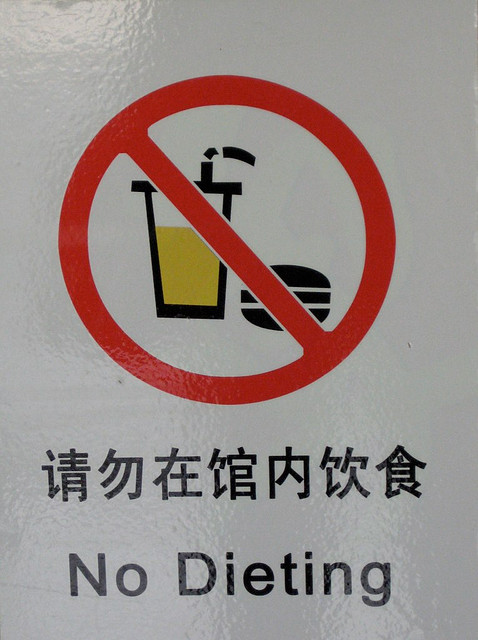
Given what you’ve learned this week about the politics of representation, what ideological purposes does the image below fulfill?
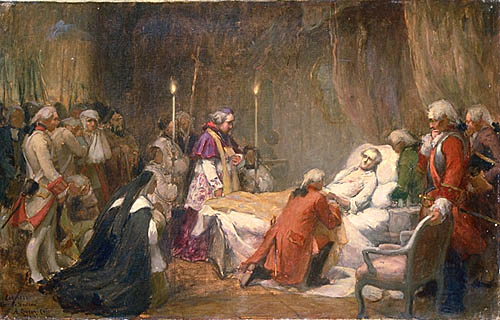
Is economic behaviour universal? Do all people pursue their material self-interest all the time? Put another way, can you think of situations where a “backward sloping supply curve” would explain your behaviour?