
Warm Welcome
This blog outlines my food consumption for 24 hours and use of fossil fuels in my food.
Breakfast
Home made whole wheat bread.

Actual Photo of the bread
Ingredients: Wheat flour, salt, yeast , olive oil , water
Production: My mother used the bread maker at home to make this bread. The break maker runs on the electricity. The break maker was used for about 2 hours.
Delivery: Since the bread was homemade I just walked to the kitchen from my room to eat the bread. However, all the ingredients were purchased locally from the grocery store.
Packaging: There was no packaging. We just kept it in a plate and stored it in the fridge.
Making food at home not only saved transportation cost but also no fossil fuels were used.

Image of the cheese sausages I ate for breakfast
Cheese Sausages:
Ingredients: Chicken, cheddar cheese, butter , milk , salt , starch , sugar , spices , salt, soya protein, monosodium glutamate , coloring .
Production: The location mentioned on the sausages in 680 Upper Thomson Road, Singapore . That means that the sausages were produced locally. The chicken meat came from the local slaughter house. Once the hens in the egg factories are unable to produce quality eggs they win an all expense paid trip to the slaughter house.
Delivery: I bought these sausages from the local grocery store. Since, the sausages are locally produced, fossil fuels were used only in the local transportation from factory to the grocery store. As the sausages were stored in the refrigerated section in the grocery store, electricity was used to refrigerate the sausages. The link below shows how sausages are made. To produce these sausages on a mass scale a lot of automated machinery is used. All this machinery runs on the electricity which further uses more fossil fuels. Electricity in Singapore is generated from fossil fuels.

This video shows how sausages are produce in a factory on a large scale.
Packaging: Sausages are packed with plastic packaging and a paper sticker is placed on top. Plastic is a bi product of crude oil .Plastics are made from liquid petroleum gasses, natural gas liquid and natural gas. Paper is produced from trees. To log and process the trees heavy machinery is used . All these machinery runs on the fossil fuels. Lastly more fossil fuels are used to transport the packaging material such as plastic and paper to the sausage factory.

This video shows how plastic used in the packaging is produced. It is quite clear a lot of electricity is used in producing this plastic. Moreover, plastic is a bi product of crude oil that is produced during the distillation of oil.

I consumed these eggs . I know that these eggs are produced locally because they have a local manufacturer’s address on them.
Boiled Egg
Ingredients: Egg
Production: I boiled the water using the gas stove and placed the egg in the boiling water. The gas stove runs on the LPG gas , a type of fossil fuel. I boiled the egg for approximately 12 minutes. The eggs are packed and produced locally in Singapore. As my eggs are not organic, it is safe to assume that there were produced in the same way as shown in the video link below. I am quite shocked by knowing the numerous steps involved in egg production as I thought egg production is way simpler. The video is quite evident of the high tech machinery that is used in the producing and packaging eggs. All this machinery consumes a lot of electricity. The video mentions that the chicken are fed mixture of grains and mixed with soy bean. These grains and the soy are quite low category and not suitable for human consumption. As the chicken feeder consist of low quality food it must be produced locally . It is illogical to feed chicken imported feeder, as it will only increase the price of production.
Delivery: As the eggs are locally produced use of fossil fuels for the delivery is quite low.
Packaging: The eggs are packed in the plastic packaging with a label placed on the top. Plastic is a bi product of crude oil.
Eggs produced in a factory.

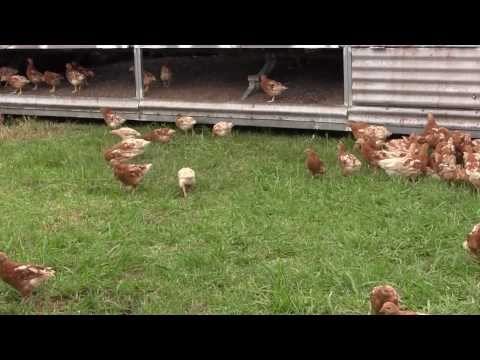
Organic eggs produced in a free ranging chicken farm.
This video shows that the organic egg production consumes way less energy and fossil fuels. The chicken are allowed to roam freely and they use way less machines.
Lunch:
Rice (Basmati Rice): A strain of rice produced in India.
Production: India has not yet adopted advance farming techniques as developed countries. Majority of farming in India is primitive. As you can see in the video the farmer are manually growing rice and using cattles to plough their fields. It is quite evident that no fossil fuel used in the production of rice.
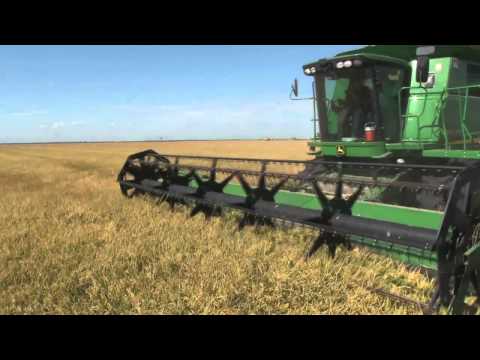
Machine intensive method of growing rice in developed countries.
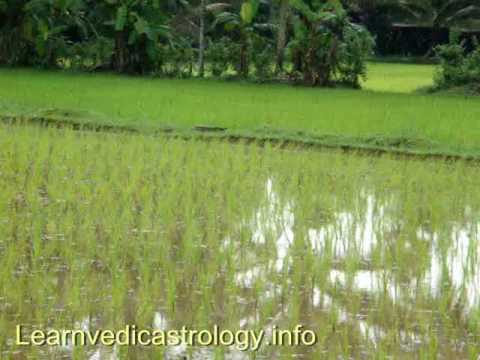
Traditional way of growing rice in developing country.
Delivery: Basmati rice is a product of India and it is produced and packed in India. The freight involved in shipping Basmati rice from India involves consumption of fossil fuels. Most of these goods are transported through sea freight ( Bulk carrier ships) as it much cheaper compared to air freight. Ships run on the heavy oils such as 380 CST or 760 CST, It is lowest category of fossil fuel. Viscosity of these oils is much higher compared to oils used in the vehicles. Viscosity is higher due to the impurities mixed in the oil. Impurities result in higher emission of greenhouse gasses. According to the IMO ( International Maritime Organization) ships are allowed to use any kind of fuel at sea but, when they are near coast they must use the fuels that are low in sulfur and carbon content.
Packaging: Rice is mostly packed in paper or plastic bags. My mother threw away the packing so I am not sure how they were packed.
Despite using traditional methods India is not only able to feed such large population but also export the surpluses. After viewing the videos , my ideas has changed. I thinks it is possible for us to go back to the old farming methods and still survive.
The guardian, UK based newspaper claims that 2 billion tons of food is wasted every year. I think humans just need to make smart choice and waste less food. If we do not waste food I don’t think we will need advanced machinery to grow our food and less fossil fuel will be consumed.

A picture from the wet market. These markets usually sell local vegetables and fruits.
Mashed potato
Production: I managed to ask the one of the shopkeeper where they get most of their food from. The person replied that most of the vegetables and fruits come from the farms in Malaysia.
Delivery: Potatoes were bought from the wet market. As there is a bridge between Malaysia and Singapore road freight was used to deliver theses potatoes to the market.
Packaging: There was no packaging for the potatoes. I went shopping with my mother and we used our own bags instead of taking a plastic bag from the shopkeeper.
Dinner:
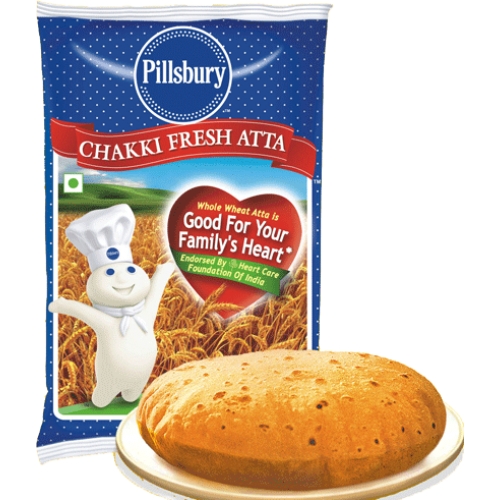
My family uses this brand of flour to make rotis
Roti– it is like a bread made out of only wheat.
Production: My mother made roti at home. My mother used the flour from same company shown in the picture above. The packaging does not carry organic label. So I believe it is most likely to be a GMO ( genetically modified food). They company buys the wheat from the local farmers in India.
Delivery: “Pillubury Chakki Fresh Aata” is mostly produced in India. It has to be transported to Singapore. Again this is transported in large bulk carrier ships. Once arriving in Singapore they need to be transported by trucks to the shops. The Indian grocery store is at some distance from my house. We had to take a taxi, which further added to the emission of fossil fuel.
Packaging: It is packed in the plastic cover. Fossil fuels are used in making plastic packaging.
In India you can also buy this from the local shops that grinds the wheat grains in front of you. This method cut downs on various freight costs and reduced the production costs.

A picture of wheat grinding shop in india.

Picture of cauliflower curry my mother prepared for dinner.
Cauliflower curry
Production: Just like potatoes the cauliflower was bought from the local wet market. To make this curry my mother used different types of spices which were bought from the local Indian grocery store.
Delivery: According to the shopkeeper cauliflower was imported from Malaysia. Spices were transported through sea freight to Singapore.
Packaging: There was no packaging.
Snack:

Lindt Sea salt Chocolate I ate as a snack.
Chocolate
Production: Lidnt chocolates are produced in Switzerland. In the ads they show that their chocolates are handmade. After doing some research I found out that there chocolates are also made in large factories with automated machines that consume a lot of fossil fuels.
Delivery: They are transported through sea freight in special temperature controlled containers.
Packaging: They are packaged in silver foil and paper.

The complex and fossil foil intensive method of making paper.

Blueberries:
Production: According to the website they are grown by the “Growers who live up to our stringent quality standards.” The box had a sticker that claimed “Enter the lot code on the box to find out the specific information on the variety of the blueberries”. Unfortunately , I couldn’t find on place to search this lot number on their website. The website mentions that the blueberries were handpicked. The fossil fuels were only used while sorting the overripe blue berries in the automatic sorter.
Delivery: They are transported through sea freight from Oregon, USA in special temperature controlled containers. Once arriving in Singapore they are dispatched to the grocery store through trucks.
Packaging: They are packaged in the plastic box labeled with a sticker.
Works Cited
Primary Research
I interviewed my father who worked as a marine engineer for 20 years to gain some insight on sea freight.
I interviewed a shop keeper in the wet market to know where does he get his supply from.
Secondary Resrarch
” Almost half of the world’s food thrown away, report finds | Environment | guardian.co.uk .” Latest US news, world news, sport and comment from the Guardian | guardiannews.com | The Guardian . N.p., n.d. Web. 13 July 2013. <http://www.guardian.co.uk/environment/2013/jan/10/half-world-food-waste>.
” Almost half of the world’s food thrown away, report finds | Environment | guardian.co.uk .” Latest US news, world news, sport and comment from the Guardian | guardiannews.com | The Guardian . N.p., n.d. Web. 13 July 2013. <http://www.guardian.co.uk/environment/2013/jan/10/half-world-food-waste>.
“2010 California Rice harvest, shot in high definition.” Youtube. N.p., n.d. Web. 13 July 2013. <https://www.youtube.com/watch?v=oZZFvZgXST4>.
“How It’s Made Eggs – YouTube.” YouTube. N.p., n.d. Web. 13 July 2013. <https://www.youtube.com/watch?v=aYhEbjhhcAg>.
“How It’s Made Plastic Bags – YouTube.” YouTube. N.p., n.d. Web. 13 July 2013. <https://www.youtube.com/watch?v=8CfL5xl2N1Q>.
“How It’s Made- Deli Sausage – YouTube.” YouTube. N.p., n.d. Web. 13 July 2013. <https://www.youtube.com/watch?v=mQbZ8KbZP5Y>.
“How much oil is used to make plastic? – FAQ – U.S. Energy Information Administration (EIA).” U.S. Energy Information Administration (EIA). N.p., n.d. Web. 13 July 2013. <http://www.eia.gov/tools/faqs/faq.cfm?id=34&t=6>.
“Organic Pasture Ranged Egg farming – YouTube.” YouTube. N.p., n.d. Web. 13 July 2013. <https://www.youtube.com/watch?v=K0H-mrjSBBg>.
“Traditional Rice Farming in South India.” Youtube. N.p., n.d. Web. 12 July 2013. <https://www.youtube.com/watch?v=YHT4VHAb2bg>.
1 thought on “Oil We eat”