The days when a friend was defined as a “person” that you know well and regard with affection and trust may be changing. Today, businesses use Social Media, such as Facebook Fan Pages to create a relationship that is almost if not equal to the past definition of a “friend.” When an individual starts to interact with a corporation’s fan page, that person is starting to form a relationship with that corporation. After having browsed through several of the most well known fan pages of different corporations (e.g. Coca-Cola, YouTube, Red bull, etc), it became quite obvious that consumers are beginning to communicate with corporations almost as if they are good acquaintances. In addition, corporations are attempting to do the same. For example on the Facebook Red Bull Fan Page, a thread on Shaun White, a fan favourite snowboarder, was started by Red Bull just before his attempt to get Gold at the 2011 Winter X Games. It’s as if the corporation itself is a fan of him. That thread has garnered over 283 comments from Red Bull fans that have their own opinions related to Shaun and the event; usually these kinds of discussions are done between friends or in sport forums. Often I get calls from friends asking, “hey, are you watching the hockey game?” This is not so different from what Red Bull has been doing with the use of their fan page.
While I as yet would do not feel that I am a “friend” of any particular corporation, I do however think that the lines where a “person” is used in the definition of a friend may soon change into a word more closely aligned with the meaning of “entity.” An article titled “What Makes Facebook Fan Pages Successful” states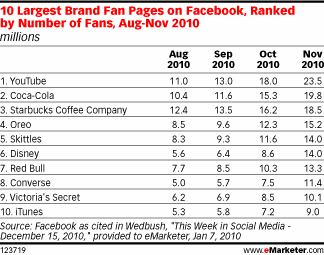 that “engagement, interest and constant connection keep fans coming back to a company’s Facebook fan page.” Disney has used Disney trivia and different promotions to engage its fans while Oreo has launched an interactive online game. Both these methods have greatly helped the two corporations skyrocket to close to the top of the list of Facebook pages with the most fans. In their own ways, these firms’ engagement, interest, and constant connection with consumers are no different than the expectations that one usually has of his/her friends. If a corporation is able to develop trust and affection from a consumer, then the concept of brand loyalty, with the help of Social Media, perhaps may reach new levels that were before never even thought possible.
Sources: www.facebook.com; www.emarketer.com