Categories
Marketing

Genuine Goodwill

I feel like one of my favourite things to blog about happens to be brand management and how a company needs to treat it’s customers well no matter the monetary cost.

In light of the horrific Japanese earthquake and subsequent tsunami, Softbank’s CEO Masayoshi Son offered free phones to earthquake orphans among other things. For those who are unfamiliar with this company, Softbank is one of Japan’s largest mobile company, they are very popular with the general population.

Image from http://www.ipodschool.com/

Masayoshi Son, after visiting Tamura, a city heavily affected by the nuclear disaster, announced that Softbank will provide job positions and help relocate citizens in the city. They will also cover a year’s worth of living expenses, including commute and food. Softbank is also using their existing promotional campaign site to organize requests for emergency supplies.

Finally, in another use of social media, one of Masayoshi Son’s followers suggested that Softbank should provide orphaned children with free phone credits in order to contact their friends and relatives. Masayoshi Son retweeted this idea and announced that the children will receive free phones and call costs will be waived until they are 18 years old.

It’s amazing to see this outpouring of compassion, especially from someone as high up as a CEO of a large corporation. Most wealthy individuals tend to just write a cheque and forget about the matter completely. However Son did the extra mile and offered something that will allow suffering individuals the ability to contact friends and receive help. Not only does this reflect positively on the company and brand as a whole, those children are likely to become lifelong advocates of Softbank. And although marketing is far, far from anyone’s mind in this situation and building customer loyalty is most likely not the ultimate goal, it just goes to show that when a compassionate individual does something good for the society, their actions can speak for themselves.

This is an amazing example of using social media and genuine goodwill to help others.

Categories
Marketing

Social Media and Marketing

Geoffery Colon from Advertising Age recently wrote a post on how one company’s use of social media and CRM (customer relationship management) restored the faith of an upset customer, namely, himself. Geoffrey’s Volvo randomly overheated as he was driving to work one day. Upset and frustrated, Geoffrey decided to leave a comment on Volvo’s Facebook page to see if anyone would respond, and whether that response would just be another canned “Thank you, we’ll be looking into the matter”.

Image from http://carsoncontract.co.uk

To his surprise, within 12 hours, Debbie Lentz from Volvo North America left a voicemail on his machine. The person who managed the Facebook community contacted her and she apparently had tracked down his phone number from his purchase of the car. Debbie had already contacted Geoffrey’s purchasing dealer, reimbursed him for the rental car and gave her direct phone number for future contact in case anything went wrong.

It is really nice to see an extremely large company (Volvo) take it’s customer satisfaction so seriously. The fact that a single post on Facebook led to such quick and decisive action is amazing. What started as a negative situation (faulty car) has turned into a situation where the consumer feels glad that they chose a particular brand. This is the type of action that can turn someone into a brand loyalist or even a brand advocate.

It also highlights the changing environment associated with social media. Customers have so many channels to communicate satisfaction and displeasure now. No longer are they constricted to just calling a 1-800 phone number, or emailing the customer support department. We can now just post something on a Facebook page, or quickly tweet something directly to a company’s twitter and we expect quick responses. The problem now comes from whether or not a company decides take advantage of social media and start to engage and respond to these messages.

Categories
Marketing

Coffee anyone?

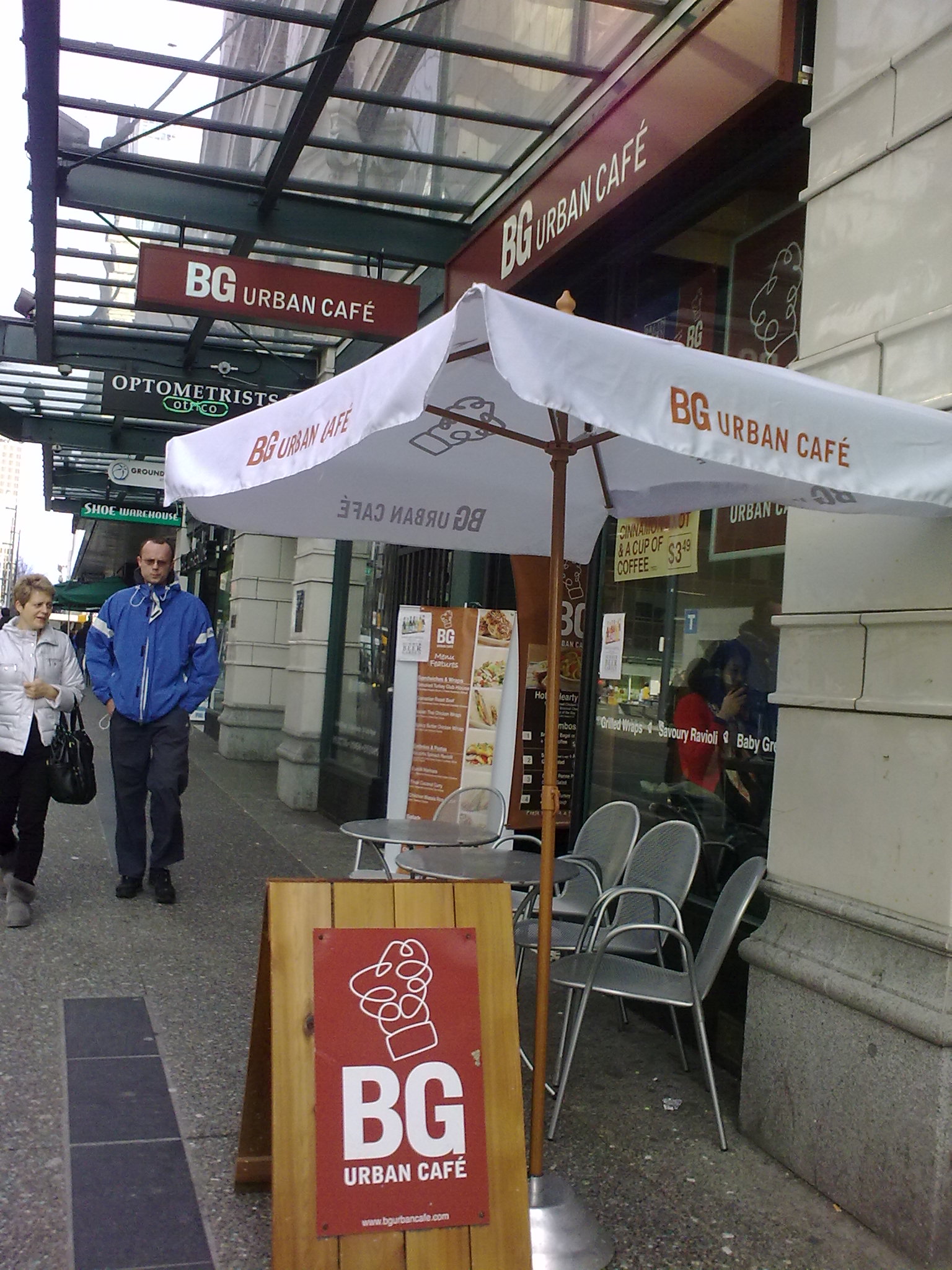
Photo taken by Jeannie Tse

Recently I was walking downtown on the ever-busy Granville Street when I came across a rather new coffee shop situated, BG Urban Cafe. I’ve passed by many times before since it opened a couple of months before, however this was the first time I took a good look at the store front.

Located just steps away from London Drugs and two Starbucks, BG Urban cafe had a very “cool independent” coffee shop feel courtesy of their name, logo and store design. It seemed like the type of place where young professionals would sit back, relax and purchase expensive lattes with elaborate latte art foam.

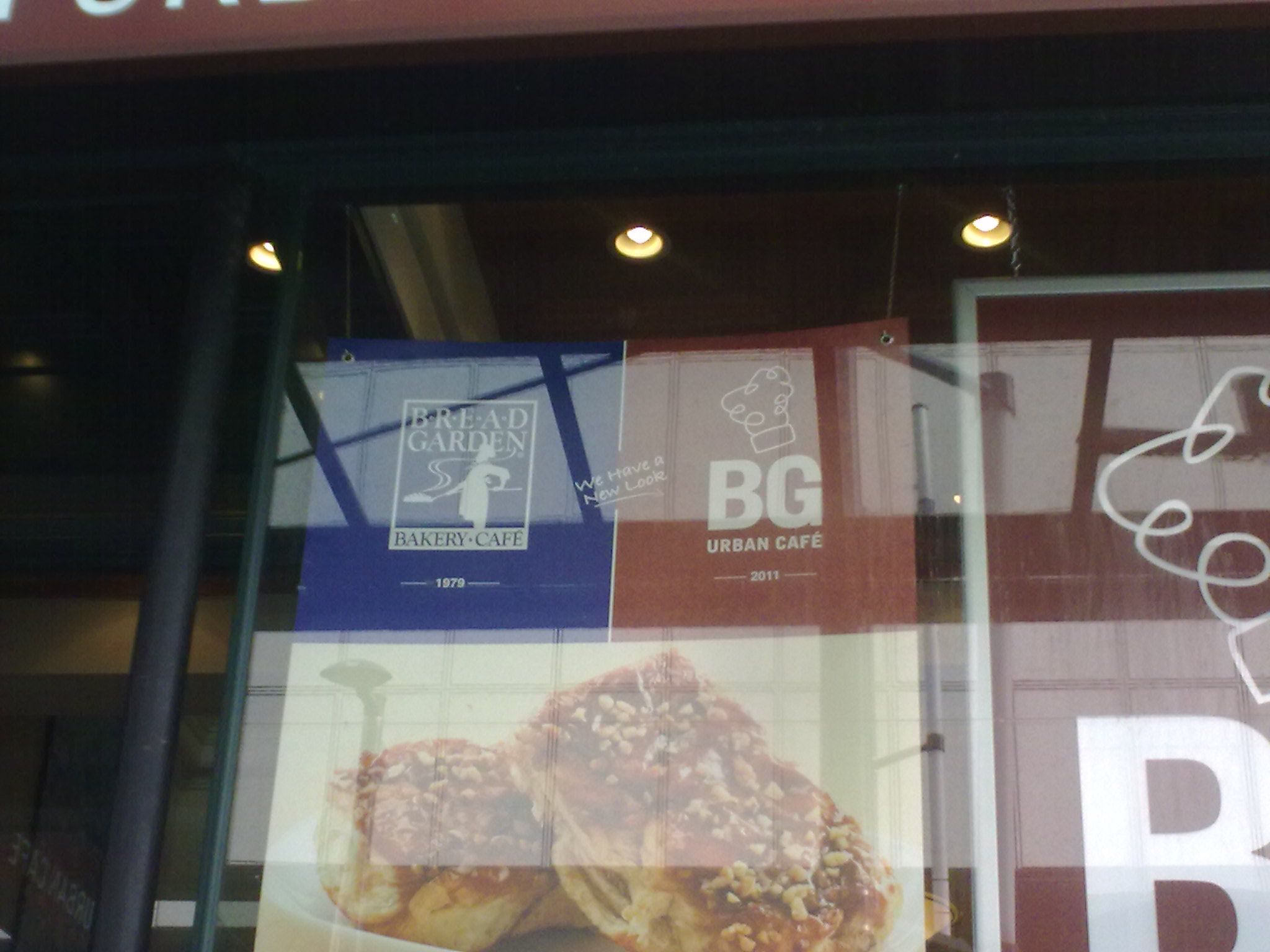
It was almost refreshing to see something that wasn’t a chain store occupying the touristy street. However, upon closer inspection, I discovered a sign that said “Bread Garden cafe: We have a new look!”

I was taken aback completely, for me, Bread Garden symbolized a tired, old chain store that sold mediocre sandwiches and passable coffee. I knew of no one in my age demographic that frequented this store.  Since when did they become a “urban” cafe?

Photo taken by Jeannie Tse

I believe that the company realized this and decided to completely re-brand their store into something that is currently very popular with the younger generation, the “independent” coffee shop. This is evidenced by the popularity of stores like Cafe Artigiano, JJ Bean, 49th Parallel and more.

And it seemed to be working so far, the store itself was rather busy and you could see groups of 20-somethings sitting in the comfortable plush seats by the window chatting up a storm.

However, I still associated the brand with the old, little shop by Metrotown, a new name and store atmospherics has not been able to change my view so far. It really highlights the difficulties companies face when they try to completely rebrand and change their image.

Spam prevention powered by Akismet