
Categories
Uncategorized

The Cambridge Satchel Company: From Humble Beginnings to Household Name

With just £600, no prior business knowledge and the support of her mother Freda Deane, Julie Deane propelled her kitchen table business into a global brand.

I normally skip the adverts and go straight to the Youtube video I want to watch. This time however, not only did I watch all of Google Chrome’s “The web is what you make of it” advert on Julie Deane, but I immediately skipped my video and opened Google instead. Intrigued by the 60-second clip and hoping to learn exactly how she turned her home business to household name, I did further research on Julie Deane and her company The Cambridge Satchel Company and discovered both a mother determined to make ends meet for her children and a resourceful entrepreneurial spirit behind a successful brand.

Deane wanted to transfer her bullied daughter into private school. So with just £600 and no prior business knowledge, Deane founded The Cambridge Satchel Company. Her limited budget to cover all the start up expenses for her company, including promotional leaflets and the initial batch of bags, would normally deter aspiring entrepreneurs. But Deane saw things differently: “A limited budget makes you more creative – you know it’s about you making money, not how other businesses have done it before you.”

Since starting her business in 2008, Deane has since grown her business to an almost £12 million turnover with 70 employees and a global network of 100 countries. Her strength lies in her entrepreneurial ability to envision the untapped market and create a demand for her highly differentiated, traditional Harry Potter style satchel bags. Not only did she exploit a gap in the market by making and selling unique products, but she has never paid for advertising during her startup period and never borrowed money to fund her business. Instead of adhering to the traditional marketing norms, Deane capitalized on the current power of technology and networked her way to success through bloggers, Youtube gurus and finally, fashion editors.
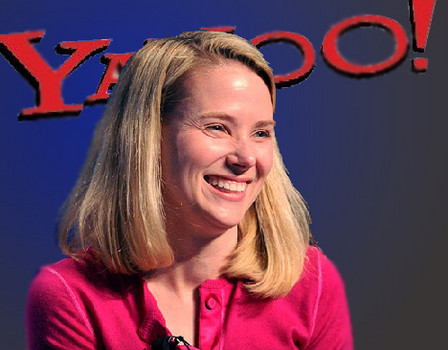

Image via: http://www.thenextwomen.com/2012/09/17/julie-deane-founder-cambridge-satchel-company-star-new-google-chrome-advert

Categories
Uncategorized

The Women of Wall Street: Wait, where are they?

The youngest CEO of a Fortune 500 Company at 37 years old and a new mom since September, Marissa Mayer knows no limits while heading Yahoo!.

In response to my fellow classmate Braxton Ryback’s post on the female influence in business, I would like to draw further discussion on women in financial services and the gender disparity in the business workplace. To start with the facts:

  • Only 3% of Fortune 500 CEOs are women
  • Men are paid approximately 25% more than women for the same work
  • The 50 highest-paid executives in the U.S. are all men

As Anne-Marie Salughter points out the crucial issues many women face of seeking balance and advancement, many women—despite consistently performing at the highest level—are turned down at times for promotion. Women often face gender-based stereotypes particularly in intense and fast-paced job industries, such as in finance. Yet a Catalyst study reveals that companies who have at least three women on their board of directors have 16% higher financial results.

Braxton mentions how “women bring a unique perspective, adding spice and variation.” John Keyser, Founder of Common Sense Leadership, believes women are simply “more dutiful and thoughtful in preparing their work” and then draws a comparison between how the women he works with tend to start work early and turn it in on time as opposed to the men who pulls it together, “turning in an inferior product.”  While these beliefs may be true in certain circumstances, I do not believe differences between the female and male gender should be the focus of the debate. It is not about demeaning the male gender and enforce stereotypes on the male work ethic (if there even is one) and promoting a female-dominated world but rather, about equality and implementing gender-balanced ratios in the boardroom, eliminating discrimination against and stigmatization behind the female force and ultimately providing equal opportunity in a more just society.

The women of Wall Street: Currently lacking in numbers, but a definite driving force for success.

Image via: http://news.ixwebhosting.mobi/2012/07/31/14880.html

Categories
Uncategorized

What Motivates Me

What do you value the most?

a. Money

b. Power

c. Other

This recent iClicker question reflects a question I have put much thought into, particularly upon entering university and taking my first steps as a business student.

For the most part, I believe that those who claim to adhere to the trite saying “money can’t buy you business” and be perfectly happy living a minimalistic life without too much spare money have never experienced poverty. In fact, I have noticed that most of the people who tell me they do not need money lead rather privileged lives.

While money is important, it certainly is not everything. Making a reasonable amount of it would allow in one way me to fulfill my ultimate goals of contributing back to society and helping the less fortunate as well as seeking life’s greatest pleasures such as experiencing firsthand cultural and geographic diversity through travel. For me, happiness is ultimately of much higher value than extrinsic rewards and in this light, money serves simply as a means not an end. I do want to make money and I have no shame in saying so, but as Michael Kwan points out in his blog, “Chase money. There’s nothing wrong with that. But chase it with a very specific purpose in mind.”

With these thoughts in mind, I reached for my iClicker and confidently clicked c. other as my answer.

Categories
Uncategorized

Nordstrom: The Story Behind Its Success

A customers sits in an unsold chair at the now-closed Sears downtown Vancouver location as Nordstrom lounges its way into Canada, where there are already 15,000 Canadians in their loyalty program.

A Bloomberg article recently reports the makings of a new Nordstrom Inc. billionaire: 76-year-old Anne Gittinger, the company’s largest shareholder after her billionaire brother Bruce A. Nordstrom. The Seattle-based retailer, whose shares have increased 17% since June and during an economically deteriorating period, operates 240 stores and remains “one of the few department store retailers that is still growing.” In fact, four stores will open in Canada between 2014 and 2016. From case studies such as Zara and Aldo, the mass customization strategy clearly helps generates increasing revenues and meets ever-changing consumer demands. But what makes Nordstrom, a company whose strategy isn’t primarily mass customization since it is a department store, stand out despite a slow changing stock? I did some research on the company and list a few reasons below:

1. Variety in style

The increasing variety of brand and style makes up for the lack of a constantly changing stock within each season. The company also recently partnered with TopShop, everyone’s favourite London brand whose inspirations come directly from the runway targeting young customers.

2. Development of a stronger technological presence

Having purchased hautelook.com, an online shopping website, Nordstrom targets the dollar yet style savvy customer and integrates Nordstrom Rack and hautelook.com marketing under one online premise. Furthermore in 2010, the company invested $69 million to upgrade the company website, better enabling customers to shop at the comfort of their own home and provide in store wi-fi, ultimately enhancing and prolonging the customer experience.

3. Consumer engagement through loyalty programs

The perks of the Fashion Rewards program are hard to ignore. Two points are awarded for each dollar, and for every 2,000 points you spend, you receive a $20 voucher in the mail. The store card also holds key to pre-admission to the Anniversary sale, a fashion hotline and extra points during special sales. Furthermore, the card tracks how each consumer spends and tailors advertisements to particular taste. Some call it an invasion of privacy; Nordstrom calls it two billionaires behind its belt and a third one in the making.

Categories
Uncategorized

Why It’s Never Too Early to Start a Lemonade Stand

Young entrepreneurs at work.

Having read Ben Mezrich’s The Accidental Billionaires which profiles the rise of then 20-year-old Mark Zuckerberg’s social networking innovation called—you may have heard of it—Facebook, I started to think about the relationship students have with their aspirations, specifically pertaining starting their own businesses while they are still in school. This led me to the question: Why is it so hard for many students to actually turn their big, bold, entrepreneurial thoughts into action?

Upon entering university, I have never met as many bright, young students who have dared to dream as big. Become CEO of a major corporation, start my own my business, be my own boss—these are the common goals I hear from my peers. And then I ask, “When will we start?” The response? “When I’m older, when I graduate, after I get work experience, after I start a family.” Why? “I have no time. Plus, I’m too young.” Cue in now 28-year-old Marc Zuckerberg of Facebook, 21-year-old Brian Wong of Kiip or 25-year-old Glenn Clayton of AppletonLearning—the list goes on. Each of them were students, barely a few years my senior, when they started their first ventures. What stops people like them from starting now when they had such big dreams? Nothing.

As students of the Sauder School of Business at UBC, we’ve been given so many resources and as cliché as it sounds, we really do take it all for granted—at least I have. As I slowly ease into my transition to university, I now realize that I have the real opportunity to chase my dreams. I may not know exactly what I’ll be doing, but there’s one thing I do know: I dare to not only dream big but to also pursue these dreams with fearlessness.

Image via: http://jdwphoto.wordpress.com/page/2/

Spam prevention powered by Akismet