Anyone remember this?
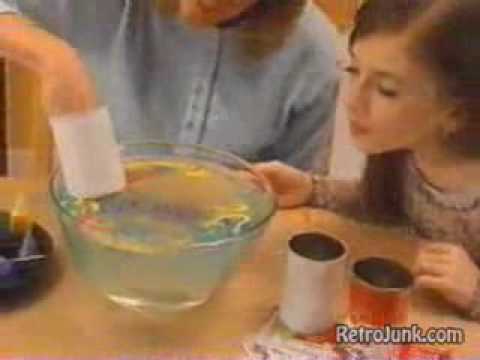
Okay don’t laugh. I wanted this kit SO badly when I was a kid. It looks pretty cool right? Turn your everyday household items into a hippy’s dream. Or in this case, a child who clearly has no sense of style’s dream.
I wanted this gift more than anything for Christmas. Mom and I went to the toy store one day for me to pick out potential gift ideas, and the minute I saw the kit, I begged her to get it for me. Then she read me the little square of white paper next to the display saying that there were harsh, toxic chemicals in the paint. No Magic Dip for Jackie. Sigh.
Given that this wasn’t recalled by the sounds of it (please correct me if I’m wrong), I wonder if the whole point of putting an adult in the Magic Dip ad was to signify that yes, the company knew there were harmful chemicals in their product, but if an adult is present then it’s okay. Sure, lots of toys indicate an adult must be present to handle them, but to the extent of handling potentially harmful chemicals? Hmm, sounds a little iffy to me.
We talked a little bit about marketing and ethics in our last class the other day, and this came to mind during our discussion. Is it ethical to market products to children knowing that there are potentially harmful chemicals/ substances associated with said product? Sure, there are plenty of arguments for this, however I was so disappointed personally when Mom wouldn’t get me this kit that I wonder if this kind of marketing (implications of requiring an adult present) is ethical in the sense that it is considered fair to the kids who watch these ads, get their hopes up for receiving this product, and when they do either a) require a special gas mask or what have you to play with it or b) have the toy taken away from them once Mom and Dad find out their kid has about six brian cells left from inhaling so many toxic fumes. I personally think these ads create serious buyers’ dissonance for children and adults alike. I mean, kids don’t like having toys withheld/ taken away from them or have them banned from Mom’s shopping list, and parents I’m sure don’t like disappointing their children thanks to misleading advertising.
Perhaps I’m putting too much thought into this one advertisement. Forgive me. I’m still a bit upset over not having my awesome Magic Dip kit. 🙁



 still going to sit here and stuff my face just as much as any little kid post-trick or treating. I’m not going to think about how this butter will clog my arteries, or how this chocolate will give me a sugar high and withdrawal in about six hours, or how I’m going to have a massive stomach ache after eating this whole bag. No. All I’m thinking right now is “how fast can I get these Twix bars into my mouth without making a mess on my shirt”. Maybe this is the fat kid inside me talking, but I honestly don’t see much of a point to marketing Halloween candy in smaller and “healthier” portions. In reality, most kids (and adults) aren’t going to be thinking “ooo how many calories are in two pieces of Mars bar”. Sure, there will always be the small group of people that DO in fact take nutrition into consideration, but I just think the majority of people on Halloween will not have health being their number one concern, and therefore I honestly don’t think marketing smaller, fewer calorie snacks will be the most effective marketing plan.