Highlights of the presentation:
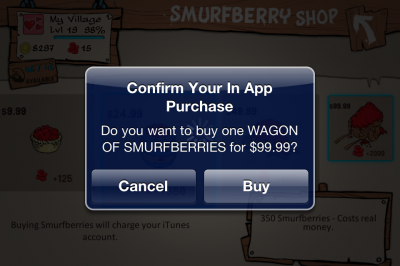
After receiving many complaints from parents, Apple has changed its policy for in-app purchases. The change is made to prevent some unexpected bills. Sarah Kessler points out another issue, “Whether it’s appropriate to market expensive virtual goods within games intended for young children.”
In-app purchases for children-typed games are a loop-hole that allows children to purchase goods (virtual) with the use of a parent’s credit card. Whereas offline, a child walking up to the cash register with a credit card would be denied the transaction. These in-app purchases discovered an untapped market that is now under debate.
Is it appropriate to market to children who may not understand the value of money?
If this question were to be reworded, “Is it appropriate to market a good that is well beyond the audience’s means and does not understand the value of money?” then we can tell this takes place in real life. The difference between the two groups is the children versus adults. Children are assumed to not yet know these things where adults are supposed to.
This way of generating sales is quite sneaky as the bill at the end of the month tends to drop some mouths. Usually this type of strategy would not work as the product continues its life cycle but because these games often have a short lifespan and does not face returning customers (unless for another version of the game), it works. Sales and revenue could decrease because of the new prevention changes. Therefore, marketers would no longer make these in-app purchases targeted to children as expensive since parents are made aware of each purchase. Perhaps as a result, there will be a switch as more marketers make games intended for adults.
Maria Ogneva gives 10 steps on how to listen online and what to do with the results. These steps can be used in companies that are in the walk, run, and fly stages; it just varies on how far the company goes in each step.
What is interesting is step 7: if these are steps that teach a person how to listen, it is funny how one must be told to actually listen first. This is an important stage and I feel is often overlooked by companies eagerly wanting to jump in to the innovative atmosphere and having large egos.
It’s crucial to know the culture of the community and the norms. It’s somewhat like attending a wedding; you can’t show up in a Speedo, you must know what the dress code is. Starbucks does a good job of listening. They do not inject an advertising message on every instance the company is mentioned (step 7 and 8).
Most of all: if you do not listen well, you may end up turning away all your positive commenting people by annoying consumers and making them contemplate about privacy issues! A company needs to find a strategy that fits because there can be very negative implications if not done properly- word spreads quickly on the internet.
In the “5 Tips for Improving Your Social Customer Service,” it talks about how social media allows for customers to take control and force businesses to help on customers’ own terms. Social support is an opportunity to maintain engagement and stay on top of potentially damaging talk.
1. Everyone should be considered to have the same priority. Even if someone has a high Klout score, these people should be helped, “but not at the expense of helping others.”
2. Ensure the listening tool is able to notify you of any information quickly and completely so that you may be able to act easily.
3. Make sure all employees are on the same page regardless of what department or office they are in. You should all work from the same customer record.
4. You will need to collaborate internally quickly by setting up the proper tools and process to facilitate this.
5. Keep in mind; this is a highly regulated industry. Therefore, you must know when it is appropriate to continue the conversation publically or switch to a private one. Nonetheless, be sure to maintain excellence in either way.
I feel these tips are better suited for a company that is at the “flight” stage of their online presence and social media. A small company would not be able to commit to these steps because it simply would not have the resources. Therefore, to make this more adaptable to the “walk and run” stages, this list should be used as boundaries and overall guidance.
Step 2 and 3 would require a company to invest in a new CRM and is likely to be very expensive. What a small company could do instead of this is to dedicate an hour a day to review the areas online (that contains talk about your company) and to offer support when needed.
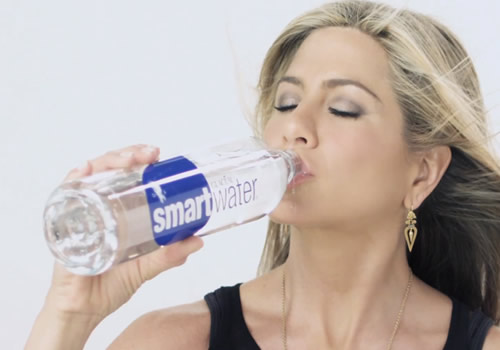
On December 29th, 2010, drinksmartwater uploaded a “Smartwater Trailer” on YouTube that generated as of March 7th 554 views. You can say this was not very successful as not many people watched it before the “jennifer aniston goes viral- smartwater” video was posted. Since then, the trailer has reached 6,549 views and the video itself has accumulated 1,423,212 views. It is amazing on how fast this video has spread because last night, this video generated a relatively miniscule amount of viewers- just under 1,500.
BeenerKeeKee19952 also uploaded “Jennifer Aniston Goes Viral (With Me) Smartwater Viral Campaign.” This is significant because smartwater has created a evangelist by incorporating him in the commercial, which would then influence many of his own followers. Within one day, many people have uploaded their own reviews, opinions, and responses to this “viral” video. For example, MaxJohnsonTv2 said in his video, “water is water, all water is the same” demonstrates that this video is creating buzz about the product which is the objective.
Smartwater utilizes a few YouTube sensations to help make their product spread across the community. Essentially they are trying to use “viral” in an explicitly blatant and humourous way to become viral. This proved to be very successful as Smartwater was able to plunge into the YouTube pool and experience the positive ripple affects.
Mashables asks a great question about this online video ad, “What do you think? Can Smart Water have it both ways? Or is this idea not so smart after all?” I think Smartwater did a great job in creating brand awareness and a positive image (by the looks of the online comments so far). I believe they owe their success to being one of the few companies to utilize this tool and maintaining a light humourous tone in the video. Once this tool gets old, I do not think other videos will receive the positive result that the Jennifer Aniston “Sex Tape” did.
When making a web video, companies (big or small) have to consider: What message is their video expressing? How will it affect their customers? When should they release it for maximum impact?
This article talks about “Innovative ways to use web video”
What does this mean?
Web video is one way that helps to level the playing field for companies. Small companies are able to make great videos that become viral. Web videos are great for any product/service as Tipp-Ex is an example of this. It is a commercial about white out- something so old, traditional, and does not create a lot of excitement when thought of. But since they used video as an a way of engaging its audience through something entertaining, fun, and most of all interactive, this video has reached 15,520,133 views!