Categories
Uncategorized

Corporate Social Responsibility Through Carbon-Offsetting

In my classmate Tim Martiniak’s blog post on the company Offsetters, he argues that in the long run the popularity of carbon-offsetting will not necessarily increase. I agree with this statement, however I believe that carbon-offsetting companies like Offsetters and Harbour Air will continue to find success from a financial perspective because there are certain tasks that people do that rely on industries that have a heavy impact on the environment. For example, although there are alternatives to air travel, there will always be people that depend on flying for transportation. Companies like Air Canada and WestJet may be able to decrease their environmental footprint, however in order to stay ahead in the market in a world where consumers are becoming more environmentally-aware in their purchasing habits, they need to rely on businesses with a priority and expertise on carbon-offsetting. Huge businesses may not find it beneficial to focus a significant amount of attention on becoming environmentally-friendly, and would rather hire a company like Offsetters with a proven track-record like Offsetters to do the work. Also, with increasing government regulations on environmental footprint, the number of businesses that require help in becoming environmentally friendly will increase as well. Corporate social responsibility will become not just be a responsibility of a company, but will also become an extremely profitable business model.

Works Cited
Bennett, Nelson. “Business In Vancouver Logo.” Business In Vancouver. N.p., n.d. Web. 14 Nov. 2012. <http://www.biv.com/article/20121106/BIV0114/311069956/star-turn-for-vancouver-carbon-offset-company>.
“Carbon Neutral.” Harbour Air. N.p., n.d. Web. 14 Nov. 2012. <http://www.harbour-air.com/offsetting.php>.
Martiniak, Tim. “COMM101 Business Fundamentals.” COMM101 Business Fundamentals. N.p., n.d. Web. 14 Nov. 2012. <https://blogs.ubc.ca/timmartiniak/>.
Categories
Uncategorized

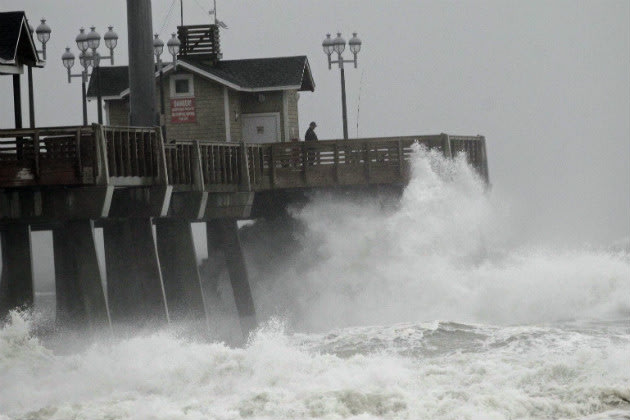
Ethics Plays a Part During Natural Disasters

In my Economics 101 class, we have been taught the Supply and Demand relationship. When things are scarce, like during the aftermath of a natural disaster, the demand for these items rises while the supply decreases. The first question is whether or not a company should stay open or not. In my opinion, this is barely even debatable. If a business sells essential survival items such as food, clothing or flashlights, then it should stay open and for as long as possible. I would not debate whether a business should just give away their products for free, as that would be an unrealistic idea, and would have to depend on the individual business owners. Second, as to whether employees should be required to work, it should be determined by the level of risk involved with working and getting to work. If the business sells essential items and the risk factor is relatively low, then employees should be required to work. Otherwise, a store selling computers should not be forcing its employees to work if risk is involved. With the third question, I relate it back to my earlier point referring to essentials. Prices should not rise when it comes to essentials. Denying a poor family the ability to purchase food when food is already scarce is simply unethical. The profit that could potentially be gained does not surpass the basic human ethics that would be violated.

Works Cited

“Ethical obligations during natural disasters.” Business Ethics. N.p., n.d. Web. 6 Nov. 2012. <www.canadianbusiness.com/blog/business_ethics/104470–ethical-obligations-during-natural-disasters>.

“Sandy: East Coast braces for epic hurricane, life-threatening storm surge | The Lookout – Yahoo! News.” Yahoo! News – Latest News & Headlines. N.p., n.d. Web. 6 Nov. 2012. <http://news.yahoo.com/blogs/lookout/sandy-hurricane-east-coast-nyc-forecast-142549538.html>.

Spam prevention powered by Akismet