Seeking Safety: Urban and Rural Displacement in Civil Wars Abbey Steele

http://www.yale.edu/cpworkshop/papers/Steele.pdf

As Steele argues in the article one of the common concerns of humanitarian scholarship tends to be on what produces the displacement and wether if is voluntary or involuntary, with long and imbricated debates over the pertinence of one or another term for appropriately discuss the nature of the phenomenon. However, how people are displaced is also a relevant question that needs to be asked. Not only because the patters of community building are necessarily different from rural to urban communities, but also because it is important to see how those new communities that are formed could also become enclaves or continuations of the conflict that originated the displacement, or if on the other hand, they are simply a new beginning, for the communities that resettle.


News article 1 " Abuses against Salvadoran migrants rise 46% in Mexico"


This article talks about how the violation of Salvadorian humans rights have raised in Mexico 46% this year compared to last year. It mentions that “about 300,000 Central Americans undertake the dangerous journey across Mexico each year on their way to the United States.  The trek is a dangerous one, with criminals and corrupt Mexican officials preying on the migrants. Gangs kidnap, exploit and murder migrants, who are often targeted in extortion schemes” (Abuses against Salvadoran migrants rise 46% in Mexico)
And these migrants are not only abused during the journey to the USA but also once they get to the united states, the article mentions that even with this increase in violence people still take this journey because there are no opportunities in El Salvador, and how the solution to this is helping people stay in el Salvador, which in my opinion takes away the focus from those causing harm and in a way in blames the victims of these crimes.
The article also shows how just having laws to protect immigrants is not enough to protect people, what is important is to implement these laws because like in this case even though more laws are being passed they are not being implemented resulting in an increase in abuse.

My thoughts on the declaration of rights

The declaration of rights have a lot of similarities, starting with the magna carta, we see that part of the purpose is to give power to those who lack it and to diminish power to those that have it, especially monarchy  and government. It is also evident that each declaration reflects events and problems that were happening in the era in which they were written. For example in the Magna Carta it mentions that “The Church was to be free from royal interference, especially in the election of bishops” which reflects problems at the time between the church and monarchy, we also see the mention of loans made by Jews which was common at that time.  All of these aspect where more specific once we get to the Declaration of independence we see more rights that generalize to more people for example “That all men are created equal; that they are endowed by their Creator with certain unalienable rights”. In the English bill of rights 1689 we see for the first time that it is there should be no “illegal and cruel punishments inflicted” and this we see repeated in many other declarations for example in  the Constitution of the United States : Bill of Rights it says “nor cruel and unusual punishments inflicted”. And it is repeated up to our day, but like in the English bill of rights it’s very vague.  In the Declaration of the Rights of Man 1789, it mentions that “ No one shall be disquieted on account of his opinions, including his religious views, provided their manifestation does not disturb the public order established by law.” Here is the first time religion and most important the differences of religions are mentioned. It is not until the Charter of the United Nations that the clear equality of man and woman are mentioned in article 8, where it mentions “The United Nations shall place no restrictions on the eligibility of men and women to participate in any capacity and under conditions of equality in its principal and subsidiary organs”. I also found it surprising to find things included that I would never think about for example in the Convention for the Protection of Human Rights and Fundamental Freedoms Article 12 it mentions that you have the Right to marry. I personally thought that the International Convention on the Elimination of All Forms of Racial Discrimination was the charter of rights, that entails more basic rights that should be included in other declaration of rights especially article 5 where it includes right of housing, health care and education, which are not included in many of the declaration but are essential to life. I also found that International Covenant on Civil and Political Rights was one of the few that included right of children, which I think is very essential. Finally I found it interesting that these declaration of rights even the ones for the UN are mostly translated in Arabic, Chinese , English , French , Russian, Spanish, but I think that they should be translate din to more languages. In general I found that a lot of the declaration of right’s were similar and had similar goals in mind which is to give power to others, but in my opinion there should be more basic rights added to most of them and they also should be more specific.

holaaa

Hi everyone!! My name is Daniela and I’m a fourth year (yes… will be done in Dec!) student majoring in Latin American Studies with a minor in International Relations. Have to admit that I reallly love and enjoy the combination!

I’m really fascinated by everything regarding Latin America and most specifically Peru, since I was born and raised there (Lima) until I was 19.. when I came to Vancouver for university.

Photos of Lima: http://www.flickr.com/photos/destinoperu/sets/72157600076130035/show

This course seems really exciting and I’m thrilled to join you guys for the journey to Robson Square every Monday!  :P

Nos vemos!


"In the news" post 1: Guatemala – USA’s Lab Rat?

A couple of days ago I was reading on the BBC news homepage about some horrific experiments which were conducted by the US Public Health Service in the 1940s on Guatemalan sex trade workers, prisoners, and psychiatric patients; acts which the scientists who conducted them tried to limit the spread of knowledge about to the public.


These people were deliberately infected with such sexually transmitted diseases as syphilis, gonorrhea, and chancroid; against their knowledge and without consent, and approximately only 700 people received treatment afterwards. As if the act itself wasn't bad enough, it is then mentioned in the article that similar experiments were also conducted against prisoners in Indiana, but that those "participants" were aware of the procedure, unlike their Guatemalan counterparts, revealing what is quoted in the article accurately as a "shocking double standard". 


I found the entire article quite upsetting, and quite shocking, hypocritical and ironic too. These awful acts were occurring during the Second World War - a time when the West, and the USA in particular was fighting against the Nazis, who themselves were also discovered to have been conducting similarly wrong and twisted experiments against Jewish people, homosexuals, people of Roma descent, people who were handicapped, etc. Interesting to find out that maybe the USA weren't the heroes they would have liked us to believe they were in this time.

I was glad to read that President Obama seems to have set up a health commission which is investigating these acts, but also hope that some action will be awarded to those affected, more than just the apology offered to the Guatemalan president, and the affirmation that "these acts [run] contrary to American values" - an interesting claim in itself, especially given that similar acts were also conducted on American citizens. It makes me personally wonder what part is viewed then as being wrong, or most wrong, and what the president is attempting to make amends for:  that these experiments were done without consent? That they were preformed on members of a different country who perhaps had no way to communicate with those involved in the process? That they were preformed on specific members of a society - those in the sex trade industry, prisoners, mentally ill - people who are often viewed as having less rights, or being less in control of their own rights? Or simply that they happened at all?


Some Guatemalans who were involved have apparently announced that they are now suing the US government over the procedures, and I am interested to see how this case develops.

http://www.bbc.co.uk/news/world-us-canada-14908020

"In the news" post 1: Guatemala – USA’s Lab Rat?

A couple of days ago I was reading on the BBC news homepage about some horrific experiments which were conducted by the US Public Health Service in the 1940s on Guatemalan sex trade workers, prisoners, and psychiatric patients; acts which the scientists who conducted them tried to limit the spread of knowledge about to the public.


These people were deliberately infected with such sexually transmitted diseases as syphilis, gonorrhea, and chancroid; against their knowledge and without consent, and approximately only 700 people received treatment afterwards. As if the act itself wasn't bad enough, it is then mentioned in the article that similar experiments were also conducted against prisoners in Indiana, but that those "participants" were aware of the procedure, unlike their Guatemalan counterparts, revealing what is quoted in the article accurately as a "shocking double standard". 


I found the entire article quite upsetting, and quite shocking, hypocritical and ironic too. These awful acts were occurring during the Second World War - a time when the West, and the USA in particular was fighting against the Nazis, who themselves were also discovered to have been conducting similarly wrong and twisted experiments against Jewish people, homosexuals, people of Roma descent, people who were handicapped, etc. Interesting to find out that maybe the USA weren't the heroes they would have liked us to believe they were in this time.

I was glad to read that President Obama seems to have set up a health commission which is investigating these acts, but also hope that some action will be awarded to those affected, more than just the apology offered to the Guatemalan president, and the affirmation that "these acts [run] contrary to American values" - an interesting claim in itself, especially given that similar acts were also conducted on American citizens. It makes me personally wonder what part is viewed then as being wrong, or most wrong, and what the president is attempting to make amends for:  that these experiments were done without consent? That they were preformed on members of a different country who perhaps had no way to communicate with those involved in the process? That they were preformed on specific members of a society - those in the sex trade industry, prisoners, mentally ill - people who are often viewed as having less rights, or being less in control of their own rights? Or simply that they happened at all?


Some Guatemalans who were involved have apparently announced that they are now suing the US government over the procedures, and I am interested to see how this case develops.

http://www.bbc.co.uk/news/world-us-canada-14908020

Hello everyone!

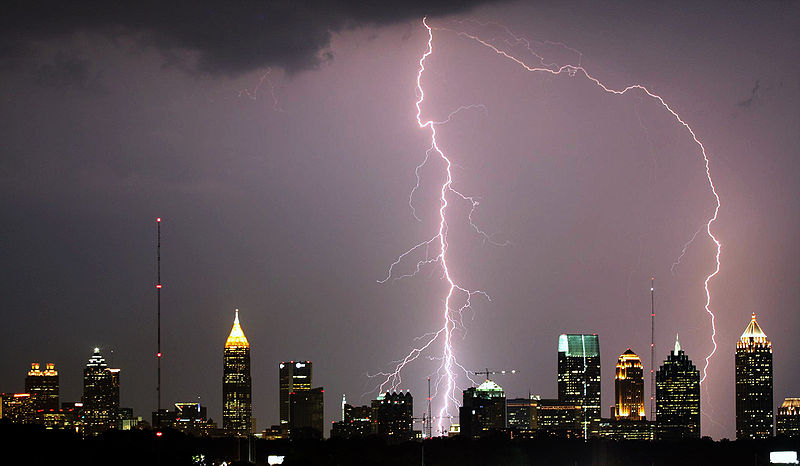
Hey!  I'm Marina, and I'm from Atlanta, Georgia.  I've been in Vancouver for 3 years now, and I love it.  I don't even mind the rain, but I do wish there were more thunderstorms.  Anyway, I'm a 3rd year in GRS studying Latin America and Sustainable, Community Development with a focus on Nutrition.  By studying nutrition, what I am really interested in is food: proper nutrition, food culture, food security, civic agriculture, food systems, and most importantly-eating!  I'm excited to take this course not only to learn more about human and civil rights in Latin America (obviously) but also to further explore policies and charters surrounding the human rights to food and water.  

Man up Vancouver rain

Hello everyone!

Hey!  I'm Marina, and I'm from Atlanta, Georgia.  I've been in Vancouver for 3 years now, and I love it.  I don't even mind the rain, but I do wish there were more thunderstorms.  Anyway, I'm a 3rd year in GRS studying Latin America and Sustainable, Community Development with a focus on Nutrition.  By studying nutrition, what I am really interested in is food: proper nutrition, food culture, food security, civic agriculture, food systems, and most importantly-eating!  I'm excited to take this course not only to learn more about human and civil rights in Latin America (obviously) but also to further explore policies and charters surrounding the human rights to food and water.  

Man up Vancouver rain

Introduction

Hi everyone,

I’m Susan Millar, I’m a third year student majoring in Latin American Studies with a minor in International Relations.

I took LAST 100 last year, and found the content really interesting. This led me to LAST 301, which to me looks even more intriguing. I have always been very interested in the concept of human rights, especially how it applies in different regions of the world. I hope this class adds to my understanding of human rights and especially to the concept of human rights in Latin America.

I was born and raised mostly in Canada, on northern Vancouver Island. When I was younger I lived on a boat on the coast of Mexico for about a year, which is where my interest in Latin Amercia stems from. During that time I learned to speak Spanish quite well, although I lost most of it over the years I spent back in Canada. I have also studied Spanish for the past 5 years but have still not reached the level of fluency.


me!

Hi everyone,
  So I'm Jen Gebert, or Jenny too.  This is my last semester of my Latin American Studies major...phewf.  I love this major, and am so glad it exists.  I've spent some time in Mexico, have a Mexican husband, and a half-mexican daughter. She already says "gracias." :)  Any news related to Latin America seems to grab my attention, but I am most interested in gender issues, things to do with the borderlands of Mexico and the United states, and how we are all implicated in global issues and ideas.  From previous classes, issues of human and civil rights have always been a source of contention, debate and interest in Latin America, and I'd like to learn a bit more about them in relation to that area.

me!

Hi everyone,
  So I'm Jen Gebert, or Jenny too.  This is my last semester of my Latin American Studies major...phewf.  I love this major, and am so glad it exists.  I've spent some time in Mexico, have a Mexican husband, and a half-mexican daughter. She already says "gracias." :)  Any news related to Latin America seems to grab my attention, but I am most interested in gender issues, things to do with the borderlands of Mexico and the United states, and how we are all implicated in global issues and ideas.  From previous classes, issues of human and civil rights have always been a source of contention, debate and interest in Latin America, and I'd like to learn a bit more about them in relation to that area.

Hola LAST301


My name is Hollman Lozano, I am from Colombia and currently I am doing a double major on political science and philosophy. I am in this class because one of the things that interest me is the political and philosophical discussion about the issue of rights. What are the implications, limits and possibilities of having rights?  How does one enforce them, once one has them? Are they really dependent on the structure of the nation-state, or could they be enforced in a supra-national scenario? Although my concern is more towards the figure of the refugee and how s/he challenges the figure of human rights in particular, it seems that indigenous people also present peculiar challenges to the discourse of rights.