A couple days ago, I was browsing Youtube when I stumbled upon an anime music video for a Japanese song. Sounds pretty typical, right? Well, I liked the singer so I Googled her to see if there were any other songs of hers that I would like.
And that’s when I discovered that the voice I heard on the video was actually synthesized.
Vocaloid is a singing synthesizer program created by the Yamaha Corporation. A developer would take this program and record voice samples of a voice actor and input the data into Vocaloid. The developer would then put the finished product out on the market for sale.
What’s interesting is how the product is actually marketed. Japan is the home of anime, with a huge national fan base. As such, the developers packaged each Vocaloid application with a character to represent the voice. This character came with a unique name, and an appearance drawn in anime style.
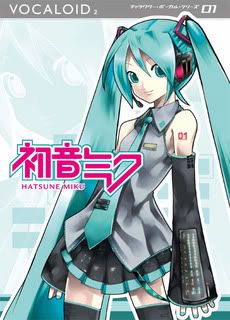
While typical marketing methods such as promotions in magazines, street pole banners, and online games featuring these Vocaloid singers were used, it was through the popularity of video sharing that really launched the software.
A producer would compose a song and write lyrics to go with it. He or she would then run it through one of the Vocaloid products. This song would then be uploaded onto Nico Nico Douga, a Japanese video sharing website. An interested artist that listens to the song would then generate images or animation for it. The song would then be re-uploaded with its accompanying music video. Some of these videos have more than one million views. Basically, free advertising for the producers of the Vocaloid software.
Here’s an example of one of the finished music videos:
[youtube]https://www.youtube.com/watch?v=VoPzP-MwcLI[/youtube]
As an avid viewer of Youtube, I can definitely see the appeal of Vocaloid. There are many talented composers and songwriters out there that don’t necessarily have the vocal ability to support what they come up with. Since Vocaloid is a singing synthesizer program, the “singer” packaged inside has an unparalleled vocal range. The only thing that restricts the creation process is time, which brings me to my next point.
Vocaloid seems perfect for those who have a day job. You don’t have to book an expensive recording studio that has fixed hours of operation. Instead, you can produce everything in the comfort of your own home. Quite a few people have done just that and gone on to sell the songs they created on iTunes to make a tidy profit.
All in all, I’m pretty impressed by this software. If I were a composer and songwriter, I would definitely be interested in Vocaloid.