Categories
Uncategorized

Risky Business

I find it fitting that my final blog post is on risk management as it sheds light on my biggest fear. That is, I fear of one day borrowing a large sum of money in order to pursue an entrepreneurial project and fail to make anything out of it. Thus being left not only in debt, but also without a goal to pursue.
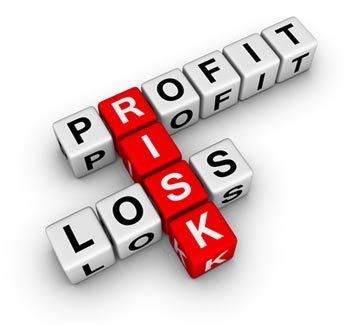
No Profit Without Risk

This trepidation of mine has arisen throughout the Commerce101 course as I’ve been introduce to many of the aspects required for a successful business. The areas for failure are vast and numerous; as poor personal management, a faulty marketing strategy, a fragile organizational structure, or even a mistake in the financial accounting department could be the reason for an organizations downfall.

However, after being given the privilege to meet and listen to successful Sauder graduates such as Nolan and Janice, I find the risk of putting one’s self out there and attempting to reap the rewards worth the possible rotten apple. That in mind, the article I read reminds the reader that before pursuing one’s ambition, one should remember that the biggest risk lies within us.  We should be cautious as to not overestimate our abilities and under-estimate what can go wrong. Any corporation or venture that doesn’t recognize it’s Achille’s heel is fated to die because of it.


Categories
Uncategorized

Starbucks In India

A post on CNN’s business blog discusses Starbucks’ entry into the Indian market. I find this blog as a “must read” because it captures key lessons that have been taught in class then applies it to a real world situation. That is, the blog discusses the factors that Starbucks took into account when opening in India, as well as the points of differences that would allow Starbucks to thrive.

Starbucks in India

It may come as a surprise to hear that India’s per-capita consumption of coffee is 82 grams per year: in the United States it’s four kilos. So why would Starbucks decide to open in India? Well Starbucks holds an advantage over other competitors, as the main attraction of Starbucks will be the clean reliable seating provided to all its customers. As one girl in the blog claims; “In Mumbai, it’s become hard to find a nice place to just hang out”.

I personally applaud Starbucks for its ability to both find a gap in the market and successfully take advantage. Additionally, the blog reaffirms a vital lesson that has shown up numerous times throughout the duration of COMM 101. That is, for a business to be successful it must be able to recognize its strength as well as its weaknesses. Thus, gaining the ability to pursue ventures that are more likely to pay off. Just as in the case of Starbucks.

Categories
Uncategorized

Broke with a Business Idea

Recently, my classmates and I were introduced to Janice Cheam, founder of the company Energy Aware. Based on a topic she evidently has a passion for, energy conservation, Janice and her company have been able to create the Power Tab In-Home Display. A device that allows users to monitor the power consumption levels of their house.

Energy Aware Logo
The Power Tab

The device is flexible in terms of placement and will come in very handy for those that live in areas in which energy bills may leave your wallet noticeably lighter. Moreover, Janice introduced the audience to several ways in which one may fund an entrepreneurial venture. Such techniques include angel investors, those who allocate funds to a business in return for future ownership equity, as well as love money. The latter being money which is given by friends and other loved ones.

Inevitable Rejection

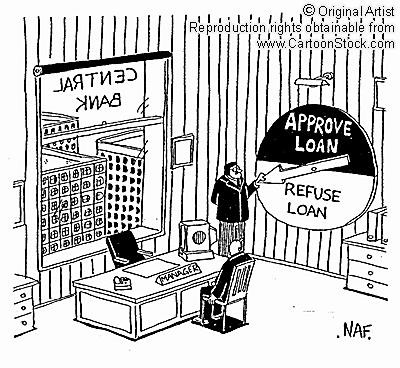
Being introduced to different methods of generating financial capital in order to start up a new business was as eye opening as much as it was calming. To be frank, I never did fancy going to bank and asking for a loan that would inevitably never be given to me.

Categories
Uncategorized

URTHECAST

URTHECAST: Competing in Space

Vincent Perraud’s blog post on the blue ocean strategy stood out to me as it firmly related to the venture of a recent guest speaker we had the privilege of listening to. In short, the blue ocean strategy claims that one must not enter a market and battle it out with all the other sharks. Instead, one may create a new market and swim in a new shark free zone. This strategy heavily relates to the aforementioned guest speaker, Wade Larson, who presented his project entitled URTHECAST.

A multi million-dollar project that intends to allow individuals to stream live HD videos by installing two HD cameras on to the International Space station. URTHECAST is also expected to generate money through contracts with news networks that would be willing to pay money in order to be able to televise live events such as Hurricane Sandy.

Shark Free For Now

By coming up with such a service, Mr. Larson and his brother, have successfully pushed themselves ahead of the competition by creating a product that offers services similar to that of Google Earth, yet takes it a step further by offering live streaming. A point of differentiation that certainly places URTHECAST in an ocean of its own. For now.

Categories
Uncategorized

So whose fault is it?

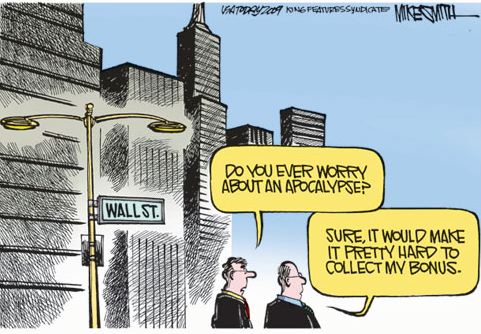
Why worry about the consequences when it doesn’t effect your bonus?

Common wisdom would argue that by positively reinforcing the desired actions of an employee through rewards such as bonuses, firms would be able to extrinsically motivate their employees into constantly maintaining such behavior. However, a common, and sometimes fatal mistake is rewarding A while hoping for B. A prime example of this would be the 2008 economic recession.

As banks began allocating bonuses to employees who were able to sell the most mortgages, in hindsight, it should come as no surprise that these bankers began giving out loans with inflated ratings. In fact, the situation reached the extent to which individuals who had long been deceased were being given loans. Safe to assume, such loans were never going to be paid back.


Incentives Tied With The Health of the Company

So, how can such situations be avoided? Well, firstly, it would be wise to remember that business is about disincentives as much as it is about incentives. To avoid such a mess in the future, I support the notion that bonuses and other incentives that may lead to destructive behaviour come with the added clause that one may not only lose his bonus, but also be docked pay if certain negative circumstances were to arise. Thus hopefully eliminating the probability of any incentive fueled destructive behaviour.

Article Link: http://www.conservapedia.com/Financial_Crisis_of_2008

Spam prevention powered by Akismet