Categories
book review READERS

February READERS Meeting or Taking a chance on a book, and loving it!

READERS is a professional review group that meets to discuss literature for children and teens. It is comprised of teachers, teacher librarians, public librarians, authors, illustrators, UBC SLAIS grad students, BEd students, administrators and others who have a keen interest in the topic. It is supported by the Richmond Teacher Librarians Association. We meet at Kathleen MacNeeley Elementary School Library once a month to discuss children’s literature from picture books to storybook apps and beyond. It is a open, welcoming, flexible group where we talk about what we are passionate about.

The group is fairly new, it only started back in October or November, but it already has a good core of people who contribute literature and ideas from many different professions and points of view. This week was a small meeting with only five members attending due to busy schedules. Lots of things going on just before Easter, report cards, and spring break.

Discussion in our group is fairly fluid. Almost everyone brings something to share, but it’s not a requirement. Sometimes you haven’t encountered anything over the month that you’re really passionate about and want to share with colleagues, some months you just want to listen. We don’t always have time for everyone to share everything they brought, but everyone gets a chance to talk and we often get moving on a theme as you will see from the items mentioned this month. One item leads to similar or “read-alike” recommendations, or items that would be the next step or perhaps an easier read on the same theme.

Items Discussed:

Brushes is an iPad drawing/ painting application. It is more complex than Doodle Buddy with more tool options and a movie/animation option that kids love to play with and gets many oohs and ahhs. It has been used to great success at grade 1/2 library time.


One Gorillia by Anthony Brown. A wonderfully illustrated primate picture book. This book combines counting, introducing the reader to new or different primates than the usual, and has an interesting message about families and belonging. Great for discussions about family, evolution and related species, art, or just a good group read-aloud concept book.

This lead to a discussion of Browne’s style and a look at some of his other books including My Mom, and My Dad.

Simile books are apparently in short supply, and along with My Mom and My Dad mentioned above some other good simile books are: My Dog is as Smelly as Dirty Socks by Hanoch Piven and Quick as a Cricket by Audrey Wood.


Wonder by R.J. Palacio is a middle-grades fiction novel about a young boy with severe facial abnormalities who leaves his sheltered home schooled life and enters the scary, judgemental world of a New York private school. It was anticipated to win several awards at this years ALA midwinter, but surprisingly left without any.


Gong Hey Fat Choy! As the Chinese New Year has just passed we have all spent the last month going over our Chinese New Year materials and purchasing new ones. Vancouver is a very multicultural city with a large chinese population and it is important to be familiar with and have resources for a variety of different cultural festivals from Chinese New Year to Valentine’s Day to the Up coming Vaisakhi ( April 14th). Here are a few of our mentions for Chinese New Year:

Celebrating Chinese Festivals by Sanmu Tang is a very comprehensive picture book covering many Chinese festivals.

What the Rat Told Me by Marle Sellier – An illustrated retelling of the Tale of the Zodiac

Chinese Festivals Series by Better Link Press


And of course a Valentines Day story:

The Yuckiest, Stinkiest, Best Valentine Ever by Brenda A. Ferber and Tedd Arnold (author of Fly Guy). This book breaks out of the sappy Valentine’s mold by adding some interesting thoughts and lots of humour. Leon has a crush on a girl and is making a beautiful valentine for her but just as he’s finishing it comes to life and runs away. The valentine is convinced it would be a terrible idea for Leon to give his crush a valentine and seeks out the opinions of those he passes during his escape run. This is a Valentine’s book even boys appreciate.


Moving on from the holiday theme we jumped to the non-fiction picture book I am a Pill Bug by Yukhisha Tokuda translated to English from the original japanese. This book has colourful, accurate Japanese styled illustrations made from paper collage that gives the pictures and engaging texture. (I even felt the page at one point to make sure the paper wasn’t glued directly onto the page.) This book was a group member’s favourite because of it’s international science class or home science connection as pill bugs can be found almost everywhere in the world. Oh, and it’s written from the perspective of the bug. So much fun!

Jumping up a few grades, one of our members demonstrated paper bag booktalks. She used Word Nerd by Susin Nielsen for her example. For the book talk the presenter gathers items significant in the story and collects them in a paper bag to act as memory aids and visual aides for their presentation. Much more fun than your average book report!

Each item is pulled out of the bag in sequence as the presenter talks about the book. The items serve as notes and visual aides.


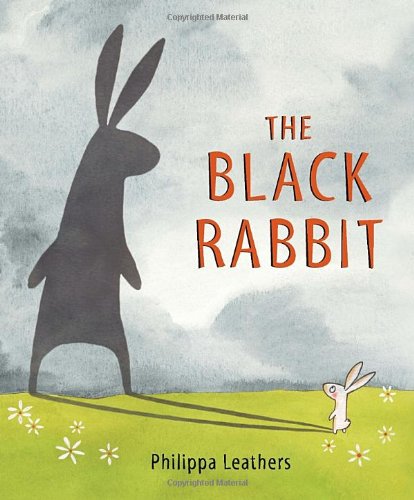
Simple and loveable is The Black Rabbit by Phillipa Leathers. Adorable illustrations and simple text tell the story of a small white rabbit who is scared of his own shadow and goes to great lengths to escape it.
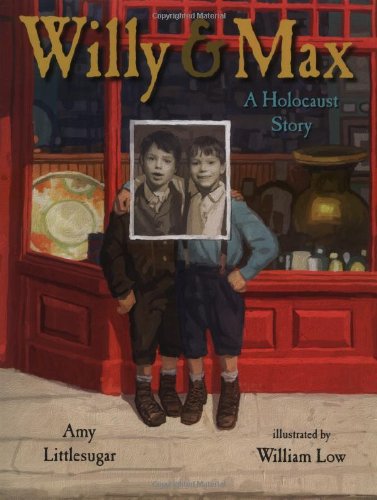


Willy & Max by Amy Littlesugar, illustrated by William Low is the semi-biographical story of two boys friendship and the theft of art during the Nazi occupation. Members of the group discussed how holocaust literature for elementary as body of literature has continued to grow over the decades and more stories are published every year. While the classics such as The Diary of Anne Frank are still popular with youth there are many more options out there for a wide range of ages and reading levels. Another book mentioned in the theme was Rescuing the Children, Stories of  Kindertransport by Deborah Hodge. This book is a collection of nonfiction, biographical stories with an informational section in the back giving the survivors’ stories more context for the reader.



I discussed The Alchemist (The Immortal Nicholas Flamel Series) by Michael Scott. As an avid reader of fantasy and fiction involving mythologies I approached this series with hope and caution. About a quarter of the way through the first book I was pleasantly surprised, and my appreciation for the author and series grew from there. This fast paced, well written series follows the twins Sophie and Josh as they are caught up in a supernatural battle between ancient beings once worshiped as gods, demi-gods, and heros. They are pulled along by Nicholas Flamel, the infamous, immortal alchemist from fifteenth century France. Nicholas has spent his immortal life protecting the Book of Abraham the Mage from the “Dark Elders,” brewing the Elixer of life every month from an ever changing recipe from the book. But now, Dr. Dee, servant of the Dark Elders, has stolen the book, except for the last two (vital) pages that Josh managed to tear out during a struggle. Now Sophie and Josh are involved an an immortal battle as both sides believe them to be the twins of prophecy and the key to victory.

The series is fast paced (the first novel takes place in 72 hours) and well plotted. World mythologies are woven throughout as new characters are introduced to the mix. But the most outstanding feature is the authentic, convincing, and engaging characterization of Sophie and Josh. I follow the series for them, not for the next magical battle (although those are fun too).

Recommended read-alikes from other members: Shadow Magic Series by John Lenahan and any of Rick Riordan’s series.

There most likely will not be a meeting in March due to spring break and many people taking holidays but we will be back for sure in April. If you are in the Vancouver area and are interested in coming out leave a message for me on the blog and I will get in touch with you. We are always welcoming new members.


Categories
LIBR559M LIBR562

Back to the Future! or I needed a break.

So, this will be my first post since I completed my Social Media class this summer. It has been a while. In fact it has been a month. I needed the break. Now I return, fresh, interested, enthused, and enrolled in new classes. Of course new classes also encourage reflections on past courses so before I move forward, how about a quick look back.

I spent a large portion of time during my six weeks of two online classes griping about how horrible condensed, online classes are. Case in point is my “How do they do it” post. I even wrote Vista a breakup letter on facebook after officially finishing my last bit of my last online course. (Unfortunately, every course in my program is supposed to make some use of the online learning portal, but it’s more like still having to see the ex occasionally because you still share the same friends.)

But now that I have some distance I would like to mention a few things I found I liked about online classes, and what works well in online classes.

Things I liked:

  • Allowed me to make my own schedule.
  • Forced me to make a regular daily work schedule and stick to it. I am now much better at doing work a bit every day, whether I have to or not.
  • Gave me some flexibility as to where I could do my work, as long as I had wifi, decent workstation, and limited sun glare.
  • Used many types of media including journal articles, news articles, websites, videos, recorded interviews, recorded presentations.
  • Made me use and understand many different online tools.
Things that worked well:
Here are a few things my professors have implemented in online classes that I found effective.
  • Study buddies: Sounds funny, I know, but having a study partner throughout the entire course was really helpful. We could split up the work and pool resources to make the weekly work more manageable. We could get together to complain and sympathize about the course (sometimes just knowing some else is in the same boat makes a huge difference). We knew someone was there and this really went far to combat the isolating nature of online classes.
  • Assigned discussion posts: One of my instructors assigned a small group of students to each discussion topic every week. This meant that instead of having to post to every discussion, I only had to post to the few I was assigned and just read the rest. This took the pressure off discussions somewhat. It is more realistic as well. In a class of 40 students, does everyone pipe up and talk on every topic? Nope.
  • Clear, detailed course schedule: Students want to know what they have to do when. Beyond our anxiety prone natures, we are balancing more than one class and have to plan and schedule accordingly. This applies to in-person and online classes.
  • Making use of all the functionality of an online portal: Slide shows, recorded presentations, links to resources (if possible), quick feedback, and more! There is a wealth of information and a myriad of ways it is presented. All this selection can accommodate way more learning styles and aid retention.
  • Making a space for students to communicate outside teacher supervision: Teachers talk about students in staff meetings and the staff room. Students need somewhere to talk about teachers and the courses outside of instructors’ hearing. For an online course, this means some sort of online space. Trust me, if anything, this will make happier students, not a mutiny.
These are some of the positives of online classes. The only plus of online condensed classes: it’s a short stint in hell, you only have to survive six weeks. I will not take another online condensed class unless I have no other option and it will have to be a pretty interesting course for me to take a regular online one. Despite the positive aspects, I think I’ve done my time.
Categories
LIBR559M

Aggregators Part two: Netvibes or Engage!

Finally, the long awaited sequel to my post on aggregators!

So the second aggregator I tried was Netvibes. Netvibes is a web application with customizable widgets for users to gather all their social media together into a “Dashboard” or homepage. From their webpage:

“Get your own personal dashboard to monitor all your favorite blogs, Twitter, Facebook, YouTube and all of your favorite interests. Just type in a topic and get your free personal dashboard now.”

They also offer some pre-designed dashboards built around particular interests. There is a personal and a business version of the application, the personal version is completely free. Kansas State University professor Dr. Michael Wesch uses Netvibes as an interactive teaching tool to engage his students, educate them with and about new web tools and social media applications, and have them collaborate on a variety of projects.

I spent over two hours customizing my dashboard, but I have to admit a lot of that was due to me trying to decide what theme I wanted for my title bar and background. I have two pages, the main dashboard and then one just for academic/ work. Finding and adding widgets was simple and intuitive. There are lots of options and you can add almost all common social media feeds and applications.  So far I haven’t found something I wanted to add but couldn’t.

Here are my two pages:


I have been using my Netvibes dashboard (which I titled “Engage”) as my homepage for a week and a half now. I have had to make an adjustment to my normal routine when I sit down to my computer and open my browser, but I am enjoying it. It does the one main thing I really wanted which is it has on one page all the sites I check regularly and it tells me when they’re updated. I can read my RSS feeds within the dashboard, or go to the site which is nice. Most of the time I still click through to the main website to read the updates.

So far my only real problem with my netvibes site is that there is no help section for when I’m having trouble with a widget. I haven’t managed to get my gmail calendar widget to update yet and Netvibes has no support to help me figure out what is wrong.

I can definitely see using this type of application to create a class or office homepage. I think it has a lot of possibility and it doesn’t take too much time to set up (if you don’t fiddle with colours for hours). Keep in mind though, it is more of a portal rather than a one stop shop. It is aptly named a dashboard. It will help you get you where you want to go, and hopefully do it faster and with less distractions along the way.

Engage will be my homepage for a while longer.


Categories
LIBR559M

Aggregators: Worth the Time? or A comparison of Symbaloo and Netvibes, Part 1

What are aggregators? They are not domesticated alligators used in “back to nature” agricultural programs. They are applications and tools that allow a user to collect information from disparate sources and present it in one place. My colleges Alison Dodd and Michele Ramos have a very good definition of Aggregation on the HLWiki Social Media Glossary:

Aggregation refers to collecting content from multiple social media sites (such as Facebook or Twitter) with the goal to organize and simplify users’ social networking experiences. While individual sites may offer unique features specific to that site, social networking aggregation collects the content that is produced on several sites and delivers it in a less overwhelming way. Aggregating content is performed by using tools to draw information from different sites into a single space. Aggregation services provide tools and widgets — either downloadable or web-based — that function to consolidate friends, bookmarks, messages and profiles in easy, digestible formats. Aggregation is done by an application programming interface (API). Some examples of aggregation include FriendFeed, Flock, TweetDeck, SocialNetwork.In, SocialURL, Digsby, Trillian/Adium, YooNo, and OrSiSo.

As someone who, prior to this unit, didn’t even use an RSS feed (such as Google Reader) I found the introduction to all these different aggregators extremely interesting. But how useful would I find these applications personally and as an LIS student? So I took two of the aggregation applications presented in the module Symbaloo and Netvibes, set up accounts and tried them out.

This post will focus on Symbaloo:

Symbaloo is an aggregator that colourfully and graphically presents your personalized bookmarks, RSS feeds, and some commonly used web applications like Google search and Wikipedia search. It is presented as a Personal Learning Environment (PLE) portal or a launch pad. There is a nice demonstration of the platform here.

The application is very simple and easy to use, but it does take time to customize the webmix for your personal use. I spent over two hours working on my “desk” webmix for all the bookmarks and feeds that I use regularly. I didn’t spend much time trying to make it pretty, but  a user has some options (tile arrangement, colour, icon) to customize the look of the interface to make it graphically appealing. This is what my personal webmix currently looks like:

My Symbaloo

I enjoyed making the webmix, but I don’t find it particularly useful for myself. I have my frequently used bookmarks well organized within my Safari browser and my less used bookmarks I currently collect on delicious. Sites that I check everyday are shown in my top sites display every time I open up a new tab in my browser.

For RSS Symbaloo works moderately well. If you click on the feed tile, the five latest posts will (usually) show up in the centre of the webmix, but it only displays the title of the post and the date it was posted. You have to click on the post to read it and there is nothing indicating if there is a new unread post.

The widgets that allow you to interact with different applications (like Google) from the centre box are few and most of them are already integrated into many browsers. Many of the widgets don’t work well and some not at all. I was excited to see a CBC Radio widget, but unfortunately I couldn’t get it to play.

For these reasons I don’t think I will continue with Symbaloo for my own personal use but there are a few ways I could envision using this professionally:

  • Webmixes are hosted in the cloud so if I was switching workstations frequently I could quickly and easily access all my bookmarks.
  • Webmixes can be made public, searchable and tagable. Webmixes would be a great way to share a collection of resources with your network in a friendly and appealing way. For example I found this great webmix for online children’s books:
  • Webmixes are very simple and visually appealing so they would be great portals for younger users. Here is an example of a webmix created by Melissa Techman, school librarian and tech lead, for students in kindergarten to grade two for curriculum related webpages.

Next up: Netvibes.

Stay tuned for the exciting conclusion to…

Aggregators: Worth the time?

Categories
Uncategorized

Half Term Reflections or How do adults do this?

DISCLAIMER: Professors, read at your own risk. This post is to share with other students feeling the crunch. I have noticed that every time I reach out and share I get many responses along the lines of “I was thinking the exact same thing but didn’t want to say anything.” And those people in similar situations, and myself, feel better.

DISCLAIMER 2: I actually like my classes, which makes it all the worse that I can’t enjoy them. It’s hard to enjoy the swim when doing your best is just keeping your head above water.


Okay, I don’t actually hate my life, there’s lots of good stuff going on. Like my windsurfing classes that I started last week, my new apartment, my excellent roommies and my awesome study group. Lots of good things going on. What sucks is that I can’t really enjoy any of it, because of the two classes I’m taking this term.

My reflections halfway through term 2 summer semester I learned this:

  • I will never again take online classes, unless I have no other choice.
  • I will never again take full-time summer classes, unless I really have no other choice.
  • I will never, ever again take full-time online summer classes, not even if I have to stay an extra semester in school just to finish my program. Ever.

A bit of background: At SLAIS summer semester is split in half consisting of two terms of six weeks. So if you take summer classes at SLAIS, you have to take condensed classes (3 credits in 6 weeks). Normally full-time study in this program is four courses per semester, each course being the equivalent of 120 hours (class +study time). Because condensed classes are cut in half, the administration limits student to two courses per term, which then works out to 4 courses in the semester.

This should be the same amount of work as a regular semester right? WRONG! It is definitely more work. Last term I took one online course and one in-class class. It was a slightly heavier than normal workload but I managed alright and I really enjoyed the classes I took even if I didn’t have the time to do as good a job as I would have liked. This semester I am in two online classes. BIG MISTAKE. In my defence, they are both classes that I think are important and interesting but are only offered online and in the summer.

I did some math before term started so I could set up a work schedule like a responsible student.

  • 120hrs/6weeks = 2o hrs/week.
  • 20hrs/week *2 = 40hrs/week
  • 40hrs/week = full time job = 8 hrs/day   5 days/week
  • I can’t focus for 8 hours on schoolwork, at least not straight, and my teachers want me logging into class daily or almost daily. So:
  • 7hrs/day * 6 days/week (one day a week all just for me) = 42 hrs/week + one day for a weekend. Totally doable I thought.

This schedule lasted for 3 days of week one. Did I start slacking off you ask? No, I started working longer and longer hours just to keep up.  I would show up to the department around 10 or 11 (after doing some healthy exercise) and work, with a lunch break, until about 8. Sometimes later. Then I would go home, cook, eat, and sometimes log back on to domore work. Needless to say, whatever I did after supper was pretty dismal quality.

By Sunday, the last day of online modules for online classes, I would be overwhelmed with how much I hadn’t managed to get to that week and ready to throw in the proverbial towel. Imagine my amazement when I discovered, through a cry out on facebook, that I was not the only one feeling the crunch, in fact, a good half the class (of each class) shared my sentiments. That was the first week. It hasn’t got any better.

Now it is three weeks into the 6 week term. I just spent an intensive week working on a 3000-4000 word paper for one class, while also trying to keep up in the weekly assignments for both classes that had me working until 8pm or later in the first week when the work load was the lightest. (If you want, you can have a look at my paper. If you really want to know, I’ll share my mark with you when I get it. ) Monday rolled around and I was so burnt out I didn’t even touch schoolwork. Now it’s tuesday (wednesday now?) and I am, of course, behind and playing catch up.

My roommate summed up my thoughts very succinctly when she said “How do adults do this?” We assume that we just haven’t grown up enough, or didn’t get the memo on how to complete work in a timely manner and still have a balanced life.

For those of you out there struggling like me, I have found a few things that help:

  • Make every week a new week. If there is stuff in the last week that you didn’t get to, forget it. Don’t play catch up because you will never be caught up, you will only fall further behind. If you really care, save the readings (or whatever) and go back to them after the course is done.
  • Reach out to other students in your class. Chatting with others in the same situation will make you feel less isolated and less stupid.
  • Disconnect. I know it feels like you should be working, be online all the time. It feels like any time you’re offline you are falling further behind. But you can’t be connected all the time and stay sane. Take a bath, a walk, read a book, crochet another square for that afghan. DO IT. You’ll feel guilty, but you’ll actually be able to work better and for longer if you take breaks.

DISCLAIMER 3: Maybe I shouldn’t make this post, but I’m going to anyway.


Categories
_____ & Giggles

Google Autofill Amusement or How Do They KNOW!!!

Discovered this on a Library Science meme. Had to try it out for myself. ROFL!!!

Google trying to shift suspicion.
But how do they know?!!
Categories
book review LIBR559M

A chance to explore LibraryThing! or an exercise in frustration.

Okay so this weeks social media topic is creation and the mission for this week is to create something using social media. Yay creation, but wait, you mean on the computer. So my crochet monster stuffy doesn’t qualify? Oh well.

I took the opportunity to explore another social media utility I have recently joined but haven’t yet had a chance to really explore: LibraryThing. I joined LibraryThing back in June after discussing it and Goodreads in class and among classmates. I love the idea of having a complete list of the books I’ve read, reading and writing reviews, creating a wish list (accessible anywhere there is internet, because I always forget my list on the fridge at home!), organizing collections, etc. Really, what librarian-wannabe wouldn’t like something like LibraryThing? I chose LibraryThing over Goodreads because I was informed by friends it was more “librarianish.”

Things I have done so far on LibraryThing:

  • Read reviews
  • Added books to My Library (not realizing that I really should have been adding them to My To-Read list)
  • Applied for early review copies of books (because who doesn’t like free books). I asked for any book available for Canada.
  • Received and read 1 advance copy of a romance ebook.

Today I moved up the social media participation ladder to critic by posting my review of Santa Fe Fandango by Elinor Groves (advanced copy). This was good for many reasons:

  • I like creating.
  • I have to as part of the agreement for advance copies and it will help me get more advance copies.
  • I was forced to use more of the applications tools, including the help wiki.

Why did I have to use the help wiki? Why was submitting my carefully crafted review (structure stolen from/ inspired by Gene Aubaum’s reviews on Unshelved.com) an exercise in frustration? Because of how LibraryThing insists on adding books to My Library.

To add a book to My Library LibrarThing searches external catalogues like Amazon.com and Library of Congress for records matching your search criteria. You pick your book out of the results and LibraryThing imports the record into your collection. Simple right? Think again. An advance copy, even though it has an ISBN isn’t in any of those catalogues yet! But other reviewers have already created a record for this book so I should be able to add it to my library from the book’s main page, right?

This should be simpler.

Wrong. Clicking the “Add to My Library” button takes you to the search page. So I have to add it manually and so did the other 14 reviewers which means there are 15 separate records for this books. Can we say redundant? Why can’t I search and add records from within LibraryThing?

But, after cursing the application, I created the record (more creation!) and added my review. I guess it all works out in the end. The good part about social media applications like LibraryThing is that they are changing, updating and improving and I can have a say in how that happens. I just have to find the right forum in which to do so.

After all that, here’s the review:

Santa Fe Fandango by Elinor Groves

Matti Glover is a sensible artist making a living in Santa Fe, New Mexico. She spends her days working on advertising for local businesses and her evenings painting and spending time with her best friend Bram Daniels. When Bram has to go out of town on business, Matti gladly moves into his beautiful, gated community home in order to take care of his beloved cats. Pheasant Hill often plays host to celebrities but Matti is still shocked to see non other than Antonio Reed, the new hot film star and Matti’s favourite actor, walk through the main building. After she safes him from a gaggle of rambunctious girl scouts, Matti has a chance to get to know the real Antonio Reed, if she can keep her own fangirl inclinations in check.

Why I picked it up: I was just finishing my first semester of my masters program and could really use some fun light reading. I requested it as an advance copy reviewer and got it!

Why I finished it: If you are female, replace Antonio with any of your favourite male actors and you’ll be hooked. Nobody likes to admit it but we’ve all had this daydream at least once. Besides, the setting is beautiful and the writing is liquid.

Who I’d give it to: My roommate who is in the same program as me and needs a break just as much. We both enjoy a guilty read once in a while, especially when we can share it with someone else.


Categories
LIBR559M

Creating social capital through collaboration or getting together to make it worth your while

So topic of the week in Social Media class is collaboration, more specifically collaboration with social media. We also worked in groups on a wiki entry. Our group did a wiki entry on social media for youth services:Social Strategies for Youth Service Librarians.

While doing research for the wiki I rediscovered a youth services program using social media and involving collaboration, (or maybe cooperation in some cases. For the difference see Jessica’s excellent post.) The program is TeenRC. It is a social networking site for teens that revolves around reading, writing, literature and other materials. It was developed and is administered by dedicated youth services librarians, but it’s content is teen created. Teens create a catalog of books they have read or would like to read, they can write reviews, share their own writing, have discussions (not just limited to literature) in the forums, and there are regular special events like author visits and interviews, or contests.

It seems like a fantastic site with a lot to offer but libraries have tried to run sites like this before and since without success. Either the administrators lose funding or interest or the teens don’t join. One of the things that really makes this site work is the number of libraries collaborating on the project. There are 332 participating libraries with TeenRC.  Not all of those libraries have creative control over the project of course, but they are involved and this means the site is available and suggested to a much larger audience. If you can get a small number of teens to join from each of those libraries you end up with a pretty good user base. If they like it, they will spread the word and you will get more teens joining in. And they are more likely to like it, the more people that are on it because social networking sites grow in social capital as they grow in size. This make a larger social networking site more valuable to an individual and more likely to stick around.

Now I’m only brushing on social capital which is a complex sociological theory and I can’t find the article I originally read about social capital and social networking sites (if anyone has a good link, post it in the comments!). As I understand it and remember it, social capital is the value we derive from our social networks (online, offline, professional, social, familial, etc.). The larger and more connected our networks the more value they have. The strength of the connections is important too, so there have to be a balance between quality and quantity. (Think of the person with 1000 facebook friends, does he really know all those people, does he get anything beyond a number on his page from them.) For a social networking site to be of value it have to have many subscribers, thereby offering it’s users the opportunity to expand and strengthen their social networks.

The same rules apply to libraries trying to use social media in programming. You have to use existing social media with enough social capital, or at least potential, or it won’t offer the user anything and the project will flop from lack of users. Or in the case of TeenRC, create your own social networking site, but collaborate with others to ensure a good start up group size and encourage growth from there. The collaboration also means reaching people geographically distant with is one of the great affordances of online social networks.

I really like TeenRC. I haven’t really gotten into the site because to take full advantage of it you have to be registered and to be a registered user you have to be a teen, but I like the idea and I will follow it’s development. I hope it continues to grow and change and live.

Categories
LIBR559M

The Social Media Panopticon or I’m feeling watched and alone.

My undergraduate degree is in criminology and you can bet we spent many hours in that program discussing different theories and studies of surveillance. So when the subject of surveillance in social media came up I was definitely interested. The discussion though has had the side effect of making me feel surveilled in my online activity. I feel watched by friends, colleagues, my professor, future employers, future students, and maybe even the government!

It started with Anders Albrechtslund and his article Online Social Networking As Participatory Surveillance. Albrechtslung suggests classical theories of surveillance,  like Jeremy Bentham’s panopticon and the theories of Michel Foucault, fail to cover the widespread participation in social media. He supports an expansion of current surveillance theories to incorporate a more horizontal structure instead of top down. For support, he illustrates how through social media people voluntarily open themselves up to public scrutiny. Even just the information you have to enter to create an online profile for facebook or twitter impressive. Then once you have that account, you participate in sharing details of you life to the world, without really thinking about it.

This is the crutch of the matter. We do it without really thinking about it. When we share something on facebook we don’t think about the world reading it, we see it as sharing it with our friends. I knew, but didn’t really think about, all the ways in which the things I post online could be used. My words can be taken out of context and used in ways I never intended, my birthday party photos used against me at a job interview, my profiles scanned for criminal tendencies.  Sure I knew these things were a possibility  but not until recently have I really though about it and now I am feeling it’s full effect.

One of the benefits of online interactions, including social media, is the freedom to express yourself,converse and connect with others, share. I like sharing. But now I feel watched and the freedom is gone. I want to share my thoughts and feelings but fear how they will be taken out of context and used against me and I won’t have the chance to defend myself. I might not even know it’s happening. And that was the function of the panopticon: each prisoner was isolated and arranged so each individual at any given moment could be observed from the guard post but the prisoner never knew when he was being observed  and so acted as if he were being observed at all times. In the social media panopticon the person in the guard post could be anyone and they can observe not only your current behaviour but all your past behaviour as well. And you don’t know when they’re watching.

So now, living in a new place away from the people I like to share things with, I hesitate to reach out and share like I did before. The effect will fade, I’m sure, but it doesn’t mean the surveillance in social media fades with it. I guess it’s like coming to terms with the millions of cameras on city street corners.

Categories
LIBR562

Public Lending Rights or If it’s not about the money, why is it about the money?

PLR or Public Lending Rights. I first discovered these on monday in my International Issues class and got all upset about them but so many countries have a PLR system I figured I must be missing something so I sought out more information. As of last night I had a better grasp on the systems and the reasons for them but I still didn’t like them and I was going to write a passionate blog post but it was going on ten thirty after a very long day of school work and I just wanted to go to bed. This morning, er, afternoon now, my passion is missing. I guess this will be my sober second thought rather than my passionate musings.

PLR or Public Lending Rights is a system that gives money to authors whose books are loaned out at public libraries. Many countries have a PLR system including the UK, Germany, Australia, and yes Canada. My initial discovery of PLR was the UK system and that is the one I read the most about, but each PLR system is similar.

Why have a PLR? The argument is that authors suffer a loss of revenue from book sales because libraries are purchasing one book then lending it out to many people for free. Because authors are a nation’s public and cultural asset the government must subsidize it’s authors.

Okay, I’ll grant you that yes, many individuals get to read a single library copy that has only been paid for once, but I question the claim of loss of revenue. The assumption is that if a person cannot get a copy of a certain book at the library they will go out and buy it. But then again, maybe they just won’t bother reading it. What about the awareness and free advertising a library gives an author and his/ her works?

Who pays? Each country with a PLR system has set up an annual fund for the administration and disbursement of PLR. ONce the administration costs are taken out, whatever is left is spread among the registered authors based on whatever formula their system is using. In the UK it is based on how many times a book is loaned out in a sample of libraries, in Canada it’s based on how many copies are in a sample of library catalogues. The big thing for me is that it’s not the libraries that pay, at least not directly. There are also caps on how much an author can receive so that a few bestselling authors don’t hog the entire fund. (Along with this is the idea that if your book is so popular, you probably don’t need the subsidy.) In 2010, the Public Lending Right Commission of Canada’s disbursements totalled 9.9 million dollars but individual payments average $583 with the cap at $3486. Obviously, this is not enough for someone to make a living on. But proponents of the system argue it’s not about the money, it’s about the justice of it, the recognition of the author’s rights and how they are suffering from the free public lending of their books.

What get’s my goat: The accusation or insinuation that libraries are somehow stealing from authors. Marian Engel, one of the founders of PLR in Canada openly accused “Canada’s librarians of “ripping off Canada’s writers” by lending out their books for free, thereby undermining their book sales.” (Andreas Schroeder, Canada’s PLR Program: The Untold Story) As a soon to be librarian, and a lifelong user of libraries it’s hard to imagine libraries ripping anyone off. Libraries already do so much with so little, couldn’t they have picked on someone who was actually out there to make a buck rather than an institution that gives everything they take, back to the community.

If it’s about justice, where’s the justice? If it’s about money, go after someone who has some.

Good, if dated, article about the PLR program in the UK: Dworkin, G. (1988) Public Lending Right – The UK Experience. Columbia-VLA Journal of Law & Arts 13(1).

Spam prevention powered by Akismet