READERS is a professional review group that meets to discuss literature for children and teens. It is comprised of teachers, teacher librarians, public librarians, authors, illustrators, UBC SLAIS grad students, BEd students, administrators and others who have a keen interest in the topic. It is supported by the Richmond Teacher Librarians Association. We meet at Kathleen MacNeeley Elementary School Library once a month to discuss children’s literature from picture books to storybook apps and beyond. It is a open, welcoming, flexible group where we talk about what we are passionate about.
The group is fairly new, it only started back in October or November, but it already has a good core of people who contribute literature and ideas from many different professions and points of view. This week was a small meeting with only five members attending due to busy schedules. Lots of things going on just before Easter, report cards, and spring break.
Discussion in our group is fairly fluid. Almost everyone brings something to share, but it’s not a requirement. Sometimes you haven’t encountered anything over the month that you’re really passionate about and want to share with colleagues, some months you just want to listen. We don’t always have time for everyone to share everything they brought, but everyone gets a chance to talk and we often get moving on a theme as you will see from the items mentioned this month. One item leads to similar or “read-alike” recommendations, or items that would be the next step or perhaps an easier read on the same theme.
Items Discussed:
 Brushes is an iPad drawing/ painting application. It is more complex than Doodle Buddy with more tool options and a movie/animation option that kids love to play with and gets many oohs and ahhs. It has been used to great success at grade 1/2 library time.
 One Gorillia by Anthony Brown. A wonderfully illustrated primate picture book. This book combines counting, introducing the reader to new or different primates than the usual, and has an interesting message about families and belonging. Great for discussions about family, evolution and related species, art, or just a good group read-aloud concept book.
This lead to a discussion of Browne’s style and a look at some of his other books including My Mom, and My Dad.
Simile books are apparently in short supply, and along with My Mom and My Dad mentioned above some other good simile books are: My Dog is as Smelly as Dirty Socks by Hanoch Piven and Quick as a Cricket by Audrey Wood.
 Wonder by R.J. Palacio is a middle-grades fiction novel about a young boy with severe facial abnormalities who leaves his sheltered home schooled life and enters the scary, judgemental world of a New York private school. It was anticipated to win several awards at this years ALA midwinter, but surprisingly left without any.
Gong Hey Fat Choy! As the Chinese New Year has just passed we have all spent the last month going over our Chinese New Year materials and purchasing new ones. Vancouver is a very multicultural city with a large chinese population and it is important to be familiar with and have resources for a variety of different cultural festivals from Chinese New Year to Valentine’s Day to the Up coming Vaisakhi ( April 14th). Here are a few of our mentions for Chinese New Year:
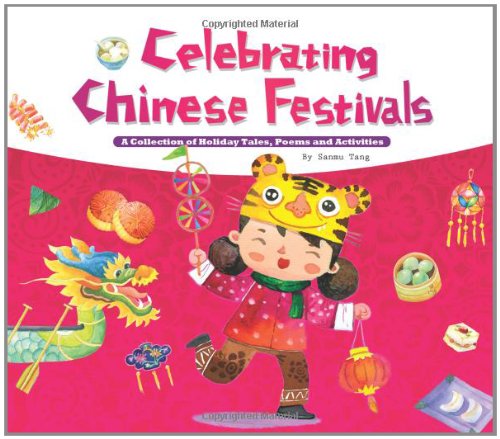 Celebrating Chinese Festivals by Sanmu Tang is a very comprehensive picture book covering many Chinese festivals.
What the Rat Told Me by Marle Sellier – An illustrated retelling of the Tale of the Zodiac
Chinese Festivals Series by Better Link Press
And of course a Valentines Day story:
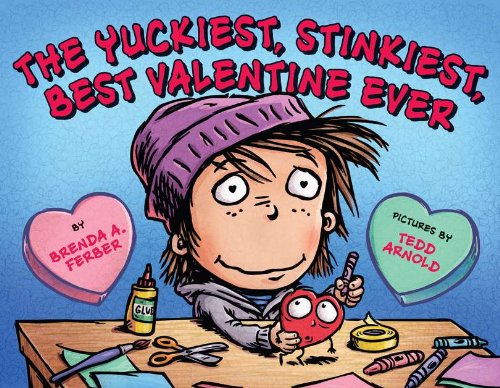 The Yuckiest, Stinkiest, Best Valentine Ever by Brenda A. Ferber and Tedd Arnold (author of Fly Guy). This book breaks out of the sappy Valentine’s mold by adding some interesting thoughts and lots of humour. Leon has a crush on a girl and is making a beautiful valentine for her but just as he’s finishing it comes to life and runs away. The valentine is convinced it would be a terrible idea for Leon to give his crush a valentine and seeks out the opinions of those he passes during his escape run. This is a Valentine’s book even boys appreciate.
Moving on from the holiday theme we jumped to the non-fiction picture book I am a Pill Bug by Yukhisha Tokuda translated to English from the original japanese. This book has colourful, accurate Japanese styled illustrations made from paper collage that gives the pictures and engaging texture. (I even felt the page at one point to make sure the paper wasn’t glued directly onto the page.) This book was a group member’s favourite because of it’s international science class or home science connection as pill bugs can be found almost everywhere in the world. Oh, and it’s written from the perspective of the bug. So much fun!
Jumping up a few grades, one of our members demonstrated paper bag booktalks. She used Word Nerd by Susin Nielsen for her example. For the book talk the presenter gathers items significant in the story and collects them in a paper bag to act as memory aids and visual aides for their presentation. Much more fun than your average book report!

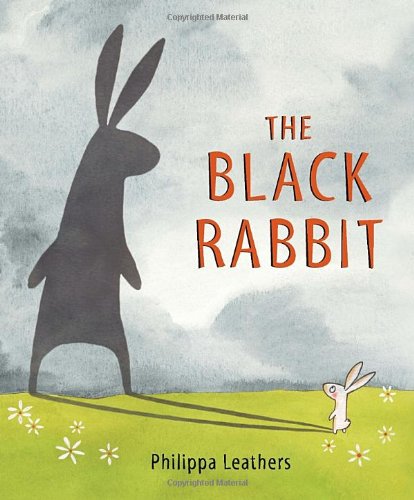
Simple and loveable is The Black Rabbit by Phillipa Leathers. Adorable illustrations and simple text tell the story of a small white rabbit who is scared of his own shadow and goes to great lengths to escape it.
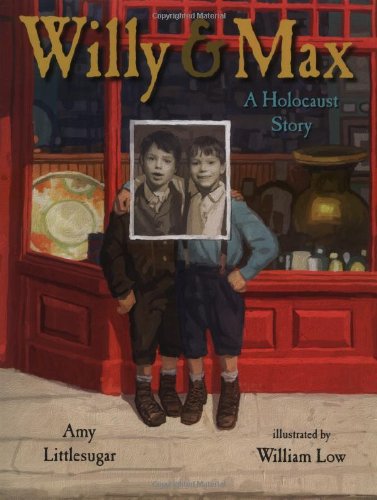
Willy & Max by Amy Littlesugar, illustrated by William Low is the semi-biographical story of two boys friendship and the theft of art during the Nazi occupation. Members of the group discussed how holocaust literature for elementary as body of literature has continued to grow over the decades and more stories are published every year. While the classics such as The Diary of Anne Frank are still popular with youth there are many more options out there for a wide range of ages and reading levels. Another book mentioned in the theme was Rescuing the Children, Stories of Kindertransport by Deborah Hodge. This book is a collection of nonfiction, biographical stories with an informational section in the back giving the survivors’ stories more context for the reader.
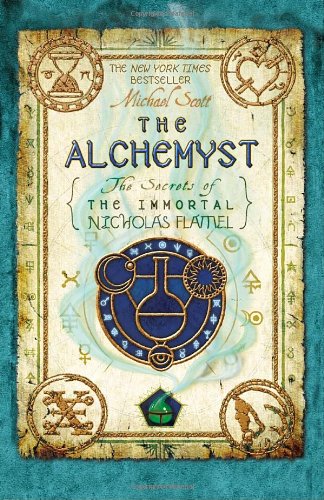
I discussed The Alchemist (The Immortal Nicholas Flamel Series) by Michael Scott. As an avid reader of fantasy and fiction involving mythologies I approached this series with hope and caution. About a quarter of the way through the first book I was pleasantly surprised, and my appreciation for the author and series grew from there. This fast paced, well written series follows the twins Sophie and Josh as they are caught up in a supernatural battle between ancient beings once worshiped as gods, demi-gods, and heros. They are pulled along by Nicholas Flamel, the infamous, immortal alchemist from fifteenth century France. Nicholas has spent his immortal life protecting the Book of Abraham the Mage from the “Dark Elders,” brewing the Elixer of life every month from an ever changing recipe from the book. But now, Dr. Dee, servant of the Dark Elders, has stolen the book, except for the last two (vital) pages that Josh managed to tear out during a struggle. Now Sophie and Josh are involved an an immortal battle as both sides believe them to be the twins of prophecy and the key to victory.
The series is fast paced (the first novel takes place in 72 hours) and well plotted. World mythologies are woven throughout as new characters are introduced to the mix. But the most outstanding feature is the authentic, convincing, and engaging characterization of Sophie and Josh. I follow the series for them, not for the next magical battle (although those are fun too).
Recommended read-alikes from other members: Shadow Magic Series by John Lenahan and any of Rick Riordan’s series.
There most likely will not be a meeting in March due to spring break and many people taking holidays but we will be back for sure in April. If you are in the Vancouver area and are interested in coming out leave a message for me on the blog and I will get in touch with you. We are always welcoming new members.


