May 2021

Week 9 (May 25th-28th)

I have completed my last week of full-time teaching! I still remember how overwhelmed and anxious the thought of a 10-week practicum sounded back in March, but it also feels like it went by within a blink of an eye. Lots of collaborative activities occurred this week. Continue reading to learn more!

Unit of Inquiry:

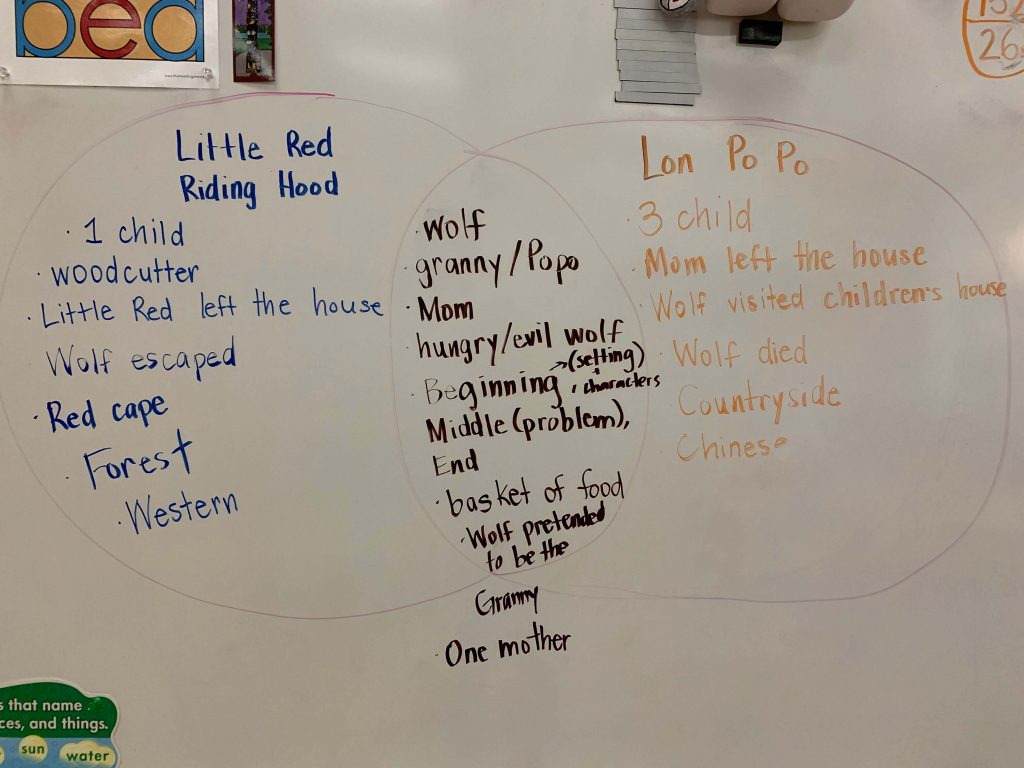
For our fairy tale of the week, we focused on Little Red Riding Hood. On Tuesday, I read the original fairy tale and Lon Po Po, a Chinese version of it. Students got to listen to the same fairy tale, but were written from two different cultures. After reading both stories, we engaged in a Venn Diagram on the white board. I organized a Think/Pair/Share as students paired up and got to share the similarities and differences between the two stories. This was a great example to demonstrate to students that traditional stories (fairy tales and legends) have been told for hundreds of years in every culture. This was the Big Idea for our current Unit of Inquiry. 

*Reading the words in the picture, I now see a spelling mistake. It should say 3 children, not 3 child. Teachers make mistakes, too!
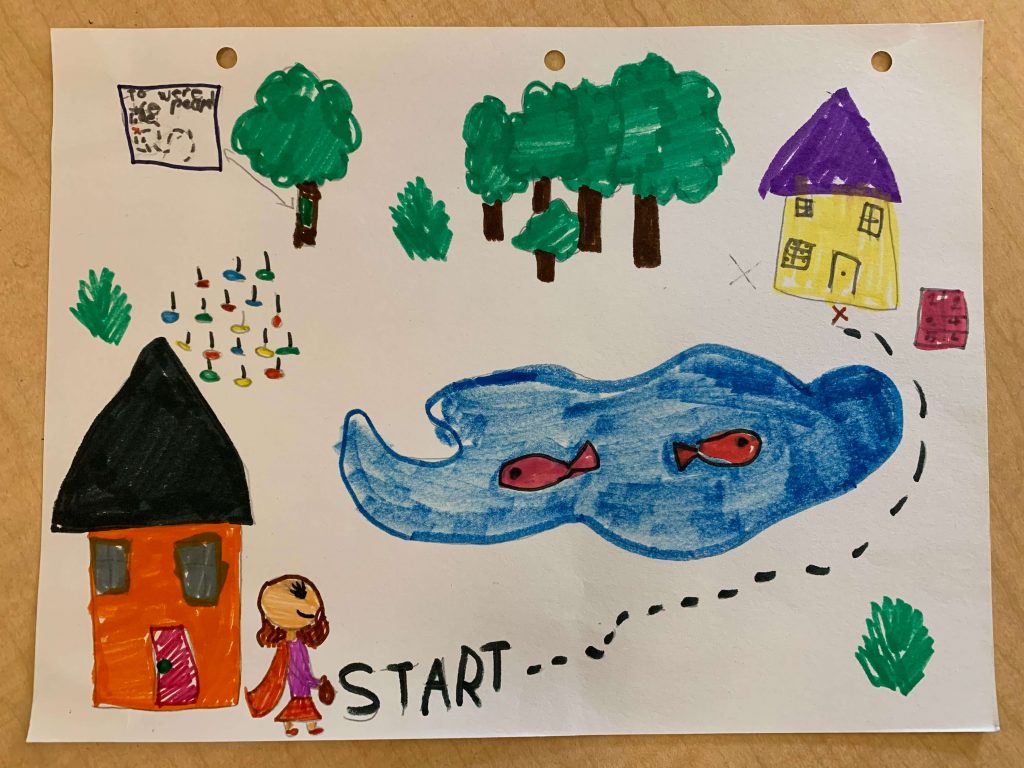
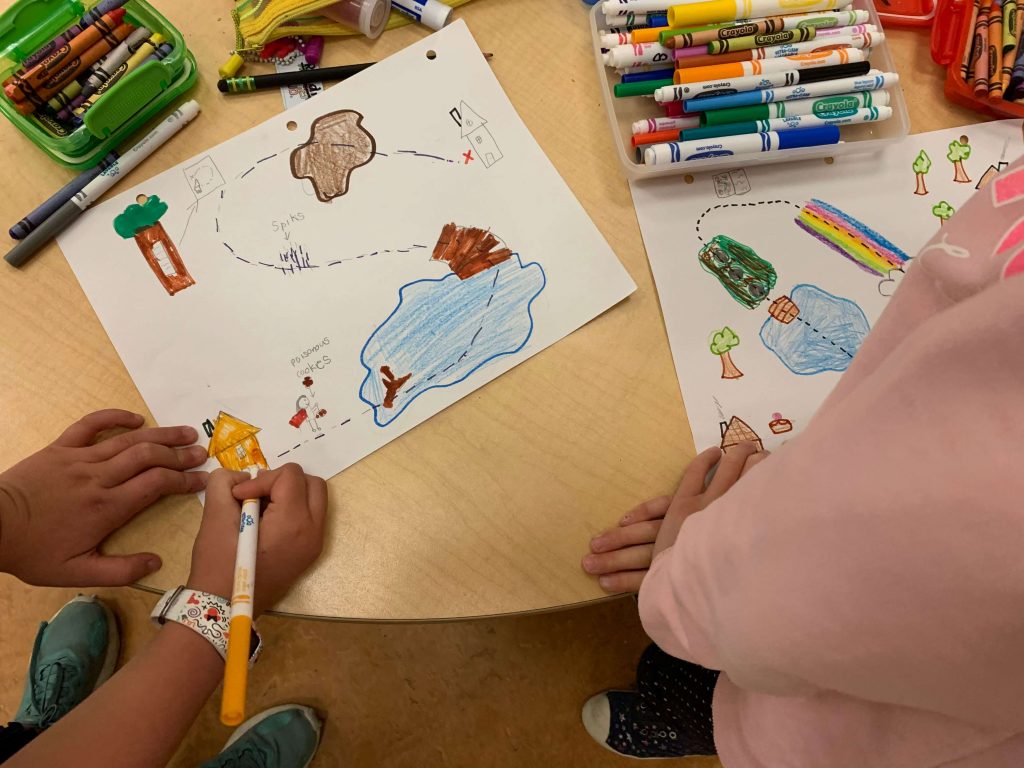
On Wednesday we played with our creativity and imagination. Students were required to create their own Map that started from Little Red Riding Hood’s home to Grandma’s home. However, they also had to develop at least 2 tools/gadgets that would help keep the wolf away from Little Red Riding Hood and Grandma’s home. I drew an example to show the students. On my map, I created 3 tools/gadgets:

  1. A poisonous cookie to give to the wolf that would make him fall asleep.
  2. If the wolf woke up and met Little Red Riding Hood later on down the trail, there would be a poster hammered to the trees in the forest. The poster would be an illustration of a false map to Grandma’s house! 
  3. A fingerprint scanner on Grandma’s door that only Little Red Riding Hood and Grandma know the code to.

The students were ready to create their own map after seeing my example. After they were given ~20 minutes to make their map and tools/gadgets, students got to pair up and present their work. Many of the students’ creativity exploded which is evident in their drawings. I definitely wouldn’t want to be the wolf in their story!
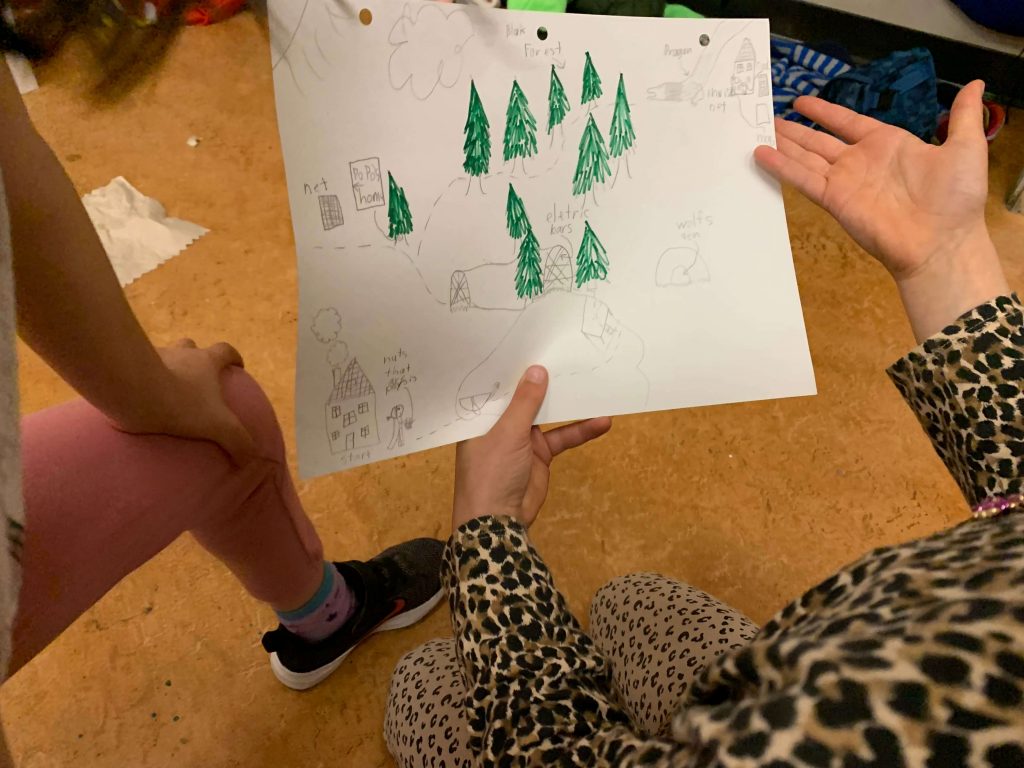
On Thursday the students engaged in a STEM activity connected to Little Red Riding Hood. Students had to work with their table group to create one object that would help get the basket of goods from Little Red Riding Hood’s home to Grandma and avoid the wolf. My example for the students was a flying robot. The robot stored the basket of goods in one of its compartment. There was also a button, if pressed, that releases a stinky odor and would make the wolf run the other way. I was very impressed at how engaged the students were. At the end, we sat in a community circle and each table group presented their creation.
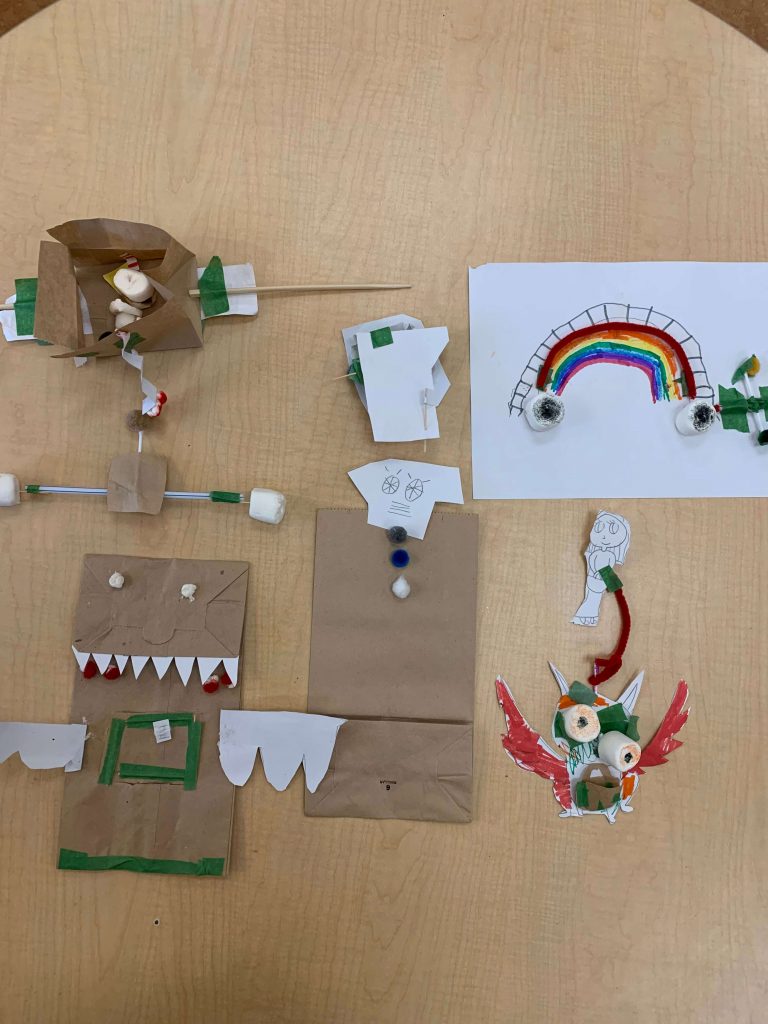
From the top left (clockwise): zip line, teleport and a back up robot (right below it), rainbow slide and catapult, flying dog with a leash (and Little Red Riding Hood), and a flying dragon with wings to fend off the wolf!

On Friday I shared two Coast Salish legends that were from Strong Nations, written by Celestine Aleck. They are called The Great Trade and The Great Blanket of Moss. After reading each story, students turned to a neighbour and discussed the beginning (characters and setting), middle (problem), and end (solution). We also shared the different messages and lessons that we interpreted from both stories. 

Art:

Students have been engaged with the Firefly Project, a program through the Presentation House Theatre that some primary classes got a grant from, for a few weeks now. Manami, Director of Applied Theatre Arts, works with each student one on one to create their own story. Each of their story will get printed and published and a copy of it will be taken home to them while a class book will be made for the teacher. Manami also organizes and leads two drama classes to each participating class. As well, Liz, an artist, leads two visual art classes. We had our visual art classes this week and the student used watercolour to illustrate their story cover on cardstock paper.
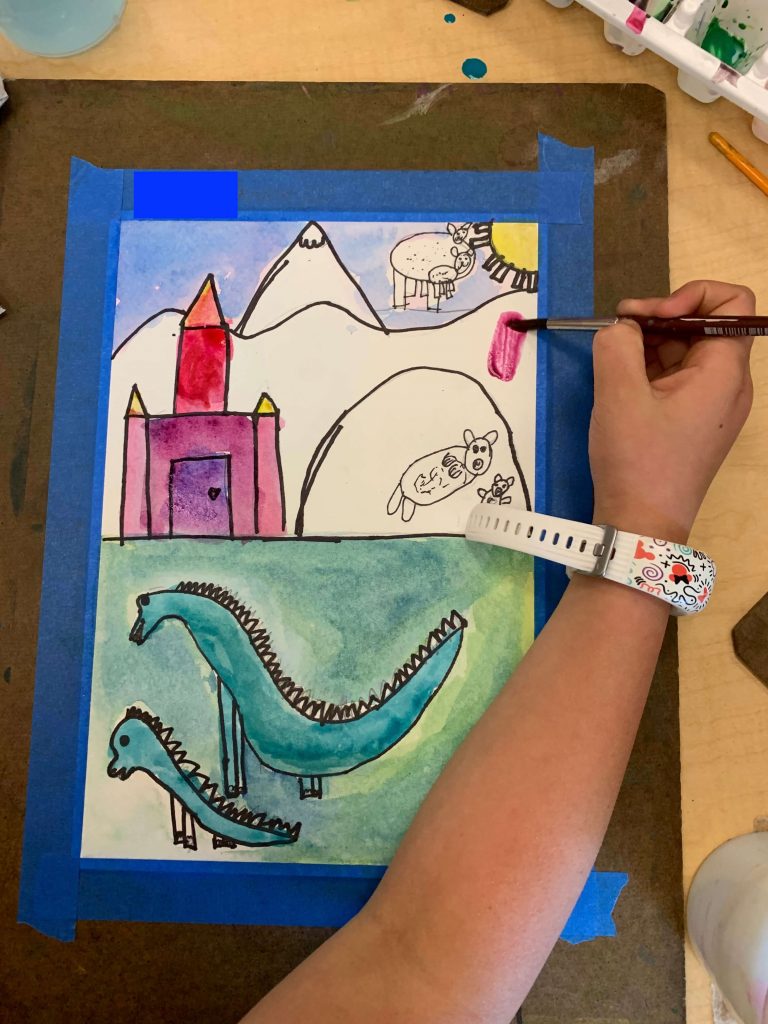
As my practicum in the classroom begins to wind down, I look forward to my community field experience opportunity within the next few weeks. I will be shadowing and helping the VP as a Learning Support Teacher (LST) to provide support to students. I will also be visiting other classrooms gathering insight in to how other teachers teach and create and maintain their classroom environment.

-Ms. Mah
 

Week 8 (May 17th-21st)

We had another great week that was filled with lots of engaging activities. Continue reading to learn more.

Art:

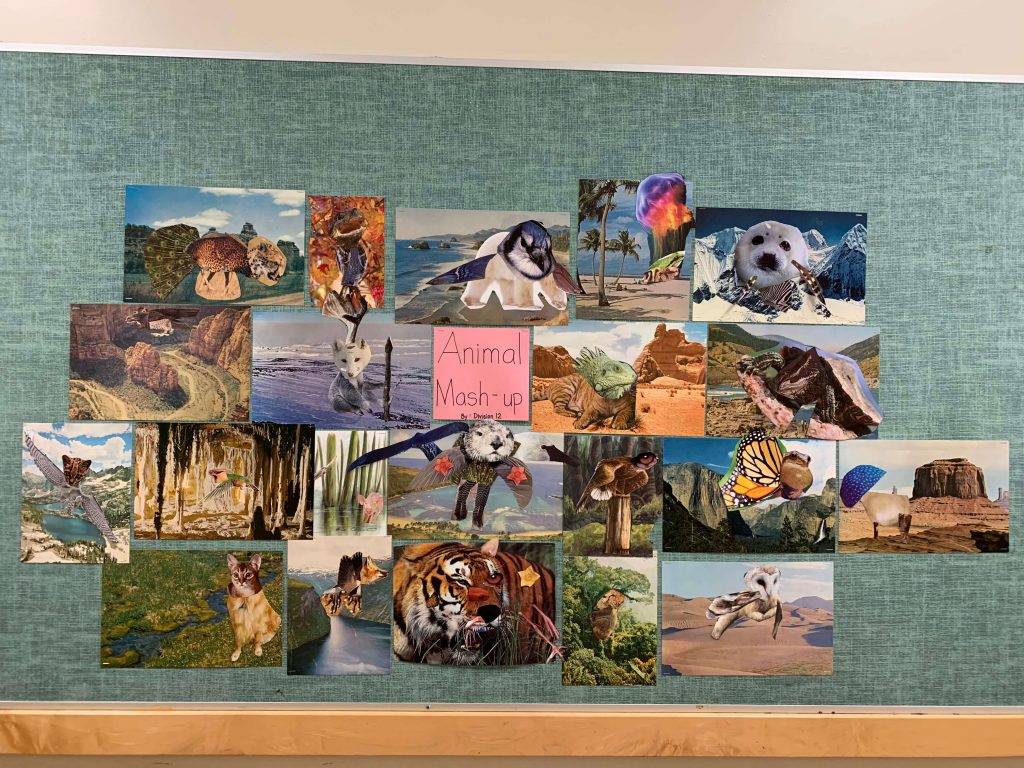
My SA suggested the idea of an animal mash-up art activity as she already had a lot of animal pictures and background cardstock that was available. As an introduction, I showed the students an example I made combining a geese’s head and wings with the body and legs of a cheetah. This art activity required students to justify why they created their animal mash-up as a way to focus on animals’ structural features. For example, I wanted to create an animal that could run away fast from predators, run fast to catch prey, and be able to fly and look from high above. Students were extremely engaged in this activity and their animal mash-ups were fantastic! Which ones make you smile?

Animal Mash-Up

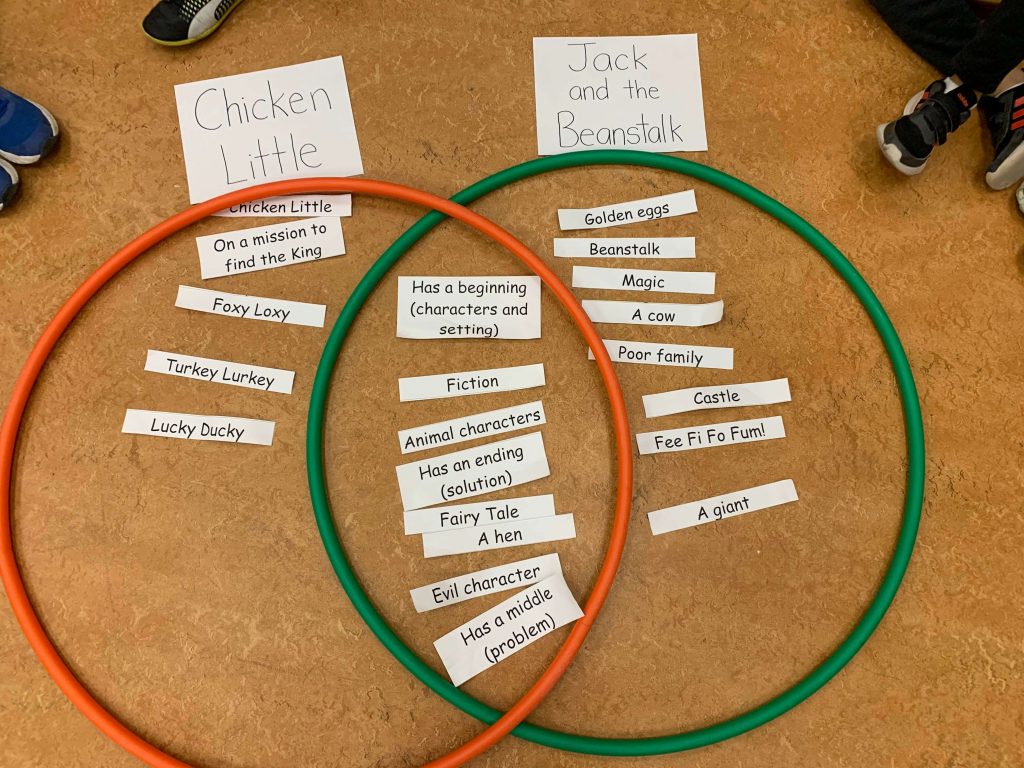
This week’s main fairy tale was Jack and the Beanstalk. After reading one version of the fairy tale, the students engaged in a hula hoop Venn Diagram. We compared the fairy tale Chicken Little to Jack and the Beanstalk. Sitting in a community circle each student got one piece of paper that stated something that belonged somewhere in the Venn Diagram. I liked this format more than using paper and pencil because students were invited to engage in discussions regarding where they thought their piece of paper should go, building off of others, and making connections.

Unit of Inquiry:

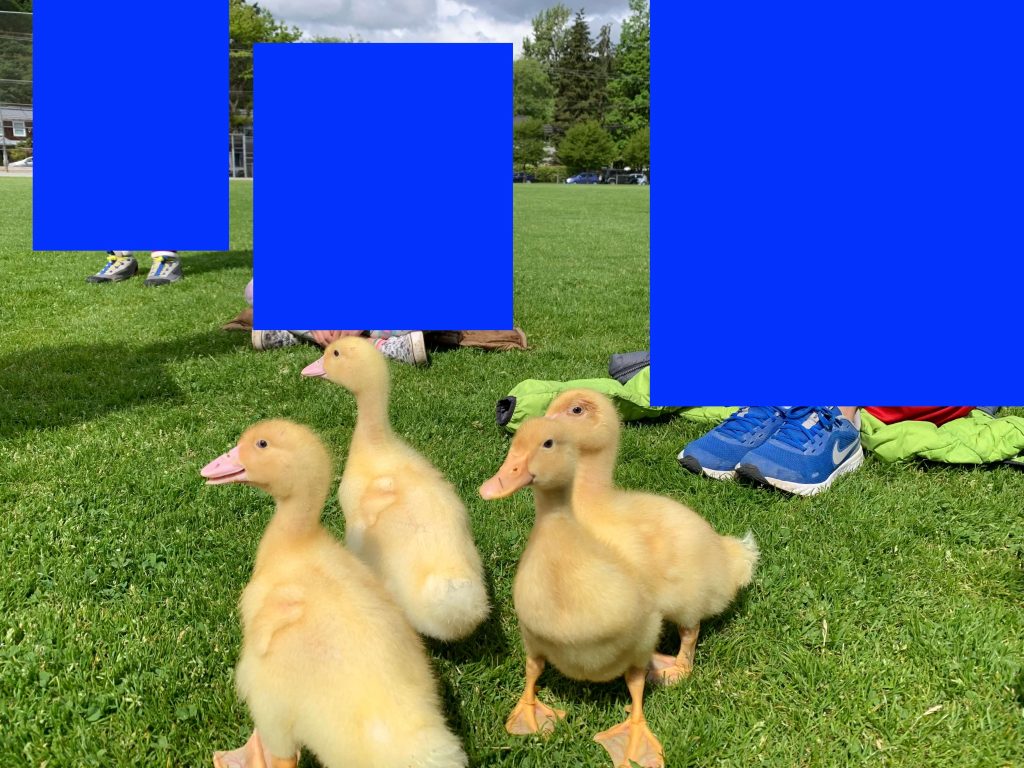
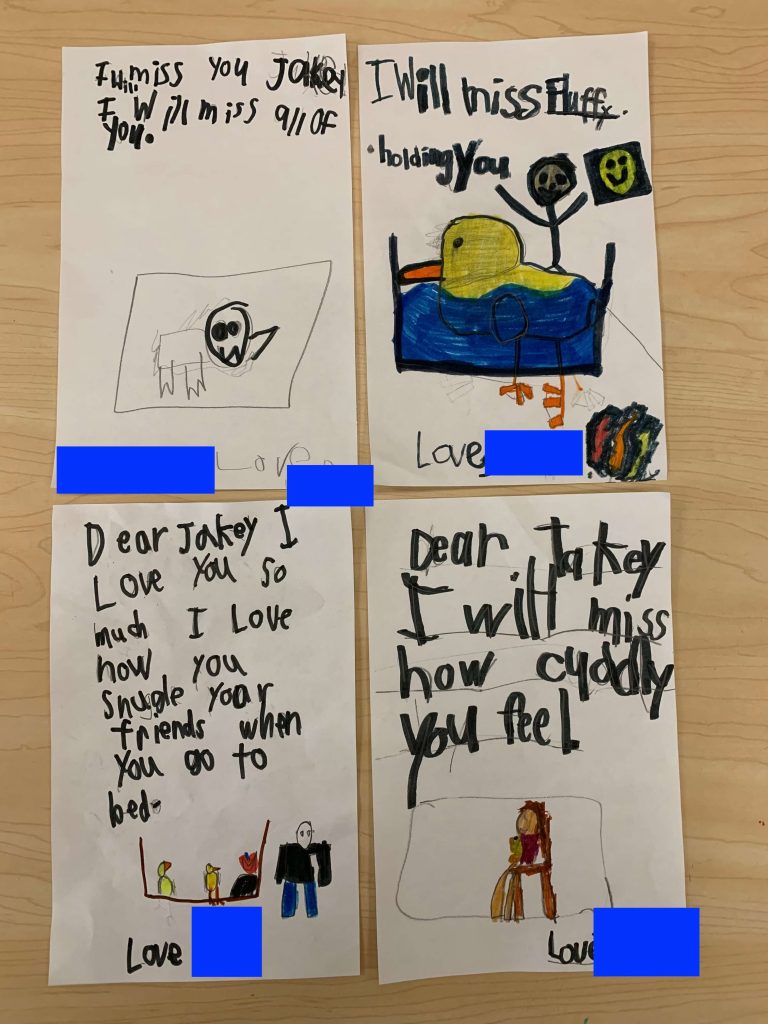
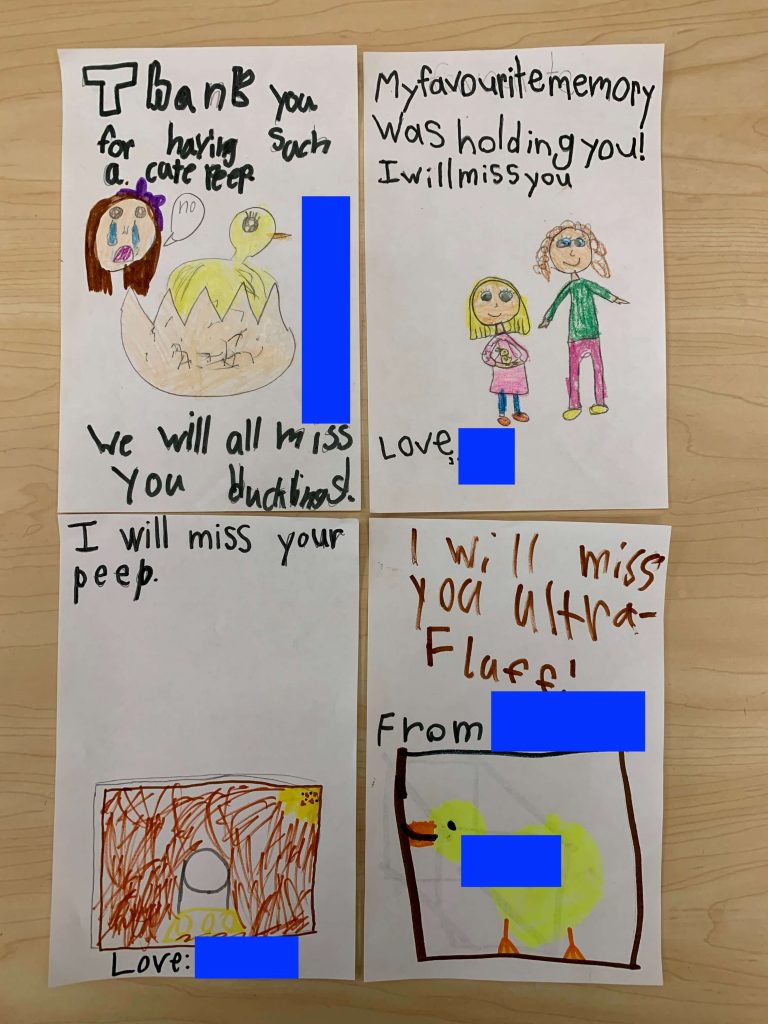
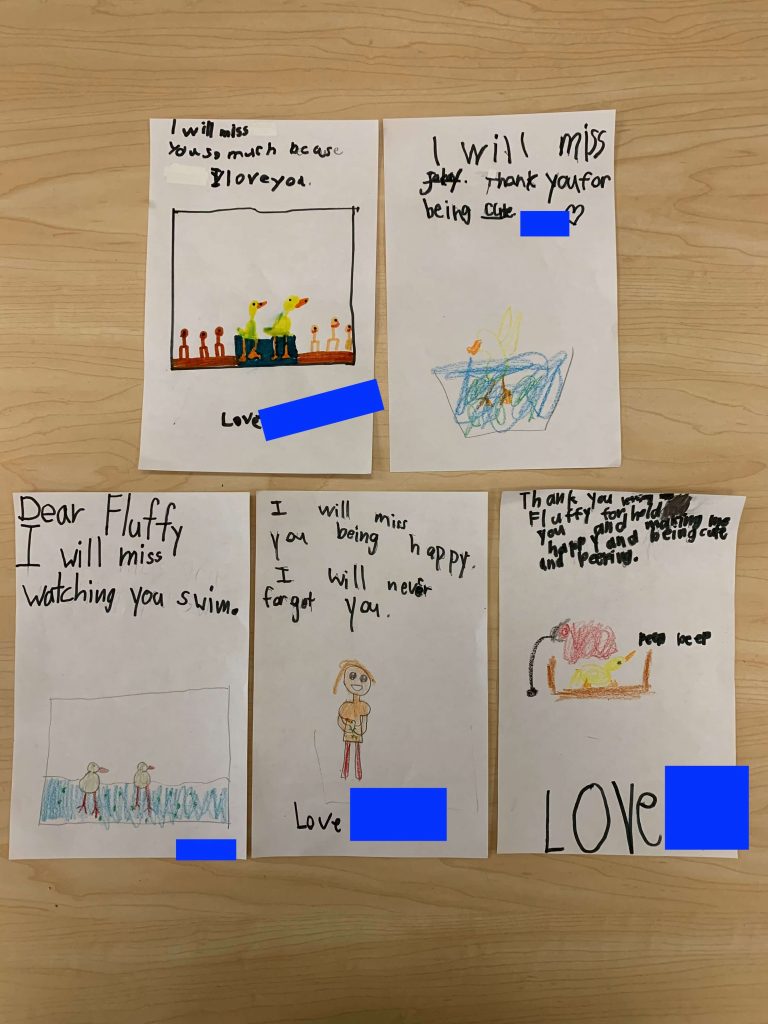
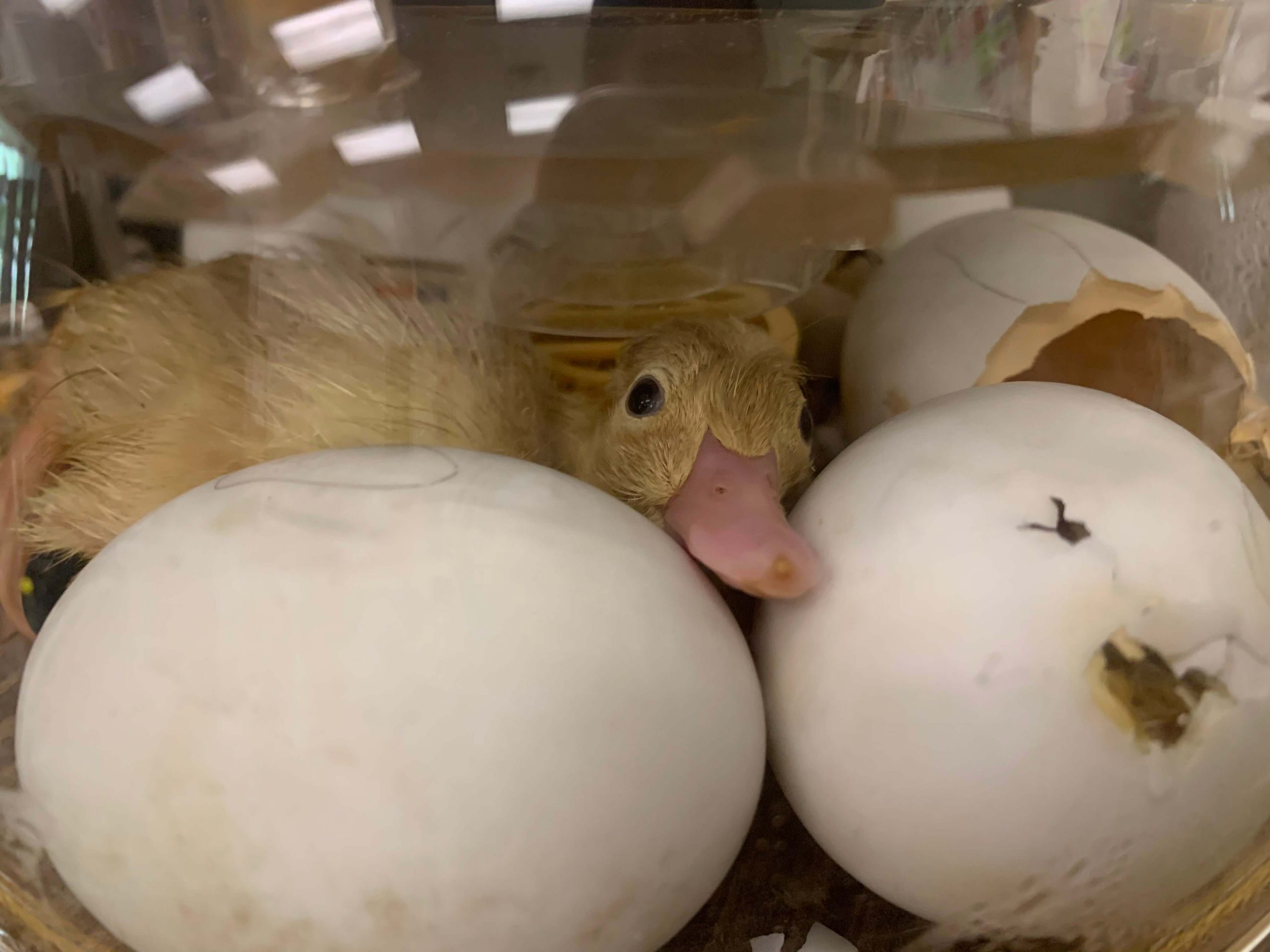
It was a bittersweet week as we had to say good-bye to the ducklings. From receiving the duck eggs on April 7th to watching them hatch out of our their eggshell and taking care of them, we were sad to see them go because they have become part of our class community. For our last activity with the ducklings, we sat in a community circle on the grass field and let the ducklings roam around and eat the grass. So many of the students thoroughly enjoyed it!

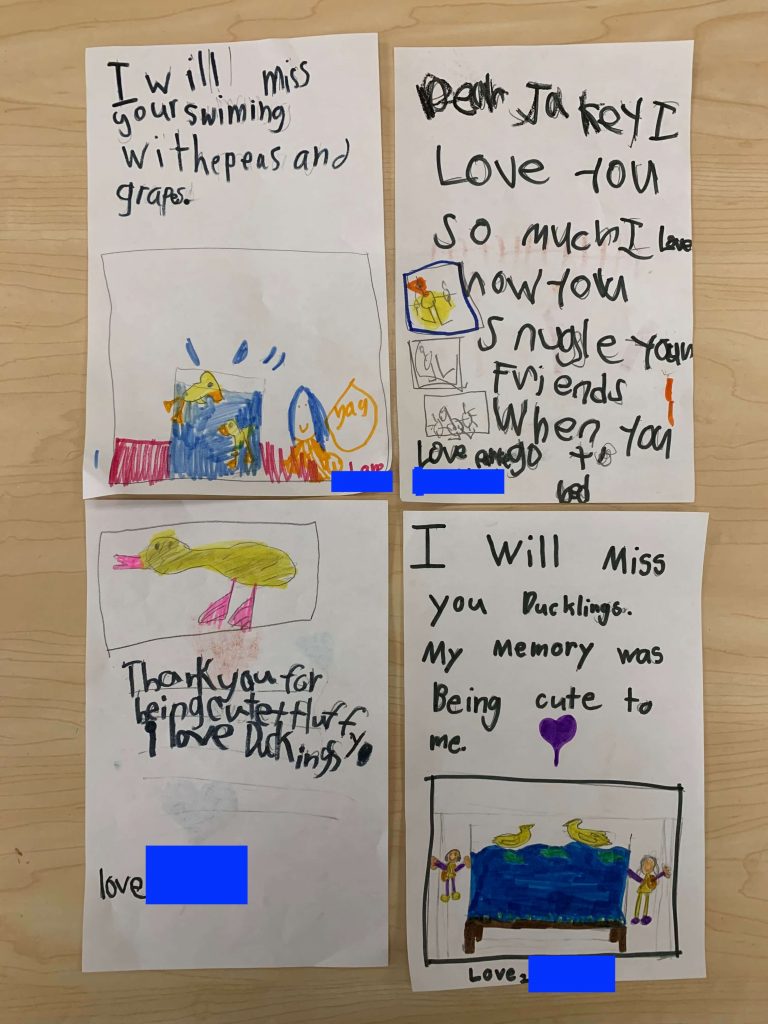
The students made cards to give to the people from the farm where the ducklings went back to. They were very thoughtful in their messages and grateful to have had such an amazing and humbling experience. 

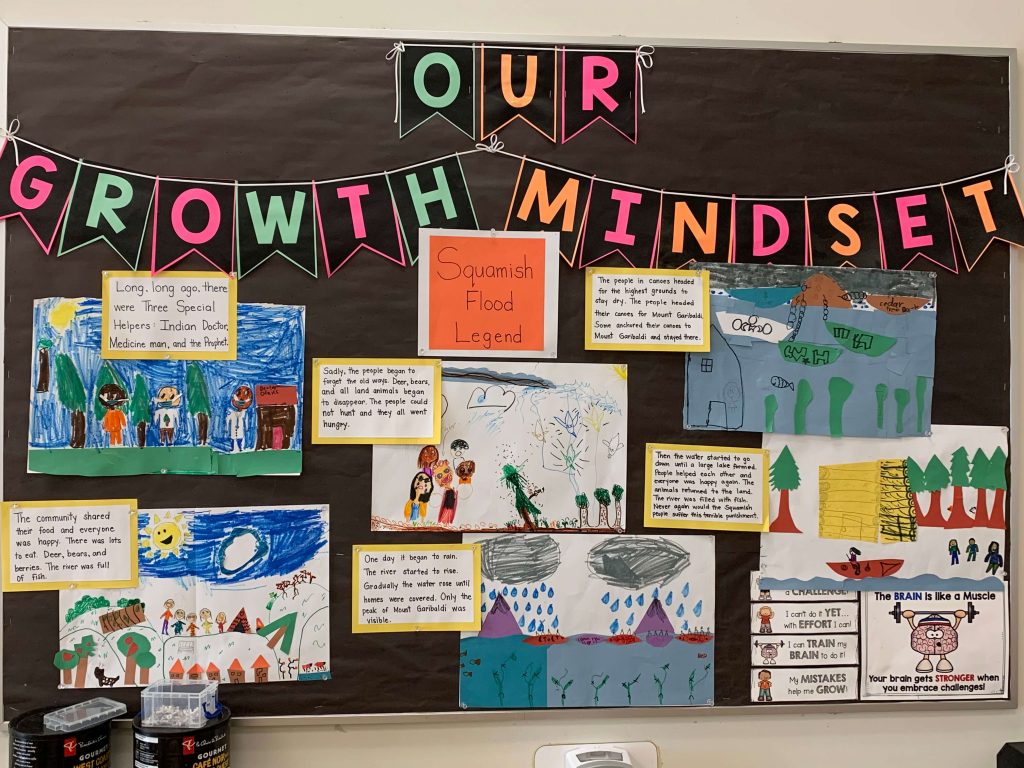
I introduced and retold the Squamish Flood Legend to the students while we sat in a community circle. As a follow-up activity, the students were instructed to work together in their table groups to create one part of the legend. We discussed the beginning, middle, and ending of the legend thus, reiterating elements of a story. Each table group was assigned one significant scene from the legend to illustrate. This was another successful collaborative activity!

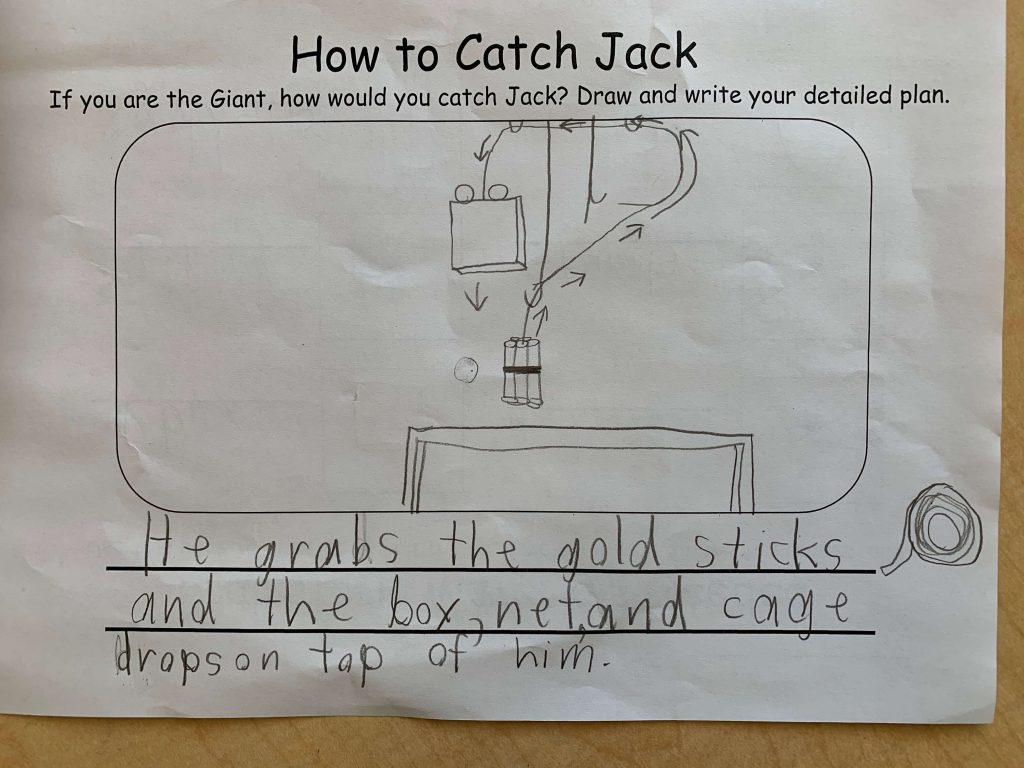
After reviewing Jack and the Beanstalk, by reading the students another version of the fairy tale, the students pretended they were the giant or ogre and had to devise a plan to catch Jack. As this was an individualized activity, students had to write how they were going to catch him and accompany it with a picture. This activity invited lots of creativity and the use of imagination. As a wrap up, we sat in a community circle and each student got the opportunity to present their work.

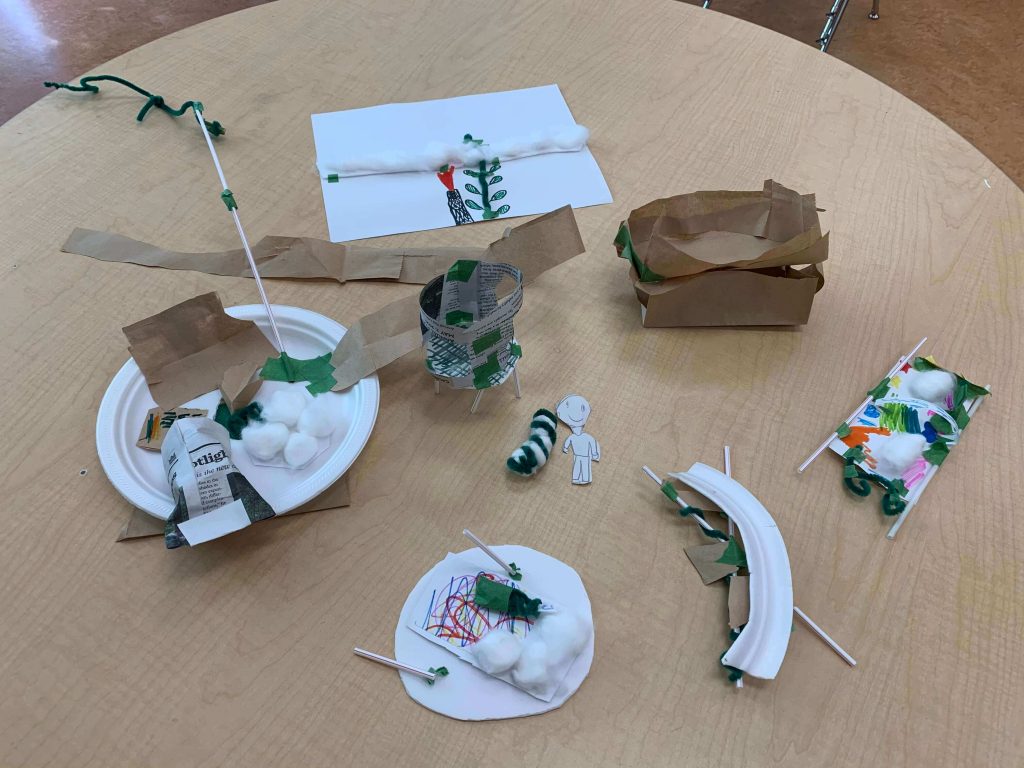
The students engaged in a STEM activity. We pretended that Jack, from Jack and the Beanstalk, was scared of heights and was too afraid to climb the beanstalk. So, in table groups, students had to work together to create one object that would help Jack get to the top of the beanstalk without climbing. I made an example to show the students which was a rocket backpack. I made the backpack out of construction paper and tape and used two pipecleaners as the straps. I coloured and taped on fire that came out of the backpack and added four cotton balls to the sides of the backpack. The cotton balls were for if the rocket failed, they would make contact with the ground and serve as a soft landing and bounce him all the way to the top. The students were very created! Check out their creations below.

Clockwise from the top: Dragon transformer, 2-part rocket ship, a sled with a seatbelt, UFO, teleport, and trampoline.

Math:

As we wrapped up the unit on subtraction, we moved on to reviewing various math units. This week we focused on Measurement. Connecting it to our Unit of Inquiry, we created a height beanstalk. The students cut out a leaf template and paired up to measure each other’s height using a tape measure. Each student used the unit, centimetre, to measure their their partner’s height. Our beanstalk was made out of construction paper and we rolled it up and taped it to a wall. I forgot to take a picture of it and have taken it down from the wall as we are moving on to a different math topic next week.

We also engaged in a paper airplane activity whereby the Grade 1s made theirs with construction paper while the Grade 2s made theirs with newspaper. The students made a prediction on which material would fly the farthest. We went on the grass field and the students helped me make a baseline and benchmarks using cones. I used a tape measure to describe the importance of a baseline and on each side made benchmarks of 1 m starting from 1-10. Each student had four attempts and after each of them, they had to think of a way to change their airplane to improve their distance.

Next week will be my final week of full-time teaching before I start decreasing my teaching time and responsibilities. I’ve said it before but I’ll say it again, it’s crazy how fast time flies! 

-Ms. Mah

Week 7 (May 11th-14th)

This week we started our new Unit of Inquiry which is Storytelling! Although I am nearing the end of my full-time teaching, I am enjoying planning for this new unit. I will try to keep this week’s blog post short and sweet.

Unit of Inquiry:

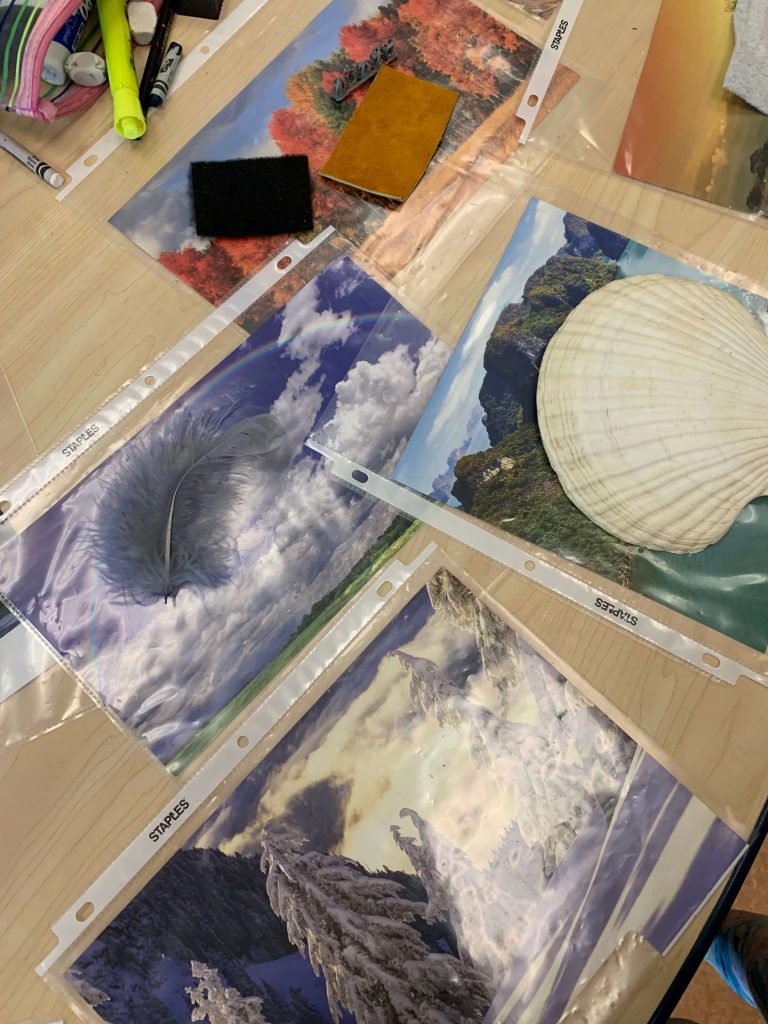
As a provocation to our new Unit of Inquiry, Storytelling, I provided each table group with various pictures associated with fairy tales and legends. This included wizards, magic wands, step mother and step sisters, king, queen, princess, prince, witches, dungeons, castles, glass slipper, fairy godmother, raven, sun, and many more. Students were asked to work together to make inferences on what their next U of I would be. We then sat down and discussed that our new U of I is Storytelling. Students will continue to engage in two types of storytelling: fairy tales and legends. 

Each week, we will focus on one main fairy tale. This week we focused on Chicken Little! 

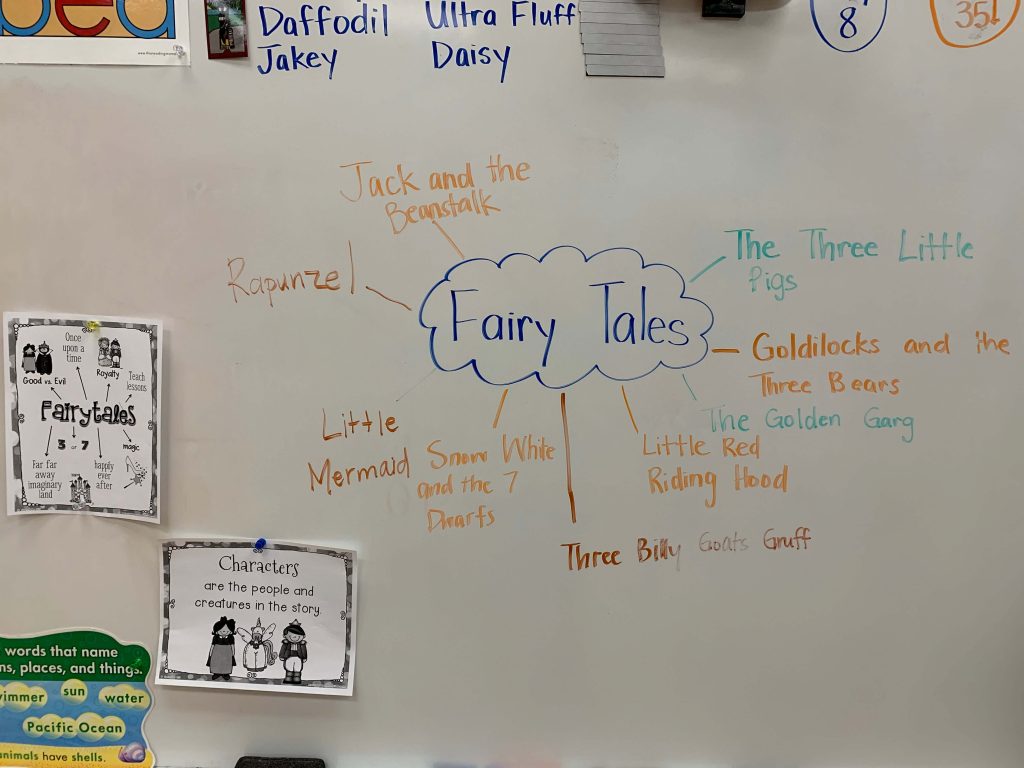
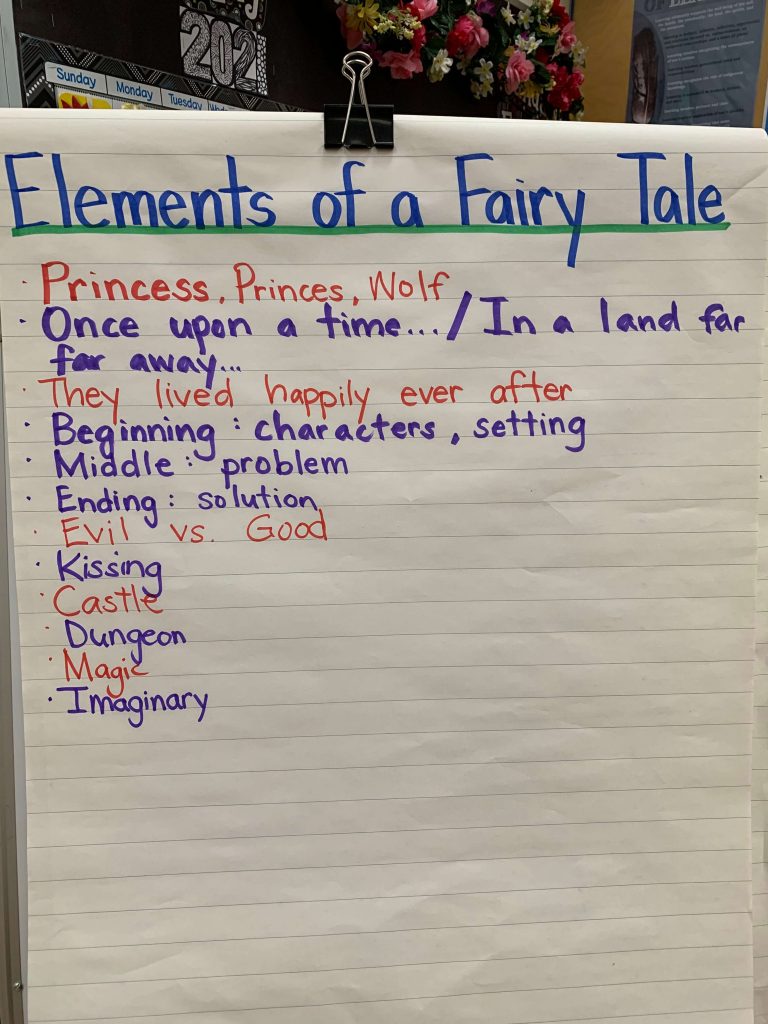
As a formative assessment, students brainstormed fairy tales they knew and what fairy tales have in common.

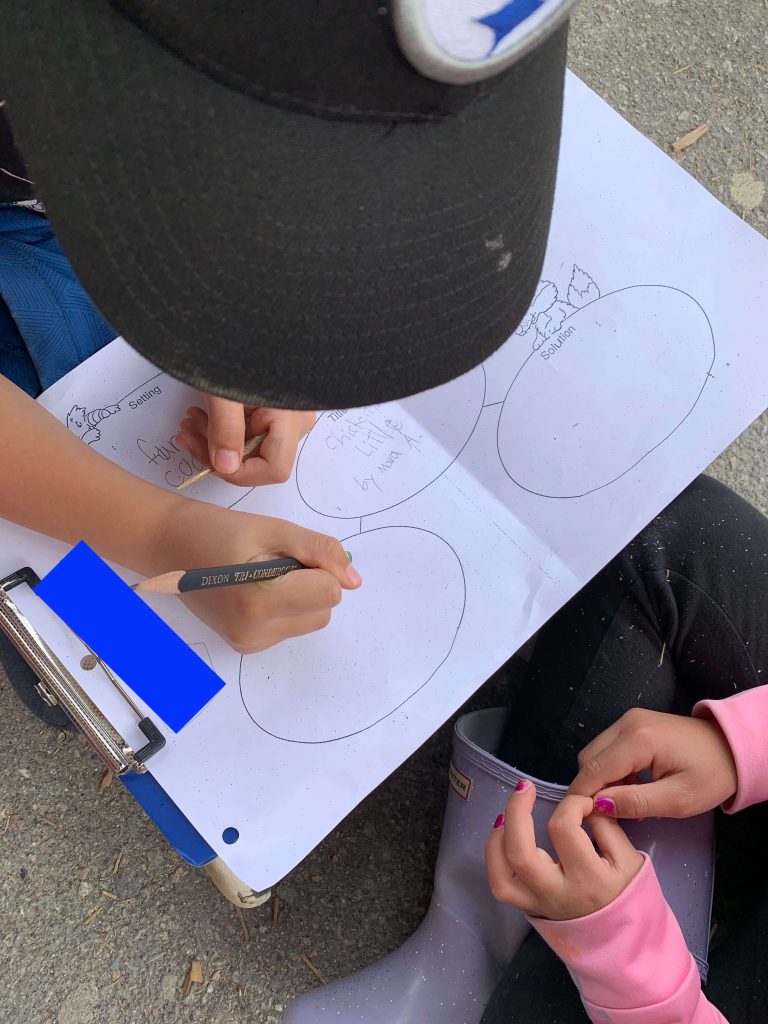
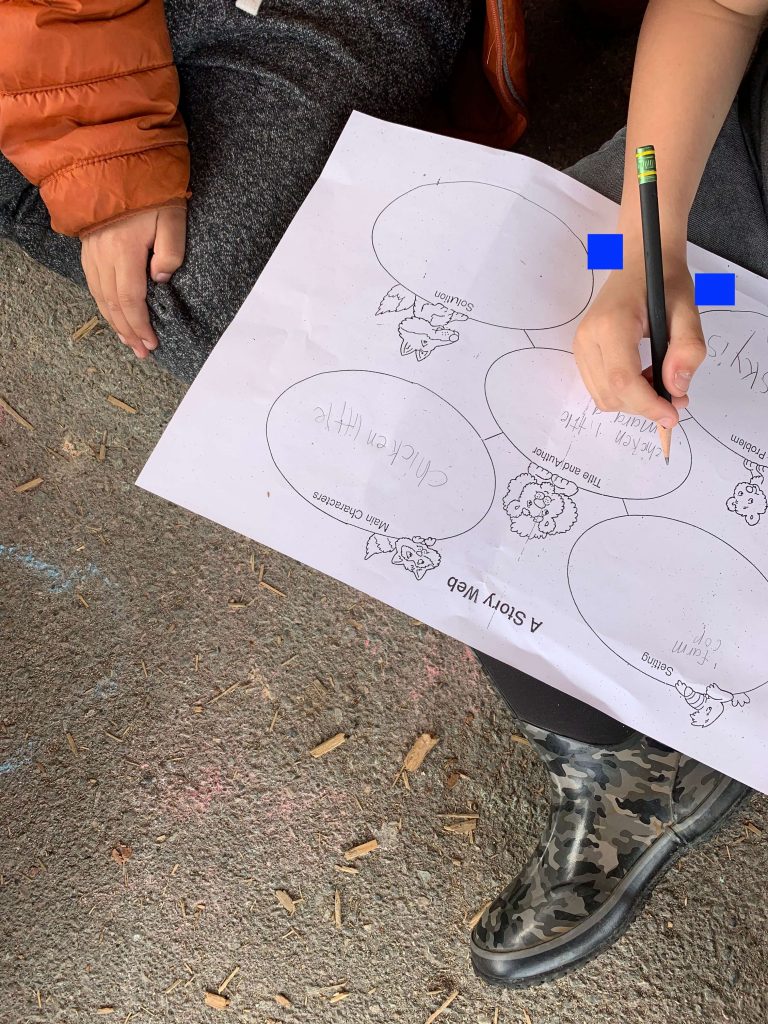
On another day, I read the original story of Chicken Little to the students. As a follow up activity, they worked in groups to identify the elements of the story: Beginning (characters and setting), Middle (problem), and Ending (solution). 

It was a very nice week, in terms of weather, as I took the students outside on our school ground to introduce legends. We discussed the importance of legends to Indigenous peoples and that traditionally they are retold and shared orally. I read Strong Stories Coast Salish: The Sun and the Moon by Celestine Aleck and illustrated by Cole Good. The students discussed how legends can be a way of explaining how something came to be or can provide a lesson. I also informed the students that Indigenous peoples legends are sacred to their culture and those who hold the power and responsibility of sharing a legend, most likely an elder, carries a lot of weight to not only make sure it is retold accurately but that it isn’t told by any who are not allowed. My SA informed me that any legends that are authentically sourced by Indigenous peoples that are published or shared orally can be retold orally to others.

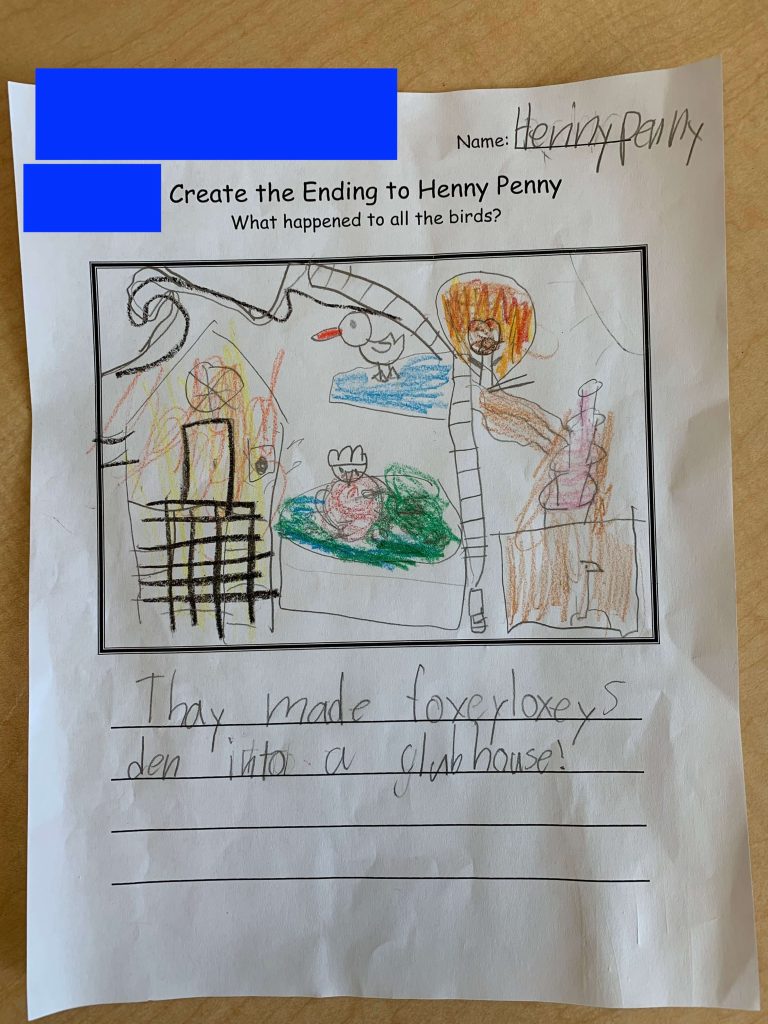
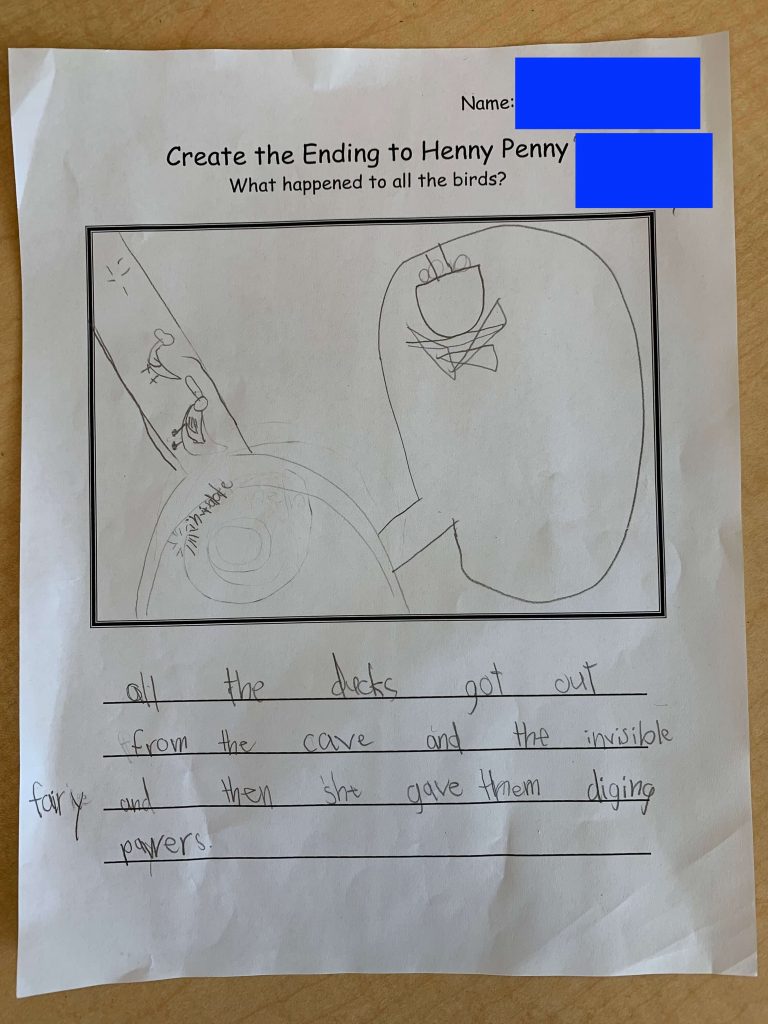
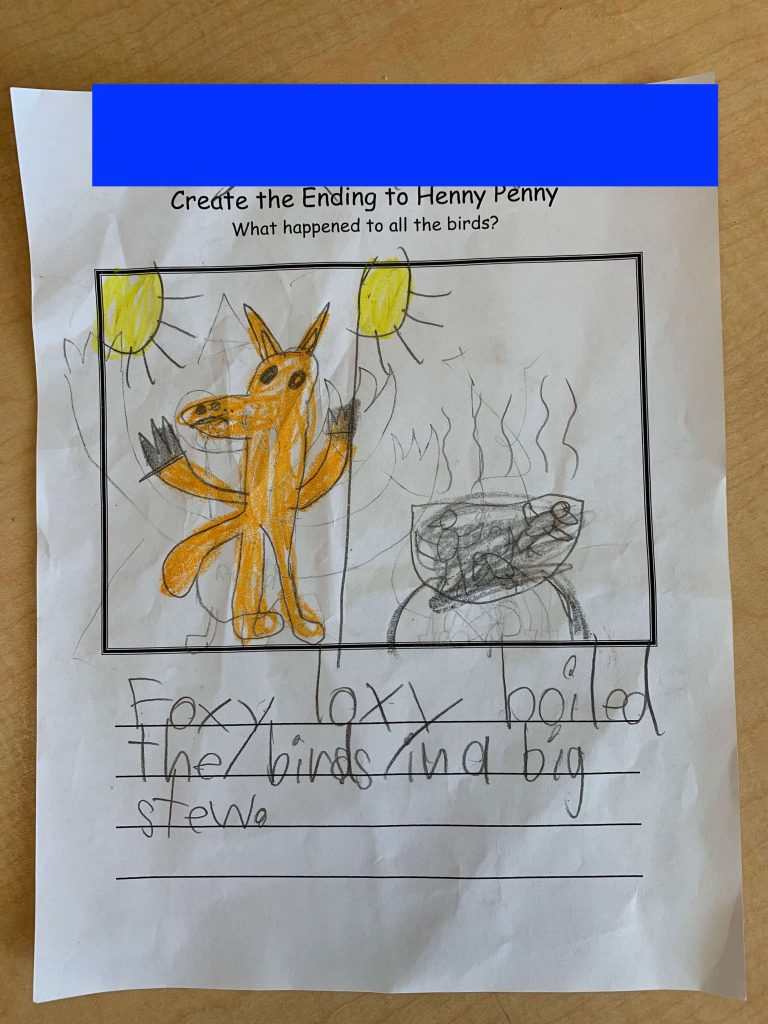
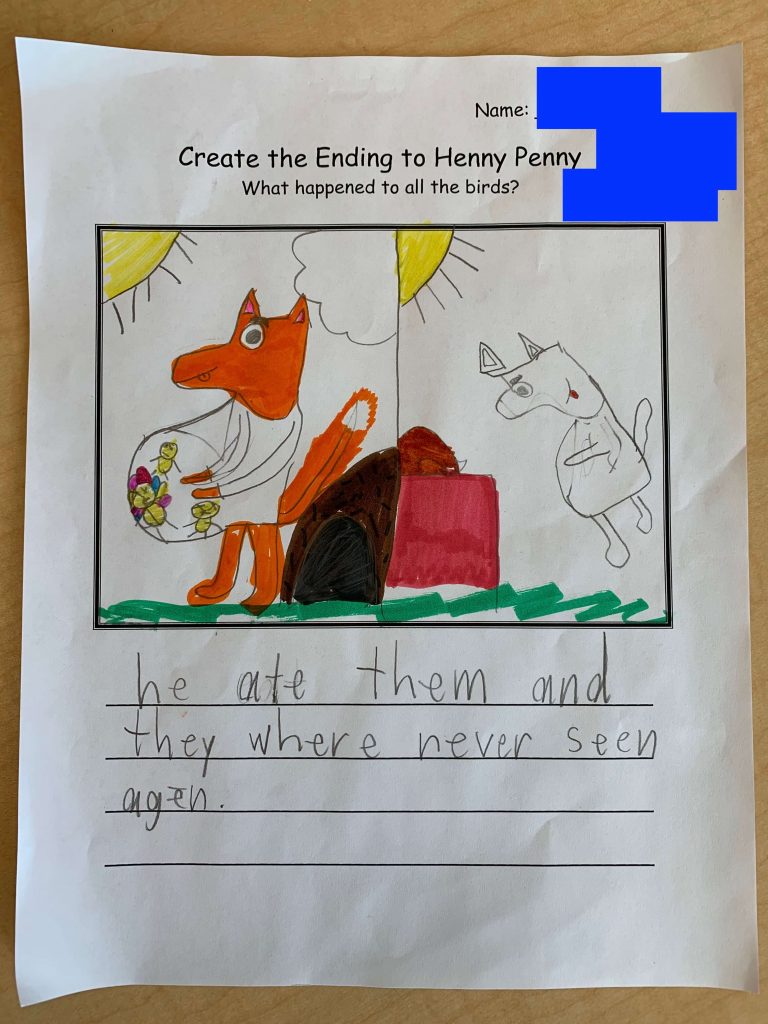
My favourite lesson from last week was the students creating their own ending to Henny Penny, an alternative version to Chicken Little. I read Henny Penny to the students and then they were instructed to work in groups to draw and write what happened to Henny Penny and her friends after getting trapped in Foxy Loxy’s home. Students had the choice of either acting it out or retelling their ending in a community circle. Below are some of their creativity and imagination!

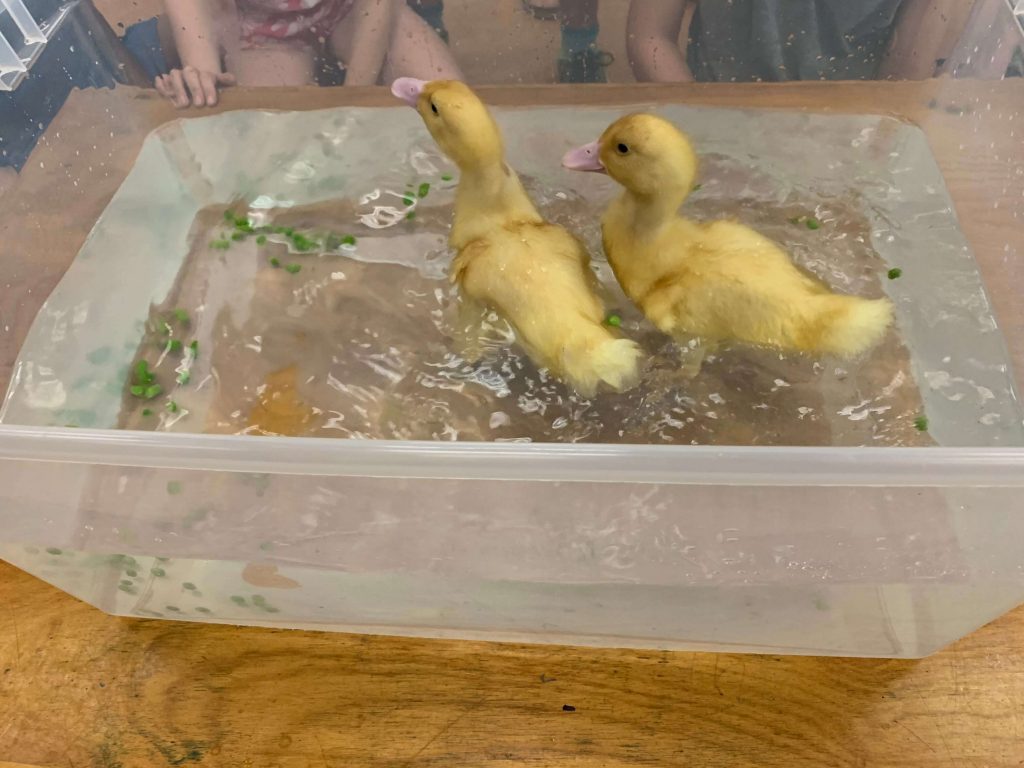
This past week the students were Duck Ambassadors which meant they presented to various classes in our school about duck and egg hatching facts. The students adore the ducklings and have enjoyed their time with them in our classroom. We will be saying good-bye to them this upcoming week. I’m planning on having the students create their own good-bye cards. A fun activity we engaged in was putting two ducklings in a tub of warm water at once and watching them dive to eat peas and mixed greens. So cute!

Thanks for reading my blog post!

-Ms. Mah

Week 6 (May 3rd-7th)

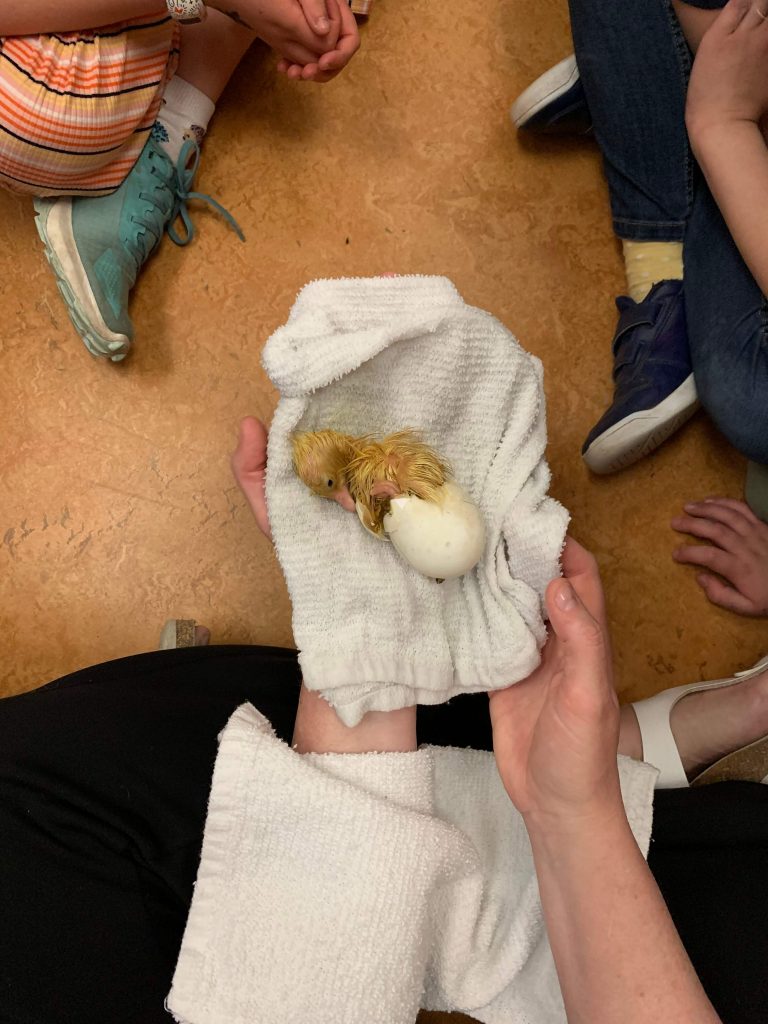
What an exciting Week 6! All six of our ducklings hatched and we even got to see one hatch with the students! They hatched on May 4th and 5th. I’m so glad that I decided and was able to take care of living things during my practicum because it provides a richer experience, both for the students and myself. After all of the ducklings hatched, the class got to share their name suggestions and we did several rounds of voting. In the end, we decided fairly upon Fluffy, Daffodil, Jakey, Fifi, Ultra Fluff, and Daisy.

Students sitting in a community circle watching a duckling hatch.

Students sitting in a community circle while the ducklings explored a bit outside of their brooder. We were firm that no students could touch the ducklings.

Art:

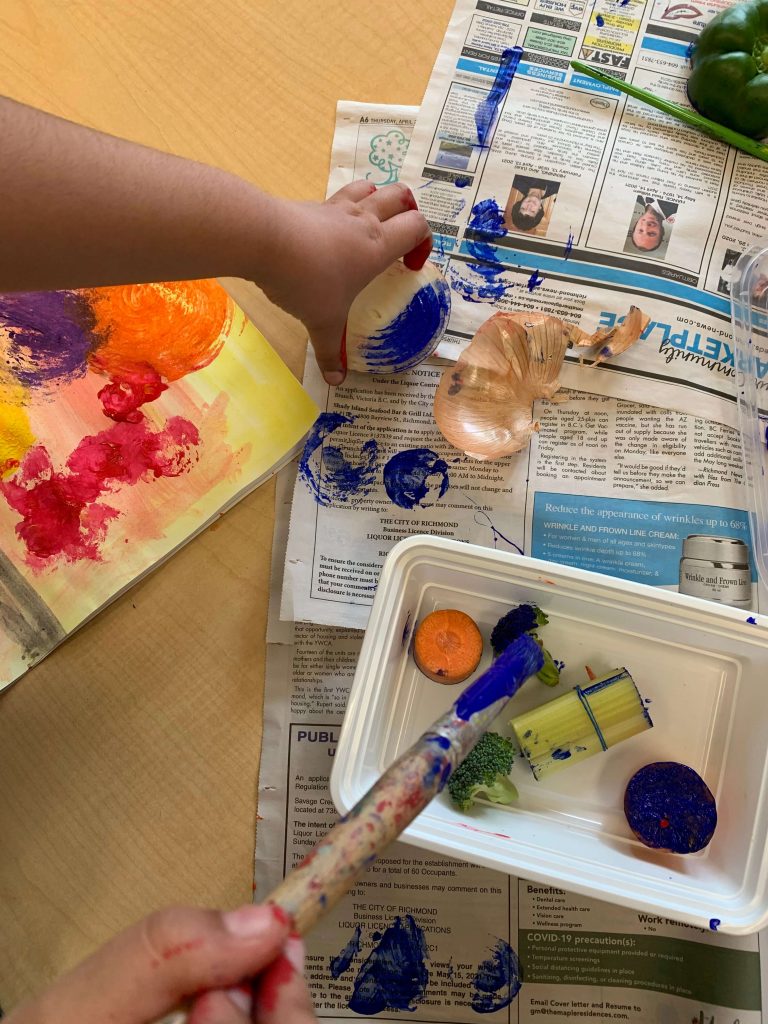
We explored vegetable printing to create our Mother’s Day cards! Students used a variety of vegetables and fruits such as bok choy, carrots, onions, peppers, broccoli, and celery.

Students had the choice of writing either a Haiku or Acrostic poem for their Mom. They glued it inside their Mother’s Day card.

Exploring with vegetable printing.

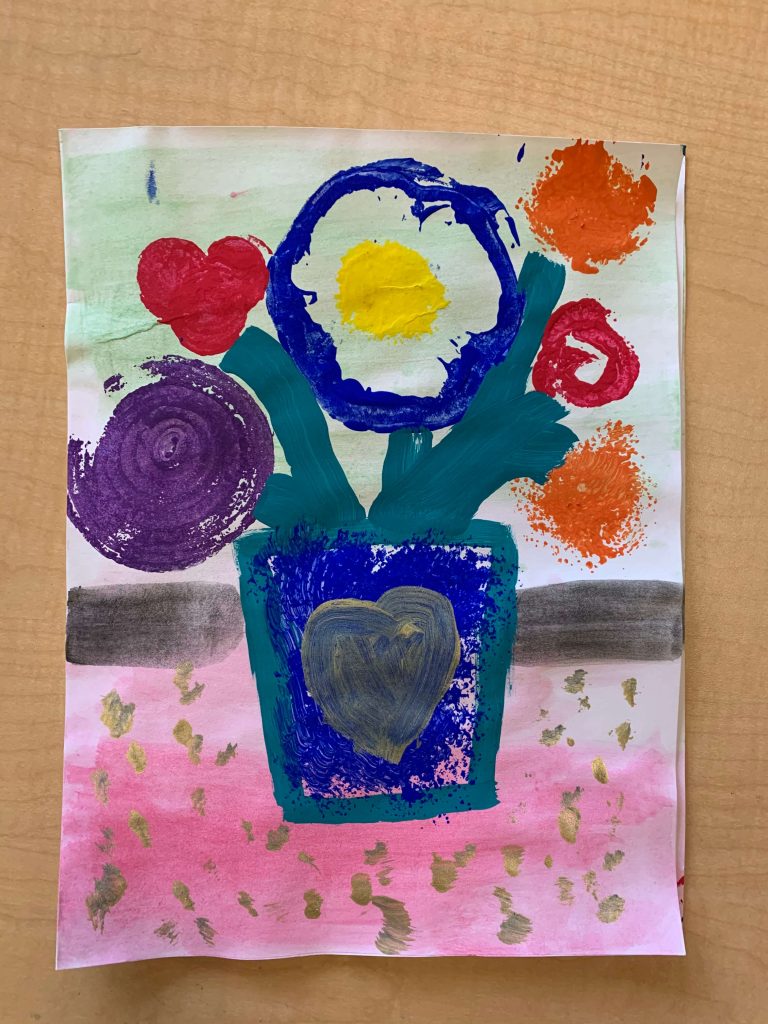
Mother’s Day Card with vegetable printing.

Unit of Inquiry:

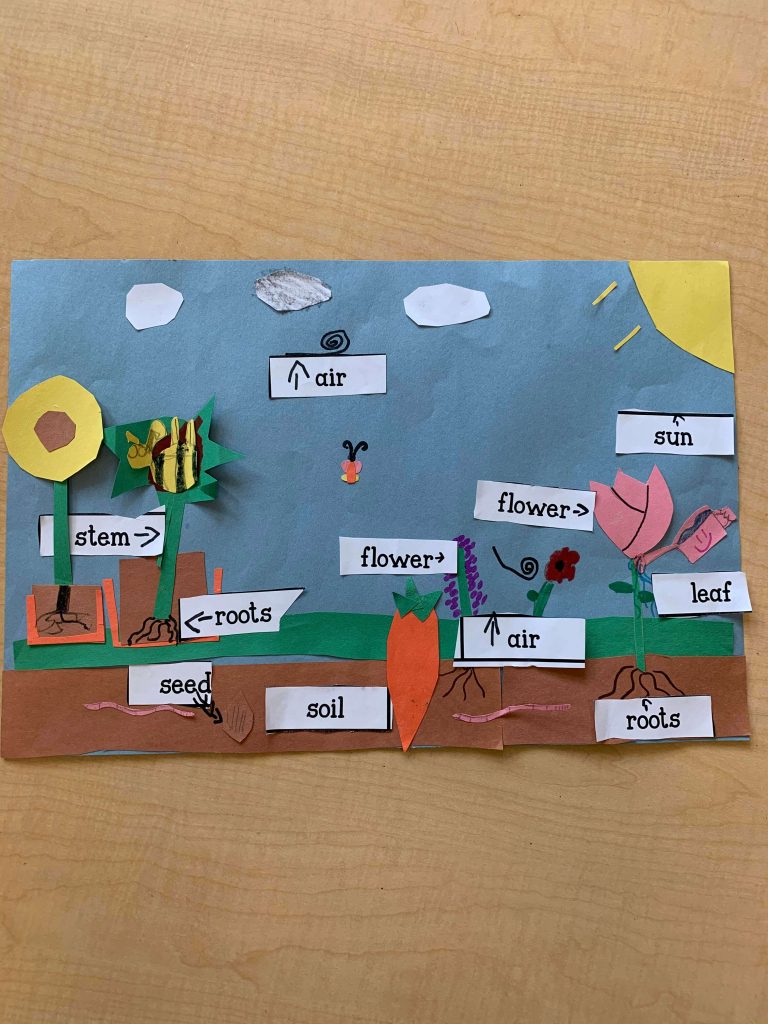
As a summative assessment, students worked together in table groups to design their own garden. Each were required to design their own plant while also ensuring that each group included at least one root vegetable (something we’ve discussed previously). Students were provided labels they had to attach to their plant and garden. Once completed, students sat in a community circle and each group got to present their garden. It was a great collaborative activity!

A table group’s garden design.

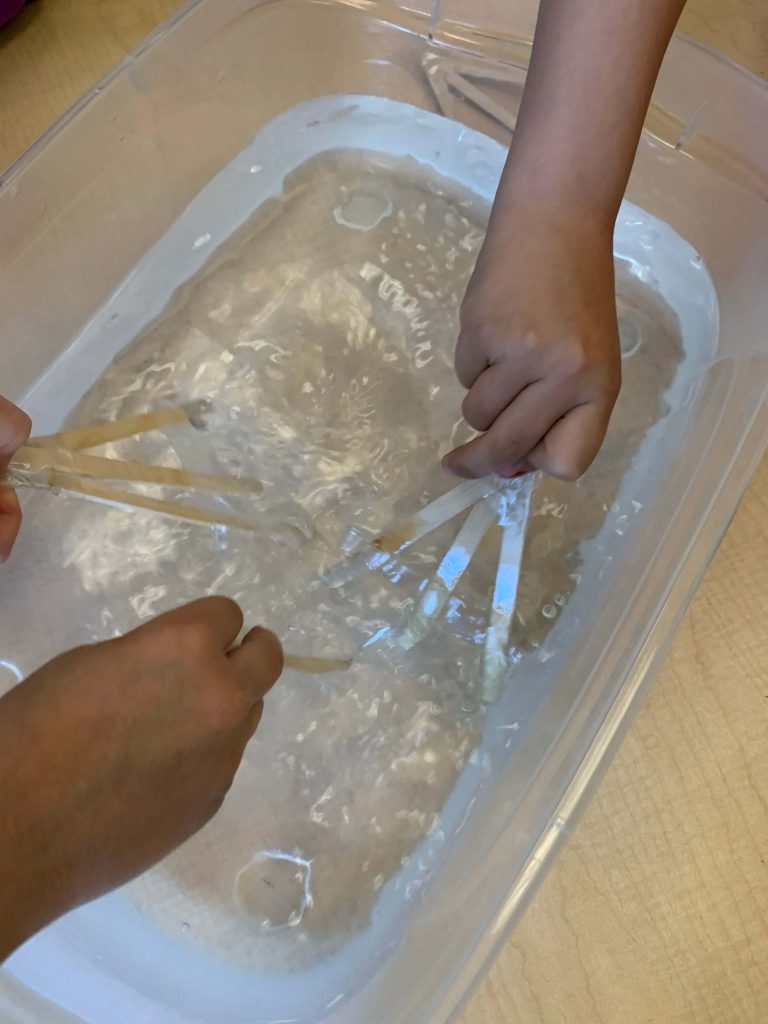
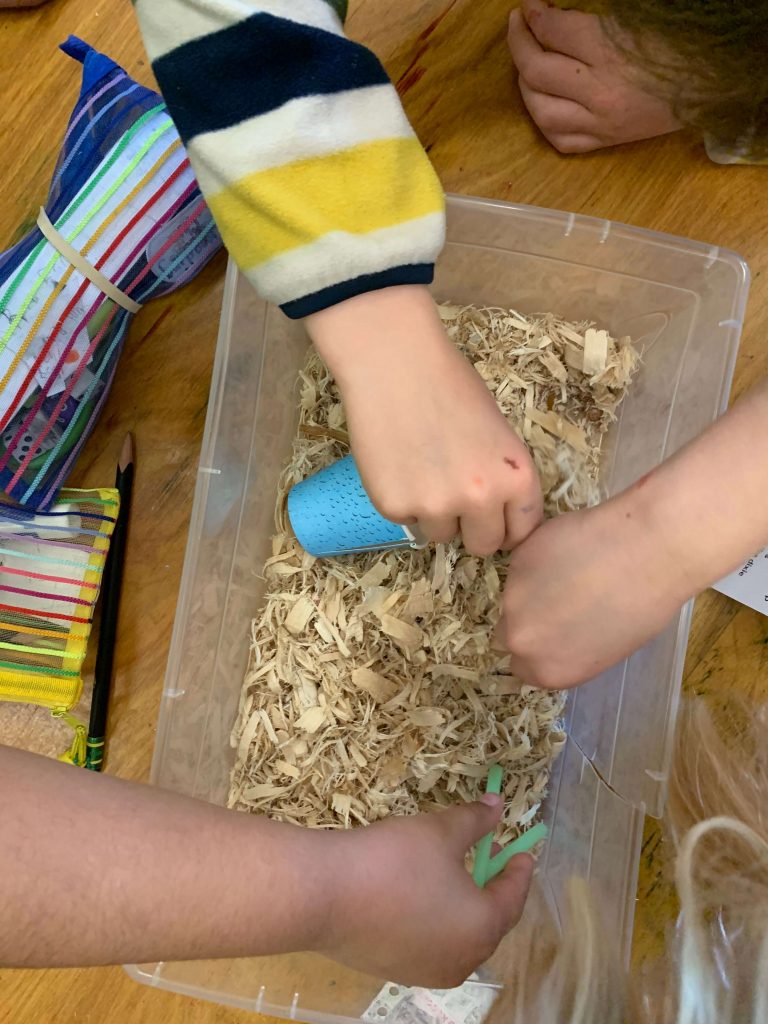
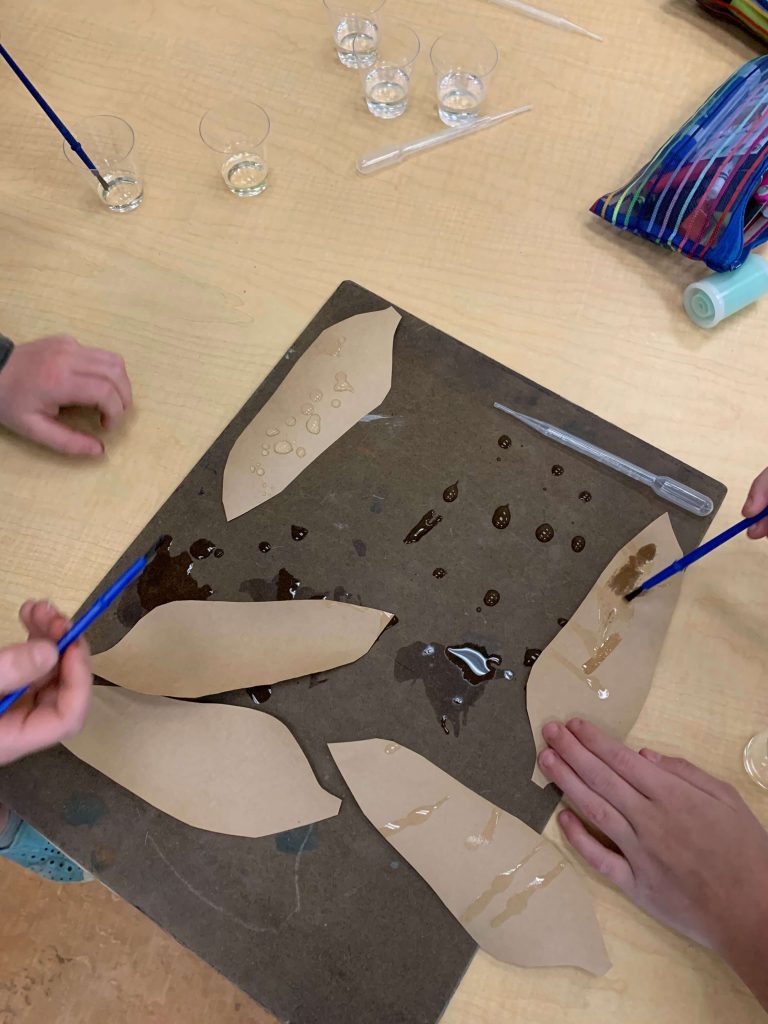
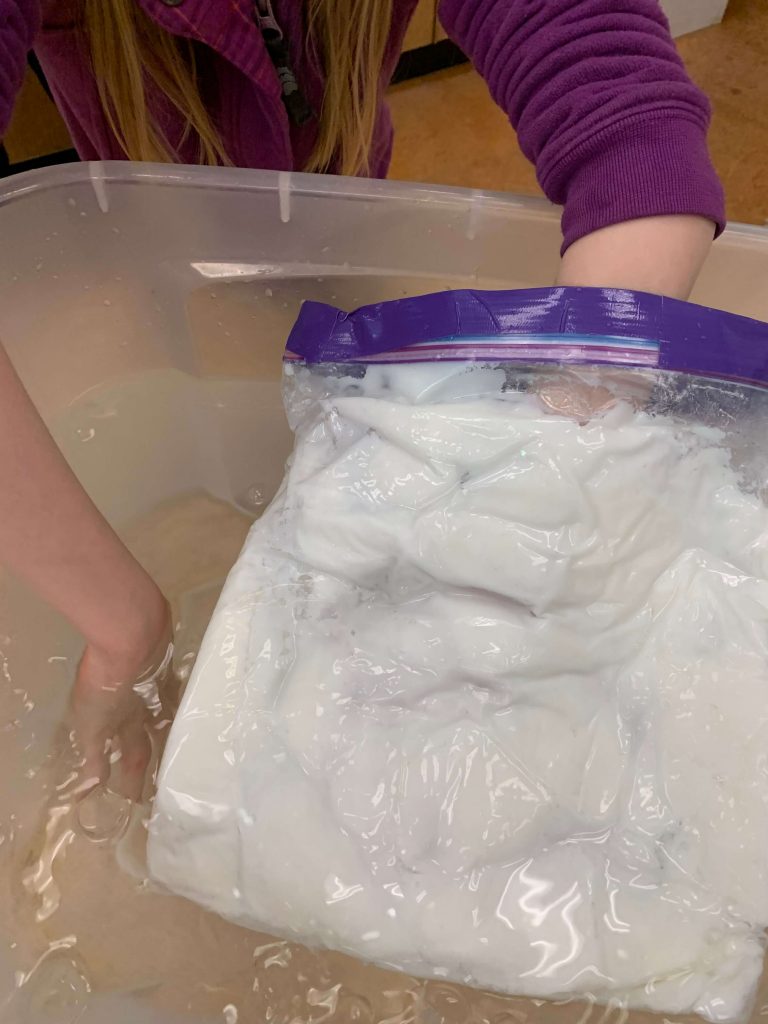
This week students became scientists and engaged in several science experiments that examined different animals’ structural features and behavioural adaptations. Some experiments/stations included observing the difference between webbed and non-webbed feet, exploring the functions of different types of beaks (scoopers vs. pincers), how blubber plays a key role for animals that have it, animal coverings and how it helps them survive in their environment, and how water and oil interact on feathers (waterproof feathers!). 

Webbed feet vs. non-webbed feet.

Scooper vs. pincer beaks

Oil and water feathers.

Animal coverings and their environments.

Blubber vs. naked hand in cold water.

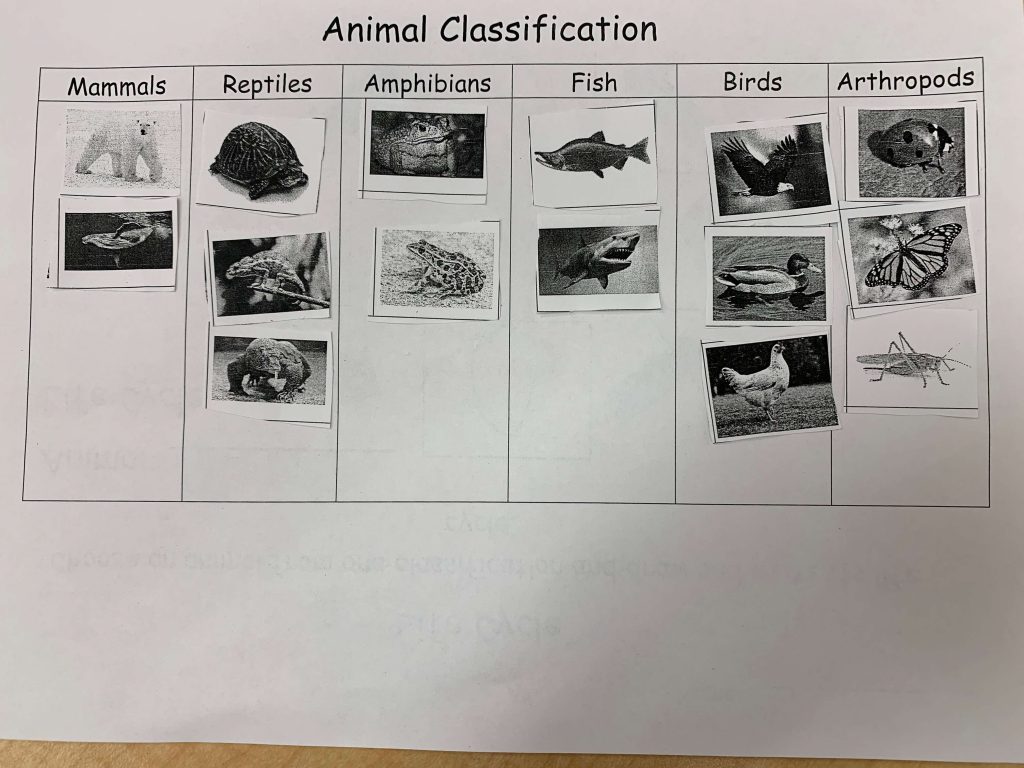
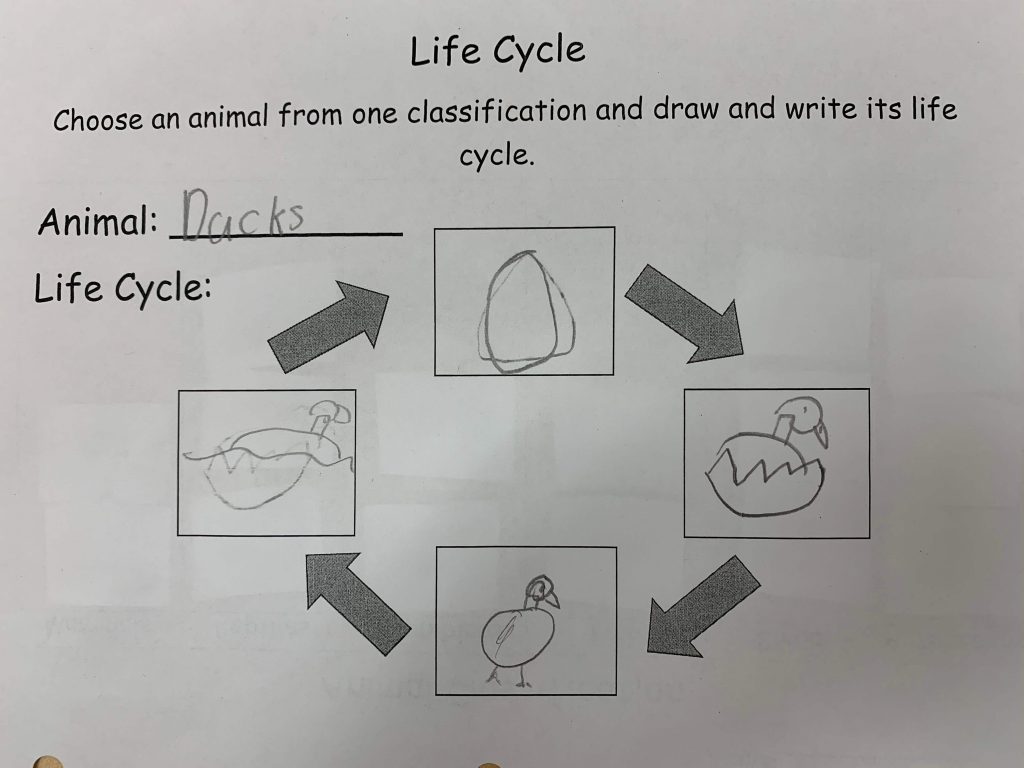
I organized another summative assessment, but this time it was individual. The students were instructed to cut, glue, and classify all the animal pictures under the correct classification. On the back of the Grade 1’s worksheet, they were instructed to choose an animal of their preference and write a structural feature they have that helps them survive in their environment. On the back of the Grade 2’s worksheet, they were instructed to choose an animal of their preference and draw and write the life cycle of that animal.

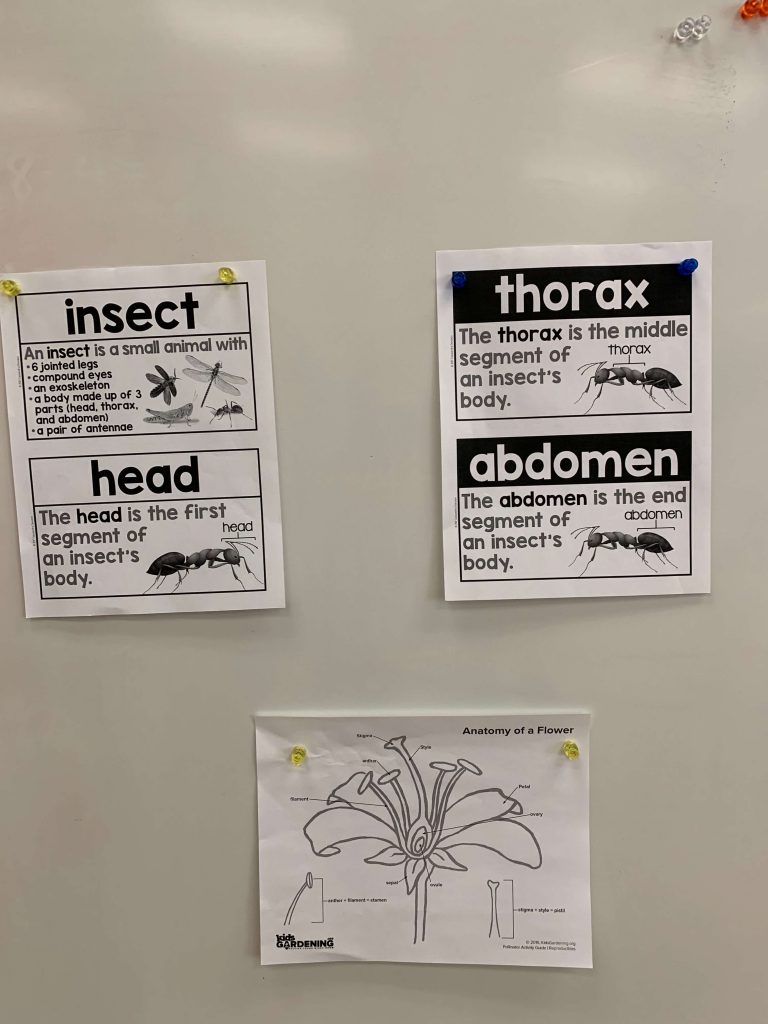
This was also the last week of our Unit of Inquiry on Living Things. To wrap it up, I thought it would be great to engage the students on the concept of pollination. This would invite students to make connections about how plants and animals are dependent upon each other. For this lesson, I made a PowerPoint and started off with introducing some arthropods like ladybugs, flies, moths, butterflies, and bees. We discussed what insects have in common (head, thorax, abdomen) and how many go through either complete or incomplete metamorphosis. To make a connection to pollination, I showed the students different insects and asked what is another thing they all have in common. One student was able to make the connection that they all pollinate! I introduced the concept of pollination, when a pollinator carries a pollen of grain from the male part of a plant to the female part of the same plant. We also examined the anatomy of a flower. I incorporated a movement-based learning activity to wrap up the lesson whereby each Grade 2 student was given a flower card with clues regarding what specific pollinator they prefer. This activity is called Pollinator Restaurant. While the Grade 2s were instructed to take their flower picture card and colour their petals accordingly, I sat down with the Grade 1s to review the different pollinator picture cards that would be handed out. I informed the class that the Grade 2s were the servers at the restaurants as they would be standing at a table holding up their flower card. The Grade 1s were the customers, pollinators, and mingled with the server(s) at each restaurant to determine which flower they matched best with! The students were engaged and had fun trying to figure out their match.

That completes my Week 6 blog post! I’ll be starting my 7th week of practicum. Crazy how time flies. Thanks for taking the time to read. 


-Ms. Mah
Week 5 (April 26th-30th)

This week flew by! It was my first week teaching full time and I enjoyed it, although there’s definitely an adjustment regarding an increase in responsibility and organization. I’m continuously thinking and planning two steps ahead, especially if an unexpected event occurs; being flexible and adaptable is key to successful teaching.
This week I took on the final unit, Language Arts. For our Unit of Inquiry, we explored similarities and differences between offspring and parent, extended our learning on living things by going on a nature walk to release salmon fry, and explored the concept of photosynthesis. Read on to learn more about what we engaged in.

Art:

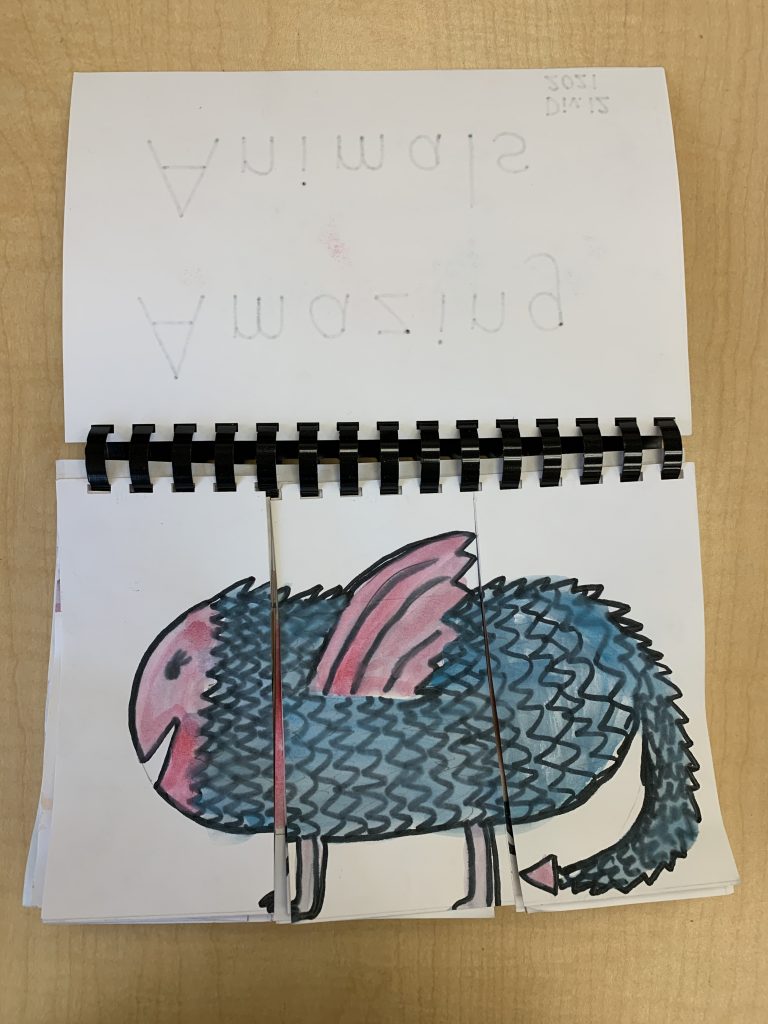
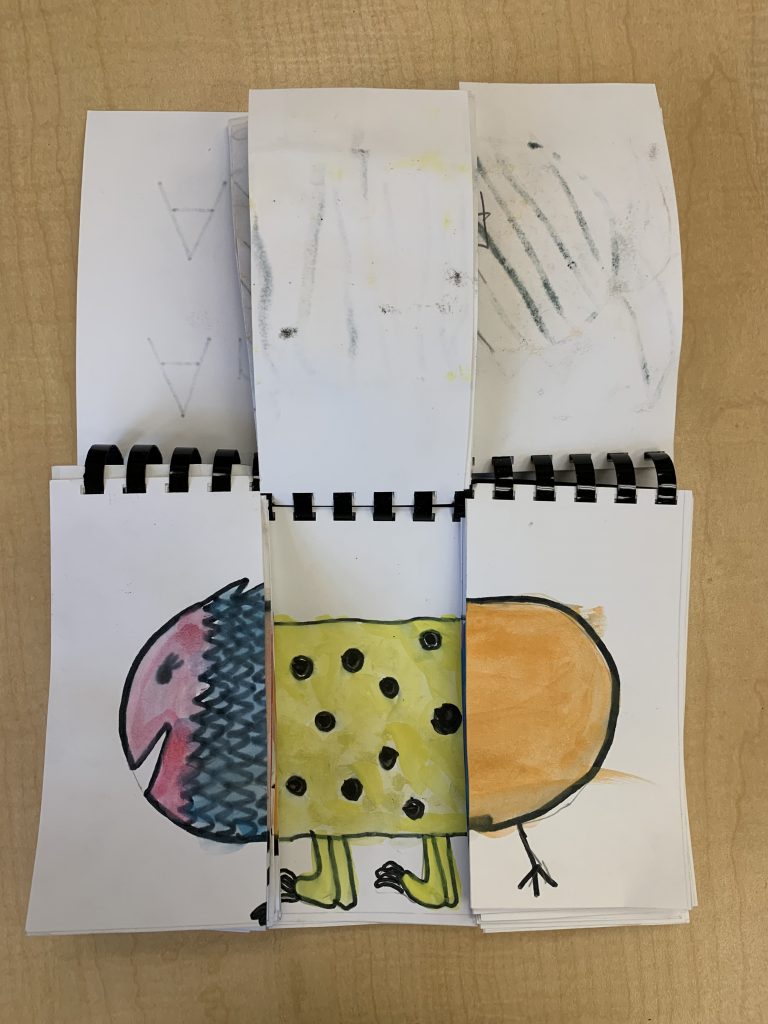
The students created an animal flip book! This was an idea I got from my SA and wanted to reproduce with our students this year. Each student was given the same size rectangular piece of vellum paper. I drew an oval using a pencil and divided the paper into thirds. I then labelled each section, from left to right, as “Head”, “Body”, and “Tail.” The students were instructed to choose a different animal than everyone else and make sure their structural features were drawn in the appropriate sections (i.e., nose, ears, mouth, legs, wings, tail, etc.). They used a pencil to draw their animal and then outline it with a black marker. Once complete, they experimented with watercolour to paint their animal. A few days later, after they were completely dried, I used a cerlox machine to bind them. Then, I cut each students’ animal into thirds. Below is the finished product, whereby students are able to randomly flip each three sections to create a uniquely looking animal.

Math:

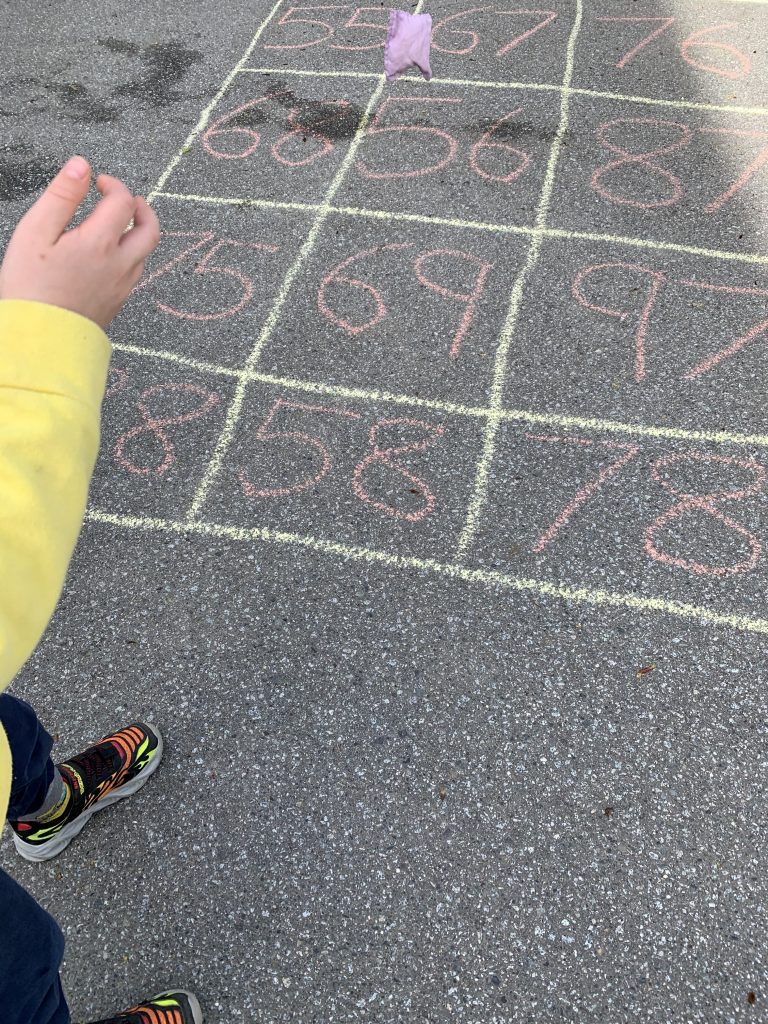
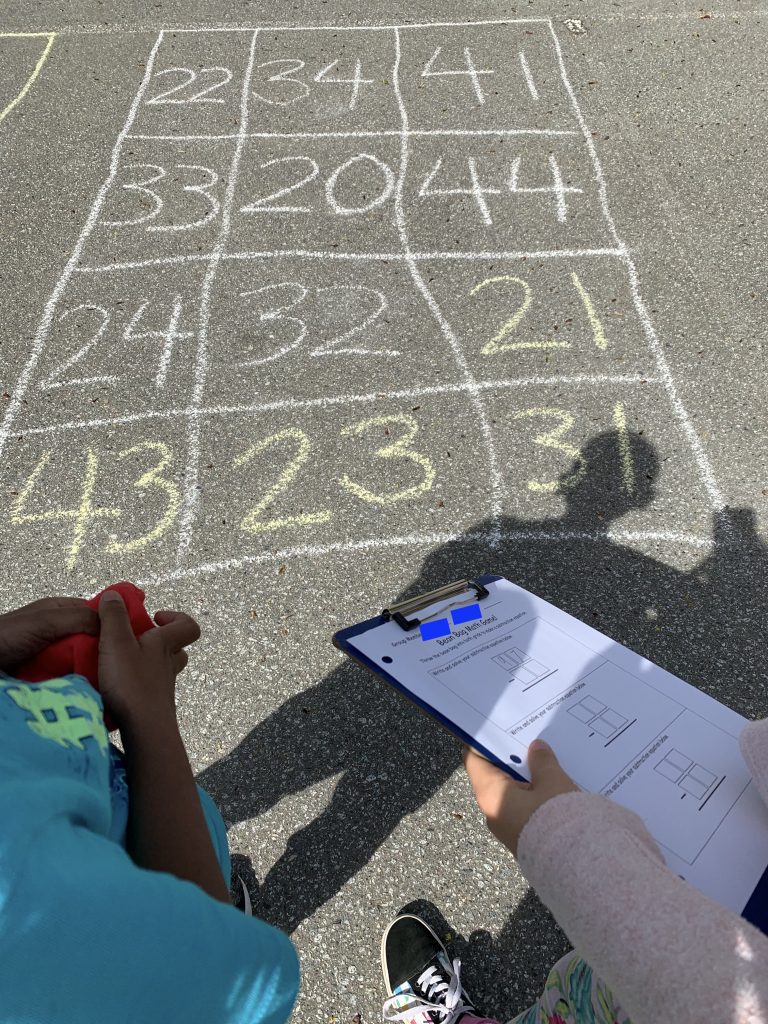
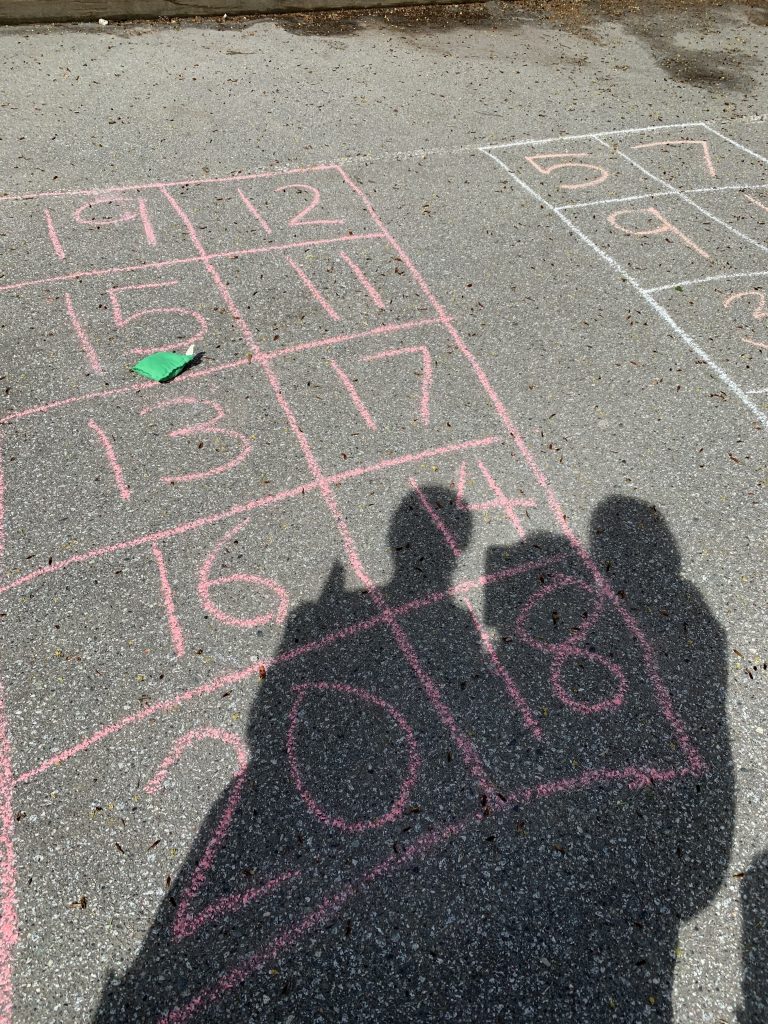
The bean bag math activity I engaged the students in a few weeks ago was a success. I wanted to bring math outdoors again and take advantage of the warmer and dry weather. For each grade I drew two separate boxes. The first box for each grade includes only minuend values. The second box for each grade includes only subtrahend values. This activity focuses on subtraction, as that is what we have been practicing for several weeks. In pairs within their grade, each partner would take a turn throwing a bean bag onto one of the grids. They would create a subtraction problem and have to solve it. Although it takes me approximately 10 minutes to set up, drawing the grids using chalk, it is definitely worthwhile in my opinion. 

Language Arts:

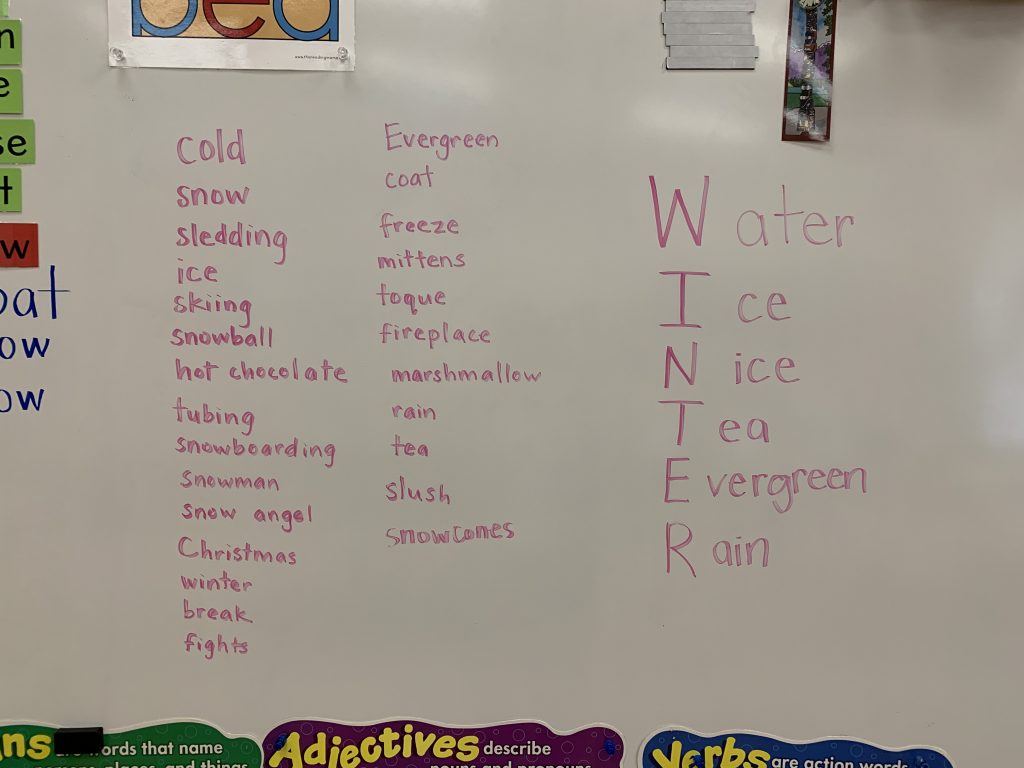
Taking on Language Arts for my first time this week went smoothly. For Language Arts, we have literacy stations from Monday to Thursday. There are seven stations and seven table groups, so it works out perfectly. Each group must complete each station by the end of the week. There will always be a phonics, journal, and guided reading station. I led guided reading and it’s been enjoyable thus far. As April is Poetry month, students were introduced to Acrostic poems. One of the stations required students to create their own Acrostic poem. At the beginning of the week, I discussed the format of an Acrostic poem and we collaborated as a class to create one. 

The left side shows students’ ideas of what they associated Winter with. On the right is our Acrostic poem.

Unit of Inquiry:

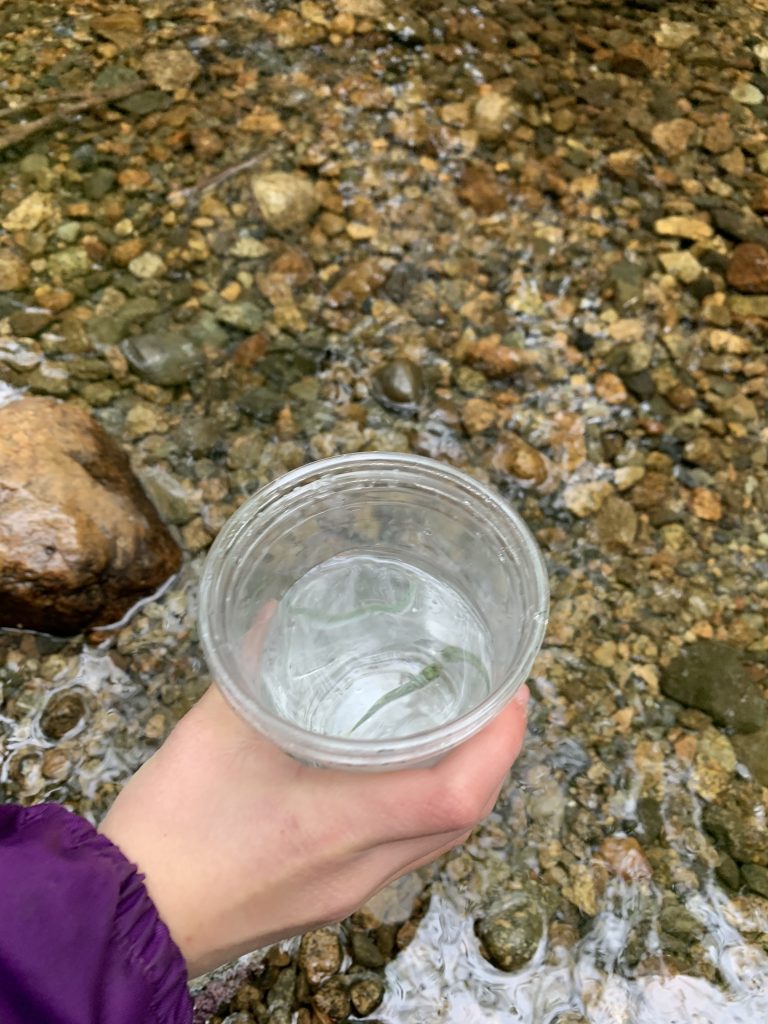
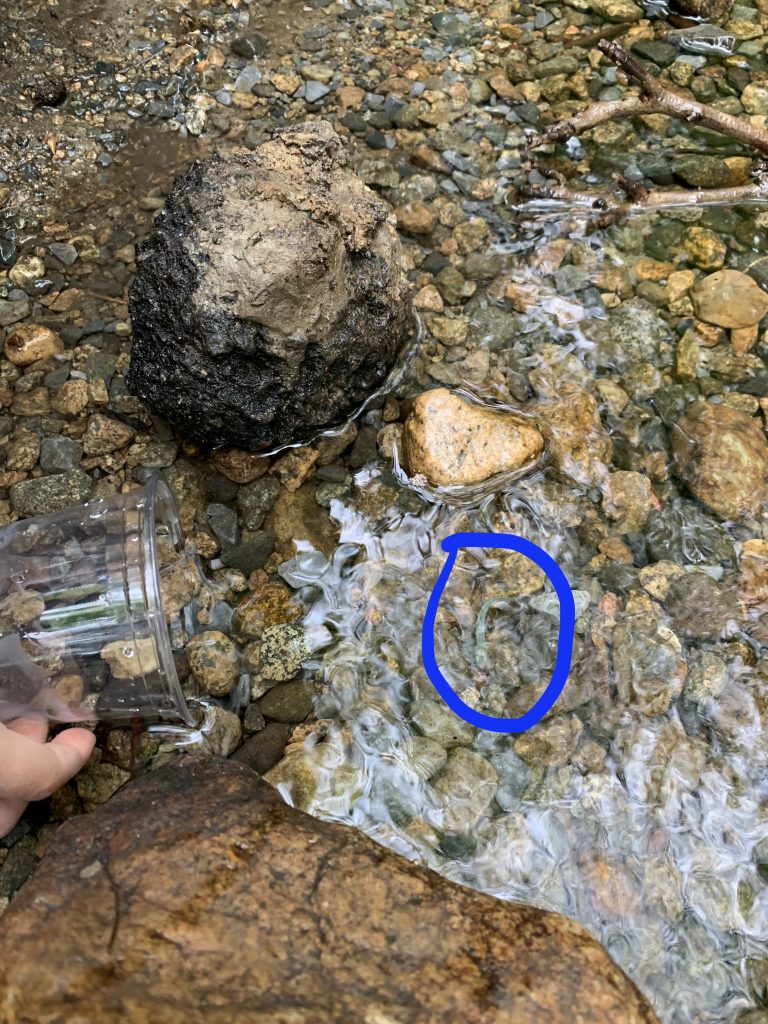
One of the Kindergarten classes at our school got salmon fry from a hatchery and was going to release them in the nearby creek. They kindly extended an invitation to our class to release some of the fry and we happily agreed! Since we explored the life cycle and journey of salmon, I thought this would be a rich hands-on opportunity for the students to participate in releasing salmon fry. In groups of 3 students released a salmon fry. We observed their Parr marks and how they camouflaged immediately once they went into the creek. We could barely see them! It’s amazing how much outdoor and hands-on opportunities there are when you’re surrounded by forests, water, and wildlife.

Salmon fry with Parr marks.

Releasing a salmon fry!

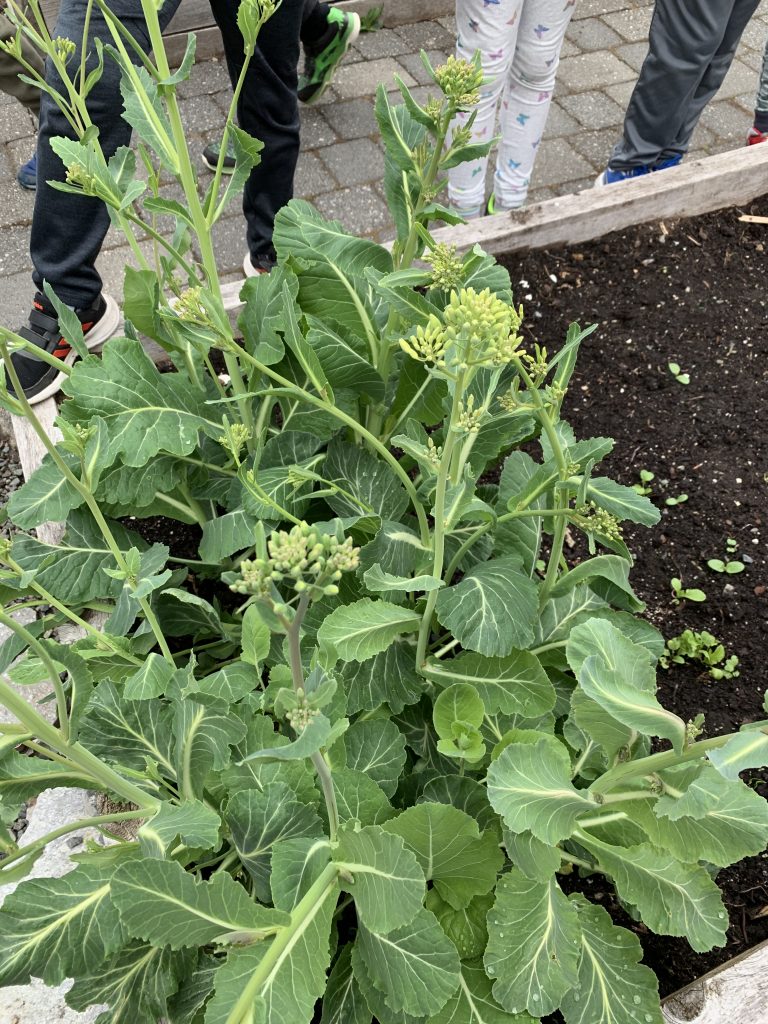
On our way to the creek, we stopped by our community garden. Usually a small group of students visit our community garden weekly with an EA to water the plants. This was my first time seeing our community garden and the students were excited to show me. 

Collard greens growing in our community garden.

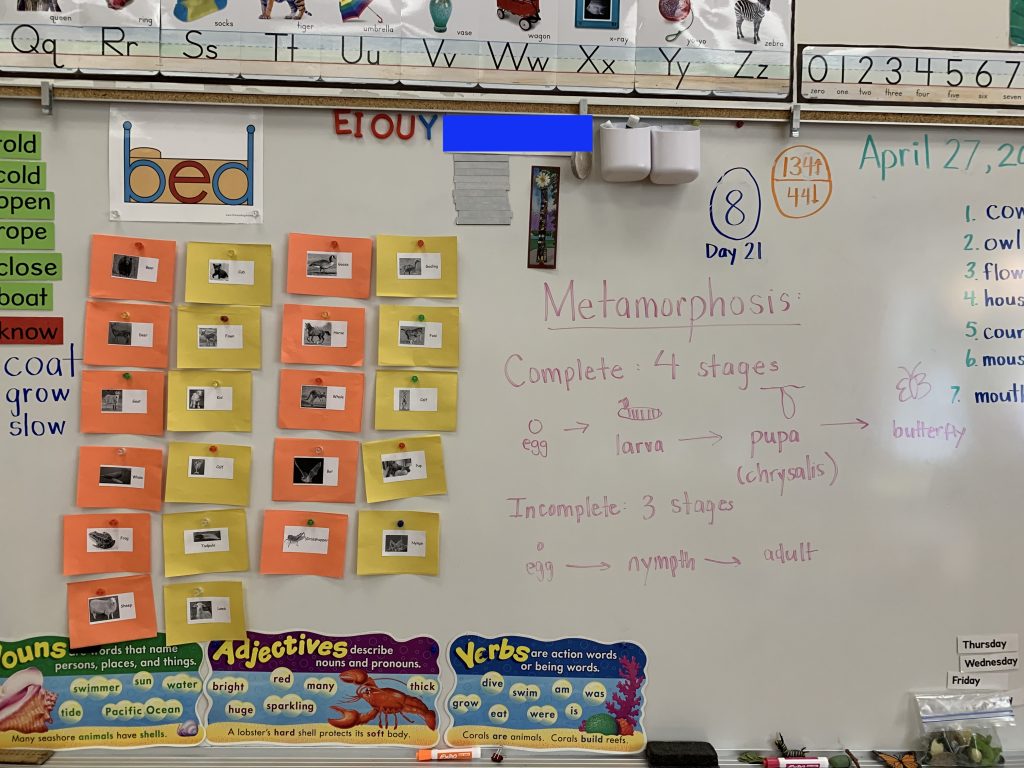
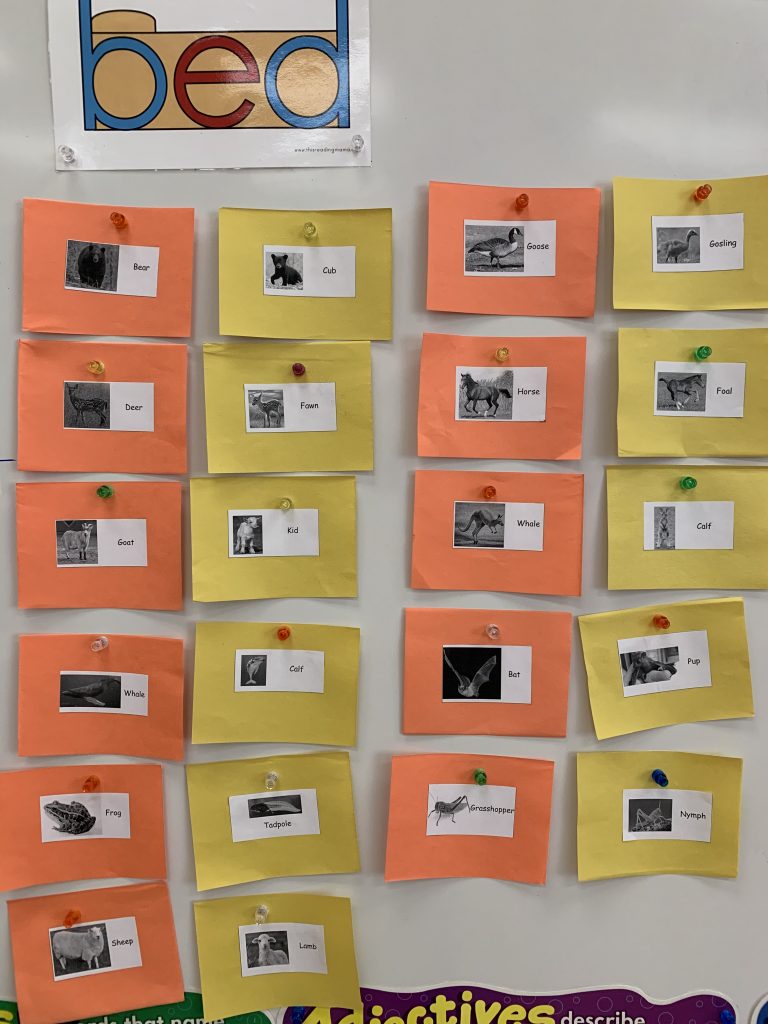
This week we explored the similarities and differences between parent and offspring. As an interactive movement-based learning activity, half the class was given an orange card. The other half was given a yellow card. Each orange card stated an adult animal while each yellow card stated the baby animal of one of the adult animals. The objective of the activity, Find Your Family, was to identify the parent or baby of that animal. The first part of this activity included only the name. There were some students that had a difficult time trying to find their family. Once each student was paired up, I introduced the second part of the activity. Each student was given the same orange or yellow card but with a picture to accompany its name. This allowed them to assess if they found their correct family in the first part and affirm it in the second part. The students had a blast communicating with one another, trying to find their family. Once each family was found, we discussed how many offsprings looked similar to their parent. However, students noted how a tadpole didn’t look like their parent, an adult frog. This activity invited us to discuss the concept of metamorphosis; animals that go through four distinct life cycle stages and whose bodies physically change while developing into an adult.

Note that the picture of the Kangaroo (adult) and its baby is labelled incorrectly. I made that mistake and informed the students. It should be called a Kangaroo (adult) and Joey (baby).

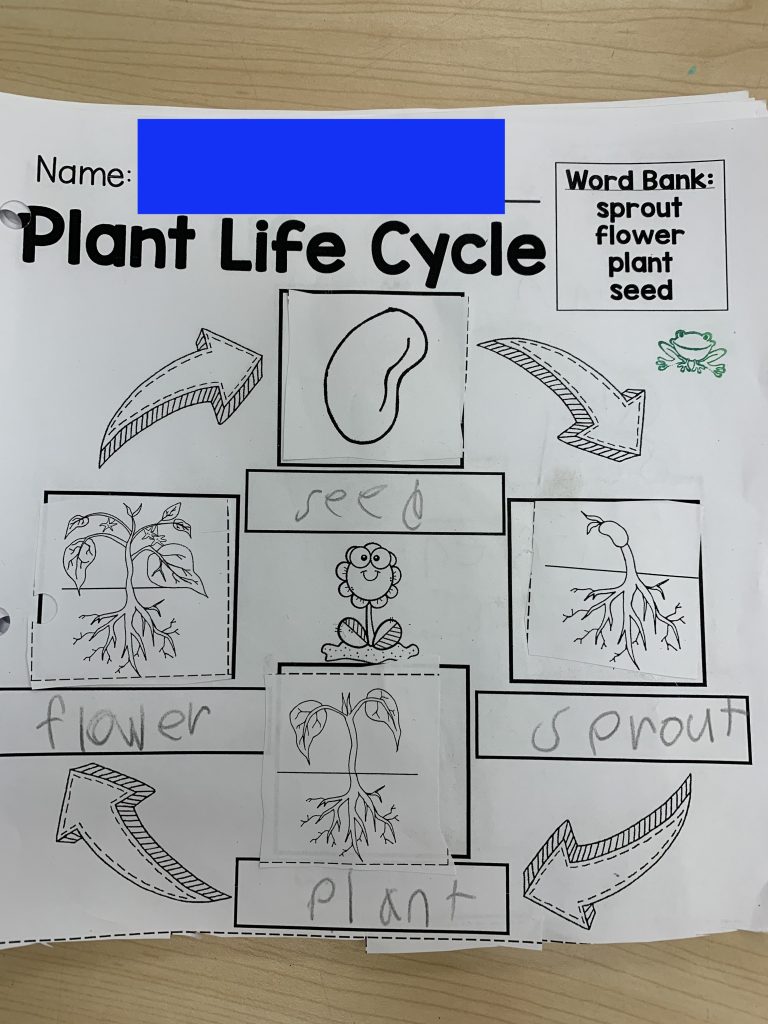
We discovered the life cycle of a plant and discussed the importance of plants and what they need to grow. The concept of photosynthesis was explored and students were able to communicate that through it, plants absorb carbon dioxide, a gas in the air that is toxic for our environment, and release oxygen, a necessity for many living things. As well, plants need water, the sun’s energy, soil, and carbon dioxide to grow.

I’ll be heading into my 6th week of my 10-week long practicum! So far it has been an eye-opening and rewarding journey. I’m looking forward to what this week has in store for me. 

-Ms. Mah