Categories
Uncategorized

Mini Assign 3: Illiberal democracy

This article argues that although Turkey has become more liberal than a decade ago, it is still an illiberal democracy, which is defined as a “political system in which free and fair elections take place, but civil liberties are not fully protected and governmental power is not limited with liberal principles.” The article comments that although an illiberal democratic regime is not the most desirable situation for Turkey, it is better than the authoritarian ones. It understandable why Turkey is called an illiberal democracy as its people can only vote for parties rather than candidates, and as the freedom of speech is high constrained through prosecutions by the state. It means that one crucial attribute of democracy, namely civil liberties, is absent from Turkey’s democratic regime.

In another article, the term “illiberal democracy” is used to warn India against stifling artistic expression. It argues that doing so is detrimental to India’s cultural and intellectual pluralism, hence the development of its democratic society. Again, India is a democracy with free elections, but it is obvious that the government’s action to constrain artists’ freedom of expression is anti-liberal/democratic.

The two articles’ definitions of illiberal democracy are both compatible with that of Collier and Levitsky, who identify illiberal democracy as belongs to the group of “diminished subtype”, as well as of democracy where “elections are reasonable free and competitive but civil liberties are incomplete.” By offering clear definitions of illiberal democracy and by having a seeming agreement on the  “the root conception (of democracy) used in deriving subtypes”, the authors of the two articles successfully avoid the problem – suggested by Collier and Levitsky – of reducing the value of the diminished subtype.

Despite these authors have used “illiberal democracy” consistently to illustrate the absence of civil liberties, the idea of illiberal democracy itself raises the question if free elections alone can justifiably label a regime as democratic, when civil liberties – which include freedom of speech and discussion – are essential for citizens’ informed judgments in elections. Meanwhile, the idea of illiberal democracy appear to me as an excuse of a government for not fixing its flaws.  In my view, if a government cannot fulfill even the basic  standards of democracy, it will be better to just call it a non-democracy (maybe with elections).

Categories
Uncategorized

Elective 3: The Value of Convictions in Democratic Debates

http://www.ted.com/talks/michael_sandel_the_lost_art_of_democratic_debate.html

I get inspired by one of you guys to get insights from TED talks 🙂

According Mr. Sandel, central to Aristotle’s thinking on justice is the idea that, it is hard to debate what is justice, without being able to first decide the purposes of social institutions and what quality is worthy of honor and recognition. To illustrate his points, Mr. Sandel used the example of same-sex marriage to suggest that, whether same-sex marriage should be legalized is really a matter of what you think the purposes of marriage are. As such, Mr. Sandel argues that, in order to achieve productive democratic debates and more important, mutual respect in a society, citizens should engage directly with the moral and religious convictions of themselves and others, instead of shying away from these convictions before entering into the political and civic life.

I find My Sandel’s points compatible with my understanding of developmental democracy, which advocates the protection of political and civil rights by the law. These rights include the freedom of speech, expression, association, voting and belief.  Among the proponents of developmental democracy, John Stuart Mill in his Essay on Liberty (1859), emphasizes the importance of freedom of discussion and of crash of ideas, which are both regarded as stimulation for human development. I have no doubt that Mill would be disappointed if he had a chance to look at contemporary political discourses, in which not only citizens but also politicians actively take an accusatory tone against their opponents. Therefore, it is hard for anyone to disagree with Mr. Sandel that, the art of democratic debate, has really been lost.

I believe the revival of the quality of citizens and of democracy must be pursued simultaneously, and that one way to do so is to reeducate citizens the meaning of free speech and democratic debates. Citizens should learn that their freedom of speech only grants them the right to determine their positions with their convictions and to use reasons to debate with others, but not the right to disrespect other ideas which are incongruent with their convictions. It is my belief that, though respectful discussions and debates, people with different convictions would be more able to not only reach agreements which better serve without offending both sides, but also to enhance their individual development by enriching their understanding of fellow citizens.

Categories
Uncategorized

Democracy in the News 3: Freedom of Speech = Freedom to Spend = Corruption (?)

In 2010, the U.S. Supreme Court passed the Super PAC (super political action committees), which sought to constitutionalize the right of individuals and corporations, whether for-profit or non-profit, to invest unlimited millions on election spending. In supporting their demand, the Super PAC advocates argue that free spending of candidates on elections is a means to protect the freedom of speech.

Just as many others, I not only find the Super PAC a ridiculous notion but also one of the best ways to induce corruption. Although the super PAC needs to be reported in time, and cannot coordinate with the candidate(s) or campaign(s) (because otherwise the donations would be considered as bribes), investigations are rare and there are loopholes for the Super PAC to conceal the identities of donors. With such a huge reward and relatively small risk, it is reasonable to believe that the Super PAC, soon or later, will cause corruption.

Meanwhile, despite I agree that free speech should be constitutionally protected, I have a hard time seeing the linkage between the freedom of speech and the freedom to spend (or the freedom to receive donations). To me, adding the idea of “freedom to spend” into the electoral system only means reinforcing the economic and hence political inequality in the United States. This is because candidates who lack the networks and whose proposals do not align with the interests of powerful interest groups, would now be disadvantaged by lacking the financial resources, but not competence, to compete with their Super PAC rivals.

Proponents of the Super PAC argue that although candidates may now have more money for their campaigns, it does not mean the election is biased towards the riches. This is because eventually the voters are the ones who decide whom to vote for. While this argument is logically correct, it fails to address the fact that long period of exposure to these campaigns, and particularly negative ads by the Super PACs, would undoubtedly impact one’s attitudes. Here, the question becomes: “Would such election still be considered as democratic if only its processes, but not means of competition, follow the democratic standards?”

Categories
Uncategorized

Mini Assignment 2 dedicated to fellow students :)

Christa Bicego

http://vet-games.myanimalgames.com/

This is such a cute site! You can play “vet games” and other animal games on it. I know you probably won’t want to play these games, but I hope knowing their existence will put a smile on your face.


Jairus Yip

http://www.tourismvancouver.com/dine/dine-out-vancouver-2012/

For our classmate from Singapore and others who love food! Dine Out Vancouver 2010 is happening from January 20 – February 5! Just pay $28 you can get your appetizer, entree(s), and dessert at famous and decent restaurants! YUM!


Niel Chah

http://www.arthousecoop.com/projects/sketchbookproject

Knowing that you like watercolor painting excites me! 🙂 Sketchbook project is something I have always wanted to participate, but couldn’t because of the limited time on hands (sad face)…….. I hope this project will also interest you!

Categories
Uncategorized

Democracy in the News 2: Presidential election exposes flaws in Taiwan democracy: scholars (?)

Related to my previous analysis on Taiwanese election and democracy, this article argues that because the Taiwanese election outcome was likely “manipulated” by powerful business leaders, Taiwanese democracy is flawed. The article slightly amazes me because it seems to argue that freedom of speech should be constrained by the concept of “corporate responsibility”, which does not seem to me a democratic element.

One of the scholars in the article claims that, “the essence of democracy lies in the people and their free will to vote for the candidate of their choice.” This statement however, does not contradict with the thinking of democracy. First, these business leaders are included in “the people”, therefore they are also entitled to the freedom of speech. This is especially true when diverse opinions from different actors (i.e. business leaders, working classes and etc.) in a democracy are valued. Furthermore, if the idea of “corporate responsibility” should be used to constrain the freedom of speech of businessmen, doesn’t it imply that we should also impose some ethical standards on the speeches and behaviors of the public? If so, how should we measure whether an action or a speech is ethical or not? Second, although these business leaders might have substantially influenced the public opinion, on the election day, the public was still the one who decided whom to vote, with no gun pointing to their heads by these business leaders (sorry I can’t think of a better way to illustrate my point….). Therefore, the public is easily influenced by these businessmen simply because they also concern about the economic interests of Taiwan, but not because they are irrational or the democratic system is flawed. As such, one can argue that the election result is legitimate because it reflects the view of the majority.

On the other hand, while those business leaders can be described as “irresponsible” because of their disregard of their influence in politics and hence public interests, it is unreasonable to condemn their behavior as against democracy. At most, one can argue that Taiwanese government is short of ethical constraints on its members, but not of democratic elements. To conclude, the article, or these scholars, should only claim Taiwanese democracy as flawed if these business leaders had “manipulated” not the public opinion but the electoral procedures. For example, if these businessmen happened to have bribed the officials involved in the election and have made their favorite candidate(s) win, then Taiwanese democracy can be justifiably argued as flawed. However, there is no such evidence (at least at the time being) about this kind of corruption or other undemocratic practices. Therefore, the argument made by these scholars appears to be ill-found.


p.s. The influence of agents other than political parties/elites on public opinion reported here, reveals another limitation of most minimalist accounts in addressing the importance of political and social institutions.

Categories
Uncategorized

Elective 2: The U.S. Presidential Election and Schumpeter’s Model of Competitive Elitism

In the light of making my post relevant to our lecture, I have tried to analyze US presidential election through Schumpeter’s model of competitive elitism.

So I read this article, whole headline basically concludes the whole story. In fact, I find this article to be a bit tedious as it records the accusations back and forth between these Republican presidential candidates. As first glance, the situation appears to have confirmed Schumpeter’s model of competitive elitism, which emphasizes the role of competition between rival political elites and parties. However, at a deeper level, the fact that the capabilities of these candidates are evaluated not only by the campaigns between these rivals but also by empirical evidence – for example, Gingrich challenged Romney’s capability to create jobs because during Romney’s years as Massachusetts’s governor, the state was rated the 47th in the nation in job creation –  illustrates that popular political views are not as easily manipulable by the elites as Schumpeter suggests.

The most legitimate accusation I found in the article is the fact that Romney, a multimillionaire, paid only a ~15% tax rate, rather than the supposedly ~35% tax rates for top incomes (because his income was generated mostly from investments but not workplaces, he was not charged with the higher tax rates on incomes from work). Despite Romney’s admission of his low effective tax rate, the public and rival politicians continue to demand him to disclose his tax returns, arguing that such disclosure is conformity to the democratic ideal of transparency.  Meanwhile, there has been a tradition for presidential candidates to disclose their tax forms (Ironically, the tradition was started by Romney’s father). Accordingly, the standards imposed by the democratic system and the tradition have both triggered Romney’s rivals to depict him as an dishonest candidate. The article also suggests that Romney has been attacked for being “disconnected from the middle class realities” because of his unfair tax payment. This accusation implies the high value of economic equality in a democracy, especially in the United States against the backdrop of Wall Street Occupation. Although the influence of these quarrels between the candidates on popular political attitudes can hardly be measured, the fact that these candidates have been trying to criticize their rivals’ morality appear to have aligned with Schumpeter’s emphasis – that the electorate is emotional and can be easily affected by emotive information of candidates over the evaluation of their political competence.

Despite the similarity between reality and elements in Schumpeter’s model, the model has been criticized for holding lots of problematic accounts. Above all, the failure of Schumpeter to see democratic models as a benchmark rather than a method or a reflection of reality, had led him to underestimate the rationality and influence of the electorate in a democracy. As such, Schumpeter’s argument that his model is a substitution for “the classical democratic theory” (which at the same time does not exist) is invalid.

Categories
Uncategorized

Elective 1: The Feasibility and Worthiness of Democratic Workplace

One of the topics on democracy which interests me is the debate on democratic workplace. Scholars have argued that in aspiring to the highest democratic ideals, democracy should be extended to the workplace and that employees should have the right to self-governor their workplaces.[1] Emphasizing the importance of equality in economic resources, Robert Dahl gives a convincing argument for workplace democracy. Dahl argues that the ownership of economic enterprises should be handled be caution because it affects “the economic order for the distribution of resources, strategic positions, and bargaining strength, and hence for political equality.” [2] In other words, to ensure equal distribution of political power, economic arrangements should be seriously determined. Dahl assumes that because an advanced democracy would seek to strengthen its democratic process through achieving economic equality, it would aspire to extend democracy to economic enterprises.[3]

Undoubtedly, there are shortcomings of the centralized management style in current workplaces. For example, employees who are not responsible for decision-making are sometimes burdened by the poor decisions made by higher management. However, the disadvantages of workplace democracy are worth equal attention.  First, I am concerned about the wishes of the employees, who have other legitimate interests besides their work and may not want to participate in their companies’ management. In fact, it can be argued that demanding employees to manage their companies regardless of their will is an undemocratic practice. In addition to the problem of wishes, the problem of limited information for management should also be noted, especially in the cases of contract and part-time employees, who are more likely to concern about information about their tasks more than that about the company. Consequently, the competence of their capability to make relevant judgments raises the question of how to balance economic efficiency with democratic equality.

The conflict between economic ownership and democratic rights is described to be a result of capitalism. One solution to this conflict is to remove management rights from the shares in publicly-traded companies.[4] While this suggestion is legitimate because sometimes shareholders are less competent than employees in making efficient and effective decisions, its application is limited to publicly-traded companies but not to privately-owned companies, whose management is composed of owners themselves but not of shareholders.

Despite the difficulty to implement workplace democracy, the practice is not destined to be unrealistic. Indeed, progresses have been made since 1980s. In British Columbia, the province instilled democratic elements into the workplace through its privatization of road maintenance in 1987.[5] The government not only encouraged employee groups to present proposals, but also provided incentives for them to create their own companies, which could lease infrastructures from the government if they were approved by the according criteria.[6] Although such privatization was aimed for improving economic efficiency than democratic equality, it reflects that the extension of democratic processes into the workplaces is practical.


[1] See Bill Longstaff, “Part II: The Workplace,” in Democracy Undone: The Practice and the Promise of Self-governance in Canada (Calgary: Ballot Pub., 2001); Robert Alan Dahl, Democracy and Its Critics (New Haven: Yale University Press, 1989).
[2] Dahl, 333.
[3] Ibid.
[4] Longstaff, 54.
[5] Longstaff, 66.
[6] Ibid.

Categories
Uncategorized

Democracy in the News 1: Taiwan’s election: The meaning of citizenship in a globalized world

AFP PHOTO / Sam YEH

From 

Ok, I know the Taiwan’s presidential election has ended and Ma Ying-jeou has won, but I still want to respond to the influence of Taiwanese expatriates in the election, which has already been reported before the election. In one article, it is mentioned that Taiwanese businessmen in China (referred to as theTaishang in the article) had been trying to avoid the victory of Tsai Ing-wen, who advocates formal independence of Taiwan, by urging their compatriots in China to return to Taiwan and to vote for the “Beijing-friendly” Ma Ying-jeou. The article says that besides exhortation, these Taishang executives had even arranged discounted plane tickets and holidays for their employees, so the latter can return home to vote. Their actions are confirmed when after the election one article suggests that “the Ma camp counted on the support of an estimated 200,000 China-based Taiwanese businesspeople and their relatives who returned home to vote”.

In my opinion, the votes of these Taiwanese expatriates suggest the problematic identification of citizens in this globalized world. First, should these expatriates be counted as citizens? How to determine whether they deserve a citizen’s right to vote when their contribution to Taiwan is marginal or at best ambiguous? Second, if these expatriates are considered citizens, is it legitimate for them to vote primarily based on  their economic interests, but not other interests such as the health, social, cultural, and civic ones, which will all affect Taiwan and its resident citizens? Meanwhile, the fact that these expatriates have been exposed to information provided (and censored) by the Chinese government suggests that their judgments about what is good for themselves and Taiwan may have been swayed. Consequently, the democratic ideal which describes citizens as a check on the government appears to be unfulfilled because the accountability of the sources of their information is debatable. In sum, all these questions raise doubt about whether citizenship is merely defined by a passport or their contribution to the states and their knowledge about their and state’s interests.

Categories
Uncategorized

Mini Assign 1: Hello Fellow Students!

Self-introduction again!

I am Mandy, a fourth year student double majoring in political science and international relations. I am from Hong Kong and I came to Vancouver for university in 2008. Vancouver is a fascinating place which has undoubtedly changed my life (dramatically) in these four years. The people and things I have encountered here have far exceeded more than I could have ever imagined in HK. Despite Vancouver’s awesomeness, I have always seen Hong Kong as my home and have been longing to return since my Day 1 in Vancouver. This is my last term at UBC and I wish everything I have learnt at this amazing university will be applicable to my future career in governmental or academic work back home!

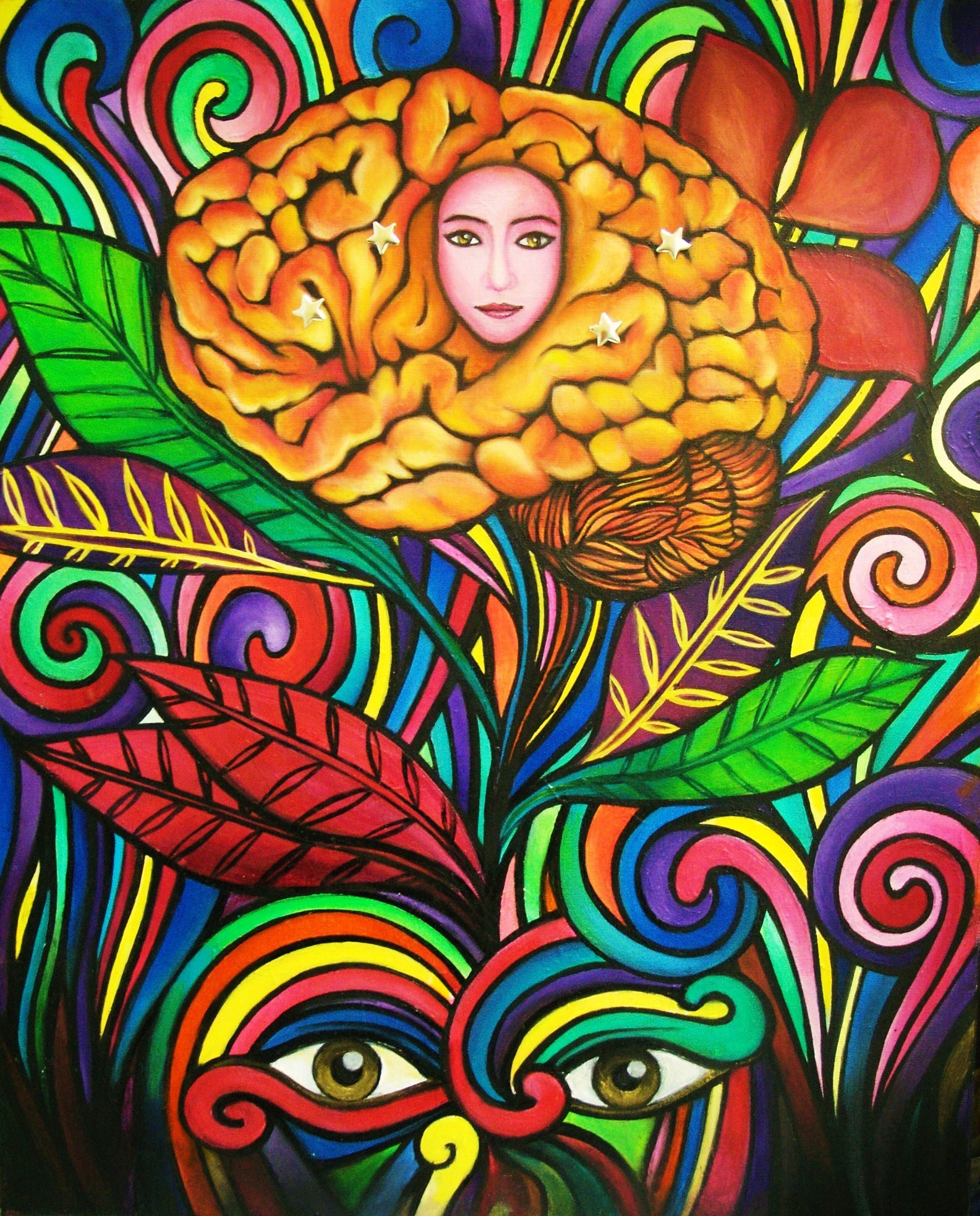
Oh, I also did lots of artworks back then (before I got preoccupied with my study). Here are some of my works 🙂

The value of democracy is a question I contemplate a lot. I grow up in a democratic environment, and just like many others, I have also experienced disillusionment. I remember there was a time I could not agree more with Plato, who in his Plato’s Republic describes democracy as “rule by the mob”. Yet, my perception of democracy has changed after I have seen people at grassroots level struggling for democracy, as seen in Thailand and the Arab world. Besides, last term I took a class on democratic theory and was greatly inspired by the famous democratic theorist, Robert Dahl. I remember in one chapter of his book he says we should not compare the deviated side of democracy with the ideal side of authoritarianism. Instead, we should compare either the ideal sides or the deviated sides between the two types of regime. His conclusion is that, if we apply a fair comparison, democracy will be no doubt a better option than an authoritarian regime. His comment reminds me that sometimes we are “spoiled” by our democratic environment to believe that democracy is not good enough, when the fact is that we are already million times luckier than others in authoritarian regimes. With all these influences, I have now put my faith in democracy but agree that there are lots of things need to be done to realize the ideal side of democracy.


Spam prevention powered by Akismet