Categories
COMM 296

Coolest Camera Ever ?!?

Possibly the coolest marketing strategy I’ve seen in a while.

Presenting the GoPro HD Hero, the world’s most versatile camera:

YouTube Preview Image

I must admit, I’m not a photographer. In fact I can barely tell you the differences between the first video-capable digital SLR Nikon D90, the HDR-XR150 Handycam camcorder and the GoPro HD Hero.

In colloquial terminology, “All I know is its pretty and I want one”.

Why? Because the inherent foundation upon which the GoPro marketing creativeness rests is solid. By this I mean that they have taken a camera, added a feature (High-Definition), and made ads so cool that I want it. Not only this, but the ads showing professional extreme sports aficionados in their native element of wonderful scenery reinforce the necessity of  adding the HD feature.

The GoPro camera has a feature, a position alongside other things awesome, and the one-two punch of lifestyle marketing and viral advertising. 


Categories
COMM 296

Tintin vs Superman?

Character Relatability Key to Brand Relationships

In class, we talk all about brands creating relationships with consumers. So what if you could personify a brand to form and maintain a customer-brand relationship? Well, creating a character is a great way!

The most-recognized characters in the world are Mickey Mouse, Ronald McDonald, and Superman. So what does it take for characters to be ‘loveable’?

  • Relatability- perhaps Superman is a little more do-gooder than any of us, but the idea that he can maintain 2 identities may be appealing to consumers. Plus, he’s awesome. Tintin, the  “indefatigable, incurably innocent boy reporter” is more accurately the everyday Belgian hero. Tintin comics have been translated into almost every language and boasts a large audience in India, as demonstrated by Steven Spielber’s decision to release a new Tintin movie in Asia before Europe and North America. I argue that since Tintin had a widespread appeal before the movies were made, his world fame is due to his relatability and interesting storylines, rather than Spielberg.
  • http://www.time.com/time/magazine/article/0,9171,2097373,00.html
  • http://timesofindia.indiatimes.com/entertainment/hollywood/news-interviews/Indias-a-very-important-market-for-tintin/articleshow/10668290.cms
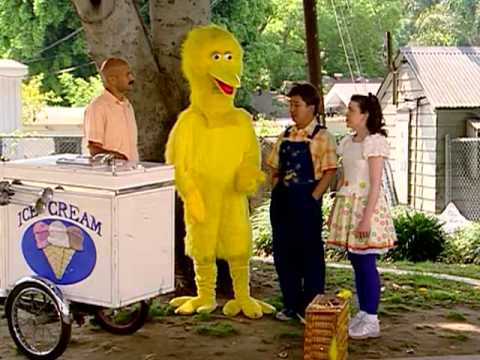
  • Simplicity- in terms of the story. By keeping the character’s motives, background, and actions predictable, the consumer has an easier time associating the character with the overall brand. I give you Cookie Monster.
  • Brand personality- Characters also aid the development of brand personality- a set of human characteristics associated by a brand. Creating a character to represent a brand instead of a spokesperson is much easier for the company to sell and for a consumer to understand. For example, the Geico lizard.
  • Time- The larger-than-life characters have been able to withstand the sands of time, and spark mutli-generational fans: Looney Toons characters, Tintin, Sesame Street, Muppets, Snap, Crackle, and Pop.
Relatability, Simplicity, Solid Brand Personality, and Longevity are the keys to a successful brand character.


Categories
COMM 296

Branding Jamaica

Tourism Marketing- Branding an entire country

The interesting thing about tourism marketing is that the tourism boards MUST differentiate their brand, especially countries who offer similar landscapes and activities. This is the case for tourism in the Caribbean. Known as the destination travel region to the large target market of international visitors looking to unwind in a tropical paradise, Caribbean tourism boards have had to undergo re-branding efforts in order to respond to the worldwide economic downturn.

Currently, each Caribbean marketing strategy to promote tourism is quite similar. Here are some actual value propositions:

Jamaica- Once you know, you go

Cuba- Authentic

Dominican Republic- Has it all

Though the efforts that these countries have made are similar, Jamaica has actually experienced an increase in the number of international tourism arrivals:

“Over the past two years alone, the number of international tourism arrivals…has risen 12.9 percent – an especially impressive figure given the challenges in its main source markets” http://sflcn.com/story.php?id=10929

Clearly Jamaica has a strategy that is working. Possibly their success can be attributed to their program ‘Meet the People’ which offers a truly local experience. Meet the People is a program introduced in the late 60’s to get tourists away from the resorts and all-inclusive travel experience. Meet the People match visitors with locals with similar interests. The visitors then get a true taste of Jamaica and a different experience than what the upscale all-inclusive offers.

Perhaps the introduction of programs like these, or volunt-tourism and eco-tourism initiatives, will prove to be the key to attracting year-round tourism, even through times of recession. Re-branding these destinations into new brand experiences opens a whole new market for the environmentally- and socially-conscious traveler.

YouTube Preview Image


Categories
COMM 296

Ski Bums, Yogis, and Surfer Dudes

From sport-specific retailers to lifestyle brands

Walking past a RDS outlet, I was surprised by the clean lines and simplicity of the logo, and amazed at the fact that an inexpensive plain shirt can be transformed into perceived customer value with the simple addition of a meaningful logo. This realization exemplified a continuing trend in marketing- associating a common product with a brand. The italics are intended as emphasis to the fact that a brand, especially a lifestyle brand, is synonymous with a perceived identity. There is no physical requirement to wear these logos, one doe not need to be able to pull off the one-legged king pigeon pose or even land a Double McTwist 1260; however, the wearer must be willing to comply with the demands of the respective lifestyle. Paraphrasing a recent episode of ‘Community’, lifestyle brands are “..fundamentally symbolic…[and] founded on the principles of high-minded rhetoric.” The logos of lifestyle brands all have a common subtext- namely ‘I choose to wear this logo as an extension of myself. I live to [insert ski, board, surf, practice yoga, etc.] and I define myself by the conventions of my chosen sport. Furthermore, I belong to a tight-knit community of others who not only enjoy the sport, but also cite participation in the sport as the main reason to live.’

By wearing these logos, customers also demonstrate alignment with company values.  Here are a few lifestyle brands with clean simple lines. Try and figure out which one is which. Though the logos are simple, simplicity is truly the key to memorability, and having a memorable story is an essential component of lifestyle brands. 


Categories
COMM 296

Pepsi or Pesi?


From Argentina to Spain, and now to Mexico, PepsiCo has been rebranding Pepsi as “Pecsi” or “Pesi” to Spanish-speaking consumers. Because the ‘ps’ in ‘pepsi’ is not a common sound in Spanish, Pepsi is trying to reinforce that “however you say ‘Pepsi’, you save money”. By segmenting their international consumer-base into linguistic groups, then targeting the spanish-speaking community and then further targeting dialect, PepsiCo has been able to position Pepsi alongside freedom of expression/pronounciation. In this way, PepsiCo has succeeded in letting their consumers take ownership of the product. They cleverly understood how to ‘speak their language’.

YouTube Preview Image

In 2010, Pepsi ran the following commercial with Spanish footballer Fernando Torres pronouncing “Pepsi” as “Pesi”. When confronted by a frustrated director, he retorts “Listen man, I’m from Fuenla, and that’s how we say it” and then he proceeds to rip the ‘p’ from the banner.

https://www.youtube.com/watch?v=5LzJRbvTJu0&feature=related

Colloquial language often represents a substantial geographic region, and in this case, PepsiCo’s approach parallels the appeals to nationalism which are so often made to Canadians. For example, Molson Canadian’s tagline “Made of Canada” or anything to do with Tim Horton’s or hockey. In a recent Globe and Mail article, the announcement of the first true brand export of Tim Horton’s in Dubai elicited quite a nationalistic/nostaglic response:

http://www.theglobeandmail.com/news/national/tim-hortons-sets-up-shop-in-dubai-in-first-true-brand-export/article2172616/

These examples illustrate the importance of understanding the consumer. As local businesses become global, the need for cross-cultural understanding intensifies. Even at the scale of a corporation like PepsiCo, there needs to be strategies in place to understand customer needs and wants. If your customer can’t pronounce the name of your product, you can fight it, or create a new campaign. Similarly, Tim Horton’s expansion into Dubai must be handled with a clear understanding of the new environment.


Categories
COMM 299

299- What have you learned about yourself in this course?

COMM 299/Business Communications

This class has been helped me identify my strengths, and also careers in which my strengths would be best applied, and how to go about finding opportunities in those fields. After the lesson on the hidden/invent-a-job market, I realized that I don’t really want a typical office job. Since then, I have been exploring other possibilities for this summer. I have also been reflecting on which option to take at the end of second year, and this class has shown me that my path of studies, and career path nonetheless, is actually quite flexible and that if I take the time to explore my options and utilize the opportunities made available, I don’t need to be concerned at this point. It was also interesting to learn that employers are looking for Sauder students as much or more than we are looking for employment. Knowing that there are many job opportunities out there and that our skills as students are desired, I feel more confident about the job application process. The greatest lesson that this course has taught me about myself is that no matter what job I pick or how I choose to spend my time, my career needs to be aligned with my own goals and not others’ expectations real or perceived.

Categories
COMM 299

299 Post- What is the greatest lesson you have learned from someone else?

It is very difficult to pinpoint one great lesson learned from someone else. I believe that each person in your life teaches you something, and it is up to you to learn from them and apply the lesson to your life. However, this question must be answered in less abstract terms, so I would have to say that my grandparents have taught me a great lesson. Both sets of my grandparents immigrated to Canada from Ireland and Croatia respectively when my parents were very young in search of opportunity. They came here with little money, no relatives, many children to support, and no job prospects. Each of my four grandparents worked tirelessly to provide for their families. My Irish grandmother had 4 children to look after, and my grandfather found work as an engineer at BC Hydro. My Croatian grandmother used her cooking skills and worked in many restaurants, including with Umberto Menghi, and took sewing jobs on the side. My grandfather, with only a grade 3 education, worked as a carpenter, and would walk long distances to and from work.  Their dedication and perseverance is truly inspiring. They have taught me about the importance of working hard, making the best of every situation, and now I approach every opportunity with an understanding of the sacrifices that my family has made for my brother and I.

Categories
COMM 101

Social Entrepreneurship?

What exactly is a true social entrepreneurship? In class, we looked at a few examples, like Jamie Oliver’s restaurant ’15’ run by 15 young people who wouldn’t otherwise have the skill to work in the industry. When we tried to pin down exactly what it is, we tried identifying what is not.

A social entrepreneurship is NOT:

  • A charity
  • A formal (governmental) social service
  • A business motivated only by profit

Thus, a social entrepreneurship is a business that is operated to both affect change and create monetary gain.

At least, that is what I thought it was until a very interesting discussion with a classmate. He thought that that social entrepreneurship was another way to market a business, a buzzword to entice customers by pulling on their heart-strings. I disagreed until I realized that our perceptions of the motivations of the social entrepreneurs was the basis for our disagreement. After this, I tried to explain that a social entrepreneurship is simply a business that considers both the inputs and outputs of their company to maximize both the market value of the product and the value created in the community, which is not only shrewd business sense, but making also difference in our world.

We came to an agreement: a properly-run social enterprise is actually disguised as an extremely efficient business by considering the inputs and/or creating opportunity (ethically-sourced material, volunteers etc.) to deliver the community not only a functional product or service, but also considers how it affects others.

Here’s a link to a local social enterprise I found out about- Soup Sisters hold a social event which includes cooking classes, and use the fee per participant to pay for the ingredients, then the food is given to those who need it: http://www.soupsisters.org/

Categories
COMM 101

Entrepreneurship


Sara Blakley, creator of SPANX, is the definition of a true entrepreneur. According to spanx.com, she was working as a sales rep by day and comedian by night, when she had an idea for footless pantyhose. With only $5000 dollars in the bank, she worked tirelessly to develop a prototype and even used herself as the before and after model in the original marketing . Ten years have passed, and now she finds herself in control of a multi-million dollar business. Let’s review the definition of an entrepreneur checklist:

Risk? YES- new product, had to convince patent office, had to work a deal to make a prototype, time, money, considerable amount of energy invested…

Innovation? YES- SPANX redefined ‘shapewear’ by not showing any visible pantylines and by cutting off the feet so the hoisery wasn’t visible. She obtained a patent in 2000, and in 2007, patented a the manufacturing process of a new type of bra.

Wealth Creation? YES, global retail sales exceeded $750 million in 2008

YouTube Preview Image

Indeed, Sara Blakely is the epitome of an entrepreneur.

Categories
COMM 101

Financial Crisis! The Blame Game…

Before our class on the financial crisis, I had been wondering how it is that the financial crisis became so widespread so quickly. After starting from the beginning- the sub-prime mortgages, the lack of financial literacy, the leveraging, the Structured Investment Vehicles, the CDO’s, CDO’s squared, cubed, the madness, the fear, the consequences, the global economy; I began to see that it was in fact the INTERRELATEDNESS of all those affected- homeowners, banks, bigger banks, Wall street, other countries- which helped the spread of the crisis. As well, it is possible that everyone involved at each level of the crisis should take some blame. Whoever came up with the idea of sub-prime mortgages, the homeowners who thought that paying for something with money you don’t actually have, and the people who bought the packages of high-risk mortgages, they all share blame.

But really there is no use playing the blame game, because it is a downward-spiral, a conversation that leads nowhere. As much as I want to know how, at any level, someone didn’t stop and say ‘hey, this whole idea is based on the assumption that house prices don’t decrease’, what we really need to be talking about is increasing public financial literacy, so that everyone can understand the interrelatedness of the components of the economy.

Here’s an example of interrelatedness (in a humourous context) of the economy, the job market, home loss, health care, government, illegal activity

YouTube Preview Image

Spam prevention powered by Akismet