Marketing the revolution: social media’s role in the toppling of a dictatorship.

This post was largely inspired by Malcolm Gladwell’s recent New Yorker article – Small Change: why the revolution will not be tweeted. In this article Gladwell comprehensively undermines the notion that new mediums in themselves – twitter, facebook, blogs, or other are able to drive, to initiate meaningful societal change. The resultant ‘weak ties’ diminish barriers to activism yet do not promote the forms of activism that permit the overthrow of government.
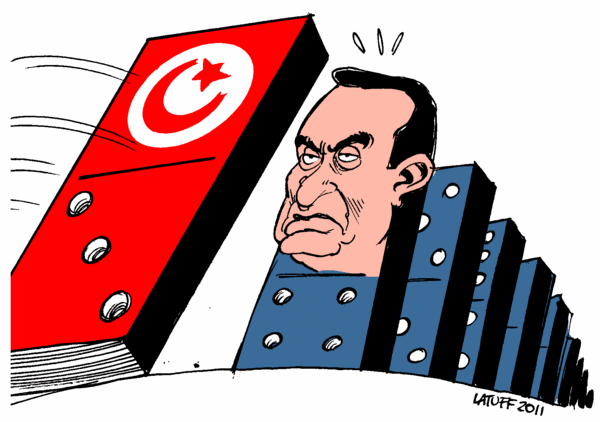
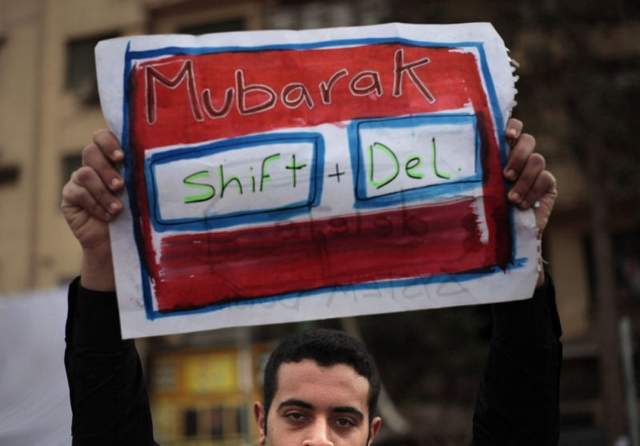
Interestingly the disabling of the Internet on January 28th, three days after the initial day of rage in Egypt, is argued to have ha a greater impact on Mubarak’s eventual fate than the social media tools he so feared. Shutting down the Internet further enraged much of the younger generation and forced individuals on to the street in order to have an idea of what was going on, to know if a loved one was safe, and to vent their frustrations.
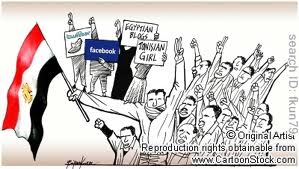
So when this protest was initiated by Egyptians – even if influenced by Tunisians, largely through traditional communication channels, and the influence of the outside world likely had little impact. What role did social media play: my intuition, although undoubtedly inadequately founded, is little at all. This is not a situation paralleling the Rwandan Genocide or Darfur conflict in which outside support was being asked and increased western consciousness regarding the issue could have prevented significant bloodshed. Within Egypt itself Arab news outlets such as Al Jezeera appear to have had greater impact than the predominantly English-language tweets hash-tagged #egyptrevolution.

Thus social media appears to have significantly altered the manner in which conflicts are portrayed to third parties, but not how they are undertaken on the ground.

It has not, however, altered the basic organizing structure of revolution, and has played a limited role in the overthrow of Mubarak, Ben Ali, and likely overthrow of Qaddafi.
Sources:

http://www.newyorker.com/reporting/2010/10/04/101004fa_fact_gladwell#ixzz1Ev5Kawbw
http://www.nytimes.com/2011/02/17/world/middleeast/17sharp.html?_r=1&pagewanted=2&sq=egypt%20peaceful%20protest&st=cse&scp=5
http://www.nytimes.com/2011/02/21/business/media/21link.html?ref=socialnetworking

The Best Laid Plans: of mice, men, and literary publishing

The literary publishing industry is in a difficult spot: a Porter’s analysis should not be required for either explanation or justification. E-reader sales are heating up, the general public appears to be spending an ever-decreasing portion of their time reading, and the notion of personal libraries packed with expensive hardcovers appears, for my generation at least, to be an archaic form of interior design.

With his recent self-publication of The Best Laid Plans, Terry Fallis has shed light on another difficulty facing the industry: the increasing ability of writers to interact directly with their potential audience. After experiencing difficulty securing a publishing contract Terry decided to distribute his satirical commentary of the Canadian political scene virally: via a self-narrated podcast. Since then the novel has won ‘The Stephen Leacock Award for Humour’ as well as the ‘Canada Reads 2011 Selection’.

This dissemination strategy may be a sign of things to come: Terry Fallis could be doing for the literary publishing industry what The Arcade Fire accomplished in the music industry: utilizing the internet to circumvent the powers that be and forge direct relationships with audiences. It is important to note that both Terry Fallis and The Arcade Fire have signed traditional contracts; however this ‘pull strategy’ is an aberration to say the least. Normally a writer (a previously unpublished one at least) will produce an unsolicited manuscript, try to get it picked up by a literary publishing house, which will then push it on to audiences.

Terry Fallis’ novel not only ‘deftly explores the Machiavellian machinations of Ottawa’s political culture’ but also new avenues for successful, award-winning content distribution and literary marketing.

Full Press; Fallacious marketing or bound for success?

At his moment I would like to take a brief look at the Full Press Vineyards marketing strategy. This has been an interesting and, in a manner, simple campaign. In the world of wine marketing, differentiation can be difficult. The options are just about endless, quality product is now coming from multiple continents, and the average consumer appears to be, at times, overwhelmed. To be frank what percentage of casual wine consumers actually knows the meaning of body, nose, brightness, new vs. old world fruit, oak flavours, etc. The adjectives, varieties, domains, and pairing recommendations are endless. And for myself at least, unless I am accompanied by a connoisseur, my choice is often rather random: a few bottles I consistently enjoy, and often hit or miss beyond this point.

Full Press is attempting to simplify this decision-making process for a particular audience: the beer-drinking male. The tag line ‘Man’s Guide to Wine Pairing: Goes with Meat’ is undoubtedly designed to simplify the decision-making process. A number of individuals don’t need to know about the cassis undertones, oak casketing, or a sulphurous nose. Full Press is positioning itself towards a male audience looking to have a bottle of wine as opposed to a few beers with a steak, rib, or lamb dinner. The secondary slogan ‘Crafted with Pride’ is a phrase which could easily be used to describe beer.

My assumption is that this marketing strategy has been largely propelled by market research. Full Press is targeting itself towards a non-traditional market, and in my opinion, quite successfully so. All that is left is to try a bottle and see if the taste can back up the campaign.

For my favourite source of wine information try viewing a video on Wine Library TV.

Spam prevention powered by Akismet