Design marketing: total control, or third-party diffusion?

Today I am looking to add a brief post: a meditation of sorts really. For the past few days I have been plagued by a single question. To what extent should the basis of a sound marketing strategy be design? When is it most appropriate to market a product post production, when should marketing research influence product development, and when can the supportive infrastructure around an industry allow a well designed product to market itself?


In regards to the second question mentioned above, need is often claimed to be the mother of necessity, however I have often taken exception to this statement. More often than not, in recent product development invention appears to give birth to need, not the other way around.

Nevertheless the majority of my thought has been regarding the third question in the series above. In the hotel industry, fashion, architecture, design, marketing – when awards, blogs, magazines, TV shows exist for the sole purpose of promoting an industry – should one aim to portray a message directly, or to facilitate its diffusion via third-party, supposedly unbiased, sources?

And for such a strategy, what limitation on marketable products exists?

If Renova can design black toilet paper, and have a story carried by the New York Times, what can such an approach do for us all?

History will be made: Hockey, Hope, and History

Here, I am taking a moment to expand upon a campaign and some additional commentary made in a post by Wyatt Hamilton. Wyatt posted a number of the NHL’s recent ‘History will be made’ advertisements. He goes on to describe both the success and ubiquitous presence of the campaign. Indeed, as Hamilton mentions, this campaign is to be broadcast on TV, online, in magazines, in arenas, and through social media: the campaign is meant to be immersive, both in its message and multiple mediums.

There is undeniably a growing trend in professional sports to promote the history of the game, as opposed to current excitement. Legends of past always carry greater weight than those developing in the present. Moreover with the NHL’s most marketed player, Sidney Crosby, out indefinitely with post-concussion syndrome, the individual player approach appears to be demonstrating its limitations. Great way to hype a game, but a significant investment in an individual, and much less likely to attract attention to the league as a whole.

YouTube Preview Image

The memory of the average NHL fan is limited. How many of us have seen Rocket Richard adorn the jersey, or for that matter, the Russian Rocket (Pavel Bure)? Hockey is a sport played at a rapid pace. The league is trying to keep fans’ memories from forgetting at a similar rapidity.

Moreover, by using fan favourites, Stevie Y, Bobbie Orr, Patrick Roy, the league is investing in timeless stories, those that will not fade into irrelevance, and cannot be sidelined by a headshot.

History is constantly being made, but through this historic campaign the NHL is inviting its viewers to witness the next chapter: not a single, far removed event, but the continuation of a time-honoured legacy.

YouTube Preview Image

History will be made, will you be a witness?

Response: Radiohead and marketing (or lack thereof)

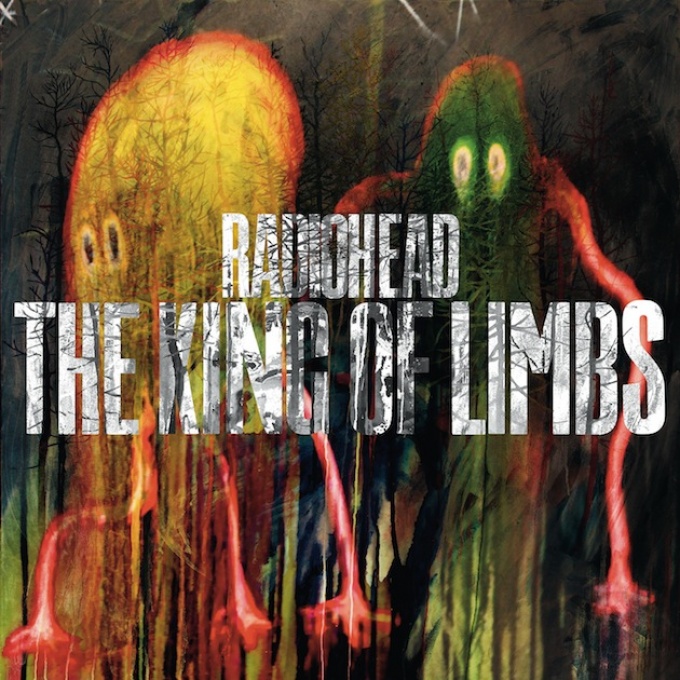
Today, I caught myself reading through Pierre Schiffler’s blog. I was quite frankly shocked. Radiohead released a new album? Wait what? I realize that I have been somewhat distracted from my usual musical research of late, but I have difficulty seeing how I could have missed this. Yes Sufjan Steven’s Age of Adz went under my radar for a rather lengthy stretch, but this is Radiohead.

Thus as anyone thoroughly ashamed by his ignorance in such matters would do, I tracked down a number of articles detailing the release and the album. Not the most productive afternoon of my life, but rather interesting.

This most recent release was described as a natural progression from Radiohead’s pay-what-you-want online release of In Rainbows four years ago.

Pierre, in his post, effectively juxtaposes the remarkably limited marketing campaign with the album’s predictably meteoric rise on The Hype Machine, Last FM, and similar sites. However I disagree that the release strategy undertaken was a ‘bare minimum’ undertaking. Perhaps describing it as a less-is-more approach is more appropriate. Yes, limited promotion (just stopping short of saying nothing at all) was used; however this is perhaps more reflective of the album itself, the direction of the industry, and Radiohead’s general unpredictability, than anything else.

Although pushing the boundary, it appears to be more of an EP that a full album, Radiohead does not appear to be touring in support of the EP/Album, and the majority of Radiohead fans are likely to come into possession of the album via less-than-legal downloads regardless of release strategy. Interestingly, as Pierre himself mentions, the album’s online uproar appears to have outdone In Rainbows: even though critical reviews appear less favourable.

In brief, the traditional marketing and distribution platforms for music are increasingly compromised: especially when a dedicated fan base is particularly technologically savvy. By limiting the campaign, Radiohead focused on customers that will actually consider paying for the content. Radiohead’s strategy appears to extract value from fans willing to pay, while refraining from investing in individuals who are just going to download the album anyway – I won’t even mention buying a traditional CD from a record store, as demonstrated by this release strategy, an increasingly irrelevant platform.

Hotel Marketing strategies: lessons from the blogosphere, and Istanbul.

In continuing with the Turkish theme, I recently read through a blog by the title of ‘hotel marketing strategies’, which posted two recent interviews with a Turkish hotelier. The focus of the discussion was the importance of online user-generated content, reputed design, and strategies to maintain a positive online presence in the hotel marketing industry.

The article argues that, when it comes to hotels, players in the industry do not control the predominant industry channel — online hotel-review and travel sites. Thus, perhaps the best marketing strategy is not really a marketing strategy at all.

The hotel in question, the Witt Istanbul, has been tremendously successful: winner of the 2010 Design Award by Wallpaper Magazine, and rated a World’s 100 Best Hotels by the Sunday Times Traveler Magazine.

As mentioned in the article, the emphasis in the project was on design, and quality. By successfully fulfilling these elements customers are doing the marketing themselves. As found in the interview,

I think we’re going to see more and more of that in the future. Improving ‘findability’ will give a better return on investment than outbound sales efforts. Having an impressive online presence pre-sells potential guests before they even contact you.”


By hiring reputed young designers and emphasizing guest experience, a word-of-mouth campaign grew naturally. This campaign was certainly aiding along by Gradigio, a digital communication agency. Nevertheless, this online, blog and review-driven campaign has been successful, and a manner in which smaller individual hotels can beat out international chains.

When it comes to hotel marketing, guest reviews are key. Thus in a certain sense, the product itself is the marketing campaign. The medium really is the message. And as Seth Godin often repeats, design is the foundation of marketing.

Sources:

http://www.hotelmarketingstrategies.com/hotelier-interview-tuncel-toprak-of-witt-istanbul-suites/

http://www.autoban212.com/

http://www.hotelmarketingstrategies.com/maintain-interest/

AWARDS

Turkish Tourism: the hypermodern intermeshed with the historic and the quixotic

I have just recently received news that I will be travelling to Istanbul near the end of March. Thus, the past few days have largely been spend rummaging through online reviews, tourism information, and blogs, as I wait for my Lonely Planet Turkey to become available at the local library.

In the process, I have come across the Ministry of Tourism sanctioned Turkey advertisements. After noting the beauty, and juxtaposition, I came accross the extent of segmentation undertaken throughout the video campaign.

Messages such as

I dream of: Turkey

YouTube Preview Image
Welcome home: Turkey

YouTube Preview Image

Unlimited Turkey

YouTube Preview Image
Go with the rhythm…enjoy Turkey

YouTube Preview Image
Istanbul: timeless city

YouTube Preview Image
And others all end with the signature Tourism Turkey Logo. Although not overly disparate in title, the varying advertisements are clearly targeting different portions of the tourism market.

First the similarities, all of the commercials prominently display the ocean, central mosques, yachts, and of course, pretty women.

However the differences are of particular interest. Turkey itself appears to be fraught with duality. Europe and Asia, Islam featured alongside Christianity, postmodern architecture laid beside Byzantine ruins, Armani suits amidst traditional dress, a unique blend of escapism intertwined with familiarity. The ministry advertisements appear to emphasize this juxtaposition and yet do so while hinting at an underlying uniqueness, difficult to replicate elsewhere.

The lavish and outright gaudy opportunities, notably in Istanbul, are hinted at; however they are underscored by a genuine culture, a musical scene, local cuisine, and incredible biodiversity. The combination of this ‘easy access’ with genuine authenticity allows Turkey to set itself apart from newly-emerged Arab competitors such as Dubai while also presenting unique, ‘foreign’, and historic aspects simply non-present in many European tourism destinations.

It appears that Turkey has a proposition for everyone, from adventure travel to weekend getaways. I am looking forward to finding mine.

Spam prevention powered by Akismet