Categories
Uncategorized

Sustainability – A Trend or Marketing Strategy?

Commenting on  Rachel Yu’s Blog: https://blogs.ubc.ca/rachelyu/2011/10/10/marketing-and-sustainability/
YouTube Preview Image

More and more companies nowadays are directing their resources to sustainability, but what are the true intentions behind that mindset? Are companies only doing it to stay within competition’s range because everyone else is doing it, or is it because they truly want to save and protect the environment? I agree with Rachel Yu in terms of “I feel that some of the companies are just hopping onto the going-green bandwagon just because it’s the mainstream these days”.

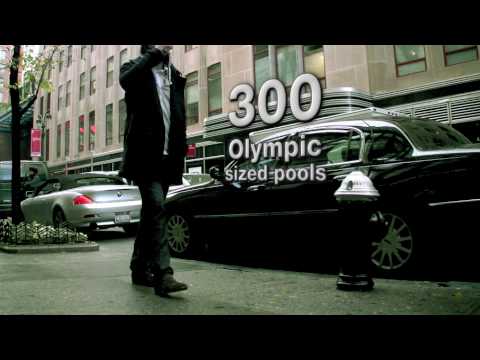
Like in the Starbucks example, its great that they saved waste equivalent to 400 fully loaded garbage trucks with their newly designed cup. With just a simple adjustment to their product, companies can save tons of waste in our planet and also convey to the consumers that their company is in the category sustainability and have a positive image of that. It seems like a win-win situation with the company. Therefore, it is irrational for companies to miss out on the opportunity and not join in to this trend to if they can alter a bit of their product and bandwagon into the sustainability trend.

As consumers, we also may not care about sustainability, but the fact that a company will “make the effort” to take a step towards sustainability will give the slight additional positive image of that company, “oh that’s nice of them”.

Even if the sustainability informational advertisements don’t mean anything to the consumer, the advertisements itself is still a great way to get the company’s name out there at the same time. Again, a win-win situation occurs.

In essence, the question might not be “why are companies following this trend?” but instead, “why not?”.

Categories
Uncategorized

Just In The Right Place

Reference: “Marketing blog #1- Virtual Subway Store Makes Grocery Shopping Easy
https://blogs.ubc.ca/elizalee/

YouTube Preview Image

After learning about distribution in class, I’ve learned that “convenience” is the key to success whether to the producer or the consumer; getting the right product to the right place to the right time. Home Plus’s strategy to make a virtual store in the subways of Korea really adapted to the average Korean consumer’s needs by making it truly convenient to shop for groceries while waiting for the subway to get to/back from work and having their ordered goods delivered to their doorsteps without any effort by the consumer themselves, which ultimately adds customer value to the store.

In order to be successful at delivering all the orders taken online, the company must have a value delivery network where the company, suppliers, distributors and consumers set up a marketing channel to deliver the goods from the manufacturer to the consumer. This distribution must be very complex because of its time-orientated factors because they are delivering perishable items. Home Plus must have spent a considerable amount of resources to insure this process is smooth and gets delivered on time to create customer value and take on a whole new set of customers that value their services. This service also gives Home Plus a big competitive advantage because in the world today, many consumer’s are using smart phones and similar technology in their everyday life that makes Home Plus’s service very compatible compared to the traditional offline supermarkets.

Therefore, it’s no surprise that Home Plus’s online sales increased by 130% and became #1 online store in Korea. I am again astonished by the company’s care for its Korean market. Home Plus increased their sales and brand image with just a placement strategy, the company accomplished so much with no change in the product, pricing, promotion. However, I think this strategy will only work well in countries that are fluent in using technology. If we had this kind of service in Canada where we are still a few years lagging behind the technological frontiers, most people would not know how to use the features on their devices or may not even be able to access such devices. So I think it was very clever to cater the Korean market with this service and placement because it distinctly matches its consumers needs and environment.

Categories
Uncategorized

Coke’s Consumer Involvement – “Share a Coke” Campaign

Commenting on this blog: http://www.adweek.com/adfreak/australians-getting-their-names-coke-bottles-and-cans-135519

“The soda brand has launched its “Share a Coke” summer campaign, in which 150 of the nation’s most popular names are printed on Coke bottles.”

I’ve always wondered how marketers would find a way to increase sales on product that’s already been in the market for so long and Coke’s initiative to commence personal name branding on its products stunned me. It’s simply amazing and clever. Although I don’t usually drink soda beverages, if my name was put on a coke bottle, I would definitely make a purchase and even buy it even if I didn’t already like coke before. This campaign’s change in the packaging turns the beverage into a whole new product for consumers, which differentiates Coke apart from all the other soda brands. The bottles can be used as personal gifts for those with the corresponding name on it, people can collect all the names, people can re-use the bottle and retain their name on it, and etc. Who would have thought that a single bottle of Coke can be bought as an actual presents before?

Coke’s “Share a Coke” campaign really showed me how market penetration worked. They increased sales  of the original product in the current market segments simply by just adding names onto it.  Making it personal to the consumers. Getting in-line with what a consumer would want: their name on a prestigious bottle. The market penetration concept seemed so  difficult to imagine. How could marketers increase sales to the exact same market segment with the exact same product without adding anything to the original product itself? Good examples were hard to find. The only answer I could think of was to increase sales by external influences ie. major increases in celebrity ads, sponsoring athletes, witty/unique ads, or even lowering price. However, without any of those, Coke has blown me away with just a simple change, which would have cost them little to implement too.

To add, Coke has designed a follow-up marketing program to make a video/song for each name on the bottle. How much more personal can they get? The only downside is that people won’t buy the product if their name is not on the bottle, which can be quite a lot of consumers considering only 150 names are being printed on the bottle. All in all, this campaign is both very effective and cost efficient, the best of both worlds. Cheers to Coke!

YouTube Preview Image


Categories
Uncategorized

Blog #1 – Testimony Of A Doubtful Consumer.

Comm 296 has been revealing to me all the behind-the-scene secrets for the questions I started having recently as to why companies are becoming “so nice” to consumers. For example, services such as extended warranties, free product replacement/repair and producing new products that are more specified at a need for a cheaper price. I always thought that marketing was a scam to capture consumers to the brand just to make a sale, like in the product concept where companies mass produce a product and convince consumers that it is the best. But now I know they’re aiming for something even deeper through the marketing concept.

Marketers/companies are trying to acquire my entire lifetime-loyalty so that I’d not only purchase their product when I have a problem to solve, but to keep coming back to the same brand every single time and even maybe purchase another product for solving my other needs/problems.

To illustrate, during the winter of Vancouver, I needed a good jacket to keep me warm. The first brand I thought of was The North Face because my friend had a backpack from that brand and kept bragging about it’s functionality and looks. The North Face mainly specialized in winter clothing, so I assumed their jackets must be even better! I was right. I bought a down jacket, the “Diez” model, even though it was quite expensive and I LOVED It. The jacket is amazingly light and also keeps me surprisingly warm too, not to mention their lifetime warranty for defects in materials/workmanship.

Since then, I’ve always gone back to The North Face to solve my winter-clothing problems and I have been unconsciously demonstrating consumer-generated marketing by recommending it to all my friends and family. Unknowingly, the brand caught me, and converted me into an advertisement.Therefore, the main thing I’ve learned is that companies offer a product of value to me and then they’d reap a value back, which are long term profits(consumer equity) and even create consumer-generated marketing. So “being nice” isn’t a scam to increase sales. Companies are building good customer relationships to further increase profits in the long-run.

YouTube Preview Image

Spam prevention powered by Akismet