Categories
Uncategorized

Social Media vs. Luxury Brands

The economic recession has imposed great impact on the consumer goods market and today I’d like to see how the recession influence the luxury market and how luxury brands can utilize social media to retain their brand image and customers to fight against the recession.

In fact, I believe luxury brands are the brands that can take best take advantage of social media and networking, such as microblogging and online content creation.

1.Social media is among the best tools that luxury brands can utilize to create an emotional attachment that goes beyond just a product features.

2.Social media can be used to faciliate social networking, in order to generate and retain a steady hardcore fans of the brand. By increasing social awearness and costomer involvements, luxuray brands, such as Ferrai, are able to generate, other than the customer who are acutally purchasing their products,  an ethusiastic aspirational customer base, who dreams of one day affording their product, and they might.

3.Luxury is often associated with exclusivity. The good thing about social media is that luxury brands can create things like exclusive private networks or special content that is only for customers of VIPs. A good example for this Gilt.com requires membership before customers can place an order, and mambership can only be obtained through a current member. In this way, exclusivity helps to add more value to the luxury brands.

-END-

Categories
Uncategorized

Excite or Panic?

Thanks to the technological advances, people are generally more socially connected both on line and offline. People tweet more, take more photos wherever they go, and “sharing with friends” is becoming popular and even becoming a part of the lifestyle of many young people. The video below is made by Coca-cola recently to promote their Coca-cola village in Israel. 600 teenagers were offered a wristband which contains their facebook usernames and passwords. Those wristbands were actually RFID tags that enable them to check into various attractions in the village and automatically tag themselves in pictures shown on the facebook account of the performer. It successfully connects the real world with the virtual world, and allows people to share things in real time which has added fun and excited most of those teenagers. As for marketers, this is exciting too. Imagine if this could be recreated on a larger scale at all kinds of events or even retail locations. For example, it is as easy as waving your wristband to join an email list for promotional offers!

YouTube Preview Image

However, such campaign also provoked concerns of many other people. They are concerned with the overexposure or even misuse of their personal information Some people also describe it as scary and terrifying as they feel being watched and tracked whenever and wherever they go with such RFID tags. Other people think the tag is effectively a surveillance camera in stores.

RFID is definitely the latest and “coolest” technology as described by some people. However, there are some ethical issues that need to be carefully considered beforehand by marketers who wish to incorporate such technology in their marketing practices.

-END-

Categories
Uncategorized

Find it! Share it!

Itspot, a new iPhone app, is a location-based social media tool that allows users to find sweet deals in major shopping centers in Toronto and share shopping experiences and thoughts with their friends in real time.

With this free app downloaded, users are able to access promotion information more easily and quickly. Users are also encouraged to exchange shopping information and opinions with their network of friends. By tapping into such social shopping as a promotional strategy, retailers can expect that shoppers’ overall shopping experience would be further enhanced. When shoppers use the Itspot Toronto App and find great deals or make purchases, they spread out the word, which is definitely a win for both shoppers and retailers. However, the downside is that bad word of mouth can also be spread out quickly. Therefore, retailers should frequently check and make sure that the promotion information conveyed by the app is accurate and up to date and make commitments to enhance product quality and offer better customer service.

With the Christmas shopping season about to begin, the Itspot will definitely be a good networking and social media tool for shoppers and add value to their shopping experience.

-END-

Categories
Uncategorized

Simply a Price Increase?


Today, I went to Simply Pasta (@ UBC SUB) for lunch.

I haven’t been there since this semester and was surprised to find that there were not too many people waiting. Usually, there are long line-ups in front of Simply Pasta, especially during lunch peak hours. Thus, I was happy, but when I was ordering, I found that the price per serving has increased from $5.75 to $7.25, a 26% increase! I also noticed that pasta and topping remain unchanged. Moreover, prices other food stands in the cafeteria charged also did not change. Therefore, I was wondering what would justify such pricing strategy.

People buy a certain product because their perceived value (benefits-costs) of the product is high. The pasta and topping remain the same, which means customers derive the same benefits as before. However, they now have to pay higher prices for the same benefits. No wonder some people would just simply turn away. I don’t think the price increase would be beneficial to Simply Pasta, because their target market is college students, who are relatively price-sensitive. Therefore, chances are that, increasing price would not increase their sales in terms of $ amount. What’s worse, there are plenty good substitutes for pasta in the cafeteria. The greater the availability of substitutes products, the higher the price elasticity. The price increase, therefore, may not be a wise choice for Simply Pasta. Evidences also support such reasoning, as less people are lining up, showing a negative consumer reaction to such price increase. Simply Pasta simply need to rethink.

-END-

Categories
Uncategorized

A Lesson from Burger King

YouTube Preview Image
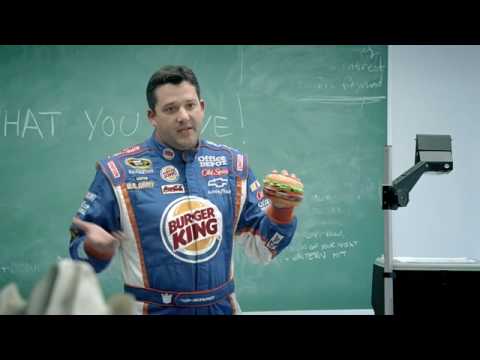
This is an ad running by Burger King features NASCAR champion Tony Stewart teaching a course to other celebrities that it is important to endorse brands they actually believe in. As for marketers, choosing the wrong person to endorse their products is risky. A brand usually has a personality as does the celebrity. If the two personality does not match, the campaign usually wont be as powerful as expected. By adopting celebrity endorsement for their products, marketers are actually conveying a message in their ad: “buy this product, because someone you admire recommends it”. The problem rises here: is the celebrity really “admired” by the customers in the target market? If the answer is no, the marketer is exposed to a risk that customers who don’t like the celebrity would be highly likely to switch to other products. The reason is that, by using the product, the customer is sending a message to people around her that she wants to affiliate to the celebrity who endorses the product, which is not what the customer want. Therefore, in order to run an effective ad, marketers should always do plenty research on target customers’ preferences and ensure that the celebrity and their products are a good fit.

-END-

Categories
Uncategorized

Is It Just Too Much??

In support of International Breast Cancer Awareness Month, the NFL players are wearing pink shoes, gloves, caps, and sweatbands. Besides, many brands are using pink in their ads to embrace the idea and show supports. Pink is everywhere this October.

No one can argue the Pink campaign has not been successful in raising awareness of breast cancer, but it seems the campaign had already began to show signs of overexposure and a potential for losing its authenticity due to a sort of “pink overload” that may happen as more and more companies joined the campaign.

Some voices from people:

  1. Genuiness Problem: it’s only about pink. People were wearing pink during the game, but there were no promo, or commercial during the game that gives any information about the cause;
  2. A backlash of consumer cynicism from people who just want to watch their football without the pink towels and buy their products without constant pink reminders;
  3. “What about other cancers or other preventable deadly diseases?” Awareness around breast cancer is well beyond that of most comparable illnesses;
  4. Instead of investing so much time and effort into somewhat meaningless symbolism, the campaign would be better off trying to capitalize on the ubiquity. Breast cancer groups may be better served to focus on a couple times of year where people are most likely to support the campaign monetarily and drive research.

I am not sure how much money so far has been invested in the campaign or how much fund they have raised from it, but it is always good to consider from time to time the benefits we derive from the branding strategy and the cost accociated to it, namely, the brand equity.

Another thing we’ve learned from the text book is that companies shoud be vigilant in protecting their brand names, because if they are used so generically, over time, the brand itself can lose its trademark status. As for the pink campaign, overexposure may cause a loss of authenticity or even provoke consumer cynicism.

However, the question was and remains, where is the imaginary line between adequateexposure and overexposure???


-END-

Categories
Uncategorized

Gilt.com

I got to know the website from a friend last year and did not pay much attention to it at first. After becoming a member, I constantly received emails that remind me of new daily special sales, and I was gradually drawn to this website which features sales of luxury products at discount prices. Now, browsing the website from time to time has become one of my rituals. In fact, Gilt.com is becoming increasingly popular these days and is estimated to pull in $400 million in sales for the year 2010. As I am taking marketing right now, I guess there can be a good marketing lesson to take from the success of Gilt.com.

1. Imagery leads to effective positioning

Gilt.com is clearly not a website that sells average products, and the imagery they use on their website effectively conveys this message to their target customers. The imagery is usually carefully selected and changed everyday to indicate a premium experience and a fresh website content that is worth seeing everyday. The technique strongly reinforces their brand image and this positioning effectively helps them to differentiate themselves from websites that sell average products. Chances are that people tend to think of and want to visit Gilt.com when it comes to luxury products, which is a good start for Gilt.com.

2. Backstory adds to value

Why do people buy luxury products? High quality may be part of the reasons, but more importantly, a shareable story that the purchasers can tell to others along with the product they purchase adds tremendous value to the product itself, because telling the story is considered by purchasers as a good way to affiliate himself to an idea/belief or a group of people he sets as a reference group to build a disirable self-image. To differentiate itself from other websites selling luxury goods, Gilt.com has always been focusing on and succeeding in offering such stories for purchasers to tell in order to further make their puchasing experience more enjoyable.

3. Urgency to purchase increases conversion rates

For most e-commerce sites, conversion rate is always a big headache. How does Gilt.com tackle this problem? What they do is to set a time limit for the purchase which means the product you put in your shopping cart would expire after 10 minutes. The limited amount of time you can hold on to the product, along with a relatively easy return policy, Gilt.com is more effective than most other e-commerce sites in terms of converting viewers to purchasers in a timespan as short as 10 minutes.


4. Daily email marketing creates a ritual

Rituals such as going to Starbucks for a coffee or brushing your teeth with Crest are disirable consumer behavior for companys because this kind of buying pattern usually guarantees stable sales and solidify customer loyalty. Companies try hard to encourage such behavior and Gilt.com is no exception. It sends an email noting the sales for the day every day at noon EST, a time conveniently scheduled when many office professionals are taking their luch break. By doing this, Gilt.com is capable in creating a ritual for its customers to browse the website at a convenient and determined time everyday which would increase the posibility that they would make a purchase.

If someone is considering incorporating an e-commerce component to your business, I guess Gilt.com has offered good reference and there is a lot to learn from their various marketing techniques.

-END-

Categories
Uncategorized

Did You Know Your Coffee Profile?

I just finished a quick and interesting quiz on MyMasterRoaster.com which helps to determine my coffee profile (I didn’t know I have a coffee profile before @_@). This profile would then be used to generate a list of coffee blends that best suite my palate.

This is a new online tool lauched by coffee roaster Van Houtte. I think it is a good way to position itself towards its specific target market, bean lovers, by showing its expertise in bean making and its efforts in flavor improvements. The quiz gives people a perception that coffees are not created alike and all coffee drinkers have certain coffees that better suit toward their tastes than others. Consumers usually react positively to customization. The strategy Van Houtte is using here resembles micro-marketing and is making the consumers feel that its products satisfy their needs well, and are uniquely designed for them—–positioning a good value. So we have good reasons to believe that this campaign would successfully stimulate the willingness of beans purchase from Van Houtte.

Another benefit we can not ignore is that, the quiz is such a free and easy-to-use tool as it helps Van Houtte to collect data on its target consumers. By analyzing the answers, Van Houtte is able to know more about the taste of its consumers and therefore can tailor its flavour to better adapt to those customers.

-END-

Categories
Uncategorized

How You Handle Competitions Matters!!

http://www.rohitbhargava.com/2010/10/visa-chases-the-myth-of-exclusivity-and-fails.html

In this article, the author talked about his two distinct experiences with VISA and American Express, two of the most popular credit cards nowadays. VISA was associated with a negative experience when the author went to the Summer Olympics in Sydney, an event sponsored by VISA, ten years ago. The author waited in the line for a drink for a long time only to learn that they only accepted VISA cards – and he had not brought his with him! On the contrary, AMEX gave more pleasant experience when the author was in a gift shop and was told at the cashier that, with an AMEX card, he could get a 5 % discount on his purchase- a nice benefit! Apparently, the two credit cards adopt different approaches towards their competitors. VISA uses irritating exclusivity arrangements to grab market share, whereas AMEX focuses on how to create more value for its customers. Guess what the result is? After similar experiences for a couple of times, he is now much happier to be a customer of AMEX! The story provides valuable insights for marketers: “if a good portion of your customers are also customers of competitors – then your challenge is NOT to get them to choose you instead of the other, but rather to get them to choose you more often than they choose your competitors”.

Psychological factors- how customers feel about your products- play an imporatant role in consumers’ purchase decision making process. Some customers have attitudes towards the product even before they actually use it. Their attitudes are enduring but can be influenced or even changed through persuasive communications and personal experience. Advertisements, campaigns are typical ways of this kind of persuasive communications frequently used by marketers. But has it ever occured to them that, how they treat competitors also influences attitudes of customers, expcically those who are also customers of competitors. Marketers need to handle this with care. Of course, they have to win the battle, but in a graceful and decent manner, because if they don’t, they are likely to provoke customers or even turn them off. I recall an ad made by Pepsi I saw last year. The competition between Pepsi and Coke has been lasting for ages. But the thing is, does this kind of ad really work?

YouTube Preview Image

In the ad, Pepsi was intentionally degrading Coke. If I were a fan of Coke, I guess I would never think about switching to Pepsi. Pepsi should go with it if this kind of result is what it really wants.
What I am trying to say here is that a customer’s purchasing decision is influenced by his attitude and personal experience. The best way to attract customers from competitors is thus not forcing them to, but focusing on adding more value to its products and provide positive experience for the customers as much as possible.

-END-

Categories
Uncategorized

Green Marketing Let’s go GREEN!

You probably have heard of “Green Consumerism” , a notion that is becoming popular thess days. In general, there is a growing public awarness of the environment degration, and as a result, consumers nowadays begin to consider the environmental implications associated with their puchasing decisions and would prefer eco-friendly or “green” products.

What differentiates these two body lotions?

Kiehl’s has long been recognized by its eco-friendly packaging and high-quality, as their formulations have always been made with natural ingredients. Kiehl’s also has a group of loyal customers or even advocates thanks to its NO animal ingredients/NO animal testing policies. On the other hand, Dove contains animal fat and for this reason vegetarians and vegans refrain from using it. Now you see, it really makes a difference!

http://www.hchlv.com/render.aspx?siteID=1&navIDs=1,163,171,301
a brief overview of how the ethical and environmental segmentation applies to the UK population

To ensure a marketing strategy is effective, it is always important for marketers to be aware of social trends and give a timely response. Businesses should take heed of this growth in “green consumerism,” and new marketing campaigns should be devised to reflect this new strain of thought among consumers.

Here are some of the main differences between green marketing and other forms of advertising:

– unlike, price, quality, and other features, the environmental impacts of a product may not affect the purchaser directly. It offers consumers the opportunity to act on their environmental concerns.

– unlike most advertised product attributes, environmental claims may apply to the full product life cycle, from raw material extraction to ultimate product disposal, reuse, or recycling.

– environmental marketing provides an incentive for manufacturers to achieve significant environmental improvements, such as toxics use reduction and recycling, by competing on the basis of minimizing environmental impacts of their products.

What can companies do to respond to this social trend and conduct effective green marketing?

– by promoting the environmental attributes of their products

– by introducing new products

– by redesigning existing products

Important highlight:
Companies with product lines that were created in an environmentally friendly fashion (i.e., with recycled products, comparatively low pollutant emissions, and so on) should learn to shape their marketing message to highlight such efforts and to reach those customers most likely to appreciate those efforts.

-END-

Spam prevention powered by Akismet