Categories
Uncategorized

The seven sins of greenwashing – Extracted from sinsofgreenwashing.org/

I love this site, that’s why I want to share this information with you:

tradeoff_smSin of the Hidden Trade-off

A claim suggesting that a product is ‘green’ based on a narrow set of attributes without attention to other important environmental issues. Paper, for example, is not necessarily environmentally-preferable just because it comes from a sustainably-harvested forest. Other important environmental issues in the paper-making process, such as greenhouse gas emissions, or chlorine use in bleaching may be equally important.

noproof_smSin of No Proof

An environmental claim that cannot be substantiated by easily accessible supporting information or by a reliable third-party certification. Common examples are facial tissues or toilet tissue products that claim various percentages of post-consumer recycled content without providing evidence.

vagueness_smSin of Vagueness

A claim that is so poorly defined or broad that its real meaning is likely to be misunderstood by the consumer. ‘All-natural’ is an example. Arsenic, uranium, mercury, and formaldehyde are all naturally occurring, and poisonous. ‘All natural’ isn’t necessarily ‘green’.

worship_smSin of Worshiping False Labels

A product that, through either words or images, gives the impression of third-party endorsement where no such endorsement exists; fake labels, in other words.

irrelevance_smSin of Irrelevance

An environmental claim that may be truthful but is unimportant or unhelpful for consumers seeking environmentally preferable products. ‘CFC-free’ is a common example, since it is a frequent claim despite the fact that CFCs are banned by law.

lesser_smSin of Lesser of Two Evils

A claim that may be true within the product category, but that risks distracting the consumer from the greater environmental impacts of the category as a whole. Organic cigarettes could be an example of this Sin, as might the fuel-efficient sport-utility vehicle.

fibbing_smSin of Fibbing

Environmental claims that are simply false. The most common examples were products falsely claiming to be Energy Star certified or registered.

Categories
Uncategorized

What a twist*

YouTube Preview Image

I saw this video for the first time three years ago. It was about a month after moving to canada, and since then, I know the way I thing about sustainability changed. One has to understand that sustainabilty has to be part of everyone, and not just limited to can afford it. I say that because sometimes buying a biodegradable detergent which is is three times more expensive than regular detergent is not viable. Being sustainable can be affordable to everyone.

*Seth green making fun of M. Night Shyamalan

Categories
Uncategorized

Cause-Related Marketing

Cause-related marketing can sometimes lead to great things. We see clear examples every day like the one we saw in class where the NHL worked together with the pink ribbon association to promote breast cancer awareness, and in a way to introduce the NHL in a different market. It’s a clear win win.

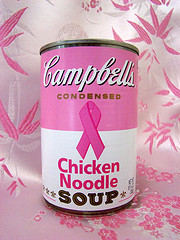
My concern is with the approach given to this donations. It seems the campaign reaches enough people, and a lot of people is buying cause-related items,  e.g. Pink campbell soup, or any (RED) product.  Is it really worth spending that much money promoting this campaigns? Just to give an example, it seems (RED) campaigns are extremely pricey and if you look at the (RED) t-shirts for example, they are not that pretty anyways (a mon avis). Why not donate directly to the cause instead of shopping something to donate. I don’t think, unless we are talking about items everyone buys in a weekly basis, it is really worth it to spend all this amount  of money to promote a company doing a good thing. I read about a campaign that was held in England in 2006 between Pampers and UNICEF where they promoted that for every pack of diapers sold by pampers they where going to fund tetanus vaccines for mothers-to-be in the developing countries. At the end of the campaigns they announced that the promotion had resulted in over 7 million vaccines. Translating that into money it is about CAD$ 0.04 for every package of diapers they sold atCAD$ 13.00. In the end they donated  about $330000 from sales over 95 million dollars. 1

I think donations have to be more direct, we don’t have to consume to help!


1 Pampers example extracted from the green marketing manifesto by John grant

Categories
Uncategorized

Use only what you need

I love sustainability. I  have always been a fervent supporter and activist of sustainability and all that surrouds it. I have decided from now on, I am only going to post sustainable marketing related articles, starting with this one:

Denver Water Ad: Use Only What You Need – Adpunch.

I think the pictures speak for themselves.

Cheers!

Spam prevention powered by Akismet