Tesla and the Rise of AI

We’ve all seen the doomsday warning associated with artificial intelligence. Images of robot armies and a mastermind intelligence launching the world’s nuclear arsenal are commonplace in Hollywood and popular culture. While mankind is still decades away from constructing an artificial intelligence of that caliber, many organizations have started developing the early stages of a true intelligence. One such organization, Tesla, is pursuing AI research in order to fully realize their dreams of a self-driving car. This research has been in progress for quite some time, but setbacks have set the clock back on fully-achieved automatic driving. On May 7, a Tesla car did not recognize a large truck on the road and collided, resulting in the death of a Tesla driver.

Source: GETTY Images

Source: GETTY Images

Trying to bounce back, Tesla announced the latest software update for its self-driving cars on Sunday, revealing that the vehicles will be relying more heavily on radar to make decisions, rather than the optical cameras already installed on the cars. While from a collision-avoidance stand point radar will be a vast improvement, there have been issues raised against how the artificial intelligence will react in potential pedestrian collisions. As referenced in the blog of David Ross where he questions the role of artificial intelligence as a friend or foe, there is a classic dilemma regarding whether a self-driving car should protect its driver or the pedestrian crossing the road in a situation where only one can be saved. This is just one of the many simulations that Tesla will need to run through in order to make the program a success on the consumer market. In addition, in a new blog post by the Tesla Development Team it was highlighted that the key issue in using a radar collision detection system is the prevalence of false alarms. Using the current system, small metallic objects such as a soda can appear to be larger and more obstructive than it actually is, resulting in unnecessary stopping. As well, “Something made of wood or painted plastic, though opaque to a person, is almost as transparent as glass to radar.”

While there are definitely issues and glitches that still plague the Tesla self-driving car, the progress they have made is something to be commended. If and when Tesla can achieve their vision of the completed and safe autonomous car, Tesla will spearhead the automobile industry into an entirely new market. As the pioneers of this new movement, the prosperity that Tesla will experience will be incredible. As it stands, Elon Musk is well on his way to leading one of the strongest car companies the world has ever seen.


The US Election and the Stock Market

The stock market, on any given day, is in a constant state of fluctuation. Business news and quarterly reports fuel the ever-changing values of different firms, but sometimes things that are seemingly disconnected from the business world can have the greatest effect on the stock market. Last Friday (October 28, 2016), it was announced that the Federal Bureau of Investigation discovered a new “trove of emails” from one of Hillary Clinton’s top aides during her time as Secretary of State that could potentially provide evidence of a leak of state secrets.

Up until now, the feeling on Wall Street was that Hillary Clinton’s victory was almost guaranteed, and as such, the market showed consistent gains over the last couple of months. The thinking behind this being that Hillary Clinton, considered more predictable than Donald Trump, would be better for the market. Thus, more people invested in the market in anticipation of continuing growth. However, with the onset of a new scandal, markets have started to get nervous. According to Naeem Aslam, chief market analyst at Think Forex in a note to clients, “Hillary Clinton’s news has taken the wind out of the market rally. This certainly increases the chances and odds for Trump winning.” As people begin to lose faith in Hillary Clinton’s chances, and in anticipation of massive market losses at the hands of Trump’s unpredictability, people stop investing in the stock market and instead are buying gold. It is commonly known that in times of market uncertainty, people revert to buying gold and bonds in order to hedge their investments. This is causing fairly significant losses in some of the biggest markets indices on Wall Street. In fact, at one point the Dow was down 125 points from its highs of the day

Source: CNN Money

Source: CNN Money

The important thing, at least in my eyes, is to acknowledge the strength and nature of the stock market. It’s easy for investors to get nervous when watching such a charged political debate; especially when so much of the business world seems to be riding on the decisions to be made in the coming week. However, from what I can tell, the stock market actually has more influence on the election than vice-versa. The stock market is a powerful entity, and historically, has been able to predict the outcome of the election. When the stock market is up in the three months before the election, most likely the incumbent party (the democrats in this case) will win, and losses in that period would indicate a change in party. In fact, there’s an 85% success rate when following that pattern since 1928. So perhaps investors should try to keep the market up if they are looking for a Clinton win this election.

Word Count: 455

Two Months On: Where’s Hanjin?

It’s been almost two months since the South Korean shipping giant, Hanjin, filed for bankruptcy. The fall of the company was not exactly surprising given the fact that according to the BBC, Hanjin has been unprofitable for four of the last five years, but what is surprising is that nobody caught wind of their downfall sooner. When a company runs out of cash like Hanjin did, it usually comes down to bad financial accounting. More specifically, in this case, Hanjin faces a cash shortage after failing to persuade key lenders to reschedule debt. Basically, Hanjin knew it wasn’t going to be able to pay off its debt by the time that had already been established, so when that deadline came around, there was no money to pay, forcing them to enter receivership (where a receiver is appointed to oversee the possession of and selling of assets in order to repay the outstanding debt). So what are they doing now, two months later?

Because Hanjin ran out of money, their ships, all the sailors they employ, and all their containers have been stranded outside of port waiting for a solution to be found within the upper echelons of Hanjin’s managment. No port wants to allow Hanjin’s ships into port because of their lack of cash. Without cash, Hanjin’s ships cannot pay the port fees needed to process the removal of their containers and allow them entry to dock. At the same time, these stranded ships and, more specifically, their crews cannot wait forever out at sea.

Thousands of Hanjin containers are stuck in port and at sea (Source: BBC)

Thousands of Hanjin containers are stuck in port and at sea (Source: BBC)

Outside of the company itself, retailers are getting nervous. In the U.S. alone, Hanjin was responsible for eight percent of transpacific shipping. With the future of the company, and the containers they have on board their ships, hanging in the balance, U.S. retailers are worried about keeping their shelves stocked for the upcoming holiday season.  This case is a classic demonstration of the power of the Supply Chain and the importance of securing all the links in the chain. Much of the retail industry relies heavily on shipping companies such as Hanjin to distribute the goods to where demand presents itself. Because of this reliance on shipping companies, retail companies have a limited responsiveness to change (i.e. the bankruptcy of a key distributor) which increases the risk of shortages, additional costs, and certainly affects the reputation of these companies.

As it stands, many of Hanjin’s ships and their crew are still waiting for a deal to be made that could save the company. Meanwhile, all retailers can do is wait, watch, and hope that their shipments will arrive soon.

Word Count: 434

Government Financing of Professional Sports Stadiums

Almost every major city in the world has invested in providing quality sports venues for its populace. Whether it’s a small minor league baseball field to seat 5,000 or arenas like Los Angeles’ Coliseum that seat close to 100,000, there are serious expenses that arise from their construction. The new and improved Yankee Stadium was built in 2009 and carried a whopping 2.5 billion dollar price tag (3.25 CAD). The Yankees took out loans and municipal bonds in order to help cover the huge costs of construction, totaling around 431 million dollars from the city of  New York.  The issue however lies in the fact that these bonds are federally-based and thus, totally tax-exempt. The end result is that the government is losing billions of dollars worth of tax revenue. The issuing of these municipal bonds has become extremely common within professional sports. The NFL has built a total of thirteen stadiums, Major League Baseball a total of 12, and another 11 stadiums have been constructed in the NHL and NBA. Through issuing these bonds, the government has lost over three billion dollars in tax breaks. At this point, the American government is basically subsidizing the construction of these projects using taxpayer dollars from across the country.

Tax Revenue Lost Since 2000

Advocates for this use of public financing use the argument that building these sport complexes provides huge economic growth at a local level in the surrounding area. However, in reality there is little evidence that this actually happens. According to studies by Brookings, there is no “discernible positive relationship between sports facilities and local economic development, income growth, or job creation.” Even more than this fact, it is hard to justify the use of federal bonds and federal tax-breaks to pay for projects in only a few select major cities across the country. As it stands, residents in states like Alaska, Wyoming, or Maine are helping pay for these stadiums with their own tax dollars. So even if a stadium were to bring in the economic growth that is often proposed, many of the people paying for its construction will never experience the economic prosperity that they are paying for.

I believe that this practice needs to be eliminated or at least regulated more closely on a nationwide level. The only groups that really benefit from public financing are the already rich owners of sport teams, much less the government. These bonds, when properly used, fund public works like highways, schools,  or hospitals. It seems obvious that the construction of a sports facility does not quite fit into this category of public expenditure. The government should start implementing policies that would limit federal involvement in any ventures that would be used primarily for “private business use.”

Word Count: 427

Sources Cited:

https://www.brookings.edu/research/why-the-federal-government-should-stop-spending-billions-on-private-sports-stadiums/#federal-subsidy

http://money.cnn.com/2016/09/09/news/nfl-sports-stadiums-tax-breaks-taxpayers/?iid=EL

http://www.forbes.com/sites/jeffreydorfman/2015/01/31/publicly-financed-sports-stadiums-are-a-game-that-taxpayers-lose/#4f89afe56183

The Troubling Spread of the ‘Turing Playbook’

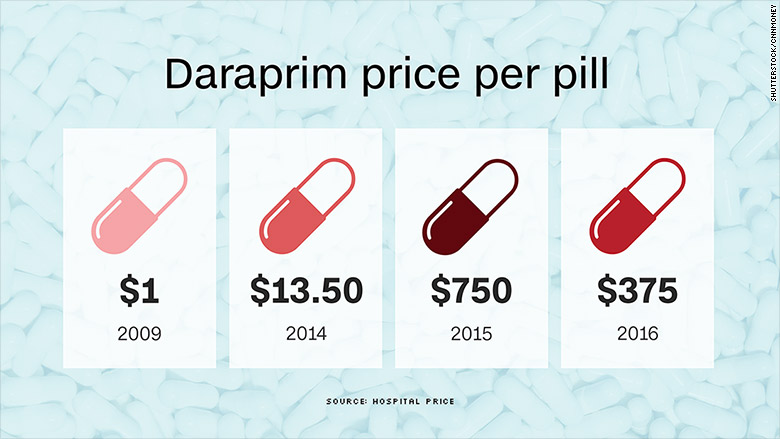
It is all too easy to be caught up in the competitive race for revenue and to forget the basic principles that are taught to commerce students the world over. The ideas of business ethics and corporate social responsibility are not new to the world of commerce, yet it seems that in many cases, the desire for profit has overshadowed the need to maintain the values of responsible business in today’s hectic corporate sector. As described by Business Case Studies, businesses not only have a responsibility to be fair to their employees and shareholders to make a competitive return, but also have the duty to “work in ways that do not damage the communities in which it operates.” Enter Turing Pharmaceuticals. In September of 2015, Turing Pharmaceuticals, led by CEO Martin Shkreli, acquired the distribution rights for a drug called Daraprim and almost immediately increased the prices of the drug from $13.50 to an absurd $700.00 per pill. This drug, a powerful and necessary one in the fight against HIV/AIDS, became unavailable to thousands of Americans almost overnight. While the drug has now been reduced to $350.00 per pill, the core of the problem lies in an utter disregard for the ethics.

Source: CNNMoney

Source: CNNMoney

Ever more worrisome, this disregard for ethics has begun to show its itself in other companies. According to Calvin Chang’s blog post on Mylan’s Price Charges for the Epi Pen, just this past month , the cost of an EpiPen increased in the United States from $100 to $600 and according to the same blog, about 10 other drugs are facing similar price hikes due to a lack of intervention over pharmaceutical companies’ ability to control prices. The end product is a dangerous game of calculated negligence. In these situations, these companies obviously hold little regard for the well being of their customers, however, even from the perspective of pure long-term financial success, this strategy won’t pan out. While profits and revenue will have corresponding increases in the short-term, by holding their customers hostage with exorbitant pricing, these companies are jeopardizing their image and standing among the general public. Indeed, a long-term successful business must rely on a strong focus on the community they serve. Without the support and approval of their constituents, a business cannot thrive. So while Turing Pharmaceuticals and those that follow the so-called “Turing Playbook” will see short term gains in revenue, I fully expect the public to find alternative means of acquiring the same product, eventually leading these companies to financial ruin.


Word Count: 412

Works Cited:
“Business Ethics and Corporate Social Responsibility.” Business Case Studies. N.p., 2016. Web. 11 Sept. 2016.
Howard, Jacqueline. “EpiPen Cost Soars, but It’s Not the Only Drug to.” CNN. Cable News Network, 25 Aug. 2016. Web. 11 Sept. 2016.
Long, Heather. “What Happened to AIDS Drug That Spiked 5,000%.” CNNMoney. Cable News Network, 25 Aug. 2016. Web. 11 Sept. 2016.