Staying Strong and Achieving Success…

Zimt1

Keep believing and don’t give up.

When Emma Smith came to talk to us about her company Zimt Artisan Chocolates and how she started with such a small idea, made it grow in such a short time span and how far it has come in only a few years really astonished me. I came across this article about Zimt Artisan Chocolates and Emmas plan of going international. I realized that even I could be capable of starting my own company and that I am in the exact same spot that she was in when she started.

She based her idea on veganism, an area that was very likely to expand in the future and is still continuing to become more common and known.

She incorporates a variety of modern trends that will target a specific customer base. Her products are raw, vegan, fair trade and organic. When she was speaking to us she really expressed how passionate she is about these matters and put a lot of emphasis on animal rights. Furthermore, her products are also very suited for diabetics and offer an alternative to people with dietary restrictions.

I really look up to Emma and how much effort she has put into the project and how she never gave up when she was struggling. Especially when she couldn’t produce her products on her own anymore and needed to hire a packaging firm to help her with her production. I think it must be incredibly hard to keep going when you think you have reached a dead end and just continue believing in your choices and retain a positive mindset.

How to be Successful in Business…

dal_u_mcuban_576

“There is very little knowledge that can’t be obtained through effort” – Mark Cuban

I have recently come across a blog post by Mark Cuban discussing the 6 things that you need to know to be great in business. I could relate to many of the aspects mentioned in the article and could draw connections to my previous knowledge.

He mentions that selling is not convincing but rather about helping. I had never thought about it in this way, but it makes sense because convincing a customer to buy a product will not guarantee customer satisfaction and the customer might not even be in need of the product and will end up being disappointed with the purchase.

The second point he makes, is putting yourself in the shoes of the customer which in my opinion is the most important point. This relates closely to what we discussed in class when creating value propositions because it is the pains of the consumer that the service or product needs to address.

Another clever point that Mark Cuban brings up is the aspect that you should know as much as you can about technology. Technology is advancing so fast that it can be hard to keep up with the latest trends. I think it is crucial to know as much as technology as you can to be the first with new innovations.

Mark Cuban has made me become more aware of the essential factors that are needed to be successful in business.

Social Enterprise Will Never Be Redundant

SocialEnterprise_graphic2

Whether we would need the Arc or social enterprise if the United Nations were fully funded is a fair question to ask, but with a little thought the answer is simple.

Social enterprise is an opportunity for individuals and organizations to support those trying to make a difference in the business world and funding the United Nations would not replace the social enterprise.

 The United Nations is not enough to cover all the aspects that the Arc and social enterprise offer. Social enterprises to not aid people monetarily or provide them with resources, but are providing knowledge, education and business skills. I do not think it is not a matter of funds that the United Nations is lacking to offer what the Arc does. The United Nations would have to become significantly larger to be able to help everyone and controlling such a large organization and workforce is nearly impossible.

By spreading business knowledge it can improve the quality of life all over the world and even help undeveloped countries raise their standard of living. The Arc Initiative has helped small firms such as Salem’s in Ethiopia and has made a significant difference.

I believe that global effort is needed to resolve social and environmental problems and charitable giving alone is not enough.

Importance of Corporate Culture

zappos

Corporate culture is crucial to the success of a company.

Danielle Van Jaarsveld came to our lecture and spoke to us about organizational behaviour and human resources and she sparked my interest in corporate culture. It has become clear to me that the state of the employees while determine the success of the company and where it will go in the future.

After having read Charmian’s blog post about Zappos and their corporate culture, it led me to think further what could go wrong with this strategy and why not all companies and have turned to this approach. I agree with Charmian that the relationships between employees are extremely important in the work environment and everyone should feel comfortable, but I think companies using this strategy need to be careful that employees don’t take these benefits offered to their advantage. Furthermore, the companies would have to ensure that the money invested into its employees will still secure high profitability.

I have realized from my own experience that a group of people sharing the same views, perspectives, beliefs and values will be able to corporate more efficiently and will be more likely to come to an agreement. This will create a more positive atmosphere that everyone will enjoy working in. However, I have learned that this is not only the case for group work in school, but also in large companies such as Zappos or WestJet.


Ensuring Customer Satisfaction

aoh_6897-728x520_q85

Customization is the key!

Since Nike has created their new Nike ID customization site and has made large investments to improve their website as well as launched their Nike Plus Training App, their sales have increased by more than 70%. They have successfully widened their customer base, now reaching more females. Sales are boosted as customers have the free choice of the color of the shoe itself, as well as its laces and can even add a customized phrased, which automatically ensures customer satisfaction.

The article suggests that some of Nike’s success came from their appearance during the World Cup. This is similar to Visa being present in the Olympics, as we analyzed in class. Nike wasn’t an official sponsor, but was worn by the players more than any other brand.

This strategy is extremely beneficial for Nike because it helps reduce their inventory levels, as the shoes are made on demand and there needs to be no forecasting as to how many shoes will be demanded and need to be manufactured. I personally think that becoming personal and creating a bond with the customer is extremely difficult for a big brand, but Nike has successfully found a way to satisfy the customer in various aspects and has therefore gained many loyal customers. I think in the future many other companies will follow in these footsteps and offer similar services.

Weighing up costs and benefits…

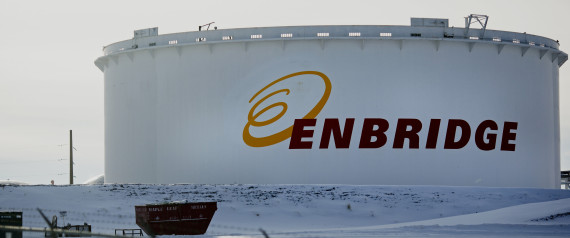
Ongoing Construction On The Enbridge Athabasca Pipeline Twinning Project

The Nak’azdli Territory is an incredibly well preserved area with precious wildlife and biodiversity.

The article “There will be no pipeline” illustrates the importance of the Nak’azdli territory to their values and lifestyle and their attention to preserving this land for their future generations. Allowing Enbridge to build the Northern Gateway Pipeline across their land comes with many risks, such as oil spills, which could have detrimental effects on the nature and wildlife.

My first reaction after reading this article, was that the Nak’azdli First Nations should continue their opposition and fight for protecting and sustaining their territory, but I soon realized that they are dependent on fossil fuels and commercial interests for their community income and that this project could bring valuable benefits.

A successful business will try to predict the outcome, which in this case is the progression of the pipeline. It is important to try and maximize the opportunities and minimize the costs (using a SWOT analysis). The Nak’azdli should analyze their value propositions and evaluate the cost of their options.

This is similar to Taseko, who have trouble getting permits to build new mines due to potential harm to the environment that could be created. The CEO Russ Hallbauer, an alumni of the Sauder School of Business, is planning to build a mine in Tsilhqot’in Territory and is analyzing the situation for the point of view of the First Nations to weigh their costs and benefits. 

I support that First Nations have to make their decisions based on their opportunities that are created for them and their future generations.

Hewlett-Packard pressured to split?

hp-2

Hewlett-Packard is planning to split into two companies and separate the computer and printing business from the hardware and services operations.

Even though many jobs are being cut, HP is adjusting to the changing market and is constantly reshaping its business model to alter and adapt strategies to the advantage of the company.

Revenues have been increasing, which shows that HP is maintaining a strong brand identity and is leading in innovation, but profit has been decreasing. HP recognized this problem and is analyzing and handling this situation. The article talks about competition in the technology industry and I think this is a very important issue because technology is developing at such a fast rate, it is very easy for companies to fall behind on the newest trends. One reason why they are splitting into two companies is because it will enable them to grow at a faster rate without having to adjust many different areas to the changes that are taking place. HP encompasses many different areas of technology and it makes it more difficult to manage all of these areas under on brand name and identity.

I think that if they company splits apart, each new company has a more narrow focus and can help the identity of the brand and makes it easier to connect to a specific audience.

Downhill for Tesco…

article-2281448-1784A919000005DC-517_634x413

With the case of Tesco we can clearly see the importance of brand identity and innovation.

Tesco has been trying to increase its profits, by saving costs on its innovation and customer service. Their investments are too low and this is harming their brand identity and their engagement towards fulfilling customers needs.

The article suggests that customers aren’t willing to travel to out-of-town hypermarkets anymore when online shopping is a lot more convenient and time efficient. Consumer habits are bound to change over time but Tesco has not been adjusting to these changes. I would recommend that Tesco should have a rebrand to move back into the positive light and offer points for online shopping and in-store shopping, which can be redeemed. More money needs to be invested to not fall behind of competitors.

Tesco needs to recognize that when a company is making a lot of money it can be hard to then spend and invest it, but if it is used efficiently it will increase profits and be worth it in the long run. The article takes a very pessimistic view and claims that Tesco will never return to its glory, which I don’t think is necessarily true, as Tesco has many loyal customers and by changing their investment strategies they can climb back to the top!

HMV on the Brink …

hmv-store


HMV is forced to reshape its business plan in order to survive, as the market for music is rapidly changing.

The article says that entering the competition of online streaming is a bad idea, and I really agree with this statement because the online music industry is so far ahead that it will be difficult for HMV to make a name for themselves. Christine says in her blog post that HMV has no other choice but to cater online streaming, but I think that by adjusting their business model they can continue without going online. However, I do agree with Christine that it is very benefiicial for HMV to sell merchandise for bands and singers and in that way attract customers to their store.

The article claims that if HMV were to stream and sell music online, that Spotify and Deezer would not be a competition but I think that those are the leading companies in the online music industry and would definitely be of big importance in the way HMV will shape their service.

The article ends with a very important thought that when customers enter a store they will be offered first-hand service and advice, which the internet does not offer and that is of great value.

And who knows.. in the future CD’s might be as popular as Vinyls are at the moment and then HMV will rise up again.

Water is Not a Right..

The multinational food and beverage company Nestle is taking it too far! 

They are driving to achieve maximum profit and not taking into consideration the well-being of others. 

Should water now become a commodity to invest in, rather than a resource available to survival? I personally think this is taking it a step too far. Anyone who can’t pay for water will only have 20L of water available everyday for basic hygiene and survival..

The CEO of Nestle Peter Brabeck said: “Access to water is not a public right” (Samson).

Many people are unaware that Nestle has been finding loopholes in British Columbia to extract water from aquifers, without having to pay for the resource or reporting the quantity which has been extracted and then selling it at a high price to achieve the highest possible profit. By this, Nestle has extracted and sold over 265 million liters of fresh water. Nestle is being unethical and taking advantage of the laws that have been set over 100 years ago. Why is there no limit or price for regulating the usage?

Nestle has said they will truck in emergency supplies for citizens who can’t afford to pay for water, but I don’t think 20L a day is merely enough for basic hygiene and healthy lifestyle. Yes, our fresh water supplies should be conserved as resources are scare, but the way Nestle is taking actions is unethical and harming and I think it is even a violation against human rights . Even collecting rainwater has in some parts of the United States, become a crime and leaves citizens with no way out.

Freeman explained situations similar to this and that regulations will eventually be put in place and Nestle is therefore a “business that is likely to decline”.