05/3/15

‘Indigenous Community Work’ with Dawn Morrison

I had an excellent opportunity to be part of a group discussion with Dawn Morrison, about her work over the past several decades with indigenous communities and food sovereignty. After the presentation, I did some further research into her work history on her web page. The first thing that jumped out at me was a Venn diagram of what they call their medicine wheel.

Screen Shot 2015-05-03 at 1.06.59 PM

The medicine wheel depicts four quadrants with land being at the center of the wheel. It represents land as being the source for the other quadrants.

This depiction of a food system is very different from what the international and academic community has come to accept as a working Venn diagram for how the world works. The most simple Venn diagram I have come across in my studies in one where the center of a “wheel” as a goal. That goal being sustainability (broadly defined).

http://upload.wikimedia.org/wikipedia/commons/thumb/7/70/Sustainable_development.svg/320px-Sustainable_development.svg.png

Both diagrams have their own merits. However, the differences between both representations might be a foreshadowing indicator of why communication difficulties exist between both parties.

When Dawn spoke, I did get the impression that the land is the center of all things, a land-centric view. Whereas the other diagram is a system-centric, with human beings acting as the control agents of the system, so we could say it is an anthro-centric view.

Avoiding any comparative analysis that attempts to make one model better than the other, I believe it is more interesting to come to the realization that each model is working with a “center.” What they share in common is that they are both “-centric” in design. Going forward into the future models will have to be dynamic with no center but rather with greater emphasis on the relationship direction, amplitude (intensity) and frequency.

Screen Shot 2015-05-03 at 1.44.58 PM

The models of the future will be drawn in real time, as the world becomes connected pole to pole. The next global system will balance itself through perimeters that are present to benefit a global citizenship where the least harm will be the ultimate goal.

05/3/15

Entomophagy (Eating Bugs) – Canary in a Coal mine.

In our endless hunt for sustainable cheap protein. The global community has now started to focus in on insects as a viable food commodity. Considerable efforts are being made to popularize insect at our dining tables. Yes I know several other cultures have been using insects in their diet for millenniums. So what is the big fuss, why are entrepreneurs trying to build markets for our little crawly friends? Many are making claims that it can help stave off world hunger, others point to the potential for new business ventures in poorer economies. The international community, the scientific community, and private sector are promoting Entomophagy as an opportunity for future prosperity.

Well as you have come to know me by now, I always look for how champions of a cause can fail. Maybe it’s all my years studying Shakespearean tragedies. But I see this Entomophagy as a canary in a coal mine.


360px-Strasbourg-16_rue_du_22_Novembre_(4)
Coal miner with a canary


Few people if any are pointing to the significant risks associated with trying to commodify insects. If we introduce bugs into our global food market, as a means to supply our increasing populations demand for protein. We may be unable to stop the economic forces that will wreck further havoc to our ecosystems through our current system of animal protein production. The marketization of insects is simply the human species eating its way down the food chain. We have seen similar trends in seafood where larger fish species are going extinct and attempt to popularize jellyfishes as a main food staple.

Be warned (by me), I hope I don’t have a crystal ball or the ability of clairvoyance, but if you ask me my canary doesn’t seem to be doing so well.

04/29/15

All hammers no nails.

In the article ‘Stop Trying to Save the World: Big Ideas are Destroying International Development,’ focus is put on the sums of $’s when addressing development goals such as;

The donations gushed in. In 2006, the U.S. government and two major foundations pledged $16.4 million in a public ceremony emceed by Bill Clinton and Laura Bush. The technology was touted by the World Bank and made a cameo in America’s 2007 Water for the Poor Act. Jay-Z personally pledged $400,000. PlayPump set the goal of installing 4,000 pumps in Africa by 2010. “That would mean clean drinking water for some ten million people,”

This form of development is budget focused rather than need focused in economic terms we are talking about the difference between a supply side or demand side driven solution. In my opinion, this is the greatest flaw that is undermining all development projects. “X” non-profit company, raises “Y” amounts of $, so they must spend “Z” where ever they can, regardless of need. So what could be done?

The article provides another clue into how the model is broken. “By 2007, less than two years after the grants came in, it was already clear these aspirations weren’t going to be met. A UNICEF report found pumps abandoned, broken, unmaintained.”

In the water pump example, evaluation of the demand for water pumps was limited strictly to physical capital. Physical capital is defined as things that are material, and their costs. 
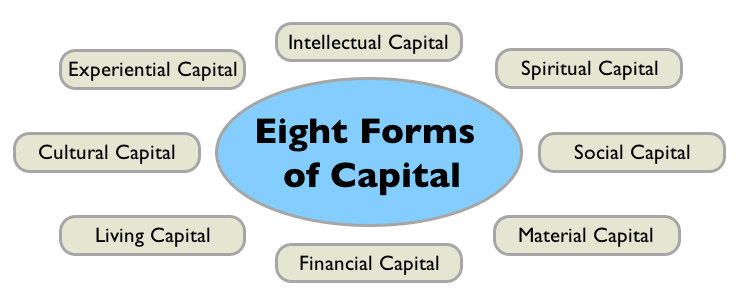
Proper assessment needs to take account of other forms of capital such as human capital (labor), knowledge capital (how to maintain the pumps), and social capital (trust, integrity, business acumen). Financial capital is but one form of assistance, one tool in the toolbox. To put it in simple terms: It’s no use having a hammer if you don’t have nails, doesn’t matter how badly or desperately you need a home.

The design stage in international development projects is often too oversimplified as an exercise in logistical coordination. Greater efforts need to be put into pre-hoc (before) evaluation, that is site/location specific and take into account a broad base of various forms of capital assets.

Screen Shot 2015-05-03 at 12.11.45 PM

As I mentioned earlier international development is a toolbox full of hammers with no nails, that’s if you can even find someone to swing the hammers.

04/29/14

Kiva a scam! shame, shame, shame!

Forgive me for having such an accusatory tone in my title, but it is tough for me to not have a violent reaction to Kiva, the poster child for microlending. I mean it was featured on Oprah so it must be a big deal. So what has Kiva actually been able to do? Has it been successful at poverty alleviation by financing microloans to poor borrowers at interest rates sometimes exceeding 100%?

Let us consider a simple thought experiment, imagine you were planning to open a small business, and you needed to finance the start-up costs of that business. So you went to your local financial institution and provided them with all the necessary documents for the loan. The loan officer reviewed your documents and after careful consideration approved you for your loan. However, he informed you that the loan would be at an interest rate of 109%. Do you actually believe that your business could succeed with such a massive debt burden on any potential future profits of your business? Would you accept the loan as a rational person, with a smidgen of business acumen?

Of course not, so why do we accept these conditions for the poor and their business ventures? Kiva is nothing more than a loanshark posing as a nonprofit social institution that seeks to alleviate poverty by indebting the already marginalized.

How is Kiva so successful at what it does? Does it work? Who cares? This is the genius of Kiva – it doesn’t need to work. It feeds an “ideology of entrepreneurial charity,” as marketing researcher Domen Bajde puts it, and ideologies don’t need proof. It is an illusion, a façade and the public face of a broader agenda – the financialization of the poor.

Don’t get me wrong microlending is a power financial tool that growing economies need access to. However, they must be regulated so they operate with the same rules we do in more privileged nations. Furthermore, it is our duty to be whistleblowers to such injustices and inequalities to the norms of fair and equitable business practices. We who have the burden of knowledge also have an obligation to act. We must not only be generous with our wealth but also generous with our protection and justice.

04/22/14

THE WORLD’S TOP 10 MOST INNOVATIVE COMPANIES IN FOOD

I had the opportunity to read an article highlighting the most innovative companies in the food and agricultural industry.  Fast Company, a leading business magazine. In their annual Most Innovative Companies issue, Fast Company recognizes firms that are radically remaking an industry, changing consumer habits, and challenging economic assumptions.  Several of the enterprises in the article are ones I follow very closely. The emergence of socially minded entrepreneurial businesses with the aim of improving or reinventing our food system has gained popularity and interest with the investment community. Green business has come to the mainstream, the opportunity for the inherent problems of the world food system, to find solutions through the power of business, seems to have great promise.

Several of the companies mentioned have had great success, I have a personal preference for Chipotle new branding and image change. They are taking several of the big food concerns and introducing them in their very avant-garde ads.
My favorite one to date is their scarecrow ad campaign.

These companies are creating the new earth, they are trailblazing solutions, instead of feeding us the same old unhealthy unethical foods and telling us how bad things are.

Read more about the other companies mentioned.

http://www.fastcompany.com/3026682/most-innovative-companies-2014/the-worlds-top-10-most-innovative-companies-in-food

11/25/13

Show me the money!

Ever since development projects and NGOs have depended on government grant dollars or the charitable contribution, fundraising campaigns have had to shout, not unlike Tom Cruise’s character in the movie Jerry Maguire “Show me the money.” Well, I believe that we are now at a new financial paradigm with regards to how fundraising and financing will be handled in the future. Before you can come to understand my reasoning for such a belief, let me give you a brief history, of some major events that have happened in past decade with regards to the non-profit sector. The most significant occurred back in 2006 when Warren Buffett “The Oracle of Omaha” and one of the richest men in the world established the Giving Pledge. The Giving Pledge was created to help address society’s most pressing problems by inviting the world’s wealthiest individuals and families to commit to giving more than half of their wealth to philanthropy or charitable causes either during their lifetime or in their will. Warren Buffet has championed this pledge by personally promising to give away 99 percent of his fortune to philanthropic causes, primarily via the Gates Foundation. So how much $$ are we talking about?  Mr. Buffet pledged 10 million Berkshire Hathaway Class B shares to the Bill & Melinda Gates Foundation worth approx. US$30.7 Billion when issued back in 2006.  The foundation will receive 5% of the total donation on an annualized basis. The pledge is conditional upon the foundation giving away each year, beginning in 2009, an amount that is at least equal to the value of the entire previous year’s gift from Buffett. This magnitude of giving is unprecedented in the history.  So what does this type of philanthrocapitalism mean for the future of development project capitalization and NGO/ charitable fundraising? Now more than ever the importance of aligning one’s self with foundations such as the Gates foundation and having an intimate understanding of their grant application is of paramount importance to the success of any organization. It also means that money should never be a limiting factor to the success of a project if and only if the vision, mission statement, and leadership of the organization responsible for the project, can produce the intended goal.

So in closing, I would challenge all of you to build your vision of a better world without the dated belief that money is a limiting factor. We are presently living in unprecedented times, become a trailblazer in your careers and nourish the new world with your knowledge, and talents. I know I do, in every waking minute of my life and career.


11/18/13

Let’s get cracking!

I’d like to crack this shell of an idea that it is taboo when talking about the non-profit or social sector, to focus on business principles, numbers, and growth. It was during my attendance at the Global conference on development that I began to identify perhaps a new trend happening between the for-profit and non-profit sector. Perhaps it was the fact that I was lunching with over 40 billion dollars in development dollar potential; perhaps it was hearing the ex-VP of Marketing at Starbuck Tim Schottman speak about his application of for-profit business principle to the social sector, such as “return on social equity” to his non-profit organization SightLife,  the only non-profit global health organization solely focused on eliminating corneal blindness in the U.S. and around the world. Perhaps it was the opportunity to hear Ken Berger, CEO, Charity NavigatorAmerica’s largest independent charity evaluator who stated their  goal as “to advance a more efficient and responsive philanthropic marketplace by evaluating the financial health of America’s largest charities.” Or watching the TEDxPhilly talk by Jay C. Gilbert co-founder of the B Lab which created, and awards, the B corporation certificate for for-profit organizations. B Lab’s goal is to harness the power of business to solve the world’s social and environmental problems. Perhaps it’s when I attended a presentation Social Sector CEO Trends: Pathways to Leadership, that focused on the results from a recent Waldron-Evans survey conducted with the CEOs of largest NGOs and foundations nationwide. The study highlights the career paths of these leaders as well as the “migration” of CEOs from the private and public sectors.

After reflecting upon each of my experiences and learnings from the events above. A trend seemed to emerge, that both the social business sphere and private sector appear to experience a blurring of the lines between them. Language and terms are being used with similar intent in both areas, the migration of industry senior level talent are bringing their skill sets, which they developed in the for-profit sector over to the non-profit sector. There is also a reverse migration of for-profit business enterprises adopting some of the social sectors business mission statements, and building them into their core business structure.

This trending and blurring of lines between both areas illustrate that the firm and its principles are merely a tool to achieve a goal. Whether that goal is a for-profit venture, or an attempt to end global hunger due to poverty, makes no difference to the “business tool.” The heart and soul or lack thereof, are what should be scrutinized, not whether a firm is labeled for-profit or non-profit, private or social. How are we to succeed at the paramount task of ending world hunger due to poverty, if it’s taboo to talk about efficiency, growth rate, return on investment, competitive advantages, or return on social equity. I want to crack this ridiculous shell that separates the social sector from the private sector. Besides, i’ve always like my eggs scrambled.


10/30/13

It all began with “Being peace”

Being Peace is a book written by Thich Nat Hanh, a Zen Buddhist monk, that was suggested to me by a friend back in 2008. I didn’t retain much of the book except a profound sense of peace, and one nugget of knowledge that has lodged itself in my brain, and won’t go away. That nugget is that every day  40,000 children die of hunger. It was this piece of knowledge that set my life on a new trajectory.

My life’s vow from that day on is to dedicated the remainder of my life’s work to ending child starvation due to poverty. What I’ve come to understand is that the goal is clear. However, the road is windy, obscure and untravelled. I do know for certain that it will take disciple and perseverance to S.M.A.R.T. (Specific, Measurable, Actionable, Results-based, Timely) Goal setting principles that will ensure the success of my life’s efforts. We know for certain that we are now producing enough food to feed the world regarding tonnage. However, the importance of culturally appropriate, sustainable and nutritionally dense food, must be taken into measure. Furthermore, once quality and quantity are both achieved, access will then be the next issue to tackle.

To summarize my view of S.M.A.R.T and how it relates to my life’s work.

A lifetime is a precious thing if not the most valuable, it defines all of our experiences, and bookends our life’s work. How will you write your life’s novel, how many chapters will you have, what will you write and what will life write for you. I encourage you all to find what motivates you from within because I can assure you that the outside world will get turbulent and attempt to dislodge you from your goal but if your motivation is from within, then your ambition and compass for a better world will not falter.