Did writing this make me and anti-feminist? Oh well – as long as I’m not considered one, I’ll be happy. This was for my first history of science course class last year. I was trying to add what I knew about both Eugenics and Feminism together. It’s a really rushed work – you can tell by the grammar, but I still got a really good mark on it. (yay)
————————
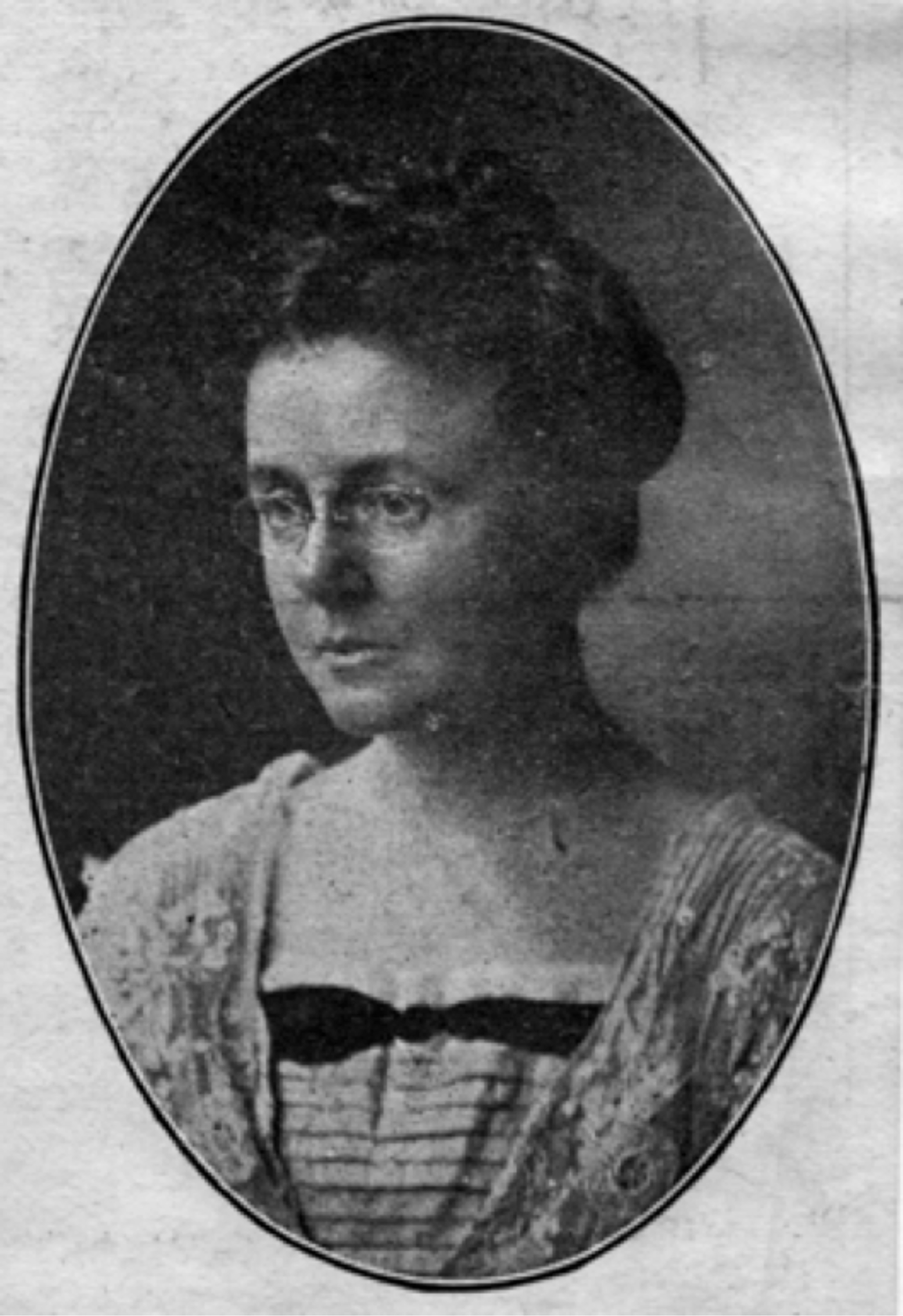
Helen MacMurchy
Eugenics and Feminist Reinforcement
In the early twentieth century, the health of a nation was judged by its infant mortality rate, so it was no surprise that mothers wanted to raise healthy children, and that governments were prepared to help them. However, many of the mothers in early nineteenth century North America were more than ordinary cooking, cleaning, mothering housewives – they were maternal feminists in the first wave of feminism. As Ontario’s Inspector of the Feebleminded, and one of Canada’s few women in power, in 1915, Doctor Helen MacMurchy had the popularity over woman to tell mothers how to raise their children.She may have had good intentions toward Canadian mothers and their children, but as her career involved reinforcing public health, Canada’s concern in Eugenics of abolishing hereditary weakness was Helen MacMurchy’s main goal. In this essay, the connection between feminism and Eugenics will be explored, discussing how the two reinforced each other in the early twentieth century and their connection in today’s modernized scientific world.
For Helen MacMurchy’s government position to exist, there had to be a background in Eugenics from years before. It is however debatable how scientific the knowledge behind eugenics was at the time. Scientific knowledge of Eugenics up to the twentieth century was based on statistical evidence of family histories, highly biased intelligence tests, and statistics of how many people were disabled physically, and/or “feeble minded” within a country.The definition of “feeblemindedness” was also racist, as immigrants entering countries, such as Canada, had to immediately write intelligence tests when they got off the boat that brought them there. Not only were these immigrants fatigued from their travels, but also many of them could not understand English. Helen MacMurchy’s goal of abolishing heredity weakness can therefore be seen as corrupted by the inaccurate tests, especially because while she was held her position, 22% of Canada was non-British, non-French immigrants.The feminists of Canada were oblivious to this fact, so it can be noted that there was an extra percent of people seen as feebleminded bolstering the government’s imposition of positive Eugenics to the hegemonic races of Canada, and to hegemonic woman’s newly founded right to reproduce with whoever she wanted to.
As women had just begun to fight for the rights of their own bodies and reproductive capabilities, Helen MacMurchy, through her series of “Little Blue Books,” started informing woman on how to raise a mentally and physically fit child. The two ideas went hand in hand because before a woman could possibly have a “fit” child, she would have to pick a suitable man with the qualities appropriate for procreating such a child. Before that time, the idea that a woman could pick a man to be her mate was seen as preposterous, and so the early twentieth century version of a feebleminded child was more likely to be born. From the “Little Blue Books” the idea of a rise in “fit children” of the hegemonic white race of Canada, not only reinforced positive Eugenics, but also gave the possibility of improving Canada’s infant-mortality rate, as well as the future maternal-mortality rate. The maternal mortality rate would idealistically get better because mothers who died while their child was still an infant were seen to have individual inadequacy, a trait which Eugenicists thought was related to weakness in heredity.
Helen MacMurchy employed more than Positive Eugenics in her task of stamping out hereditary weakness in Canada. She employed Negative Eugenics when lobbying with those in the National Council of Women, labeling unwed women as feeble-minded, condemning many of those women to be institutionalized. If they had children, they were either institutionalized as well, or left in the care of a “more suitable” family, depending if they were also deemed to be feeble minded. First wave feminism supports what Helen MacMurchy did because being “a good mother” was still defined by having a husband during that wave of feminism, and “the woman as being more than a wife and mother” had not been explored much yet in that particular wave.
Today, long after “Eugenics” became a faux-pas word, and after three waves of feminism, feminism and “Eugenics” still go hand-in-hand. North American women have gained complete rights to their bodies, who can they reproduce with, and the institutions that used to hold the feeble minded were closed decades ago. They can now choose not to marry, and have children without being married. It is the practice of having children in which Eugenics is still involved. Eugenics has found a new name in the science of genetics. Nowadays, women have their unborn fetuses tested for genetic anomalies before they are born, and can even choose the exact sperm that fertilizes their egg. If an anomaly is found, the woman is usually advised to go through an abortion – as to not have the burden of caring for a mentally insufficient or physically ill child. Women may have reproductive freedom, but society and medical professionals in that society still find the less fit unfit to be born – an idea crucial to negative Eugenics. The infant-mortality rate has improved drastically, and yet the practice of making strong fit children goes on.
Feminists may now take the opposite side of the argument from first wave feminism and fight for the right of society to accept women who choose to birth a child less smart, or strong, or even less healthy than the majority of children. Like Doctor Michael J. Sandel in his article, “The Case Against Perfection,” they would want to embrace the gift of life, rather than try to make it better with genetics.
Feminism may have reinforced Eugenics during its first wave almost a century ago, but decades later after the Holocaust in Germany, mass sterilization especially in Western North America, and the wrongful institutionalization of thousands of individuals the connection has broken. Helen MacMurchy’s name currently cannot be found in searching the website for the National Council of Women, even in its history archives. Perhaps feminists have figured out that education is the key to making weaker woman stronger. Sterilization, discrimination, and euthanasia did not work in the past – and those are some of the issues that feminists theories about and fight against every day. After all, why should people discriminate against those who are different, when different points of view are what educates and expands learning in the world?
The world has learned the terrors of the radical side of Negative Eugenics, but Negative Eugenics still exist in every MRI when a doctor tells eager parents the gender of their unborn child, or when prospective parents get tested to see if they are carriers of debilitating genetic diseases or viruses. Medical professionals and scientists with the same good intentions that Doctor Helen MacMurchy had still exist, and in educational institutions such as the University of British Columbia there is no requirement of the history of Eugenics for those pursuing degrees in genetics. Degrees in feminism do cover past discrimination in multiple courses, even in regards to Eugenics. The question is, why do the feminists know more about the past of Eugenics than the geneticists implementing it?
(bibliography available upon request)