I like to complain about things from time to time. Check this out.
Omar
I like to complain about things from time to time. Check this out.
Omar
Hi all,
Here are some really good films on the Arab Israeli conflict that helped me get a feel for what is really going on, and to transcend the misinformation and lack of information that often characterizes North American mainstream media reporting:
Lemon Tree (Etz Limon)- fictional, the story of a Palestinian widow who must defend her lemontree field when a new Israeli Defense Minister moves next to her and threatens to have her lemon grove torn down.
Peace, Propaganda and the Promised Land- about the US mainstream media portrayal of the conflict and the strong Israeli lobby in USA.
Occupation 101- documentary on the history and current reality of occupied territories and the conflict more generally.
Paradise Now- fictional, a story of two Palestinian men on their journey to becoming suicide bombers.
Gaza Hospital- documentary of a hospital that served as refugee shelter during Lebanon’s long civil war. http://www.nowlebanon.com/NewsArchiveDetails.aspx?ID=137662
Frontline and the BBC also do really good docs. on a wide range of subjects.
On a side note, Waltz with Bashir is an absolutely amazing (fictional, cartoon) movie about the Israeli invasion of Lebanon.
Al Jazeera English just released 1600 internal documents from Israel-Palestine negotiations. It is really worth checking out to get an understanding of the peace process. http://english.aljazeera.net/palestinepapers/
From www. stratfor.com
View Video: Dispatch: Self-Immolation as a Political Tool | STRATFOR
TRANSCRIPT
VP of Strategic Intelligence Rodger Baker examines the tactic of self-immolation as a way to galvanize protest movements.
Editor’s Note: Transcripts are generated using speech-recognition technology. Therefore, STRATFOR cannot guarantee their complete accuracy.
There have been several cases of self-immolation in North Africa in the past several days. This seems to stem back to the mid-December self-immolation case in Tunisia that triggered a series of events that ultimately appears to have led to the overthrow of the Tunisian government.
Self-immolation can be a very powerful political tool. It evokes a sense of horror in those who see it but also it’s a method of public death that doesn’t harm others in the same way that suicide bombings or attacks of that sort do. Therefore it can draw very different focus, onto what ultimately are the underlying causes, and what the issue is that the individual is protesting against.
In Tunisia, there was certainly an economic underpinning to this and a dissatisfaction with the way in which the government ran the economy. For self-immolation to really stir up a movement or to stir action, it requires that there is already that tension, there is already a sense of action just underneath the surface and it’s really looking for something to trigger that off — whether it be self-immolation, whether it be a particularly profound political speech, an attack upon a government office or some other act. Self-immolation, though, does have the sense of martyrdom to it. It has the sense of taking upon yourself great pain for others or for the cause that you are ultimate dying for.
We’ve seen the tactic used quite a bit in places like South Asia, in places like East Asia. Some of the most notable example that people are aware of include in Vietnam, where Buddhist monks burned themselves. In South Korea, the labor movement had a lot of its early start on a case of self-immolation that helped to inspire different organizations to pull together and really build up what became a very powerful labor movement.
To many people, then, self-immolation is connected more closely to East Asian religions, to Buddhism, but that’s not really the case. Historically we’ve seen it carried out as a nonreligious political tool in Eastern Europe, and by individuals around the world. What we’re seeing in North Africa now is political self-immolation, it’s not religious self-immolation and it’s very unusual in this region. We do see them in Afghanistan and Pakistan in regard to women’s rights and family rights. We’ve seen in South Asia and India in dealing with the caste system or other political elements. But in the Middle East, this is a new tactic and that may have contributed to how much power this case at this time.
When a government looks at a case of self-immolation it’s actually a very difficult thing for them deal with. This is not an individual who’s going out and hurting other people, they’re not blowing up buildings and attacking government buildings and therefore it’s very difficult for the government to condemn the individual if all they do is kill themselves, and if they do it in a very public way that has political undertones, that allows their message spread in a way the government can’t really control and can’t really get a grasp on. As this spreads through North Africa, we’re already seeing governments take action both to try to prevent or preempt self-immolation but also to address some of the issues that are stirring unrest within these countries.
Hello class,
I, and a few other students, are organizing an event titled “Islamophobia: Implications on Global Health.”
The perceived ‘clash’ between ‘Islam’ and the ‘West’ post 9/11 creates anxieties. Even at the university, one may find a portrayal of “Islam” and “Muslim” within the context of conflict and violence. This form of othering contributes directly to the marginalization and isolation of Muslims living in the West. This community collaborative dialogue provides an intellectual and respectful space to explore Islamophobia as it pertains to social justice, security and sustainability. The project will approach the underlying issues of Islamophobia through a series of short talks that address art as resistance, gender and race as they affect the lives of Muslims, and a dialogue session to explore the implications of Islamophobia on global health.
Location:
UBC’s Liu Institute For Global Studies
6476 NW Marine Drive
Vancouver, BC
For more information check out the facebook event.
Just looked over the article that Prof. Faris sent us about the role of Twitter/Facebook and wanted to look a little bit deeper into the role of social media in the Tunisian conflict.
http://english.aljazeera.net/indepth/opinion/2011/01/2011116142317498666.html
This is getting pretty intense. The next year in Lebanon might be very messy. Israel (it is purported) is preparing for another attack, Hezbollah is very uneasy with this tribunal and they do not have a government. What’s next? A civil war? A war with Israel? Both at the same time??
http://english.aljazeera.net/mritems/Images/2011/1/14/2011114132958767472_20.jpg
Indictment lodged in Hariri probe Prosecutor for UN tribunal investigating the 2005 assassination of ex-Lebanon PM submits indictment against suspects.
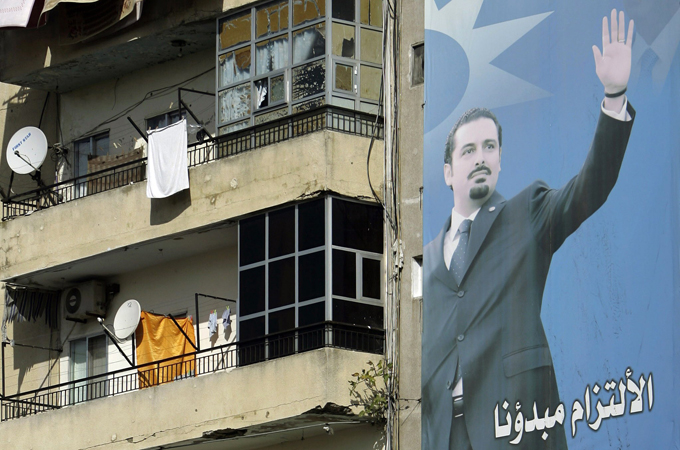
A prosecutor for the UN tribunal investigating the 2005 assassination of former Lebanese prime minister, Rafiq al-Hariri, has filed the body’s first indictment against suspects in the case.
The confidential documents were handed to the registry on Monday, the tribunal said in a statement.
“The prosecutor of the tribunal has submitted an indictment and supporting materials to the pre-trial judge,” it said, though details of suspects named and the charges against them were not released.
“The contents of the indictment remain confidential at this stage”.
Daniel Fransen, the pre-trial judge, must confirm the charges before any arrest warrant or summons to appear can be issued.
The tribunal is widely expected to indict members of Lebanon’s Hezbollah, a move many fear could rekindle violence in the country.
Al Jazeera’s Zeina Khodr, reporting from the Lebanese capital, Beirut, said the tribunal has been a source of tension in the country.
“It is widely believed to point the finger at Hezbollah members. Hezbollah has called it a US tool, and … has alleged it is politicised. It has questioned the way [the tribunal] conducted investigations,” she said.
“We heard the secretary-general of Hezbollah, Hassan Nasrallah, say yesterday that the group will reject any accusation and it will work to defend its reputation as well as its dignity and it will confront it.
“But he stopped short of saying exactly what kind of action the group would take.”
Collapsed government
The indictment announcement came less than a week after 11 ministers allied with Hezbollah resigned from the government of Saad al-Hariri, the Lebanese prime minister, forcing it to collapse.
The lawmakers withdrew from the unity government last Wednesday over the prime minister’s stance on the tribunal.
Talks scheduled for Monday to name a new Lebanese prime minister have been postponed until next week.
Lebanese politicians said that the consultations on a new government could be delayed because of a summit in Damascus on Monday where the leaders of Syria, Qatar and Turkey met to discuss Lebanon’s political crisis.
But Nasrallah said late on Sunday that his party would refuse to back Hariri, Lebanon’s caretaker prime minister, in forming a new government.
Hezbollah, which has a political bloc in parliament as well as a powerful military wing, commands strong support in Lebanon’s Shia Muslim community.
Lebanon’s crisis is the result of long-simmering tensions over the UN tribunal’s probe of the death of Rafiq al-Hariri, a former Lebanese prime minister and the father of Saad Hariri.
Hezbollah has several times denounced the Netherlands-based tribunal as a conspiracy by the US and Israel. On Monday, the group’s al-Manar television said the US was behind the release of the draft indictment as part of a bid to sabotage efforts to solve Lebanon’s crisis.
It also accused the US of “pushing the indictment ahead to light the fuse to blow up the bridges for a solution”, adding that the “Americans control the indictments in form and content”.
Hezbollah had demanded that Saad Hariri’s government reject the court’s findings even before they come out.
But though he offered some concessions, Hariri refused to end co-operation with the tribunal, prompting Hezbollah’s walkout.
As I am sure we will be talking more about Tunisia in class on Tuesday, I found this article interesting. It reminded me about what professor Faris said in class about the social implications of an event like this and how it has the potential to spread, even in the form of a solidarity rally.
In the interest of furthering our understanding of Global Islam, UBC and Laurier Institution are launching a free 4 lecture series featuring the world’s most renowned scholars in Islamic studies on Saturday, January 15th, 2011. The inaugural lecture is taking place on the UBC Point Grey campus, Old Auditorium. The remaining 3 lectures will take place at the UBC Robson Square downtown Vancouver campus.
Seating is limited. Reserve your seat by phone or online. For further details see attached poster: CP_1012_Post_LL_2
We would appreciate your assistance in forwarding this announcement through your networks.