Aboriginal peoples
The ancestors of Aboriginal peoples are believed to have migrated from Asia many thousands of years ago. They were well established here long before explorers from Europe first came to North America. Diverse, vibrant First Nations cultures were rooted in religious beliefs about their relationship to the Creator, the natural environment and each other.
Aboriginal and treaty rights are in the Canadian Constitution. Territorial rights were first guaranteed through the Royal Proclamation of 1763 by King George III, and established the basis for negotiating treaties with the newcomers—treaties that were not always fully respected.
From the 1800s until the 1980s, the federal government placed many Aboriginal children in residential schools to educate and assimilate them into mainstream Canadian culture. The schools were poorly funded and inflicted hardship on the students; some were physically abused. Aboriginal languages and cultural practices were mostly prohibited. In 2008, Ottawa formally apologized to the former students.
In today’s Canada, Aboriginal peoples enjoy renewed pride and confidence, and have made significant achievements in agriculture, the
environment, business and the arts.
Unity in Diversity
John Buchan, the 1st Baron Tweedsmuir, was a popular Governor General of Canada (1935–40). Immigrant groups, he said, “should retain their individuality and each make its contribution to the national character.”
Each could learn “from the other, and … while they cherish their own special loyalties and traditions, they cherish not less that new loyalty and tradition which springs from their union.” (Canadian Club of Halifax, 1937).
English and French
Canadian society today stems largely from the English-speaking and French-speaking Christian civilizations that were brought here from Europe by settlers. English and French define the reality of day-to-day life for most people and are the country’s official languages. The federal government is required by law to provide services throughout Canada in English and French.
Today, there are 18 million Anglophones—people who speak English as a first language—and seven million Francophones—people who speak French as their first language. While the majority of Francophones live in the province of Quebec, one million Francophones live in Ontario, New Brunswick and Manitoba, with a smaller presence in other provinces. New Brunswick is the only officially bilingual province.
Settlement History
Language Spoken in Canada
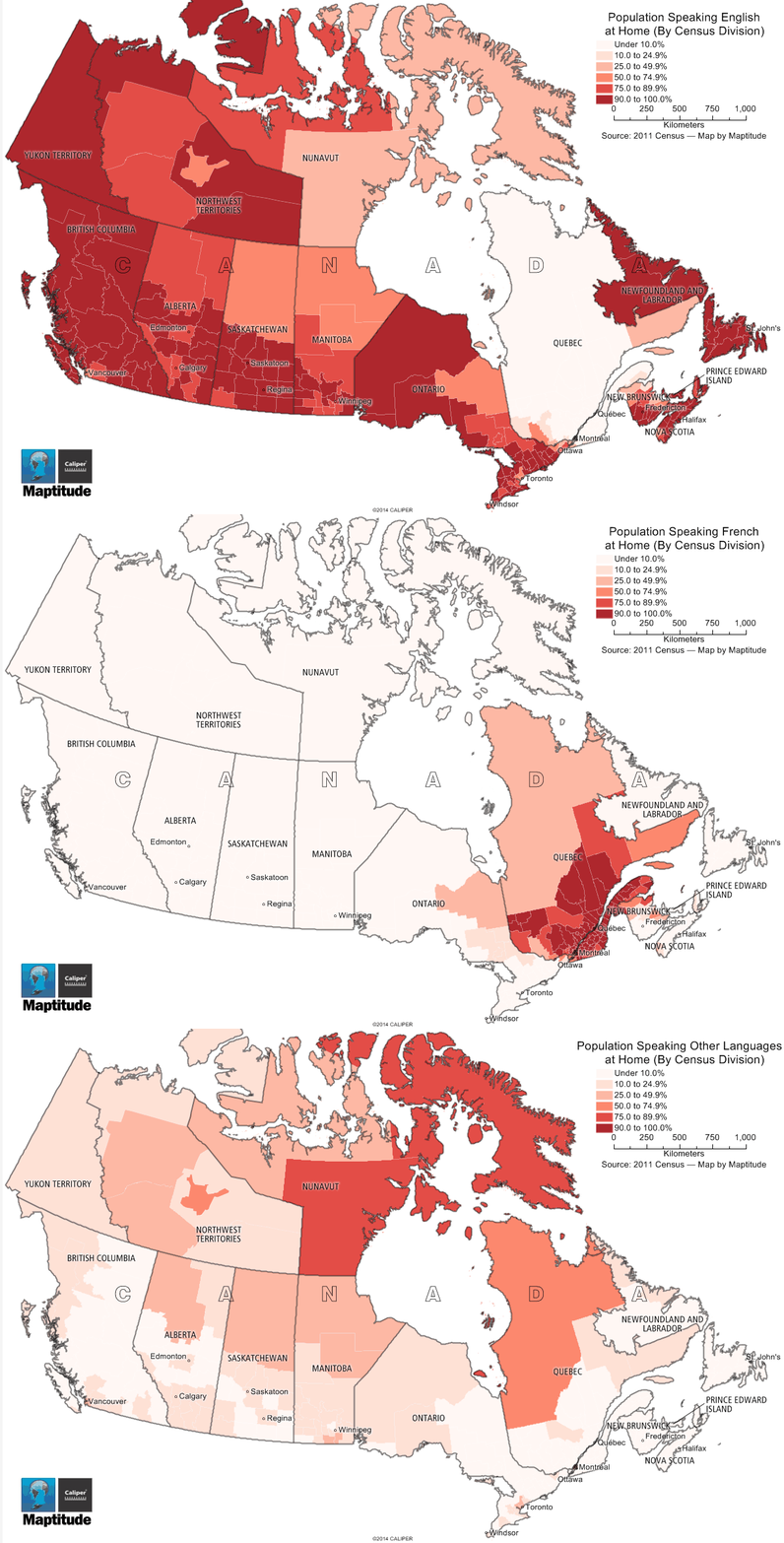
 ©Caliper. Maptitude® mapping software.

(From Left to Right) St. Patrick’s Day Parade, Montreal, Quebec Highland dancer at Glengarry Highland
Games, Maxville, Ontario Celebrating Fête Nationale, Gatineau, Quebeca Acadian fiddler, Village of Grande-Anse, New Brunswick

Becoming Canadian
Some Canadians immigrate from places where they have experienced warfare or conflict. Such experiences do not justify bringing to Canada violent, extreme or hateful prejudices. In becoming Canadian, newcomers are expected to embrace democratic principles such as the rule of law.
Diversity in Canada
The majority of Canadians were born in this country and this has been true since the 1800s. However, Canada is often referred to as a land of immigrants because, over the past 200 years, millions of newcomers have helped to build and defend our way of life.
Many ethnic and religious groups live and work in peace as proud Canadians. The largest groups are the English, French, Scottish, Irish, German, Italian, Chinese, Aboriginal, Ukrainian, Dutch, South Asian and Scandinavian. Since the 1970s, most immigrants have come from Asian countries.
Non-official languages are widely spoken in Canadian homes. Chinese languages are the second most-spoken at home, after English, in two of Canada’s biggest cities. In Vancouver, 13% of the population speak Chinese languages at home; in Toronto, the number is 7%.

The great majority of Canadians identify as
Christians. The largest religious affiliation
is Catholic, followed by various Protestant
churches. The numbers of Muslims, Jews, Hindus, Sikhs and members of other religions, as well as people who state “no religion” are also growing.
In Canada the state has traditionally partnered with faith communities to promote social welfare, harmony and mutual respect; to provide schools and health care; to resettle refugees; and to uphold religious freedom, religious expression and freedom of conscience.
Canada’s diversity includes gay and lesbian Canadians, who enjoy the full protection of and equal treatment under the law, including access to civil marriage. Together, these diverse groups, sharing a common Canadian identity, make up today’s multicultural society.
Leave a Reply