Categories
Marketing Uncategorized

Envisioning a Coca-Cabana: A Reflection

The ‘Market’ for Coca-Cola

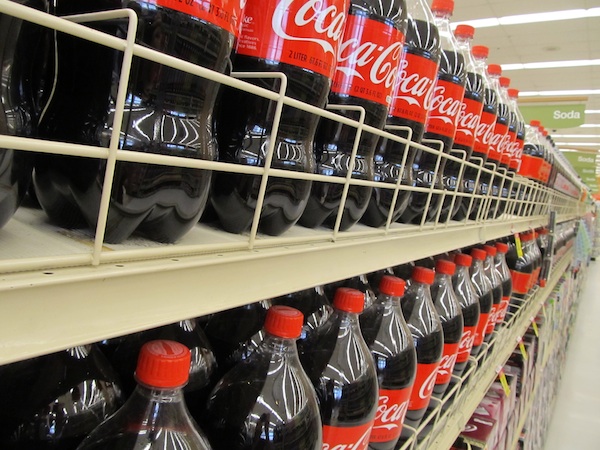
The decision to focus on Coca-Cola for a series of marketing projects, although exciting at first, and not a regrettable choice, did come with its fair share of difficulties. The majority of them originated from the fact that the brand is so established and successful. In the first and second assignments, the task of analyzing the brand’s successes and not-so-successes (it wouldn’t be accurate to call them failures, after all), came as a surprise when our group – despite our extensive research – could not present cases of weakness or fault as strong as the cases we found of strength and success. We had chosen the brand out of interest, but also under the assumption that as a company with such a broad history, there would be more material to work with and expand upon. True in part, but as we quickly found out, this also meant that the company had, over time, gained the experience and ability to basically perfect their marketing strategies.

However, through hard work and determination, our team was able to select a target segment of the market (for the third assignment) to focus on, aided by the consideration of Coca-Cola products in our own day-to-day lives. This segment of Canadian students in their undergraduate degrees, according to our analysis, is an important section within the brand’s target market that should have more resources geared toward promoting to, because the benefits offered by the company’s signature product, Coke, is directly aligned with many of these consumers’ tastes and consumption preferences (flavour, flexibility in use, caffeine-content, etc).

Being able to analyze the vast information offered by the internet, scholarly articles, and company reports, and choose an effective segment, not only taught me about the ways large companies work and how they might miss smaller, more specific, but nevertheless important consumers (due to generalizations or an inability to stay grounded like a smaller company might); I learned more about the importance of persistence and improved my ability to analyze and be a critical thinker. Although choosing a smaller, newer, or less successful company to analyze may have proved for a slightly easier project, it tested my work ethic and I learned about the difficulties and accomplishments professionals in marketing, especially that of market research, might face on a regular basis.
Categories
Uncategorized

Is There a Need to Knead the Need into Consumers?

As the wave of midterms pass by in a whirlwind of highlighted notes, last-minute cramming, and caffeinated hours spent in coffee shops and university libraries, students everywhere are a little more than ready to wind down at the bar with friends, classmates, and acquaintances alike, over a drink or two.

What are the kids drinking these days anyway? An excellent question, to which Guinness has provided a heartwarming response. The popular Irish brew, dark and distinct in flavour (one might say it’s an acquired taste), has been commonly associated with the masculine drinker, capable of handling the strong, burnt, and thick profile. This connotation is exemplified by the brand’s recent ad campaign, using the brotherhood of a team as the fuel for its endearing commercial which features a group of friends in wheelchairs playing a game of basketball. Aided by the swells and crescendos of the Cinematic Orchestra’s “To Build a Home, That Home,” the significance of each pass of the ball and shot at the hoop becomes evident at the end, when all but one of the players unstrap themselves from their wheelchairs, and the chair-bound friend rolls out of the gymnasium, together with his able-bodied teammates.

“Dedication. Loyalty. Friendship. The choices we make reveal the true nature of our character.” 

Without explicitly pushing the desirable value of a Guinness into the faces of the audience, the brand conveys dedication, loyalty, and friendship, into the minds of consumers, promoting the aforementioned camaraderie associated with their product. If this is the commercial that “the boys” think of when they meet up after their last economics or organic chemistry midterm, the ad has done its job. Advertising doesn’t need to annoy its audiences with pushy proposals and vies for their pocket money by comparing themselves to other products or by listing out reasons to purchase A over B. Despite the dark, bitter taste of the drink itself, Guinness’ ad leaves the viewer feeling uplifted and refreshed. And we could all use a little inspiration in our day, no?

Watch the ad here.

Categories
Uncategorized

What I Like About You

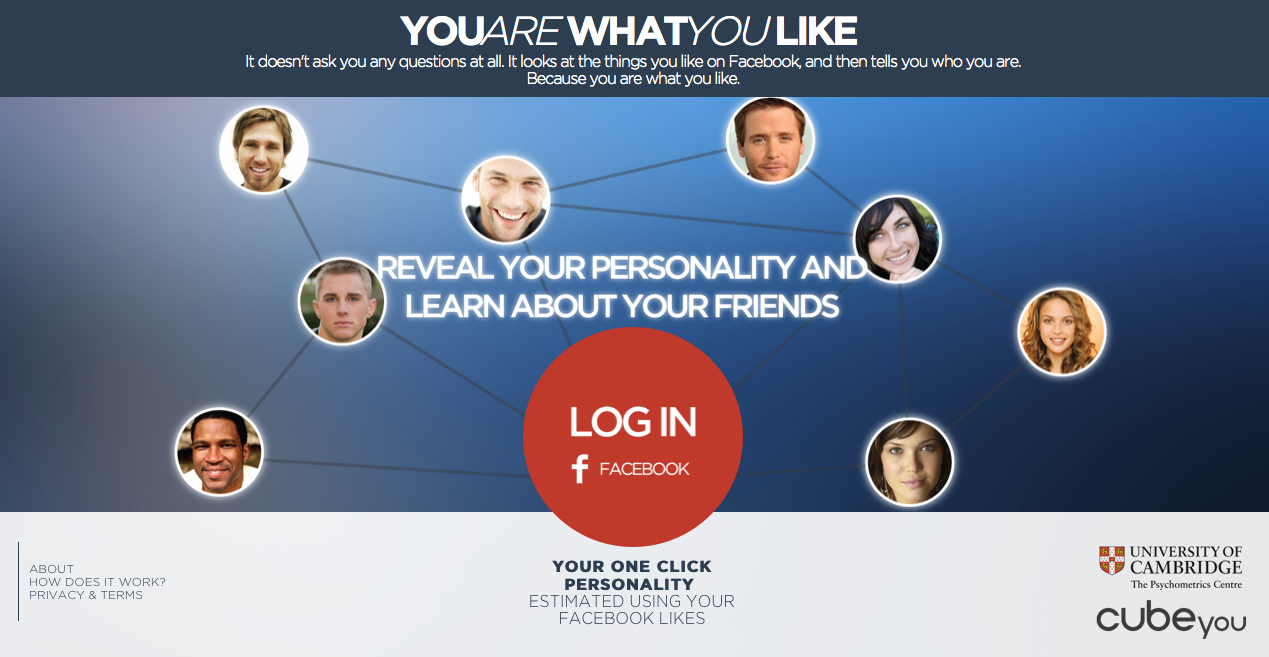
Recently, Maddi Koop posted “You Are What You ‘Like'” on her blog, a look into data mining using a person’s ‘Likes’ on Facebook, and how consumers can be targeted according to their publicly stated tendencies, interests, and lack of interests. I largely agree with Maddi’s approach to liking or not liking pages on Facebook, and have to commend the engineers behind such data mining businesses on their ability to weed out the extraordinary and uncharacteristic Likes, amongst the vast number that actually do fit with the consumer’s preferences.


That being said, imagine this.

Would it be feasible for a consumer and/or group of consumers to boycott the system? If enough profiles (thus consumers, from the perspective of businesses) like specific pages, related or unrelated to their actual interests, could this not lead to the creation of a new market segment, to which products or services might be tailored toward? A little imaginative, yes, but it is important to note that such data mining should not be a main point of reference for businesses in the development and marketing of their products.

The issue with technology as such a prevalent factor in our day-to-day lives could also be the reason for wasted resources – by relying on technology to sum up and draw conclusions from data, as opposed to live, interactive research, we run the risk of drawing false conclusions, of dismissing intuition or human experience in favour of the ‘facts’ being presented to us.

Categories
Brand Positioning Marketing Uncategorized

Sweet Dreams are NOT Made of These

Boo!

If that wasn’t scary enough, maybe the screams of these kids will get you into the Halloween spirit.

Earlier this month, Crest released an ad quite contrary to what one might expect from a toothpaste and dental health company. The cleverly designed campaign video provides a comedic take on Halloween, testing out kids’ reactions to receiving ‘healthy’ treats, in place of their candy corns, lollipops, and chocolate bars.

Their responses varied from forced politeness,as Adrianna tried to like the taste of an artichoke buttercup: “It’s kind of good, kind of bad,” but upon being directed to be honest, she came out with the truth, “It’s bad,” to full-on rioting (around the Crest representative’s knees, no less).

More than just a funny promotion though, this was a smart and strategic move by Crest  (P&G), a way of opposing and solving the problem posed by Halloween, the night epitomizing cavities and dental decay. By embracing one of the sugariest days of the year, because “Nothing is more horrifying than Halloween without candy,” the company encourages us to indulge in the treats we love, and make up for the havoc wreaked on our teeth and gums with Crest and Oral B products. A ‘convenient’ trade-off and a spot-on take on communicating value to consumers.

Categories
Corporate Social Responsibility Entrepreneurship Social Entrepreneurship Sustainability Uncategorized

The Lack of “Social” Media

As mentioned in previous posts, the emergence of corporate social responsibility and sustainability is increasing every day. Entrepreneurs are popping up left, right, centre, with a new product or service which is said to “better your life,” but which of these actually improve our living standards or quality of life? Can those that do all be referred to as “social enterprises”? And if not, what makes one business a social enterprise as opposed to a regular entrepreneurial venture?

Social Enterprise
(defn): “[an organisation] with an explicit aim to benefit the community, initiated by a group
of citizens and in which the material interest of capital investors is subject to limits.” (EMES

There are countless examples of this type of business, as it is not limited to Nongovernment Organizations (NGO) or Nonprofit Organizations (NPO) – they can include for-profit organizations, if they operate through nonprofit mechanisms or with social/environmental goals. Two examples that recently caught my eye are Kiva and Isang Litrong Liwanag.

Kiva Microfunds, which I discovered through a post by Ashley Belzil, is an amazing organization (NPO) that basically allows you to lend money to those struggling to run their businesses in impoverished, developing countries – all through microfinance. Kiva does not collect any interest, and lenders are “almost always guaranteed …a 98.97% return rate”; the simple act of lending, say $25, is so minuscule in comparison to the beneficial change it brings the recipients.
Isang Litrong Liwanag translates to “A Litre of Light,” and is the name of the business that social entrepreneur Illac Diaz (with the help of others) began in the Philippines. Using water and chlorine in a plastic drink bottle, this enterprise has provided over 30,000 homes all over the world, with solar, sustainable, and 55-watt light-‘bulbs’ – brightening up many households that otherwise would be spending much more money on electricity.

Unfortunately, I feel that the brilliance and impact of this social enterprise (and so many others) are overlooked and do not receive the credit they deserve, especially relative to companies that supply us with luxuries, like electronics or clothing. As a global community, we need to strive to fulfill more necessities rather than desires, even if these necessities are not directly our own – because in the end, we’re affected by the actions of others.

Watch: Kiva         Watch: Isang Litrong Liwanag

 Sources:
http://www.emes.net/index.php?id=203
http://srint.org/terminology/
http://www.kiva.org/about/how
http://aliteroflight.org/about-us/
https://blogs.ubc.ca/ashleybelzil/2012/11/13/the-gift-of-giving/
http://www.fastcoexist.com/1678329/the-worlds-cheapest-lightbulb-is-made-of-just-a-plastic-bottle
http://www.wimp.com/lightenup/

Photo:
http://2.bp.blogspot.com/-ufnyUq4qC-Q/T2d4X5iBx-I/AAAAAAAAAF0/3u8vOPICXHI/s1600/CHOOSESE.jpg

Categories
Brand Positioning Corporate Social Responsibility Sustainability Uncategorized

R.E.S.P.E.C.T: Your Elders, Your Peers, Your Environment

Corporate Social Responsibility (CSR) is a growing topic of discussion in today’s world of business, as the global population grows to new heights and endangered icebergs simmer down to new lows. The carbon footprint that each of the world’s seven billion persons leaves is not a matter to be taken lightly – especially by those that have a greater-than-average impact upon others; in other words, businesses.

While the number of companies that are changing, finding new ways to be sustainable, and providing eco-friendly options for their consumers is increasing, innumerable businesses around the world still do not recognize the weight that they carry on their shoulders. In contrast, the scholarly leaders of the ancient world knew much of not knowing much. As an article from Forbes’ CSR Blog said (referencing Princeton philosophy professor Melissa Lane’s book),

“[Leaders of the ancient world] understood that they were embedded in an interdependent social web and they knew that their decisions had to take into account not just self-interest but the collective interest as well.”

It is then implied within that statement, that today’s leaders and business folks think and act according to Adam Smith’s famous self-interest principle. How, then, can we expect advancement towards sustainability in the competitive corporate world, where prices are already much higher than what the average consumer can afford in the current economy?

In response, I agree with David Marks,

“The right strategy could become a competitive advantage.”

And an example of this competitive advantage that other companies should take into consideration is the reinvention of athletic apparel brand Nike; by “addressing impacts throughout [its] supply chain,” Nike is promoting a better image, creating a positive change  on the environment, and ensuring a greater lifespan for the company as a whole. Why all companies don’t do this bewilders me – if we don’t work to be sustainable now, who knows if there will be anyone to do business with in the future !

So consider that.

Sources Cited:
http://www.forbes.com/sites/csr/2012/10/02/ancient-advice-for-todays-sustainability-leaders/
http://nikeinc.com/pages/responsibility
http://www.greenbiz.com/blog/2009/11/12/how-companies-manage-sustainability-tradeoffs

Categories
Entrepreneurship Finance Uncategorized

Groupon Takes a Tumble

The online discount site Groupon struggles to find a leg to stand on, as its 3rd quarter reports have investors everywhere shaking their heads in disappointment.

Despite being fairly new (public since November 2011), the company’s share price has dwindled down from its peak (in November 2011 as well) to when it closed at $2.76 on Friday the 9th, 25% lower than its previous “all-time low of $3.68 a week ago, on Nov. 1.” In addition, the company’s predicted earnings of  “$580 million to $620 million” only proved to be a detrimental valuation as revenue grew (however slowly) to $569 million, which still missed the hopes of Wall Street by a whopping $22 million.

As the company watches its value drop lower and lower, new methods of bringing in sales are being introduced – predominantly through Groupon Goods, the brand’s take on e-commerce which actually “[sells] physical goods such as electronic gadgets, housewares and clothes.” This branch into direct retail allows the company to use the whole of the products’ sale in calculating revenue, as opposed to the basic Groupon that shared the sale with the collaborative company – ultimately increasing Groupon’s total revenue. More recently, the business has announced that for the coming holiday season, it is offering “free shipping and returns for items bought through Groupon Goods,” as well as debuting “its first Groupon Goods online holiday catalog.”

These motions, effective nonetheless, are clearly set up with the aim of increasing sales, but will it be enough to reverse the damage that’s been done so far? With this question (as well as my previous post) in mind, I ask:

what does it take for a company to stand up after it’s fallen down?


Sources Cited:

http://www.chicagotribune.com/business/ct-biz-1110-groupon-20121110,0,7499711.story
http://ca.finance.yahoo.com/q/hp?s=GRPN&a=10&b=4&c=2011&d=10&e=13&f=2012&g=d&z=66&y=198
http://www.canadianbusiness.com/article/106065–groupon-stock-falls-after-3q-results-fall-short
http://www.businessweek.com/ap/2012-11-12/groupon-goods-offers-free-shipping-for-holidays
Photo:

http://www.digitaltrends.com/web/can-groupon-succeed-with-a-30-per-year-vip-subscription-model/


Categories
Brand Positioning Entrepreneurship Uncategorized

What Helps Your Startup Stay Up ?

In today’s society of global communication, constant innovation, and never-ending competition, startups are always popping up right, left, centre; but what makes a startup business successful enough to be more than just a startup, what makes it stay up?

This question was triggered by my discovery of my aunt’s own startup: Snapette, a mobile fashion app that (simply put) allows you to share your style with others all over the world. Despite my initial amazement and awe, I began to wonder how she and her partners had achieved this, let alone the rest of the startup world.

It probably helps when Forbes writes an article about your company, not to mention when your company is linked to a celebrity, like their fashion advisor, actress Emma Roberts. Or maybe the key is doing the impossible – or at least unimaginable, like the founders of Urthecast did. Streaming live feed the world from cameras in space isn’t only unimaginable, it’s “hard to reproduce.” Learning about this Vancouver-based company at school not only opened my eyes to the different kinds of businesses that could be created, but also caused me to further examine what it was about successful entrepreneurs that allowed them to change our lives in the coolest of ways. Upon browsing amongst numerous start-ups (via 500 Startups, Inc.com, Forbes), I found that three common characteristics, of today’s prospering companies, are that they stay 1) current, 2) engaging and interesting, and 3) easily accessible.

Whether it’s a mobile app that geotags favourite fashion items, or an orbiting, high-definition video camera that lets “environmental groups…study the effects of deforestation,” the emerging businesses of today continue to amaze us consumers in their climb out of the Silicon Valley.


Sources Cited:
http://www.forbes.com/sites/ilyapozin/2012/07/19/10-greatest-industry-disrupting-startups-of-2012/
http://500.co/startups/
http://www.inc.com
http://urthecast.com
http://www.urthecast.com/blog/news-stories/wind-chairman-joins-vancouver-tech-startup-board/
http://www.forbes.com/sites/tomiogeron/2011/10/13/female-founders-of-snapette-not-your-typical-geek-entrepreneurs/
http://www.wwd.com/fashion-news/fashion-scoops/shop-smart-6441467

Photo:
http://militarytobusiness.blogspot.ca/2010/12/start-ups-at-hbs.html

Categories
Sustainability Uncategorized

Could Storm Season Mean Clear Skies for BC Hydro?

Since its debut by BC Hydro last year, Smart Meters have sparked quite the heated discussion amongst consumers all around British Columbia. Despite the fact that Smart Meters were first implemented as far back as 2000 in Italy (followed by numerous other countries all over the globe such as the USA, Sweden, Denmark, Australia, Spain, and more), Canada only hopped on board in 2007 – or maybe ‘hopped’ is too strong of a word…

“Nov. 3, 2005 [started] the process of getting “smart meters” [in…] by 2010. In the first phase, meters will be installed on 800,000 homes, mainly in urban areas, by 2007.”

This long implementation period (whether it was for the same reasons or not) is a fitting representation of BC’s response to Smart Meters (2011) as well; many of Hydro’s customers’ have responded negatively, feeling their privacy, security, and health are at risk due to these wireless (and therefore radio frequency-emitting) energy consumption recorders which impose multiple financial burdens on their users. Yet thanks to BC Hydro’s market power (as a monopoly), the company has been installing its Itron meters, in homes and small businesses that fall under a certain amount of kiloWatt usage, at a faster rate than Ontario; the company plans to complete installation of these all over BC by the end of 2012.

While BC Hydro has made the mistake of not providing the sufficient response demanded by its unhappy clients, its most recent response to the events of Hurrican Sandy and storm season is commendable, a step in the right direction. I hope that Hydro will continue to stay up-to-date with its communication and release of information, and this may – eventually – convince the consumers that Smart Meters are, in fact, beneficial on more than one level – financially (long-term), in terms of sustainability, and safety.

Sources Cited:
http://www.bchydro.com/news/conservation/2012/storm-season-smart-meters.html
http://www.bchydro.com/energy_in_bc/projects/smart_metering_infrastructure_program/faqs/radio_frequency.html?WT.mc_id=rd_metersafety
http://www.cbc.ca/news/background/energy/smartmeters.html

Photos:
http://www.2020vancouver.com/sites/2020vancouver.com/files/imagecache/660_wide/IMG_1536.jpg
https://mocana.com/blog/wp-content/themes/mocana-red/timthumb/timthumb.php?src=https://mocana.com/blog/wp-content/uploads/sandy-meter.jpg&h=277&w=670&zc=1

Categories
Uncategorized

the future of RIM: does it exist ?

As the releases of the new iPhone 5 and the Samsung Galaxy S3 stir up the debate between iPhones and Androids, we ask ourselves:
where is the future of RIM headed?

In June (2012), Forbes published an article containing their Customer Loyalty Engagement Index, which lists the current lines of smartphones according to “consumer engagement and corporate profitability.” Blackberry sat below Nokia, LG, and Motorola, at a mere no. 7, while Apple and Samsung lounged comfortably at the top at 1 and 2 (respectively). This was not only is a visual representative of RIM’s (already plummeted and continuously dwindling) appeal to consumers, but was also reflective of RIM’s decrease in sales by 20%, “with its market value down nearly 76% from a year ago.”

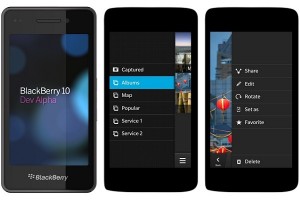
However, a recent article by Crackberry.com informed me that surprisingly enough, Research in Motion’s continues to grow in consumers (by more than 10% annually). Although this sluggish growth doesn’t compare to the likes of Apple and Samsung, it gives me (Blackberry through and through) hope that the launch of Blackberry 10, with its extra convenient, one-hand features to better access notifications and messages, a new keyboard, as well as OS features that differentiate personal and work actions, means a potential future (in market value, subscriber base, reputation, and profits) for RIM.

Sources:

http://crackberry.com/following-blackberry-jam-americas-things-are-looking-bit-research-motion

http://www.forbes.com/sites/marketshare/2012/06/12/6668/

http://www.wired.com/gadgetlab/2012/09/blackberry-10-features-all-inone-approach-to-the-inbox/

Photos:

http://www.geek.com/articles/mobile/blackberry-10-os-hardware-delayed-until-2013-20120629/

Spam prevention powered by Akismet