
Blog Post #11: The Power of Social Enterprise
” If the United Nations was fully funded why would we need the Arc or social enterprise?”

“If money could have changed the world, money would have changed the world.” (Sharad Vivek Sagar) The reason social enterprise is so important for society is because, no matter what society believes, money cannot solve all the world’s problems. Should the United Nations achieve an infinite supply of money, it would never be enough because just blindly dishing out aid to people in need does nothing. Instead, helping people to (proverbially) stand up on their own two feet will have a much greater and longer lasting impact. And that is what social enterprise is; it is a way for a company to profit while also benefitting the community and citizens around them. It has become commonplace for corporations to view social work as a cost, something that they must subtract from their bottom line. But social enterprise is a way of both bringing in profits and helping propel the world. Muhammad Yunus (pictured right), through his company Grameen Bank, gives people loans so that they can create their own businesses, a micro-financier in the purest sense. With only a small loan, he brought a world of change to thousands of people, and, in the process, made a profit. Had the UN been in this scenario, they would have probably only delayed the issue through their delivery of different types of aid. The UN would not have given these people the tools they need to survive and prosper on their own, instead just giving them the necessities for them to survive in the short-term. In its truest form, the difference between the UN and a social entrepreneur is that “…social entrepreneurs are not content just to give a fish or teach how to fish. They will not rest until they have revolutionized the fishing industry.” (Bill Drayton)
“Social Entrepreneurs: Pioneering Social Change.” YouTube. Skoll World Forum, 18 Feb. 2009. Web. 10 Nov. 2014.


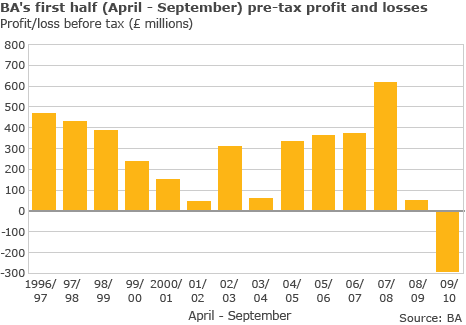 lower fares are a direct result of having lower maintenance and overhead costs for their airplanes by way of innovation. This allowed the airline industry to be available to a greater number of people, perfectly illustrating Christensen’s timeline of a disruptive innovation. After all this, I am not at all surprised that Europe’s traditional powerhouses are slowly fading away into non-existence. All these years, instead of trying to sustain their innovation, they fed off their innovation’s market power. Now, their sins are catching up to them, and, as told by Mr. Christensen, the process of disruptive innovation is running its natural course.
 respective stock exchange. According to a study done by Corporate Knights Capital, for companies with at least $2 billion of market value, firms trading on the TSX are near dead last, finishing behind those on the NYSE, Helsinki stock exchange, and even the lowly-regarded Moscow stock exchange. The report looked at a firm’s quality of reporting on energy use, carbon emissions, waste generation, water use, employee injury rates, employee turnover, and total payroll costs.
 School article “
 areas of the studies’ metrics. Although a relatively new position, companies all over the US and the world have incorporated a CSO into the C-Suite because it not only enhances the company’s image, but it lowers operating costs and increases profits. This, in its truest form, showcases a trend towards increasing shared value. It is a farce that Canada, a country lauded for being so environmental conscious, should have its major corporations act in such a way. In my eyes, Canadian companies should be at the forefront of sustainability, not stumbling at the back. Luckily, I believe that by implementing a CSO, Canadian companies will not lag behind in reporting their sustainability data, but be eager to show their highly sustainable practices.
 slogans aligns with the company’s image. His argument contradicts the opinions of blogger Toula Dimonis, who believes that this does not provide a friendly environment for women. John’s argument is that these advertisements, even though they demean and alienate women, ultimately add to the advancement of the brand, as women are not the company’s target audience.
 such as sports and beautiful women. Similar to Hooter’s, the company’s value proposition is geared towards creating a enjoyable environment for men, not women. So although Toula Dimonis would “never go to Jack Astor’s on a girl’s night out,” it doesn’t matter, because women are not who the value proposition is geared towards. The point of differentiation is meant to appeal to the thousands of men who, after enduring a hard day at work, need to choose a bar that will best alleviate the day’s stress. And, having best differentiated their brand around the stereotypes of men, Jack Astor’s is where these men will go. In my eyes, John is completely right in believing Jack Astor’s is justified in this marketing campaign. I do believe this help propels the brand and appeals to their target audience. The only problem is, why do they have to completely alienate and demean half of society?


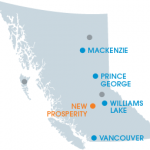 includes the land designated for the mine, as a Tribal Park, thereby stopping Taseko Mines from progressing any further. Although this has caused some to question the legitimacy of the Tribal Park claim, it no doubt brings up an interesting theme. In my eyes, it appears as if the Aboriginal people are fighting for their culture, the sacred land on which they have lived for thousands of years. They are undoubtedly trying to protect their sacred wilderness from the plunder of profit-seeking corporations. I believe, more than anything else, this brings up a invaluable lesson about consent prior to action. Taseko Mines should have made sure that the Aboriginal people were satisfied before moving further in their proposal. By incorporating all stakeholders in the planning process, Taseko could’ve quelled all concerns and eliminated this controversy. However, by shutting out the Tsilhqot’in people, Taseko alienated the Tsilhqot’in tribe, making them rebel in protest. In its truest form, this shows how greatly business proposals hinge on incorporating all stakeholders into the strategic process.




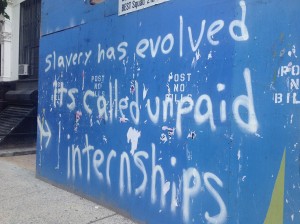 internships at prominent companies. In fact, as reported in the Economist’s 2013 article Are Unpaid Internships Illegal?, nearly two-thirds of college students will have interned somewhere before graduation. But are these unpaid work experiences ethical? From a surface level, this system compromises the social norm of bartering work for compensation. The students, eager to gain experience in hopes of furthering their resume and broadening future job opportunities, turn a blind eye to the ethical quagmire they are taking part in. On a deeper level, unpaid internships cause a threat to the company. According to R. Edward Freeman’s explanation of Stakeholder Theory, employees are driven by incentives, and, without them, deem it unnecessary to produce top-quality work. This will often cause a business to decline. In their current state, the interns, filling the niche of employees, do not feel obligated to work at optimum levels. However, based on Freeman’s teachings, should these interns be compensated through minimum-wage income or promises of future employment, they would realize the benefit of helping the company prosper and work harder. All withstanding, these reason illustrate the benefits of compensating interns in one way or another.