Provide a detailed analysis and reflection on my diet over a 24 hour period with the intention of highlighting the use of fossil fuels in the chain of events that led up to the meals on my plate.
My analysis will include but not be limited to the following:
Farming

Transportation
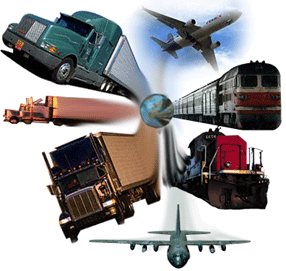
Processing
 http://www.gbt-inc.com/assets/images/food%20processing.jpg
Packaging
 http://www.i-convert.com/wp-content/themes/iConvert/images/food-packaging-1.jpg
Cooking
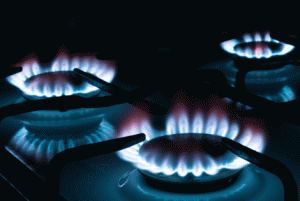 http://rodale.menshealth.com/files/images/cooking-with-gas-470.jpg
Waste Disposal

The purpose of this blog is to bring awareness to the interconnected relationship between the food industry and the fossil fuel industry.
Breakfast
- Olympia Krema Plain Greek Style Yogurt
- Peruvian Organic Fair Trade Coffee, Locally Roasted
- Kellogg’s Vector Cereal
Yogurt: It is produced in a plant located in Delta BC, just 30 Km from my grocery store which I walk to. Of the 5 ingredients listed on the package, the 4 largest are dairy products which originate from dairy farms within a 60 km radius of the plant. This sounds promising for a low transportation fuel usage, however, one bit of information that I wasn’t able to hunt down was the feed for the cows. Is it grain or grass? and if it is grain, where does it come from? because of the geographical location of these farms, there is a high probability that the cows are fed grain at least through the winter months. The majority of wheat grown in Canada is grown in Alberta, Saskatchewan, and Manitoba. This means that the grain used to feed the cows likely comes from around 1500 km away by rail. The current standard fuel for Canadian locomotives is petroleum derived diesel, although alternatives are being used in some regions such as natural gas, another fossil fuel. Because my yogurt isn’t organic, the grains fed to the cows were grown with fertilizers which also use fossil fuels in production. The grain is planted and harvested with machinery that burns fossil fuels. The processing of yogurt uses electricity which in BC comes from hydro-electric facilities not fossil fuels. Once produced the yogurt is packaged in recyclable petroleum based plastic containers.
Peruvian Coffee: The coffee is most likely planted by machines which burn fossil fuels, but because of the mountainous locations where the coffee grows it is usually picked by hand. The coffee is organic which means no chemical fertilizers are used in it’s growing. The coffee is transported by small trucks which burn a lot of fuel, to processing plants which run on electricity from a variety of sources, some of which are likely fossil fuel based. The beans are dried in the sun before being shipped north over 8000 km on boats powered by petroleum-based diesel. Once here, they are roasted by machines that burn natural gas before being packaged into paper bags. I grind the coffee and brew it using hydro based electricity and then send the grounds to the city compost in a truck that also burns fossil fuels.

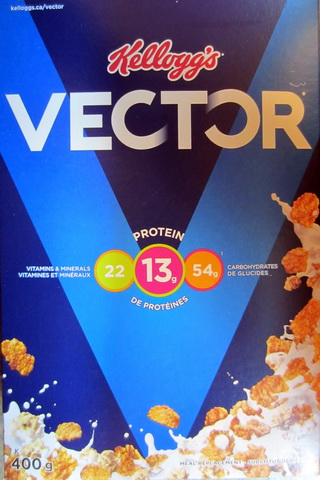
Vector Cereal: Due to the overwhelming amount of ingredients in this cereal I will only look at the two largest in quantity: rice, and whole grain wheat. Because I struggled to find any information on the Kellogg’s website that wasn’t purely image boosting fluff, I will make some guesses as to the origins of these ingredients. The rice likely comes from California where fossil fuel burning modern mechanized processes plant, harvest and thresh the rice. The rice is then transported by truck to a plant where it is winnowed, and milled into the white rice that is used in the cereal. The winnowing and milling are done using the electricity at the plant, much of which likely comes from burning fossil fuels. The now processed rice is then once again shipped by fuel consuming means to the Kellogg’s plant where it can be further processed into the cereal that we eat. Much the same as the rice, the wheat is planted, harvested, and threshed by a fuel burning combine before being shipped to the Kellogg’s plant to be further processed into the cereal. Once the cereal has been made it is packaged in a plastic bags and cardboard boxes and shipped by fuel burning truck to grocery stores all over Canada. I pick up all my groceries by foot. The cardboard box gets trucked to a recycling facility and the plastic bag gets trucked to a landfill. The cereal is not organic meaning that fossil fuel intensive chemical fertilizers were used in the growing of any number of it’s ingredients.
Already by 9:00 AM an enormous amount of fossil fuels have been burned Just to bring me my breakfast!
Protein Shake
I like to supplement my diet with some extra protein and carbohydrates after going to the gym so I often make myself a shake containing Whey protein, apple juice, and a banana. I thought it might be interesting to look at my simple protein shake as well and consider how fossil fuels were used in it’s creation.
Whey Protein: It is a bi-product of cheese production so it has a very similar upbringing as the yogurt that I had for breakfast. From the fertilizing, harvesting, and transporting of the wheat from field to dairy farm, to the transportation of milk to the processing plant, creation of heat used in the process of cheese making, and transport of the whey protein to local stores, there are fossil fuels used at every stage. It is also packaged in a petroleum produced plastic containers.
Bananas: My Del Monte banana was grown using petroleum produced fertilizers in the coastal regions of Ecuador. The bananas are harvested by hand and transported by truck to the seaports where they are then shipped to North America, and again transported by truck to storing facilities before moving on to grocery stores. Every part of the transportation involves burning fossil fuels, including the climate controlled environments that the bananas are transported in to ensure they stay fresh.
Santa Cruz Organic Apple Juice: My apple juice started on organic farms around the United States where no pesticides or fertilizers are used. The apples are hand picked and trucked to a Santa Cruz plant where the apples are mechanically pressed using electric power which could come from many sources including fossil fuel burning. The juice is then pasteurized likely using fossil fuels as a heat source. The juice is sealed in glass jars and then once again shipped across North America to get to the grocery store where I bought it. All the stages of shipping involved burned fossil fuel. The glass production also uses a large amount of fossil fuels as a heat source.
Lunch
Because my protein shake and lunch came so close together today I opted for some fresh vegetable that conveniently came in one package from Costco.
Carrots, peas, cherry tomatoes, broccoli, and cauliflower: Because these vegetable were all produced in a similar manner I am going to lump them together. I couldn’t hunt down the sources of these vegetables however because they are all grown in the US Canada and Mexico, I will assume Costco got them from North America and didn’t import them from further abroad. They are not organic which means that plenty of fertilizers made with the help of fossil fuels were used in their growing. Also while some of the vegetable are harvested by hand, there are still fossil fuel burning machines used to transport them and aid in the harvesting. They are transported all over North America until they find themselves in my Costco, all the while being refrigerated which adds to the amount of fossil fuels burned for their transportation. They were packaged in a plastic container that was made from oil, and I used my car which burns gas to get them home. I ate them raw so there was no extra fuel used on my end.
This goes to show that even the most unsuspecting of foods consumes plenty of fossil fuels to make it to your plate.
Dinner
Perogies with onions and butter: The Cheemo Perogies that I had for dinner are made predominantly from wheat flour and potatoes. Much like the wheat that was used in the Vector serial that I had for breakfast, fossil fuels were used in the fertilizers, harvesting, processing, and transportation of the flour (see vector section for more details). The potatoes In the perogies too were grown with the use of chemical fertilizers that were made with fossil fuels. They were mechanically harvested by a machine that burns fossil fuels, transported by fuel burning truck to the processing facility where they were cooked using natural gas for heating and mashed using electrical energy that likely comes from fossil fuels as well. The perogies are made by a large line of machines that also consume power and finally they are frozen before being bagged in plastic and shipped in freezer trucks to stores. The freezer trucks that transport the perogies burn fossil fuels not only for propulsion, but also to generate the power to ensure the cargo stays frozen. The onions that I ate with my perogies were organic, however, I’m not sure where they were grown. They didn’t have fertilizer used in their growing however they were likely harvested using fuel burning machines, transported by truck. I cooked the onions and perogies over a natural gas flame which adds to the carbon footprint of my dinner even though I could have easily used an electric element with hydro power to reduce the amount of fossil fuels used in my cooking. The butter that I used for cooking would have been produced in the same manner as my yogurt and would have had a similar amount of fuel burned in it’s creation and transportation.
Every Item that I ate throughout the day was steeped in fossil fuels, and the extent to which our food system relies on fossil fuels is shocking. To envision a future without the burning of fossil fuels one first needs to envision a whole new means by which our food is grown, processed, transported, packaged, and cooked.