Categories
John Stewart/Stephen Colbert Marketing TV Commercials

The Rally to Restore Sanity And/Or Fear: Part III of III

This rally was held on October 30, 2010 and had an attendance of almost 215,000 people. Much like Stewart and Colbert’s usual style, the rally was a parody of two different rallies held on August 28th, 2010 (Glen Beck’s “Rally to Restore Honor,” and Al Sharptons “Reclaim the Dream”). The rally was held for those who do not share the extreme views that were dominating American newscape; the people who are reasonable, sane, and want America to stop being represented by the “crazies.”

Advertising

In an episode back in September, Stewart hinted towards an announcement he plans on making in the future. This was quickly countered by Colbert following Stewart’s show with an even bigger announcement pending. Stewart and Colbert left the suspense to build up for a week before officially announcing the rally. Once announced, Stewart and Colbert ran a minimal TV campaign and focused more on advertising their rally on their own show. When asked, Stewart commented that those who would come to his rally were only those that watch his show anyways, so why waste the money (he parodies his Jewish heritage quite a bit).

The rally got many endorsements from celebrities and politicians (trying to cash in on the Stewart/Colbert mania in my opinion). Oprah Winfrey appeared on Stewart’s show live via video feed, and announced to the audience that she has left airplane tickets for the rally under their seats (something Oprah does quite a bit apparently). Colbert and Stewart took advantage of this attention by fundraising for DonorsChoose, raising approximatley $250,000 in the span of 3 days. This only worked to draw more attention to the rally.

Success

The rally drew some heavy hitters out of the crowed; Sheryl Crow, the hosts of Mythbusters, and R2D2 to name a few. The event was lauded by all those who the Daily Show normally pokes fun at; Fox, MSNBC, CNN, etcetera (no word from Glen Beck). The programs commended the rally and had “nothing but nice things to say about [it].”

Overall, the rally achieved its purpose. Americans rejoiced at being reasonable and politically sane, all while mocking the right/left-wing extremists that brought the rally in the first place. It was like a week long episode of the Daily Show, but on a much grander scale. In an amazing way, Stewart and Colbert made 250,000 people essentially act out their show. Here are some pictures from the event;

I hope you enjoyed this series analyzing the success of Stewart, Colbert, and everything they seemingly touch. Now heres a video of Michael Jordon donning a hitler ‘stache for no apparent reason (Movember meets Hitler?)

YouTube Preview Image
Categories
John Stewart/Stephen Colbert Marketing

The Stewart and Colbert Team: Part II

Chances are that you recognize Stephen Colbert, he rarely needs an introduction. Once a correspondent on the Daily Show with John Stewart, Colbert is host of “The Colbert Report” (silent T’s in both words), a show that has been nominated for 4 emmys and 2 satellite awards. Colbert himself has been on the “Time’s 100 most influential people” list, and has hosted for various awards and ceremonies (including the infamous White House Correspondents’ Association — noted further below).

If John Stewart seemed like a popular feller in my previous post, then Colbert eclipses him by a mile. He is adored by mainstream population for his on screen characters eccentricies, satirical perspectives and extremist right-wing behavior. Colbert arguably has more of a hold among his fans than John Stewart, because whenever Colbert calls for an action, which he often does (and it’s usually something ridiculous, like  nominating him for a president, naming a bridge after him, or attending some rally), his fans get the job done. They nearly had a bridge named after him (deemed illegal because he was still living), nearly put him in the presidential race (overruled by supreme court), and have produced a well documented phenomenon known as the Colbert Bump (a noticeable spike in public interest/earnings due to recommendation or condemnation by Colbert).

The Colbert Report

Colbert Report is a spin-off show from the Daily Show, created just to retain Stephan Colbert (previously, the Daily Show lost correspondent Steve Carrell for his acting gig). The correspondent known as Stephen Colbert got his own half-hour slot after John Stewart to give his own take on current news, events, and politics (often the same news already delivered by the Daily Show). The actual structure of the show was designed to mock the O’Reilly Factor, a popular right-wing program hosted by a lunatic named Bill O’Reilly. In a way, the Colbert Report and Daily Show are based upon the exact same premise: a parody/satire of established news programs, but still delivering quality content. The show appeals to the same targets, and yet they both have an extremely loyal fan base of their own.

Marketing and Success

Colbert Report differentiates itself from the Daily Show by doing the opposite of what John Stewart does. Whereas John Stewart has a pragmatic and realistic view of the world with a knack for cutting through the BS, Colbert Report has an extreme conservative and right-wing take on news, and often obfuscates and piles on more BS to already complex events. Whereas John Stewart will flat out say “George Bush is lying about WMD’s to invade Iraq,” Colbert will say “George Bush isn’t lying enough to the American population, and this is stopping him from conquering the world.” It’s obvious when watching that Colbert is being sarcastic in his delivery. There is a segment on his show called “The Wørd,” where he chooses a specific word (often made up by himself), and then he spews an extremist rant surrounding the word, all meanwhile on-screen text is juxtaposed to his left showing the satirical context of his rant. Maybe George Bush should have realized this, because he had Colbert host his White House Correspondents’ Association dinner, only to have Colbert mock his government with his deliberate right-wing extremist commentary. The event garnered massive attention for Colbert, and was one of the many embarrassments of Bush’s presidency. By being over-the top and politically incorrect,  Colbert has differentiated his show from the Daily Show. This feat is the reason both shows can deliver the same content in completely different ways, and thus attract different fan bases while still appealing to each others.

Advertising for Colbert Report is wrought with egoism, and narcissism. I noted in my previous post that the marketing for John Stewart worked because of its humbleness and truthfulness to reflect his pragmatic and realistic nature; the marketing reflected the personality. The same principle applies to Colbert. His image and advertisements come across as arrogant and over the top, and yet somehow that is the appeal of the show. His is so transparent in his (fake) intentions, that it suits the show and his style of comedy.

next week: Part III – The Rally to Restore Sanity and the March to Keep Fear Alive

Categories
Marketing Rant

The Marketing Virus: Immune to the Technology Antidote

(Delay in Stewart/Colbert story – will resume next week so stay tuned)

I was reading some other students marketing blogs, and I ran into Norbert Ma’s post about Pepsi trying to use Facebook to promote its brand. This got me remembering some articles I came across a few weeks ago about how corporations and businesses are trying to come up with more, more and more ways to use Facebook to promote their products. Forget Facebook, businesses are working hard at increasing their presence even in the mobile front by making apps for consumers smartphones.

What I see coming is a revolution in marketing. In the old days, marketers used to segment, target, and position their product based on the old rules. They would broadly divide their segments, decide who and how to target them, and then position themselves in the center. They’d resort to tried and tested channels of communication, such as TV commercials, radio, and magazines. But gone are the days when that would have been enough. With the advent of the internet and the ensuing exponential progression of technology, consumers these days fast forward commercials with TiVo, download their favorite songs into their car/iPod, and read all their news over the internet. The average consumer today can watch their favorite shows, hear their favorite songs, and get all the news they could ever want without ever turning to their television, radio, or newspaper/magazine.

Marketers have tried to adapt to this shift in consumer lifestyle by making their presence known at the root of all changes: the internet. This started with ads on popular sites (such as Google, WallStreetJournal.com), and slowly morphed into much more annoying memory hogs. I remember at one point 2 years ago, my news article would request 200kb of data, while the commercial overlay for Toyota’s Prius would request 10mb (For non-technical people, it just means that the ads became very cumbersome and annoying). Ads were getting much more aggressive with their presence, and were destroying the content of the news site itself. Perhaps they overstepped their grounds, because they invoked Chtulu; Enter Adblock Plus. It started off small, but the snowball grew into an avalanche in short time as everyone slowly blocked all ads from the internet. Adblock worked to block all sorts of ads: Video ads, webpage ads, pop-up ads, etc. It was a corporations (marketers) worst nightmare. Naturally they tried to stifle the app, but its been getting more and more mainstream. It doesn’t help that initiatives like the national Do-Not-Call lists were being created to chain marketers even more.

So now with TV attendance dwindling and an invisible force field around the growing technological world, marketers were scratching their heads trying to do their job; How could shovel their product and commercials down our throat? It’s my opinion that a marketers job is to analyze where the most of their target market conglomerate, and then (if I may) throw their company in the middle like some sort of grenade hoping to hit as many people as possible. But now that people have more options to view their media and block ad content, how can they do this?

Of course, being the clever and ever-evolving virus that they are, marketers are launching their war against our 5 senses by showing up in our networking mediums such as our social networking sites, phones, and the internet in general. This includes plans to spam us with ads on Facebook with the new Facebook Deal, ads on our smartphones on basic games and apps, and of course, by lobbying the government against ad blocking. Of course this all was to be expected, but the real jaw dropper was yet to be unveiled.

Google, MSN, Yahoo, Facebook, all pinnacles of the world wide web, could no longer fend off lobbyist pressure to do something about “freeloaders.” The drank the kool-aid about 2 years ago, and started playing around with the idea of net neutrality. Net neutrality became a hot topic and proved to be the golden road for marketers to open Pandora. The issue of net neutrality itself is simple; anonymity and freedom of users from Internet Service Providers. This means no discrimination based on how much they use the internet, which websites they visit, etc… ISP’s tried to end net neutrality by claiming that 90% of bandwith (downloading; internet capacity) is being used by only 10% of customers, so it is unfair for the average person to have to pay such “exuberant prices” for someone elses content. Net neutrality became even more of a hot topic when the RIAA tried to push it through so that it could isolate heavy-bandwith users (again for non technical people – people who download a lot) so that they would get a good idea of who is probably downloading illegal content such as movies, music, or software. But this road has long since morphed into a marketing battle. Corporations are lobbying against net neutrality, not on morals grounds, but because they would be able to “package” websites into different rates, much like a “pay-per-usage” cell phone plan. For exmaple, for $10/month, you could get access to Facebook, Google, and a list of 20 sites you choose (excluding certain bigger ones like Globe and Mail), but for $15/month, you could get access to Facebook, Google, Globe and Mail, Hotmail, and a list of 100 sites you choose (still excluding certain ones, such as Ebay perhaps). With net neutrality gone, corporations could finally chain the beast that is known as the internet, and get a stranglehold on it once and for all.

And of course, the kicker, ad blocking/illegal video streaming/music streaming content would be banished forever. It’s like a big reset button; send the world back to the simple way it used to be when people watched TV, listened to the radio, and read their newspapers. This change hasn’t come to pass yet, and it may never should free-thinking people have any say in our society.

I’ll end this article off now with a reference to the title. I’ve said this before, and I’ll say it again: marketing is a virus. It has no use, no value, and no contribution to society. And if marketing is the virus, then technology is the cure. But no matter how much technology you make to crumble the marketing disease, it will also evolve, adapt and gain strength, and move to bring down the beast.

Categories
John Stewart/Stephen Colbert Marketing

The Stewart and Colbert Team: Part I

This is the first part of a 3 part series analyzing the Stewart/Colbert mania that has gripped North America. The first two parts will briefly summarize the content, success, and marketing strategies of the two respective shows, and the third will look into the recent held rally the pair have held. You may have heard of it:

YouTube Preview Image

The above rallies are occurring in Washington, D.C as we speak, and are drawing in crowds in excess of 250,000 people. John Stewart first announced this, or more like announced that he had a pending announcement, almost a month and half ago, and Colbert quickly counter-announced John’s announcement with his own announcement of a far greater pending announcement (if you don’t watch the shows, you may not get this).

Now before I continue further, let me give you a quick introduction into these 2 shows. (Daily Show only for Part I)

The Daily Show

Hosted by John Stewart, the Daily Show has grown to be one of the most popular shows on Comedy Network. It’s a comedy news show that highlights real news and events from around the world (with a focus on political commentary in America) and adds some bizarre humor and perspective to it. In recent years, its really transformed into a loud critic of established news channels/shows (such as Glen Beck, CNN, FOX), and unlike the aforementioned programs, is praised for delivering an unbiased and impartial view of global events with no agenda. The newsworthy content that appears on the Daily Show is rated on par with news delivered through “real” news programs such as CNN and Fox. John Stewart has a pragmatic, realistic, and cut-the-BS approach to news and delivers it in a 25 minute show punctuated with silly jokes and dry wit. On top of this, John Stewart frequently interviews high-profile politicians, authors and even celebrities (most recently, Bill Clinton and Barack Obama). To the dismay of many (see video below), John Stewart seemingly holds the power to sway popular opinion with his show. He can make a mockery of respected shows and people (see Crossfire, Jim Kramer, or Rick Sanchez), and ruin their careers. The show has a cult like status, although in recent years its become much more mainstream.

YouTube Preview Image

Success

It’s true that John Stewart’s success is largely attributed to the merits of his analysis and content. If he never delivered quality news and humor, then he would just be that show that came on after “Puppets that make crank phone calls” on the Comedy Network. His pragmatism and unbiased view of important news from around the world (including news that does not make it onto mainstream news outlets) has been the tale of his success.

However, a key factor in this success has been the marketing of his show. John Stewart’s advertisements are humble, patriotic, and generally reflective of his show. The ads make it clear that its a comedy show commentating on the state of the world. John Stewart doesn’t claim to have an important opinion in his ads, or claim he has any opinion for that matter unlike some programs (Glenn Back?). Even Comedy Network’s advertisements of his show don’t mislead viewers into believing this is a legitimation news show. However, when viewers do watch his program, they are often shocked to find the quality and validity of the news content he provides. In this way, John Stewart undersells and overdelivers. The show itself is not constructed or designed for any particular person or political ideology; his show is neither republican nor democratic, even though both would point their fingers the other way. He slams whoever is “in the wrong,” and if this has been Liberals or Republicans 30 times in a row, he has no qualms with saying it (to be fair, Republicans have been on the receiving end of his stick more often than not ever since Dubya took control, correlation or causation?). In that sense, anyone can watch his show and laugh at the hypocritical and exaggerated political landscape that leads their country.

Another key factor for its success has been the distribution of the show. It comes on 12’o clock in the night, so its certain that not many people get to watch it before they sleep, so how does he draw in such a large crowd? Being the shrewd political commentator he is, John Stewart recognizes that most of his audience is in Generation X and Y, and as such, he should communicate to them in their desired format; the internet. Comedy Network streams the Daily Show for free over the web, and was actually one of the first to do so before all major networks put their most popular shows up on the web. This supplied his show to a far greater proportion of his target market, and the show took off from there. I remember seeing and reading about John Stewart’s program since Day 1 (aka June 2005) in a variety of blogs, news aggregators (Digg, Reddit), and the general web.

I’ll end this post on that, and continue next week with a similar analysis of the Colbert Report. I’ll leave you with what will probably be the most famous interview ever conducted by John Stewart (this link may be removed for violating YouTube’s terms of use, so just in case, head over to Comedy Network’s official video archives to view the full interview).

YouTube Preview Image
Categories
Marketing Rant

There goes decency (this is why I’ll always hate marketing)

(Be prepared, this post is a little darker than usual. Must be my mood, exam week)

I don’t even have to explain myself with this ad.

A lot of people have seen these around, and I’d say that a good guess is that only half of those people would realize this is a poster for a movie. Look at it again, and try to find exactly where it says this is a movie poster. That’s right, down at the bottom in size 12 font.

It’s just shock-and-awe-blast-some-acid-in-your-face tactic with a blatantly condescending and derogatory poster that is masking itself pretty realistically as a self help phone line. I’m sure the thought process of whichever ingenious marketer came up with this was “ZOMG! It makes you look once, blink your eyes, and then again to see if its real!!! MARKETERS DREAM, HIGH FIVE!!”

I don’t consider myself a prude when it comes to sex or anything, but things like this just boil my blood. I just don’t like it when people think they are being secretly clever with such shocking nonsense to get peoples attention (note: Lady Gaga). Do they really think they came across something that no one else thought to do before? Again, the thought process is roughly around “ZOMG we can be like so shocking and so obnoxious and like soooooo mean but funny, and do somethin that like nobody ever does in their right mind but that like totally makes it different and ppl will totally think its hilarious and they’ll take notice and omg they’ll think we’re sooooo smart for not being stupid conformist.” Anyone with an IQ in double digits knows that they can be insensitive or shocking to get a point across, but the only difference is that we have things like ethics, morals, and a sense of decency in our daily lives.

This is also the reason I hate marketing and I’m a finance kind of guy. Specifically, the part of marketing called “advertising” where the boss man simply says “sell my product, I don’t care how.” This means using whatever means necessary to promote your product, taking advantage of whatever comes their way and not thinking about any implications of anything. It has no morals, no ethical values, and its laughable to think that advertising brings any value to the product that wasn’t already there (if any). Truth is, if your movie about 14 year olds having sex, cough -SEX DRIVE – has any value at all (note: see “felony“), it should be able to sell without the marketing division deciding they need to pursue it at a certain “angle.” Simply communicating your movie should be enough, and a little creativity couldn’t hurt. But nope, there is no limit or line in marketing. Take this for example (and you see this everywhere): A guy tries to sell you a car through the cars own merits, or a guy sell you the same car by having a half-naked girl (or guy I suppose) sitting on the hood; which salesman do you buy from? What value did the second salesman add to the product?

I digress. What I’m saying is that I hope advertising like that above dies out of this world, and I’ll be sure to never watch this movie, whatever it is called. If an advertiser has to skirt the boundaries of ethics to sell a product (and I don’t mean showing skin or demeaning women, I’m desensitized to that), then chances are I won’t be buying that product. I don’t find you clever, nor do I laugh at your funny take on your product; just go away.

Categories
Marketing

Ingenious Business Cards

I came across this article the other day about clever business cards. I thought I’d share it with you guys because the creativity and ingenuity behind these cards are pretty impressive.

Business cards don’t simply have to convey your contact details. If done right, they can be as useful as any marketing tool. I like to think of it like “self-marketing.” What I mean by that is exactly how it sounds, marketing yourself (not necessarily your company or line of work). It’s like a free pass to boast or toot your own horn. Even if you choose not to go that route, you can at least add some color and humor to it. Good self-marketing isn’t an easy task – you can either go overboard or undersell. Getting the right mix, and still coming across as clever is very rare. If done right, the business card practically becomes an added salesman.

Here are some of my favorites:

Either way, you're paying
Add some humor to your messy divorce
Just don't keep it near your babies
Subtlety isn't this doctor's specialty

Theres more in the link, but I thought I’d highlight these ones. How would you design your business card if you have to?

Categories
Marketing TV Commercials

Toyota Sienna tries to bring back the mini-van

Everyone knows mini-vans are lame, hell even Toyota knows mini-vans are lame. But they still have a daunting task to market and make profit off of producing one. So how do they go about this?

Meet these guys: the “Sienna” family, a suburban family of 4 who are not like conventional (advertising) couples. They understand that they are a mature couple and have a responsibility to their children (hence the mini-van), but they are also light-hearted, quirky, and young at heart.

YouTube Preview Image

This is Toyota’s latest campaign to curb the image mini-van’s have of being lame and old-fashioned. As shown above, we see that a pair of hip, modern, and funny parents chose to buy the Sienna.  The style of this compaign parodies reality television as they keep chasing this couple and finding out what they think of the Sienna. Below, we see the same hip and modern couple rapping about how they cool they think the mini-van really is (ironically of course).

YouTube Preview Image

Sure they talk about their responsibilities and duties as parents, but at least they rap it to us with gangsta’ beats in the backgrounds so we can also see how ironic and hilarious they are (……. those guys aren’t hardcore!!!1!11!!!!11).

 So exactly what is Toyota trying to accomplish? Many TV commercials go for the funny bone with ho-hum gags or punchlines. Toyota tried to up the funny with this latest campaign, and possibly aimed to start a viral sensation (didn’t happen).

But beyond just have an funny and ironic commercial, they are trying to tackle a fundamental insecurity of a lot of current and prospective mini-van drivers. They’re trying to convince people they can drive the Sienna and still be a “cool” and funny couple, just like these guys on TV. They keep the humor and quirks of the couple believable and replicable, so that people can not only identify where they fit in with the van, but how they can be more like the couple. They want families to be comfortable driving the van, and not feel that they need a sportscar or luxury sedan to be the hip and modern couple. If they can succeed with this and associate their Sienna as the “cool” mini-van, then they have succeeded in their goals and will likely experience increasing revenue.

But are people buying it? I don’t think so. My personal opinion is that this campaign is a  failure. I find the commercials overly-ironic and the parents patronizing and cliché, all of which will merely turn people off of it. Furthermore, the dad has a really creepy hipster + Steve Job’s look about him that makes him even more of a cliché.

ps. the song is actually really good

Categories
Marketing TV Commercials

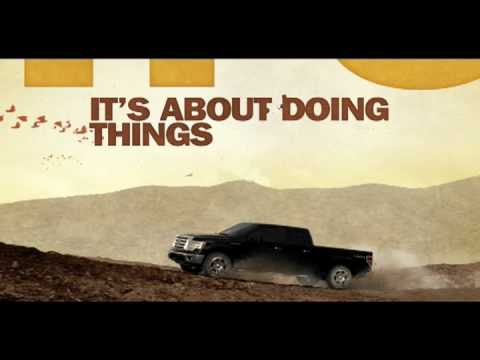
Ford F150 – Most annoying campaign ever

YouTube Preview Image YouTube Preview Image

Hey everyone, this is my first blog post.

I don’t often get to watch TV in my spare time these days, but when I do get the opportunity, it kills me to have it wasted with commercials like the above. I physically cringe when I see it. This is the “Way of Life” campaign from Ford. Gone are the days when Ford F150 was associated with patriotism, America, and the ranch life. This campaign sets to prove that the F150 is a “real man’s” truck. From a marketing perspective, its clear what Ford’s strategy is: single out and communicate exclusively to its target market.

I find most commercials purposely broad and vague, as they are trying to promote their product in a way that it will reach as many people as possible. Although there is probably an obvious target market behind their products (eg; makeup for women), they do not exclude or ostracize other demographics purposely. Why bother? The reason behind it must go something like “why focus exclusively on a certain demographic, when profits may exist in others?” It leaves open the possibility for additional revenue outside of their focus, which is never a bad thing.

Ford F-150 decides to abandon this traditional model, and just comes out with fingers pointing towards their target market. In this case, those happen to be the construction-type laborer workers who earn their money through the sweat and dirt on their hands. To appeal to this demograph, Ford made use of the following clichés:

  • Rock music – check
  • Dizzying camera movements and flying blocks of text crashing into the ground to simulate the chaotic and fast paced nature of construction work – check
  • Condescending narrator with a fake Boston/New York accent speaking in everyday laymans language. No fancy commercial script here, but a really gritty conversation with your average “construction worker” – check
  • Constant visual and dialogue references to construction work / tools / hauling payloads – check
  • Reference to burbon (a real man’s drink)- check
  • Did I mention constant implications that F150 is for a real man’s work? Yup, women don’t fit in their commercial. No women – check
  • Not-so-subtle slant at geeks, hippies, and white collar workers (the bane of all construction workers) – check

The list could go on. To better illustrate the above, here are a few direct quotes from the clips

The engineers who built the ’09 F150 are probably the same guys we cheated off of in science class. We’re thinking about pizza, they’re thinking about aerodynamic wake properties

Chances are you’re not making money pushing a pencil, or hand modelling

You don’t want your cargo swaying like hippies around a campfire*

Conclusion: It’s a bold move. Ford decided that they only need to target the market who they feel will be the primary buyers of the F150 (or at least provide the bulk of their revenue). They feel no need to extend its product to other demographics, and instead exclude and take jabs at them. This of course is done to further delight its target market, so that they may better identify their values with Ford F150. From a marketing perspectives, Ford has made the strategic decision to tailor its product almost exclusively for a small niche market, and hope to capture enough of this niche market to outweigh the losses they will suffer for not marketing to all the demographics. This risk is taken to promote product loyalty and to capture the market for that niche. It’s essentially a different approach to promoting their brand and increasing profits.

All that being said, I don’t identify with this commercial at all. It’s unethical, rude, and really just panders to the crass, crude macho-man-wannabe’s. Oh, and the narrator’s  attempts to mimic the everyday laborers’ personality is just pathetic.

*Couldn’t actually find this commercial from YouTube, but I know it exists. It’s so cliché, that it’s one of the reasons I hate this commercial campaign so much; my inspiration for my first marketing blog post.

Spam prevention powered by Akismet