Categories
Uncategorized

Electric cars ‘pose environmental threat’

Are electric cars the future?

A recent article published by the BBC completely shocked me when I read the very first line that stated, “electric cars might pollute much more than petrol or diesel-powered cars, according to new research” (To read further refer to http://www.bbc.co.uk/news/business-19830232).

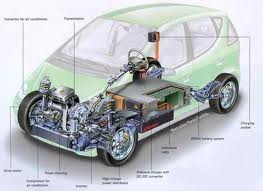
Electrical cars are the most “greenest of the personal transportation industry” and therefore encouraged to be purchased (Barbara). However, the Norwegian University if Science and Technology study found that greenhouse gas emissions rose dramatically if coal was used to produce electricity for the electric cars (Electric). This means that producing electric cars is not only costly but creates greater greenhouse effects than that of producing vehicles that use petrol and diesel. The article further states, “in addition, producing batteries and electric motors required a lot of toxic minerals such as nickel, copper and aluminum. Hence, the acidification impact is much greater than that of conventional car production” (Electric).

Nevertheless it can be argued that although the process of producing an electric car can lead to greater greenhouse emissions, in the long run these cars are much more efficient than a vehicle using petrol and diesel. The question that arises: is it better for one to consider the long term rather then the short term effects of purchasing an electric car?


Works Cited:

 Aaron, Ziv. “About Owning a Hybrid or Electric Car.” Green Living on National Geographic. National Geographic, n.d. Web. 08 Oct. 2012. <http://greenliving.nationalgeographic.com/owning-hybrid-electric-car-2352.html>.

Barbara. “Goal For The Green.” Advantages and Disadvantages of Electric Cars. N.p., 4 Apr. 2011. Web. 08 Oct. 2012. <http://goalforthegreen.com/2011/04/advantages-and-disadvantages-of-electric-cars/>.

“Electric Cars ‘pose Environmental Threat'” BBC News. BBC, 4 Oct. 2012. Web. 08 Oct. 2012. <http://www.bbc.co.uk/news/business-19830232>.


Picture Reference:

“Energy and Kids.” Energy and Kids. Bulgaria, 2005. Web. 08 Oct. 2012. <http://www.kids.esdb.bg/smart_inventions.html>.


Categories
Uncategorized

European Debt Crisis: A Look at the Impact on Africa

Will Africa be the land of opportunity during this World Crisis?

After reading Rachel Servoz and Emily Yu’s blogs it made me consider looking into the impact of the European Crisis on African counties as I come from Tanzania.

Europe has been a primary consumer of most of the commodities in Africa. The financial debt in Europe has therefore lead to volatility in prices of commodities in many of the African countries such as Kenya, Tanzania, and Uganda. This has affected trade and the demand of commodities in Africa such as oil and copper, the currency leading to higher inflation rates in African countries and the employment rates in Africa.

Yet, “According to World Bank and IMF, Africa has one of the best growth prospects over the coming decade. In 2011, developed countries recorded approximately 2% growth rates, while African nations recorded nearly 5.5% on average” (Maithya). This proves that many of the African countries will be countries of opportunity in the coming years as they learn to become sustainable without aid from the developed world. Ngozi Okonjo- Iweala, Nigeria’s Finance Mnister quotes “We have learnt how to manage our economies to produce sustained growth. What needs to be recognized when these decisions are made in Europe, is how they can make more use of the dynamism of the developing world” (Europe).


Works Cited:

 Abdullahi, Shaflu. “African Economies and the Global Debt Crisis :: Holler Africa –Make Yourself Heard!” African Economies and the Global Debt Crisis :: Holler Africa – Make Yourself Heard! Holler Africa, 2005. Web. 07 Oct. 2012. <http://www.hollerafrica.com/showArticle.php?artId=508>.

“Europe Crisis ‘threatens Africa'” BBC News. BBC, 1 Dec. 2011. Web. 07 Oct. 2012. <http://www.bbc.co.uk/news/business-15968984>.

Maithya, Nicholas. “European Debt Crisis: A Look at the Impact on Africa.” ValueWalk.Weneca Media Group, 5 June 2012. Web. 07 Oct. 2012. <http://www.valuewalk.com/2012/06/european-debt-crisis-a-look-at-the-impact-on-africa/>.


Picture Reference:

“Europe and World Crisis By Alexei Talimonov | Politics Cartoon | TOONPOOL.”Europe and World Crisis By Alexei Talimonov | Politics Cartoon | TOONPOOL. Toonpool.com, 2012. Web. 07 Oct. 2012. <http://www.toonpool.com/cartoons/Europe%20and%20World%20Crisis_155770>.

Categories
Uncategorized

Advertising to Children- Kid Gloves

Our children are the future! Is this how we want them to grow?

The class discussion held on the 2nd of October on how media affects the behavior of consumers and children inspired me to research further on this topic.

Media is a big aspect of the society that projects continues sources of information. Advertisements are everywhere from our television screens to billboards, directly affecting the minds and behaviors of the young and elderly consumers. According to an article by “The Economist” there has been controversial debate on banning advertisements aimed on children.

On one hand, not every child is gullible in believing what it sees and if they are it is the teachers and parent’s responsibility to teach the children of the realities of commercial media. However, on the other hand, it is said that children are naive, therefore easily persuaded by advertisements. Statistics show that “two-thirds of infants and toddlers watch a screen an average of 2 hours a day” (KidsHealth). Television can be an excellent source of educator and entertainer for children, however too much exposure to such media at such a critical time of the human brain development can be very harmful for the children in a long run (KidsHealth). This can interfere with the activities such as being healthy, physically active, reading, playing with friends and most importantly spending time with family. These disadvantages can lead to exposure of negative information that will eventually affect behavior and actions of such kids in the coming future.

Works Cited

“Children, Adolescents, and Advertising.” Children, Adolescents, and Advertising. American Academy of Pediatrics, 2012. Web. 07 Oct. 2012. <http://pediatrics.aappublications.org/content/118/6/2563.full>.

“KidsHealth.” How TV Affects Your Child. The Nemours Foundation, 2012. Web. 07 Oct. 2012. <http://kidshealth.org/parent/positive/family/tv_affects_child.html>.

“Kid Gloves.” The Economist. The Economist Newspaper, 04 Jan. 2001. Web. 07 Oct. 2012. <http://www.economist.com/node/464997>.

“MP Links Children’s Advertising and Mental Illness.” BBC News. BBC, 14 June 2012. Web. 07 Oct. 2012. <http://news.bbc.co.uk/democracylive/hi/house_of_commons/newsid_9728000/9728176.stm>.

Shah, Anup. “Children as Consumers.” Global Issues. Global Issues, 21 Nov. 2010. Web. 07 Oct. 2012. <http://www.globalissues.org/article/237/children-as-consumers>.


Picture Reference 

“Understanding Advertising and Your Children.” The Better Mom. Insight Blog Design, 2012. Web. 07 Oct. 2012. <http://www.thebettermom.com/2012/05/understanding-advertising-and-your-children/>.

Spam prevention powered by Akismet