Sustainable development? More than one answer


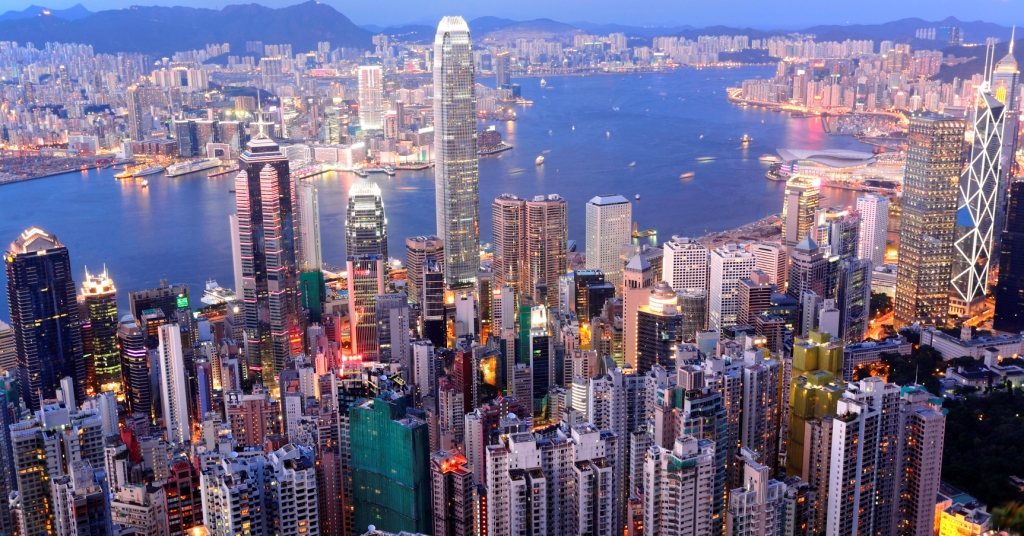
In recent years, sustainable urban development has been an focused area of attentions due to the increased worries about pollutions in China. Hong Kong has traditionally been an icon city for sustainable urban growth. Raj Sapru, in his blog Sustainable Urban Growth: Is Hong Kong a Model for China, however, argues that, although Hong Kong has a history of glory sustainability, the city needs more urgent, united social will to allocate resources to solve the problems in sustainable growth. For example, businesses should further undertake efforts to improve energy, air, and water impacts.

To me, sustainable development is not simply a business issue or political issue. Rather, it is a cross-disciplinary one. I still remember the shocking feelings I had when I learned that, in a tiny place of 1,100 square kilometers with 7 million residents, Hong Kong somehow managed to keep 70 percent of total territory green and untouched. From the perspective of environmentalists, the greenness of Hong Kong becomes the city’s lung to digest pollution and produce clean air. On the business side, the Hong Kong government’ intentional limited land supply artificially keeps the housing price high, which is a key to the Hong Kong economic stability.

The negative effect, however, is that Hong Kong people have long suffered from the unaffordable rents and housing. To the Hong Kong society, this is not sustainable in the long-term because of the rapidly increased unequal distribution of wealth. Is this less important than keeping 70 percent of territory green? What should we sacrifice for the “greater sustainability”? Is it politically possible? These questions don’t have a simple answer. What does have a rather simpler answer is that, the notion of some Hong Kong people blaming every social problem to Mainland China is wrong. This notion dangerously distracts Hong Kong people from make efforts to solve the deeper rooted problems. After all, China will continue to become a dominant influence in the East Asian region, and therefore the fusion of China and Hong Kong is inevitable.

Sources:
Sustainable Urban Growth: Is Hong Kong a Model for China?

Paradox of Value Proposition

After reading a blog post written by my comm101 classmate Sarah, A Deeper Look into Value Proposition, about the deeper thoughts of value propositions of companies, which could be different from parent companies and their subsidiary companies. For example The Body Shop and L’oreal, Dove and Axe. She believes that it is confusing since the same company has totally different value proposition. (The Body Shop is known as against animal-testing while L’oreal has been reported that they tested on animals) In this post, I strongly agree with Sarah’s view.

In my opinion, one of the reasons that customers want to buy the products from a specific brand is the brand value proposition, they buy the products which they believed in. If the value proposition of the brand is a paradox, how could customer trust the products and how could the company build the customer relationship.

In marketing strategy, it is reasonable that a company has many branches for diversity, such as the sub-brand of Victoria’s Secret, Pink. Compare with the VS which’s main customer segment is woman who between 21-49, Pink is more ‘childish’ which is targeting on young between 16-29. This example is an acceptable example for me because the value proposition of VS is always making their customers feel sexy, sophisticated and forever young.
Sources:
Sarah’s Blog Post: A Deeper Look into Value Proposition
Value Proposition of Victoria’s Secret
Target Market/Market and Customer Segmentation of Victoria’s Secret

“One to One”, step by step

Toms Shoes
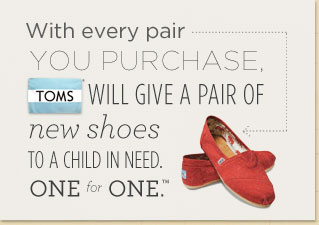
Toms Shoes’ innovation of “one to one” business model has been popular since it was first launched in 2006. This model functions on the basis that Toms Shoes would donate a pair of shoes to those in need for every pair of shoes sold. Supposedly, this model is built with humanitarian and cosmopolitan intension to create comfort for poor people in underdeveloped areas. However, it has been controversial.

From a marketing perspective, this has definitely been a success. This is demonstrated not only by the increased sales for Toms Shoes (one of the fastest growing ventures in the world), but also by the fact that many other companies have urged to adopt this model. However, it is this success that made critics skeptical. Cheryl Davenport says: “[this model] isn’t designed to build the economies of developing countries. It is designed to make western consumers feel good.” The critics’ main argument is that when you give away free things, you not only risk the potential to damage local industries, but also risk the chance of creating potential over-dependency among people in those underdeveloped areas. If the poor don’t acquire the skills and resources to improve their local economy, they will not get out of the poverty cycle. And that’s the underlined real issue that needs to be solved.

These criticism are reasonable in my opinion, however, we also need to recognize the fact that this is a bold experiment as Toms Shoes develops its social entrepreneurship. No model would be perfectly functional at its first glace, we need to be more patient for improvement. In fact, Toms Shoes has already attempted to improve their “one to one” model by replacing free footwear with free training and education. As for the criticism that this model “makes western consumer feel good”, I can only ask: what’s wrong with that?

Sources:
The One-for-one Business Model: Avoiding Unintended Consequences
Toms Shoes: a Doomed Vanity Project?
The Broken “Buy-One, Give-One” Model: 3 Ways To Save Toms Shoes

What makes a TEAM


Regarding to my COMM101 teammate Yuki’s Blog Post T E A M to A Team, which states what a team should like and her deficiency as a team number. After reading her blog, I found out some new views of being a team.

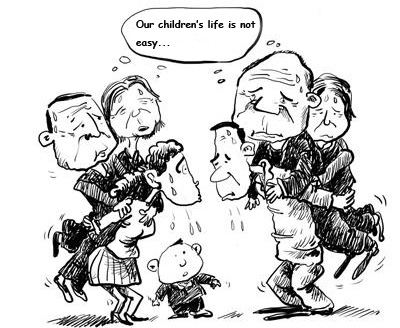
Firstly, just like the picture I put in the very beginning of this blog, TEAM=Togethers Everyone Achieves More, a good team gathers people and these people work together for a same goal. Just our COMM101 group assignment, we divided work and everyone takes it seriously since we all will get a same score, and currently we are struggling in the group assignment 2 🙁

Secondly I want to talk about the leadership, I always believe that it should have a role of a team leader who gives a direction to other team numbers. But it doesn’t mean that other team numbers are not important, they are also crucial. It just looks like a ‘like’ symbol, if there are no other four fingers, it is just a stupid thumb, it is meaningless, but with that four fingers, it is a LIKE!
However, there must be some arguments among team numbers, which is said by Shomas as storming, due to the different opinions and personalities, but if everyone could sit down and calm down, it will be solved quickly.

Sources:
Yuki’s Blog Post : T E A M to A Team

Besides Remembrance Day

The poster of Tmall Double-11 Shopping festival

Every body knows the November 11th is the Remembrance Day in order to memorize the the members of their armed forces who have died in the line of duty during the WW1 and WW2. However, except for the Remembrance Day, Nov.11 is also a special day for all Chinese people since it is the annual Tmall shopping festival which is kind of Chinese version of Black Friday. Tmall is one of the largest online shopping platform in the world and at the Double-11, it provides all the product in half price.

The news today morning said the value sales was over 10 billion yuan in the first 18 mins, 20 billion yuan in the first 34 mins and 30 billion yuan in the first 74 mins. That was huge.

However, meanwhile double-11 brings the huge profit to sellers, it also increase the pressure in several industries, especially in logistics. The couriers need to face the dramatically increase work since the orders are over 0.12 billion in the first hour, the delivery work must be intense.

Although the Double-11 is a carnival for online shopper, it potentially increase the stress on transportation due to the increase in order delivery. However, it also brings huge benefit for online sellers. It shows the success in E-Commerce.

Sources:
Alibaba Double 11 Sales Exceeded $2 Bln in One Hour in 2014
For couriers, China’s ‘double 11’ shopping day means double the work
Headline of Tmall

The end of the one-child policy

Just two years after Chinese government announced that if both parents are one-child then they can get the second child, Chinese government announced that all couples can have two children last week.

Chinese had a population explosion in the early days, so the one-child policy was founded in order to decelerate the birth rate. However, it was always criticized by foreign media since they thought this is not humanistic.

Today, China has severe situation of aging population and the young generation have huge stress that they need to support two parents.

This new policy is founded to improve this serious situation. However, lot of young married couples are not seeking for the second child for several reason: they just start their careers that have no space for the second one since the first may already take a large amount of time; their economic conditions are not allow them to afford the second child since the house should be rearrange, the expenditures in every charge are huge, etc.

Finally, the two-child policy may lead a more serious problem that the discrimination about women in the office since they have more probabilities to give a birth so the job efficiency of the companies would be slow down. So they may have lower salaries and low change to get stable jobs.

Sources:
China allows all couples to have two children
What social phenomenons would two children policy brings

Balmain for H&M
Recently H&M announced that they will have a forthcoming collaboration with Balmain which is a well-known luxury brand and focus on high-end dress.

H&M as a fast-fashion brand always have the comparative advantage of good-quality but cheap clothes, the target customers of H&M are women around 16-35, and it is the favourite brand among the college female student including me. Balmain is a high-end brand and the target customers are people with higher salaries and more disposable income than H&M customers.

Such two different companies with different value propositions and customer segments, why would they decide to come out a forthcoming collaboration?

In my opinion, H&M decided to do that because the fantastic design and wonderful idea of Balmain; Balmain decided to do that because the broad market H&M has and the potential customers who couldn’t afford Balmain but can afford a little “expensive” H&M. Furthermore, the previous success of H&M x Alexander Wang gave both of them confidence that the clothes will be sold out immediately.

This cooperation between H&M and Balmain shows the win-win when two companies change their value proposition for catering to taste of majority customers.

Sources:
H&M and Balmain campaign

Why Apple?

Apple's functional integration
There is no doubt that Apple is the hottest and most potential company in the planet, every time when Apple release a new product, it will cause attention of the whole world.

But why people choose Apple and what makes Apple so different? The answer is Apple is not only produce the hardware such as iPhone, MacBook and iWatch, the Apple Inc. but also a combination of the hardware company, the software company (the IOS system), the services company (Siri), and the retail company (Apple Retail Store). This makes Apple so unique because other companies only made one or two of them. Take the competitor of Apple, Samsung, as an example, Samsung produce the hardware only, then put Android System on it, use Google as service company and sell it via Retailed Stores like BestBuy.

Apple is the only company which gathered these four parts together, it is a vertical integration, so it’s controlling the whole pace of the selling experience and it’s better for Apple to carry through Apple’s approach to products is that they are at the union of liberal arts and technology.

The combination of vertical integrated products and the simplified design is the reason why Apple is so successful.

Sources:
Why Competing with Apple is so Difficult

The Transition of Alibaba

The Chinese largest online shopping platform Alibaba is searching opportunity to transfer into a broad-based provider of online services.

The chairman of Alibaba, Jack Ma, plans to sell a trillion dollars in future five years. In order to realize his great aspiration, he develops Alibaba’s business both online and offline. Ma already had a deal with two giant American retailers, Macy’s and Costco, who agreed to use Alibaba’s online platform, Tmall, sell goods to Chinese customers. Meanwhile, Ma gathered nine Chinese famous express companies and business institutions and set up a ‘China Smart Logistic Network’ called Cainiao in 2013. Cainiao ensures the shipping period of goods would no longer than 24 hours, which speeds up the online shopping efficiency. Also Alibaba invent the most revolutionary online payment function, Alipay, by using escrow, which helped buyers and sellers overcome distrust. In addition, the online money-market fund, Yu’E Bao, provides the microloans to user and roughly has 600 billion Yuan assets in total.

As a Chinese people, Alibaba indeed take a large per cent in my online shop life, the Taobao, which is a branch company, is the most mainstream shopping website for Chinese young people, customers could buy anything on it. And the Alipay is the most convenient way to transfer money that I ever used, it avoids handling charge, also faster and safer than via bank transfer.

Sources:
Clicks to bricks

The Extraction from Nestlé should be regulated for Future Sustainable Growth

null

The background that I want to talk today is about Nestlé, which is the largest bottled water company and international corporation, extract groundwater in B.C without paying a penny.

Since the groundwater regulation in B.C is actually quite uncompleted, Nestlé basically take pure and clean groundwater for free. Here comes lots of concerns by nearby residents that they thought it is unfair that Nestlé just take the water and then sell it back in plastic bottles which prices $1.19 and the price can almost compare with same amount of gasoline. Also they thought that the water should be a public trust.

What’s more, because of Nestlé project, locals became its employees. However, employee’s engagement would be affected by the ethics of a company. Due to locals were already concerned about Nestlé’s unlimited extraction, their engagement might have a severe degradation.

In my view, Nestlé as a huge multi-billion dollar based company, should take responsibility to protect the public resources. Rather than extracting them ceaselessly, it should be charged voluntarily even though the groundwater regulation system in B.C is not perfect for good reputation among society and essential protection of the groundwater for sustainable future use.

Sources:
‘Wild West’ of groundwater: Billion-dollar Nestlé extracting B.C.’s drinking water for free

Spam prevention powered by Akismet